Elizabeth Stoneking
1x
Nominee1x
Finalist
Elizabeth Stoneking
1x
Nominee1x
FinalistBio
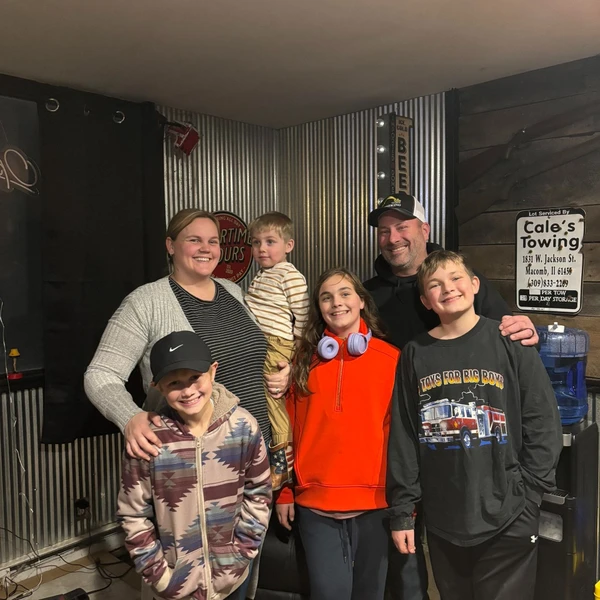
As a mother of four, my commitment to education is deeply personal. Every day, I see firsthand the impact that strong early learning experiences have on a child’s growth, confidence, and future opportunities. Pursuing a master’s degree in Early Childhood Education will allow me to turn that passion into a meaningful career—one where I can support not only my own children, but countless others during their most formative years.
This journey is about more than professional advancement; it’s about creating stability and opportunity for my family while serving my community. By furthering my education, I am investing in a future where I can provide for my children, model perseverance, and make a lasting difference in the lives of young learners.
Education
Western Illinois University
Master's degree programMajors:
- Education, General
Western Illinois University
Master's degree programMajors:
- Education, General
Western Illinois University
Bachelor's degree programMajors:
- Liberal Arts and Sciences, General Studies and Humanities
Miscellaneous
Desired degree level:
Master's degree program
Graduate schools of interest:
Transfer schools of interest:
Majors of interest:
Career
Dream career field:
Education
Dream career goals:
ESL Kindergarten Teacher
Monomouth - Rosevilel2025 – Present1 year
Sports
Track & Field
Varsity2008 – 2008
Awards
- MVP
Public services
Volunteering
Illinois Agriculture in the Classroom — Literacy Coordinator/Advocate2023 – Present
Special Needs Advocacy Inc. Kathleen Lehman Memorial Scholarship
I am a mother of four and a graduate student currently pursuing my Master’s in Early Elementary Education with an endorsement in LBS1. My journey into education has been deeply personal and shaped by my experiences as a parent. While my passion for education developed later in life, it became clear and purposeful when my oldest son was diagnosed with ADHD, anxiety, and dyslexia. Through his challenges, I gained firsthand insight into the complexities of the educational system, including the process of obtaining a diagnosis, developing an Individualized Education Program, and advocating for appropriate services. Navigating these systems was not always easy, and at times I found myself fighting to ensure my son’s legal rights were upheld so he could receive the support he deserved.
These experiences ignited a passion within me not only to advocate for my own child but also to support other families facing similar challenges. I became an IEP advocate, helping parents better understand their rights and empowering them to be active participants in their children’s education. Wanting to expand my impact further, I joined the parent mentor program within my school district, where I gained valuable hands-on experience collaborating with educators and supporting students with diverse needs. I then obtained my substitute teaching license and completed a four-month long-term teaching assignment. Each of these steps reinforced my desire to pursue a career in education and confirmed that I wanted to be in a position where I could make a meaningful difference from within the school system.
Now 1.5 years into my Master’s program, I am currently working as an ESL kindergarten teacher. In this role, I serve a diverse group of learners, including students who are non-English speakers and those with physical and developmental disabilities. This experience has strengthened my ability to differentiate instruction, create inclusive classroom environments, and meet students where they are academically and emotionally. It has also deepened my understanding of the importance of cultural responsiveness, patience, and individualized support in helping every child succeed.
Recently, I accepted a position in a transitional program for students ages 18–22 with special needs. In this role, I will help build and develop programming that focuses on life skills, independence, and community engagement. My goal is to help students gain the confidence and practical skills necessary to navigate adulthood, form meaningful connections, and become active members of their communities. I am especially passionate about preparing students for life beyond the classroom by emphasizing real-world experiences and functional skill development.
Throughout my career, I am committed to making a positive social impact by advocating for equitable and inclusive education. I strive to ensure that students with special needs are not only supported academically but also valued for their unique strengths and abilities. By combining my personal experiences, professional training, and passion for advocacy, I aim to create supportive learning environments where all students have the opportunity to thrive and reach their fullest potential.
RonranGlee Special Needs Teacher Literary Scholarship
Professor Harold Bloom’s statement about bringing a student to “a sense of his or her own presence” resonates deeply with me as I begin my career in special education. I understand this idea as helping students recognize that they exist with value, identity, and agency. It means guiding them to see themselves not just as learners completing tasks, but as individuals who have a voice, who can make choices, and who can shape their own futures. In the field of special education, this concept is especially important because many students have experienced being defined by their disabilities or limitations rather than by their strengths and potential. My role as an educator is to help shift that narrative, empowering students to recognize who they are and what they are capable of becoming.
This belief is rooted in my personal experiences. My stepfather passed away from Alzheimer’s disease at the age of 56, and witnessing his decline had a profound impact on me. I watched as someone full of life gradually lost his memories, his independence, and ultimately his sense of self. At the same time, I saw my mother devote herself to his care, navigating both the emotional and physical challenges of loving someone through that process. That experience shaped my understanding of how vital identity and presence are to being human. It also instilled in me a deep sense of empathy and patience—qualities that I carry into my work with students. I am driven by the belief that every individual deserves to feel seen, valued, and understood, regardless of the challenges they face.
As I begin working in a transitional classroom serving students ages 18 to 22, I see an incredible opportunity to bring this philosophy into practice. This stage of education is about more than academics; it is about preparing students for life beyond the classroom. My mission is to support my students as they develop independence, self-confidence, and the skills necessary to engage meaningfully with their communities. I want to help them discover their strengths, identify their goals, and build the confidence to pursue those goals. Equally important, I strive to honor the hopes and aspirations of their families by working collaboratively to create a supportive and forward-thinking plan for each student’s future.
To guide my students toward a sense of their own presence, I focus on three key approaches: fostering voice and choice, creating real-world learning opportunities, and encouraging reflection. First, I prioritize giving students opportunities to make decisions. Whether it is choosing a task, setting a personal goal, or expressing a preference, each choice reinforces the idea that their voice matters. These moments, though sometimes small, are powerful in building self-determination and confidence.
Second, I emphasize real-world connections. I believe students develop a stronger sense of self when they can see their role in the world around them. Through community-based instruction, job training, and social interactions, I help students experience what it means to contribute, belong, and succeed in authentic environments. These experiences allow them to move beyond the classroom and begin envisioning themselves as active members of their communities.
Finally, I encourage reflection as a way to solidify growth. Many students benefit from explicitly recognizing their achievements and progress. By guiding them to reflect on what they have accomplished, the challenges they have overcome, and the skills they are developing, I help them build a clearer and more confident understanding of who they are.
Ultimately, my passion for special education comes from a commitment to helping students discover their own presence in the world. I want each student to leave my classroom not only prepared for the next stage of life, but also confident in their identity and abilities. By fostering independence, connection, and self-awareness, I strive to empower my students to move forward with purpose, dignity, and a strong sense of who they are.
Jerrye Chesnes Memorial Scholarship
Returning to school as a mother of four has been one of the most difficult and meaningful decisions I have ever made. My journey has not been supported in the way many would hope. Although I am married, I have had to take on the responsibility of managing everything on my own—paying for school, arranging childcare, working, and still being present for my children. My first two children were born just ten months apart, and from early on I learned how to function in survival mode while still trying to build a better future.
There have been many moments where continuing my education felt out of reach. I have taken on random and sometimes exhausting jobs just to keep up with tuition. I have had to ask family members for help and take out loans, knowing the financial burden it would bring later. Each step forward has required sacrifice, but I continue because I know what this path represents—not just for me, but for my children. I want them to grow up seeing that even when life is overwhelming, giving up is not the answer.
Currently, I am also working as an ESL teacher, despite having no prior experience when I first entered the classroom. Walking into that role was intimidating, and at times I felt unprepared. However, instead of allowing that fear to stop me, it pushed me to work harder. I began seeking out resources outside of school, researching teaching strategies, and finding creative ways to connect with my students. I have had to adapt quickly, learning through trial and error, but that experience has made me more determined to grow into the educator I know I can become.
My passion for early childhood education comes from both my personal and professional experiences. As a mother, I understand how important it is for children to feel seen, supported, and valued. As an aspiring educator, I want to be someone who advocates for every child, especially those who may not always have someone fighting for them. Every challenge I have faced has strengthened that purpose.
Balancing motherhood, work, and school is not easy. There are long nights, constant stress, and moments of doubt. But there is also growth, determination, and hope. Returning to school is more than earning a degree for me—it is about creating a stable future, breaking cycles, and showing my children that resilience and hard work can lead to something greater. I am committed to finishing what I started and becoming a teacher who makes a lasting difference in the lives of others.
Sandy Jenkins Excellence in Early Childhood Education Scholarship
My passion for early childhood education developed later in life, shaped deeply by my experiences as a parent of four children. It was not until adulthood—and especially during the COVID-19 pandemic—that I began to truly understand the impact that early learning environments have on a child’s sense of self, confidence, and love for learning. During this time, I noticed a troubling lack of engagement and enthusiasm in my children’s educational experiences. Learning often felt rushed, as though the goal was simply to move on to the next grade rather than to truly understand each child as an individual.
This became especially clear with my son, who has dyslexia, ADHD, and anxiety. I saw how easily his unique strengths were overlooked in a system that did not always have the time or flexibility to adapt to his needs. Instead of being recognized for his individuality, he often felt like he was falling behind or being pushed forward without the support he deserved. Watching him struggle made me realize how essential it is for educators to take the time to understand each child’s learning style, challenges, and potential.
Motivated by this realization, I became involved in my district’s Parent Mentor Program. Through volunteering, I had the opportunity to work closely with teachers, staff, and families, building connections that helped bridge gaps between home and school. This experience opened my eyes to the powerful role that empathy, advocacy, and communication play in education. I began to see that meaningful change happens when educators are not only knowledgeable, but also compassionate and willing to meet children where they are.
Through this journey, I discovered my passion for supporting young learners, particularly those who may feel “outside the norm” or in need of extra understanding and encouragement. I want to be the kind of teacher who sees each child as an individual, not just a student. I believe every child deserves to feel valued, capable, and supported in a classroom environment that celebrates their uniqueness rather than overlooks it.
My goal as a future educator is to create a classroom where children feel safe to be themselves, where their strengths are recognized, and where their challenges are met with patience and care. I want to foster a love of learning by making education engaging, inclusive, and responsive to each child’s needs. Early childhood education is a critical foundation, and I am passionate about ensuring that foundation is built on understanding, encouragement, and genuine connection.
Ultimately, my experiences as a parent and mentor have inspired me to pursue a path where I can make a meaningful difference. I am committed to becoming the best educator I can be—one who treats every child as I would my own and helps them grow into confident, capable individuals ready to succeed in their own unique ways.
Dr. Connie M. Reece Future Teacher Scholarship
My inspiration to become a teacher began when I was in first grade, during a time when I was struggling in ways that others did not fully understand. I had difficulty with my speech and often experienced hoarseness in my voice, which made it hard for me to communicate clearly. This led to frustration and moments where I could have easily been labeled as “difficult,” “too hard,” or even overlooked. However, my teacher, Mrs. Clapsaddle, chose a different approach. She took the time to truly get to know me as an individual rather than defining me by my challenges. She paid attention, asked questions, and worked to understand the root of my struggles. Because of her patience and compassion, I began to feel seen, heard, and valued. She not only helped me improve my communication, but she also gave me confidence in myself. That experience stayed with me and planted the first seed of my desire to become a teacher.
As I grew older, life gave me another powerful perspective that deepened my passion for education—becoming a parent. While volunteering in my oldest son’s classroom, I had the opportunity to observe teaching from a new angle. My son receives special education services, and I was introduced to the process of his Individualized Education Program (IEP). His special education teacher took the time to sit down with me, carefully explain every part of his plan, and show me practical ways I could support him both at school and at home. She guided me on how to advocate for his needs, how to help him stay focused, and how to celebrate his progress rather than only focusing on challenges.
What stood out most to me was not just her knowledge, but her empathy and dedication. She treated my son as an individual with strengths, potential, and a future—not as a set of limitations. She also empowered me as a parent, helping me feel confident in supporting my child’s education. Through her example, I saw firsthand how meaningful it is when educators build strong relationships not only with their students, but also with their families.
These experiences have shaped the kind of teacher I aspire to become. I want to create a classroom where every student feels safe, understood, and supported, especially those who may feel different or struggle to find their voice. I plan to use my own experiences to connect with students on a deeper level, showing them that challenges do not define their abilities or their potential. I want to be the teacher who listens, who adapts, and who encourages each student to grow at their own pace.
In addition, I hope to inspire students by helping them build confidence in themselves and their abilities. I believe that when students feel valued and supported, they are more willing to take risks, ask questions, and fully engage in their learning. I also want to foster open communication with families, just as my son’s teacher did with me, so that parents feel included and empowered in their child’s education.
Becoming a teacher is my way of paying forward the kindness, patience, and understanding that others have shown me throughout my life. From Mrs. Clapsaddle’s belief in me as a child to my son’s teacher’s guidance as a parent, I have experienced the life-changing impact that compassionate educators can have. I am committed to carrying that same impact forward, helping students become confident, capable individuals who believe in themselves and their future.