Hobbies and interests
Journalism
Community Service And Volunteering
Poetry
Art History
Spanish
Sewing
Reading
Adult Fiction
I read books daily
Elise Kohli
1x
FinalistElise Kohli
1x
FinalistBio
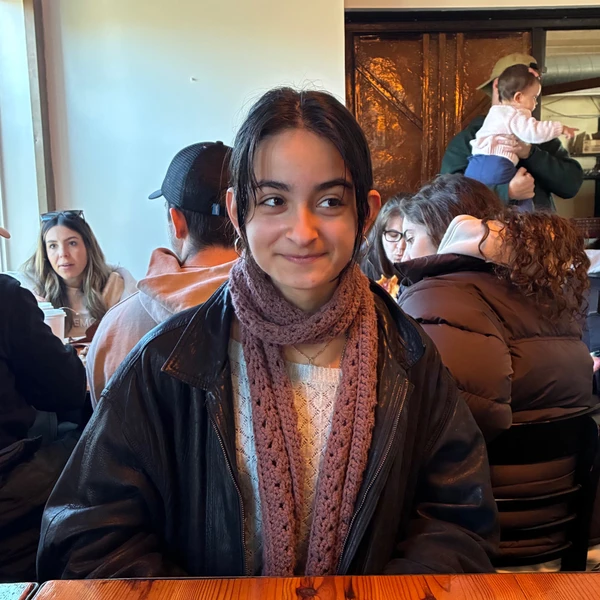
My name is Elise Kohli and I'm a high school senior who is looking to afford the egregious price tag of a liberal arts education. I am a sister, artist, and leader. Throughout my childhood, my family and I have grappled with my youngest brother's childhood Leukemia. After five years he's securely in remission! Because of that experience, I have discovered a tenacity I didn't know I had. When I think about my future I hope to work somewhere with artists, whether in a museum, at a publishing house or otherwise.
I am the Editor-in-Chief of The Enloe Eagle's Eye, my high school's newspaper and Stone Soup, my high school's literary magazine. I am a leader of the Teen Art's Council, the NC Museum of Art's board of teen volunteers. In the summers you can find me at Umstead State Park working as a camp counselor, skipping rocks in the creek. I love to play the guitar badly and sew.
Education
Enloe High
High SchoolMiscellaneous
Desired degree level:
Bachelor's degree program
Majors of interest:
- English Language and Literature, General
- Museology/Museum Studies
Career
Dream career field:
Publishing
Dream career goals:
Junior Counsler
Schoolhouse of Wonder2024 – 20262 years
Arts
NC Governors School (A state residential summer program)
Visual Arts2025 – 2025
Public services
Volunteering
Spanish Honor Society — Publicist2022 – PresentVolunteering
National Art Honor Society — Member2024 – PresentVolunteering
North Carolina Museum of Art — Co-Lead of the Teen Arts Council2023 – Present
Future Interests
Advocacy
Volunteering
Entrepreneurship
Justin Burnell Memorial Scholarship
All throughout elementary school, I was the type of kid who carried a chapter book in my backpack. I made sure to always carry complete series with me to class, lest there was any lull in instruction. I was always ready to jump back into whatever story I was immersed in at the time. It was only natural that I began to come up with my own stories. At home, I would draw comics in my notebooks. I’d create characters that, in some way, I wished to emulate. As a sixth grader, I wrote a short story about a squadron of airforce pilots, but I didn’t let anybody read it. It was about a steely and punk pilot named Devon, but that wasn’t the cause of my embarrassment. There was a minor character who was openly bisexual.
In hindsight, this fear of being “caught” with a queer character in my story came from the fear in my real life. There are plenty of kids' books that praise what makes us unique and “weird’. But “lesbian” felt too different to feel like something I could come back from. Even when I came out, I kept quiet about it. It wasn’t something to advertise. In eighth grade, I mentioned something relating to my sexuality offhandedly and the girl sitting next to me, someone I considered a friend, made a face. She said “Don’t hate me, but I don’t support that.” I remember I felt physically nauseous, and replied, “Don’t worry about it, I get it.” At that time, I had a community of other queer friends, but deep down it was evident how I felt; I was still too different.
This February, I wrote an article for my high school's newspaper spotlighting Black, female authors. I’d heard Audre Lorde’s name before, but as I started digging deep into her story and work, I felt something indescribable. I’ve read most of what Sylvia Plath has to offer. My end table has American poetry anthologies stacked too tall, but Lorde’s “Martha” easily surpassed them all. So rarely are the experiences and thoughts of someone like me given voice in poetry, much less in the overall media. Reading Lorde’s work instilled in me a sense of community, I was seen. Above that, I felt for the first time proud of my lesbian identity.
I didn’t grow up in an intolerant household, but any queer person knows that doesn’t stop the overarching stigma from affecting your relationship with your identity. But, I know the first step to undoing this internalized strife is through representation. If I had access to queer stories as a kid, maybe my queerness wouldn’t have always been something to “come to terms with,” but began as something to celebrate. I am dedicated to pursuing writing because I am dedicated to the power of representation. I am dedicated to the bookish elementary schooler who I know doesn’t have to grow up with the same feeling of isolation I did.
Redefining Victory Scholarship
Matthew E. Minor Memorial Scholarship
Nick came to camp with a reputation. A rock-throwing reputation.
Schoolhouse of Wonder is known locally as the only camp where children with special needs aren't asked to leave. As we sing in our Monday morning rules song, respect is our #1 rule, and it’s mutual. When a camper “acts out”, we ask why. So, when I witnessed a notorious Nick rock-throw, that was my first question.
Nick likes to throw rocks not to put others in danger, but because he loves football. He was eager to answer my questions about his position (linebacker), what he likes about it (running, catching), and what he doesn't (lack of throwing).
The next time Nick sent quartz flying, I provided a less destructive object in lieu of a football: a soft pinecone. I handed him leaves to halve during quieter times since I knew a sporty, energetic kid would respond to a fidget instead of repeated reprimanding. Soon, Nick began to pick up leaves to tear on his own, and these newfound strategies began reducing his disruptions. When Nick acted out, and subsequently got in trouble, his peers would laugh, or even avoid him. Singling him out in front of the group resulted in isolation every time. In taking the time to listen and connect with him, I gave Nick a chance to succeed.
That Friday, I was delighted to tell Nick’s family about the pinecone touchdowns he made, whereas at other camps, they might’ve heard more about timeouts. Instead of isolating him from his peers, I helped him engage with them. Creative problem-solving allows notorious rock-throwers to thrive in environments they otherwise couldn’t. Through respect, asking why, and reaching the root of an issue, I aim to create a more inclusive community.
This value of inclusion doesn’t stop at camp. Last year, as a lead of the Teen Arts Council at the NCMA, I oversaw meetings leading up to our final event, Teen Night. I reached out to collaborators, giving them a chance to join the community. That night wasn't about who won the scavenger hunt or who played the best indie rock. It was the knowledge each attendee left the museum with: there is a place for them. The council and I made that possible, and along the way, we created a place for ourselves.
As I enter higher education, my financial need is significant. My twin sister and I both plan on attending college, as well as my younger brother further in the future, doubling and tripling the tuition my family must afford. I hope to avoid student loans at all costs, and will rely on scholarships for most of my financial aid. Whatever my future looks like, I know I will continue to protect the members of my community and make intentional choices that lead to inclusivity.
Tawkify Meaningful Connections Scholarship
At the North Carolina Governor's School opening convocation, each instructor asks the auditorium full of fresh faced students an open-ended, philosophical question. This ceremony set the tone for the rest of the program; Governor’s School thrives on curiosity.
LJ, my Self and Society instructor, began our first class with a warning: this class was driven by student experience, it would only work if we ‘bought in’. I live in an urban bubble, but Governor’s School accepts students from across North Carolina. The diversity in our classroom was apparent from the voices alone. My classmates and I had different accents, backgrounds, and beliefs. To be vulnerable when I wasn’t sure how my peers would react was intimidating to say the least.
Each time LJ proposed a question to the class and was met with awkward silence, he would sit in it. Some silences lasted longer than others, but he waited through them all with a gentle smile on his face, unflinching in the uncomfortable quiet.
One afternoon, LJ hung up signs with different parts of individual identity written on each one. He asked which part of ourselves we felt the least comfortable discussing and told us to stand by the sign that correlated with our answer. I knew my answer immediately because it was the one I had been determined to avoid. When he asked for elaboration, the entire class was silent.
It was in that silence that I understood ‘buying in’ is uncomfortable. Honesty was the only way to turn our different backgrounds from an obstacle to a valuable opportunity, even though staying impersonal felt safer. I expected to be met with judgment, but hands began to raise after I broke the ice and shared why I felt discomfort with my queer identity. My peers standing by opposite signs found truth in what I’d said. Even Maddie— a girl from a small coastal town, who incorporated her Christian beliefs into every anecdote and who I was afraid would stop speaking to me after that class—told us how her faith guided her but also isolated her from her peers, similar to my sexuality.
When the session ended, LJ asked us what we’d take away from Governor's School. Maddie and I both said a more open mind. After our last class, LJ asked me to hang back. He explained to me that, at the closing convocation, each instructor selects one student to ask a question to the audience, mirroring the opening convocation. He asked me to take his place.
When LJ asked me to participate in the closing convocation, I was ecstatic. His belief in me meant the world, but what meant more was the way my friends had held back outside the door, waiting for me. They were genuinely excited for me when I told them what LJ had wanted, and I knew that I had, we all had, ‘bought in’.
Not only did LJ see us, he made it his mission to ensure we saw each other, too. Since returning from Governor's School, I’ve gone out of my way to connect with people I might have avoided before. I’ve sat in silence because I know sometimes that is what it takes to let somebody collect the courage to share, and what that person has to say is valuable. I’ve learned how to be vulnerable, and how this vulnerability is the key to a strong foundation of connection. Building real relationships takes courage, but the reward is always worth the risk. I thank LJ for the friendships I made at Governor's School, and I will continue to carry LJ's lesson no matter where I go.
Kristen McCartney Perseverance Scholarship
When I was three years old, my dad took me to the farmer's market to get donuts. Inside, we passed an oversized inflatable slide. I tried to drag him over, but we kept walking. As my dad tells it, he went to get napkins, and when he returned, I was gone. He found me, smiling, sliding down that slide. Even then, he says, I was determined to live life to the fullest, regardless of what stood in my way.
My brother was diagnosed with leukemia in 2017. My family shed any kind of familial roles and became a strange support system of people. I learned earlier than I should have that nothing is sure in life. I began to beg for piano lessons.
Creativity was my life force. I thrived in the warm timbre of my upright piano; my future, although vague, was decidedly in the arts. My childhood home contains countless cabinets dedicated to crafting, and under my bed, sketchbooks are stacked to the wall. In a pandemic spent behind a desk with my precious Ohuhu markers, I set my sights on UNCSA, an arts highschool in Winston-Salem. I wrote a letter to my sophomore self, when I would be eligible to apply. Her desperation was palpable in her handwriting alone; it was clear that art represented freedom.
Freshman year was a new chapter. Finally, I got to be 14 years old, without a pessimistic view of the world and a sardonic apathy toward kids who didn't understand what trauma meant. I realized I wasn't an all-knowing old soul, it was different. It didn't last. That spring, my brother had a recurrence.
Winston-Salem felt so far away, and responsibility to my family outweighed my promise to the middle school girl telling me to leave. In search of a middle ground, I applied to the NCMA Teen Arts Council.
Over my time on the council, I've led sketch activities, guiding attendees through the same galleries that inspired me as a tween. Last year, as Team Lead, I oversaw meetings preceding our biggest event of the year, Teen Night. I reached out to collaborators, giving other teen-led organizations a chance to join the community we were building. That night wasn't about who won the scavenger hunt or who played the best indie rock. It was about the knowledge each attendee left the museum with: that there is a place for them. The council and I made that possible, and because I stuck with it, we created a place for ourselves, too.
Art tells a story, and in my exhibitions, I will tell those stories that are too often left untold. As a museum professional, I hope to continue to promote inclusion and uplift young artists of all voices. I want to foster strong communities rooted in empathy, and I will use my education to continue to make spaces for those who might not have another place to belong. I know it won't be easy to challenge the status quo, but I'm ready. This isn't where I thought I'd be, but I owe it to the girl behind the desk, fascinated by the world and desperate to be a part of it. Art has been a constant in that endless toddle to the bouncy slide; it is the byproduct of experience, an ode to all of living. It is an art in itself to seek a path out in the face of adversity, the art of tenacity only forged through experience. I'll carry that for the rest of my life, lived on my terms if I have anything to do with it.