Hobbies and interests
Music
Advocacy And Activism
Resin Art
Electric Guitar
Drawing And Illustration
Sculpture
Drums
Singing
Advertising
Business And Entrepreneurship
Camping
Exploring Nature And Being Outside
Carpentry
Reading
Biography
I read books multiple times per month
Elijah Vanecek
1x
Finalist
Elijah Vanecek
1x
FinalistBio
I am a singer-songwriter from Grand Ronde, Oregon, and music has been the constant in a life often shaped by instability. My parents divorced when I was six weeks old, and I spent my childhood moving between two very different households. During difficult periods of my youth, including times of homelessness, music became both my refuge and my direction.
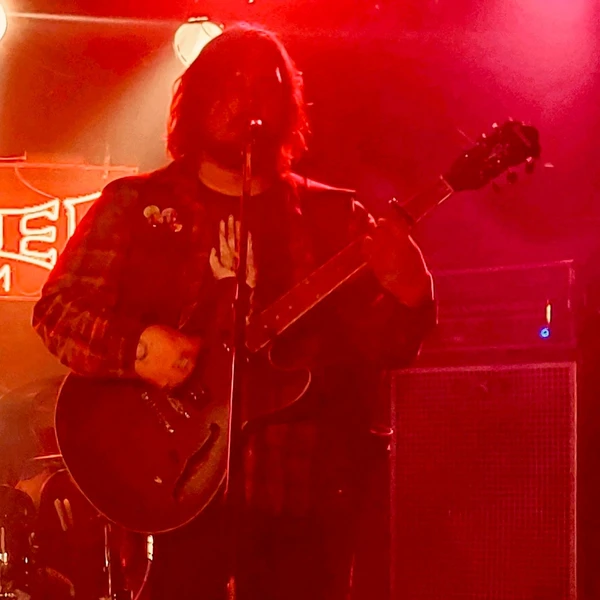
I began playing at a young age and eventually taught myself guitar, bass, piano, drums, and voice. At sixteen, I was featured as a solo artist on Portland’s KINK 101.9 FM during their “Unsigned and Unplugged” program. From 2018 to 2023, I was a founding member and manager of the folk-rock band The Lower Falls. Alongside writing and performing, I handled booking, promotion, and organization for the group. We performed at more than thirty venues across the West Coast, including the Whisky A Go-Go and The Viper Room, and recorded a live session at Jung Records with the personal studio engineer of the Whisky A Go-Go.
Despite these experiences, financial barriers have made pursuing higher education difficult. I will be a first-generation college graduate on both sides of my family, and education represents an opportunity to build stability and expand my future.
My goal is to deepen my knowledge of music and the creative industries while continuing to create meaningful work and contribute to my community through art.
Education
Clackamas Community College
Associate's degree programMajors:
- Music
Miscellaneous
Desired degree level:
Associate's degree program
Graduate schools of interest:
Transfer schools of interest:
Majors of interest:
- Music
- American Indian/Native American Languages, Literatures, and Linguistics
Career
Dream career field:
Music
Dream career goals:
To record and engineer an entire album, to play shows consistently, and make a living by touring and session recording.
Musician, performer, songwriter
The Lower Falls2018 – 20246 years
Arts
Self study
Music2013 – Present
Public services
Volunteering
Oregon food bank — Volunteer2011 – 2015
Future Interests
Advocacy
Volunteering
Learner Mental Health Empowerment for Health Students Scholarship
Mental health is not an abstract concept to me. It has shaped nearly every chapter of my life, especially my ability to learn, grow, and function as a student. I was diagnosed at eight years old with bipolar disorder and depression and was placed on an adult dosage of Abilify. At that age, I didn’t have the language to understand what was happening, only the weight of it. The medication made it difficult to think clearly, to feel present, and to engage with the world around me. For years, I moved through life in a fog. Alongside that came significant weight gain, which brought its own set of struggles—social isolation, damaged self-esteem, and a deep sense of disconnection from myself.
As I got older, my understanding of my mental health became more complex. I am now diagnosed with PTSD, borderline personality disorder, anxiety, and substance use disorder. There were years where I coped in ways that nearly cost me everything. But I reached a point where continuing down that path meant losing myself entirely.
Choosing higher education is, for me, an act of resistance. It is proof that I am not defined by my diagnoses or my past. It is structure, purpose, and a way forward. Music has been the other constant—a place where I can process, translate, and release what I carry. Between education and music, I’ve found something close to clarity. Not perfection, not a cure—but a place to stand.
Mental health matters to me as a student because I know what it costs when it’s ignored. It affects focus, motivation, relationships, and the ability to believe in your own future. Without stability, even the most capable person can struggle to succeed. With support, that same person can rebuild.
I advocate for mental health in my community by being honest about my experiences. I don’t hide where I’ve been. Whether it’s through conversations, music, or the spaces I help create, I try to make it clear that struggling doesn’t make you weak—it makes you human. I’ve organized and participated in community-based music spaces where people are encouraged to show up as they are, without judgment. These spaces often become informal support systems, especially for people who feel overlooked or alone.
I also lead by example. Staying committed to my education, maintaining my recovery, and continuing to create are all forms of advocacy. They show that healing is possible, even if it’s slow and imperfect.
Mental health isn’t something I can separate from who I am as a student. It’s the ground I had to learn to stand on before I could even think about moving forward. And now that I am moving forward, I intend to bring others with me, or at the very least, remind them they’re not walking alone.
Neil Margeson Sound Scholarship
Music has been the most constant force in my life. Long before I understood where I belonged in the world, I understood sound. It became both a refuge and a language through which I could make sense of difficult experiences. I began playing music at a young age and quickly gravitated toward learning multiple instruments, including guitar, bass, drums, and piano. Over time, music stopped being just a hobby and became the central path through which I developed discipline, creativity, and purpose.
Throughout my teenage years and early adulthood, I committed myself fully to performing and writing music. From 2018 to 2023 I was a member of the band The Lower Falls, where I served not only as a songwriter and performer but also helped manage the band’s logistics, promotion, and bookings. During that time we performed at dozens of venues across the West Coast, including historic stages such as the Whisky a Go Go and the Viper Room. Those experiences taught me how much work exists behind the scenes of music: collaboration, organization, communication, and persistence. They also reinforced my belief that music has the power to bring people together and create meaningful connections.
Music has also shaped my educational journey in a deeper way. Much of my life has involved navigating instability, including periods of homelessness and personal loss. During those times, music gave me structure when other parts of my life lacked it. Practicing, writing, and performing required focus, patience, and resilience—skills that now guide how I approach my education. Returning to school represents a new chapter for me, one where I can combine lived experience with formal training to grow both as an artist and as a professional.
My long-term goal is to build a sustainable career in music while also contributing positively to the communities that shaped me. I want to continue writing and performing original music, recording new material, and developing projects that create opportunities for other emerging artists. Education will allow me to strengthen my understanding of music production, performance, and the broader music industry so that I can navigate it more effectively and ethically.
Ultimately, music is more than a career goal for me. It is the tool that helped me rebuild my life, the way I connect with others, and the path through which I hope to create something lasting. By pursuing higher education, I am investing not only in my own future, but in my ability to use music as a force for connection, resilience, and creative expression.
Trudgers Fund
In February of 2022, within the span of just a few days, my partner died from an overdose in my arms. Shortly afterward, I admitted myself to detox. While I was there, the dog who had been my closest companion was killed while I was away. Standing in front of the mirror during that time, something inside me finally broke through the fog I had been living in. I realized that if I kept living the way I had been, the only thing waiting ahead of me was more loss. That was the moment I said to myself, “Enough.”
My struggle with addiction had started years earlier. I began drinking at a very young age, and over time, it progressed to marijuana, then heroin, and eventually fentanyl and methamphetamine. My addiction lasted on and off from the ages of fifteen to twenty-four. Much of it grew out of loneliness and instability. I experienced homelessness as a teenager and spent much of my life moving from place to place, rarely staying anywhere long enough to build real roots. Without consistent community or support, I felt completely alone for much of my youth. Substances slowly became the way I tried to escape that feeling.
Addiction gradually took everything from me. It pulled me away from the person I could have been and replaced it with a version of myself that was miserable, lost, and constantly running from reality. I often thought I had already hit the lowest point possible, but addiction has a way of showing you that there is always further to fall.
The losses I experienced in February of 2022 forced me to face my life honestly. Instead of sending me deeper into darkness, that moment gave me clarity. On February 2, 2022, I chose to get sober, and I have remained sober since that day.
Recovery has not been simple or easy, but it has been built one step at a time. Small choices matter. Asking for help. Trying even when things feel uncertain. Reaching for connection instead of isolation. Those choices have slowly reshaped my life.
Music has also played a major role in my recovery. As a Native artist with Tututni, Cowlitz, and Iroquois heritage, storytelling and creative expression have always been powerful ways to process hardship and connect with others. Performing music gave me a way to rebuild my sense of purpose and find community again. It reminded me that even painful experiences can be transformed into something meaningful when they are shared honestly.
Pursuing higher education now represents a turning point in my life. I will be the first person in my family, on either side, to graduate from college. For me, this milestone represents more than personal success. It represents survival, growth, and the chance to build a future that once felt impossible.
My goal is to use my education to help people who are struggling with addiction, homelessness, and isolation—especially young people who feel like they are navigating life alone. Addiction thrives in isolation, but recovery grows through connection. If my journey can help even one person believe that change is possible, then the path I have walked will have served a greater purpose.
Sobriety gave me my life back, and education will give me the tools to help someone else reclaim theirs.
Marshall and Dorothy Smith Music Scholarship
Music has been central to my life for as long as I can remember. I was raised in a musical household where my mother, a piano player and vocalist, introduced me to the emotional depth of music at an early age. By the time I was eight years old, I had begun teaching myself instruments and eventually learned guitar, bass, drums, piano, and voice. What started as curiosity grew into a lifelong commitment to songwriting, performance, and creative expression.
From 2018 to 2023, I was a core member of the band The Lower Falls. During those five years, I took on both creative and leadership responsibilities within the group. I contributed to songwriting and musical direction while also managing the band’s operations, including booking shows, coordinating promotion, organizing recordings, and handling much of the communication and logistics that keep an independent band functioning. Taking on these roles gave me a clear understanding of the discipline, organization, and persistence required to build something in the music industry.
As a band, we performed extensively across the West Coast, playing at more than 30 venues. Among those performances were shows at two historic Los Angeles venues, the Whisky A Go-Go and The Viper Room. Performing in spaces with such deep musical history was a major milestone for us as developing artists and gave us valuable experience performing in professional environments.
One of the most meaningful opportunities we had came when we were invited to record a live studio session at Jung Records by the personal studio engineer for the Whisky A Go-Go. Working in that environment allowed us to experience the professional recording process more deeply and to collaborate with someone with years of industry experience. That same engineer later went on to host live sound at the 2024 Grammy Awards, which makes that experience especially memorable.
While music has given me incredible opportunities, my path has also been shaped by significant challenges. I have experienced long periods of homelessness throughout my life, including years during my adolescence and early adulthood. Stability was often uncertain, and music was often the one constant I could carry with me wherever I went. Those experiences made me more resilient and self-reliant, but they also showed me how difficult it can be to build a stable future without access to education and resources.
Returning to college represents an important turning point in my life. I will be a first-generation college graduate on both sides of my family, which means a lot to me. Higher education represents more than a degree; it represents an opportunity to build long-term stability and create a future that was not always available to me growing up.
After completing my degree, I plan to continue building my career as a songwriter and performing artist while also expanding into music production and recording. My goal is to create high-quality recordings of my own work while eventually helping other independent artists develop and capture their sound. I am especially interested in supporting artists from underserved backgrounds who may not always have access to professional creative spaces.
At this point, funding is the primary barrier standing between me and completing my education. Scholarships and financial support would enable me to focus on my studies and continue building a path forward. With the opportunity to complete my degree, I intend to combine my real-world music experience with formal training to build a sustainable career and contribute meaningfully to the creative communities that shaped me.
James B. McCleary Music Scholarship
Before I understood what safety felt like, I understood sound.
Before I understood family, I understood music.
My parents divorced when I was six weeks old. Before I could form memories, my life had already split into two separate worlds. For as long as I can remember, I have moved back and forth between my mother’s home and my father’s home several times a year. My childhood was measured in car rides, packed bags, and doorways that never quite felt permanent.
My father was an angry man, hardened by life and guided by a harsh philosophy about how a boy should be raised. In his mind, strength came through pressure and discipline. Sensitivity was something to be corrected, not protected.
Moving constantly between two completely different households was confusing and painful for a child trying to understand where he belonged.
For years, I endured abuse at the hands of my step-grandfather. The physical and sexual abuse I experienced during those years left me wounded.
My safe place became music.
Part of that connection began with my mother. She was a pianist and vocalist, and she was one of my earliest musical inspirations. Some of my first memories revolve around the sound of her piano late at night. She once told me that when I was about three years old, she would sit down to play, and I would crawl underneath the piano. I would curl my entire body beneath it, pressing myself against the baseboards, and cry while the music vibrated through the wood above me.
Looking back, sound has always been the way I understand the world.
Even rhythm lived inside me before I ever touched an instrument. My mother remembers hearing clicking and clacking sounds when I was very young. She would follow the noise and find me somewhere with two sticks in my hands, drumming along to a rhythm that only existed in my head.
Then, when I was nine years old, I found the guitar.
The moment I picked it up, something inside me settled into place. The guitar could carry rhythm like drums, but also melody and emotion. It gave me a way to release fear, anger, and confusion long before I had the words to describe them.
Outside of music, life remained unstable. Poverty followed us closely, and we moved constantly. Every new town meant another school where I was the outsider again. Isolation became familiar.
As I grew older, my connection to music deepened into discipline. I devoured records, liner notes, interviews, and biographies. While other kids memorized sports statistics, I memorized albums. I studied bands, producers, and recording histories until I had become a walking encyclopedia of rock and roll.
Looking back now, I understand why.
Music gave me what my childhood often could not. It gave me safety, language, and identity. When the world felt chaotic, music gave me structure. When I felt invisible, it gave me a voice.
Music did not erase what I lived through, but it kept those experiences from defining my life.
From the vibration of my mother’s piano to the guitar I first picked up, music has always carried me forward.
Before I understood what safety felt like, I understood sound.
Now, through music, I finally understand both. And I want nothing more than to share this gift I was given and maybe give someone who struggles in similar ways the beautiful, unending, astounding world that is the gift of music, My HOME.
With peace x love x empathy,
Elijah Blake