user profile avatar

Elijah Anderson

1x

Finalist

Bio

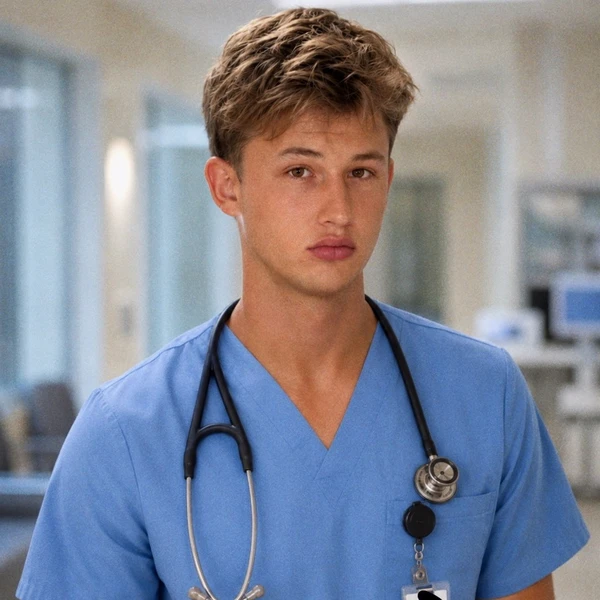
I grew up without a safety net — unstable housing, family addiction, cluster-B dynamics, and complex trauma. Today I'm a PRN MHT floating between Adult Inpatient Psychiatry and Inpatient Geri-Psych at a local hospital, and an accelerated LPN bridge student at my local community nursing college. My goal is becoming a Psychiatrist and founding an income-based counseling center — a diverse team of mental health professionals ensuring underserved communities have real access to healing. My clinical passions: Jungian Psychology, Internal Family Systems, DBT, and EMDR.

Education

National Park College

Trade School
2026 - 2027
  • Majors:
    • Practical Nursing, Vocational Nursing and Nursing Assistants
Miscellaneous

  • Desired degree level:

    Doctoral degree program (PhD, MD, JD, etc.)

  • Graduate schools of interest:

    • University of Arkansas for Medical Sciences
    • Columbia College (CA)
  • Transfer schools of interest:

  • Majors of interest:

    • Practical Nursing, Vocational Nursing and Nursing Assistants
    • Registered Nursing, Nursing Administration, Nursing Research and Clinical Nursing
    • Research and Experimental Psychology
    • Medicine
    • Clinical, Counseling and Applied Psychology
  • Planning to go to medical school
  • Career

    • Dream career field:

      • Medical Practice
    • Dream career goals:

      My goal is becoming a Psychiatrist and founding an income-based counseling center — a diverse team of mental health professionals ensuring underserved communities have real access to healing. My clinical passions: Jungian Psychology, Internal Family Systems, DBT, EMDR and a blend of Eastern and Western Philosophies.

    • Ranch Hand, Wild Game Caretaker

      Morgan Creek Concrete Co.
      2016 – 20182 years
    • CNA

      Nursing Home
      2024 – 20251 year
    • Mental Health Tech + Certified Nurse Aid

      National Park Medical Center
      2025 – Present1 year

    Sports

    Archery

    Intramural
    2010 – 20144 years

    Soccer

    Varsity
    2016 – 20182 years

    Mixed Martial Arts

    Intramural
    2010 – 202010 years

    Arts

    • Wedding + Event Photographer [Freelance]

      Videography
      2013 – Present

    Public services

    • Volunteering

      Rose Heights Media — Livestream Director, On Set Directors Assistant
      2013 – 2018

    Future Interests

    Advocacy

    Volunteering

    Philanthropy

    Entrepreneurship

    Harry & Mary Sheaffer Scholarship
    Empathy is not something I learned in a classroom. It is something I learned from surviving. I am a first-generation college student in every meaningful sense — no family member guided me through applications, no parent explained financial aid, no relative had a connection at a university who could open a door. I navigated all of it alone, while managing housing instability, a demanding hospital job, and the kind of personal history that does not leave much room for error. There was no safety net and no roadmap. There was only the decision, made over and over again, to keep going. That background is not a liability. It is my greatest clinical asset. I work as a Mental Health Technician floating between Adult Inpatient Psychiatry and Inpatient Geri-Psych at a local Arkansas hospital, and I am currently enrolled in a Practical Nursing certificate program working toward my LPN. My patients are overwhelmingly from marginalized communities — people experiencing homelessness, poverty, addiction, trauma, and mental illness, often all at once. I do not observe their suffering from a distance. I understand it from the inside. When a patient tells me the system has failed them, I believe them immediately and completely, because I have lived a version of that story myself. That quality — the ability to genuinely believe someone's pain without requiring them to prove it — is rarer in healthcare than it should be. I intend to carry it everywhere my career takes me. My plan is to become a Psychiatric Mental Health Nurse Practitioner, specializing in trauma-informed care using modalities like EMDR, Internal Family Systems, and Dialectical Behavior Therapy. Beyond clinical practice, I am working toward founding an income-based counseling and therapy center staffed by a diverse team of mental health professionals — a place built specifically for the people most likely to be turned away everywhere else. Underserved communities. Low-income individuals. People without insurance, without family support, without anyone in their corner. Building a more empathetic global community does not begin with grand gestures. It begins with one provider who refuses to see a patient as a diagnosis, one clinician who asks the question behind the question, one person in the room who makes someone feel genuinely seen. I am training to be that person professionally. I have been practicing being that person my entire life. First-generation students do not just bring ambition to higher education. We bring perspective that cannot be taught. I intend to spend my entire career putting mine to work. Best Regards, Elijah Philip Anderson, MHT + Enrolled & Accepted Nursing Student
    Robert F. Lawson Fund for Careers that Care
    Some people choose careers in healthcare because they are drawn to the science. I chose it because I know what it feels like to need help and not receive it. My goal has always been and will always be to show others love, speak truthfully, walk with integrity and be the person younger me needed as a young man. I grew up without a safety net — unstable housing, family addiction, complex trauma, and caregivers who could not care for themselves. There was no professional who intervened, no system that caught me, no one who looked past the chaos to see someone worth investing in. I learned early that the people who need the most support are consistently the ones with the least access to it. That gap did not make me bitter. It made me purposeful. Today I work as a Mental Health Technician at a local Arkansas hospital, floating between Adult Inpatient Psychiatry and Inpatient Geri-Psych. I am also enrolled in a Practical Nursing certificate program working toward my LPN — the first step in a longer journey toward becoming a Psychiatric Mental Health Nurse Practitioner. I earn under $20,000 a year, have no family financial support, and am navigating housing instability while putting myself through school. Every dollar of scholarship support makes a direct, concrete difference in whether I can stay enrolled and focused. Robert Lawson retired from military service and kept serving anyway — because for some people, helping others is not a job description. It is a way of being. I recognize that in myself. My shifts do not end when I clock out. I carry my patients with me. I think about the unhoused man in acute psychosis who had no one to call. The elderly woman with dementia who cried every night because she forgot where she was. The teenager in crisis who just needed someone to sit with them without flinching. I do not look away from those moments. I move toward them. My long-term goal is to found an income-based counseling and therapy center — a place where underserved communities have genuine access to mental healthcare regardless of income, insurance status, or ZIP code. The professionals I want to build that with are people like me: those who came from the communities they serve and understand from the inside what it means to be turned away. Robert Lawson understood that the mission does not stop. Neither does mine. Best Regards, Elijah Philip Anderson, MHT + Current Nursing Student
    Bill E. Wood Memorial Scholarship
    My grandfather was a Marine sniper during the Korean War. He came home, but not whole — a grenade took his eyesight, and he spent the rest of his life in darkness. He never made much of it. He did not speak about it constantly or use it to define himself. He simply continued living, continuing showing up, continuing being present for the people around him despite carrying something most of us will never fully understand. I think about him often when I clock into my shift. I work as a Mental Health Technician at a local Arkansas hospital, floating between Adult Inpatient Psychiatry and Inpatient Geri-Psych. My patients are some of the most vulnerable people in our community — individuals in acute mental health crises, elderly patients with dementia and late-life depression, people who have been failed by every system that was supposed to protect them. It is not glamorous work. Some shifts are grueling in ways that are hard to describe. But I show up, because someone has to, and because my grandfather taught me without ever saying a word that service is not about conditions or comfort. It is about commitment. He gave his sight for this country. The least I can do is give my time and presence to the people in my community who need someone to stand beside them. I am currently enrolled in a Practical Nursing certificate program, working toward my LPN licensure as the first step toward becoming a Psychiatric Mental Health Nurse Practitioner. I grew up navigating instability, complex trauma, and circumstances that could have easily pulled me under. What kept me oriented was an early understanding — shaped in part by watching my grandfather live with grace inside tremendous loss — that hardship does not excuse you from responsibility to others. If anything, it qualifies you for it. Bill Wood sounds like a man who understood that. A veteran, a minister, a man who gave hope in difficult situations and positive encouragement daily — his life was a sustained act of service across nearly nine decades. I may be at the very beginning of mine, but I am building it on the same foundation: showing up for people who are struggling, offering presence where others offer absence, and refusing to let my own difficult history become a reason to look away from someone else's pain. My grandfather lost his eyes in Korea and still found ways to see what mattered. I carry that with me into every shift, every patient interaction. Every step forward in my nursing education. Service is not something I do. It is something I come from. Best Regards, Elijah Philip Anderson, MHT + Nursing Student
    Calvin C. Donelson Memorial Scholarship
    Calvin Donelson believed that if you could envision it, you could build it. That belief resonates deeply with me — because practical nursing is exactly that kind of work. It is not theoretical. It is hands-on, skill-based, and built through practice, repetition, and an unwavering commitment to doing the job right. It is a trade in every meaningful sense of the word. I am currently enrolled in a Practical Nursing certificate program at my local community nursing college, working toward my LPN licensure. I also work as a Mental Health Technician in Adult Inpatient Psychiatry and Inpatient Geri-Psych at a local hospital — meaning I am not just studying this craft, I am already living it daily. Like Calvin in his barbershop, I show up for people at their most vulnerable, in their most difficult moments, and I take that responsibility seriously. I did not come from a background that pointed me toward success. I grew up navigating unstable housing, family addiction, and complex trauma without a safety net or anyone to model what a stable future could look like. What I had instead was a deep, early understanding of human suffering — and an equally deep need to do something meaningful with it. Healthcare became my answer. Not because it was handed to me, but because I chose it, pursued it, and refused to let my circumstances decide my ceiling. Calvin mastered carpentry and barbering not through a university lecture hall but through dedication, repetition, and pride in his craft. Nursing is no different. Every IV, every assessment, every moment of genuine human connection with a frightened patient is a skill built through practice. My instructors, my patients, and my coworkers are my apprenticeship. The hospital floor is my workshop. What inspires my journey is both personal and professional. Personally, I know what it means to need care and not receive it — to be a person the system overlooked. Professionally, I am driven by a long-term vision: to become a Psychiatric Mental Health Nurse Practitioner and eventually found an income-based counseling center where underserved communities have real access to mental healthcare. But that vision starts here, with this certificate, with these clinical hours, with learning the fundamentals of the craft the right way. Calvin believed anyone could accomplish their goals regardless of the path they chose. He lived that truth as a Master Craftsman and Master Barber. I am living it as a nursing student and mental health worker who built something from very little. His legacy is a reminder that the path matters less than the integrity and dedication you bring to it. I am bringing both. Best Regards, Elijah Anderson, MHT/CNA
    Catrina Celestine Aquilino Memorial Scholarship
    Personal Statement — Catrina Celestine Aquilino Memorial Scholarship I grew up without a safety net. Unstable housing, family addiction, complex trauma, and caregivers who could not care for themselves shaped my earliest years. There was no one to advocate for me, no system that caught me, and no professional who looked past the chaos to see a child worth investing in. I learned early that access to help — real help — is not equally distributed. Some people are born into safety. Others have to build it from scratch, for themselves and eventually for others. I am building mine in healthcare. Today I work as a Mental Health Technician floating between Adult Inpatient Psychiatry and Inpatient Geri-Psych at a local hospital, and I am currently enrolled as an accelerated LPN bridge student at my community nursing college. Every shift I work, I see the same pattern Catrina Aquilino recognized in her legal career: the people who need the most support are consistently the ones with the least access to it. My patients — many unhoused, many uninsured, many from communities that have been failed by every system they encountered — deserve providers who understand that context. I believe I am becoming one of those providers. My long-term goal is to become a Psychiatric Mental Health Nurse Practitioner. I am drawn specifically to trauma-informed care and modalities like EMDR, Internal Family Systems, Dialectical Behavior Therapy, and Jungian Psychology — approaches that treat people as whole persons with histories, not just diagnoses to be managed. My own experience navigating complex PTSD has given me insight into what it feels like to sit on the other side of the clinical relationship, wondering whether the person across from you truly sees you. I intend to be someone who does. Beyond clinical practice, my vision is to found an income-based counseling and therapy center staffed by a diverse team of mental health professionals. The model is simple and, I believe, revolutionary in its simplicity: no one turned away because of what they cannot afford. The communities I want to serve — low-income individuals, LGBTQ+ youth, survivors of abuse and neglect, people without family support systems — are precisely the communities most likely to go without mental healthcare entirely. That is not a gap I am willing to accept. Reading about Catrina, I was struck by her belief that where a person was born or which family they came from would never determine whether she would show up for them. That principle is the foundation of everything I am working toward. I did not come from the right family or the right circumstances. I came from the kind of circumstances that break people — and instead they clarified my purpose. I want to build the kind of care I never had access to and make sure others do not have to wait as long as I did to find it. Best Regards, Elijah Philip Anderson, MHT