user profile avatar

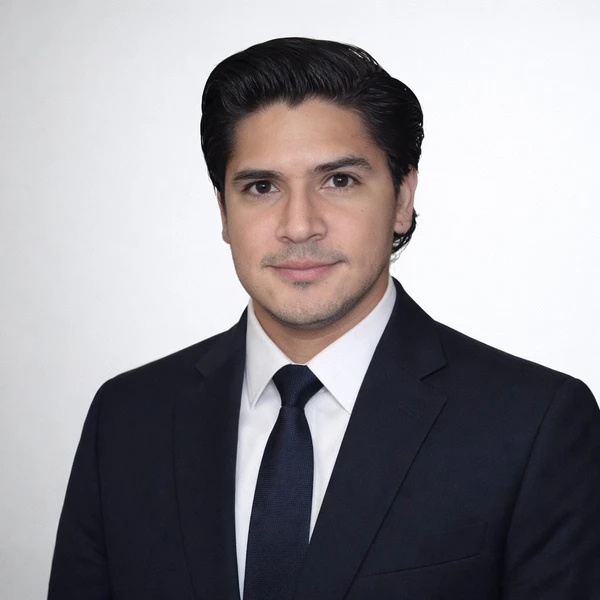
Edwin Brown

1x

Finalist

Bio

I'm a U.S. Army veteran, a first-generation college student, and a father of three boys. I was born in Honduras and grew up watching my parents work hard without ever getting a degree themselves, so finishing college wasn't just a goal for me, it was personal. I served four years in the Army as a Water Treatment Specialist, stationed at Fort Drum and Fort Lee, and deployed to Poland in support of NATO operations. After being medically retired, I came home with a 100% service-connected disability and a whole new set of challenges I didn't expect. Adjusting to civilian life wasn't easy, but I leaned into education because it was the one thing I could control. Since then, I've earned an Associate's in Accounting, a Bachelor's in Business Administration from the College of Staten Island, and a Master's in Public Administration from John Jay College of Criminal Justice, where I graduated with a 3.8 GPA. Now I'm pursuing a Master of Science in Information Systems at Baruch College's Zicklin School of Business. My goal is to combine everything I've learned across technology, public administration, and business into a leadership career that actually makes systems work better for the people who depend on them, especially veterans and underserved communities. I've managed multimillion-dollar budgets, led teams under pressure, and navigated bureaucracies that most people would walk away from. I want to be the person who fixes the systems instead of just surviving them. When I'm not studying or chasing my kids around, I'm figuring out how to build something my sons can be proud of.

Education

CUNY Bernard M Baruch College

Master's degree program
2026 - 2027
  • Majors:
    • Management Information Systems and Services
CUNY John Jay College of Criminal Justice

Master's degree program
2022 - 2024
  • Majors:
    • Public Administration

College of Staten Island CUNY

Bachelor's degree program
2018 - 2021
  • Majors:
    • Business Administration, Management and Operations

Jefferson Community College

Associate's degree program
2016 - 2018
  • Majors:
    • Accounting and Related Services

Miscellaneous

  • Desired degree level:

    Master's degree program

  • Graduate schools of interest:

  • Transfer schools of interest:

  • Majors of interest:

    • Management Information Systems and Services
    • Public Administration
  • Not planning to go to medical school
  • Career

    • Dream career field:

      • Information Technology and Services
    • Dream career goals:

      Lead technology and operations strategy at the director level, bridging IT systems, public administration, and business management to improve how government agencies and organizations serve veterans and underserved communities.

    • Water Treatment Specialist (92W)

      U.S. Army
      2017 – 20214 years

    Public services

    • Volunteering

      Fort Drum Military Community — Veteran Mentor
      2025 – Present

    Future Interests

    Advocacy

    Volunteering

    Philanthropy

    Entrepreneurship

    Christian Fitness Association General Scholarship
    The first time I sat in a graduate classroom after leaving the Army, I could not stop scanning the room. Every door, every window, every person who shifted in their seat registered as something my brain needed to track. I had spent years in the military where that instinct kept people alive. In a lecture hall at Baruch College, it just kept me from hearing the professor. That was the beginning of understanding that the challenge I faced in school was not academic. It was learning how to exist as a student when my mind and body were still wired for a world I had left behind. I served in the United States Army for years, leading teams in high-pressure operations, managing multimillion-dollar budgets, and making decisions that affected dozens of soldiers. I was good at it. The structure, the clarity of mission, the accountability all made sense to me. When I separated from the military with a Total Permanent Disability rating for service-connected PTSD and ADHD, I thought the hardest part was over. I was wrong. The transition to civilian life came with a kind of silence I was not prepared for. No chain of command. No briefings. No one telling me what the objective was for the day. For someone with ADHD, the absence of structure was paralyzing. For someone with PTSD, the quiet spaces where my mind could wander were not peaceful. They were dangerous. I would sit with a textbook open for hours and absorb nothing, not because I lacked the ability, but because my brain was busy replaying things I did not want to remember. I enrolled at the College of Staten Island and earned my Bachelor of Business Administration. Then I completed a Master of Public Administration at John Jay College of Criminal Justice. Each degree taught me something beyond the coursework. It taught me how to build my own structure when no one else was providing it. I learned that I needed to break my study time into focused intervals because long sessions caused my ADHD to spiral. I learned that sitting near the door in a classroom helped my PTSD stay manageable rather than overwhelming. I learned that asking for help was not weakness. It was strategy. By the time I started my current program, a Master of Science in Information Systems at Baruch College's Zicklin School of Business, I was also navigating something new. I was a father of three boys. My oldest, Ethan, is seven and already curious about computers. Valentino is six and full of energy that mirrors my own. Enzo, my youngest, turned one in February 2025. My wife Dayana holds our family together with a patience I am still trying to learn from. Balancing graduate coursework with raising three young children while managing PTSD and ADHD is not something I would describe as simple. There are nights when I am reviewing database optimization concepts after spending the evening helping Ethan with homework and getting Enzo to sleep. There are mornings when my ADHD medication has not kicked in yet and I have a paper due by noon. There are moments when the weight of it all makes me want to quit. I have not quit. My GPA is 3.823. That number does not tell the whole story, but it tells an important part of it. It tells you that I show up. It tells you that I have figured out, through years of trial and error, how to manage the invisible challenges that come with being a disabled veteran in a classroom full of students who do not carry the same weight. What I have learned from this challenge is that resilience is not a single dramatic moment. It is a daily practice. It is choosing to open the laptop instead of closing the door. It is driving to campus when every part of you wants to stay home. It is telling your seven-year-old that Papi has to study tonight but will play tomorrow, and then actually playing tomorrow. I am pursuing information systems because I want to build technology that serves people the way I wish technology had served me during my transition. Veterans navigating the VA system, immigrants trying to access services in a new country, families in underserved communities who need better tools to manage their lives. I know what it feels like to be lost in a system that was not designed with you in mind, and I want to change that. This scholarship would reduce one of the many barriers I face. Financial pressure is real, especially for a family of five living on veteran benefits and student loans. Every dollar of support means one less thing pulling my attention away from the work I am here to do. I did not come to school because it was easy. I came because I believe that the same discipline that kept me alive in the Army can help me build something meaningful in the civilian world. The challenge I faced was learning to be a student again when everything in my history told me I was something else. I overcame it by refusing to let that history define the limits of what I could become.
    Tawkify Meaningful Connections Scholarship
    The first time my son Ethan asked me why I was always staring at a textbook instead of playing with him, I didn't have a good answer. He was four then, too young to understand that his father was fighting two wars at once: one against the limits of a GI Bill stretched thin, and another against the nightmares that followed him home from deployment. But Ethan's question did something no professor or therapist ever could. It forced me to connect my education to something real, to a person standing three feet tall, looking up at me with total trust. I am a father of three boys (Ethan, Valentino, and Enzo) and a husband to Dayana, the woman who held our family together when my PTSD made me want to disappear. Every relationship in my life has become a compass for my professional goals, not because those relationships are simple, but because they are urgent. When I enlisted in the U.S. Army at twenty-six, I was already a father and an immigrant from Honduras trying to build something permanent in a country that felt temporary. The military taught me that connection is not a luxury. It is infrastructure. In my unit, trust between soldiers was the difference between a mission completed and a mission failed. I carried that lesson into my career in public administration, where I managed multimillion-dollar budgets and supervised teams that depended on clear communication and mutual accountability. But it was my family that taught me the deeper lesson: that professional goals without personal roots are just ambition with no direction. After my honorable discharge, I came home with a Total Permanent Disability rating, a diagnosis of PTSD and ADHD, and three children who needed a father who was present, not just physically, but emotionally. Dayana became my anchor during the hardest transition of my life. She didn't let me retreat. She reminded me, sometimes gently and sometimes not, that the man she married was still in there somewhere, and that our sons deserved to see him. That accountability, born from love and not obligation, is what pushed me to pursue my Master of Public Administration at John Jay College, where I graduated with distinction. And it is what drives me now as I pursue a Master of Science in Information Systems at Baruch College. My goal is to build technology systems that serve veterans, immigrants, and underserved communities, populations I belong to, populations my family belongs to. Every system I study, every database I design, every workflow I optimize is connected to a face. Ethan's face when he asks me what I'm building. Valentino's curiosity when he watches me work. Enzo's tiny hand gripping my finger while I read case studies at midnight. These are not distractions from my professional life. They are the reason it exists. I have also learned that relationships extend beyond blood. My professors at Baruch, my fellow veterans in student groups, the caseworkers who helped my family navigate SNAP and Medicaid: these connections formed a web of support that no amount of individual talent could replace. In a world that increasingly measures success by independence, I have found that my greatest achievements came from interdependence. When I graduate, I want to create information systems that make government services more accessible to people who have been overlooked. I want to build bridges between data and humanity, the same way Dayana built a bridge between the soldier I was and the father I needed to become. Relationships are not a chapter in my story. They are the spine of the book. Every professional goal I set is a promise to someone I love, and every connection I build is an investment in a future where my sons can look at their father and see proof that showing up for the people who matter is the most powerful thing a person can do.
    Learner Calculus Scholarship
    The first time I truly understood calculus was not in a classroom. It was during my years in the U.S. Army, standing in a supply warehouse, trying to predict how quickly our unit would burn through critical resources during a deployment cycle. I did not call it calculus at the time. I called it "keeping people alive." But the concept was the same: rates of change, optimization under constraints, and making decisions with incomplete data. Calculus, at its core, is the mathematics of change. And in every STEM field, understanding change is not optional. It is essential. In my current graduate program at Baruch College, where I am pursuing a Master of Science in Information Systems, calculus shows up in ways most people would not expect. Machine learning algorithms rely on gradient descent, a process rooted in derivatives, to minimize error and improve predictions. Database optimization uses cost functions that mirror the same principles I first encountered in integral calculus. Even cybersecurity risk modeling depends on probability distributions built on calculus foundations. What makes calculus uniquely important in STEM is that it bridges the gap between observation and prediction. Algebra tells you what is. Statistics tells you what was. Calculus tells you what will be, and how fast it is getting there. That predictive power is what separates a STEM professional who reacts from one who anticipates. Consider something as routine as network traffic analysis. Without calculus, an IT professional can see that a server is slowing down. With calculus, that same professional can model the rate of traffic increase, identify the inflection point where the system will fail, and intervene before a crash happens. The difference between those two outcomes is the difference between downtime and continuity, between lost revenue and operational stability. I have seen this principle play out beyond technology as well. During my military service, I managed multimillion-dollar budgets across complex logistics operations. Every decision involved rates of change: how quickly supplies depleted, how funding allocation shifted quarter to quarter, how personnel needs scaled with mission demands. The officers and analysts who understood these patterns made better decisions. The ones who did not were always playing catch-up. Calculus also teaches a way of thinking that STEM demands. It trains you to break massive, overwhelming problems into infinitely small, manageable pieces, and then rebuild them into solutions. That mental discipline carries over into software development, systems architecture, data science, and engineering. It is not just a math skill. It is a problem-solving framework. As a first-generation college student, a veteran, and a father of three, I understand what it means to navigate complexity with limited resources. Calculus gave me a language for that experience. It taught me that change is not something to fear. It is something to measure, model, and master. For any student entering a STEM field, calculus is more than a prerequisite on a transcript. It is the foundation that every other technical skill is built on. Without it, you are guessing. With it, you are engineering solutions. That distinction matters. In STEM, in service, and in life.
    Elijah's Helping Hand Scholarship Award
    There is a particular kind of silence that comes after a nightmare. Not the peaceful kind. The kind where you are sitting upright in bed at two in the morning, heart pounding, sheets soaked, and you cannot remember where you are. Fort Drum. Your bedroom. Your wife is asleep beside you. Your one-year-old is in the next room. You are safe. But your body does not believe you. I served in the United States Army as a Water Treatment Specialist from 2017 to 2021, stationed at Fort Drum, New York. I deployed overseas. I earned an honorable discharge and came home with two things I did not expect: post-traumatic stress disorder and attention deficit hyperactivity disorder. Together, they have reshaped every part of my life. PTSD does not announce itself on a schedule. It arrives in the middle of a lecture at Baruch College, where I am pursuing my Master of Science in Information Systems. A door slams in the hallway, and suddenly I am not in a classroom anymore. My professor is explaining database architecture, but I am somewhere else entirely. By the time I come back, I have missed ten minutes of material that I will spend two hours trying to reconstruct from the textbook. ADHD makes that reconstruction nearly impossible. My concentration fractures. I read the same paragraph four times and open my laptop to take notes only to find myself staring at a blank document twenty minutes later. The impact on my education has been measurable. I earned my Master of Public Administration from John Jay College of Criminal Justice with Distinction, carrying a 3.823 GPA, but every grade point cost me twice the effort it cost my classmates. I developed systems to compensate. I record lectures. I break assignments into fifteen-minute blocks. I study in the same chair at the same table at the same time every day because routine is the only defense I have against the chaos in my own mind. These are not study tips. They are survival strategies. The impact on my family is harder to quantify. I am a father of three boys. Ethan is seven, Valentino is six, and Enzo is one. There are days when Ethan asks me to help with his homework and I have to step out of the room first because my frustration threshold has been compressed to nothing by a day of fighting my own brain. I come back. I always come back. But my sons should not have to wait for their father to regulate himself before he can sit beside them at the kitchen table. Mental health has also shaped my financial reality. My service-connected disability provides monthly compensation, but it exists because something is genuinely broken. My family receives SNAP and Medicaid. These conditions do not exist in isolation. They affect earning capacity, academic performance, family stability, and long-term planning. What I have learned is that perseverance is not about willpower. It is about infrastructure. I built mine piece by piece. A therapist who understands veterans. A wife who knows what the bad days look like. A degree program that gives me a clear professional path where I can build tools that help communities like mine. Every morning I get up and choose the plan over the paralysis. Some mornings that choice takes five minutes. Some mornings it takes an hour. But I make it every single day, because three boys are watching, and I want them to see a father who did not let the hardest thing about him become the only thing about him.
    Ruthie Brown Scholarship
    The first time I logged into my student loan account after receiving my Total Permanent Disability discharge from the VA, the balance read zero. For a moment, I just stared at the screen. That number had followed me for years, growing quietly while I served at Fort Drum, while I navigated PTSD and ADHD after my honorable discharge, while I tried to figure out what came next for my family. Seeing it disappear should have felt like freedom. Instead, it felt like a warning. Because I knew I was heading back to school, and I was determined not to let that number climb again. I am a graduate student in the Master of Science in Information Systems program at Baruch College, CUNY. I am also a father of three boys, ages seven, six, and one. My wife and I receive SNAP and Medicaid. Our adjusted gross income last year was thirteen thousand two hundred dollars from a small business I run while attending school. My Student Aid Index is negative fifteen hundred. The math is clear. Every dollar of tuition I cannot cover with scholarships or grants becomes debt that my family cannot afford. My strategy for addressing future student loan debt starts with prevention. I have committed to an aggressive scholarship application process, applying to every opportunity that fits my background and goals. In a single session, I submitted twenty scholarship applications across multiple platforms, targeting awards for veterans, BIPOC students, first-generation college students, and students with disabilities. I treat scholarship applications the way I treated mission planning in the Army. I identify the objective, assess my resources, execute with discipline, and do not stop until the task is complete. Beyond scholarships, I leverage every benefit available to me. My VA disability rating provides a monthly stipend that covers basic living expenses without adding to my tax burden. I chose Baruch College, a public institution within CUNY, specifically because the tuition is significantly lower than private alternatives while the program quality is nationally recognized. Every decision I make about my education runs through a cost-benefit analysis. I also work. My Schedule C business income is modest, but it exists because I refuse to rely entirely on benefits or borrowed money. I manage my workload carefully around my class schedule and my responsibilities as a father. Some semesters that means working more. Some semesters that means applying to more scholarships. The constant is that I am always doing something active to keep debt from accumulating. The hardest part of this strategy is not the work. It is the focus. PTSD and ADHD make sustained concentration difficult. There are mornings when filling out one more application feels impossible. But I have learned something about myself through four years in the Army and five years of navigating life after service. I do not need motivation to show up. I just need a plan and a reason. My three sons are the reason. The plan is simple. Graduate debt-free. Build a career in information systems that will give my family stability. Show my boys that their father did not just survive hard circumstances but outworked them. I am not asking anyone to solve my financial problems. I am asking for partners in a strategy that is already in motion. Every scholarship I receive is one less loan I will never have to take, one less payment that will never compete with groceries or rent. That is how I am addressing my student debt. One application, one decision, one day at a time.
    Learner Mental Health Empowerment for Health Students Scholarship
    There is a version of me that wakes up at 0500 and executes every task before my three sons open their eyes. That version exists on good days. On bad days, I sit on the edge of the bed for twenty minutes, convincing my body that the house is safe, that the sounds outside are just wind, that there is no reason for my heart to pound before sunrise. I am a United States Army veteran with service-connected PTSD and ADHD. I served four years at Fort Drum, New York, completed a foreign deployment, and received an honorable discharge. The Army gave me discipline, purpose, and an Army Achievement Medal. It also gave me a nervous system that does not know the war is over. When I enrolled in graduate school, I expected the coursework to be the hardest part. I was wrong. The hardest part is showing up consistently when your brain fights you every morning. PTSD makes concentration feel like holding water in your hands. ADHD makes prioritization feel like sorting sand. Together, they mean every assignment requires twice the effort it should. I completed my Master of Public Administration at John Jay College of Criminal Justice with a 3.823 GPA and graduated with Distinction, not because the challenges disappeared, but because I learned to work alongside them. Now I am pursuing a Master of Science in Information Systems at Baruch College, and mental health remains the invisible variable in my academic life. Some weeks I produce work that makes me proud. Other weeks I cannot open my laptop without feeling overwhelmed. The difference is not intelligence or motivation. It is whether my mental health is cooperating. This is why mental health matters to me as a student. It is not a wellness poster on a campus wall. It determines whether I can be the father, student, and professional I am capable of being. My three sons, Ethan, Valentino, and Enzo, are watching. When I push through a hard week, I teach them that struggle does not mean failure. When I ask for help, I teach them that strength includes honesty about your limits. My advocacy lives in the spaces where veterans and students intersect. I speak openly about PTSD and ADHD because silence keeps other veterans from seeking help. When a fellow veteran tells me they want to go back to school but worry they cannot handle it, I tell the truth: it is hard, your brain will fight you, and you can still succeed. Veterans do not respond to sugarcoating. They respond to honesty from someone who has been there. I also advocate through my career path. I am studying information systems to build technology that connects veterans and underserved communities to mental health resources. The VA system is difficult to navigate on a good day. For a veteran in crisis, it feels impossible. I want to design platforms that simplify access and meet people where they are instead of forcing them through bureaucratic mazes when they are already struggling. Mental health is the foundation everything else is built on. My education, my fatherhood, my future career all depend on managing what my service left behind. I am not ashamed of that. I am motivated by it.
    Future Green Leaders Scholarship
    The first time I saw real waste was not in a landfill. It was in a government office in Honduras, where my mother stood in a line that wrapped around the building, holding a folder of papers that had already been submitted three times. Every duplicate form, every redundant trip, every hour spent waiting for a system that could not find her records represented a kind of waste that nobody talks about when they discuss sustainability -- the waste of human time, institutional energy, and public resources caused by inefficient information systems. I am pursuing a Master of Science in Information Systems at Baruch College because I believe that sustainability in the public sector begins with smarter technology. My field sits at the intersection of business operations and digital infrastructure, and it has enormous untapped potential to reduce environmental impact. Every paper form that becomes a digital workflow eliminates printing, mailing, and physical storage. Every database that connects agencies reduces redundant data collection and the energy required to process duplicate requests. Every well-designed platform that allows citizens to access services online eliminates thousands of car trips to government offices each year. This is not theoretical for me. During my four years in the United States Army at Fort Drum, New York, I managed multimillion-dollar equipment budgets and saw firsthand how outdated tracking systems led to over-ordering, waste, and unnecessary resource consumption. When inventory records lived in disconnected spreadsheets instead of integrated databases, units ordered supplies they already had. Equipment sat unused in warehouses while other units requisitioned replacements. The environmental cost of manufacturing, shipping, and storing redundant materials was staggering, and it was entirely preventable with better information architecture. After my honorable discharge, I completed a Master of Public Administration at John Jay College of Criminal Justice, graduating with Distinction. That program taught me how public organizations operate and where their systems break down. Now, at Baruch, I am learning how to build the technology that fixes those breakdowns. My career goal is to design information systems for government agencies that serve veterans, immigrants, and low-income families -- and I want sustainability to be embedded in every system I build. The future I envision is one where a veteran applying for disability benefits, a family enrolling in SNAP, or an immigrant filing paperwork can complete every step from a single digital platform. No duplicate forms. No unnecessary office visits. No paper records sitting in filing cabinets consuming physical space and resources. A centralized, efficient system reduces the carbon footprint of public service delivery while simultaneously making those services more accessible to the people who need them most. Sustainability should be a priority in information systems because technology touches every sector. A single well-designed digital platform can eliminate more paper waste than a recycling program, reduce more transportation emissions than a carpool initiative, and conserve more energy than switching to LED bulbs in one building. The leverage is extraordinary. I grew up watching my mother navigate systems that wasted her time and the government's resources. I served in an Army that wasted materials because its databases could not communicate. I am building a career to ensure that the next generation of public systems is lean, connected, and sustainable by design. The greenest future is not just about clean energy. It is about clean information.
    New Beginnings Immigrant Scholarship
    I was eight years old the first time I understood what it meant to start over. My family moved from Honduras to the United States, and overnight, everything I knew disappeared -- my neighborhood, my friends, the sounds of my street, the language everyone around me spoke. I arrived in Hollywood, Florida, speaking only Spanish, clutching a backpack that held everything familiar I had left. The classroom was loud and fast. The teacher's words blurred together. I did not raise my hand for months. What nobody told me then was that starting over would become a pattern. Every time I thought I had found stable ground, the world shifted again. My family moved between Honduras and the United States multiple times throughout my childhood, and each crossing meant rebuilding -- new schools, new friendships, new rules. I learned early that home was not a place. It was something you carried inside yourself and rebuilt wherever you landed. By the time I graduated from MacArthur High School in 2007, I had developed the survival skill that defines my life: adaptability. I enrolled at the College of Staten Island, earned my Associate in Accounting and then my Bachelor of Business Administration, all while working and navigating systems that were never designed for someone like me. English was my second language. Nobody in my family had attended college in the United States. Every form, every financial aid application, every advising meeting required me to translate not just words, but entire worlds. In 2017, I enlisted in the United States Army. Some people saw it as an unexpected choice for an immigrant from Central America. I saw it as the most American thing I could do -- commit to something larger than myself. I served four years as a Water Treatment Specialist at Fort Drum, New York, earned an Army Achievement Medal and a Humanitarian Service Medal, managed multimillion-dollar equipment budgets, and led teams in high-pressure environments. The Army gave me discipline and purpose. It also gave me PTSD. After my honorable discharge in 2021, I faced the hardest restart of all. I was a disabled veteran with a service-connected condition, a father of young children, and a man trying to figure out who he was outside of uniform. Instead of retreating, I leaned into education. I completed my Master of Public Administration at John Jay College of Criminal Justice, graduating with Distinction and a 3.823 GPA. Now I am pursuing my Master of Science in Information Systems at Baruch College. My career aspiration is specific and personal. I want to build information systems that help immigrants and veterans navigate government services. I have stood in both lines -- the immigration office and the VA waiting room -- and I know how broken those systems are. The paperwork is confusing, the databases are disconnected, and the people who need help the most are the least equipped to fight through the bureaucracy. I want to change that. Every new beginning in my life prepared me for this work. The boy who could not raise his hand in an American classroom is now a graduate student designing the systems that will make sure the next family does not have to struggle alone. Starting over taught me that resilience is not about surviving one hard thing. It is about choosing to build something meaningful every single time the ground shifts beneath you.
    Bulkthreads.com's "Let's Aim Higher" Scholarship
    The first time I stood in front of a government office in Honduras as a teenager, I watched my mother struggle to understand paperwork that would determine whether our family could access basic services. The forms were confusing, the process was opaque, and nobody seemed willing to help. Years later, after serving four years in the U.S. Army at Fort Drum and navigating the VA system as a disabled veteran with PTSD and ADHD, I realized that broken information systems hurt the people who need them most. What I want to build is a bridge -- an information systems infrastructure that connects underserved communities to the government services they deserve. That is exactly why I am pursuing my Master of Science in Information Systems at Baruch College after completing my MPA with Distinction at John Jay College of Criminal Justice. During my military service, I managed multimillion-dollar budgets and led teams responsible for critical operations. I saw firsthand how efficient systems save lives and how inefficient ones create unnecessary suffering. When I returned to civilian life, I carried those lessons with me. Now, as a father of three young boys, I carry something even more powerful: urgency. My sons -- ages seven, six, and one -- deserve to grow up in a country where their father built something that matters. The system I envision would streamline how veterans, immigrants, and low-income families access benefits, healthcare referrals, and educational resources. Right now, these communities navigate a maze of disconnected databases, outdated websites, and overwhelmed caseworkers. I have lived on both sides of that maze. I grew up between Honduras and the United States, speaking Spanish before English, and I have filed paperwork as both an immigrant family member and a decorated soldier. I understand the frustration from every angle. My community at Fort Drum and across Northern New York includes thousands of military families and immigrant workers who face these exact challenges. Building a centralized, user-friendly platform that connects them to resources would reduce wait times, eliminate redundant applications, and restore dignity to the process of asking for help. This scholarship would directly support my ability to focus on coursework in database management, systems design, and data analytics -- the technical skills I need to turn this vision into reality. Every dollar that reduces my financial burden gives me more hours to study, more energy to show up for my children, and more momentum toward a career that serves others. I am not building something abstract. I am building the system I wish existed when my mother stood in that government office, when I sat in a VA waiting room, and when my neighbors searched for resources they could not find. Higher education is my foundation, and with it, I intend to aim higher than survival. I intend to build something that lasts.
    Julie Holloway Bryant Memorial Scholarship
    My first language is Spanish. I was born and raised in Honduras, where Spanish was the only language I knew growing up. Every conversation at home, every lesson in school, and every interaction in my community happened in Spanish. When my family moved to the United States, I was thrust into an English-speaking world with almost no preparation. I remember sitting in classrooms where I could not follow the teacher, struggling to read assignments that might as well have been written in code, and feeling isolated because I could not express myself to the other students around me. Learning English was not a gradual, comfortable process. It was survival. I listened carefully, repeated phrases I heard on television, and practiced with classmates who were patient enough to slow down for me. At home, I became the translator for family members who needed help at doctor's appointments, parent-teacher conferences, and government offices. At twelve or thirteen years old, I was interpreting medical instructions and filling out official paperwork because I was the one in the family who could navigate both languages. That responsibility shaped me. It taught me that language is not just communication. It is access. The challenges of being bilingual followed me into adulthood. When I enlisted in the U.S. Army at eighteen, I had to prove myself in an environment where clear, precise English was essential. Writing reports, briefing superiors, and following technical procedures in my second language required constant effort. There were moments when I doubted whether my English would ever feel natural enough to compete at the level I wanted. But I pushed through four years of active duty at Fort Drum, earned the Army Achievement Medal and Humanitarian Service Medal, and completed a foreign deployment, all while operating in my second language every single day. After my honorable discharge, I carried that same determination into higher education. I earned a Master of Public Administration from John Jay College of Criminal Justice, graduating with Distinction and a 3.823 GPA. Writing graduate-level research papers, presenting policy analyses, and defending arguments in academic English challenged me in ways that monolingual students may never fully understand. Every paper I submitted represented twice the cognitive work, thinking first in Spanish, then translating my ideas into precise academic English. Now I am pursuing a Master of Science in Information Systems at Baruch College, with an expected graduation in 2028. My goal after graduation is to build information systems that improve government operations, particularly in agencies that serve veterans and immigrant communities. Growing up bilingual gives me a perspective that most technologists lack. I understand what it feels like to encounter a system that was not built with your language in mind, and I want to change that. The benefits of being bilingual extend beyond professional goals. Spanish connects me to my roots in Honduras, to my family, and to a cultural identity that I carry with pride. It allows me to communicate with Spanish-speaking veterans, families, and community members who deserve to be heard in their own language. In public service, that ability is not a bonus. It is a necessity. Being bilingual has never been easy, but it has made me sharper, more resilient, and more empathetic. Every challenge I faced because of language taught me something that no textbook could. I do not see my bilingualism as an obstacle I overcame. I see it as the foundation of everything I have built.
    Learner Online Learning Innovator Scholarship for Veterans
    When I transitioned out of the U.S. Army after four years of active duty at Fort Drum, I knew I wanted to continue my education, but the path forward was not straightforward. I was honorably discharged with a service-connected disability, and as a father of three young children, sitting in a traditional classroom on a rigid schedule was not always possible. Online platforms and digital tools became the foundation of my academic success. During my Master of Public Administration program at John Jay College of Criminal Justice, I relied heavily on the CUNY virtual library system, JSTOR, and Google Scholar to access research on public finance, organizational management, and government accountability. These tools allowed me to conduct deep research from home while my youngest son slept in the next room. I graduated with Distinction and a 3.823 GPA, and much of that achievement came from being able to study on my own terms using digital resources that were available around the clock. Now, as a graduate student in the Master of Science in Information Systems program at Baruch College, online tools are even more central to my learning. I use platforms like Coursera and LinkedIn Learning to supplement my coursework in database management, systems analysis, and data analytics. When a classroom lecture introduces a concept I need to explore further, I turn to YouTube tutorials and Stack Overflow discussions to see how professionals apply those skills in practice. Python documentation, GitHub repositories, and interactive coding environments like Jupyter Notebook have helped me bridge the gap between theory and application. One of the most significant ways online learning has supported me is through flexibility. Living with PTSD and ADHD means that some days are harder than others. There are mornings when focus comes easily and evenings when concentration is a struggle. Online platforms let me structure my study sessions around my mental health, not against it. I can pause a lecture, revisit a module, or work through a coding exercise at my own pace without falling behind. That flexibility is not a luxury for me. It is a necessity. Beyond coursework, I have used online tools to develop practical skills that connect directly to my career goals. I want to build information systems that improve government operations, particularly in agencies that serve veterans and low-income communities. Using Tableau Public, I have practiced creating data visualizations that make complex budget information accessible to non-technical stakeholders. Through free SQL courses online, I have strengthened my ability to query and manage large datasets, a skill I plan to bring into public sector technology roles. As a first-generation college student who grew up between Honduras and the United States, I did not have family members who could guide me through higher education. Online communities filled that gap. Forums, study groups, and mentorship platforms connected me with other veterans and graduate students who understood the challenges of balancing school, family, and service-connected disabilities. These connections reminded me that I was not navigating this journey alone. Online learning has not replaced the classroom for me. It has expanded it. It has given me the tools to compete at the graduate level, the flexibility to manage my health and family responsibilities, and the confidence to pursue a career where technology meets public service. Every resource I access online brings me one step closer to building systems that make government work better for the people who need it most.
    Lotus Scholarship
    Growing up between Honduras and the United States, I learned early that financial stability was never guaranteed. My parents worked hard but never attended college, and there was no roadmap for higher education in my family. When I joined the U.S. Army at eighteen, it was both a path to serve and a way to build something from nothing. After four years of active duty, I was honorably discharged with a service-connected disability. Transitioning to civilian life as a father of three young sons while living on limited income forced me to make difficult choices every day. My family qualifies for SNAP and Medicaid, and our Student Aid Index is negative. Yet I refused to let financial hardship define our future. I earned a Master of Public Administration from John Jay College of Criminal Justice, graduating with Distinction and a 3.823 GPA. I am now pursuing a Master of Science in Information Systems at Baruch College because I believe technology can strengthen the public institutions that serve families like mine. My goal is to build systems that improve government accountability and efficiency, particularly in agencies that support veterans and low-income communities. I have managed multimillion-dollar budgets in military and government settings, and I want to bring that discipline to the technology side of public service. Every semester requires balancing tuition against childcare and household needs. But I keep going because my children are watching. I want them to see that where you start does not determine where you finish, and that education is the most reliable bridge between struggle and stability.
    Ethel Hayes Destigmatization of Mental Health Scholarship
    Living with PTSD as a United States Army veteran has shaped nearly every part of who I am today. It has changed the way I see my future, the way I connect with the people I love, and the way I understand the struggles that so many others carry in silence. PTSD is not just a diagnosis written in a file. It is something that settles into a person's life in ways that are hard to explain to someone who has never lived through it. It can show up in the middle of the night when sleep should bring peace. It can appear in a sound, a smell, a flash of memory, or a quiet moment that suddenly does not feel quiet at all. Trauma has a way of leaving fingerprints on the mind, the heart, and the body. It can make the world feel unfamiliar, and it can make ordinary days feel heavier than they should. I also manage ADHD, which compounds those difficulties. Together, these conditions affect my focus, my motivation, and my ability to stay consistent. There are days when the weight of what I experienced in service makes it difficult to concentrate on assignments or stay engaged in coursework. Transitioning from a structured military environment to civilian academic life required me to rebuild routines from scratch, often without the built-in support systems the Army provided. My experience with mental health has directly shaped my academic and career goals. I am currently pursuing a Master of Science in Information Systems at Baruch College, City University of New York, after earning a Bachelor of Business Administration from the College of Staten Island and a Master of Public Administration from John Jay College of Criminal Justice. My military service showed me how operations succeed or fail based on the quality of information flow and leadership decisions. Living with PTSD and ADHD taught me that the systems meant to support people, especially veterans, are often broken or hard to access. I want to change that. My goal is to use technology and management expertise to build better systems that help veterans and underserved communities access the support they deserve. Mental health has also reshaped my relationships, especially as a father. I am raising three boys, and making sure they see a man who finishes what he starts is one of my strongest motivations. There are days when PTSD makes it hard to be fully present, when the weight of the past pulls me away from the moment. But fatherhood has given me a reason to keep fighting. I want my sons to know that struggling does not mean failing and that asking for help is not weakness. Being a present and involved father who models discipline and perseverance is how I fight back against what trauma tries to take from me. My experience with mental health has also changed how I understand the world around me. I am bilingual in English and Spanish, and I use that to help fellow veterans and military families navigate educational resources and benefits they may not know are available. Having moved between cultures and countries throughout my life, I understand what it feels like to need guidance and not know where to turn. I have learned that many people carry pain in silence because they do not know where to go or who to trust. That understanding drives me to share what I have learned with others walking a similar path. We are not the worst things that happened to us. Scars are not chains. Real strength is having the courage to face what is broken and do the work to heal. Hope is not pretending the pain is not real. Hope is deciding that pain does not get the final word. With effort, with endurance, and with a real goal ahead, life can still become something greater than what hurt you. That is what I believe, and that is why I keep going.
    John Acuña Memorial Scholarship
    I served in the United States Army in roles focused on administrative leadership, fiscal operations, and logistics management. During my service, I supervised large teams and managed multimillion-dollar budgets, gaining experience in records management, finance, and compliance across multiple duty stations, including assignments connected to Fort Drum, New York. My responsibilities demanded precision, accountability, and the ability to lead under pressure. The Army gave me a foundation built on discipline, integrity, and an unwavering commitment to mission accomplishment. Those years shaped how I approach every challenge I face today. My current education goal is to complete my Master of Science in Information Systems at Baruch College, City University of New York. I have already earned a Bachelor of Business Administration from the College of Staten Island and a Master of Public Administration in Operations and Management from John Jay College of Criminal Justice. My military service directly shaped these goals by showing me how critical efficient systems and sound management are to any organization. In the Army, I saw firsthand how operations succeed or fail based on the quality of information flow, data management, and leadership decisions. I want to bring that same operational mindset into the civilian sector, using technology and management expertise to improve how organizations serve people. As a veteran, I have faced challenges that go beyond the academic. I live with PTSD, which affects my focus, motivation, and ability to stay consistent. There are days when the weight of what I experienced in service makes it difficult to concentrate on assignments or stay engaged in coursework. I also manage ADHD, which compounds those difficulties. Transitioning from a structured military environment to civilian academic life required me to rebuild routines from scratch, often without the built-in support systems the Army provided. Balancing graduate studies with fatherhood has added another layer of complexity. I am a father of three boys, and making sure they see a man who finishes what he starts is one of my strongest motivations. Financial pressure is constant, and the cost of education does not pause for personal struggles. Despite all of this, I continue to show up and push forward because I refuse to let my hardest days define my future. I believe that service does not end when the uniform comes off. I support my community by being a present and involved father who models discipline and perseverance for my three sons every day. I use my bilingual skills in English and Spanish to help fellow veterans and military families navigate educational resources and benefits they may not know are available to them. Having moved between cultures and countries throughout my life, I understand what it feels like to need guidance and not know where to turn. I make it a point to share what I have learned with others walking a similar path. Whether it is helping someone understand the GI Bill process, encouraging a fellow veteran to pursue higher education, or simply being available to listen when someone is struggling, I try to give back in ways that matter. My goal is to use my education and experience to serve veterans and underserved communities through leadership in information systems and public service, building better systems that help people access the support they deserve.
    Bryent Smothermon PTSD Awareness Scholarship
    More Than What Happened to Me PTSD is not just a diagnosis written in a file or a word people throw around when they want to describe pain. It can show up in the middle of the night when sleep should bring peace. It can appear in a sound, a smell, a flash of memory, or a quiet moment that suddenly does not feel quiet at all. Trauma has a way of leaving fingerprints on the mind, the heart, and the body. It can make the world feel unfamiliar, and it can make ordinary days feel heavier than they should. That is the hard truth. But it is not the whole truth. For those of us who carry trauma, the struggle is real, and pretending otherwise helps no one. There are days when everything feels dark, when the future looks distant, and when simply making it through the day feels like a battle. Falling can happen. Breaking down can happen. Losing your way for a while can happen. But even that is not the end of the story. What matters is that a person can rise again. I know that because I have had to do it myself. I have fallen. I have known what it is to look at the horizon and see more gloom than light. And still, I got back up. Not because it was easy. Not because I had all the answers. Not because pain magically disappeared. I got back up because something inside me refused to die. Something in me kept saying that my life would not be reduced to my worst experiences. That belief matters. In fact, it changes everything. We are not the worst things that happened to us. We are not the sum of our wounds. We are not permanently trapped inside the darkest chapter of our lives. Yes, trauma can leave scars, but scars are not the same thing as chains. A scar tells the truth that something painful happened. It does not mean the future has been canceled. That is why I tell other veterans who are dealing with PTSD to get help. Go to the hospital. Reach out. Speak up. Do not carry it alone as if suffering in silence makes you stronger. It does not. Real strength is having the courage to face what is broken and do the work to heal. Real strength is asking for support when pride tells you not to. Real strength is choosing to fight for your future even when your past keeps trying to drag you backward. I believe with all my heart that there is more in us than we sometimes see in ourselves. There is more discipline, more purpose, more resilience, and more power waiting to be claimed. There are still goals to chase, still ground to take, still victories to earn. There is still a version of each of us that has not yet been fully built. And that is where hope lives. Hope is not pretending the pain is not real. Hope is deciding that pain does not get the final word. Hope is getting up one more time. Hope is putting effort behind your future. Hope is choosing purpose over surrender. With effort, with endurance, and with a real goal in front of you, life can still become something greater than what hurt you. The past may have shaped part of the journey, but it does not own the destination. We are still capable of rising into people we have not even fully imagined yet. And that, more than anything, is why we keep going.