
Hobbies and interests
Ethics
Business And Entrepreneurship
History
Reading
Biography
Business
History
I read books multiple times per week
Ebonee Bryant
1x
Finalist1x
Winner
Ebonee Bryant
1x
Finalist1x
WinnerBio
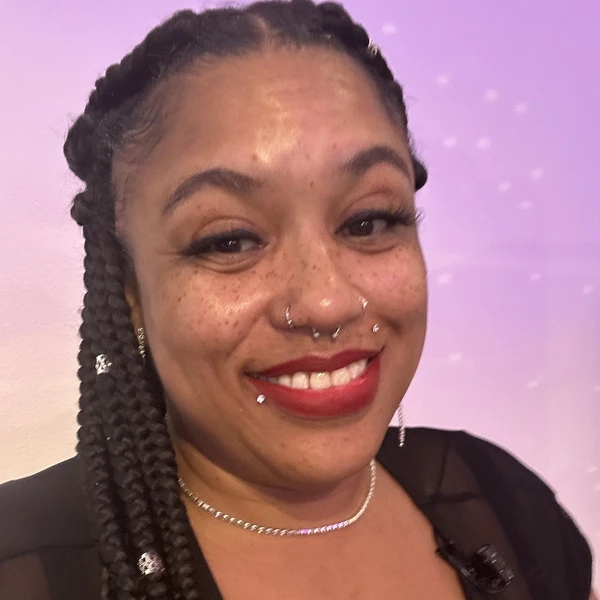
Ebonee Nicole Bryant is a community advocate, nonprofit leader, and business student dedicated to advancing literacy, equity, and family well-being. She is a mother of six boys, a wheelchair user, and a Read 360° Council member with Turn the Page KC, where she works to promote literacy access and community-based resources.
Currently completing her associate degree in Business, Ebonee plans to continue her education and pursue a career in the nonprofit sector. Her long-term goal is to open and own a day shelter that provides a safe, supportive space, centering the voices of the community to understand better and address literacy needs.
Despite navigating a brain injury that impacts memory, Ebonee remains committed to academic excellence and leadership. Her lived experience fuels her passion for inclusive, culturally responsive solutions that empower individuals and families to thrive.
Education
Johnson County Community College
Associate's degree programMajors:
- Business, Management, Marketing, and Related Support Services, Other
Miscellaneous
Desired degree level:
Bachelor's degree program
Graduate schools of interest:
Transfer schools of interest:
Majors of interest:
Career
Dream career field:
Non-Profit Organization Management
Dream career goals:
My long-term goal is to open and own my own day shelter, where I can provide a safe, supportive space and connect individuals and families to the resources they need to thrive.
Council Leader
Turn the Page KC/ Read 360°2022 – Present4 years
Public services
Advocacy
Turn the Page KC/ Read 360° — Council Leader2022 – Present
Future Interests
Advocacy
Volunteering
Philanthropy
Entrepreneurship
Simon Strong Scholarship
Adversity has been a constant teacher in my life, shaping not only who I am but how I see the world and the people in it. One of the most defining challenges I have faced was learning how to rebuild my life after a traumatic injury that permanently changed my mobility and affected my memory. Overnight, tasks I once took for granted became obstacles, and the future I had imagined no longer looked the same.
In the beginning, the adversity felt overwhelming. I had to grieve the loss of my independence while still showing up every day as a mother, a student, and a woman determined not to be defined by her limitations. Navigating physical barriers, memory challenges, and societal assumptions about disability tested my confidence and resilience. There were moments of frustration and self-doubt, especially when I felt I had to work twice as hard just to be seen as capable.
I overcame this adversity by refusing to give up on myself. I learned to advocate for my needs, ask for help without shame, and develop systems that supported my success. I leaned into education as a tool for empowerment, returning to college and committing myself to maintaining strong academic performance despite cognitive challenges. I also surrounded myself with people who believed in me, reminded me of my worth on hard days, and pushed me to keep going when quitting felt easier.
This adversity shaped me into someone deeply empathetic and resilient. It taught me patience, humility, and the importance of adaptability. I learned that strength is not about doing everything alone, but about knowing when to lean on others. My experiences have also fueled my passion for service and advocacy. I now approach leadership and community work with cultural intelligence and compassion, understanding that everyone carries invisible battles. What once felt like a setback has become the foundation for my desire to create inclusive spaces and support systems for others facing hardship.
The greatest lesson adversity taught me is that progress does not have to be perfect to be meaningful. Some days, simply showing up is a victory. I learned to measure success not by comparison to others, but by my own growth and perseverance.
To anyone facing similar circumstances, my advice is this: do not let your adversity convince you that your story is over. It is simply being rewritten. Permit yourself to grieve what you’ve lost, but do not lose sight of what remains. Advocate for yourself boldly, build routines that work for you, and never underestimate the power of consistency over time. Most importantly, remember that your value is not diminished by your challenges. Sometimes, the very thing that tries to break you becomes the reason you are able to lift others.
Kim Moon Bae Underrepresented Students Scholarship
Being an African American woman has shaped every part of my life, from my earliest memories to the way I navigate adulthood, education, and community work. My identity has been both a source of challenge and a source of strength. It has shown me the realities of systemic barriers while teaching me resilience, advocacy, and the importance of lifting others as I rise.
Growing up, I quickly learned that opportunities were not always equally accessible to people who looked like me. From education to healthcare to community resources, I often had to fight to be seen, heard, and valued. That awareness shaped my understanding of the world and ignited in me a determination to not only succeed but also to create opportunities for others. I knew early on that my journey would be different, and that difference would demand persistence, courage, and resourcefulness.
My identity has become even more significant as I have become disabled. Navigating a world that is not always accessible, both physically and socially, has given me a unique perspective on exclusion and inequity. During COVID, I was placed in a nursing home where I experienced firsthand how easily systems can fail those who are already marginalized. I had to advocate not only for myself but for fellow residents who were underfed and dismissed. That experience solidified my commitment to using my voice to fight injustice, to speak up when others cannot, and to lead with empathy.
Being a mother of six has further shaped my path. Raising children while managing my disability has required creativity, resilience, and patience. It has reinforced the importance of education, opportunity, and community support; not just for my family but for all families facing systemic challenges. My lived experiences allow me to understand the struggles of marginalized communities intimately, and they inspire me to work toward solutions that are both practical and transformative.
This identity also fuels my educational and professional goals. I am pursuing higher education to strengthen my ability to advocate, lead, and implement programs that support underserved communities. My ultimate goal is to open a day shelter that serves families in crisis, offering resources, dignity, and hope. Being African American and having faced systemic inequities firsthand informs every decision I make in this journey. I bring cultural awareness, empathy, and lived experience into my work, ensuring that solutions are not only effective but inclusive and equitable.
My identity as an African American woman has taught me that challenges are not roadblocks; they are opportunities to develop resilience, voice, and leadership. It has shown me the power of advocacy, the importance of education, and the need for compassion in community building. As I move forward, I am committed to using my experiences and perspective to create systems that empower others, particularly those who are marginalized. My identity does not define my limitations; it defines my purpose and drives me to build a better future for my children and my community.
Harry & Mary Sheaffer Scholarship
My greatest talents are not something you will find on a résumé. They were shaped through survival, motherhood, disability, and community leadership. I have learned how to listen deeply, how to speak with purpose, and how to translate pain into action. These skills allow me to move through different spaces with empathy and cultural awareness, which is exactly what the world needs right now.
Becoming disabled changed how I see people. It forced me to slow down and truly notice how systems and attitudes affect those who are often ignored. I learned what it feels like to be spoken over, underestimated, and made invisible. That experience taught me how powerful it is to be seen and heard, and it gave me a deep commitment to making sure others feel that same dignity. Whether I am working with families, nonprofit leaders, or community members, I bring that awareness into every conversation.
As a mother of six boys, I have also developed strong communication and emotional intelligence skills. I am constantly navigating different personalities, needs, and challenges, and that has taught me patience, conflict resolution, and compassion. Raising children in today’s world requires understanding how to talk about hard topics like identity, fairness, and responsibility. These are the same skills needed to build bridges between cultures and communities on a global scale.
Through my work with Turn the Page KC and the Read 360° Literacy Council, I use my leadership and organizational skills to bring people together around shared goals. Literacy, safety, and education are universal needs. When people come together to support children and families, they begin to see each other not as strangers, but as partners. I have learned how to create spaces where people feel welcome, respected, and heard, even when they come from different backgrounds.
I also bring cultural intelligence into everything I do. Understanding that people’s behaviors, fears, and values are shaped by their lived experiences allows me to approach conflict and misunderstanding with curiosity instead of judgment. This is essential in a global community where people are often divided by race, disability, income, and culture. I work to model respectful dialogue, active listening, and inclusive leadership so that others feel safe enough to share their stories.
In the future, I plan to use my education in business and nonprofit leadership to build programs and community spaces that promote empathy in action. Whether through a day shelter, educational workshops, or community partnerships, I want to create environments where people are not just served, but understood. I want families, especially those who are marginalized, to feel that they belong and that their voices matter.
Empathy is not passive. It requires effort, courage, and the willingness to learn from people who are different from us. By combining my lived experience, leadership skills, and commitment to service, I can help create a more compassionate world, one conversation, one family, and one community at a time.
That is how I will use my unique talents and skills to help build a more empathetic and understanding global community.
Sgt. Albert Dono Ware Memorial Scholarship
Sgt. Albert Dono Ware’s legacy of service, sacrifice, and bravery is not something I view as distant history. It is a mirror of the values that have shaped my own life. These principles are not abstract to me. They are woven into the daily realities of being an African American woman, a mother of six sons, a person with a disability, and a community advocate navigating systems that were not built with people like me in mind. My journey has taught me that courage is not always loud or celebrated. Often, it shows up quietly, in the decision to keep going, to speak up, and to serve even when the cost is high.
Service has always been central to my life. As a mother, my first form of service is to my children, raising them with dignity, discipline, and a deep sense of responsibility to others. But my service extends beyond my household. Through my work with Turn the Page KC and the Read 360° Literacy Council, I help promote literacy, educational access, and community safety. These efforts reflect my belief that strong communities begin with informed, empowered families. When people have the tools to read, learn, and advocate for themselves, they are less likely to be silenced by injustice.
Sacrifice, too, has shaped my path. Becoming disabled changed my life in ways I could never have imagined. During COVID, I was placed in a nursing home where I was separated from my children and treated as though my independence was no longer worth fighting for. That season demanded profound sacrifice of comfort, of certainty, and of the future I once envisioned. But it also revealed my strength. I used my voice to advocate not only for myself, but for fellow residents who were being underfed and dismissed. Because of that advocacy, the facility implemented changes, including a snack program to address hunger. That experience taught me that even when systems try to erase you, resistance is still possible.
Bravery, in my life, has meant refusing to accept what I was told my limits were. I fought to leave the nursing home and return to my children. I went back to college despite a brain injury and the fear that I would not be able to keep up. I chose to invest in my future when it would have been easier to settle for survival alone. That bravery is what now fuels my vision for addressing the challenges faced by African American communities in the United States.
Today, African American communities continue to face disproportionate barriers in healthcare, education, housing, and economic opportunity. These disparities are not accidental. They are the result of policies and systems that have historically excluded, exploited, or neglected us. My experience navigating disability services, housing systems, and healthcare has shown me how deeply these inequities run. For African American families, the stakes are especially high, as racial bias compounds already fragile systems.
One of the most critical reforms we need is in healthcare and disability policy. African Americans are more likely to receive inadequate care, have their pain dismissed, and face barriers to long-term support. We need policies that prioritize culturally competent care, strong patient advocacy protections, and transparent accountability for institutions that fail marginalized communities. Disability should never mean loss of dignity or autonomy.
Education and literacy reform are also essential. Literacy is power. When children and families lack access to quality education, they lose access to opportunity. Programs like Read 360° and community-based learning initiatives must be expanded, especially in historically underserved neighborhoods. Investment in early childhood education, parent engagement, and community learning hubs can help close achievement gaps that have existed for generations.
Housing and community infrastructure must also be addressed. Too many African American families are forced into unsafe, overcrowded, or unstable housing. This affects health, educational outcomes, and generational wealth. We need policies that support affordable housing, protect tenants, and encourage community-driven development instead of displacement.
The stakeholders who must be involved in driving this change are many. Local and federal governments must create and enforce equitable policies. Healthcare systems, schools, and housing authorities must be held accountable for outcomes, not just intentions. Nonprofits and grassroots organizations bring lived experience and trust, making them essential partners in reform. Faith leaders, educators, and community advocates also play a crucial role in mobilizing and educating the public.
Most importantly, the people most affected, African American families, people with disabilities, and low-income communities, must have a seat at the table. We are not problems to be solved. We are experts in our own lives.
Sgt. Albert Dono Ware’s legacy reminds us that service, sacrifice, and bravery are not just values of the past. They are tools for shaping the future. I carry these values with me as I pursue education, lead in my community, and work toward building systems that honor dignity, equity, and possibility for African American communities and beyond.
Future Green Leaders Scholarship
Sustainability should be a priority in the nonprofit and community service field because the people we serve are often the first to feel the impact of environmental neglect. Low-income families, people with disabilities, children, and seniors are more likely to live in unsafe housing, breathe polluted air, and lack access to clean water, nutritious food, and green spaces. Environmental harm is not just a climate issue—it is a justice issue. If we care about equity, health, and opportunity, then sustainability must be built into how we serve our communities.
In my work with families and children, I have seen how environmental conditions directly affect learning, safety, and well-being. A child cannot focus on school when their home has mold, lead, or unsafe heating. A parent cannot stabilize their family if their neighborhood is plagued by pollution, flooding, or food deserts. These issues hit hardest in communities that are already struggling, which makes sustainability essential to breaking cycles of poverty and inequity.
As someone who plans to open a day shelter and work in nonprofit leadership, I see sustainability not as an extra feature, but as a responsibility. A shelter or community center that wastes energy, relies on disposable materials, or ignores environmental health is missing an opportunity to protect both people and the planet. I want the spaces I help build to model what responsible, forward-thinking care looks like.
In the future, I plan to integrate sustainability into every level of my work. That means choosing energy-efficient buildings, reducing waste through reusable supplies, and partnering with local organizations that focus on recycling, composting, and food recovery. For example, food rescue programs can reduce landfill waste while feeding families. Community gardens and urban farms can improve access to fresh produce while lowering transportation emissions. These are practical solutions that serve people and the environment at the same time.
I am also deeply interested in education as a tool for change. Many families want to make healthier and more sustainable choices, but they are not given the information or resources to do so. Through workshops, partnerships, and community programming, I want to help families learn about home safety, energy efficiency, and environmentally responsible practices that also lower costs. Sustainability should not be a luxury—it should be accessible to everyone.
My lived experience has taught me that systems matter. The way buildings are designed, the way food is sourced, and the way resources are managed all affect human dignity. By bringing environmental awareness into nonprofit leadership, I can help create programs that do not just address immediate needs but also protect long-term health and stability.
I see my future not just as a service provider, but as a steward—someone who helps build community spaces that are safe, efficient, and respectful of the world we all share. When we care for the environment, we are also caring for the people who depend on it most. That is why sustainability must be a priority in my field, and why it will always be a priority in my work.
Priscilla Shireen Luke Scholarship
Giving back has never been something I do on the side—it is part of who I am. My life experiences, especially becoming disabled and navigating systems that were not built with people like me in mind, have made me deeply aware of how easily people can fall through the cracks. Instead of letting that reality harden me, it pushed me toward service, advocacy, and community leadership.
Right now, I give back through my work with Turn the Page KC and the Read 360° Literacy Council, where I serve as a council leader. In this role, I help connect families to literacy resources, promote reading equity, and support programs that strengthen children’s learning environments. Literacy is more than reading—it is access, opportunity, and confidence. When families have the tools to support their children’s education, entire communities become stronger. I also help organize and host community meetings that bring together parents, educators, nonprofits, and safety advocates to address real issues impacting children and families. Topics like home safety, injury prevention, and healthy learning environments are not just academic to me—they are personal.
As a mother of six boys, I know that when one family struggles, the community feels it. I use my platform, my voice, and my relationships to make sure families are not left to navigate challenges alone. Whether it is connecting someone to resources, advocating for safer housing, or creating spaces for people to learn and be supported, I believe service happens most powerfully at the local level.
In the future, I plan to expand this impact through my education in business and nonprofit leadership. My long-term goal is to open a day shelter that provides not only immediate support—like meals, hygiene access, and safety—but also dignity, education, and connection to long-term resources. Too many people are treated as problems instead of people. I want to create a space where individuals and families experiencing hardship are met with compassion, cultural intelligence, and practical solutions that help them stabilize and rebuild.
I am especially committed to serving people with disabilities, single parents, and families navigating crisis, because I have lived that reality. My experience in a nursing home during COVID taught me how vulnerable people can be when systems fail them. It also taught me how powerful advocacy can be when someone is willing to speak up. In my future work, I will use both my lived experience and my formal education to design programs that are trauma-informed, inclusive, and responsive to real community needs.
I do not see education as a personal achievement—it is a tool for collective change. Every class I take strengthens my ability to write grants, manage programs, build partnerships, and advocate effectively. My goal is not just to help people survive, but to help them thrive.
Giving back is not something I plan to do someday. It is something I am already doing—and something I will continue to grow into for the rest of my life.
Susie Green Scholarship for Women Pursuing Education
The courage to go back to school didn’t come from a moment of sudden confidence. It came from survival. After becoming disabled and being placed in a nursing home during COVID, I experienced what it feels like to be pushed to the margins of society. I was separated from my children, stripped of my independence, and placed in an environment where people were treated more like burdens than human beings. I was grieving my body, my freedom, and the life I thought I was supposed to have. In that season, I felt defeated, discarded, and invisible.
But even in that broken place, I discovered something powerful: my voice still worked.
I spoke up when residents were being underfed. I pushed back when staff treated us without dignity. I refused to be quiet when the administration tried to convince me I was incapable of caring for myself so they could keep me there. That fight was exhausting, but it changed me. I realized that understanding systems—healthcare, social services, housing, and power structures—was not optional for someone like me. If I wanted to protect my family and myself, I had to learn how those systems worked and how to challenge them when they failed.
That realization is what led me back to school.
Education became more than a personal goal; it became a form of armor. I wanted the language, the credibility, and the confidence to navigate institutions that too often overlook people with disabilities, low-income families, and marginalized communities. I didn’t want to rely on luck or kindness anymore. I wanted knowledge. I wanted to walk into rooms with decision-makers and be able to speak clearly, strategically, and with authority.
As a mother of six boys, going back to college was also about legacy. My children had already watched me endure things no parent should have to. I wanted them to see something else, too—that even after trauma, even after loss of mobility, even after being told you don’t matter, you can still build something meaningful. I wanted them to see that education is not just for people with easy lives; it is for people who refuse to let hardship define their future.
There was fear when I enrolled. I worried about my brain injury, my memory, and whether I could keep up. But I also remembered everything I had already overcome. Compared to fighting to be reunited with my children, fighting to be seen as capable, and fighting to survive emotionally and physically, school felt like a challenge I could face.
Today, I am proud to say I have a home, a vehicle, and a growing family. But I am most proud of the fact that I didn’t let the hardest chapter of my life close the book on my dreams. Going back to school was me choosing growth over grief, purpose over pain, and possibility over fear.
That is what gave me the courage—not the absence of fear, but the refusal to let it decide my future.
Hearts on Sleeves, Minds in College Scholarship
WinnerThere was a time in my life when I felt like my voice didn’t matter anymore. It was when I became disabled and was placed in a nursing home during COVID. I had gone from being a mother, a leader, and a person with agency to someone who was treated like a number. The transition was devastating. I was grieving my body, my independence, and my sense of identity all at once. On top of that, I was separated from my children and placed in an environment where many of us were overlooked, underfed, and spoken to as if we no longer mattered.
The nursing home was not what people imagine when they think of care. Residents were often hungry. Meals were small, unappetizing, and sometimes skipped altogether. Staff were overworked, detached, and at times unkind. Many residents were too tired, too ill, or too afraid to speak up. I was struggling too, but something in me refused to accept that this was all I deserved. Even though I felt defeated and discarded, I knew that what was happening to us was wrong.
So I used my voice.
I began speaking up not only for myself, but for everyone around me. I reported concerns. I asked hard questions. I documented what I saw. I pushed back when we were treated without dignity. It wasn’t easy. I was labeled difficult. There were moments when the administration tried to make me feel small or powerless, even suggesting that I was incapable of caring for myself so they could keep me there. But I kept going, because silence would have meant accepting a life I knew was not meant for me or the people around me.
Eventually, something shifted. The facility implemented a snack program because they could no longer ignore that residents weren’t getting enough to eat. Staff became more mindful, more compassionate, and more accountable. For the first time, many residents felt seen. I realized then that even in a place designed to strip you of control, your voice can still create change.
That experience changed me forever. I learned that confidence does not come from being fearless—it comes from being willing to speak even when you are afraid. I also learned that communication is not just about being heard; it is about standing in your truth long enough for others to have to listen.
When I finally fought my way out and made it back to my children, it felt like coming back to life. Today, I have a home, a vehicle, and I’ve even welcomed a new addition to my family. I am no longer the woman who was once confined to a bed and told she could not survive on her own. But I carry that version of myself with me, because she taught me something powerful: my voice can protect, transform, and liberate.
In the future, I plan to use my voice to advocate for people who are still being overlooked—people with disabilities, families in crisis, and communities that are too often ignored. I never want to feel that empty and alone again, and I don’t want anyone else to either. If my voice can open doors, create dignity, or even bring one person hope, then it is a voice worth using.
Debra S. Jackson New Horizons Scholarship
My journey to higher education has not followed a traditional path, but it has been shaped by resilience, responsibility, and a deep commitment to serving others. As a mother of six, a wheelchair user, and a community advocate, I returned to school not because it was easy, but because it was necessary. Every challenge I have faced has clarified my purpose and strengthened my belief that education is one of the most powerful tools for creating stability, opportunity, and meaningful change.
My life experiences have shown me how closely education, literacy, and access to resources are connected to a family’s ability to thrive. Through my work with community organizations and literacy initiatives, I have seen parents struggle to navigate school systems, job applications, and healthcare because of gaps in literacy and support. These moments did not discourage me—they motivated me. They showed me that I wanted more than to help in small, temporary ways. I wanted to build something lasting that could serve families with dignity, structure, and respect.
Pursuing higher education at this stage in my life is about transformation. It is about giving myself the tools to turn compassion into action and vision into reality. As a business student, I am learning how organizations function, how resources are managed, and how programs can be built to last. These skills are essential for my long-term goal of opening a community-based day shelter that centers the voices of those it serves while providing access to literacy support, family advocacy, and stability resources. I want this space to be a bridge—connecting people to education, employment, and opportunities that help them move forward.
My personal values have been shaped by perseverance, empathy, and accountability. Living with a brain injury that affects memory has taught me to work harder, to ask for help when needed, and to never take progress for granted. Being a mother has taught me the importance of modeling resilience and lifelong learning. My children watch me study, attend meetings, and advocate for others, and through that, they learn that growth does not have an expiration date.
Community service is not something I do—it is who I am. I believe in meeting people where they are, listening to their experiences, and building solutions alongside them. My education will allow me to serve more effectively by equipping me with the skills to manage programs, write grants, evaluate outcomes, and lead organizations that are financially sound and ethically grounded.
This scholarship would be an investment not only in my education, but in the future of the community I serve. Financial support allows me to focus on my studies while balancing family responsibilities and advocacy work. It brings me closer to completing my degree and launching the programs I envision. With this support, I will be better positioned to create opportunities for families, strengthen literacy efforts, and build a legacy of service rooted in dignity, inclusion, and long-term impact.
My story is one of persistence, purpose, and hope. Higher education is the bridge between where I am and the difference I am determined to make—and I am ready to walk it.
Let Your Light Shine Scholarship
Creating a legacy for me is not about being remembered for wealth or titles—it is about being remembered for the lives I helped stabilize, empower, and uplift. My legacy will be built through service, education, and community-centered leadership. I want to leave behind systems and spaces that continue to support families long after I am gone, especially those who have been overlooked, misunderstood, or pushed to the margins.
One day, I hope to create and operate a community-based day shelter that serves as a hub for literacy, stability, and empowerment. This will not be a place where people simply pass through, but a space where they are seen, heard, and supported. The shelter will provide access to literacy resources, job readiness support, family advocacy, and connections to housing, healthcare, and education. Most importantly, it will be built around the voices of the people it serves. I believe that the most effective solutions come from those who are living the challenges, and my goal is to create a model that listens first and responds with dignity and respect.
This business will operate as a nonprofit organization with strong financial and operational foundations, ensuring that it can grow and adapt to the needs of the community over time. I want it to be known not only for its heart, but for its excellence—its accountability, transparency, and ability to produce real outcomes. My business degree is helping me prepare for that responsibility, teaching me how to manage budgets, lead teams, and build partnerships that make long-term impact possible.
I shine my light by showing up, even when it is difficult. As a mother of six, a wheelchair user, and a student navigating a brain injury, I live every day with challenges that could easily discourage me. Instead, I choose to lead. I lead in my family by modeling perseverance, compassion, and curiosity. I lead in my community by advocating for literacy, safety, and access to resources. I lead in my education by pushing through obstacles and refusing to let them define my future.
I also shine my light by creating space for others to be heard. Whether I am hosting community meetings, connecting families to resources, or working with literacy councils, my goal is always the same: to make people feel valued and capable. I believe that when people are seen and supported, they begin to believe in themselves—and that belief changes everything.
My legacy will be measured by the children who grow up with stronger literacy skills, the parents who gain confidence and stability, and the communities that become safer and more connected because of the work I helped build. I want my children to be proud not only of what I accomplished, but of how I did it—with integrity, empathy, and determination.
Through my future business, my education, and my everyday leadership, I am creating a legacy rooted in service, resilience, and hope. That is how I shine my light—and that is the legacy I am committed to leaving behind.
Built for Business Scholarship
Obtaining my business degree will be one of the most transformative steps in my life, not only for my career, but for the people and communities I am committed to serving. As a mother of six, a wheelchair user, a community advocate, and a Council leader, I have learned that passion alone is not enough to create lasting change. Vision must be supported by structure, knowledge, and sustainability. A business education gives me the tools to turn lived experience and community-driven ideas into organizations that truly work.
I am currently pursuing my associate degree in Business with plans to continue toward a bachelor’s degree. My long-term goal is to open and operate a day shelter that provides a safe, supportive space for individuals and families while centering community voices to understand their literacy, employment, and stability needs. Too often, services are designed without input from the people they are meant to help. My goal is to build something different—a place where people are not treated as numbers or problems, but as partners in their own growth. A business degree will allow me to build this vision in a way that is financially sound, accountable, and able to grow.
From budgeting and accounting to marketing, management, and nonprofit finance, the knowledge I gain through my business studies will allow me to lead with confidence and competence. I want to be able to write grants, manage payroll, track outcomes, build partnerships, and make data-informed decisions that ensure every dollar is used wisely. In the nonprofit world, sustainability is everything. Without strong financial and organizational leadership, even the best missions can fail. My degree will give me the foundation to protect the work I am doing and the people it serves.
On a personal level, earning my business degree represents resilience. I live with a Spinal Cord injury that affects my mobility, yet I remain committed to maintaining a strong academic record while balancing school, parenting, and community leadership. Every class I complete strengthens not only my skills but my confidence. It reminds me that I am capable of achieving complex goals even when the path is not easy. This degree is proof—to myself and to others—that persistence, adaptability, and support can overcome barriers.
The impact of this degree also extends to my children. As a mother of six boys, I know that what I model matters. When they see me studying, attending meetings, and working toward my goals, they learn that education is not something that ends in high school—it is a lifelong investment in yourself and your future. My degree will create greater financial stability for our family and show them that leadership and service can go hand in hand.
Professionally, my business degree will give me credibility in spaces where decisions are made—whether I am advocating for funding, collaborating with partners, or leading a nonprofit organization. It will allow me to sit at the table with confidence, knowing that I understand how systems, budgets, and organizations function. That knowledge gives me a voice that cannot be easily dismissed.
Most importantly, this degree will allow me to serve my community with greater integrity and impact. I do not just want to help people in the moment; I want to build something that lasts. I want to create programs that are effective, measurable, and responsive to the real needs of the people they serve. A business degree gives me the ability to turn compassion into action and vision into sustainable change.
By earning my business degree, I am not only changing my own life—I am laying the foundation for a future where my community has stronger resources, greater access to literacy, and spaces designed with dignity, equity, and opportunity at the center.