user profile avatar

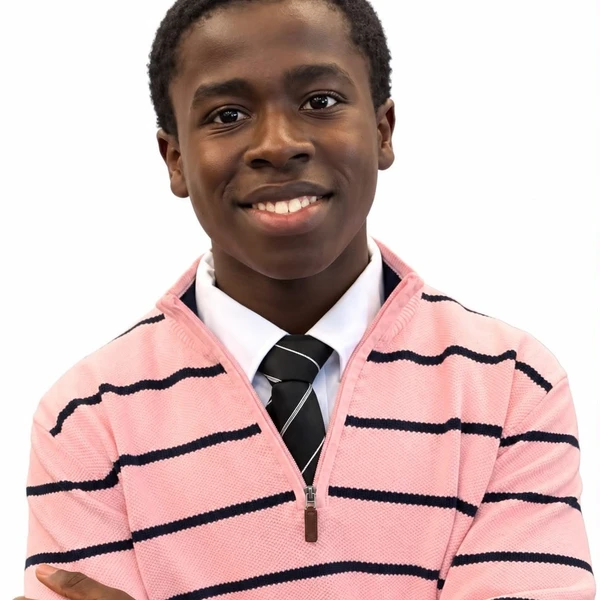
Ebenezer Bonku

1x

Finalist

1x

Winner

General information

Hobbies & Interests

  • Soccer
  • Reading
  • Korean
  • African American Studies
  • Volleyball
  • Research

Bio

I am a rising high school senior from the Bronx with a strong interest in healthcare, biomedical research, and service. After moving from Ghana to the United States, I challenged myself to pursue opportunities beyond the classroom, including hospital volunteering, biomedical engineering research, internships, and community service. I hope to build a career in healthcare and use science to improve patients’ lives.

Education

Democracy Prep Harlem Charter School

High School

2025 – 2027
Miscellaneous

Desired degree level:
Doctoral degree program (PhD, MD, JD, etc.)
Majors of interest:
Biological and Biomedical Sciences, Other, Neurobiology and Neurosciences, Biomedical/Medical Engineering, Registered Nursing, Nursing Administration, Nursing Research and Clinical Nursing
Desired degree modality:
In-Person
Medical school interest:
No

Career

Miscellaneous

Dream career field:
Medicine, Dentistry, Nursing, Military, Mental Health Care
Work experience:
0 years
Has nursing license:
No

Future Interests

  • Advocacy
  • Volunteering
  • Entrepreneurship
Dr. Edward V. Chavez Athletic Memorial Scholarship
Some of my favorite memories of my dad did not require us to say much. We could sit together and watch a soccer game, following the same ball, reacting to the same chances, and sharing the excitement that made an ordinary afternoon feel special. At the time, I thought we were simply watching soccer. I did not know those moments would become memories I would spend years learning how to carry. Losing my dad changed the meaning of those moments. A game could still begin with a whistle and end with a score, but something important was missing. I could watch a match and remember how we used to watch together. I could step onto a field surrounded by teammates and wish I could share the result with him. Grief taught me that losing a parent is not only losing someone from your future; it is learning to live with memories that keep appearing in your present. Soccer became one way to keep moving forward without pretending that the loss no longer hurt. On the field, I have teammates counting on me, decisions to make in seconds, and opportunities to create something with others. As a vice-captain, I have learned that leadership is not always about scoring the winning goal. Sometimes it means encouraging a teammate after a mistake, communicating under pressure, or reminding the team that one difficult moment does not determine the entire game. I have recorded ten goals and seventeen assists, earned five Man of the Match awards, and been part of a league-winning team. I am proud of these accomplishments, but soccer's greatest gift cannot be measured in statistics. An assist can matter as much as a goal. A teammate's confidence can matter as much as a trophy. Soccer has taught me that success is not only what one person achieves, but what a group becomes capable of achieving together. I am still learning to live with my loss. I cannot replay the past or share another match with my dad. There are moments when I wish I could tell him about a game or hear what he thought about a particular play. Those are the moments that remind me how much ordinary conversations can mean. But I can decide what I do with the values those memories leave behind. I can bring commitment, patience, and compassion into how I play and how I treat people beyond the field. I hope to pay this forward by encouraging younger players and helping create opportunities for children who might otherwise lack access to sports. I want them to discover that soccer offers more than competition. It can provide community, confidence, and a place to feel supported when life becomes difficult. I want to be the teammate and leader who notices when someone needs encouragement. I used to think the best part of watching soccer was seeing who won. Now I understand that the most important things a game gives us never appear on a scoreboard. My dad and I shared a love for soccer. Although I cannot share another match with him, I can carry that connection into every game I play and every person I encourage. The final whistle will always come. What matters is what we carry with us when it does.
Frontier Scholarship
Some nights, the hardest question was where we would sleep. I imagined that moving to America would mean starting a better life. I thought about the education I could receive, the opportunities ahead of me, and the future I wanted to build. I did not imagine how much uncertainty could follow us. There were nights when my family had to figure out where we would stay, and the next morning, I still had to wake up and go to school as though everything were normal. My mother worked 24-hour shifts, giving so much of herself to keep us moving forward. Watching her work so hard made it difficult to complain about my own struggles. I knew she was carrying responsibilities that did not disappear when she was tired. I also knew I wanted to help. I looked for any job I could get because I wanted to contribute, even while trying to adjust to a country where almost everything felt unfamiliar. School brought its own challenges. I had come from Ghana, where I understood the school system and knew what was expected of me. In New York, I had to learn a different system while adjusting to life outside the classroom. During tenth grade, our housing difficulties and a commute that could take around two hours each way made keeping up with assignments difficult. Some assignments went unfinished, and zeros appeared in my grades. Those grades showed what I had missed, but they did not show everything I was carrying before I reached the classroom. Still, I cared deeply about my education. I wanted a future where my circumstances would not determine how far I could go. I pursued research opportunities, challenged myself academically, and became involved in community service. My interest in neuroscience and medicine also grew from seeing how illness can affect entire families, especially when treatment is expensive. I hope to become a neurosurgeon and eventually help patients whose families face barriers to receiving medical care. What I am most proud of is that I continued looking for opportunities even when my circumstances made them difficult to reach. I have not always had the stability or resources I wanted, but I kept trying to find a way forward. I learned that progress does not always look impressive from the outside. Sometimes, it is simply continuing to work toward a future you still believe is possible. I often think about my mother working those long shifts and the nights when we did not know where we would sleep. Those memories are painful, but they remind me of what my family has endured to give me a chance at something more. I want to honor those sacrifices by making the most of my education and using what I learn to help others. America is where I am trying to build that future. I am still finding my footing, but I no longer need to have every step figured out before I move forward. One day, I hope my family and I can look back on those uncertain nights from a home where the question of where we will sleep is no longer something we have to ask.
William T. Sullivan Memorial Scholarship
I have learned that some of the most important work happens when nobody is keeping score. I have seen it in the time people give, the things they share, and the effort they make for someone they may never meet again. That understanding is part of what drew me to TLC Ghana, a community initiative through which I have helped support people in Ghana through donations and outreach. Being involved in TLC Ghana has given me the opportunity to contribute to communities beyond my own family and friends. Through our outreach efforts, I have helped with work intended to provide support to people who need it. I often think about the journey a donation takes before it reaches someone who can use it. An item that one person no longer needs may become something another person has been waiting for. I find meaning in being part of that process because it reminds me that what we have can serve a purpose beyond our own lives. The work has also made me more aware of its limitations. There are always more people who need assistance, and the resources available to help them do not stretch far enough. That can be frustrating when you know people are still struggling. I have learned to accept that I cannot meet every need on my own, while still taking responsibility for the part I can play. Each effort matters because it contributes to a larger commitment to helping others. This commitment has become personal to me through my responsibilities at home. I help care for my grandmother, including making sure she receives her medicine when needed. It is an everyday responsibility, and I have learned to take it seriously even when I have assignments to finish or other things demanding my attention. There is something meaningful about knowing that another person is counting on you. It has made me more thoughtful about the time and effort that caring for someone requires. My experiences with TLC Ghana have given me a reason to keep serving, especially as I prepare to begin college. I want to continue supporting communities in Ghana while finding opportunities to volunteer in New York. I also hope to pursue a career in healthcare. Seeing how the cost of treatment can place pressure on families has made me interested in improving access to medical care. In the future, I want to use what I learn in college to help people who might otherwise struggle to receive the treatment they need. I sometimes think about how many people have helped shape my life through things they probably considered ordinary. Their efforts have stayed with me, and I want to offer that same kind of support to others. My work with TLC Ghana has shown me that service can begin with a single decision to get involved. I intend to keep making that decision, in college and throughout my life, because I know there will always be people whose lives can be made a little easier by someone willing to help.
Breanna Coleman Memorial Nursing Scholarship
A hospital can be a strange place to be afraid. People walk quickly through its hallways, machines beep, phones ring, and conversations happen in unfamiliar medical terms. Yet, for the person sitting in a hospital bed, time can feel painfully slow. A few minutes waiting for an answer can feel like hours. I began to understand that healthcare was not only about what happened in the operating room or what a doctor could see on a scan. It was also about the people who made patients feel less alone while they waited. During my experience at Mount Sinai Hospital, I became more aware of the responsibility that comes with caring for another person. Being around patients and observing healthcare professionals showed me that even when medicine cannot immediately provide an answer, the way a patient is treated still matters. I found myself thinking about the difference between simply attending to someone's medical needs and making that person feel seen. I want to enter a profession where both matter. That desire did not begin in a hospital. It began much earlier, in Ghana, where I learned that sickness affects more than the person whose name appears on a medical chart. It affects entire families. When my grandmother faced health challenges, I saw how worry could settle over a household and how the cost of treatment could make an already difficult situation harder. I also learned that care does not end when a hospital visit is over. Sometimes it means remembering someone's medicine, checking that they have what they need, or making time for them when everyone else is busy. Helping care for my grandmother has taught me that love often looks less like a grand gesture and more like showing up, again and again. I have carried that lesson into my community service. Through TLC Ghana, I have participated in efforts to support communities through donations and outreach. Working to help others has taught me that service is not about being the person with the most resources. It is about recognizing a need and deciding that it matters to you. I have also supported younger students through academic assistance, because I believe that helping someone gain confidence and opportunity can change the direction of their future. I want to pursue nursing because I want to combine scientific knowledge with the kind of care that makes people feel human when illness threatens to reduce their lives to a diagnosis. I want to understand what is happening inside the body while remembering the person experiencing it. I want to be the nurse who explains something one more time when a patient is confused, notices when someone is uncomfortable, and treats a worried family with patience rather than dismissal. In the future, I hope to use my education and experience to improve access to healthcare, particularly for communities in Ghana where the cost of treatment can stand between a person and the care they need. I know that one person cannot fix every barrier. But one person can make a patient feel heard, help a family understand its options, or provide care with dignity when someone is most vulnerable. I cannot promise that every patient I meet will leave a hospital completely well. What I hope I can promise is that they will not feel that their pain is unimportant or that their fears are a burden. To me, that is what makes nursing meaningful: treating the illness while remembering the life attached to it.
Bick New York Scholarship
I did not know what an AP class was. I did not know how college applications worked. I did not know what a research internship looked like, how scholarships were found, or who I was supposed to ask for help. When I moved from Ghana to New York during 10th grade, I entered an education system where everyone seemed to know the rules except me. So I started asking questions. At first, they were small. What does this mean? Who should I email? How do I apply? Eventually, my questions became opportunities. I searched for internships, reached out to mentors, volunteered in hospitals, and pursued programs that introduced me to fields I had only read about. I learned that not knowing something was not a reason to stay outside the door. It was a reason to knock. That mindset eventually brought me into a biomedical research laboratory at Columbia University. I worked on a project involving magnetic bead-based bisulfite conversion of DNA and its potential use in liquid-biopsy approaches for lung cancer. There were moments when an experiment did not produce the result I expected. Instead of seeing that as a dead end, I learned to investigate what went wrong, change my approach, and try again. That experience changed the way I understand education. Education is not just about collecting grades or knowing the right answers. It is about becoming someone who can face something unfamiliar and still find a way forward. I have carried that lesson into every part of my life. As a student, I help classmates who are struggling. Through volunteering and internships, I have learned to serve others while learning from people around me. As someone who hopes to study neuroscience or biomedical engineering and eventually become a neurosurgeon or cardiothoracic surgeon, I know there will always be another question I cannot answer yet. I want to be the kind of person who asks it anyway. The financial reality of college makes that next step difficult. I have three siblings currently in college, and only one parent financially supports our household. This scholarship would ease some of that burden and give me greater freedom to pursue the education, research, and experiences necessary to reach my goals. When I arrived in New York, I did not have a map for where I was going. I learned to make one. Now, I want to keep building the path forward, not only for myself, but for the students who may one day need to see that there is a way forward for them too.
Bick First Generation Scholarship
When I first began learning how college worked in the United States, I quickly realized that there was no family roadmap waiting for me. I was learning the language of transcripts, applications, scholarships, recommendations, and financial aid while my family was learning alongside me. Being a first-generation student means that many of the doors I am trying to walk through are doors my family has never had the opportunity to open. Moving from Ghana to the United States during 10th grade made that feeling even more real. I had to adjust to a new education system while figuring out how to prepare for a future I could only imagine. Rather than waiting until I understood everything, I started looking for answers. I sought out advanced classes, internships, research opportunities, and people who could teach me what I did not yet know. Each opportunity became another piece of a map I was drawing for myself. At Columbia University, that curiosity took me into a biomedical research laboratory, where I worked on a project involving magnetic bead-based bisulfite conversion of DNA. I remember working through experiments that did not immediately produce the results I wanted and having to slow down, examine what went wrong, and try again. Research taught me something that a textbook could not: progress often begins with being comfortable not knowing the answer. That lesson has stayed with me far beyond the laboratory. My ambitions have also been shaped by the people I serve. Whether volunteering at Mount Sinai and Memorial Sloan Kettering Cancer Center or helping other students understand material at school, I have found meaning in being useful to someone else. These experiences have helped me see my future not simply as a personal achievement, but as an opportunity to serve. I hope to study neuroscience or biomedical engineering and eventually become a neurosurgeon or cardiothoracic surgeon. I want to build a career at the intersection of science, technology, and patient care, while eventually using what I learn to contribute to healthcare in Ghana. The financial reality of reaching that goal is difficult. I have three siblings currently in college, and only one parent is financially supporting our household. Supporting four college students while managing the needs of our family makes higher education a significant financial challenge. This scholarship would give me more than help paying for college. It would give me room to pursue opportunities without asking my family to carry a burden that is already heavy. More importantly, it would help me continue building the future that I have been learning to navigate on my own. I may be the first in my family to take this path, but I do not want to be the last.
Marcia Bick Scholarship
Winner
When I moved from Ghana to the United States during tenth grade, I quickly learned that wanting an opportunity and knowing how to reach it were two different things. I entered a new school system while trying to understand college admissions, scholarships, and the path toward a career in medicine. I did not have the advantage of already knowing how everything worked. What I did have was the willingness to learn, ask questions, and keep moving forward. I believe motivated students from underserved backgrounds deserve opportunities because talent should not be limited by the resources someone happens to be born with. A scholarship can mean more than help paying tuition. It can give a student the freedom to take an unpaid opportunity, participate in research, buy necessary academic materials, or attend a college that once seemed financially impossible. When someone has the drive to succeed but lacks the resources to get there, an opportunity can change the entire direction of their future. I have tried to create opportunities for myself rather than wait for them. I sought out STEM programs and internships that introduced me to experiences I had never imagined having. During my NY Bioforce internship, I worked on biomedical research involving magnetic beads, DNA methylation, and a microfluidic platform. I learned to micropipette, use a NanoDrop, and design microfluidic chips. Through Future Minds, the Harlem Children’s Zone, and the YMCA, I also developed communication, teamwork, and service skills. Each experience required me to step into unfamiliar environments and prove to myself that I belonged there. My motivation comes from more than academic ambition. Losing my grandmother made me want to understand medicine deeply enough to help other families facing illness. I hope to study neuroscience or biomedical engineering, pursue medicine, and eventually become a physician who combines patient care with research and technology. The financial reality of reaching that goal is significant. As a first-generation student, I am determined to make college possible while being thoughtful about the financial burden it can place on my family. Receiving the Marcia Bick Scholarship would help reduce that burden and allow me to focus more fully on my education, research, and preparation for a medical career. I have already learned how to keep going when the path is unfamiliar. What I need now is the opportunity to keep building on that effort. I want to prove that where a student begins does not have to determine how far they can go.
Sloane Stephens Doc & Glo Scholarship
I used to think that making an impact meant doing something big enough for everyone to notice. My grandmother changed that definition for me. When she became ill, I watched someone I loved become a patient, and I watched my family search for answers we did not always have. I remember wishing I understood more about what was happening inside her body and wishing there were something I could do beyond watching and hoping. Losing her left me with questions, but it also gave those questions direction. I began to see education not simply as a way to build a career, but as a way to become useful to someone else. That belief has shaped the future I am working toward. I want to study neuroscience or biomedical engineering, pursue medicine, and eventually become a physician who combines patient care with research and technology. My goal is to help develop better ways of understanding and treating disease while making patients feel seen as people, not just diagnoses. I have already begun taking steps toward that future. During my NY Bioforce internship, I worked on a biomedical research project involving magnetic beads and DNA methylation on a microfluidic platform. I learned to micropipette, use a NanoDrop, and design microfluidic chips. I remember the first time an experiment did not behave the way I expected. Instead of seeing the unexpected result as failure, I had to ask what it was teaching me. That moment changed how I approach problems. Science became less about getting the “right” answer and more about having the patience to keep searching for one. My impact will not stop at medicine. As a first-generation immigrant from Ghana, I know what it feels like to enter a new environment and have to figure things out as you go. Moving to the United States during tenth grade meant adapting to a new educational system while trying to understand where I belonged. Programs such as Future Minds, along with my experiences with the Harlem Children’s Zone and YMCA, have shown me how powerful it can be when someone creates an opportunity for you. I want to become that person for someone else. I want to mentor students who are curious about STEM but do not yet see themselves as scientists, engineers, or doctors. I want to share what I learn, help students find opportunities, and remind them that coming from an underrepresented background does not mean their ambitions have to be smaller. My grandmother is the person who first made me ask what I could do to help. Education is giving me the tools to answer that question. I cannot change what happened to her, but I can decide what her memory inspires me to do. I want to build a career that turns knowledge into care, opportunity into opportunity for others, and personal success into something that reaches far beyond myself.
H. Thomas Pittman STEM Scholarship
Three moments have shaped my decision to pursue a degree in STEM: losing my grandmother, moving from Ghana to the United States, and discovering that I could contribute to science through biomedical research. Each changed the way I understood my future. The first was losing my grandmother. Watching someone I loved become affected by illness left me with a feeling I could not easily explain: I wanted to understand what was happening and, somehow, be able to help. At the time, I did not know what career would allow me to do that. But that loss planted a question that has stayed with me: What if I could learn enough about the human body and disease to help another family experience a different outcome? That question became the beginning of my interest in medicine, neuroscience, and biomedical science. The second pivotal moment was moving from Ghana to the United States during tenth grade. I entered a completely different educational system while trying to find my place and keep up academically. I had to learn how opportunities worked, how to ask for help, and how to advocate for myself. Starting over could have made me hesitant to take risks, but it did the opposite. I began actively searching for STEM programs, internships, and mentors. I realized that if I wanted opportunities that were not always immediately available to me, I had to be willing to look for them and work for them. That mindset has become one of the most important parts of who I am. The third moment came when I was given the opportunity to experience biomedical research firsthand through NY Bioforce. I worked on a project involving magnetic beads and DNA methylation on a microfluidic platform. I learned to micropipette, use a NanoDrop, and design microfluidic chips. More importantly, I experienced what it feels like to ask a scientific question, test an idea, encounter results that do not go as expected, and try again. I stopped seeing STEM as something that happened only in textbooks. I could see myself participating in it. These moments are connected by a common lesson: my circumstances do not have to determine the size of my ambitions. My grandmother gave me a reason to care about medicine. Moving to a new country taught me resilience and initiative. Research showed me that I could turn my curiosity into action. As a Black student and first-generation immigrant pursuing STEM, I know there may be moments when I feel like I do not belong in certain rooms. Instead of letting that possibility limit me, I want to become someone who enters those rooms prepared and eventually holds the door open for others. I plan to study neuroscience or biomedical engineering, pursue medicine, and use research and technology to improve patient care. STEM is not simply the degree I want to earn. It is the path I have chosen to turn loss, change, and opportunity into impact.
MedLuxe Representation Matters Scholarship
My grandmother is one of the biggest reasons I want to pursue a career in medicine. Losing her changed the way I think about healthcare. Before her illness, medicine was something I mostly saw from a distance. Afterward, I understood that behind every diagnosis is a person with a family, memories, fears, and people who desperately want them to be okay. One of the hardest feelings was wanting to help someone you love but not having the knowledge to do anything about it. I cannot change what happened to my grandmother, but I can let her memory shape what I do with my future. My goal is to become a physician, with a particular interest in neurosurgery, and eventually combine patient care with biomedical research. I want to understand the science behind complex diseases while also understanding the person experiencing them. My interest in this path has grown through my STEM experiences. During my NY Bioforce internship, I worked on a biomedical research project involving magnetic beads and DNA methylation. I learned techniques such as micropipetting and NanoDrop analysis and gained experience designing microfluidic chips. That experience helped me see how research can become a bridge between a scientific question and a real patient need. I want to continue developing that connection throughout college, medical school, and my career. I also believe that who provides healthcare matters. Increasing racial diversity in healthcare is important because patients should be able to feel understood and respected when they are at their most vulnerable. As a Ghanaian immigrant, I know what it feels like to enter an unfamiliar environment and have to learn how to navigate it. My cultural background has taught me the importance of family, community, respect, and listening to others. These values will influence the way I treat my future patients. Diversity in healthcare is not only about having people from different backgrounds in the room. It is about bringing different experiences and perspectives into patient care, research, and decision-making. A physician who understands that culture can influence how a family communicates, approaches illness, or views healthcare may be better prepared to build trust with that patient. I want to be part of a healthcare workforce that reflects the communities it serves and makes patients feel that their experiences matter. When I think about my grandmother, I do not want her memory to represent only what I lost. I want it to represent what her life inspired me to become. She gave me a reason to care more deeply about medicine, and that reason continues to push me forward. My ultimate goal is to become a physician who combines scientific curiosity with compassion, contributes to research that improves patient care, and makes families feel supported during moments when they need it most. If I can use my career to give another family hope, understanding, and better care, then I will know that my journey has meaning.
Gabe J. Maletta Memorial Scholarship for Mental Health
I am pursuing a career in psychiatry because I want to help people feel understood during some of the most difficult periods of their lives. My interest in medicine began with seeing how deeply illness can affect individuals and families, but I have also become interested in the part of healthcare that cannot always be seen: a person’s thoughts, emotions, and mental well-being. I want to become a physician who listens carefully, treats patients with compassion, and helps make mental healthcare feel less intimidating and more accessible, especially for communities where seeking help may carry stigma. Kindness, patience, and servant leadership are values I have learned to practice in my everyday life. As someone who has worked with young people through the Harlem Children’s Zone and YMCA, I have learned that helping someone is not always about having the perfect answer. Sometimes it means listening, explaining something again, encouraging someone who is struggling, or simply being present. My involvement in church has reinforced this. Growing up as a pastor’s child, I have watched my family make time for people who need support, regardless of how busy life becomes. That example taught me that leadership is not about recognition; it is about being willing to serve. One of the greatest challenges I have faced was moving from Ghana to the United States during tenth grade. I had to adjust to a different educational system, culture, and environment while continuing to work toward my academic goals. There were moments when I felt behind because I did not understand how everything worked. Instead of giving up, I learned to ask questions, seek mentors, and make the most of every opportunity. My experiences in STEM programs and internships became especially important because they gave me confidence that I belonged in spaces I had once found unfamiliar. That experience changed the way I respond when I see someone else struggling. I remember what it felt like to enter a new environment without knowing where to begin, so I try to be the person who makes the process easier for someone else. Whether I am helping a younger student, supporting someone at church, or working with teammates during an internship, I try to lead with patience rather than judgment. In my future career, I want those values to remain at the center of my work. I hope to combine medical knowledge with genuine human connection so that patients know they are more than a diagnosis. For me, success will not only be measured by the career I build, but by the people who feel heard, supported, and hopeful because I chose to serve them.
Grace In Action Scholarship
When I think about the person I want to become, I think about the different communities that have shaped me. I am a first-generation African immigrant from Ghana, a pastor’s child, a student interested in STEM and medicine, and someone who has learned that opportunity comes with responsibility. Each part of my story has influenced how I see education, service, and my future. Moving from Ghana to the United States during tenth grade was one of the biggest changes I have experienced. I entered a new country, a new school system, and a new environment while trying to understand where I belonged. Things that other students seemed to know naturally, I sometimes had to figure out on my own. Instead of allowing that uncertainty to define me, I learned to ask questions, seek guidance, and adapt. The experience made me more independent, but it also made me more aware of how difficult it can be to navigate unfamiliar systems without someone showing you the way. My family has always been an important part of that journey. As the child of a pastor, church has been more than a place I attend on Sundays. I grew up seeing my father give his time and energy to people who needed encouragement, guidance, or simply someone willing to listen. I have participated in church activities and learned through that environment that leadership is not always about being the person in front. Sometimes it is quietly serving, helping others, and being dependable when no one is watching. Those lessons have shaped the way I approach school, work, and my relationships with others. My interest in medicine grew from a much more personal place. Losing my grandmother made me understand that illness does not affect only a patient. It affects entire families. I began asking myself what I could do in the future to help people facing those moments. That question eventually led me toward neuroscience, biomedical research, and my goal of becoming a neurosurgeon. I have tried to turn that interest into action. Through my NY Bioforce internship, I worked on a biomedical research project involving magnetic beads and DNA methylation. I learned laboratory techniques such as micropipetting and NanoDrop analysis and gained experience designing microfluidic chips. I also participated in internships with Future Minds, Harlem Children’s Zone, and the YMCA, where I developed my ability to work with others and contribute to communities outside the classroom. These experiences showed me that STEM is not just about formulas, experiments, or technology. At its best, it is about using knowledge to solve problems that matter to people. As I move toward college and eventually medical school, I want to combine medicine, research, and technology to improve patient care. I hope to become a neurosurgeon who treats patients with both scientific skill and compassion, while continuing to contribute to biomedical research. I also want to mentor students from backgrounds similar to mine, especially those who may feel that opportunities in STEM or medicine are beyond their reach. My journey from Ghana to the United States has taught me that where you begin does not have to determine where you finish. My family, my faith community, my experiences in STEM, and the challenges I have overcome have given me a responsibility to make the opportunities I receive meaningful. I want my career to be more than a personal achievement. I want it to be a way of serving others, opening doors for those who come after me, and leaving every community I enter a little stronger than I found it.
Dr. Soronnadi Nnaji Legacy Scholarship
When I moved from Ghana to the United States in tenth grade, I carried more than a suitcase with me. I carried the values I had grown up with: education is a privilege, hard work is an obligation, and success means little if it cannot be used to help someone else. Starting over in a new country challenged me academically and personally, but it also changed the way I understood community. I learned that sometimes contributing does not begin with having the most resources; it begins with making yourself useful wherever you are. Since arriving in the United States, I have tried to do that through the programs and communities I have joined. Through my work with the Harlem Children’s Zone and the YMCA, I have worked in environments centered on supporting young people and strengthening communities. These experiences taught me that service is often found in small, consistent actions: showing up, listening, helping someone work through a problem, and creating an environment where others feel supported. My experiences with Future Minds further developed my interest in using education and STEM as tools for opportunity. My STEM experiences have also shown me another way I can contribute. During my NY Bioforce internship, I worked on a biomedical research project involving magnetic beads and DNA methylation. I learned to use laboratory techniques such as micropipetting and NanoDrop analysis, design microfluidic chips, and think carefully about how small experimental changes can affect results. What excited me most was not simply learning how to conduct an experiment. It was realizing that the skills I was developing could eventually contribute to solving problems that affect real patients. My Ghanaian background has shaped that ambition. Growing up in a culture where family and community are deeply connected taught me that I am never working only for myself. I think about the sacrifices that made my education possible and the people who encouraged me to keep going when adapting to a new country was difficult. Being a first-generation African immigrant has also made me more intentional about taking opportunities seriously. I know what it means to enter a room without knowing exactly how the system works, and I want to become someone who helps others navigate those rooms more confidently. That is why I want to pursue a career at the intersection of medicine, biomedical research, and technology, ultimately becoming a neurosurgeon. The Dr. Soronnadi Nnaji Legacy Scholarship would help make that path more attainable by reducing the financial barriers of higher education. More importantly, it would give me the freedom to invest more deeply in research, mentorship, and the STEM opportunities that will prepare me for college and beyond. I hope to carry forward the legacy this scholarship represents: using education not as an endpoint, but as a responsibility. I want my success to reach beyond me, from the community that raised me in Ghana to the communities I will serve as a scientist and physician.
Ebenezer Bonku Student Profile | Bold.org