user profile avatar

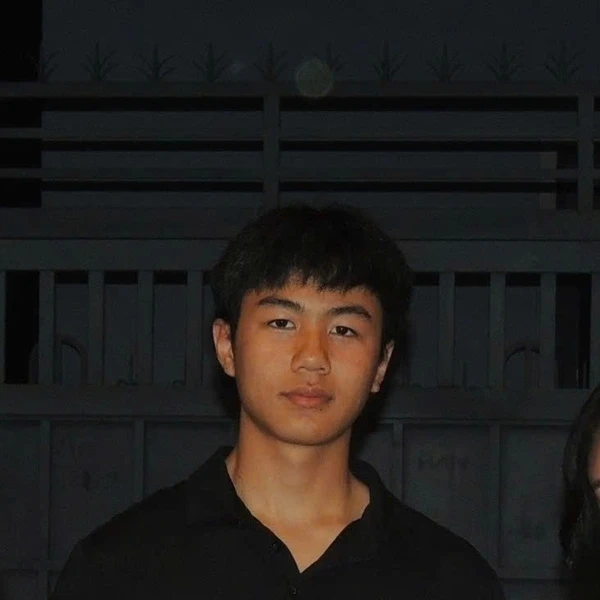
Duy Nguyen

1x

Finalist

General information

Hobbies & Interests

  • Combat Sports
  • Sports
  • Soccer
  • Wrestling
  • Kickboxing
  • Photography and Photo Editing
  • Social Media
  • Cooking
  • Stocks And Investing
  • Finance
  • Business And Entrepreneurship
  • Video Editing and Production

Reading

  • Christianity

I read books daily.

Bio

I'm Duy, a 17-year-old Vietnamese-American and first-generation college student from Fort Worth, Texas. The son of immigrant parents working minimum wage jobs, I've taken my future into my own hands — completing investment banking programs with JPMorgan and Citi, studying private equity, and building real financial models. My goal is simple: become the first in my family to graduate from university and break into finance. Every dollar of scholarship support gets me one step closer to turning that dream into reality.

Education

Seguin High School

High School

2026 – 2027
Miscellaneous

Desired degree level:
Bachelor's degree program
Majors of interest:
Finance and Financial Management Services
Desired degree modality:
In-Person, Hybrid
Medical school interest:
No
English as first language:
No
Homeschooled:
No

Career

  • Packing boxes and electric appliances

    Warehousing · Dien Quang Electricity

    Jan 2025 – Jan 2026

Miscellaneous

Dream career field:
Investment Banking, Venture Capital & Private Equity, Banking
Dream career goals:
Private Equity
Work experience:
1 year
Has nursing license:
No
Leadership experience:
Yes

Future Interests

  • Advocacy
  • Entrepreneurship
L. Renee Burch-Bealer Memorial Scholarship
I want to attend college because I've already seen what it costs not to understand it. My name is Duy Nguyen. I'm a Vietnamese-American first-generation student from Arlington, Texas. My parents immigrated from Vietnam with no college experience, no financial roadmap for American systems, and no one to explain how any of it worked. They built a stable life through work ethic alone. But when their employer offered a 401k for the first time, they handed the packet to me - their 17-year-old son - because I was the only one in the house who could translate it. I spent an evening walking them through employer matching and compound interest. By the end, they had a retirement account finally working for them. That moment made my academic direction clear. I'm pursuing finance - specifically Investment Banking, then Private Equity - because I want to understand the capital systems that have been shaping my family's life without their knowledge. And I want to use that understanding to build things that close the gap for families like mine. My academic background reflects that direction. I've maintained a 4.0 GPA while completing investment banking virtual programs with JPMorgan and Citi - learning DCF modeling, enterprise value calculations, and trading comps. I built a credit card fraud detection model using Python and machine learning, because I wanted to understand how financial systems can be protected for the people most vulnerable inside them. I also founded StockUp a teen financial literacy platform for first generation students, built on the premise that financial education should arrive before the expensive mistakes, not after. My plan for college is deliberate and financially structured. I'm starting at Tarrant County College - after Pell Grant, my cost is near zero. I'll spend two years building a strong GPA, completing all transfer prerequisites, and then transfer to a top business school. Indiana Kelley School of Business is my primary target because of their Investment Banking Workshop, one of the strongest undergraduate IB pipelines in the country. UT McCombs is my in-state option. I'm treating college as a financial decision, not just an academic one, because that's what growing up first-generation and low-income teaches you to do. This scholarship helps in a specific, practical way. Every dollar I receive is a dollar I don't borrow. I'm running a tight plan - TCC costs minimized, transfer costs offset by scholarship and remaining Pell eligibility - and finance pressure is the thing most likely to force a short-term compromise on a long-term plan. Scholarship funding keeps the plan intact. I'm not the first person in my family to work hard. I'm the first to do it inside an American higher education system. What I learn, I bring back - to my parents, to StockUp, to every first-generation student who comes after me needs someone who's already mapped the path. That's why I want to attend college. And that's exactly what this scholarship makes more possible.
Grace In Action Scholarship
I've been in church my whole life - first in Vietnam, now in Fort Worth - and the verse that has followed me across both is one I came back to the night we landed in the United States. "Whatever you do, do it all for the glory of God." - 1 Corinthians 10:31 I was 17, sitting in a new apartment in a new country, feeling the full weight of what starting over actually means. Not the version you imagine before you go - exciting, full of possibility - but the real version. Quiet. Disorienting. The kind of uncertainty that doesn't have a clean narrative until you're on the other side of it. I opened my Bible that night not because I had answers, but because I needed something to orient me. That verse was it. Not comfort exactly. More like direction. Whatever I do - not just the big things, but all of it - do it for something larger than myself. That principle has shaped every decision I've made since. My family came from Vietnam with the basics: each other, some savings, a place to stay, and a faith that had carried us through harder things than a cross-continental move. My parents are hardworking people who built stability through consistency and sacrifice. What they didn't have - what almost no immigrant family has - is a financial roadmap for American systems. How 401ks work. How credit is built. How compound interest operates over time. How to read a benefits packet. None of that was explained to them when they arrived, and none of it was explained to them at work. When their employer offered a 401k for the first time, they handed the packet to me. I was still 17. I sat at the kitchen table - the same table where we'd been praying together since we landed - and spent an evening walking them through it. Employer matching. Roth versus traditional. What it means for money to grow over twenty years when you leave it alone. By the end, they had a retirement account that was actually working. That night, I felt what I can only describe as a calling - not dramatic, not loud, but clear. The same way my church community in Vietnam had been a place where people showed up for each other with whatever they had, I understood that I was supposed to use what I was learning to show up for people who needed it. Not someday. Now. I founded StockUp - a teen financial literacy platform for first-generation and immigrant students who are navigating money without a guide. Free community and content first, then paid cohorts, then school curriculum partnerships. The mission is simple: get financial education to young people before the expensive mistakes, before the predatory loans, before the missed employer matches that compound in the wrong directions for decades. My career path is finance - Investment Banking, then Private Equity - and I've been building toward it deliberately. I completed IB virtual programs with JPMorgan and Citi. I built a credit card fraud detection model using Python and machine learning. I'm starting at Tarrant County College to keep my cost near zero, build my GPA, and transfer to a top business school - Indiana Kelley is my primary target. Every technical skill I build in that career goes back into StockUp. A finance degree and real IB experience give me the credibility to take the platform into schools, secure grant funding, and build curriculum partnerships that reach families like mine at scale. Being involved in church - in Vietnam and here in Fort Worth - taught me something that finance textbooks don't cover: that the most durable communities are built on showing up consistently for people who need you, without needing recognition for it. My church community in Vietnam showed me what it looks like to give without keeping score. My church community here showed me that faith transplants - that the same values that sustained us across the ocean are the same values sustaining us now, in a different language, in a different city, in a country still learning our names. James 1:12 is the other verse I carry: "Blessed is the one who perseveres under trial because, having stood the test, that person will receive the crown of life." The immigration was a trial. The financial uncertainty was a trial. The loneliness of being new somewhere, of figuring out systems nobody explains, of carrying your family's anxiety about the future alongside your own - all of it was a trial. I'm still in it. And I'm still building. The positive impact I want to make through my career isn't separate from my faith - it's an expression of it. 1 Corinthians 10:31 doesn't exempt finance or entrepreneurship or late-night studying for transfer prerequisites. It covers all of it. I'm doing all of it for something larger than a paycheck or a title. I'm doing it because my parents crawled through every obstacle this country put in front of them so I could walk, and I intend to run - and then reach back and show the next family the path. That's the mission. That's the calling. And I'm working on it every single day.
Kalia D. Davis Memorial Scholarship
Kalia Davis ran track, kept straight A's, served her community, and was building toward something larger than herself when she passed. Reading about her, I recognized something - not because our backgrounds are identical, but because I know what it looks like to carry multiple things at once and refuse to let any of them drop. I'm Duy Nguyen, a Vietnamese-American first-generation student from Arlington, Texas. I immigrated to the US at 17. I play soccer, lift weights, practice calisthenics, and train in kickboxing - physical discipline has been part of my life since Vietnam, and I brought all of it here. I maintain a 3.5-3.9 GPA while building StockUp, a teen financial literacy platform I founded for first-generation students, applying for every scholarship I can find, and preparing to transfer to a top business school after Tarrant County College. None of that is to list accomplishments. It's to explain what I mean when I say I understand ambition as a daily practice, not a feeling. The drive behind everything I do comes from a specific moment. My parents got their first 401k and handed me the packet. I was 17. Nobody in our household had ever had an employer-sponsored retirement account before. I spent an evening explaining it to them - matching contributions, compound interest, what "Roth" means versus "traditional." By the end, they had a retirement account that was actually working. That evening didn't just teach me about finance. It showed me exactly what the gap looks like between families who grow up understanding these systems and families who don't. That gap is what StockUp exists to close. Free community first, paid cohorts second, school partnerships third. The mission is financial literacy for teens before the expensive mistakes happen - not after. The impact I'm working towards isn't abstract: it's the next first-generation family who doesn't have to hand a benefits packet to their teenager and hope for the best. This scholarship helps in a direct way. Every dollar I receive in scholarship funding is a dollar I don't borrow. I'm executing a deliberate financial plan - TCC near-zero cost, then transfer to Indiana Kelley or UT McCombs, IB internship junior year, return offer - and every financial pressure I remove from that plan is runway I gain to pursue it fully, without compromise. Kalia's legacy is someone who worked hard, gave back, and was building something. I'm trying to do the same thing. This scholarship would honor her memory by backing someone who takes both parts of that seriously - the excellence and service - and who understands that neither one is optional.
New Beginnings Immigrant Scholarship
The first thing I noticed when we landed in the US was how quiet the airport was compared to what I expected. I'd built America up in my head for months before we left Vietnam. Loud, fast, overwhelming in the best way. What I actually felt stepping off that plane was something closer to vertigo. Everything looked different from what I knew. The signs, the scale of things, the way people moved. I was 17, and I understood in that moment that whatever I thought I knew about starting over, I had underestimated it. My family arrived with the basics. We had a place to stay, some savings, and each other. What we didn't have was a roadmap for any of it - how schools work here, how financial aid works, how you build something in a country whose systems you're learning from scratch. My parents are hardworking people. But hard work without knowledge of how the system operates is like driving without a map. You can go fast and still end up somewhere wrong. That's the gap that shaped my career aspirations more than anything else. When my parents received their first 401k from their employer and handed the packet to me me - their 17-year-old son - to explain, I wasn't angry. I was clear. Clear on what was missing, clear on what I needed to learn, and clear on what I eventually needed to build. I spent that evening walking them through employer matching, compound interest, and the difference between a Roth and a traditional account. By the end, they had a retirement account that was actually working. And I had a mission. I'm pursuing finance- Investment Banking, then Private Equity. Not because those titles sound impressive, but because understanding how capital moves gives me the tools to fix something real. I've been building toward that deliberately: completing investment banking virtual programs with JPMorgan and Citi, learning DCF modeling and enterprise value, building a credit card fraud detection model using Python and machine learning. I also founded StockUp, a teen financial literacy platform specifically for first-generation and immigrant students who are navigating money the way my family was - without a guide, without a precedent, and without anyone who thought to explain it before it was already relevant. The immigrant experience taught me things I couldn't have learned any other way. It taught me that systems are learnable - they just take time and someone willing to sit down with them. It taught me that the people who struggle most in new countries aren't the least capable - they're often the most resilient. And it taught me that information, freely available to some and invisible to others, is one of the most consequential forms of inequality there is. My career is how I address that. Not just by succeeding in finance personally, but by building things that make the financial systems more legible to people who look like me, who landed as I did, who are figuring it out from the ground up. We didn't come here to survive. We came here to build something that lasts.
Humanize LLC Gives In Honor of Shirley Kelley Scholarship
When I started high school in Vietnam, I moved out of my family's home. Not because of conflict. Not because of anything dramatic. My family's house was simply too far from school, and the commute wasn't realistic. So I packed what I needed and moved in with my grandparents. I was maybe 14 or 15. And what I thought would be a logistical arrangement turned into one of the most formative chapters of my life. My grandparents' home was quieter than I expected. Not in a lonely way - in a grounding way. There was a rhythm to how they lived that I hadn't noticed before when I only visited. My grandfather woke up early, did what needed to be done, and didn't complain. My grandmother cooked, kept the home together, asked me every evening if I'd eaten. Neither of them made a big deal out of me being there. They just made room, quietly, the way people do when they've been taking care of others their whole lives. What that taught me wasn't something they ever said directly. It was something I absorbed from watching them. They had lived through things I can barely imagine - war, poverty, the kind of hardship that doesn't have a clean narrative arc. And yet they weren't defined by bitterness. They woke up. They showed up. They found meaning in small, consistent acts of care. My grandfather checking on the house every morning. My grandmother making sure I had food before I left for school. Those weren't dramatic gestures. They were the whole thing. Living with them changed how I understood what stability actually looks like. It's not loud. It doesn't announce itself. It's the accumulation of ten thousand small decisions to keep going, keep providing, keep caring - even when no one is watching and nothing is exciting. I carry that with me now, in Fort Worth, thousands of miles from that house and those two people. When I'm building StockUp - the financial literacy platform I founded for first-generation students - I think about my grandmother making sure that I had what I needed before I walked out the door. That's what I'm trying to do, at scale, for kids who are navigating financial systems with nobody in the house who can explain them. When I'm studying DCF models or grinding scholarship applications at midnight, I think about my grandfather's routine - the dignity of doing your job without needing recognition for it. My future goals are specific: Investment Banking, then Private Equity, and a finance degree from a school like Indiana Kelley that will give me the tools to build StockUp into something that lasts. But the foundation under all of that isn't ambition. It's what my grandparents showed me in that small house in Vietnam: that the most reliable form of love is consistency, and that the best thing you can do for someone is simply make room for them and make sure they're fed. I'm trying to do that for a whole generation of first-gen kids who need someone to make room
FIAH Scholarship
I'll start with the moment that made everything click. My parents are Vietnamese immigrants. They built a stable life in Fort Worth through consistency and hard work - the only tools they had. When their employer offered them a 401k for the first time, they handed the packet to me. I was 17. I spent an evening going through it - breaking down matching contributions, Roth versus traditional, what compound interest actually does over twenty years. By the end they had an account that was working for them. By the end, I had a mission. That evening showed me something I haven't been able to unsee: financial knowledge isn't equally distributed. Some families absorb it casually - over dinner, through parents who work in finance, through schools that teach it. Others don't. And the gap between those two groups compounds silently for decades, showing up as retirement accounts that were never opened, employer matches that were never captured, debt that was never understood before it was signed. I'm a Vietnamese-American, first-generation student from Fort Worth, and I'm pursuing finance - Investment Banking first, then Private Equity - specifically because I want to understand the system that's been shaping my family's life without their knowledge. I've already started building that understanding: completed IB virtual programs with JPMorgan and Citi, built DCF models, learned enterprise value and trading comps, and developed a credit card fraud detection model using Python and machine learning because I wanted to understand how financial systems can be technically secured for the people most vulnerable inside them. I also founded StockUp, a teen financial literacy platform for first-generation and under-resourced students. Discord community, content strategy, three-phase business model: free community and content first, paid cohorts second, school partnerships third. The premise is simple: teach kids about money before they're adults making expensive, irreversible mistakes with it. The positive impact I want to make through my career isn't a side project or a someday thing - its the whole point. The IB and PE career path gives me the technical depth and institutional credibility to make StockUp something that actually scales. A first-generation founder who;s also a trained investment banker and understands how money actually moves can talk to school districts, pitch grant foundations, and build curriculum partnerships at a level that inspiration alone can't reach. My mom worked her entire life without anyone explaining the system she was working insde of. My career is what I'm building so that fewer families have to do that - and so that when they need someone to translate the packet, they don't have to wait for their teenager. That's who I am. That's the impact. And I'm already building it.
Bright Lights Scholarship
My plan has three parts, and I've already started executing the first one. The near-term plan is Tarrant County College. I'm starting there deliberately - not as a consolation, but as a financial decision. After Pell Grant, TCC costs me nearly nothing. That means two years of building a strong GPA, completing every finance transfer prerequisite, and staying debt-free while I prove what I can do academically. The target after TCC is a top business school - Indiana Kelley is my primary, UT McCombs as my in-state option, and Michigan Ross as my reach. The 2+2 transfer plan is how I get there without carrying $100,000 in debt into a career that's supposed to help me build wealth, not spend the first decade paying off school. The medium-term plan is Investment Banking. Breaking into IB from a transfer school is competitive - it requires a specific GPA, a strong network, and the right internship at the right time. I've been building toward that while still in high school: completing virtual IB programs with JPMorgan and Citi. Learning DCF modeling, enterprise value calculations, trading comps. By the time I'm applying to junior year internships, I want to have years of deliberate preparation behind me, not months. The long-term plan is Private Equity - and beyond that, using everything I've learned to scale StockUp, the teen financial literacy platform I founded for first-generation students. The same financial knowledge that will make me effective in IB and PE is exactly what's missing from the communities I grew up in. My parents didn't know how a 401k worked until their 17-year-old explained it. That gap is what StockUp exists to close - and once I have the credentials, the network, and the resources that a finance career builds, I'll be positioned to scale it properly. This scholarship helps in a specific way: it reduces the financial pressure that forces students to make short-term decisions instead of long-term ones. Every dollar I win in scholarships is a dollar I don't borrow. Every dollar I don't borrow is a dollar of freedom - to take the unpaid internship that leads somewhere - to take the unpaid internship that leads somewhere, to stay in school instead of taking a second job, to build StockUp without needing it to pay rent immediately. I'm not applying for scholarships as a backup plan. I'm applying because I've done the math on what it costs to execute the plan I've described, and I know exactly how each piece fits. This scholarship fits. The future I'm working toward is deliberate, specific, and already in motion. What I need is the resources to keep it moving without having to choose between the plan and the bills. That's what this means to me.
Sloane Stephens Doc & Glo Scholarship
The person who inspires me most never gave a speech about it. My mom raised me largely on her own through the year that counted most. She immigrated from Vietnam with nothing but the willingness to show up - every day, without complaint, without recognition, without a roadmap. She didn't talk about sacrifice. She just did it. And watching that, consistently, from close up, built something in me that I could have gotten any other way: the understanding that the most important things get built quietly, one day at a time, by people who don't wait to feel ready. The impact I want to make comes directly from watching her navigate a system she didn't fully understand. When my parents got their first 401k and called me at 17 to explain it, I wasn't surprised that they needed help. I was surprised by what it meant: that two adults who had worked their entire lives, paid taxes, built a household - had never once had someone sit down and explain how the financial system around them actually worked. That wasn't their failure. That was a gap. And gaps don't close themselves. The change I'm determined to create is closing that gap - specifically for first-generation and immigrant families who are building in America without a financial blueprint. I'm pursuing finance: Investment Banking, then Private Equity. Not for the prestige of those titles, but because understanding how capital flows gives me the tools to actually do something useful with what I know. I've already started building those tools - completing investment banking virtual programs with JPMorgan and Citi, learning DCF modeling, enterprise value, and financial statement analysis. I also founded StockUp, a teen financial literacy platform for young people from first-generation backgrounds who are navigating money without a guide. My education is the infrastructure for everything I want to build. A finance degree from a strong school - my target is Indiana Kelley - gives me the technical foundation, the credibility, and the network to make StockUp something that actually scales. A first-generation founder with real finance training and institutional backing can open doors that a motivated teenager with a Discord server cannot. I need the degree to do the work at the level it needs to be done. But the vision is bigger than a platform. The vision is a generation of first-gen kids who understand compound interest before they have a paycheck, who know how to evaluate a 401k before their employer hands them one, who don't have to call their teenager at 17 to translate a benefits packet. My mom built something out of nothing and handed it to me. What I'm building is the resource she never had - and making sure the next family doesn't have to figure it all out alone. That's the impact. That's the vision. That's what I'm going to do.
Andrea N. Santore Scholarship
I didn't choose finance because I liked numbers. I chose it because I needed to understand a system that had already been shaping my family's life without their knowledge. My parents immigrated from Vietnam. My mom raised me largely on her own for significant stretches of my childhood - working, managing the household, and navigating a country whose financial systems she had no guide for. We weren't in crisis. But we were tight. And in tight households, money isn't a topic - it's a pressure. Something you feel but don't always have the language for. The moment that crystallized the career path happened over a benefits packet. My parents got their first employer-sponsored 401k and handed it to me. I was 17. I spent an evening going through it - explaining matching contributions, the difference between Roth and traditional, what compound interest actually means over twenty years. By the end, they had an account working for them. But what I took away from that evening was a specific kind of clarity: I needed to understand this system all the way down, not just enough to help my family, but enough to help every family like mine. Finance is the field that sits at the center of everything - how businesses raise capital, how individuals build wealth, how communities access economic opportunity. I want to be someone who understands all of that deeply enough to move inside it and eventually change it. Investment banking teaches you how capital actually flows. Private equity teaches you how businesses are built and broken. Both require technical skill - DCF modelling, financial statement analysis, valuation - that I've already started building through JPMorgan and Citi virtual programs and through a credit card fraud detection model I built using Python and machine learning. A degree in finance from a strong business school changes my life in three specific ways. First, it qualifies me. The door to IB recruiting is almost entirely through target school career fairs and on-campus networks. Without the degree, the door doesn't open the same way. Second, it gives me credibility for Stock Up - the financial literacy platform I founded for first-generation students. A first-gen founder with a finance degree from Indiana Kelley or UT McCombs can talk to schools, secure grant funding, and build curriculum partnerships in a way that a founder without credentials cannot. The degree amplifies the mission. Third, it changes my family's trajectory. I am the first in my family to go through American higher education. What I learn, I bring back. The financial knowledge I gain doesn't stay in the boardroom - it goes to the kitchen table, where my parents are still figuring things out, and eventually to communities I'm building Stock Up to serve. My mom worked so I would have the time to study. A business degree is what I'm building with that time. And I plan to make sure the return on her investment compounds - for her, for our family, and for every first-generation student who comes after me and needs someone to explain the packet.
Joe Gilroy "Plan Your Work, Work Your Plan" Scholarship
My goal is Investment Banking, then Private Equity. That's the destination. Here's the map. The plan has three phases, and I've already started executing phase one. Phase 1 - Foundation (Now through TCC, 2025-2027) I'm starting at Tarrant County College in Fort Worth. After Pell Grant, my cost is near zero. That's not an accident - it's a deliberate financial decision. Taking on $100,000+ in debt before I've earned a single dollar in finance would be irrational, especially when a 2+2 transfer plan gets me to the same destinations for a fraction of the cost. At TCC I'm completing Calculus, Micro and Macroeconomics, Financial and Managerial Accounting, and Statistics - the core prerequisites every target transfer school requires. I'm targeting a 3.8+ GPA because the schools I'm transferring to - Indiana Kelly, Michigan Ross, UT McCombs - are competitive, and GPA is the primary lever I can control right now. Resources at this phase: Pell Grant covering tuition, free financial modeling resources through Forage (I've already completed JPMorgan and Citi virtual IB programs), Khan Academy, CFI courses, and my own time. The budget is essentially sweat equity. The cost is low; the output has to be high. Simultaneously, I'm building Stock Up - a teen financial literacy platform. Phase one is free community and content. Phase two, launching during university years, is paid cohorts and digital products. Phase three is school partnerships and curriculum licensing. StockUp isn't separate from my finance path - it's proof of concept. A first-generation student who can build and monetize an education platform while studying finance is a different kind of applicant than one who just studied. Phase 2 - University (2027-2029) Transfer to a top business school - Kelley is the primary target, with McCombs as the in-state option and Ross as the reach. At university, I join the banking and finance clubs immediately. Junior year, I land a commercial or investment banking summer analyst internship. That internship is the fulcrum - a return offer converts directly to a full-time position. Resources at this phase: remaining Pell Grant eligibility, institutional scholarships (Kelley has both need and merit-based awards), StockUp revenue supplementing cost, and the external scholarships I'm applying for now. The goal is to graduate with minimal debt. Total university cost after aid: targeting under $30,000 for both years combined. Phase 3 - Career (2029 and beyond) IB Analyst at a bulge-bracket or elite boutique. Two years. Then Private Equity. That's the standard path, and I've studied it closely enough to know what it takes: technical skills built now, network built at university, internship converted to full-time, performance that earns the PE look. The backup plan is Commercial Banking - Senior Relationship Manager - Corporate Banking. Legitimate, well-paying, and a real career. But the primary target is IB. The one angle most people miss: timing. I'm applying for scholarships now - before university - because every dollar I win now is a dollar I don't borrow later. The scholarship grind is part of the financial plan, not separate from it. That's how you plan your work.
Sweet Dreams Scholarship
Two stories changed mine. One is ancient. One is still being written in a Fort Worth apartment. The first is Jesus. I grew up reading the Bible not as a formality but as a guide - and the story that shaped me most is the one about a person who had every reason to demand to be served, and instead chose to serve. Mark 10:45: "For even the Son of man did not come to be served, but to serve, and to give his life as a ransom for many." That verse reoriented something in me early. It made me ask: what am I actually here to do? Not what can I get, but what can I give. That question has followed me into every decision I've made since. The second story is my parents'. They came from Vietnam with almost nothing. No financial roadmap, no network, no English fluency. They work - every day, without complaint - and built a stable life through sheer consistency. When their employer offered them a 401k for the first time, they called me. Their teenager. Because in our household, I was the only one who could translate the packet. That moment - watching two adults who had worked for decades ask their 17-year-old son to explain compound interest - showed me exactly what the problem. Not their intelligence. Not their effort. The gap was access. Financial knowledge, freely available to some families, completely invisible to others. That's the problem in my community that most people walk past. Financial illiteracy in first-generation immigrant and low-income households isn't loud. It doesn't look like a crisis from the outside. It looks like hard work. It looks like a family that's doing fine - until the predatory loan, the missed employer match, the retirement account that was never opened, the credit card debt that compounded for years before anyone understood what was happening. By then, it's quiet damage. And nobody stopped to explain it before it started. I noticed it because I lived inside it. I noticed it because my parents handed me a benefits packet and trusted me to figure it out. Most people in my neighborhood are in the same situation and don't have a kid who happens to be studying finance to bail them out. So I built Stock Up. A financial literacy platform for teens from first-generation and under-resourced communities - Discord community, content strategy, cohort-based learning, a three-phase growth model. If I had the resources to fully act right now, I'd take Stock Up into Fort Worth ISD schools directly - after-school programs, financial literacy electives, workshops for parents and students together. Because the problem isn't just that teenagers don't know about investing. It's that their parents don't either. And in households like mine, the teenager sometimes ends up carrying both. Jesus's story taught me to serve. My parents' story showed me exactly who needed it.
Kenyada Me'Chon Thomas Legacy Scholarship
The hardest thing I've done wasn't leaving Vietnam. It was landing in Fort Worth and realizing I didn't know how anything worked here. I moved to the US in mid-high school. New country, new language nuances, new systems - financial, academic, social - that nobody handed me a guide for. I had the work ethic my parents modeled and the faith that James 1:12 describes: "Blessed is the one who perseveres under trial because, having stood the test, that person will receive the crown of life." I understood I was being tested. What I didn't expect was how specific the test would be. The moment it became concrete was a Tuesday evening in our apartment in Fort Worth. My parents had just received their first employer-sponsored 401 (k) packet. Matching contributions, Roth vs. traditional, vesting schedules - none of it had been explained to them at work. So they handed it to me. Their 17-year-old son. Because in our household, I was the closest thing to a financial translator they had. I could have seen that as unfair. A teenager shouldn't be the most financially literate person in the room. But sitting at that table, walking them through it, I didn't feel burdened. I felt the gap. Clearly, specifically, in a way I hadn't before. My parents were smart, capable adults who had worked for decades - and the system had never once sat down and explained itself to them. That gap became the initiative. I founded StockUp - a teen financial literacy platform built for first-generation students and under-resourced communities. Not someday. Now, while I'm still in high school. I built the brand, the Discord community, the content strategy, the three-phase business model. I also completed investment banking virtual programs with JPMorgan and Citi, learning DCF modeling, enterprise value, trading comps - real financial skills I could put back into what I was building. I built a credit card fraud detection model using Python and machine learning, because I wanted to understand how financial systems could be technically protected for the people most vulnerable inside them. None of it started from strength. It started from sitting at a table with a packet nobody had bothered to explain. The challenge wasn't the move itself. The challenge was arriving somewhere and discovering that the systems other families navigate automatically - financial planning, retirement accounts, credit - were invisible to mine. That invisibility was the adversity. And what it catalyzed was a refusal to let that be someone else's story if I could do something about it. I'm doing something about it. Every day I build StockUp, every piece of content I create for a teenager who's growing up financially blind the way I almost did - that's the initiative that came from the challenge. Setbacks don't have to end the story. Sometimes they just tell you exactly what story needs to be written.
Matthew Hoover Memorial Scholarship
I don't have one sport. I have five. Soccer, weightlifting, calisthenics, kickboxing - I've been doing some combination of these since I was back in Vietnam, and I brought all of it with me when I moved to the US. People sometimes look at that list and think it sounds scattered. To me, it makes perfect sense. Each one teaches something different, and together they've built the version of me that shows up to everything else in my life. Soccer taught me to read situations fast and move without hesitation. When you're on the field, you don't have time to overthink - you see the opening, and you go. That instinct bleeds into how I approach academics and business. I don't wait for the perfect moment. I assess, decide, move. Weightlifting and calisthenics taught me patience in a way nothing else has. There's no shortcut in the gym. You either put in the reps or you don't. The muscle doesn't care about your intentions - only your consistency. I started seeing my GPA the same way. You don't study hard one night before a test and expect it to hold. You build over time, session by session, and the results follow. Kickboxing is the one that shaped my mentality most directly. I started it in Vietnam and kept it going here. There's something about a combat sport that forces you to be completely present. You can't be thinking about a test or a deadline when someone's throwing a combination at you. That ability to compartmentalize - to be fully in whatever I'm doing right now - has made me a better student, a better builder, a better everything. Balancing all of this with schoolwork isn't something I've perfected. I've had weeks where the gym was the only thing keeping me sane, and other weeks where I had to cut training down to thirty minutes because a deadline couldn't move. What I've learned is that physical discipline and academic discipline aren't competing forces - they're the same muscle. When I'm consistent in training, I'm consistent in studying. When one slips, the other usually does too. So I protect both. My schedule isn't glamorous. I wake up early, train, go to class or study, work on StockUp - the financial literacy platform I'm building for first-generation students - come home, and do it again. There's no secret to it. The sports I play taught me that the answer is almost always just to show up and do the work, even when you don't feel like it. Especially when you don't feel like it. I came from Vietnam to Fort Worth without a guaranteed outcome. What I had was a body I'd trained, a mind I'd disciplined, and the belief that if I kept showing up, something would compound. The sports gave me that. And every day I still lace up and go, I'm reminding myself that the foundation holds as long as you keep building it.
Reach Higher Scholarship
The book that has shaped me most is one most people own but fewer actually read deeply - the Bible. I grew up in Vietnamese, immigrant, first-generation, in a household where faith wasn't decorative. It was functional. It was how my mom made sense of a country that didn't make sense to her yet. And as I got older, I strated reading it for myself - not just following along, but actually sitting with it. James 1:12 is the verse I come back to most: "Blessed is the one who perseveres under trial because, having stood the test, that person will receive the crown of life. "That verse didn't just teach me to survive hard things. It reframed difficulty as a qualifier - proof that you're being tested for something worth having. When I moved from Vietnam to the US mid-high school, knew almost no one, had no blueprint for how any of it worked, I didn't see that as misfortune. I saw it as a test I intended to pass. My goals came from that same place. I'm pursuing finance - Investment Banking, then Private Equity - not because those words sound impressive, but because I understand what capital access means for families that don't have it. My parents built a stable life in a country they didn't understand financially. When they got their first 401k and called me at 17 to explain it, I didn't see a burden. I saw a gap. That gap became StockUp, a teen financial literacy platform I founded for first-generation students who are navigating money without a map. The verse I live by in terms of purpose is 1 Corinthians 10:31 - "Whatever you do, do it all for the glory of God." That applies to the financial modeling I've learned through JPMorgan and Citi virtual programs. It applies to the credit card fraud detection ML project I built using Python and scikit-learn. It applies to every scholarship essay I write. If I'm doing it, I'm doing it fully, and I'm doing for something bigger than just myself. A time I failed: when I first moved to the US, I assumed adapting would be faster than it was. I underestimated the language gap, the cultural gap, the way systems work differently here. My first semester I was slower than I wanted to be - catching up on English nuance, recalibrating expectations. I wanted to hit the ground running. I stumbled instead. What I learned is that adaptation isn't weakness - it's its own kind of skill. I got better at it. I stopped treating adjustment as failure and started treating it as data. Mentorship, for me, hasn't come from one person. It's come from the Bible, from watching my mother work without complaint, from the senior bankers whose career paths I've studied, from every first-gen founder who built family, financial knowledge, and example - is what makes me who I am. What I bring to a community is what Mark 10:45 describes: "For even the Son of Man did not come to be served, but to serve." StockUp is a service. Helping my parents understand retirement planning was a service. Every piece of content I create for teens who grew up like me is service. I'm not building this for recognition. I'm building it because the gap is real and someone has to fill it. I just decided that someone would be me.
American Dream Scholarship
The American dream, the way I was taught it existed before I came here, was simple: work hard, succeed. A clean transaction. Effort in, reward out. Then I moved here from Vietnam and discovered it's more complicated than that. The dream exists. I've seen it - in the stability my parents built, in the fact that I'm sitting here applying to colleges and scholarships and building financial literacy platforms while still in high school. That's real. None of it would have been possible in the circumstances my family started with. But the dream isn't equally accessible. And that gap between who the dream is marketed to and who actually gets a clean path to it - is the part nobody puts on the poster. My definition of the American dream is this: the genuine possibility of building something that compounds beyond yourself. Not just working hard. Not just surviving. Actually building - knowledge, wealth, opportunity - that outlasts you and reaches people you'll never personally meet. That's the version worth chasing. That's the version that justifies leaving everything familiar behind to start over in a country whose systems you have to learn from scratch. I came to the US mid-high school. I didn't have a network here. I didn't have the cultural fluency that kids who grew up here have. What I had was the work ethic my parents modeled and the faith that James 1:12 describes - "Blessed is the one who perseveres under trial because, having stood the test, that person will receive the crown of life." I treated the adjustment not as unfairness but as a qualifying test. My version of pursuing the dream looks like this: starting at Tarrant County College to keep education costs near zero, building my GPA, transferring to a top business school, going into investment banking, and eventually private equity. Learning how capital actually moves - and then using that knowledge to close the gap between who gets financial education and who doesn't. StockUp is part of that. I founded a teen financial literacy platform for first-generation students - young people whose families, like mine, are navigating American financial systems without a guide. The dream I'm building isn't just personal. It's transferable. That's the thing about compounding: it works on knowledge the same way it works on money. One person who genuinely understands financial systems, and chooses to explain them clearly to their community, can change the financial trajectory of dozens of families over a generation. That's my definition of the American dream. Not just making it. But making it in a way that makes it easier for the next person to follow. I am not a US citizen. I came here without a guaranteed outcome. But I came with a plan, a faith, and a belief that the dream is real - not because the system is perfect, but because the possibility is genuine for those willing to build it deliberately. I'm building deliberately.
Charles Bowlus Memorial Scholarship
My family came from Vietnam with almost nothing. Not in the way people say that casually. Actually, almost nothing - no savings, no professional network in the US, no financial literacy built for American systems, no one ahead of them who had made this specific move and could explain what to expect. My parents are capable, hardworking people who built stability through sheer repetition of effort. They didn't have the luxury of strategy. They had the discipline of showing up every day and figuring it out as they went. I watched that growing up. I understood from an early age that money wasn't something to take lightly - because we'd seen what happens when it runs tight. Tight finances mean hard choices. Tight finances mean stress that leaks into everything. They mean watching your parents work overtime and still doing the math on whether the month will work out. That background did two things to my career aspirations. First, it made finance feel urgent - not abstract. The difference between understanding compound interest at 12 versus 38 isn't academic. It's real dollars, real retirement security, real quality of life. I didn't choose to study finance because Wall Street sounds exciting. I chose it because I grew up seeing what it costs when a family has no financial foundation, and I wanted to understand the systems deeply enough to change that - for my family first, and then for others. Second, it gave a standard for what work actually means. In a low-income immigrant household, you don't work because it's fulfilling. You work because the alternative is worse. That sounds harsh, but it built something in me that I don't think I could have gotten any other way: the ability to show up when it's hard, to keep going when there's no immediate reward, to build things that don't pay off right away because I believe in what they're becoming. That's what StockUp is. I founded a teen financial literacy platform - content strategy, a three-phase business model - for first-generation students who are financially blind the way my parents were. I also built a credit card fraud detection model using Python and machine learning, because I wanted to understand how financial systems can be technically secured for the people who are most vulnerable inside them. None of that was assigned. Nobody told me to build it. I built it because growing up without financial knowledge taught me exactly what the absence of that knowledge costs - and I refused to let that be someone else's story if I could do something about it. Low income doesn't mean low ambition. In my experience, it often means the opposite. When you've seen what scarcity looks like up close, you don't chase success casually. You chase it deliberately - because you know exactly what's at stake. My career aspirations aren't about escaping where I came from. They're about being equipped enough to go back and actually help.
Michael Rudometkin Memorial Scholarship
Mark 10:45 has always stayed with me: "For even the Son of Man did not come to be served, but to serve, and to give his life as a ransom for many." Selflessness, to me, isn't a personality trait. It's a decision you make over and over - to put what someone else needs ahead of what's comfortable for you. I've made that decision in small ways and in larger ones. Here are two that I keep coming back to. The first was a Tuesday evening at the kitchen table in Fort Worth. My parents had just received their first employer-sponsored 401 (k) packet. The matching structure, the contribution tiers, the difference between traditional and Roth - none of it had been explained to them at work. They handed it to me. I was 17. I spent the next hour going through it with them - looking things up, breaking down the math, explaining compound interests in terms that made sense. We made the decisions together. By the end, they had an account set up and were actually working for them. It wasn't heroic. I didn't sacrifice anything dramatic. But what I gave them that evening was time, patience, and the willingness to translate a system that was never designed to be accessible. A lot of people who could help don't - because it's tedious, because it takes time, because it's easier to say "just Google it." I stayed. I walked them through it. That's selflessness at its most ordinary and most real. The second is ongoing - and it's called StockUp. I founded StockUp because I realized the 401 (k) conversation wasn't a one-time problem. It was a symptom of something systemic: first-generation families are navigating financial systems they were never taught. So I built a platform - teen financial literacy content, a Discord community, a three-phase model that scales from free education to paid cohorts to school partnerships - specifically for young people who are growing up the way I did. Every hour I spend building StockUp is an hour I'm not spending on something easier. I'm choosing to use what I know to help people who don't yet know it. That's the definition of service. I also built a credit card fraud detection model using machine learning - Python, scikit-learn, Random Forest - to understand how financial systems can be protected for the people who depend on them. That project connected my technical skills directly to financial security. It wasn't required. Nobody assigned it. I did it because I wanted to understand how real financial protection works, so I could eventually build systems that protect people like my parents - people who trusted institutions they didn't fully understand. Selflessness doesn't always look like a grand gesture. Sometimes it looks like staying at the table. Explaining the packet. Building the thing nobody else is building. Choosing to use your time for someone who needed you instead of for something easier. I keep choosing that. I plan to keep choosing it.
“I Matter” Scholarship
The person I helped most was someone who never asked. My parents came from Vietnam without a financial foundation - no investing history, no wealth-building knowledge, no frame of reference for how American financial systems work. They didn't ask me to fix this because they did not know it needed fixing. That's the thing about gaps in financial knowledge: you can't see what you don't know you're missing. The moment that made it concrete was a benefits packet. My parents got their first employer-sponsored 401 (k). The company matched contributions up to five percent, with a tiered structure that required understanding percentage calculations, tax-deferred growth, and the difference between a Roth and a traditional account. None of this was explained to them at work. So they handed the packet to me. I was 17. I spent an evening going through it - looking things up, running the numbers explaining the matching stucture in terms that made sense. We worked through it together. They made the decisions. By the end, they had a contribution rate set, a fund selected, and for the first time, a retirement account that was actually working for them instead of sitting dormant. It was a small thing practically. But what I understood afterward was that this kind of help - patient, jargon-free financial explanation - is not equally available to everyone. Some families absorb this knowledge over dinner growing up. My family did not have that. What they had was me, willing to sit down and figure it out alongside them. That conversation became the foundation for StockUp, the financial literacy platform I founded for first-generation teens and under-resourced communities. Because helping my parents once wasn't enough. The real help is building something that reaches people before they are already behind - before the first 401 (k) packet arrives with no one in the house who can read it. And before someone made an expensive mistake. Helping someone in need does not always look like a dramatic rescue. Sometimes it looks like an hour at a kitchen table, translating a packet nobody should have to decode alone, for two people who worked their whole lives and deserved better information than they got. That is the kind of help I'm most proud of. Seeing that kind of impact is what drives me, and it is the kind I'm trying to scale so we can reach more people, more effectively
Ruthie Brown Scholarship
My entire college plan was built around one goal: to graduate with as little debt as possible. That wasn't an accident. It was a response to watching what debt does to families who can't absorb it. I'm a Vietnamese-American first-generation student from Fort Worth, Texas. My parents worked every day to keep us stable, but we didn't grow up with a financial cushion. College was always the plan - but taking on six figures of debt to fund it was never an option I was willing to accept as inevitable. So I built a plan that treats debt the same way I'd treat any financial risk: identify it early, minimize it strategically, and never ignore it. Here's what that looks like practically: I'm starting at Tarrant County College. TCC costs almost nothing after Pell Grant - sometimes literally zero. I'm taking my full core curriculum there, building a strong GPA, and then transferring to a target four-year business school. Two years of near-zero tuition before I ever touch the more expensive institution. That decision alone cuts my total education cost by potentially $50,000-$80,000 compared to four years at a private or out-of-state school. On the scholarship side, I apply consistently. I treat scholarship applications like a job - research, write, submit, repeat. The essays I write aren't generic. They're specific to my story, my goals, and the gap I'm trying to close by founding StockUp, a teen financial literacy platform for first-generation students like me. Every dollar I win in scholarships is a dollar I don't have to borrow. I'm also building income outside of class by creating UGC content on platforms like Side Shift and Home from College. A portion of that income goes directly toward covering education expenses. My goal is to be self-funding as much as possible before I need to rely on loans at all. If loans do become necessary at the four-year level, I've already researched income-driven repayment plans, public service loan forgiveness eligibility for certain post-graduation paths, and the math of keeping total borrowing under one year's expected starting salary. The irony is that I'm studying finance specifically because I understand how compounding works- and debt compounds just as hard as investment returns do, just in the wrong direction. Every dollar I borrow today is more than a dollar I'll repay. I don't take that lightly. Debt isn't shameful. But it's a cost, and every cost deserves a plan. Mine is: start cheap, earn aggressively, borrow only what I have to, and know exactly what I'm getting into before I sign anything. That's what being financially literate looks like in practice. And it's exactly why I'm building StockUp - so the next first-generation student doesn't have to figure all this out alone.
Hines Scholarship
College means breaking a pattern. Not in a dramatic, movie-poster kind of way. In a specific, practical way: I am the first person in my family to go through American higher education. My parents came from Vietnam, built a stable life through hard work, and raised me in a household where college was the goal but nobody had a map for getting there. Nobody had gone before. There was no blueprint to hand me. So going to college means making one. What I'm trying to accomplish is layered. On the surface level, I'm, pursuing a finance degree, targeting investment banking and eventually private equity. That path requires a specific academic foundation - I'm starting at Tarrant County College to keep my costs near zero, building my GPA, then transferring to a top business school. That's the tactical plan. But the reason behind the plan goes deeper than career choice. I grew up watching capable, hardworking people - my parents, their friends, people in my community - navigate financial systems they didn't fully understand. Not because they weren't smart. Because nobody explained how any of it worked. When my parents got their first 401k and called me at 17 to explain employer matching and compound interest, I understood exactly what the problem was: financial education is not equally distributed. Some families absorb it over dinner. Others figure it out decades late, or never. College is how I get qualified to fix that. I founded StockUp, a teen financial literacy platform, because I couldn't wait until after graduation to start. But a degree - specifically in finance, from a school with strong IB recruitment - gives me the credibility, the technical depth, and the network to turn StockUp from a good idea into something that actually scales. A first-generation founder with a finance degree and real investment banking experience has a very different platform than one without it. Going to college also means something personally that's hard to put into a single sentence. My mom raised me largely on her own. She worked overtime so I'd have the time and stability to study, to build, to apply, to aim for something bigger than survival. Walking across that stage isn't just for me. It's proof that her sacrifice compounded - which is maybe the most finance-brained way to describe it, but it's true. What I'm trying to accomplish is to understand how wealth is built, then use that understanding to explain to people who've never had access to that explanation. That's the long game. College is the foundation.
Text-Em-All Founders Scholarship
I grew up watching my parents figure things out the hard way. They immigrated from Vietnam with nothing but a willingness to work. No financial roadmap. No network. No one to explain how any of it worked - taxes, retirement accounts, credit, investing. They built a stable life through sheer effort, and they did it mostly blind to the systems operating around them. When their employer offered a 401k for the first time, they called me. I was 17. I sat at the kitchen table and walked them through matching contributions, Roth vs.traditional, compound interest. We made the decisions together. The conversation lasted an hour. Afterward, I couldn't stop thinking about how wrong it was that they needed their teenager to do that. That's the gap I'm trying to close. I'm a Vietnamese-American first-generation student from Fort Worth, Texas, and I founded StockUp - a teen financial literacy platform built for young people who grew up like me. No one taught us money. We're changing that. The platform runs Discord communities, content campaigns, and cohort-based learning that teaches teenagers about investing, budgeting, and building wealth before they're adults, making expensive, irreversible mistakes. My academic plan is deliberate. I'm starting at Tarrant County College to keep my costs near zero, building a strong GPA, then transferring to a top business school to study finance. The goal after that is investment banking, then private equity. I chose this path not just for what it pays - though that matters - but because understading how capital moves gives me the tools to actually fix the problem I grew up inside of. There's a reason the wealth gap between immigrant families and established ones compounds over generations. It's not laziness or lack of ambition. It's that ambition without financial literacy is a car without a map. You can drive hard and still end up somewhere wrong. The positive impact I'm working toward isnt's abstract. It's StockUp reaching the next first-generation kid who doesn't know what a Roth IRA is before they're 30 and already behind. It's a community of teenagers learning to invest before they have a paycheck, so when they finnally do, they don't hand it over to the first predatory lender or miss-managed credit card that comes along. Education and career are my tools. Community is the target. I'm not going to college so I can close a door behind me. I'm going so I understand the system well enough to explain it - clearly, accessibly - to everyone who comes from where I came from. My parents built with whatever they had. I'm building with what they gave me. And I plan to leave something behind that makes the next generation's start a little less blind.
Chi Changemaker Scholarship
Financial illiteracy is everywhere in my community. It's just quiet about it. I grew up in Fort Worth watching capable, hardworking people - including my own parents - make costly financial decisions not because they were careless, but because nobody ever explained the basics. My parents immigrated from Vietnam with nothing. They worked, saved, and built stability through sheer effort. But when their employer offered them a 401k with a matching contribution, they called me at 17 to explain what it meant. That call was the moment I understood exactly what I needed to build. I founded StockUp, a teen financial literacy platform for first-generation students and under-resourced communities. The premise is straightforward: financial education shouldn't arrive after the first big money mistake. It should come before. What I've built so far: a social media presence, a 30-day content strategy, and a three-phase business model. Phase one is free - content, community, stock market simulations using Investopedia. Phase two is cohorts. Phase three is school partnerships. I've completed investment banking programs with JPMorgan and Citi, so the curriculum I'm building comes from real financial education, not surface-level budgeting tips. To expand, I'd start with Fort Worth specifically. The DFW school district is one of the largest in Texas. Getting StockUp into after-school programs or elective slots would put this content directly in front of the students who need it most, before they graduate and enter a financial system they don't understand. The platform scales online, but the real impact starts local. The gap I'm trying to close isn't about intelligence. It never was. It's about who gets the roadmap and who's expected to figure it out alone. I figured it out alone. I'm building the thing I needed so the next kid doesn't have to.
Spark the Change Scholarship
I didn't start StockUp because I had a business plan. I started it because of a benefits packet. My parents are Vietnamese immigrants. They came to the US with nothing but the willingness to work, and they built a stable life on exactly that. When their employer offered them a 401k with a matching contribution, they called me - their 17-year-old son - to explain what any of it meant. I sat at the kitchen table and walked them through it. What dollar-for-dollar matching actually means. Why you always capture the full match first. What compound interest looks like over 20 years. We figured it out together. I couldn't stop thinking about that converstaion afterward. Not because it was dramatic, but because of what it said about who gets taught what. My parents are smart, capable people. They'd worked for decades without anyone sitting down and explaining how retirement accounts work. That wasn't their failure. That was a gap - in who gets access to financial knowledge, and when. So I built something. StockUp is a teen financial literacy platform aimed at first-generation student and under-resourced communities. The idea is simple: teach kids about money before they're adults making expensive mistakes with it. Before the debt, before the missed employer matches, beofre the money decisions that compound for decades in the wrong direction. What I've built so far: a brand, a content strategy, a 30-day TikTok calendar, and a three-phase business model. Phase one is free-community, content, stock market simulations. Phase two is cohorts and digital products. Phase three is school partnerships and curriculum licensing. None of this is theoretical. We started building in the real world, with real people, not in a business class. Giving back isn't something I'm planning to do someday. I'm doing it now, with the skills I have right now. The Forage programs I completed with JPMorgan and Citi taught me DCF modeling and M&A analysis. That knowledge feeds directly into what I teach. StockUp isn't seperate from my finance education - it's where I put it to use. My academic and career goals point the same direction. I'm starting at Tarrant County College to keep costs near zero, then transfering into a top business school - Indiana Kelly is my main target - to study finance. From there, investment banking, then private equity. Those goals aren't at odds with StockUp. They're the source material I want to be someone who sits at the table where capital decisions get made. I also want to be someone who, after that, pulls the chair back and explains how the table works to people who've never been invited near it. That's the longer arc. StockUp is how I'm starting it before I'm qualified to finish it. The community that shaped me didn't have this. I'm trying to make sure the next generation of Fort Worth kids does.
Edna McGrowder Memorial Scholarship
The conversation that changed my direction wasn't a speech or a ceremony. It happened at a kitchen table in Fort Worth, over a benefits packet my parents couldn't read fast enough. They had just gotten their first employer-sponsored 401k. The company matched contributions up to five percent, with a tiered structure that required understanding percentages, tax-deferred growth, and the difference between a Roth and a traditional account. My parents are smart, capable people. But none of this had ever been explained to them. So they called me. I was 17. I sat down with the packet, pulled up a few tabs on my phone, and walked them through it - what matching means, why you always capture the full match first, what compound interest does over twenty years. It took an hour. My parents nodded, asked questions, and made their decisions. The whole thing worked out fine. But I couldn't stop thinking about what that moment meant. My parents had worked for decades. They had paid taxes, built a household, raised a child - and nobody had ever sat down with them and explained how retirement accounts worked. That wasn't their failure. That was a gap in who gets taught what, and when. I decided then that I was going to college - not just to build a career, but to understand the systems well enough to dismantle the gap. I wanted to study finance, learn how institutions and markets actually function, and use that knowledge both professionally and practically. For myself, for my family, and eventually for the other first-generation families who are still waiting for someone to explain the packet. I enrolled at Tarrant County College as the first step in a deliberate plan: minimize debt while building a strong academic record, then transfer to a competitive four-year business program. I founded Stockup alongside that plan - a financial literacy program for teens built around the exact knowledge my family and community never received. I'm building the curriculum, the content, and the community while still in high school, because I think the time to learn about money is before you desperately need it. Pursuing college was never about escaping where I come from. Fort Worth, my parents' story, that kitchen table - that's the foundation. College is how I build something on top of it that's actually useful. Something that compounds. My mother always said the best thing she could give me was time to dream. She protected that time by working every shift, every overtime hour, without complaint. I think about that every time I consider taking a shortcut. The people who sacrificed for me didn't do it so I could stop halfway. I'm going to college because a seventeen years old shouldn't be the most financially literate person in the room. And I'm going to keep going until I can change that - for my family, and for every family like ours that's still one confusing benefits packet away from making a costly mistake.
Pierson Family Scholarship for U.S. Studies
I grew up in Forth Worth, Texas, as the son of Vietnamese immigrants who built their lives from the ground up. We weren't poor in spirit, but we were tight on everything else. My parents worked everyday without complaint, navigated a country whose systems they didn't fully understand, and raised me in a household where college was the goal but nobody knew exactly how to get there. Nobody in my family had been through American higher education. No one could tell me what FAFSA was, what a transfer credit meant, or how to pick a school that actually matched my goals. I had to reverse-engineer everything - admission requirements, scholarship timelines, financial aid windows - on my own. That became normal for me. Figure it out, then figure it out faster. The challenge that shaped me most wasn't dramatic. It was ongoing. It was being the family's translator - not just for language, but of systems. When my parents got their first 401k and called me for guidance, I was 17. I sat the kitchen table and explained employer matching, Roth IRA contributions, and compound interest to two adults who had worked their entire lives without anyone offering that explanation. I wasn't their parent. But i was the closet thing to a financial advisor they had. That moment pushed me to build Stockup, a teen financial literacy program for first-generation students and under-resourced communities. I founded it because I knew the gap wasn't about effort - the people around me work incredibly hard. The gap is access. Knowledge. Someone willing to explain how money actually works before you're already behind. The person who inspired me most is my mother. She never complained about sacrificing her own aspirations so mine could exist. She learned a new language, adapted to a new country, and made sure I had the stability to dream beyond survival. I carry that. I don't take it lightly. I chose to pursue higher education in United States not just as personal milestone but as a responsibility to every person in my family who never had the chance. My plan is to start at Tarrant County College, keep my costs near zero through financial aid while building a strong GPA, and transfer to a top business school - Indiana Kelly or Michigan Ross - to study finance. From there: Investment banking, then Private equity. But the longer arc is this: I want to be the person I needed when I was younger. The one who sits down, explains the systems, and makes sure no first-generation family has to figure it out alone the way mine did. Post-graduation, I plan to grow Stockup into a full platform - curriculum partnerships with schools, community programs, and digital content - that reaches teens before the financial mistakes happen. A college degree is step one. The mission is bigger than the diploma.
Scorenavigator Financial Literacy Scholarship
Growing up, money was always the thing nobody talked about but everybody felt. My parents came from Vietnam with almost nothing, no roadmap, no network, no English. They worked hard enough to keep us stable, but "investing", "compound interest," and "401k" were words that might as well have been in another language. When their company recently offered a 401k with an employer match, they called me. I was 17. That moment stuck with me. Not because I had all the answers - I didn't - but because I realized I was the closest thing to a financial advisor my family had. And that's a terrifying position to be in when you're a teenager who also figured everything out from YouTube and trial and error. So I started learning, fast. I completed investment banking virtual programs through JPMorgan Chase and Citi, working through DCF models, enterprise value calculations, and M&A analysis. I built a personal portfolio plan - VOO, QQQM, SCHD - targeting a taxable brokerage account at 18. I researched high-yield saving accounts for my parents, compared Roth IRA vs. 401k options, and helped them understand why capturing the full employer match was non-negotiable free money. Finance stopped being abstract. It became some thing I could hold. But the more I learned, the more I noticed how many people around me were in the same position my family was in - capable, hardworking, just never taught. That gap isn't about intelligence. It's about access. That's why I founded Stockup, a teen financial literacy program built specifically for young people who grew up like me. No one taught us money. We're changing that. I've built the curriculum framework, the brand, and the content strategy - all while still in high school. The mission is simple: get financial education into the hands of teenagers before they're adults making expensive mistakes no one warned them about. I'm planning to transfer to a top business school to study finance after starting at Tarrant County College - not because it's the path of least resistance, but because it's the path that makes the most sense financially. I'll graduate debt light, transfer with a clean GPA, and enter a program built for the career I actually want: Investment banking and eventually Private Equity. This scholarship would directly accelerate that path. Not just because of what it covers financially, but because of what it signals - that the work I'm putting in, the program I'm building, and the future I'm chasing are worth backing. I want to sit at the table where capital decisions get made. And one day, I want to use what I know to pull others up alongside me - starting with the kids in my community who are still waiting for someone to explain how any of this works. Nobody taught my parents. Nobody is going to teach the next generation by accident either. That's the gap I'm filling, and financial education is the tool I'm using to do it.
Duy Nguyen Student Profile | Bold.org