Hobbies and interests
Chess
Comics
Exercise And Fitness
Medicine
Trumpet
Reading
Fantasy
Sports and Games
Adventure
I read books multiple times per week
Donald Davis Jr.
1x
Finalist1x
Winner
Donald Davis Jr.
1x
Finalist1x
WinnerBio
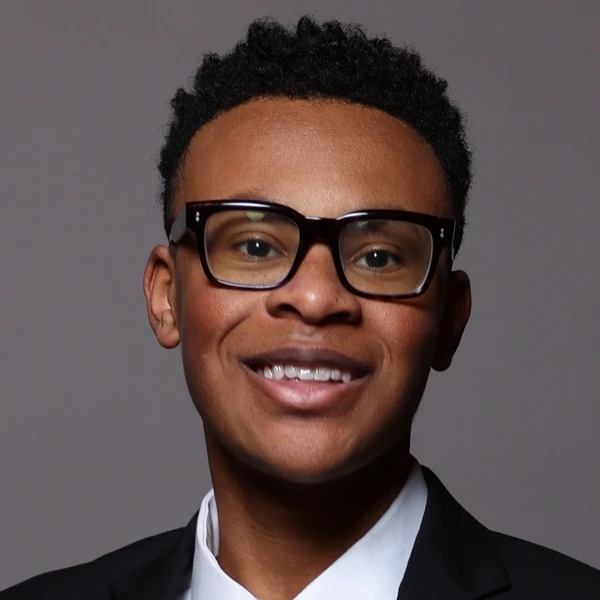
Donald DeBraun Davis is a high-achieving freshman at Michigan State University. He is pursuing neuroscience and has already accumulated 69 college credits. His long-term goal is to become a neurologist and ultimately increase the effectiveness of headache medications.
Don has already contributed to scientific databases through his research with Eastern Michigan University. Specifically, he performed an in-depth analysis of soil bacteria to observe antibiotic production. His research has been integrated into a nationwide database, focusing on identifying new antibodies to combat ever-evolving bacteria. The time that Don spent in the lab kindled his love for research. He plans to attend MSU as a Drew Scholar in the fall. He ultimately intends to earn his MD to become a neurologist. His long-term goal is to create more efficient medicine for chronic headaches.
Additionally, Don was an active member of Kappa League. He participated locally with the Ann Arbor Ypsilanti Inkster (MI) Alumni Chapter, where he served as the group’s project chair of community service. His position required him to coordinate with other members to maximize efficiency and ensure successful events.
Don’s experiences—in the lab, the classroom, and the community—have shaped his passion for discovery and service. He’s driven not just by a desire to succeed, but by a commitment to improve lives through science and compassion. Whether in a clinic or a research lab, Don looks forward to a future where he can bring lasting relief to others and leave a positive mark on the world.
Education
Michigan State University
Bachelor's degree programMajors:
- Medicine
GPA:
3.3
Early College Alliance
High SchoolGPA:
4
Miscellaneous
Desired degree level:
Bachelor's degree program
Graduate schools of interest:
Transfer schools of interest:
Majors of interest:
- Biological and Physical Sciences
- Health Professions and Related Clinical Sciences, Other
- Medical Clinical Sciences/Graduate Medical Studies
- Medicine
- Human Biology
Career
Dream career field:
Medicine
Dream career goals:
To become a neurologist and develop medicine or technology to treat chronic headaches
Horticultural Assistant
Executive Property Services2023 – 2023Administrative Clerk Intern
First Independence Bank2023 – 20252 years
Sports
Track & Field
Club2022 – 20242 years
Research
Natural Sciences
Eastern Michigan University — Research Assistant2023 – 2024
Arts
Early College Alliance
Acting2020 – 2021
Public services
Volunteering
The Cotillion Society of Detroit Educational Foundation — Community Service Projects, Cotillion Ball Escort, Etiquette & Ballroom Dance Lessons2024 – 2025Volunteering
Kappa League - Ann Arbor YPSI Inkster Chapter — Project Chair2023 – 2025
Future Interests
Advocacy
Volunteering
Philanthropy
Hines Scholarship
Going to college is about establishing roots that will ultimately become the foundation of your future. I use "future" loosely here because college extends beyond one's education and degree. It fosters connections, lifelong lessons, and shapes one's identity. This growth is accelerated in college due to the freedom that each campus inherently provides.
College is fundamentally designed to facilitate freedom. There's no set routine that each student has to follow. In fact, students are expected and ultimately forced to make their own schedules, whether they're consistent or not. One's own discipline determines their daily routine and its contents. This shift occurs rapidly, so mistakes are bound to be made, as I would come to find out during my freshman year.
Although my classes were undeniably difficult, I found that this shift in freedom was my greatest challenge. I am extremely fortunate that I met many spectacular people last year. These are friends who I can easily see myself with years down the line; however, I admittedly stretched myself far too thin. I wouldn't sacrifice the moments I shared with them for anything in the world, but it's undeniable that I fell short of my own goals due to my poor time management. This failure served as a pivotal reality check.
Despite maintaining strong grades during my freshman year, I still felt as though I had failed. I was well aware of the effort and time it would take to succeed, but I overlooked the sacrifices that were necessary to achieve it. I was overconfident due to my past exceptional performance. I truly believed I could have my cake and eat it too, but college served as a much-needed reality check to that mindset. I found that the plethora of new experiences that college had to offer is also meant to teach you how to balance them.
Failure showed me that despite my hard work, I had become complacent. I believed that balance meant confining myself to my existing capabilities. While understanding one's limits is an important part of balance, that perspective assumes those limits are fixed. True balance is not a static state. It is centered around being invested in one's continuous expansion. It requires intentionally expanding one's range with the hope of having to sacrifice less each time. The discipline and continuous growth that college has begun instilling in me will be essential as I pursue neuroscience and work toward becoming a neurologist.
Pursuing neuroscience won't be easy, so it helps to have a foundation of core values along with a purpose, instead of just one or the other. I am pursuing neuroscience so I can eventually focus my career on chronic migraines. My motivation stems in part from my own experience with frequent mild headaches. They cause discomfort and impede my daily activities, so I cannot imagine what it would be like to constantly endure a more extreme version.
I maintain an ambitious goal, but I believe college is designed to facilitate freedom and instill values that encourage students to pursue their own form of continuous expansion. The roots I establish now will ultimately strengthen my future career and my ability to help others through research.
AROC AI/ML Scholarship
Working with RStudio and AI-assisted coding tools to analyze biological datasets changed the way I think about complex systems. As I pursue neuroscience, I continue to notice parallels between the interconnected networks of the human brain and the artificial intelligence systems inspired by them.
During my time at MSU, I was responsible for analyzing biological datasets in RStudio. I often used AI-assisted coding tools to help refine code for statistical analysis. Through this process, I became more experienced with interpreting data and troubleshooting errors. I learned that meaningful analysis requires more than simply producing results; it requires understanding why trends appear and questioning whether conclusions are truly supported by the data. Working with datasets also taught me the importance of patience and adaptability, as even small errors in code or interpretation could significantly alter outcomes. These experiences strengthened both my analytical thinking and my interest in research-oriented problem solving.
What interests me most about artificial intelligence is not simply its ability to automate tasks, but its potential to uncover relationships that may otherwise go unnoticed. My experiences with biological data analysis made it clear to me that AI can help bridge the gap between raw information and meaningful insight. As someone pursuing neuroscience, I am especially interested in how machine learning can contribute to deepening our understanding of neurological disorders and chronic pain conditions.
One area that especially interests me is the study of chronic headaches and migraine disorders. These conditions can significantly impact a person’s quality of life, yet their underlying neurological mechanisms are still not fully understood. I am interested in how AI-driven analysis of neurological and biological datasets could help researchers uncover relationships associated with chronic headache conditions, potentially leading to improved diagnostics and more targeted treatments.
In the future, I hope to contribute to the development of AI systems that help researchers and medical professionals analyze complex biological and neurological data more efficiently. I believe the intersection of neuroscience and artificial intelligence has the potential to transform medicine through earlier detection of disease, more personalized treatment approaches, and a deeper understanding of the human brain.
My goal is to continue developing both my technical and analytical skills so that I can meaningfully contribute to advancements at the intersection of neuroscience and artificial intelligence. As these technologies continue to evolve, I hope to be part of the effort to ensure they are used not only to expand scientific understanding, but also to improve the lives of people affected by complex neurological conditions.
Curtis Holloway Memorial Scholarship
It is undeniable that my cousin Kenneth has played a monumental role in shaping me into the man I am today. He certainly would deny that recognition, but without his influence, I wouldn't have half the professionalism, confidence, or joy I carry today.
When my father passed, I was only 6 years old. My mother stood as a tall, unwavering pillar during this time. Her support held my sister and me together, but even pillars need their support. His death affected all of us deeply. She stayed steadfast for her children, but the gravity of his absence took a heavy toll on her. Our whole support network was there supporting her during this turbulent time, and at the forefront of it all was my cousin Kenneth.
He provided a strong and steady male role model in my life, offering guidance and perspective that deeply shaped my development. His guidance was so foundational that it extended into the smallest intricacies of my upbringing, even teaching me the basics like how to tie my shoes. Learning to tie my shoes was only one small but meaningful step in the discipline and professionalism he helped instill in me.
During my later years, he went from showing me a role model to teaching me to be one. Whether it be my posture, tone, or situational awareness, his main lesson was to pay attention. It took me a long time to fully internalize this, and frankly, I still have a long way to go, but that idea has helped accelerate my success because of its versatility. Whether you are presenting in front of a class or even cooking a meal for yourself, you are much more likely to succeed if you pay attention.
As I continued to apply that lesson, it shifted from something I had to implement to something I naturally embodied. Paying attention became more than just a habit, it became a way I approach everything from academics to everyday decisions. In school, it shows up in how I engage with detail-heavy subjects. For example, I rarely have to learn something completely from scratch since most ideas build off each other. The issue I had at the start, however, was retrieval. Making connections between similar ideas often felt difficult; even when I knew the information was there, it still felt like an insurmountable challenge to find the right connection quickly.
However, things began to change over time as I became more accustomed to the idea of paying attention. Looking back, I was trying to force the most effective route when, in reality, the most effective connections often come naturally. This realization turned his lesson into something I could actively apply.
In many ways, it mirrors how our senses constantly process information without deliberate thought. We do not consciously remind ourselves to interpret every sound or movement around us. Our minds learn to do it naturally. I realized that "attention" could be developed in much the same way. What once felt forced eventually became instinctive, allowing me to think more clearly, learn more efficiently, and carry myself with greater awareness.
More than anything, my cousin Kenneth taught me that "attention" is a beautiful display of care. Whether it's for yourself or those around you, paying attention enables you to show up, much like he did for me. That mindset continues to shape the way I learn, carry myself, and pursue my goals today. It remains one of the most meaningful ways I honor the support he gave me.
Learner Math Lover Scholarship
I adore math because of its dependability and "absolute" nature. Relative to other subjects like history or english that have multiple "right" answers, math(for the most part) is very definite. As a methodical and logic-oriented person, I have always resonated with math because of that. When I did not understand something, I knew it was not because of anyone but me, and that comprehension used to intimidate me; however, now that I've grown and matured, I find that although it can be disheartening at times, that struggle is what makes the triumph so rewarding. The feeling of finally grasping a concept that once made no sense is beyond exhilarating. Just thinking about it puts a smile on my face, and knowing that it was not luck or some other external condition instills a confidence in me thats hard to come by. It may be crazy to say this, but there is a feeling thats even better than that--and it's helping someone else learn math. I am by no means a teacher or even the most articulate person; however, one thing about me is that I won't let anyone else outwork me. At times, I can be an assertive teacher; however, I have been successful in teaching some people. It overjoyed me to visibly see the lightbulb moment in their heads. Not only was I able to help someone, but it also confirmed that I truly comprehended the material I learned. With all this in mind, I can more accurately reframe my initial statement about math. I love math because it allows me to connect with others and myself by instilling confidence in me.
Pastor Thomas Rorie Jr. Furthering Education Scholarship
WinnerA Dream Rooted in Purpose and Service
As a high school senior standing at the edge of a new chapter, I am filled with a sense of purpose and urgency. I’ve always believed that our dreams aren’t just visions of what we want for ourselves—they’re reflections of the impact we hope to have on the world. For me, that dream is to become a neurologist. It is a path shaped by curiosity, driven by personal encounters, and sustained by an unrelenting desire to heal others. The Pastor Thomas Rorie Jr. Furthering Education Scholarship represents more than just financial aid—it is a powerful affirmation that my aspirations matter. It would be an investment not only in my education but in every patient, community, and young dreamer I intend to serve along the way.
My goal is to graduate with a degree in biological science and later pursue a medical degree, specializing in neurology. I have always been fascinated by the human brain—the way it governs our emotions, movements, thoughts, and even our pain. But my passion for neurology was not born from textbooks; it came from witnessing the toll chronic headaches and neurological disorders can have on individuals close to me. A family member of mine has battled chronic migraines for years, and seeing their pain—both physical and emotional—sparked something in me. I want to do more than sympathize; I want to find solutions.
Once I graduate with a college degree, my mission is twofold: to treat and to transform. On a clinical level, I want to directly help patients manage and overcome neurological conditions that steal their quality of life. On a research level, I dream of contributing to the development of new therapies and medicines that address chronic headaches, migraines, and other under-researched neurological disorders. My vision is not just to treat symptoms but to uncover the root causes—developing treatments that are both accessible and effective.
My ultimate academic goal is to attend Stanford Medical School. I am drawn to Stanford not just because of its prestigious reputation, but because of its strong emphasis on innovation, interdisciplinary research, and community engagement. It is a place where ambitious thinkers and compassionate leaders are trained, and I want to be among them. At Stanford, I would immerse myself in neurology research, working alongside some of the brightest minds to study the mechanisms behind chronic headaches. I want to explore how genetics, environment, and lifestyle interact to trigger these conditions—and ultimately, be part of a breakthrough that changes lives.
Receiving the Pastor Thomas Rorie Jr. Furthering Education Scholarship would be a critical step toward this dream. Financially, it would ease the burden of rising college expenses, allowing me to focus more on my studies and research without the constant stress of how to fund them. But even more than that, this scholarship carries a legacy of faith, perseverance, and leadership, values that resonate deeply with my own goals .To be chosen as a recipient would inspire me to carry forward that legacy in everything I do, from the hospital room to the local classroom.
My journey does not end with a white coat and a diploma. My future plans are deeply rooted in service to the community that raised me. I come from an area where access to specialized healthcare is limited and where misinformation about health often leads to preventable outcomes. I want to change that. My long-term plan is to return to my community and create outreach programs that combine education with access. These programs would include free health screenings, seminars on neurological wellness, and mentorship initiatives for young students interested in medicine.
I believe that knowledge is power, and when it comes to healthcare, it can be the difference between life and death. I envision clinics that not only treat but teach—spaces where patients leave empowered, not confused. I want to be the doctor who listens, educates, and advocates for those who are too often overlooked by the healthcare system. With this scholarship, I can take one step closer to that reality.
Throughout my high school career, I’ve pushed myself to prepare for this path. I’ve taken advanced placement courses in Biology I & Lab, Chemistry I & Lab, Calculus I & II, Medical Ethics, participated in science fairs, and volunteered at local clinics that connected students with healthcare professionals and created awareness about brain health. I have also served as an Antibiotic & Microbial Discovery Student Researcher at Eastern Michigan University, one only a few high school students on the college team. In addition to my advanced classes when I graduate in June I will have earned a total of 62 college credits. These experiences have solidified my resolve and shown me that this is not just a career I want—it’s a calling I cannot ignore.
Still, I know that the journey ahead will be difficult. Medical school is demanding, both mentally and financially. But I am not afraid of hard work—I welcome it. My drive comes from something deeper than ambition; it comes from purpose. I am motivated by the idea that one day, a therapy I helped develop might relieve someone’s pain. That a patient, once overwhelmed by headaches, can finally sleep through the night. That a child from my neighborhood might believe they, too, can wear a lab coat.
In the end, my story is not just about becoming a neurologist. It’s about honoring where I come from, embracing where I’m going, and creating a bridge between the two. It’s about turning pain into purpose and dreams into action. The Pastor Thomas Rorie Jr. Furthering Education Scholarship would not just help me pay for school—it would help me amplify my voice, deepen my impact, and fulfill a lifelong mission to heal, educate, and uplift.
As I prepare to graduate high school and step into this new chapter, I carry with me the lessons of faith, family, and resilience. I am ready to work, to serve, and to lead. With your support, I will not only achieve my dream—I will turn it into a beacon for others.
Thank you for considering my application.
Sincerely,
Donald Davis Jr.