user profile avatar

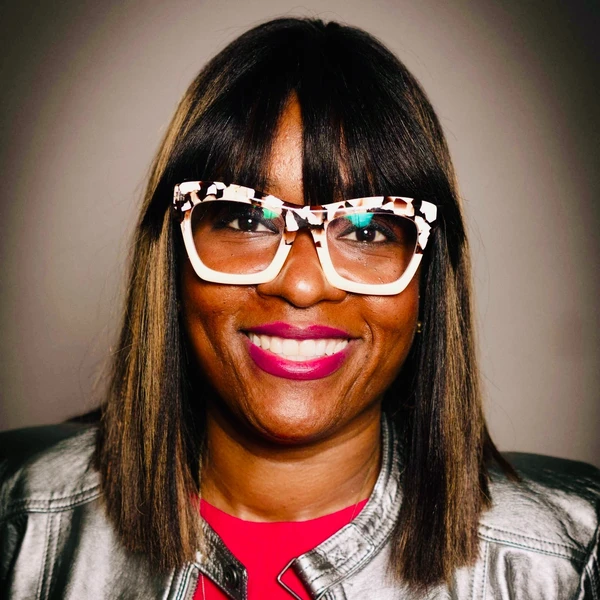
Dominique Hogue

1x

Finalist

Bio

In 2011, I visited Harvard's campus for the first time. I remember standing on those steps feeling a sense of awe. I told myself, 'What a special place. I can’t even imagine pursuing a degree from here one day.' On my way out, I stopped by the Harvard Book Store and bought a book titled 'Understand Psychology.' I’ve always been fascinated by why we do what we do, but I didn't realize then that I was planting the seeds for my future self. Fast forward 15 years to today: I am a first-generation student and the granddaughter of a sharecropper, currently over halfway through my Master’s in IO Psychology at Harvard Extension School. I returned to school in my 40s, and it has been the best decision I’ve ever made. For the past two years, I’ve been challenging myself in ways I never thought possible. I'm currently navigating a layoff that's required me to pivot, but this 'bend in the road' has only strengthened my determination. While my employer previously supported my tuition, I am now seeking scholarships to fund this final, critical leg of my academic journey. What I’ve learned so far: It’s not easy, but it’s worth it. Balancing a career with this level of academic rigor is a marathon, not a sprint. Every class gives me a new lens to see the world and lead more effectively. I'm so grateful for this journey I'm on and dream I'm making come true. Thank you for reading and your consideration.

Education

Harvard Extension School

Master's degree program
2024 - 2027
  • Majors:
    • Psychology, Other

Columbia College Chicago

Bachelor's degree program
2002 - 2005
  • Majors:
    • Journalism
  • Not planning to go to medical school
  • Career

    • Dream career field:

      Professional Training & Coaching

    • Dream career goals:

    • Director of Suites

      Mercedes-Benz Stadium/ Georgia Dome
      2016 – 20182 years
    • Managers

      The Walt Disney Company, Cirque Du Soleil
      2018 – 20268 years

    Arts

    • Disney Theatrical Productions

      Theatre
      Beauty and the Beast, On the Record, Mary Poppins
      2009 – 2012

    Future Interests

    Volunteering

    Bulkthreads.com's "Let's Aim Higher" Scholarship
    To build something usually means constructing something physical, something you can see or touch, but for me, it is about building the resilience to achieve a lifelong dream. For a long time, graduating with my Master’s from Harvard felt like a distant, completely unobtainable goal. Now that I am finally in the home stretch, and so close to making it a reality, I look back and realize I have pushed myself in ways I didn't even know were imaginable. I have put in the countless hours of work, stretched my capabilities, and proved to myself what I am truly capable of achieving through pure dedication. Then, out of nowhere, I ran into a major roadblock with a recent corporate layoff. Since my employer was paying for a large portion of this graduate program, the easiest thing to do right now would be to put my studies on hold. It would make perfect sense to pause, step back, and wait until I figure out my next professional steps and secure a new role. But I know I have to keep going. Choosing to fund these courses out of pocket during a time of total financial uncertainty is a massive risk, but it is one I am willing to take because I refuse to let this momentum stop. Every single course I take is one step closer to making a real difference in the world and the workplace. My ultimate goal is to deeply understand people, provide genuinely safe environments, and make work more equitable for everyone. This layoff didn't change that mission; it only made it more urgent. This scholarship will help me cover these unexpected out-of-pocket costs, ensuring that an unforeseen hurdle doesn't get in the way of finishing what I started. Thank you for your consideration in helping me achieve this last leg of my lifelong personal goal.
    Ethel Hayes Destigmatization of Mental Health Scholarship
    I want to begin by expressing my deepest gratitude to Dr. Terence O. Hayes Sr. for turning profound personal pain into a lasting, transformative purpose. In honoring the memory of your mother, Ethel Hayes, and establishing this scholarship, you have created a vital sanctuary for open dialogue. Your vulnerability paves the way for students like me to share our stories without shame, and for that, I am incredibly thankful. Mental health is one of the world's most painful silent struggles precisely because it is invisible. Because there are no physical markers, onlookers often assume that everything in a person’s life is perfectly fine, completely unaware of the heavy battles being fought beneath a successful exterior. Growing up in the Black Baptist church, this silence was deeply rooted. Mental health was rarely, if ever, spoken of as a medical reality. Instead, I was taught to simply "pray away" any worries, anxieties, or cares in the world. While I have always found immense comfort, resilience, and grounding in my faith, I learned many years ago that spiritual devotion and psychological care are not equally exclusive. Through my own journey, I realized that it is completely okay not to be okay. It is okay to have heavy, painful days when you do not know the way out. What I have learned is that for those of us who have faith and want that to drive our path, that is a beautiful thing. But we must also remember that God blessed certain individuals with the precise calling to be therapists; it is okay to seek them. God created doctors and medication; it is okay to utilize them if need be. Both therapy and medication have significantly changed my life for the better at times when I needed support the most. Reframing the pursuit of healing as a profound strength, rather than a lack of faith, completely reshaped my understanding of the world. Recently, that view was put to the ultimate test. Just two months ago, I was blindsided by a major corporate layoff at my job. Standing in my mid-40s, feeling as though the rug had been completely pulled from under me, was a jarring experience. I would be lying if I said this sudden shift has not greatly impacted me mentally. With less than a year left to go in my Harvard master’s program, a degree my company was heavily funding, I suddenly found myself unemployed and facing immense uncertainty. Yet, I refuse to let this circumstance break me. Navigating this crisis has reinforced my belief that human well-being cannot rely on smooth external conditions or mere good intentions; it must be sustained by resilience, faith, and robust systems of support. Instead of retreating into the silence I was taught as a child, I am actively pushing past the hardship. I am choosing to maintain my faith, seek out scholarships, and relentlessly apply for new career opportunities. This recent trial has only deepened my professional and academic aspirations. Pursuing my graduate education in Industrial-Organizational Psychology is my channel for building equitable, supportive structural environments. My goal is to design evidence-based systems within organizations and communities that prioritize psychological safety, access, and systemic representation. I want to engineer spaces where individuals, particularly those from underrepresented communities where stigma runs deep, never have to mask their internal struggles or career anxieties to be deemed successful. Breaking down the barriers to mental wellness must be woven directly into institutional fabrics so that when the "rug is pulled," individuals are caught by a safety net rather than left to fall in silence. By stepping into the light, growing in vulnerability, and actively engineering environments that value emotional wellness, we can transform communities. This scholarship would tremendously support my journey as I work to acquire the tools necessary to complete my degree and build a more just, empathetic, and systemically inclusive world.
    Sharra Rainbolt Memorial Scholarship
    They say when one person gets cancer, the entire family gets cancer. I have never heard a more accurate statement. Before 2015, I thought I understood what cancer looked like. I saw it take multiple members of my family—my grandfather, two uncles, an aunt on my mother’s side, and an uncle and aunt on my father’s side. I witnessed the pain, the suffering, the sleepless nights, and the financial strain. I saw the toll it took on everyone involved. But nothing could have prepared me for what it felt like when my father was diagnosed. On a day I will never forget, I learned that my dad—just 57 years old—had stage 4 esophageal cancer. In that moment, everything changed. I’ve always been a daddy’s girl. I have a younger brother who is a mama’s boy, so my bond with my dad came naturally. He worked as an elementary school janitor for most of his life and had only a middle school education, but he never let that limit him. He worked hard and always emphasized the importance of education, making sure my brother and I knew we could build something greater for ourselves. At the time of his diagnosis, I was on tour in Australia with Cirque du Soleil. I was living what felt like a dream. Traveling, carefree, and experiencing things I had only imagined. But none of it mattered more than being there for my dad. Within a few months, I made the decision to leave that life behind, packing my suitcases to move to Atlanta so I could be closer to him in the Midwest. Stepping into the role of an emotional caregiver forced me to find a level of strength I didn't know I possessed. My mom was completely overwhelmed, so dad placed responsibility on me—attending chemo appointments, navigating difficult quality-of-life decisions, and anchoring our family emotionally even when I was privately struggling. I traveled between Atlanta and Chicago multiple times a month, sometimes on a chaotic 12-hour notice because my dad needed me by his side for treatment the next afternoon. I also carried a heavy financial burden, charging more to my credit cards than I could keep track of. But I didn’t care. My only priority was showing up and being the pillar of strength he required. My father passed away on January 18, 2018, at 9:47 p.m. I had flown in that morning and made it home by 10:30 a.m., and I truly believe he waited to say goodbye. In the end, it was just the two of us. One of the hardest things I have ever done was look at him in those final moments and tell him it was okay to let go—that we would be okay, that I would protect my mom, and that he could finally rest. The experience taught me that real strength isn't a feeling you wait for; it is a conscious choice you make when you have no other option. It proved to me that being present for the people you love is the ultimate priority, no matter the distance or the cost. Today, I carry my father's memory into every class and assignment. He was always my loudest cheerleader, and as I march toward completing my master’s degree at Harvard Extension School, I think about him constantly. Cancer took my father, but it solidified the legacy he wanted for me. Every late night I spend studying, I am choosing the resilience he modeled—proving that his sacrifices, from the school hallways he cleaned to his final breaths, built the future his baby girl is now claiming.
    Tawkify Meaningful Connections Scholarship
    The Future of Human Connection We’re living in a strange, unprecedented time. It has never been easier to reach out to someone, yet so many of us feel completely isolated. We can drop an instant message, blast updates to hundreds of people in seconds, and stay in constant contact without ever truly engaging. Somewhere along the way, convenience started replacing genuine effort, and that shift has quietly rewritten the rules of how we build relationships. I’ve started noticing this in the smallest, everyday moments. We are so quick to text everything—good news, bad news, and every mundane detail in between—that every interaction begins to sound identical. Tone gets lost. Emotion gets flattened out. What should feel deeply personal starts to feel like a task. When the phone rings now, the immediate gut reaction is often, “What’s wrong?” instead of just picking up to chat. Calling has become associated with emergencies, when just a decade or two ago, it was simply how you caught up with someone. Just yesterday, Pope Leo XIV pointed out the slippery slope of over-relying on artificial intelligence and digital shortcuts. He warned that if we prioritize efficiency above everything else, we might eventually lose the actual desire for real human contact. That struck a chord with me because we are already seeing it play out in micro-moments every day. Reclaiming that connection requires conscious, intentional effort. It isn't going to happen automatically anymore. It means making a choice to slow down, even when it’s inconvenient. For me, that started with a few small changes. I’ve been trying to send voice memos instead of standard texts. They take longer to create, and people don't always listen to them right away, but that's fine. What matters is that they can hear my actual voice. They get the inflection, the warmth, and the real meaning behind the words, rather than trying to decode a flat screen. Interestingly, when you change how you show up, people notice. My friends have started sending voice notes back to me. They’re taking an extra second to actually connect rather than firing off a mindless reply. It shifts the whole dynamic into something much more thoughtful and human. The same goes for blocking out time for a proper phone call or a FaceTime session. Choosing a live conversation over a quick exchange builds a completely different level of trust. It’s a way to leverage technology for good, using it as a bridge rather than a replacement. But reimagining connection isn’t just about the digital space; it’s about how we behave when we are physically sitting across from someone. Being intentional in those moments is everything. It means putting the phone face down, pushing it away, and giving someone your undivided attention. Flipping your phone onto "Do Not Disturb" sends a massive, silent message: This moment, and the person in front of me, matters more than whatever is happening on my screen. It sounds like a tiny gesture, but it carries a lot of weight. It shows basic respect. It shows you are actually there. The exact same rule applies at home with family or a partner. Being physically in a room isn't the same as being mentally present, and people can feel the difference. If we want deeper relationships, we have to carve out the sacred space required to maintain them. As a graduate student returning to higher education a bit later in life, I’ve had plenty of time to reflect on how much our relationships dictate our growth, opportunities, and ultimate direction. The most impactful connections in my life were never built on convenience. They were forged through consistency, effort, and showing up when it mattered most. That perspective guides both my personal life and my professional outlook. Real connection is something you build on purpose, never by accident. In the end, protecting human connection doesn't mean throwing away our devices. It just means being a lot more intentional about how we use them. The digital tools will keep changing, but the fundamental human need to be seen, heard, and understood isn't going anywhere. If anything, it’s only getting more urgent. It’s up to us to ensure we answer the call.