
Hobbies and interests
Research
Music
Reading
Classics
Fantasy
Literary Fiction
I read books multiple times per week
Dolly Magnani
1x
Finalist
Dolly Magnani
1x
FinalistBio
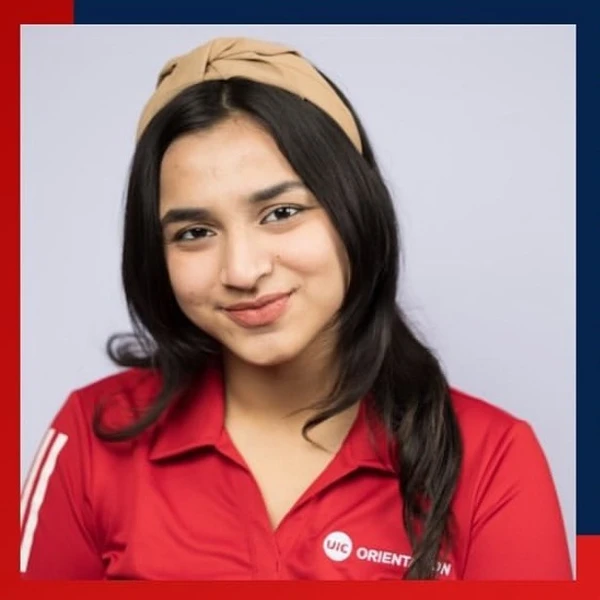
I'm a rising senior at the University of Illinois Chicago, pursuing a BS in Finance with a Corporate Finance concentration alongside a BA in Economics and a minor in Mathematics. I've maintained a 4.0 GPA and Dean's List recognition for six consecutive semesters, and I'm currently a CFA Level I candidate.
As a Finance Research Assistant under Professor William O'Brien, I use Excel and Bloomberg Terminal to research corporate tax avoidance, IP allocation, and share repurchase strategies. My prior experience includes a wealth management internship at Kotak Mahindra Bank, where I reviewed portfolios for high net worth clients, and the LSE Summer School program in Financial Markets and the Global Economy.
Outside the classroom, I actively trade a diversified personal portfolio through Charles Schwab and serve on UIC's Portfolio Management Team. I'm also a Peer Mentor for Women in Finance and a member of Econ Club. I speak four languages plus French, and I've volunteered with the Beti Bachao Beti Padhao campaign in Gujarat, helping enroll underprivileged girls in school.
I'm pursuing a career in FP&A and corporate finance, and I'm drawn to roles where rigorous analysis meets real business impact.
Education
University of Illinois at Chicago
Bachelor's degree programMajors:
- Finance and Financial Management Services
Miscellaneous
Desired degree level:
Master's degree program
Graduate schools of interest:
- University of Illinois at Urbana-Champaign
Transfer schools of interest:
Majors of interest:
Career
Dream career field:
- Financial Services
Dream career goals:
Math Peer Learning Assistant
University of Illinois Chicago (Department of Finance / Prof. William O'Brien's research)2024 – Present2 yearsPeer Tutor
University of Illinois Chicago2024 – Present2 yearsWealth Management Intern
Kotak Mahindra Bank2025 – 2025
Research
Finance and Financial Management Services
University of Illinois Chicago (Department of Finance / Prof. William O'Brien's research) — Research Assistant2026 – Present
Public services
Volunteering
Beti Bachao Beti Padhao campaign, Gujarat, India — Volunteer2022 – 2022
Legacy of Learning Scholarship
Here's your essay:
Essay (~480 words)
Education is the reason I'm sitting in a classroom in Chicago instead of the one I grew up near in Surat, India. I'm the first person in my family to pursue a four-year college degree, and that fact has shaped nearly every decision I've made since I arrived at UIC. Nobody in my family could tell me what office hours were for, how to build a resume, or what an internship search was supposed to look like. I had to figure most of it out by watching, asking, and getting things wrong first. That's part of why education means something different to me than it might to someone whose parents went through this process already: it's not just credentialing, it's the first time anyone in my family has had access to the kind of opportunities a degree unlocks.
I hope to build a career in FP&A and corporate finance, work that sits at the intersection of rigorous analysis and real decision-making. I'm drawn to it because it's a field where being genuinely good at something, and where a first-generation student with no existing network in finance, can still compete on merit: the numbers either hold up or they don't. I want to reach a point where I'm not just producing analysis but shaping the financial strategy behind it, and eventually, I want to be someone other first-generation and immigrant students can point to and say that path is possible.
The challenges haven't only been academic. As an international student, I've had to navigate visa status and work authorization rules that most of my peers never think about, understanding CPT and OPT eligibility windows, answering sponsorship questions on job applications honestly without letting them become a disqualifier, and doing all of this without a family member who'd been through it before to ask. There have been moments of real uncertainty, wondering whether an application was rejected because of my qualifications or because of a checkbox about visa status that a recruiter never looked past. What keeps me going is that I've already proven to myself I can do hard, unfamiliar things and come out the other side. Maintaining a 4.0 GPA across six semesters, starting the CFA Level I curriculum, and building a research role under a finance professor, none of that happened because it was easy. It happened because I kept showing up after the parts that were hard.
This scholarship would help ease some of the financial pressure my family and I carry every semester, since we're managing tuition without a cushion behind it and without other aid currently in place. More than the dollar amount, though, it would be one more sign that the path I'm on, being the first in my family to do this, is being recognized as worth investing in. I don't take that lightly, and I intend to make good on it.
Barbara Cain Literary Scholarship
Two books have shaped how I think about both money and purpose: Benjamin Graham's The Intelligent Investor and Ikigai by Héctor García and Francesc Miralles. On the surface, they don't have much in common, one is a foundational value-investing text, the other a meditation on Japanese longevity and purpose, but together they've given me a framework for how I want to build both a career and a life.
The Intelligent Investor changed how I think about markets before I'd even taken a single finance course. Graham's core idea, that price and value are two different things, and that discipline matters more than prediction, reshaped how I looked at my own portfolio. I started managing a diversified personal portfolio through Charles Schwab, and I found myself constantly returning to Graham's distinction between the investor and the speculator. It's tempting, especially early on, to chase whatever is moving, but Graham's insistence on patience, on buying with a margin of safety and letting time do the work, taught me to separate noise from signal. That discipline now shows up everywhere in how I approach finance academically too. When I research corporate tax avoidance or share repurchase strategy as a research assistant, I try to ask what's actually happening beneath the reported numbers, not just what the headline suggests. Graham taught me that the numbers you're given are a starting point for questions, not a conclusion.
Ikigai reshaped something different: not how I evaluate a stock, but how I evaluate a life. The book's central idea, that fulfillment sits at the intersection of what you love, what you're good at, what the world needs, and what you can be paid for, gave me language for something I'd been circling without naming. I'm good at finance, and it pays well, but I didn't want a career that only checked two of those boxes. That's part of why I've been drawn specifically to FP&A and corporate finance rather than, say, transactional deal work: I like the parts of finance that involve genuinely understanding a business and helping steer it, not just executing on it. It's also part of why I've kept tutoring students and mentoring through Women in Finance alongside my coursework, work that has nothing to do with career advancement in the traditional sense, but that sits squarely in what I find meaningful.
Read together, these two books have given me a strange but useful pairing: Graham's insistence on rigor, patience, and looking past the surface, and Ikigai's insistence that none of that matters if it isn't in service of something you actually care about. My goal isn't just to become technically skilled at finance, plenty of people manage that. It's to build a career where the discipline Graham describes and the sense of purpose Ikigai describes aren't competing with each other, but are the same thing.
Neetu Watumull Scholarship Program Managed by Rupa Shah
I was born in Surat, India, and moved to the United States to pursue my undergraduate degree at the University of Illinois Chicago. That move shaped nearly everything about how I approach my education here. I came in knowing I wasn't just attending college, I was building a foundation that had to justify the distance from home, the visa complexity, and the expectations riding on this degree. That pressure became a kind of discipline. I've maintained a 4.0 GPA across six semesters, taken on a research assistant role studying corporate finance topics, and started the CFA Level I curriculum, not because any one of those things was required, but because coming this far meant I wasn't going to do this halfway.
My background also shaped how I think about opportunity itself. I volunteered with the Beti Bachao Beti Padhao campaign in Gujarat, helping enroll underprivileged girls in school, and that experience sits close to my own story: I understand firsthand what it means when access to education is not guaranteed, and how much it changes a life's trajectory when someone makes it possible. That's part of why this scholarship matters to me beyond the dollar amount. It's not abstract; I've seen what the alternative looks like for people who don't get that access.
Financially, my situation is manageable but tight. My family is able to support my education, but every dollar toward tuition is a dollar we're stretching to make work, and there isn't a cushion behind it. I'm not currently receiving other scholarships or grants, so tuition costs come directly out of what my family can set aside, semester by semester. I've tried to offset this where I can, through my research assistant position and by keeping a tight academic and extracurricular schedule that positions me for paid opportunities after graduation rather than adding new costs now.
This scholarship would go directly toward tuition, and practically, it would ease some of that semester-to-semester pressure and let me focus more fully on the coursework, research, and CFA preparation that are already stretching my time thin. Coming from where I started, and having seen what a lack of access to education can mean for someone else's life, I don't take this opportunity lightly. I'd put this support toward finishing what I came here to build.
S3G Advisors NextGen Scholarship
Halfway through my junior year, I started applying to FP&A and corporate finance roles for the summer and fall cycles. Almost every application had the same question buried in it: "Will you now or in the future require sponsorship to work in the United States?" As an international student on an F-1 visa, I knew the honest answer was complicated, and that complexity was the actual problem. I have CPT and OPT eligibility that gives me up to 36 months of work authorization without a company sponsoring anything, but most application forms only offer a binary yes or no, with no space to explain what CPT or OPT even means. I watched a few early applications sit unanswered, and I started wondering if recruiters were reading "yes" and moving on without a second look, even when the honest technical answer, given my OPT coverage, could reasonably be "no."
My first instinct was to just answer honestly and hope someone on the other end understood the distinction. That didn't work. I got almost no responses in the first few weeks, and I had no way of knowing whether it was my resume, the roles I was targeting, or that one checkbox quietly filtering me out before a human ever saw my application.
So I changed my approach. I researched how OPT actually gets treated in hiring, and learned that for roles where my OPT window covered the full length of the position, the accurate answer to the sponsorship question was genuinely "No," since I wouldn't need the employer to sponsor anything during that time. I also started using my resume and cover letters to frame my OPT timeline as an asset rather than a caveat, describing it as a 36-month runway I already had, not a hurdle the employer had to clear. I stopped assuming every form's phrasing captured the nuance and instead answered based on what was actually true for each specific role's start date and duration.
That shift didn't fix everything. Some applications still auto-filtered based on visa questions regardless of how I answered, and I have no way of proving that. But my response rate improved once I started answering with intention rather than reflexive honesty about a status that wasn't actually a barrier for the roles I was applying to. I also began reaching out to alumni and recruiters directly, since a real conversation could explain the nuance a checkbox never could.
If I were starting over, I'd do this earlier. I spent weeks treating the sponsorship question as a fixed obstacle instead of something I could research and answer accurately. The bigger lesson was less about visas and more about not accepting a system's default framing when it doesn't actually reflect my situation. I still don't know how many applications got filtered before I made that change, but I know I stopped assuming the worst interpretation of my own answer.