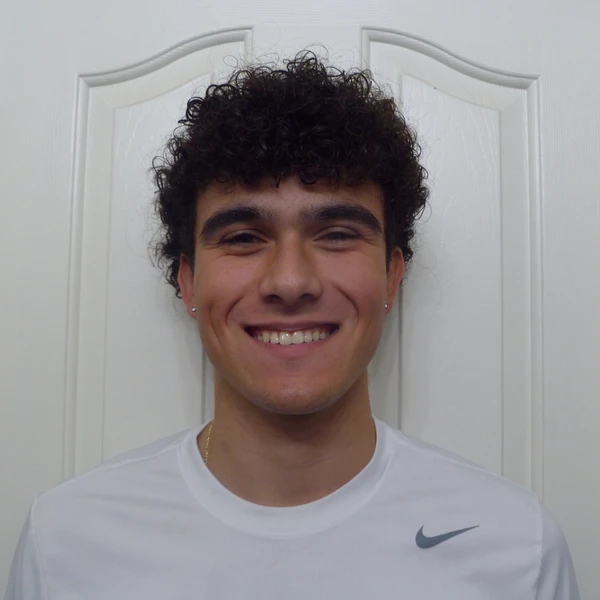
user profile avatar

Diego Sandoval

1x

Finalist

1x

Winner

General information

Hobbies & Interests

  • Soccer
  • Music

Bio

I, Diego Sandoval, was born in Sacramento California and am 17 years old. I am the youngest of four children in my family. Throughout my life, I have been active in my community from playing sports to being a member of a band that plays at our church. Over the past 2 years, I have built up my own car-washing business and worked part-time at Chipotle, all while maintaining a 4.0+ GPA. At school, I am part of the CECA (California Early College Academy) program, IB (International Baccalaureate) program, and AP classes. I have chosen Civil Engineering as my area of study because it combines both my mother's and father's careers. My mother is a math teacher and my father is a construction foreman; Civil Engineering is like combining both of those careers, giving me the best of both worlds. I aspire to be like my parents and I have always shown interest in both of their careers. One of the main reasons for my choice in this field is that it allows me to help people and communities all over. It gives a purpose for the line of work. I hope to one day become confident enough and good enough in my career to start my own company as a Civil Engineer helping the community with infrastructure one project at a time. Another big influence in my choice of career is wanting to feel as if I am helping the community. This idea stems from my time volunteering as a soccer coach. Being a soccer coach I’ve learned that I can help the future of children through the most simple things. Not only that but I’ve learned that when doing something for the greater good it gives me a natural high.

Education

California Polytechnic State University-San Luis Obispo

Bachelor's degree program

2025 – 2029

Majors:
  • Engineering, Other

Inderkum High

High School

2021 – 2025

Miscellaneous

Desired degree level:
Bachelor's degree program
Majors of interest:
Engineering, Other, Civil Engineering
Desired degree modality:
In-Person, Full-Time
Medical school interest:
No

Career

Miscellaneous

Dream career field:
Civil Engineering
Dream career goals:
Have my own engineering firm
Work experience:
1 year
Has nursing license:
No

Future Interests

  • Volunteering
  • Entrepreneurship
Greg Bartholomew Memorial Scholarship
Winner
My decision to pursue a career in civil engineering comes from a lifelong interest in construction and a desire to build projects that positively impact communities. Growing up, I was fascinated by how roads, bridges, and other infrastructure were designed and constructed. As I learned more about the field, I realized that civil engineering offered a unique opportunity to combine problem-solving, mathematics, and hands-on construction to create projects that serve people every day. After completing my first year as a civil engineering student at Cal Poly San Luis Obispo, I am more confident than ever that I have chosen the right career path. One of the biggest influences on my decision to pursue civil engineering has been my family. My father has worked for many years as a carpenter and pile driver, helping construct bridges, water treatment facilities, and other major infrastructure projects throughout California. Growing up, I heard stories about the challenges of construction, the importance of teamwork, and the pride that comes from building something that will serve a community for decades. Watching my father's dedication to his work gave me a firsthand appreciation for the construction industry and the impact it has on society. My mother, a high school math teacher, also played an important role in shaping my interests. She encouraged me to develop strong problem-solving skills and showed me how mathematics can be applied to real-world situations. Together, my parents inspired me to pursue a career that combines technical knowledge with practical application. My long term goal is to work in the construction side of civil engineering, with a particular interest in transportation infrastructure, bridges, and heavy civil construction. I am also pursuing a minor in construction management because I want to understand both the engineering and project management aspects of the industry. I hope to eventually take on leadership roles where I can oversee large scale infrastructure projects from design through construction. The concrete paving and civil engineering industries are essential to the growth and success of our communities. Every road, bridge, airport, and transportation system depends on the work of engineers and construction professionals. As infrastructure across the country continues to age, there will be an increasing need for skilled engineers who can design and build safe, durable, and sustainable projects. My goal is to contribute to that effort by helping construct infrastructure that improves transportation, supports economic growth, and serves future generations. Receiving this scholarship would help me continue pursuing that goal while reducing the financial burden of earning my degree. I am committed to completing my education, building upon the values of hard work and perseverance that my family has instilled in me, and contributing to the future of the civil engineering and construction industries.
David Ford / HDR College Scholarship
Link to essay https://docs.google.com/document/d/1oZvc-_xSpMAFZ8iUsOPKYOMbuku22npyrttgdnd3mbs/edit?usp=sharing
Dr. Samuel Attoh Legacy Scholarship
To me, legacy is not about recognition or having my name remembered, it is about the impact my actions have on people and communities long after I am gone. Legacy means building something that lasts, whether that is a structure that serves thousands of people, values that are passed down through family, or opportunities created for others to succeed. As a civil engineering major, the idea of legacy is especially meaningful because the work of engineers often outlives them, shaping how people live, travel, and access essential resources for generations. My upbringing has played a major role in shaping my understanding of legacy and the path I am on today. I grew up in a household where hard work, responsibility, and education were non-negotiable values. My mom is a math teacher, and from a young age she taught me the importance of problem-solving, discipline, and perseverance. She showed me that knowledge is a powerful tool, and that helping others understand and succeed is just as important as personal achievement. My dad works in construction as a carpenter and pile driver, building bridges and water treatment plants. Watching him leave early for work and come home tired but proud of what he helped build taught me that meaningful work is often challenging, but deeply rewarding. Seeing the physical results of his labor helped me understand how infrastructure directly improves people’s lives. These two influences, education and hands-on construction, naturally led me toward civil engineering. I saw how math and science could be applied in real, tangible ways to create safer roads, cleaner water systems, and stronger communities. More importantly, I learned that the work we do should serve a purpose beyond ourselves. That lesson has guided my decisions and continues to motivate me as a college freshman navigating a demanding academic path. Moving forward, I plan to continue this legacy by committing myself fully to my education and future career. In the short term, that means building a strong technical foundation, seeking internships, and learning from experienced engineers in the field. In the long term, I hope to work on infrastructure projects that prioritize safety, sustainability, and equity, particularly in communities that lack adequate resources. I want my work to reflect the values I was raised with: integrity, service, and accountability. Ultimately, the legacy I hope to leave is one of positive impact. I want to be someone who not only builds structures, but also builds trust, opportunity, and stronger communities. By continuing the example set by my parents, using education and hard work to serve others, I hope to create a legacy that truly matters.
Abbey's Bakery Scholarship
My name is Diego Sandoval, and I recently graduated from Inderkum High School in Sacramento, California. This fall, I am attending college at Cal Poly San Luis Obispo and majoring in Civil Engineering. I’ve always been interested in how things are built, how roads, bridges, and buildings come together to serve a purpose in the community. But one of the most important lessons I learned during high school wasn’t about math or science. It was about people, and more specifically, mental health. My best friend lived across the street from me. We grew up together, did homework side by side, and were basically like family. During high school, I started to notice that she wasn’t acting like herself anymore. She seemed tired and distant, and eventually she opened up to me about the mental health struggles she was facing. I wanted to help her, so I became the person she could talk to when things got hard. She trusted me, and I thought the best way to help her was to keep everything she told me a secret. At first, I thought I was doing the right thing. I didn’t want to break her trust or make things worse. But as time went on, I realized that her situation wasn’t improving, it was actually getting worse. I started to feel the pressure of holding everything inside. It was hard knowing that someone I cared about was struggling and that I couldn’t fix it. Eventually, I realized that keeping silent wasn’t helping her at all. With the support of my parents, I learned that sometimes being a good friend means speaking up, even when it’s uncomfortable. My friend began to get the help she needed, and I began to understand that you can’t always see mental health struggles on the outside. Someone can seem fine, smiling and joking around, but still be fighting battles no one knows about. That experience changed me in a lot of ways. I became more aware, more empathetic, and more willing to step up when I see someone struggling. It taught me that it’s okay to ask for help, and to encourage others to do the same. I also started to think about how I could take that lesson into my future career. As a future civil engineer, I want to help build communities that are not only physically safe but also emotionally supportive. I’ve come to realize that mental health isn’t separate from the environment we live in, it’s connected. My friend’s experience taught me what it really means to care for people. It’s not just about being there in silence, it’s about taking action when it matters most. That lesson will stay with me for the rest of my life. It reminded me that strength isn’t just about pushing through challenges, it’s about helping others find their way through them too.
Arthur and Elana Panos Scholarship
My faith has always been a steady guide in my life, shaping the way I see the world and the way I approach challenges. Growing up, I was taught that faith was not just about belief but also about action, living out the values of service, humility, and compassion in the way I treat others. These lessons have carried me through some of the most important parts of my journey so far and continue to influence the person I am becoming as a college freshman studying civil engineering at Cal Poly SLO. One of the most direct ways my faith has guided me is through volunteering. When I serve meals to the homeless, I am reminded of Christ’s teaching to see Him in the face of every person. It can be easy to pass by those who are struggling, but my faith challenges me to stop, notice, and respond. Handing someone a warm plate of food is more than just an act of charity, it’s a reminder that dignity and kindness matter, no matter a person’s circumstances. This practice has deepened my empathy and strengthened my commitment to use my time and talents for the benefit of others. Faith has also influenced how I use my gifts in music. Playing the violin in a mariachi band during Spanish Mass allows me to connect with my culture and my church community in a unique way. Music brings people together, and during worship, it creates a space where people can experience joy, reflection, and peace. I see this as another form of giving, sharing my abilities to uplift others spiritually. In addition, my faith calls me to care for creation and show compassion to all of God’s creatures. Making dog blankets for animal shelters may seem like a small act, but it reflects a deeper belief that every life matters. Each blanket represents warmth, security, and love for an animal that doesn’t have a home. To me, this work connects directly to the call to be a good steward of the world around me. Coaching a U10 girls’ recreation soccer team is another way I’ve lived out my faith. It isn’t just about teaching kids how to pass or shoot; it’s about instilling values of teamwork, perseverance, and respect. My faith reminds me that leadership is about service, and coaching has given me the chance to guide young athletes not only in soccer but also in life skills they can carry with them. Looking ahead to my career in civil engineering, I know my faith will continue to guide me. Engineers don’t just design structures; they create systems and environments that directly impact the well-being of communities. My faith reminds me to keep service at the center of that work, to build not for recognition or profit, but to improve lives, protect resources, and strengthen communities. Whether it’s designing safe roads, sustainable buildings, or efficient water systems, I see civil engineering as a vocation where I can live out my values in tangible ways. In every step of my journey, faith has been both a compass and a source of strength. It has taught me that success isn’t only measured by achievements but by the positive impact I have on others. I trust that as I continue to grow in my studies and future career, my faith will help me stay grounded in service, guided by compassion, and committed to building a better world.
Learner Calculus Scholarship
Calculus is the foundation that allows engineers, scientists, and mathematicians to model and solve problems that involve change, motion, and growth. In civil engineering specifically, calculus is what makes it possible to calculate how forces act on a bridge, how water flows through a channel, or how loads are distributed across a structure. Without calculus, these designs would rely on guesswork rather than precise analysis, and the safety of entire communities could be at risk. But calculus has taught me more than just equations, it has pushed me to think differently. The problems I encounter in my calculus classes are often long and complex, requiring multiple steps and different strategies before I can arrive at a solution. This forces me to slow down, analyze carefully, and decide which tools to use. I’ve realized that this same process mirrors what I will face as an engineer: breaking down a large, intimidating problem into smaller parts and solving them one at a time. Calculus, in this way, trains me to be a problem-solver, not just in math, but in real-world engineering challenges. Another lesson calculus has taught me is perseverance. At first, I struggled with concepts like limits and integrals because they felt so abstract. There were times when I would get stuck on a problem for hours, reworking my steps over and over. It was frustrating, but it also taught me the importance of persistence. Eventually, when I figured it out, the breakthrough was rewarding. That persistence is exactly what STEM fields demand. As a civil engineer, I know I will face designs that don’t work the first time or calculations that don’t add up. The mindset I’m building through calculus—staying patient and pushing through challenges, is one I’ll carry into my career. What excites me most is seeing how calculus connects across different areas. Derivatives describe velocity and acceleration in physics, but in engineering they also explain how stress changes across a beam. Integrals calculate areas and volumes, but they also allow me to measure water flow through a dam or the total load on a structure. These connections remind me that STEM is not a set of separate subjects, but an interconnected system where mathematics is the language that ties everything together. For me, calculus is more than a required class, it is a way of thinking. It strengthens my ability to solve problems, to persevere when things get tough, and to make connections across fields. These are the very skills I will need as I continue my studies in civil engineering and eventually step into the workforce. Calculus may start in the classroom, but its value extends far beyond it, shaping the way I think and preparing me for the challenges of building the world around us.
Anthony Belliamy Memorial Scholarship for Students in STEAM
My name is Diego Sandoval, and I am a recent high school graduate preparing to begin my first year at Cal Poly San Luis Obispo, where I will study civil engineering. Growing up in Sacramento, I have always been surrounded by examples of hard work and perseverance. My father works long hours as a construction worker and pile driver, and my mother is a high school math teacher who dedicates herself to her students. They have always taught me that success is built through determination, resilience, and a willingness to face challenges head-on. One of the most significant challenges in my life taught me exactly that. During my junior year of high school, right before playoffs, I tore part of the uppermost part of my quad muscle during a club soccer match. Soccer had been a defining part of my life for nearly a decade, I had played since I was a little kid, served as captain of my teams, and spent countless hours training to improve. In an instant, that part of my life was put on hold. The injury required months of rehabilitation, and I was told I might never play at the same level again. At first, I felt lost. Soccer wasn’t just a sport to me, it was where I built my confidence, formed friendships, and found purpose. The road to recovery wasn’t easy. Physical therapy was painful, and progress often felt slow. But I refused to let the injury define me. I set small, achievable goals for myself, first to regain strength, then to jog again, and eventually to return to the field. At the same time, I found new ways to stay connected to the sport I loved. I began coaching a girls’ youth soccer team, which gave me a new perspective on the game. Coaching taught me patience, leadership, and the joy of seeing others grow and succeed. It also showed me that setbacks can open doors to opportunities you might not have considered before. This experience shaped my outlook on life and my career goals in a profound way. I realized that I wanted to build a future where I could make a lasting difference for others. My injury made me more resilient and taught me how important it is to create opportunities and solutions for people facing obstacles. That’s what inspired me to pursue civil engineering. I want to design and improve infrastructure that helps communities thrive, especially in areas where resources are limited. Just as my coaches, physical therapists, and family supported me during a difficult time, I want my work as an engineer to support others, whether it’s by building safer roads, cleaner water systems, or accessible public spaces. Overcoming this challenge taught me that perseverance and adaptability are just as important as hard work. I learned that when faced with a setback, you can either let it hold you back or use it as motivation to grow in new ways. That mindset has carried me through the rigorous academics of my high school’s early college program, my part-time jobs, my volunteer work with my mariachi group and at homeless shelters, and every other challenge I’ve faced. As I move forward into college, I carry with me the lessons of resilience, dedication, and purpose that this experience instilled in me. I am determined to succeed not only for myself but for the communities I hope to serve. This challenge didn’t end my journey, it defined it.
Jimmie “DC” Sullivan Memorial Scholarship
My name is Diego Sandoval, and I am a recent high school graduate preparing to begin my first year at Cal Poly San Luis Obispo, where I will study civil engineering. Sports have always been a central part of my life, not only as a player but also as a mentor and leader. I have played soccer for over nine years, competing in both high school and club programs, and I was proud to serve as captain of my teams. Being captain taught me invaluable lessons about responsibility, leadership, and the importance of lifting up those around me. While playing has been an incredible experience, my passion for soccer has grown even more through coaching. For the past few years, I have coached a girls’ youth soccer team, and this experience has profoundly shaped who I am and how I hope to give back to my community. Coaching taught me patience, empathy, and how to motivate others to believe in themselves. Many of the players I coached had never played soccer before, and watching them develop skills, gain confidence, and grow as teammates has been one of the most rewarding experiences of my life. I learned that youth sports are far more than games, they are opportunities to teach discipline, teamwork, resilience, and self-worth. My future plans involve continuing to give back to my community through youth sports. I hope to start soccer clinics in underserved communities where financial barriers often prevent kids from participating. Soccer taught me the value of hard work, perseverance, and leadership, qualities that have shaped me as a student, athlete, and person. I believe that by creating opportunities for kids to experience the benefits of sports, I can help them build those same qualities that will serve them throughout their lives. This scholarship would help make that vision possible. College is a significant financial commitment, and while I am working hard to contribute through part-time jobs and savings, this support would allow me to focus more fully on my education while still staying involved in volunteer coaching. As I pursue my degree in civil engineering, I plan to strengthen communities through infrastructure, but I also intend to strengthen them through mentorship and youth athletics. Sports changed my life by teaching me discipline, resilience, and the power of teamwork. Now, I want to use sports to inspire and empower others, helping them build confidence and skills that will last a lifetime.
Kalia D. Davis Memorial Scholarship
My name is Diego Sandoval, and I have always believed that hard work, teamwork, and service to others define who I am. As I prepare to enter college and pursue a degree in civil engineering, I carry with me the lessons I’ve learned from years of volunteering in my community and leading on the soccer field, lessons that have shaped my character and will guide my future. Giving back to my community has always been important to me. I have volunteered in various ways, each experience teaching me something unique. With my mariachi group, I have performed at community and church events, bringing joy to audiences and connecting people through music. I also coached a girls’ youth soccer team, where I worked to inspire young athletes to develop their skills, believe in themselves, and love the game as much as I do. Volunteering to feed the homeless showed me the importance of compassion and action in addressing real needs, while making dog blankets for animal shelters reminded me that even small acts of kindness can make a difference. These experiences have strengthened my commitment to service and my understanding of the impact we can have when we contribute our time and talents to others. Athletics has been another defining part of my life. I have played club soccer for nine years and competed for my high school team, where I earned the honor of being team captain. Leading my teams taught me responsibility, communication, and the value of putting the group’s success above individual accomplishments. On the field, I learned how to stay disciplined, push through adversity, and motivate others to give their best effort. These skills have shaped not just the athlete I am, but the person I strive to be every day. The combination of volunteering and athletics has taught me that success is built on commitment, teamwork, and perseverance. Whether it’s leading a group of young soccer players, working alongside teammates toward a championship, or serving those in need, I’ve learned that the greatest rewards come from contributing to something larger than myself. This scholarship would have a profound impact on my journey. It would ease the financial burden of college and allow me to focus on my studies, pursue opportunities like internships, and continue my involvement in service and leadership. Most importantly, it would help me achieve my goal of becoming a civil engineer who uses his skills to build stronger, more sustainable communities. I am proud of the person I’ve become through these experiences, a leader, a teammate, and someone dedicated to making a difference. With this scholarship, I can continue to grow, learn, and give back, turning the values I’ve developed through volunteering and athletics into a lifelong commitment to improving the world around me.
Charlene K. Howard Chogo Scholarship
My name is Diego Sandoval, and I’m a recent high school graduate from Inderkum High School in Sacramento, California. Throughout high school, I balanced academics, athletics, work, and community service, all while staying committed to my long-term goal: becoming a civil engineer. Inspired by my father, a construction worker and pile driver, and my mother, a high school math teacher, I’ve grown up understanding the value of hard work, education, and giving back. These experiences have shaped me into someone who’s driven not just to succeed, but to make a lasting, positive impact on the world. As the son of a builder and an educator, I’ve always seen how infrastructure and knowledge go hand in hand in creating stronger communities. My dad showed me how buildings and roads connect people, and my mom taught me how education opens doors. Together, they inspired my passion for engineering, especially in ways that serve underrepresented and underserved communities. I’ve seen firsthand how neighborhoods are often overlooked when it comes to safe roads, clean parks, and reliable systems. I want to change that. In high school, I took every opportunity to prepare for this path. I dual-enrolled at American River College through the CECA program, taking college-level math and science courses. I also worked part-time at Chipotle, ran a small car-washing business, played soccer, and volunteered as a coach for a U10 girls' soccer team, all while maintaining strong grades. These experiences taught me time management, leadership, and the value of serving others. I also give back through music by performing with my church’s mariachi group, and through Friday Night Live, a club focused on healthy decision-making and student-led change. These roles helped me grow socially and emotionally, and strengthened my commitment to helping my community thrive in more ways than one. Through civil engineering, I hope to design infrastructure that improves the quality of life for everyone, especially in communities like mine. Whether it’s designing safer roads, more sustainable public spaces, or efficient water systems, I want to be part of building a future that’s accessible, resilient, and fair. My long-term goal is to start a firm that focuses on affordable and community-centered projects, places where people feel safe, proud, and connected. This fall, I’ll be attending Cal Poly San Luis Obispo, which has one of the top engineering programs in the country. Being accepted into such a respected program is a huge step toward achieving my dreams, but college is expensive. A scholarship would help relieve the financial burden on my family, especially since I’m the first in my household to pursue a degree in this field. I am committed to using my education not only to build structures, but to build up people and places that have been overlooked for too long. I want to take the values I’ve learned, hard work, service, and resilience, and use them to make a difference, one project and one community at a time.
SnapWell Scholarship
During my junior year, just before the soccer playoffs, I suffered a serious injury that completely changed my perspective on health and resilience. I tore the upper part of my quadriceps where it connects to my groin, an injury that not only took me off the field during one of the most important parts of the season but also kept me sidelined until the middle of my senior year. As a competitive athlete and team captain, the timing couldn’t have been worse, and at first, it felt like everything I had worked for was slipping away. Soccer had always been a huge part of my identity. I had played since I was four years old, competed at the club level, and earned leadership positions on both my club and high school teams. The sport was my outlet for stress and a major source of confidence. So, when I was suddenly unable to play, I struggled mentally and emotionally. I felt disconnected from my team, frustrated by my physical limitations, and unsure of how to fill the void that soccer had always filled. After some time, I realized that ignoring my injury or rushing back too soon would only hurt me more. I had to make my physical health a priority, even if that meant missing games and watching from the sidelines. I committed fully to physical therapy and focused on rest and recovery. It was one of the hardest things I’ve had to do, learning to be patient when all I wanted was to compete again. But in that time, I also began to take care of my mental and emotional health, something I had never really prioritized before. Without soccer, I redirected my energy into other areas of my life. I stayed connected to my team by encouraging my teammates from the sidelines, keep stats during games, and helping with practices. I focused more on academics and earned the IHS Platinum GPA 4.0+ Award each semester. I became more active in leadership, especially through Friday Night Live and Link Crew, and continued volunteering in my community. I also coached a U10 girls’ soccer team, giving back to the same club I grew up in. Coaching reminded me why I loved the sport in the first place and gave me a sense of purpose during my recovery. Most importantly, I learned that taking care of yourself, physically, mentally, and emotionally, is not optional. It’s essential. Before my injury, I thought being tough meant playing through pain. Now I know that real strength comes from listening to your body, knowing your limits, and being smart about how you recover and move forward. This experience changed how I’m preparing for my future. As I head into college to study civil engineering, I know I’ll face challenges, deadlines, and high expectations. But I’m entering this next chapter with a healthier mindset and a better understanding of balance. Prioritizing my health during one of the hardest moments in my life didn’t just help me heal, it made me stronger, more focused, and ready for whatever comes next.
Learner Calculus Scholarship
As a recent high school graduate preparing to study civil engineering, I’ve come to understand just how important calculus is in the STEM field. At first, calculus seemed like just another advanced math course, difficult, abstract, and filled with complex rules. But the more I learned, the more I realized that calculus is the foundation of many of the systems, innovations, and technologies that shape the world around us. In STEM, calculus isn’t just important, it’s essential. Calculus teaches us how things change. Whether we’re measuring the rate at which water flows through a pipe, how a structure responds to pressure, or how the speed of an object changes over time, calculus helps us model and understand those changes. It gives scientists and engineers the tools to solve real-world problems using logic, numbers, and patterns. In civil engineering, for example, calculus is used to calculate loads and stresses in bridges, design efficient drainage systems, and predict how structures will hold up over time. Without a deep understanding of these principles, engineers wouldn't be able to design buildings, roads, and systems that are safe and reliable. What makes calculus even more important in the STEM field is how it connects with other disciplines. Physics, chemistry, computer science, and engineering all rely on calculus to develop models, analyze data, and optimize performance. It helps researchers make predictions, test theories, and simulate complex systems. Even in areas like biology and environmental science, calculus plays a key role in understanding population growth, disease spread, and climate change. Once I realized how interconnected it all is, I began to appreciate calculus not just as a math subject, but as a powerful tool for innovation. Personally, taking calculus during high school pushed me to think critically and work through challenging problems with patience and focus. It wasn’t always easy, some concepts took time to understand but that struggle helped me grow as a student. I learned to break problems down, look at them from different angles, and use precise reasoning to find solutions. These are the same problem-solving skills I’ll need in college and throughout my career. As someone who plans to become a civil engineer, I know that the math I’ve learned so far is just the beginning. Calculus will continue to play a big role in my education and in the work I hope to do, designing sustainable infrastructure, improving public transportation, and building systems that serve communities safely and efficiently. My goal is to use STEM not just to build things, but to make a positive impact. Calculus is one of the tools that will help me get there. In short, calculus matters because it helps us make sense of change, model complex systems, and design solutions that improve lives. For anyone entering the STEM field, calculus is more than just a requirement, it’s a language of innovation. I’m excited to keep learning it, applying it, and using it to help shape a better future.
Electric Cycle Studio Student Athlete Scholarship
As a recent high school graduate and student-athlete, I’ve come to understand that success doesn’t just come from talent, it comes from discipline, time management, and a relentless drive to push forward, even when things get tough. My experience as a soccer player has shaped the way I approach school, work, and life in general. It’s taught me how to lead, how to collaborate, and how to get back up after setbacks. I’ve been playing soccer since I was five years old, and over the years, the sport became more than just a game, it became a foundation for who I am. I was honored to serve as captain for both my competitive club team and my high school team. Being captain meant more than just wearing the armband. It meant being the first one on the field and the last to leave, encouraging teammates when things didn’t go our way, and holding myself accountable to the standards I expected from others. It was my responsibility to set the tone during practice and in games, to lead with confidence but also humility. Those experiences taught me how to be a strong communicator, how to manage pressure, and how to put the team before myself. Balancing athletics with academics wasn’t always easy. As part of the California Early College Academy (CECA), I was dual-enrolled at American River College while maintaining a strong GPA at Inderkum High School. My days were long, often starting with morning workouts and ending with late-night study sessions. But soccer taught me discipline and time management, skills that I used to stay on top of my academic responsibilities while excelling in competitive athletics. I earned the Platinum GPA 4.0+ award each semester, proving to myself that I could succeed in both worlds. Being a leader on the field also helped me in the classroom and beyond. I learned how to support others, listen actively, and take initiative, skills I carried into leadership roles like Link Crew and Friday Night Live, as well as part-time jobs and community volunteering. When I was sidelined due to injury, I found a new way to stay connected to the sport by coaching a U10 girls’ team for the same club I grew up playing for. Giving back to the community that shaped me was incredibly rewarding, and it reminded me of the bigger picture, how sports can bring people together, build confidence, and create lasting impact. Resilience, dedication, and teamwork are more than just sports clichés, they’re values that define who I am. As I prepare to study civil engineering at Cal Poly San Luis Obispo, I’m taking those lessons with me. I want to build a future where I can lead projects that improve communities, just like I led my teams on and off the field. My experience as a student-athlete has prepared me to face challenges head-on, to work collaboratively, and to never lose sight of the goal. And for that, I’m incredibly proud and grateful.
Gregory Flowers Memorial Scholarship
One of the personal achievements I’m most proud of is volunteering as a soccer coach for a U10 girls team, giving back to the same club I played for when I was younger. While getting into Cal Poly San Luis Obispo’s civil engineering program was a major academic milestone, coaching that team gave me a deeper sense of purpose and taught me lessons that go far beyond the classroom. I started playing soccer when I was four years old, and the local club became a huge part of my life growing up. The coaches, teammates, and families created a community that supported me both on and off the field. So when I had the opportunity to return as a coach, I saw it as a chance to give back to the organization that helped shape me. Coaching a team of 8 and 9 year-old girls was a challenge at first, I had to learn how to manage different personalities, keep practices fun and focused, and build confidence in players who were just starting to fall in love with the sport. Week after week, I watched the girls grow, not just in their soccer skills, but in their teamwork, communication, and self-confidence. That experience made me realize how much I enjoy mentoring and leading others. I wasn’t just teaching them how to pass or shoot, I was helping them build trust in themselves and each other. And in doing that, I found myself becoming more confident, more patient, and more motivated to lead in other areas of my life. Coaching taught me the value of giving back without expecting anything in return. It reminded me that leadership isn’t about being the loudest voice, but about showing up, being consistent, and setting the tone through your actions. It also made me realize how much small moments, like encouraging a player after a tough loss, can leave a lasting impact. This achievement reflects who I am and who I want to become. As I head into college to study civil engineering at Cal Poly, I carry with me the lessons I learned on the field: how to lead with empathy, how to communicate clearly, and how to make a difference in the lives of others. Whether I’m coaching a soccer team or managing a construction project, I want to be someone who helps build strong foundations, in both people and communities. Volunteering as a coach has not only strengthened my connection to my community but has also helped shape the kind of engineer, leader, and person I hope to be. That’s why I consider it one of the most meaningful accomplishments in my life so far.
Bright Lights Scholarship
Ever since I was young, I’ve been fascinated by how things are built, from roads and bridges to buildings and neighborhoods. I would sit in the car with my dad, a construction worker/pile driver, as he explained how foundations were poured and structures came to life. At the same time, my mom, a high school math teacher, taught me how to break down problems and think critically. Together, they gave me the perfect mix of hands-on curiosity and academic discipline. That’s what inspired me to pursue a career in civil engineering. My plan for the future is to become a civil engineer who designs and leads infrastructure projects that make a real impact in people’s lives, especially in communities that have historically been underserved. I want to help build safer roads, create more efficient public transportation, and improve water systems in neighborhoods that need it most. I’m especially interested in sustainable design, finding creative, environmentally friendly solutions to modern infrastructure challenges. With the right education and experience, I believe I can help shape a future where every community has access to strong, reliable, and safe infrastructure. To reach these goals, I’ve already taken my first steps. I’ve been accepted into the civil engineering program at Cal Poly San Luis Obispo, one of the most respected engineering schools in California. I was also part of the CECA program at Inderkum High School, which allowed me to take college-level courses through American River College while still in high school. Balancing both was challenging, especially while working part-time at Chipotle, coaching youth soccer, volunteering with my mariachi group, and running a small car-washing business on the weekends. But I learned how to manage my time, stay focused, and never lose sight of my goals. This scholarship would be a huge step forward in helping me achieve my dreams. While I’m committed to working hard and supporting myself as much as I can, the financial burden of college is significant. Tuition, books, supplies, housing, it all adds up. This scholarship would relieve some of that pressure and allow me to fully invest in my education. It would give me more time to take on internships, research opportunities, and student leadership roles, all of which are crucial to gaining the experience I need to succeed in this field. More than anything, this scholarship represents belief, not just in my potential, but in the impact I hope to make. I want to be a role model for other students who come from working-class families like mine. I want younger kids to see someone who looks like them designing cities, solving real problems, and leading change. My dreams are big, but I’ve never been afraid of hard work. With the help of this scholarship, I’ll be one step closer to building a future I can be proud of and one that helps improve the lives of others.
Eldorado Tools: The Build and Make Scholarship
As a recent high school graduate preparing to study civil engineering, I see the future of construction as more than just building structures, it’s about building stronger, smarter, and more sustainable communities. Civil engineering gives me the tools to design roads, bridges, water systems, and public spaces that directly impact people’s daily lives. It combines creativity with problem-solving and allows me to turn ideas into something real and lasting. I chose this field because I want to be part of shaping the world around us, making it safer, more efficient, and more equitable for everyone. Growing up, I was inspired by my parents’ hard work. My dad is a construction worker, a pile driver and carpenter, and my mom is a high school math teacher. From them, I learned the importance of both hands-on skills and strong education. My dad builds the foundations of bridges/buildings, and my mom helps build the foundations of young minds. I want to combine both of their strengths in my career: using technical knowledge to build physical structures, while thinking critically about how those structures serve people and improve communities. In my future career as a civil engineer, I hope to lead projects that improve infrastructure in underserved areas, neighborhoods that are often overlooked when it comes to road maintenance, flood prevention, or safe public spaces. I want to focus on sustainable solutions that not only solve problems now but also protect the environment and prepare for the challenges of the future, like climate change and population growth. Whether it’s through green infrastructure, smart city planning, or innovative construction materials, I want to be part of the next generation that redefines what construction and engineering can look like. This scholarship would play a major role in helping me reach those goals. I’ve already been accepted into the civil engineering program at Cal Poly San Luis Obispo, one of the top engineering schools in the state. I’m excited to start this next chapter, but I also know that the cost of tuition, housing, books, and supplies adds up quickly. My family works hard, but we don’t have the means to cover everything. I currently work part-time at Chipotle, coach youth soccer, and run a small car-washing business to help save for college. This scholarship would ease the financial burden and allow me to focus more on my education, internships, and hands-on learning opportunities that will prepare me for the workforce. I’m committed to working hard, giving back to my community, and being a role model for other underrepresented students in STEM. With the support of this scholarship, I’ll be able to take full advantage of my college education and take meaningful steps toward a career that not only builds structures, but helps build a better future.
Jorge Campos Memorial Scholarship
Growing up, I was taught to smile and say hi to everyone, whether they were my friend, a boy, or a girl. At first, I was hesitant. As a younger kid, I didn’t want to be teased for saying hi to girls, and sometimes it felt awkward. But my parents always reminded me that kindness doesn’t cost anything, it takes no effort and no money, but it can mean the world to someone else. They taught me that a small, simple gesture might brighten someone’s day, especially if they’re going through something we can’t see. That lesson stuck with me, and to this day, I still make it a point to greet people with a smile and treat everyone with respect and warmth. Every Saturday morning, I coach a youth soccer team made up of kids from around my neighborhood. Most of them are between five and nine years old, and many come from families who can’t afford club sports. When I first started, I thought I was just there to help them improve their footwork and have fun, but over time, I realized my role was much bigger than that. For many of these kids, practice is more than just a game, it’s a safe space. Some of them come to the field quiet and unsure of themselves. I make it my mission to greet every player with a smile and a fist bump, just like Don Jorge might have. I learn their names, ask about their week, and encourage them constantly, even when they miss a shot or feel discouraged. I want them to feel seen, supported, and part of something bigger than themselves. It’s not always easy. Coaching young kids takes patience and energy, especially after a long week of school and work. But I show up, every time, because I know how much it matters. My commitment to this team has taught me what real leadership looks like, it’s not about giving orders, it’s about setting an example, staying positive, and making sure everyone feels valued. This experience has helped me grow in ways I didn’t expect. I’ve become more confident in speaking to groups, more patient in tough moments, and more focused on helping others succeed. It’s also made me realize how much I care about building strong, supportive communities, which connects directly to my dream of becoming a civil engineer. I want to design spaces that serve people, especially in under-resourced areas, and I want to do it with the same spirit of positivity and unity I try to bring to the soccer field. Just like Don Jorge, I believe a simple smile, a little encouragement, and a lot of hard work can go a long way. Coaching has shown me how one small action can ripple outward, creating a stronger and more connected community, and that’s exactly the kind of impact I hope to have throughout my life.
SigaLa Education Scholarship
Ever since I was a kid riding in the backseat while my parents pointed out buildings and bridges, I’ve been fascinated by how the world is built. My dad is a construction worker (carpenter/pile driver) who specializes in bridge work, he spends his days working with heavy equipment and building the foundations of major structures. My mom is a high school math teacher who’s always emphasized the importance of problem-solving, precision, and education. Growing up in a home where both physical and mental building blocks were valued, I naturally developed an interest in how things are designed, built, and made to last. That’s why I’ve chosen to pursue civil engineering. Civil engineering isn’t just about roads or bridges, it’s about shaping communities, making transportation safer, and building sustainable systems that improve people’s lives. My short-term goal is to succeed academically and personally at Cal Poly San Luis Obispo, where I’ve already been accepted into their prestigious engineering program. I’m excited to take on challenging coursework, participate in hands-on projects, and build a strong foundation in civil engineering. I also plan to get involved in student engineering organizations and seek out internships that will give me real-world experience early on. Being part of such a respected program motivates me to push myself and take full advantage of the opportunities in front of me. Long-term, I want to become a licensed professional engineer and eventually lead large-scale infrastructure projects that directly benefit underserved communities like mine. Being an underrepresented minority in this field makes my goals feel even more urgent. In most of my advanced math and science classes, I’ve often been one of the only Latino students. At times, I’ve felt like I had to prove that I belong, that I’m capable, smart, and driven. But instead of discouraging me, that feeling has pushed me harder. I want to be part of the change. I want younger students who look like me to see that they, too, can thrive in STEM fields. Representation matters. Seeing someone who shares your background succeeding in a tough field can change everything, it gives others permission to believe in their own potential. Outside of school, I work part-time at Chipotle, run a car-washing business on weekends, and coach youth soccer. I’m also dual-enrolled in college courses through my high school’s CECA program. Balancing work, school, and extracurriculars has taught me how to manage my time, stay organized, and stay committed, even when things get stressful. Still, college is expensive, and I know my family can’t cover the full cost on their own. This scholarship would make a huge difference for me and my family. It would reduce the financial pressure and allow me to focus more on my studies and less on how I’m going to pay for tuition, textbooks, and housing. It would also bring me one step closer to achieving my dream of becoming a civil engineer, and using that role to give back to the communities that raised me. I’m not just choosing a career, I’m choosing a path that allows me to build something bigger than myself. And with the support of this scholarship, I know I’ll be ready to take that next step.
Mark Caldwell Memorial STEM/STEAM Scholarship
One of the most difficult and meaningful challenges I’ve ever faced happened during my junior and senior years of high school. Soccer has always been a huge part of my life, I’ve played for as long as I can remember, and it’s where I’ve built leadership skills, discipline, and some of my closest friendships. But at the end of my junior season, I tore my quadriceps muscle right before playoffs. It was devastating. I had worked hard all season, and just like that, I was out. At first, I thought I could bounce back quickly. I went through physical therapy and cryotherapy, hoping to heal fast enough to play. But every time I felt a little better and tried to return, I re-aggravated the injury. My senior season, the one I had looked forward to my entire high school career was slipping away. Watching from the sidelines while my teammates played was one of the hardest things I’ve experienced. Despite the frustration, I chose not to give up. I showed up to every practice and every game. I helped track stats, gave support to my teammates, and even took on a leadership role from the bench. I used this time to study the game more deeply, watching plays, reading strategies, and offering feedback to the younger players. Mentally, I committed to the process of healing, no matter how long it would take. That meant sticking strictly to my recovery plan, listening to my physical therapist, and being patient with myself, something that didn’t come easily. Midway through senior season, I was finally cleared to play. It felt like a dream. I had to slowly build my confidence and strength back up, but being on the field again made every frustrating moment worth it. When I finally got to start in a game again, I gave it everything I had, not just because I missed playing, but because I had earned it. I had learned to work through pain, stay committed, and find value even when I couldn’t physically contribute on the field. The experience taught me much more than how to recover from an injury. I learned that leadership doesn’t require being the one scoring goals, it can mean showing up, staying positive, and helping others grow. I learned how to stay mentally strong through disappointment, and how to be part of a team in more ways than one. This hardship helped shape who I am today. It reminded me that perseverance isn’t about always winning, it's about refusing to give up, even when things don’t go your way. That mindset will stay with me as I move forward into college, my career, and life. Whatever challenges I face next, I know I can overcome them, not by going around them, but by working through them with patience, effort, and heart.
David Ford / HDR College Scholarship
I’ve always been fascinated by how things are built, how a pile of materials can become a bridge, a road, or a building that supports and connects people. That curiosity turned into a passion for civil engineering, influenced largely by the people who raised me. My mom is a math teacher and my dad is a construction foreman. Civil engineering feels like the perfect blend of their worlds, solving problems with numbers and precision while building practical, lasting solutions for real communities. Civil engineering goes far beyond structures. It’s about improving quality of life, designing clean water systems, safe roads, and infrastructure that can withstand disasters. With climate change, growing populations, and aging public systems, civil engineers are critical in keeping our world safe and sustainable. I want to be a part of that impact. I want to create infrastructure that serves people and communities, especially those that have historically been overlooked. This scholarship would ease the financial burden of college and allow me to focus on learning and growing. As a student in the California Early College Academy (CECA) program, I’ve already begun earning college credits. I’m also enrolled in the IB and AP programs and have maintained a 4.0+ GPA, all while working part-time at Chipotle and running my own car-washing business. Managing these commitments has taught me discipline, time management, and the value of hard work—skills that will support me throughout my college journey and future career. Within school, I’ve demonstrated leadership through my academic commitment and willingness to support others. I often lead group projects and organize study groups, helping classmates understand challenging material. I strive to lead by example, showing consistency, drive, and positivity even during tough times. Outside the classroom, I’ve taken on meaningful leadership roles. As captain of my soccer team, I’ve learned to encourage and guide my teammates, fostering unity and collaboration among people from diverse backgrounds. Coaching a U10 girls’ recreational soccer team has also deepened my leadership skills. Beyond teaching soccer, I work to build confidence and a love for teamwork in my players, something I hope will stay with them beyond the field. I believe I’m a strong candidate for this scholarship not only because of my academic record and leadership experiences, but because of my deeper purpose. I want to use civil engineering as a way to give back. I’ve seen the power of community through sports, school, and music, and I want to build a career that uplifts others. My dream is to own my own civil engineering firm one day, leading projects that provide safe, sustainable infrastructure to underserved communities. This scholarship would help me move closer to that dream. It would allow me to continue pursuing my education with full focus, and to become not only a capable engineer, but also a leader who builds opportunities and positive change. I’m not just aiming to build structures, I’m aiming to build a better future.
CH2M HILL Alumni Association Legacy Gift Fund Scholarship
From a young age, I was always curious about how things were built and how they worked. Whether it was helping my dad with projects around the house or solving math problems with my mom, I was drawn to both the hands-on and logical sides of learning. This natural interest, combined with the influence of my parents, my mom being a math teacher and my dad a construction foreman, led me to choose Civil Engineering as my field of study. To me, Civil Engineering is the perfect blend of both their worlds, and it offers the opportunity to create something lasting and meaningful that can improve the lives of many people. Pursuing a STEM-related career is important to me because it’s not just about building structures; it’s about solving problems, improving communities, and making an impact that will be felt for generations. I am excited by the idea of designing better roads, safer bridges, and more sustainable buildings. I want to be part of the future that makes cities smarter and more efficient. My ultimate goal is to become a licensed Civil Engineer and eventually open my own engineering firm. I hope to focus on projects that help underserved communities by providing them with improved infrastructure and safer living conditions. Community service has always been a big part of my life, and it will continue to be part of my future. Over the past few years, I have volunteered in a variety of ways. I have helped feed the homeless by making and delivering lunches, made dog blankets for animal shelters, coached a U10 recreational girls soccer team, and played violin and piano in a mariachi group at Spanish Mass and church festivals. Each of these experiences taught me that giving back doesn’t always require something huge; sometimes the smallest acts of kindness can have the biggest impact. As I move forward with my education and career, I am committed to continuing my service to the community. I want to use the skills I gain through Civil Engineering to create real change, whether that’s through volunteer engineering projects, mentoring youth who are interested in STEM, or simply being active in my local community to help where I can. I truly believe that success is not just about personal achievements but also about lifting others up and making a difference in the world around you. Choosing a STEM field is more than just a career decision for me, it’s a life commitment to problem-solving, community building, and positive change. I am excited for the challenges ahead and grateful for opportunities like this scholarship that help students like me move one step closer to making a dream a reality.
Valerie Rabb Academic Scholarship
My name is Diego Sandoval. I’m 17 years old and have lived my whole life in Sacramento, California. I’m the youngest of four siblings and currently attend Inderkum High School, where I’m dual-enrolled at American River College through the California Early College Academy (CECA) program. I come from a hardworking, close-knit family that values education, community, and service. My mother is a high school math teacher, and my father is a construction worker. Their dedication to both their careers and our family has been a powerful example for me. Inspired by both of their professions, I plan to pursue a career in Civil Engineering, combining math, problem-solving, and a desire to improve the world around me. Civil Engineering represents the perfect blend of everything I care about: building safe, sustainable structures that benefit communities while solving real-world problems. I’ve always been fascinated by the process of creating something lasting. When I was younger, my dad would point out bridges, buildings, and roads he helped construct, and I was amazed that his work left a visible mark on the world. I want to follow in his footsteps, but I also want to push forward, incorporating new technologies and sustainable practices to ensure that the infrastructure we build today supports a healthier, more resilient future. One of the biggest challenges I’ve faced was tearing my quad right before playoffs during my junior year soccer season. I had worked hard all season, and to be injured at such a critical time was devastating. I missed the beginning of my senior season and had to watch from the sidelines as my team played on without me. The recovery process was slow and painful, both physically and emotionally. But I stayed committed, attending every practice, keeping stats, and supporting my teammates however I could. I was eventually cleared to play midway through the season, and the experience gave me a new appreciation for perseverance and teamwork. I learned that even when you’re not in the spotlight, your presence, effort, and support can still make a difference. Outside of academics and sports, I’ve also been active in my community. I’ve volunteered as a mariachi violinist at my church, coached a U10 girls' recreational soccer team when our club was short on coaches, and even built a car-washing business while working part-time at Chipotle. These experiences have helped shape my values, hard work, commitment, and giving back. I’ve seen how small acts can create lasting impacts, and I hope to bring that mindset into my future as an engineer. As a Civil Engineer, I want to design and build with purpose, focusing on sustainable materials, environmentally friendly practices, and inclusive infrastructure that meets the needs of all people. I want to help build a world where communities are safer, stronger, and better connected. Higher education will give me the tools I need to do that, and I’m committed to making the most of every opportunity to learn, grow, and give back.
Sunshine Legall Scholarship
My academic and professional goals are deeply connected to my desire to make a lasting, positive impact on the world around me. I plan to pursue a degree in Civil Engineering because I want to help design and build infrastructure that improves people’s lives—especially in underserved communities. I’ve always had a strong interest in how things work, especially roads, bridges, and buildings, but my passion for civil engineering goes deeper than just the structures themselves. It’s about building stronger, more sustainable communities where everyone has access to safe and reliable infrastructure. My interest in civil engineering was sparked by my parents. My mom is a high school math teacher and my dad is a construction foreman. I grew up surrounded by blueprints, math problems, and conversations about job sites. My dad would often point out buildings and bridges he helped construct as we drove through the city, and I was always amazed by the lasting impact of his work. My mom showed me the importance of education and how understanding concepts deeply can help solve real-world problems. Civil engineering brings both of their worlds together—precision, problem-solving, and tangible impact and has inspired me to pursue it as my career path. Throughout high school, I’ve taken rigorous courses through the CECA (California Early College Academy), IB (International Baccalaureate), and AP programs, maintaining a 4.0+ GPA while dual-enrolled at American River College. These programs have prepared me academically and challenged me to think globally and ethically. I hope to carry that same mindset into my college education and future career. My commitment to giving back to the community is what keeps me grounded and motivated. I’ve played soccer since I was four years old, and over the years I’ve grown into a leadership role. I was a captain of my club and high school teams, and recently, I took on the role of head coach for a U10 girls recreational team. Coaching younger players helped me see how much influence mentorship and support can have on someone’s confidence and growth. It taught me that giving back doesn’t always have to be big, it just has to be consistent and genuine. In addition to coaching, I play violin in a mariachi group that volunteers at Spanish Mass and community events. We use music to connect with our culture and bring joy to others. I also volunteer making lunches for the homeless and sewing blankets for animal shelters. These acts of service have shown me that small contributions can have a big impact and that everyone has something valuable to offer their community. Giving back has inspired me to build a future where my career is focused on service. As a civil engineer, I want to use my education and skills to create safe, sustainable infrastructure that serves everyone, regardless of income or zip code. I want to help communities prepare for the future, not just through construction, but through thoughtful, inclusive design. Making a difference starts at home, and I plan to continue doing my part through every step of my academic and professional journey.
Heron Wolf Civil & Infrastructure Scholarship
Civil engineering, to me, is more than just designing roads or buildings—it’s about creating systems that improve lives. It’s the foundation of the world we live in. From clean water systems to safe transportation routes and sustainable buildings, civil engineers shape how communities function and grow. What excites me most is the real-world impact this field has on our daily lives, our environment, and the overall well-being of society. It’s a career rooted in purpose, which is exactly why I want to pursue it. My passion for civil engineering stems from my parents. My mom is a high school math teacher, and my dad is a construction foreman. As a kid, I loved riding in the car with my dad as he pointed out bridges, buildings, and freeways he helped build. I was fascinated by the process—how raw materials could be transformed into something strong, useful, and lasting. My mom, on the other hand, always pushed me in math. She helped me find confidence in problem-solving and saw potential in me even before I did. It wasn’t until I got older that I realized civil engineering was a perfect combination of both of their careers—a blend of math, problem-solving, design, and building for the good of the community. Over time, my interest in civil engineering has grown as I’ve become more aware of environmental issues and the role engineers play in creating sustainable solutions. In school, I took IB Sports, Exercise and Health Science, which helped me understand the science of movement and health. Though it’s not directly tied to engineering, it sparked an interest in the human impact of design—how infrastructure affects health, access, and overall quality of life. I’m passionate about designing systems that work not just efficiently but responsibly. The idea of combining engineering with sustainability is something I’m especially excited about. My path hasn’t been without challenges. Last year, just before the soccer playoffs, I tore my quad. As a student-athlete who’d worked hard all season, the injury was a devastating setback. I missed the start of my senior season and couldn’t play while I recovered. It took months of physical therapy, patience, and determination to return to the field. But during that time, I learned a lot about resilience. I stayed involved by helping coach from the sidelines, keeping stats, and supporting my team however I could. That experience taught me to stay focused and adaptable, even when things don’t go as planned—qualities that I know will help me in college and as a civil engineer. Beyond school, I’ve also juggled a part-time job at Chipotle and run my own car-washing business while maintaining a 4.0+ GPA. I’m in the CECA (California Early College Academy) program and take IB and AP classes. These academic demands, along with my other responsibilities, have helped me build a strong work ethic. I’ve learned how to manage my time, prioritize tasks, and stay committed to long-term goals—all essential traits for success in engineering. Coaching a youth soccer team, volunteering at church festivals with a mariachi group, and delivering food to the homeless have also shaped who I am. They’ve helped me see that even small actions can have a big impact. That’s what I want to do through civil engineering—help others and build things that last. Looking ahead, I hope to one day own my own engineering firm. I want to lead projects that not only meet technical goals but also reflect the needs of diverse communities. I want to build infrastructure that is environmentally friendly and socially responsible. Civil engineering gives me a path to do meaningful work, combining my skills in math and design with my passion for helping others. In the end, civil engineering isn’t just a major I chose—it’s a way I hope to leave my mark on the world.
Anthony Bruder Memorial Scholarship
As a student-athlete, I have learned the value of teamwork, leadership, and perseverance—qualities that have shaped my future career goals and personal growth. Playing soccer has been an integral part of my life, and serving as a team captain has taught me what it truly means to lead. Leadership is not just about giving directions on the field; it is about inspiring others, setting an example, and fostering an environment where everyone can succeed. I have learned how to communicate effectively, motivate my teammates, and remain composed under pressure—skills that will benefit me in my future career as a civil engineer. Soccer has also reinforced the importance of collaboration. A team cannot succeed without every player working toward a common goal. This mindset translates directly to my chosen field, where engineers, architects, and construction workers must work together to design and build projects that serve communities. Just as in soccer, success in engineering comes from strategy, adaptability, and strong leadership, all of which I have developed through my experience as a student-athlete. Beyond sports, I have a deep passion for music. I play both the piano and violin, and I am a proud member of a mariachi group. Music has provided me with a creative outlet and a different form of discipline. Just like in sports, mastering an instrument requires dedication, practice, and patience. Performing in a mariachi group has strengthened my ability to collaborate with others in a different setting, as we must synchronize our playing, listen to each other, and blend our sounds to create something greater than ourselves. Balancing athletics, music, and academics has taught me time management, resilience, and the ability to handle multiple responsibilities—skills that will be essential in my future career. My goal is to become a civil engineer and eventually start my own firm, contributing to infrastructure projects that improve communities. The leadership I have developed as a team captain, the collaboration skills I have honed through soccer and mariachi, and the discipline I have gained from both sports and music will all play a role in my success. Being a student-athlete has shaped me into a determined, hardworking individual who thrives in both competitive and creative environments. Whether on the field, on stage, or in the classroom, I strive to give my best effort and continuously improve. These experiences have prepared me to take on future challenges, and I am excited to apply the lessons I have learned to my education, career, and beyond.
James T. Godwin Memorial Scholarship
My grandfather had an incredible gift—he could grow anything. His love for gardening was unmatched, and he took great pride in maintaining a huge, thriving garden. Every February, our family would gather at my grandparents’ house to help him prepare the land for planting. It was a tradition, one that bonded us and taught us the value of hard work. My grandfather never saw the need to buy small plants from the store; he had a firm belief in growing everything from seeds. He would carefully nurture them indoors, watching them sprout and strengthen before they were ready for the garden. By March, those tiny seedlings had grown strong enough to be transplanted into the soil. As a child, I loved visiting my grandparents because I knew my grandfather would take me out to his beloved garden. He was always eager to show me how much the plants had grown or what new vegetables they were producing. With a deep sense of pride, he would walk alongside me, plucking fresh vegetables straight from the vines. He had a charming habit of rubbing them off on his shirt, then using his pocket knife to cut pieces for me to taste. When I was very little, he would tell me they were pieces of apple. “Go on,” he’d say, “it’s apple.” It made sense to me at the time—the vegetables were crisp and had a satisfying crunch, much like an apple. As I got older, of course, I realized they weren’t apple slices at all. Still, I would play along, accepting the pieces with a knowing smile and saying, “Apple, right?” My grandfather would grin, nodding as he responded, “Of course it is.” It became our little joke, a tradition of its own, and even now, I can still hear the warmth in his voice when I think about those moments. Though my grandfather has passed away, his love of gardening lives on in me. My family now has a small garden in our yard, and every year, we plant our vegetables just as he did—starting from seeds. Carrying on his traditions brings me a sense of pride and connection to him. Gardening is more than just growing food; it is a way of remembering my grandfather, of honoring the lessons he taught me, and of keeping his legacy alive. I will always treasure and remember our walks in the garden together.
Diego Sandoval Student Profile | Bold.org