
Hobbies and interests
Badminton
Bodybuilding
Biking And Cycling
3D Modeling
4-H
Accounting
Agriculture
ATV Riding
Advertising
Business And Entrepreneurship
Carpentry
Reading
Academic
Adventure
History
Sports and Games
Realistic Fiction
Business
Economics
Law
I read books daily
Diego Lopez
1x
Finalist
Diego Lopez
1x
FinalistBio
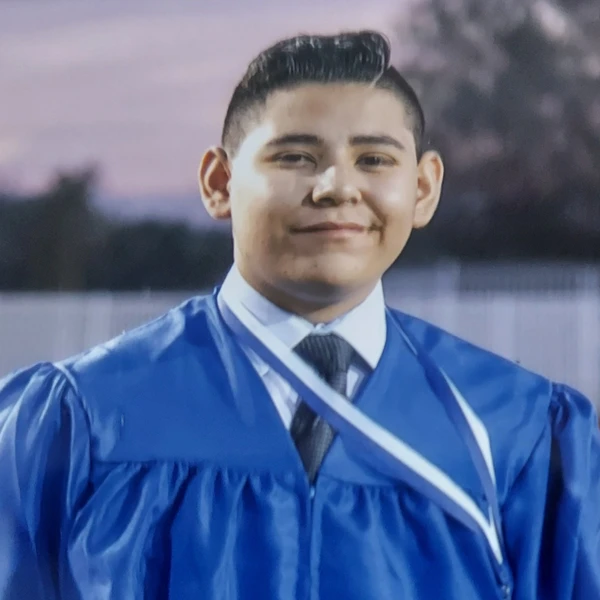
I’m a passionate and determined civil engineering student from California with a strong interest in water resources and sustainable infrastructure. My hands-on experience includes welding through a CTE program and working as a certified lifeguard, where I learned the value of safety, responsibility, and quick decision-making. These roles taught me how to work under pressure and serve my community—skills I now bring into my engineering studies. As a Latino student from a working-class background, I’m driven to create solutions that help underserved communities adapt to climate challenges like flooding and water shortages. I’m committed to using my education and experiences to build a safer, more resilient future through bold, practical engineering.
Education
Imperial Valley College
Associate's degree programMajors:
- Physical Sciences, General
- Public Policy Analysis
- Civil Engineering
Southwest High
High SchoolMiscellaneous
Desired degree level:
Bachelor's degree program
Graduate schools of interest:
Transfer schools of interest:
Majors of interest:
- Mechanical Engineering
- Civil Engineering
Career
Dream career field:
Civil Engineering
Dream career goals:
Civil Engineer
- Calexico Unified School District2024 – 2024
Sports
Baseball
Junior Varsity2021 – 20232 years
Arts
FFA Agriculture-Imperial County
Design2023 – 2025
Public services
Volunteering
CIROS — My role was selling burgers and nachos, also make an exchanged with tickets and not money2024 – 2024
Future Interests
Advocacy
Politics
Volunteering
Philanthropy
Entrepreneurship
Jorge A. Quizhpi Memorial Scholarship
Artificial intelligence (AI) is quickly changing the way we approach civil engineering. From designing smarter infrastructure to predicting potential failures, AI is becoming an essential tool in making our communities safer, more efficient, and better prepared for the future. As a civil engineering student, I believe that embracing AI will be critical to solving some of the toughest challenges our field faces—especially those made worse by climate change and growing populations.
AI is already being used in civil engineering in powerful ways. One major application is in predictive modeling, where AI can analyze vast amounts of data from sensors, weather patterns, and traffic systems to forecast when a bridge, dam, or road might need maintenance or repairs. This helps engineers prevent accidents before they happen, saving lives and reducing repair costs. AI is also used in optimizing construction schedules, budgets, and resources, helping projects stay on track and avoid waste. Even in design, AI tools can create detailed structural layouts based on environmental conditions, material efficiency, and energy usage, leading to smarter, more sustainable buildings and infrastructure.
The benefits of AI in civil engineering are clear. It allows engineers to make faster, data-driven decisions, reduces human error, and provides new insights that would be impossible to find manually. It can even increase safety by using drones and robots to inspect hazardous sites, and smart sensors that alert engineers when something goes wrong in real-time.
However, AI is not without its challenges. Overreliance on algorithms can lead to blind spots—especially if the data is flawed or biased. It’s important for engineers to verify AI-generated results and apply their own judgment. There’s also a learning curve involved; not all engineers, especially those from under-resourced areas, have access to AI training or tools. This could widen the gap between well-funded and underserved communities. Finally, AI cannot replace the creativity, ethics, and human connection that are vital to engineering—especially when working with diverse communities that need personalized solutions.
Despite these concerns, I see AI as a tool, not a replacement for engineers. Just like Jorge A. Quizhpi sought out knowledge through books and newspapers to expand his understanding of the world, I believe today’s engineers must do the same—adapting to new technologies like AI while never losing sight of the human impact of our work. Knowledge is power, and when we use it wisely, we can change lives.
As a Latino student in civil engineering with a GPA above 3.7, I’m committed to using my education to help communities through innovative, ethical, and inclusive solutions. My hands-on experience in welding and lifeguarding has taught me discipline, focus, and the importance of protecting others. These values continue to guide my journey. With the help of this scholarship, I hope to keep learning and leading in a field that has the power to rebuild, protect, and uplift entire communities—especially with the thoughtful use of AI.
James R. Schaaf Civil Engineering Scholarship
When I was younger, I watched my town in California deal with a severe flood that displaced families and overwhelmed roads. My father and I helped our neighbors stack sandbags as the water crept closer to our block. That experience made me realize how unprepared many communities are for extreme weather. It also made me curious about how we could prevent these disasters—and sparked my interest in civil engineering.
Now, as a civil engineering student in California, I see firsthand how climate change is making these problems worse. One issue that hits close to home is the crisis at the Salton Sea. Once a thriving lake, the Salton Sea is shrinking due to decades of poor water management and reduced inflows from the Colorado River. As it dries, toxic dust from the exposed lakebed blows into nearby communities, increasing asthma and other health issues. At the same time, surrounding farmland struggles with water shortages and salinity problems. It’s a perfect storm of environmental, health, and infrastructure challenges—and one I want to help solve.
As a future water resource engineer, I want to be on the front lines of addressing these challenges. I see myself working on projects that manage scarce water supplies more efficiently and protect vulnerable communities. That includes designing sustainable water delivery systems, improving irrigation efficiency, restoring wetlands, and creating barriers that reduce toxic dust emissions. I also want to work on larger-scale infrastructure—like pipelines, reservoirs, or treatment systems—that could bring relief to regions like the Imperial and Coachella Valleys.
Studying civil engineering allows me to build the technical skills I’ll need to tackle these problems. Through courses in hydrology, environmental engineering, and fluid mechanics, I’m learning how water moves, how it can be controlled, and how to build systems that last. I’m also seeking internships and fieldwork that focus on real-world projects—especially those connected to the Salton Sea, the Colorado River, or Central Valley flood control.
As a Latino student from a working-class background, I’ve seen how environmental problems often hit disadvantaged communities the hardest. Many families living near the Salton Sea are low-income and already face barriers to healthcare and clean air. I want to make sure the solutions we engineer are not just effective—but also equitable and inclusive. That means advocating for better infrastructure funding, community involvement in planning, and using engineering to uplift those most at risk.
In the long run, I also hope to inspire the next generation of engineers by working with students from underserved areas. I want them to see how engineering isn’t just about building bridges—it’s about solving real problems that impact real people.
This scholarship would allow me to stay focused on my studies and gain more experience in the field. It would support my goal of becoming a civil engineer who doesn’t just respond to climate change—but helps communities adapt and thrive in the face of it.
The engineering challenges created by climate change are complex, especially when it comes to water. But by focusing on places like the Salton Sea—and combining science, community, and bold ideas—I believe we can build a better future. I want to be part of that future, and this scholarship would help me get there.
Wicked Fan Scholarship
When I first heard about Wicked, I expected nothing more than a retelling of The Wizard of Oz. What I got instead was a powerful story that completely flipped the way I viewed good and evil. The so-called “Wicked Witch” wasn’t wicked at all. She was brave, different, and misunderstood. From the moment I read the book and watched the original musical, I was hooked—not by the magic of Oz itself, but by the truth hiding underneath the fairy tale.
In the book, Elphaba’s life is dark and complicated. She isn’t just some green-skinned villain; she’s a young woman born into a world that judged her from the start. The novel doesn’t shy away from real-world issues. It talks about power, corruption, and the way society silences people who refuse to follow the rules. Elphaba is one of those people. She doesn’t care about being liked—she cares about doing what’s right. And because of that, they call her wicked.
Then I saw the original Broadway musical, and it felt like stepping into that world all over again, but this time, with color, music, and life. It took the heavy themes of the book and wrapped them in something more hopeful. The friendship between Elphaba and Glinda stole the show. Seeing two girls who started as enemies become best friends, only to be torn apart by choices and circumstances, was heartbreaking and beautiful. And when Elphaba sang “Defying Gravity,” I remember feeling like I could do anything. That’s the moment I knew I’d never stop being a fan.
Recently, I watched the new Wicked movie. Visually, it was breathtaking—bigger than the stage, more magical than I could have imagined. But the heart of the story felt a little different. The movie tried to mix the deep, serious tone of the book with the lighter, musical energy of the Broadway show. Sometimes, it worked. I loved seeing characters like Nessarose and Fiyero get more attention. I loved the way Oz came to life on screen. But something about it didn’t hit as hard as watching the story unfold live on stage. It felt safer, like it was trying not to go too dark or too light. Somewhere in between, a bit of the magic got lost.
Still, Wicked continues to stick with me. It’s not just a story about witches or wizards—it’s a story about standing up when the world wants you to sit down. It’s about being different in a place that fears difference. It’s about friendship, sacrifice, and finding your own voice, even when everyone calls you wicked. That’s why I’ll always be a fan. Because in a world full of people choosing the easy path, Elphaba chose the right one. And to me, that makes her the most powerful character of all.
David Ford / HDR College Scholarship
Water has always been a big part of my life, even when I didn’t realize it. Growing up in the Imperial Valley, I’ve seen how important water is for farms, families, and the whole community. I remember hearing about droughts on the news, but it really hit me when I saw fields left empty because there wasn’t enough water. I started paying more attention to how water is managed and how much people depend on it. That’s what inspired me to study civil engineering with a focus on water resources. I want to help find real solutions to these problems so that people, especially in communities like mine, don’t have to worry about water running out or getting damaged by floods.
This scholarship would help me keep moving forward. Paying for college hasn’t been easy for my family, and I don’t want money to be the reason I have to slow down or give up on my goals. I’m studying at a community college right now and plan to transfer to a university to finish my civil engineering degree. This scholarship would let me focus more on school and less on how I’m going to afford it. which would help me build the skills I’ll need in this career.
Water resource engineering matters now more than ever. With climate change causing more droughts and floods, communities need experts who can design systems that keep people safe and protect water supplies. Without that work, families could lose access to clean water, farmers could lose their crops, and cities could face serious damage from flooding. My goal is to be part of the solution—to design systems that make sure water is used wisely and reaches the people who need it most.
In ten years, I see this work becoming even more important. I believe we’ll see bigger challenges with water shortages and extreme weather. But I also believe that engineers like me will have the chance to make a real impact by improving how we manage and protect water. Whether it’s working on flood control projects, improving drinking water systems, or helping farmers save water, I want to be there making a difference.
One experience that really shaped me was helping my dad with his transportation business. I didn’t realize at the time how much it would teach me. I learned how to work hard, talk to customers, and keep going even when things got tough. That experience made me realize how much I enjoy solving problems and helping people. I want to take those same skills into my future career and help solve some of the biggest challenges we face with water.
I believe I’m a good candidate for this scholarship because I care deeply about this work and I’m ready to put in the effort to succeed. I’ve seen the impact water has on people’s lives, and I want to be part of the solution. This scholarship would help me keep going, learn more, and get the experience I need to make a real difference.
SigaLa Education Scholarship
Technology is the language of the future. It influences every part of our lives—how we communicate, build, travel, and solve problems. I have chosen to study engineering, specifically structural engineering, because I want to be part of building that future. I want to design the bridges, buildings, and infrastructure that make communities stronger and safer. More importantly, I want to represent Latino voices in a field where we are often overlooked but deeply needed.
My journey started when I discovered my passion for building and creating through welding and mechanical fabrication. I remember the pride I felt when I completed my first project in high school. That small moment sparked a much bigger dream—to pursue engineering and help design the structures that keep people safe. From that moment on, I knew I wanted to continue learning, pushing my limits, and one day, making an impact on the world through my work.
As a Latino student, I have faced challenges that many others may never experience. Growing up in a working-class family, I have seen my parents work tirelessly to provide for us. Financial barriers have always been present, and the idea of attending college felt out of reach at times. Additionally, there are very few people in engineering who look like me or share my cultural background. This lack of representation can make it easy to feel like you do not belong or that the industry is not built for people like us.
However, I have learned that my identity is not something that holds me back—it is what drives me forward. I carry the strength of my family, my culture, and my community with me. I am proud to be Latino, and I am determined to show that students like me can excel in STEM. Representation matters. It matters to the next generation of Latino students who will see someone who looks like them achieving their goals and know that they can do it too.
My goal is to earn my degree in civil engineering and specialize in structural engineering. I want to use my skills to design safer buildings and infrastructure, especially in communities that are often neglected when it comes to structural safety. I believe that everyone deserves to live and work in spaces that are built to last and protect lives. Through my education, I hope to bring innovative solutions to these challenges and make a real difference in people’s lives.
This scholarship would help me achieve these goals by easing the financial burden that comes with pursuing higher education. It would allow me to focus more on my studies and less on how I will afford tuition, books, and other expenses. More importantly, it would represent an investment not just in my education, but in the future contributions I hope to make in the field of engineering. It would help me move one step closer to becoming the professional I dream of being—someone who builds, who leads, and who inspires others.
I am not just studying engineering for myself. I am doing it for my family, for my community, and for every underrepresented student who dreams of making a difference. I am ready to step up, take on the challenges, and show the world what Latino students are capable of. With the support of this scholarship, I know I can achieve my goals and give back to the communities that have shaped me. Together, we can build a stronger, more inclusive future.
Seymour Philippe Memorial Scholarship
I am proud to be Latino. That pride lives in the way my family gathers around a table full of homemade food, in the sound of Spanish echoing through our home, and in the stories my parents share about their struggles and dreams. Being Latino is more than where my family comes from—it’s who I am at my core. It’s a badge I wear with honor because I come from a people who work hard, fight for their families, and never back down from a challenge.
My roots have taught me the meaning of sacrifice. My parents left their homeland in search of a better life, not for themselves, but for me and my siblings. They faced language barriers, worked long hours in hard jobs, and gave up their own dreams so that I could chase mine. I have watched them make every dollar stretch, put family first, and carry the weight of their hopes on their shoulders. That is what being Latino means to me—carrying the dreams of those who came before me and turning them into something real.
I am passionate about going to college because I refuse to let their sacrifices go to waste. I want to be the first in my family to earn a degree, to stand on a graduation stage knowing that every step I took honors where I come from. My goal is to break barriers in engineering, a field where not many Latinos are seen or heard. I want to walk into rooms where people don’t expect to see someone like me and prove that we belong there just as much as anyone else.
My passion for building started in high school when I joined the welding and mechanical fabrication program. I remember the pride I felt bringing home my first welding project—knowing I had created something with my own two hands. That moment lit a fire in me. I knew I wanted to do more than just build with metal; I wanted to build a future for my family and my community. I dream of becoming a structural engineer, designing the buildings and bridges that hold our communities together.
Outside of school, I’ve worked alongside my dad in his small transportation business. I’ve helped load shipments, earned my forklift certification, and greeted customers with respect and pride. I’ve learned that success doesn’t start in a classroom—it starts with the hustle, the early mornings, and the hard work that my family has lived every day.
I’ve also dedicated myself to helping my community. From giving food to the homeless to handing out cards to the elderly, I’ve seen how small acts of kindness can make a big difference. I’ve worked as a lifeguard, saving lives and keeping people safe. I’ve knocked on doors to raise money for my brother’s school trip. Every one of these experiences reminds me that my story is bigger than just me—it’s about lifting others up along the way.
Being Latino means I carry my culture with pride, my family in my heart, and my future in my hands. I am ready to step into college not just as a student, but as a representative of my people—ready to break barriers, chase my dreams, and build a better future for those who come after me. This is who I am. This is why I’m going to college.
Weld Our Soul Scholarship
My name is Diego Lopez, and I am a dedicated high school student with a strong passion for welding and mechanical fabrication. My journey in welding started when I signed up for my school’s agriculture mechanics program. At first, I wasn’t sure what to expect, but once I picked up the welding torch and made my first weld, I felt something special. I remember the excitement I had when I saw the sparks fly and the satisfaction of joining two pieces of metal together. That moment lit a spark in me that continues to grow every day. I quickly realized that welding wasn’t just a class or a hobby—it was something I could see myself doing for the rest of my life.
Since then, I have worked on several projects in my school’s mechanical fabrication course. From small projects like welding plates together to larger ones like building metal frames, every task has helped me improve my skills and confidence. One of the most rewarding moments was when I finished a class project and proudly brought it home to show my family. They were impressed and proud of what I had created with my own hands. That moment showed me the value of hard work, dedication, and learning a skill that could lead me to a future career.
My passion for welding grew even stronger when I earned my OSHA certification and Forklift Operator certificate. These achievements opened my eyes to the many opportunities available in the welding and fabrication industry. I have also helped my dad with his small business, transporting loads and greeting clients. This experience taught me the importance of customer service, communication, and teamwork. It also showed me how welding and fabrication can support many industries, from transportation to construction and beyond.
In addition to my schoolwork and helping my family’s business, I have taken part in several community activities. I have volunteered to give food to the homeless and participated in events to support children who have lost their parents. I also enjoy visiting elderly community members to give them cards and make them feel remembered and valued. Through these experiences, I have learned the importance of giving back to my community and using my skills to help others.
I believe welding is not just a job—it is a way to build, create, and make a difference. My goal is to continue learning and improving my welding skills by attending trade school or a welding certification program after high school. I am especially interested in learning advanced techniques like MIG, TIG, and Stick welding so I can expand my abilities and become a well-rounded welder. I hope to work in industries such as construction, aerospace, or structural engineering, where I can use my skills to build things that help people in their everyday lives.
This scholarship means more to me than just financial support. It represents the memory of Kevin, a young man who shared the same passion for welding that I have. I am inspired by his story and motivated to continue pursuing this path, not just for myself, but in honor of him and others who have found their purpose in this craft. If I receive this scholarship, I will use it to further my education and training in welding, so I can build a successful future and give back to my community.
I am grateful for the opportunity to apply for this scholarship, and I hope to continue growing as a welder, student, and person. Thank you for considering my application and allowing me to share my story.