Hobbies and interests
Child Development
Communications
Music
Destiny Lopez
1x
FinalistDestiny Lopez
1x
FinalistBio
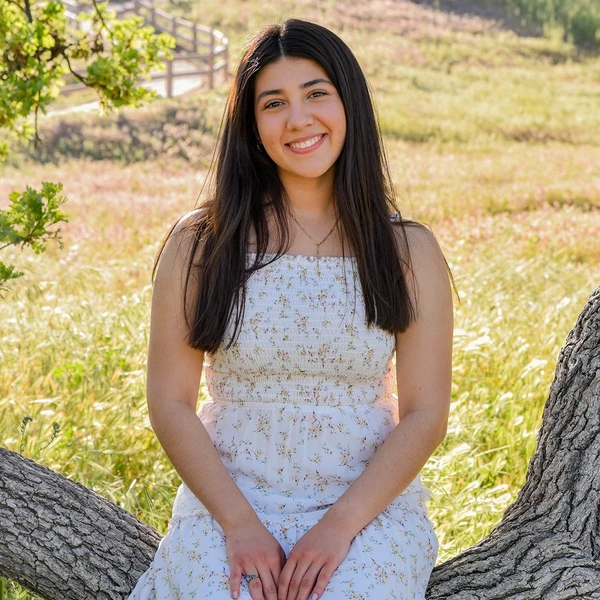
I am a 20-year-old incoming grad student, who is looking to graduate debt-free. I was raised by a single mom who taught me anything was possible, unfortunately I didn't have "college fund" when pursuing my Bachelor's degree so I put in the work and took on two jobs to graduate debt free. I want to obtain my MBA to pave the way for the younger generation in my family, to show that all the sacrifices my mom made paid off, and to prove to myself that anything is possible as long as I never give up.
Education
University of California-Riverside
Master's degree programMajors:
- Business, Management, Marketing, and Related Support Services, Other
San Jose State University
Bachelor's degree programMajors:
- Business/Managerial Economics
College of the Canyons
Associate's degree programMajors:
- Business, Management, Marketing, and Related Support Services, Other
- Business/Managerial Economics
Canyon High School
High SchoolMiscellaneous
Desired degree level:
Master's degree program
Graduate schools of interest:
Transfer schools of interest:
Majors of interest:
Career
Dream career field:
Human Resources
Dream career goals:
Teaching Associate
The Envisioneers2023 – 20252 years
Sports
Tennis
Varsity2019 – 20223 years
Public services
Volunteering
Real Life Church — Children's Ministry Volunteer2018 – 2023
Build and Bless Leadership Scholarship
My faith has profoundly shaped my leadership style by teaching me to lead with humility, compassion, and purpose. Growing up in a household filled with uncertainty, my faith, along with the unwavering support of my mom, became a constant anchor. I didn’t grow up religious, but after navigating a difficult period in my life, I found Christ, and it transformed the way I see the world. Faith taught me that true leadership is not about authority, titles, or accolades, it is about serving others, inspiring hope, and empowering people to reach their full potential just as Jesus did.
I first began to understand this deeply through experiences in my community and family, but a recent experience with my cousin in May painted it in a way that profoundly shaped me as a leader. My cousin, who I grew up with and considered like an older brother, was battling a severe lung disease and didn’t have much time left. My main concern wasn’t just his health, but his salvation; the last time we spoke, he was angry at God for what he was going through. Adding to the challenge, he was incarcerated, making visiting him a long and difficult process.
When I was finally able to see him on Easter Day, I shared the Gospel with him, explaining that he was forgiven of his sins and could be made new if he accepted Jesus. My mom and I, the only believers in our family, prayed for him daily and consistently spoke truth over his life. During our time together, he expressed his fear of suffocating and dying slowly, and I encouraged him to bring those fears to God. Before he passed peacefully in his sleep, he told me he believed in God and was confident he would go to heaven. Experiencing the transformation of his heart, even in such a short time, was deeply humbling and reinforced the power of faith-led leadership. Now that time has passed, I can see how the Lord was there through it all.
This experience shaped me as a leader by highlighting the importance of empathy, patience, and courage. It reminded me that leadership extends beyond professional or organizational success, it involves guiding and supporting people through fear, uncertainty, and moments of vulnerability. Leading through faith means being willing to step into difficult situations, speak truth with love, and empower others to find hope and purpose, even in the face of adversity.
My faith continues to guide my vision for the future. In my career, I aspire to lead with integrity and compassion, fostering environments where teams feel supported, valued, and inspired to grow. I want to build systems and lead people in ways that reflect service, humility, and ethical responsibility, principles rooted in the lessons I have learned from both personal and spiritual experiences. Just as I was able to walk alongside my cousin in his final days, I hope to empower those around me, help them overcome challenges, and create opportunities for them to thrive personally and professionally.
In essence, my faith teaches me that true leadership is measured not by authority or outcomes alone, but by the impact we have on the lives of others. It has shaped my approach to guiding teams, mentoring individuals, and leading organizations. More importantly, it has shaped my understanding of success: a fruitful life is one in which I serve others, inspire hope, and empower people to live with purpose, courage, and compassion.
Healing Self and Community Scholarship
My unique contribution to making mental health care affordable and accessible stems from both my lived experiences and my commitment to creating systemic change. From a young age, I witnessed how stigma, cultural misunderstandings, and lack of resources left people vulnerable and isolated. Watching my uncle struggle with mental health and experiencing my own challenges, including depression in college after the loss of a loved one, taught me that mental health is not a luxury; it is a necessity. Yet for too many, access to support remains limited, expensive, or culturally stigmatized.
One specific idea I am passionate about is creating a community-based telehealth platform that connects trained counselors and licensed therapists with underserved populations. It would offer sliding-scale fees, flexible scheduling, and culturally sensitive support for communities that may otherwise avoid mental health care due to cost or stigma. By combining technology with local outreach, the platform could provide virtual therapy sessions, group support programs, and mental health education workshops, making professional care available to anyone who needs it, no matter where they live.
My approach would not only focus on access but also on reducing stigma. Integrating educational initiatives into the platform and partnering with community organizations, would hopefully normalize conversations about mental health and empower individuals to seek help without shame or fear. I want to create systems, policies, and initiatives that empower anyone in need to access support, remove barriers to care, and build a culture where mental well-being is prioritized, normalized, and accessible to all.
Ethel Hayes Destigmatization of Mental Health Scholarship
My experiences with mental health have profoundly shaped my goals, relationships, and understanding of the world. As a child, I noticed early on that I felt emotions more deeply than many around me. Joy, sadness, fear, and grief seemed to hit me harder, and I often found myself becoming numb after experiencing loss or hardship. At the time, I didn’t realize that this wasn’t typical. I just assumed that everyone felt life this intensely, and I silently struggled to make sense of my feelings. Growing up, I was surrounded by a culture that didn’t believe in mental health. Struggles like anxiety, depression, or grief were seen as weaknesses, signs of fragility rather than human experiences. Opening up about my emotions felt impossible because I feared judgment and being labeled weak. This mindset made it hard to process the trauma I encountered, and it only deepened the isolation I felt.
One experience that marked me forever was witnessing my uncle, who struggled with mental health, harm himself when I was a child. That moment terrified and traumatized me. I felt helpless and alone, and I buried my fear and pain, not knowing how to cope. Years later, in college, I faced my own mental health crisis after losing a loved one. I had always excelled academically, so failing my first class during that period was crushing. Coupled with guilt for not being home when my loved one passed, I fell into a deep depression. I felt useless, like I had failed not just myself but everyone who had ever believed in me.
It wasn’t until I began therapy that I started to understand that what I had been taught about mental health was wrong. I learned that my feelings were valid and that acknowledging struggles was a sign of strength, not weakness. Therapy taught me to unlearn unhealthy coping mechanisms, like bottling up pain, numbing myself, and pushing through without support, and to replace them with healthy habits, such as seeking help, setting boundaries, and processing grief in constructive ways. The journey has been long and challenging, but it has transformed my life. I gradually rebuilt my confidence, restored my GPA, and earned a place on the Dean’s List. More importantly, I learned to prioritize my mental well-being and to maintain a balance between work, school, and self-care. These experiences have given me a deep empathy for others, teaching me to approach relationships with patience, understanding, and compassion. I now recognize that everyone carries unseen burdens, and that true connection requires openness and support.
Mental health struggles have shaped how I understand the world. I have learned that strength is not the absence of struggle, but the courage to face pain, seek help, and persevere. They have shown me that success is not measured solely by accomplishments, but by resilience, self-compassion, and the ability to positively impact the lives of others. Today, I take mental health very seriously, not only in my own life, but in the way I approach and support the people around me. It is a lifelong commitment to honor the emotional complexities of being human and to ensure that no one feels they must suffer in silence.
Marilynn Walker Memorial Scholarship
Higher education will fuel my future in business by giving me the knowledge, structure, and network to transform my determination into meaningful leadership. Over the next three to five years, I aim to grow into an operations leadership or strategic management role at a company that values innovation and social impact. In the long term, my dream is to become a Chief Operating Officer (COO) of an organization that not only runs effectively but also creates jobs, serves communities, and empowers people.
Growing up, many of my aunts and uncles would tell me that one day I would marry a man who would take care of me. But watching my single mother raise me on her own and make numerous sacrifices taught me a very different lesson. She showed me that women are capable of far more than society often expects, and she inspired me to push myself to succeed through my own hard work. Her strength became my foundation, and it fuels my desire to prove, to myself, to my family, and to future generations, that women can achieve success, independence, and leadership at the highest levels of business. It has always been her and I my whole life, and ever since I was young, she instilled in me to never give up and to always work hard.
That is why empowering women is at the center of my goals. I want to help other women excel in business and create opportunities for them to thrive in every organization I am part of. Whether through mentoring, inclusive leadership, or building systems that open doors for others, I want my career to reflect the values of integrity, equity, and service. To achieve this, I need more than ambition, I need the strategic insight, analytical skills, and leadership development that higher education provides. An MBA program will equip me with the tools to streamline operations, optimize systems, and lead teams with both efficiency and empathy. Just as importantly, it will connect me with peers, mentors, and mission-driven organizations that share my vision of using business as a force for good.
For me, higher education is not just about career advancement; it is about transformation. It will help me turn vision into execution and ensure that I am prepared to lead organizations that are not only successful but also responsible, inclusive, and empowering. With this foundation, I will continue to break barriers, uplift communities, and create pathways for other women to lead.
Mireya TJ Manigault Memorial Scholarship
I grew up in South Central Los Angeles, where poverty was part of everyday life. My mom raised me on her own, and while we didn’t have much, she instilled in me the belief that anything was possible if I worked hard and never gave up. Living in the “City of Angels,” I often noticed how communities like mine were forgotten and left behind. That reality shaped me and broke me as a young kid. I didn't understand why all my friends at school had parents gone all day working just to provide, or why children joining gangs was seen as normal. This reality pushed me to want more for myself, my family, and my community.
From a young age, I threw myself into school and excelled. Education became my way of proving to myself that I could rise above my circumstances. I challenged myself to take on more than what was expected, enrolling in community college while still in high school. By the age of 20, I had already earned my undergraduate degree, a milestone that symbolized both my dedication and my mom’s sacrifices.
But my journey hasn’t been without setbacks. When I transferred to San Jose State University, I left behind my family and my familiar support system. During that time, I also experienced a personal loss that shook me deeply. My biggest fear of moving away from home was that something would happen to my family and that I wouldn't be there with them. I also felt an immense amount of guilt for leaving my family behind to pursue my education up north. I had been working since the age of 16 just to help provide for my family and for my own needs. The combination of grief, distance, and pressure caught up with me, and for the first time in my academic career, I failed two classes. My mental health declined, and without the constant validation of academic success, I felt lost.
It took reflection and self-compassion to realize that failure did not define me. I had been pushing myself for so long that I forgot to give myself grace. I began to recognize that the same resilience that got me through my childhood struggles was still within me. Instead of being ashamed of my setbacks, I now see them as part of my growth. They taught me that success is not only about achievements, but also about perseverance, balance, and learning to honor my own well-being. Today, I carry both my triumphs and challenges with pride. They remind me of where I came from, the strength I’ve developed, and the responsibility I feel to continue striving, not just for myself, but for my family and for the communities that deserve to be seen and uplifted.
Looking ahead, my goal is to use my education and experiences to build a career that creates opportunities for underserved communities like the one I grew up in. I want to break cycles of poverty, expand access to resources, and serve as a role model for young people who feel overlooked. This scholarship would not only ease the financial challenges of pursuing higher education, but it would also allow me to focus fully on achieving these goals. By supporting me, you are also supporting my mission to uplift families and communities who deserve to believe in brighter possibilities.
Sloane Stephens Doc & Glo Scholarship
I grew up in South Central Los Angeles, where poverty was part of everyday life. My mom raised me on her own, and while we didn’t have much, she instilled in me the belief that anything was possible if I worked hard and never gave up. Living in the “City of Angels,” I often noticed how communities like mine were forgotten and left behind. That reality shaped me and broke me as a young kid. I didn't understand why all my friends at school had parents gone all day working just to provide, or why children joining gangs was seen as normal. This reality pushed me to want more for myself, my family, and my community.
From a young age, I threw myself into school and excelled. Education became my way of proving to myself that I could rise above my circumstances. I challenged myself to take on more than what was expected, enrolling in community college while still in high school. By the age of 20, I had already earned my undergraduate degree, a milestone that symbolized both my dedication and my mom’s sacrifices.
But my journey hasn’t been without setbacks. When I transferred to San Jose State University, I left behind my family and my familiar support system. During that time, I also experienced a personal loss that shook me deeply. My biggest fear of moving away from home was that something would happen to my family and that I wouldn't be there with them. I also felt an insane amount of guilt for leaving my family behind to pursue my education up north. I had been working since the age of 16 just to help provide for my family and for my own needs. The combination of grief, distance, and pressure caught up with me, and for the first time in my academic career, I failed two classes. My mental health declined, and without the constant validation of academic success, I felt lost.
It took reflection and self-compassion to realize that failure did not define me. I had been pushing myself for so long that I forgot to give myself grace. I began to recognize that the same resilience that got me through my childhood struggles was still within me. Instead of being ashamed of my setbacks, I now see them as part of my growth. They taught me that success is not only about achievements, but also about perseverance, balance, and learning to honor my own well-being. Today, I carry both my triumphs and challenges with pride. They remind me of where I came from, the strength I’ve developed, and the responsibility I feel to continue striving, not just for myself, but for my family and for the communities that deserve to be seen and uplifted.