user profile avatar

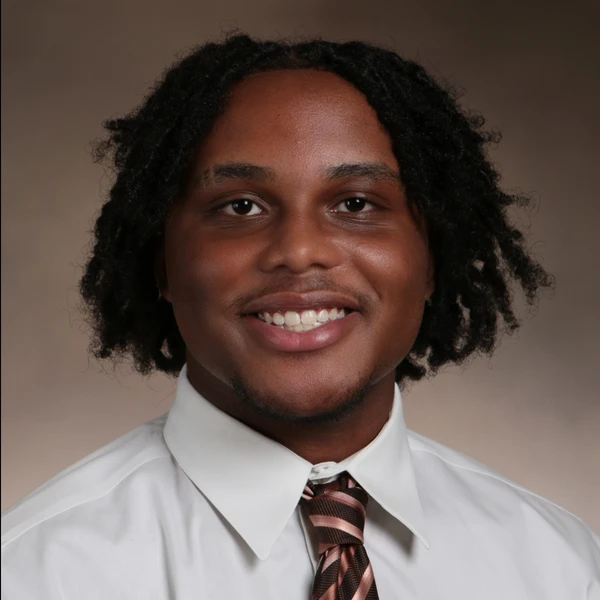
Derek Pearson

1x

Finalist

Bio

My name is Derek Pearson, and I’m a driven high school junior with a deep passion for finance and business. My ultimate goal is to become a private equity professional and eventually launch my own investment banking and private equity hybrid firm. I’m inspired by the potential of financial markets to transform businesses and economies, and I want to be at the forefront of that change. What excites me most about finance is the opportunity to solve complex problems while making a meaningful impact, especially within underrepresented communities. I believe financial literacy and access to capital are essential tools for empowering individuals and creating a more equitable economy. My vision is to not only build a successful career but also to give back by helping close the wealth gap in underserved communities. I’m committed to achieving excellence in everything I do. I’ve taken honors and dual credit courses to prepare myself for the rigorous academic journey ahead, and I’ve embraced leadership roles in programs like Kappa League and Educational Justice. These experiences have helped me develop skills in leadership, communication, and problem-solving—qualities that I believe make me a strong candidate for scholarships. Being the only African American in many of my classes has motivated me to strive for Black excellence and break barriers in the finance world. I’m dedicated to making the most of every opportunity, and I know that with financial support, I can continue to excel academically and reach my long-term career goals.

Education

Morehouse College

Bachelor's degree program
2026 - 2030
  • Majors:
    • Business Administration, Management and Operations
De Sales High School

High School
2022 - 2026

Miscellaneous

  • Desired degree level:

    Bachelor's degree program

  • Graduate schools of interest:

  • Transfer schools of interest:

  • Majors of interest:

    • Business Administration, Management and Operations
    • Finance and Financial Management Services
  • Not planning to go to medical school
  • Career

    • Dream career field:

      Financial Services

    • Dream career goals:

      Becoming a private equity professional and eventually launching my own investment banking and private equity hybrid firm

      Sports

      Archery

      Varsity
      2024 – Present2 years

      Wrestling

      Varsity
      2022 – Present4 years

      Lacrosse

      Varsity
      2022 – Present4 years

      Research

      • Finance and Financial Management Services

        National Association of Black Accountants — Chief Financial Officer
        2025 – 2025

      Public services

      • Advocacy

        Black Youth Empowerment Network — Member
        2025 – Present
      • Volunteering

        Louisville Youth Philanthropy Council — Board Member
        2025 – Present
      • Volunteering

        Kappa League — Election Committee Chair
        2022 – Present
      • Public Service (Politics)

        Educational Justice — Tutor/Activist
        2024 – Present

      Future Interests

      Volunteering

      Philanthropy

      Entrepreneurship

      SCFU Scholarship for HBCU Business Students
      There is a certain silence that lives in underserved communities. It is the silence of abandoned buildings with boarded windows. The silence of talent overlooked. The silence of young Black children walking past liquor stores and payday loan shops more often than banks, investment firms, or thriving businesses that reflect their potential. It is the silence created when generations are taught how to survive, but rarely given the tools to build wealth. I grew up understanding that poverty is not simply a lack of money. Poverty is the theft of options. It limits where people can live, where children can learn, what risks families can afford to take, and sometimes even how far a person allows themselves to dream. That is why I believe economic empowerment is one of the most powerful forms of social justice. When communities gain ownership, investment, and financial literacy, they gain freedom. The freedom to create, to build, to lead, and to leave something behind for the next generation. My vision for change begins with business because business shapes the structure of everyday life. It determines which neighborhoods receive investment and which are neglected. It determines who has access to opportunity and who is locked outside the doors of wealth creation. Too often, underrepresented communities are only included as consumers within the economy instead of owners, executives, and decision makers. I want to help change that reality. As a student pursuing a future in finance, asset management, and hedge funds, I aspire to build more than personal success. I aspire to build economic pipelines back into communities that have historically been denied access to capital. I want to create investment initiatives that support Black entrepreneurs, expand financial literacy, and increase ownership within underserved communities. Wealth should not be something that feels distant or inherited only by a select few. It should be something communities are equipped to create for themselves. To me, business innovation is not only about technology or profit margins. True innovation is creating systems that restore dignity and opportunity to people who have been excluded from both. Imagine what could happen if young Black students grew up seeing venture capital firms in their neighborhoods instead of vacant lots. Imagine if financial education was treated with the same urgency as athletics. Imagine communities where Black entrepreneurship was not viewed as exceptional, but expected. I also want my career to challenge the image of who belongs in elite financial spaces. Historically, industries like hedge funds and private equity have lacked Black representation, especially in leadership. Representation matters because visibility expands imagination. When young people see Black professionals managing wealth, leading firms, and shaping markets, they begin to understand that those spaces belong to them too. My commitment to social equity is deeply personal. As a Black man with a speech impediment, I understand what it feels like to be underestimated before you even speak fully. Those experiences taught me that many systems were not designed with people like me in mind. Instead of allowing that realization to discourage me, it fueled me. It made me determined to enter rooms where people who look like me have historically been absent and ensure the door remains open behind me. The leaders who created Social Change Fund United understood that real change requires both protest and progress, both voice and vision. I do not simply want to accumulate wealth. I want to weaponize opportunity against inequality. I want to build institutions that outlive me. Most importantly, I want young Black children to inherit communities filled not with silence, but with possibility.
      RonranGlee Literary Scholarship
      One paragraph from ancient philosophy that has always stayed with me comes from Book VII of The Republic by Plato during the “Allegory of the Cave”: “And if they were able to converse with one another, would they not suppose that they were naming what was actually before them? … To them, I said, the truth would be literally nothing but the shadows of the images.” Plato’s deeper meaning in this passage is not simply that people can be ignorant. He is arguing that human beings often become emotionally attached to limited versions of reality because those versions are comfortable, familiar, and socially accepted. The prisoners in the cave do not know they are trapped because the shadows have become their definition of truth. Plato is suggesting that one of the greatest obstacles to knowledge is not a lack of intelligence, but the false confidence that we already understand the world correctly. What makes this passage so powerful is that Plato is not really talking about a physical cave. The cave represents the mental and social limitations people live inside every day. Human beings naturally absorb beliefs from the environments around them. Families, schools, governments, social classes, and cultures all shape the way people think before they are even old enough to question those ideas. The prisoners accept the shadows because the shadows are all they have ever known. In the same way, many people accept inherited beliefs, social norms, or stereotypes without ever examining them deeply. The wording “the truth would be literally nothing but the shadows” is especially important because Plato chooses the word “truth,” not “opinion.” The prisoners are not pretending the shadows are real. They genuinely believe the shadows are reality itself. Plato is making a disturbing point about human nature. People can become so accustomed to illusion that illusion begins to feel more natural than truth. Once that happens, challenging those illusions becomes painful because it forces people to confront how limited their understanding has been. I also think Plato is describing the loneliness that often comes with growth and education. In the larger allegory, when one prisoner leaves the cave and discovers the outside world, he eventually returns to help the others understand the truth. Instead of celebrating him, the prisoners reject him because his new understanding threatens the reality they depend on. Plato is implying that enlightenment can isolate people from the communities they once belonged to. Knowledge is not always comforting. Sometimes it creates distance between a person and the world around them. This idea still applies strongly today. People often live inside modern “caves” created by social media, political division, economic inequality, and misinformation. Algorithms constantly reinforce existing opinions, making people more confident in what they already believe instead of encouraging deeper thought. Many individuals only consume information that agrees with their worldview, which creates intellectual shadows similar to the ones Plato described thousands of years ago. His argument remains timeless because human beings still struggle to separate appearance from reality. On a personal level, this passage resonates with me because education has changed the way I see the world. As a Black student interested in finance and leadership, I have become increasingly aware of how systems, environments, and expectations shape the opportunities people believe are possible for themselves. Many young people grow up surrounded by limitations that quietly convince them to dream smaller. Plato’s cave reminds me that growth often begins when someone questions the reality they were handed and imagines something larger beyond it. Ultimately, Plato’s underlying message is that true education is not the memorization of facts. It is the painful but necessary process of challenging assumptions and learning to see beyond comforting illusions. The prisoners mistake shadows for reality because they have never experienced anything else. Plato warns readers that without reflection and intellectual courage, human beings can spend their entire lives trapped inside invisible caves without ever realizing it.
      WCEJ Thornton Foundation Low-Income Scholarship
      I have always believed that success means nothing if you are the only person who benefits from it. My dream is not simply to become wealthy or respected. My dream is to become the kind of man who opens doors so wide that generations after me can walk through them without fear. Higher education is the foundation that will allow me to build that future. As a young Black man with a speech impediment, I learned early what it feels like to be underestimated. I know what it is like to have thoughts too powerful to remain silent, yet struggle to get the words out before someone cuts you off or assumes you are less capable. There were moments where speaking felt like a battle between my mind and my mouth. Still, those experiences never weakened my ambition. If anything, they strengthened it. They forced me to develop resilience, discipline, and a deep understanding of perseverance. They taught me how to listen, how to observe, and how to carry myself with quiet determination even when the world was not patient enough to hear me fully. That is why education means so much to me. To me, higher education is not just about earning a degree. It is liberation. It is access to knowledge, opportunity, and power in a society where Black excellence has often had to fight to be recognized. College will prepare me to enter the world of hedge funds and asset management, fields where Black representation remains painfully limited. I want to master finance because money moves the world. Wealth shapes communities, influences education, creates opportunities, and determines which neighborhoods thrive and which are forgotten. I want to understand that system deeply enough to not only succeed within it, but to use it to uplift others. My goal is to build a career in hedge funds and eventually create my own firm. I want to create generational wealth not out of greed, but out of responsibility. Far too many communities like mine have talent without resources, brilliance without investment, and dreams without support. I want to reinvest into those communities through philanthropy initiatives focused on mentorship, education, financial literacy, and economic opportunity. I want young Black students to look at my story and realize that their circumstances do not define the height of their future. Most importantly, I plan to establish a full ride scholarship program for students with speech impediments. I know how lonely that struggle can feel. I know what it is like to rehearse a sentence in your head before saying it aloud. I know the embarrassment of stumbling over words while people look away awkwardly or finish your sentence for you. Those moments stay with you. They can either break your confidence or build your character. For me, they built mine. I want students who struggle with speech to know that their voice still matters, even when it shakes. I want them to understand that leadership is not defined by perfect speech, but by courage, vision, and the willingness to keep speaking anyway. That scholarship will not just pay tuition. It will send a message. It will tell young people who feel invisible that they are seen. It will remind them that greatness is still possible for them. I want my life to stand for something larger than personal success. I want it to stand for empowerment. I want to be remembered as someone who reached heights that once felt impossible, then turned around and pulled others upward with him. Higher education will give me the tools, knowledge, and network to make that vision real. It will help me transform struggle into purpose and ambition into impact. True success is not measured by how high one person rises. It is measured by how many people rise because you refused to forget where you came from.