
Hobbies and interests
Archery
Athletic Training
Biology
Camping
Volunteering
Cooking
Conservation
Fishing
Hiking And Backpacking
Dennis Newman
1x
Finalist
Dennis Newman
1x
FinalistBio
My goal is to become a wildlife biologist. Currently I work in fisheries for First Nations people as a Research Technician. I have been attending school full time at Skagit Valley Community College while working and raising my son. I just completed my AAS-T in Environmental Conservation and I wish to attend WSU online to complete my BAS!
Education
Skagit Valley College
Bachelor's degree programMajors:
- Environmental/Natural Resources Management and Policy
Stanwood High School
High SchoolMiscellaneous
Desired degree level:
Bachelor's degree program
Graduate schools of interest:
Transfer schools of interest:
Majors of interest:
- Biological and Physical Sciences
- Botany/Plant Biology
- Marine Sciences
- Geological and Earth Sciences/Geosciences
- Zoology/Animal Biology
Career
Dream career field:
Fishery
Dream career goals:
Biologist
Research
Fishing and Fisheries Sciences and Management
Skagit River System Cooperative — Research tech2023 – Present
Public services
Volunteering
Swinomish Tribe — Research Tech2024 – 2024Volunteering
Skagit Land Trust — Research Tech2025 – 2025
Future Interests
Advocacy
Politics
Volunteering
Philanthropy
Entrepreneurship
Law Family Single Parent Scholarship
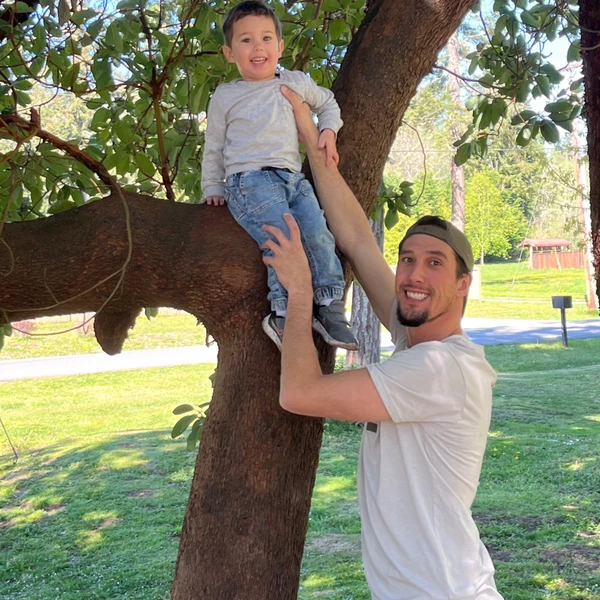
My name is Dennis Newman, I am a father to an amazing four year old who has become my adventure buddy. I am very tied to the outdoors so we are constantly exploring our local ecosystems by hunting, fishing and harvesting. Being a single parent has given me tons of motivation to continue my pursuit of academia involving environmental studies. I love to show my son how learning helps us grow and connect to what we love on a deeper level. School has been a blessing in my life, it has helped me focus on long term goals and has expanded my outward thinking about the world around me. I take what I learn in class, and bring it into the outdoors with my son in tow, teaching him the connectivity between us and our surroundings as well as how flora and fauna relate and adapt to their micro and macro environments throughout our state.
My son spends a lot of time with me while doing homework, and I think it is very beneficial to him to see the enjoyment I get from schooling. It directly transfers over to him when we read, practice writing his name or figuring out how puzzle pieces form together. If dad has a thirst for knowledge, his little buddy will want to mirror his image! My son is the reason I went back to school. I was a long time executive chef who worked his way from a prep cook to owning and operating his own restaurant by the age of 27. Covid came, and my restaurant was gone at year three.
When I had my son, I took a job in San Fransisco as an executive chef of an upscale retirement community to build a new life, pay off debt from the restaurant closing and start a new with our little family (his mother still in the picture). Unfortunately, I ended up working 15-16 hour days and missing all his first holidays. I decided I wanted to be there for my son and take a career path that would allow quality of life, a purpose, and something I could translate to making a better future for him and his generation. I thought environmental conservation would be perfect for me! His mother thought that was a pipe dream and left upon our arrival back in Washington, she wanted the paychecks, not piece and quality of life.
My son gave me the strength to rebuild my life through academia and we are in such an amazing place now! I want to take my knowledge of environmental conservation, and help regenerate our forests and waters to combat our anthropogenic footprint we leave in a negative manor on our landscape. I want my son and his generation to get to experience the beauty and love for the outdoor I grew up with by seeing native flora and fauna succeed with the environmental changes like global warming and outward expansion of our townships. With knowledge of conservation, we can keep our ecosystems in balance and provide a world we can connect to our environment in a positive light.
Future Green Leaders Scholarship
Sustainability is crucial to reduce our anthropogenic footprint to the greater Skagit watershed as there is a decline in natural origin salmon populations, primarily Chum and Chinook, which are a keystone species. The loss of natural origin fish will directly correlate to habitat degradation from intertidal marshlands to montane forest and even up to sub alpine regions within certain tributaries. We as humans cause massive habitat loss along waterways to expand townships, cultivate agricultural crops and harvest natural resources. Environmental planning and mitigation needs to be held to a high degree as we are loosing riparian buffers, losing sinuosity and morphology of waterways degrading habitat complexity, creating erosion resulting in sediment deposition and ultimately raising the temperature of the water through global warming. With the loss of a keystone species such as salmon, we are relying on supplementing native fauna with hatchery fish which results in spreading of disease, competition of resources and a decrease in fitness through cross breading. All of this stems from habitat loss. Our agricultural resources are important to supply our growing population with food but at a cost. Over tilling land depletes nutrients that used to supplied by flood planes and input from salmon carcasses after spawning are now supplemented with fertilizers creating runoff and excess nutrient and pollutants in our waterways. Diking has cause a shift in water storage and habitat complexity degradation. Up river logging has caused erosion, mass wasting and riparian buffers to be depleted warming water from lack of shade and large woody inputs for aquatic fauna habitat. Erosion from buffer loss created sediment deposition covering gravel bars for spawning and choking out the water.
Sustainability practices need to be implemented throughout the watershed. Creating buffer zones along the rivers and tributaries, holding the logging industry accountable for water quality and replanting a variety of native flora to not create monocultures with in our montane forests. The agricultural industry needs to progress their planting cycle to create natural nutrient inputs into the soil and fight against invasive species spread by their equipment along the waterways. There needs to be riparian buffer zones along the banks with natural flora to create shade for warming waters and be held accountable for runoff and pollutants introduced into the watershed.
I believe through my work and studies in fisheries research, I can help spread the light on problems we as humans are creating within our own watershed. I would be able to speak for salmon, and show the importance that they bring to our ecosystem as a keystone species. There are many studying happening to tributaries and rivers about environmental degradation as a result to a loss of salmon in the waterways. I would like to open up the eyes of the public about our long term benefits of keeping these fish in healthy numbers and how we can lower our anthropogenic footprint in our beautiful area.
Veterans Next Generation Scholarship
I am the proud son of US Navy vet. I was very fortunate that my father never suffered from PTSD and maintained in good mental and physical health after years of service. My father has always had a passion for adventure, this was a large contributor to his service in the US Navy. My father is a big outdoorsman and always took me on hunting and fishing adventures ever since I was a young boy. He taught me how to navigate the wilderness, be brave, and endure the mental strength for long hikes on unforgiving terrain. These are all attributes he learned while in the service. He would tell me stories of his travels, the places he went and the people he met. My love for the outdoors started with his guidance. He felt at peace in nature, and soon I did too. Eventually I branched off on my own, hunting and fishing the backcountry of the north Cascades, exploring the depths of the Puget Sound spear fishing, and traveling further and deeper into unknown regions secluded from man, learning about the native flora and fauna and how they connected to their environment. Years of hunting, fishing and harvesting led me into the academic career path of pursuing my AAS in environmental conservation so I could study our micro and macro ecosystems throughout Washington state and leave a world for my son and future generations to appreciate as my father and myself have. My father instilled a hard work ethic, manors and pride in myself for whatever I do starting at a young age. He always told me, "No matter what you do, try and be the best at it." That really stuck with me. He was big on building a work ethic and entrepreneurial mindset starting me off mowing the lawn, trimming trees and maintaining our property. By the time I was 16, I had many clients of my own in various neighborhood making a good living for a teenager in school. I would use this money to buy my first bass boat and start competing in local fishing competitions. My father has always supported my love for the outdoors, encouraging me to embrace the weather and solitude, to find beauty in the terrain, and enjoy the sweat equity scaling mountains. I now work in fisheries and volunteer with wildlife monitoring programs. I will be starting my BAS this next quarter and will be applying for my first field biologist position. I hope one day, to be able to be a wildlife biologist, turning my passion into my career.
Organic Formula Shop Single Parent Scholarship
The most challenging part navigating the combination of being a non traditional student and single parent is balancing work, quality time with my son, and keeping up on studies. I work 32 hour hours a week since I have to miss work for labs in school. The hours missed working drastically cuts into my monthly budget needs but if I miss labs, I won't pass the class. This last quarter was especially tough as I not only missed a day, but had class on one campus in the morning and then a night lab at another campus an hour and a half away from home. That commute added expenses onto of a lost day at work as well. Throughout the last three years pursuing my AAS, I have had to take extra jobs such as Uber Eats or roofing to try and supplement lost hours which results in less time for studies and less time with my son. I have maintained a 3.8 GPA at the expense of rest and leisure time. It breaks my heart to tell my son I can't play because I have to work an odd job to make extra income as I will not allow us to go into debt. My son is very understanding when I have to focus on homework. There have been some quarters where I have had 20 credits (4 classes) to try and speed up my degree progress and spend every minute I am home at the computer with very short breaks to play with him. He knows I am doing it for us so it keeps me going. We live on a very tight budget and I would like to spend more time with him on weekends to play, learn and grow together. I am extremely fortunate to have wonderful parents to help me out, but they are older and I know worn out by the end of the day by a very energetic four year old.
This scholarship would help give us financial peace. I would be able to keep up on my studies, and not work as much on my days off to spend time with my son. I am trying to get accepted into WSU online for my BAS in environmental conservation so I can work full time and can slow down on working on my weekends. The university is more expensive than Skagit Valley Community College where I attend but will be better for me in the long run academically and with time management. I will be attending two more quarters at Skagit Valley College to supplement a few classes from WSU to save money and will have to miss more work for the short term as there are labs I will have to attend and possibly lectures. A scholarship would help supplement that extra money needed for our expenses and would also be very helpful for future classes at Skagit or WSU. Without working weekends, my son can get the attention he deserves from me with tremendous love and laughter. I know he'll remember how hard his dad worked to give him the life he deserves, to be well taken care of, and memories of affection. This would all translate to personal growth for him in a positive light. The sacrifices single parents make while attending school takes great discipline, hope and foresight for a better future. I give the upmost respect to those working hard to give their family a better life and show their children that hard work and dedication can and will pay off.
Willie Louis Pegues Science Scholarship
My name is Dennis Newman, a long time executive chef, I transitioned to the field of environmental conservation working as a research technician for First Nations peoples within the Skagit watershed. My love for environmental sciences started as a young boy fishing, hunting and foraging throughout Washington state with my father. I formed a strong connection with the land and an appreciation for our various ecosystems. As I grew older, I explored more in the backcountry of the north Cascades and started scuba diving deep in to waters of the Puget Sound. When I was a chef, I worked on farms to learn about where our produce derived from and served farm to table, "wild" game and northwest seafood. I became obsessed with how we treat our food, the connectivity it has to our environment and our anthropogenic footprint we leave harvesting and cultivating crops. When my son was born, I decided it was time for a career change and wanted to fully immerse myself in my love for the outdoors and form a deep understanding of our micro and macro ecosystems with like minded people.
I have been fortunate in my academic journey to land in fisheries. I grew up fishing the Stilliguamish River and have seen its ups and downs with fish escapement numbers. Port Susan and Skagit Bay were also my backyard where I would hunt, fish and crab. Working in fisheries has allowed me to study my stomping grounds and understand how they function within the hydrological cycle of our regional biome and how they act as habitat for a multitude of species. I see how anthropogenic causes directly or indirectly correlate to degradation of habitat or how restoration may positively impact reproduction and longevity of marine and terrestrial animals. Working in fisheries gives me a greater understanding of the ecology of the Stilliguamish and Skagit watershed from keystone species, nutrient input and transfer, hydrology and the connection with First Nations peoples and buffers as well as habitat from the head waters of tributaries in the North Cascades down to the nearshore estuarine marshes.
My short term career goals would be to attain a field biologist position with the non profit I work for currently. I am constantly looking for wildlife technician jobs as long term I would love to be a wildlife biologist, but in western Washington, the jobs are few and far between. I find fisheries very fascinating and I like the variety I get to experience such as floating the nearby rivers for EDNA and electro shocking, or deploying large beach seines in Skagit bay. It's always different. Salmon are our keystone species and without them, there will not be much wildlife to study and our forests will degrade leaving our ecosystem shattered.
This scholarship would help me out tremendously helping lift the financial burden of pursuing my BAS. I am a single parent to a wonderful little boy, and debt just is not an option for me at my life stage. I am a non traditional student, climbing the ladder once more. I plan on pursuing academia as long as I can afford it, hopefully achieving a masters in years to come. I have been working full time in my field while attending school full time and just finished my ASS while also getting certificates in GIS and Advanced Wetland Delineation. I have a lot of passion for this career and work hard to achieve my goals. A scholarship would greatly help out!
Captain Jeffrey McFetridge USN (Ret) Scholarship
My name is Dennis Newman. Currently I work as a fisheries research tech for First Nations people. Growing up hunting, fishing and harvesting throughout the state of Washington, I became connected to our local macro and micro ecosystems and dedicated myself to learning the connectivity of native flora and fauna to their environments. I wanted a career path to emerge myself in the outdoors and environmental conservation was the way to do it! I would like to be a very well rounded ecologist but primarily focusing on wildlife biology or fisheries since salmon, primarily natural origin Chinook salmon, are a keystone species of ours. I hope to learn all I can about the connectivity of the species to our watershed and greater spatial area. With the downfall of salmon, our habitat degradation will be prominent as can be seen on many river such as the Elwa (pre dam removal) or many streams and tributaries in Alaska. The loss of a keystone species spreads to great lengths spatially affecting forests, soil composition, fauna abundance and downstream nutrient input. I want to help combat our negative anthropogenic fingerprint and leave a beautiful world for future generation to enjoy!