1. Tell us about yourself.
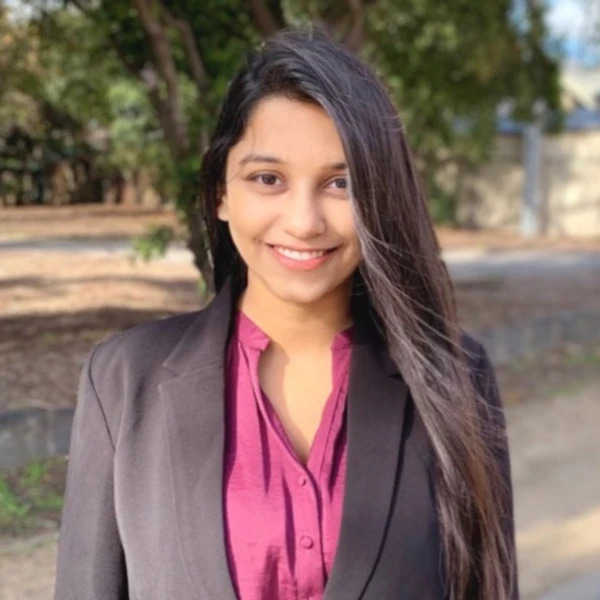
I am a biology teacher, a relentless learner, a storyteller of cells, and someone who believes that science, when taught with love, can change lives. I became a high school biology teacher at 19, not through some dramatic movie-like twist, but because I loved biology so much it physically hurt to see my peers back in Bangladesh dismiss it as dull memorization. I believed biology could be beautiful, elegant, even poetic, and I set out to teach it that way.
What drives me is the desire to help people see that beauty: in the sweeping arc of evolution, in the precision of DNA replication, in the silent, powerful pulse of the heart. My work has evolved since then, from running a grassroots coaching center out of my living room, to studying medicine and global policy, to now researching the regenerative potential of heart cells. But my mission remains the same: to teach, to heal, and to serve with empathy and evidence hand in hand.
2. What’s a real-world issue you feel deeply connected to, and why?
I feel deeply connected to the failure of healthcare systems to serve the most vulnerable. I saw it firsthand growing up in Dhaka, where delayed diagnoses, misinformation, and inequity led to preventable deaths, one of which took the person I loved most when I was just ten years old. Later, while teaching in underserved communities and speaking with students whose family members avoided care due to stigma or cost, I realized that healing the body is not enough. We must also heal the system that delivers that care.
I carry that loss, and the injustice around it, into every space I enter. It is the silent engine behind my decision to pursue medicine, my research in cardiology, and my dedication to making science accessible.
3. If you had the power to make change in that area, what would you do?
If I had the power, I would build a healthcare system rooted in empathy and scientific reasoning. A system that reaches people before they fall through the cracks, not after. I would fund scalable, community-based education initiatives so patients better understand their conditions and options. I’d redesign medical training to prioritize not only clinical excellence, but cultural humility and communication. And I would build platforms where clinicians, researchers, and teachers collaborate, because science should not end at publication; it should live in classrooms, clinics, and conversations.
On the research side, I would fund regenerative medicine, especially cardiology, so we can move away from chronic symptom management and toward real repair. I believe our future lies in bridging molecular insight with public health action.
4. How did you choose your area of study, and what do you hope to do with it?
I chose biosciences not out of strategy, but out of love. In seventh grade, I picked up a college-level biology book and read about phagocytes. These tiny cells could identify, chase, and engulf invaders, it was like reading about superheroes under a microscope. That moment stayed with me. I pursued biomedicine in college, competed in (and won) the National Biology Olympiad, and went on to teach hundreds of students, many of whom now study biosciences around the world.
Eventually, I pursued an MBA and became a Schwarzman Scholar to learn how science and leadership intersect. But every step, I was pulled back to biology. I now study at Columbia University, completing pre-med requirements and conducting research in cardiology. I hope to become a physician-researcher who not only treats patients but designs systems and policies that expand access to care.
5. What’s one goal you’ve set for yourself in the next 5 years—and how do you plan to get there?
My goal in the next five years is to begin medical school and pursue a dual career in research and clinical care. I’m currently completing a second bachelor’s degree at Columbia University to fulfill U.S. medical school prerequisites. Alongside, I am engaged in research on cardiomyocyte polyploidy (studying why heart cells in humans lose their ability to regenerate, and what evolutionary advantages may have driven that shift).
I plan to apply to medical schools with strong research programs in cardiology and regenerative medicine. I’ll continue teaching through TAship, tutoring and free workshops, keeping that part of myself alive. The path is long, but I’m walking it with intention and clarity.
6. How has education helped you better understand yourself and your purpose?
Education has been the mirror that reflected to me who I truly am. Through teaching, I discovered I’m not just passionate about science. I’m passionate about helping others see that passion in themselves. Through studying across three continents and diverse disciplines—from neuroscience to business, I realized I thrive at the intersections. And through coming back to undergrad at 27, I’ve learned that “non-traditional” paths are not setbacks, they are the scenic routes full of meaning.
Education taught me that my purpose is not just to know, but to connect: ideas to people, science to humanity, ambition to compassion.
7. How has your identity as a woman influenced the way you move through the world?
Being a woman, especially in Bangladesh, from a minority community, has shaped every decision I’ve made. I was not allowed to go outside alone, even as an adult, since it was not safe and rape threats against Hindu women were a norm. When I wanted to open my own coaching center at 19, my family feared for my safety. So, I turned our living room into a classroom. I taught biology all day, in rotating batches of 17 students, because public spaces weren’t always safe for girls.
As a woman in science, I’ve had to work harder to be taken seriously, to push through doubts (others’ and my own), and to fight for space I knew I deserved. But it also made me fiercely resilient, deeply empathetic, and unwavering in my desire to lift up other girls and women in STEM. During my graduate studies, my thesis was based on the factors that help and hinder women in STEM and that helped me gain newfound appreciation for myself and my peers. My identity doesn’t limit me, it fuels me.
8. What does leadership mean to you—and how have you embodied it?
To me, leadership is not about titles, it’s about trust. It’s about having the courage to start something before you feel ready, and the humility to learn from those you lead. Leadership is turning your living room into a classroom because your students need more. It’s showing up even when the system tells you you’re too young, too female, or too different.
I’ve led as a teacher, as a founder, as a peer mentor, and as a Schwarzman Scholar. But the leadership I’m most proud of is quiet: the kind that grows confidence in others and creates space for voices that are too often unheard.
9. Describe a time you had to be resourceful or resilient. What did you learn from it?
When my school refused to let me offer more biology classes because I was “just a 18-year-old child,” I was crushed. I cried on the rooftop, but then I taught my next class anyway. And then I built my own coaching centre, Bioland, right from my living room, to teach what and how I believed biology should be taught.
When it wasn’t safe for me to run that business in public, I turned my home into a classroom. When I realized my first undergrad degree in Australia is not acceptable for getting into medical schools in the U.S, I started again from scratch, redoing undergrad after two Masters degrees at the age of 27. Financially I am scraping by, and I see my peers moving ahead in the world while I am re-studying organic chemistry. But I am happy I am pursuing my passion. These experiences taught me that resilience isn’t just surviving hardship, it’s reshaping it into opportunity.
10. If awarded this scholarship, how would it help you pursue your dreams?
This scholarship would be transformative. As a low-income student pursuing a second undergraduate degree to fulfill medical school prerequisites in New York city, financial aid is limited, but my commitment to this path is not. This support would allow me to focus fully on my academics, research, and community engagement without the constant weight of financial stress.
More importantly, it would affirm that choosing a longer, less traditional path in the service of purpose is not only valid but valued. It would give me the space to continue growing as a future physician, educator, and changemaker, one who sees science not just as knowledge, but as care.