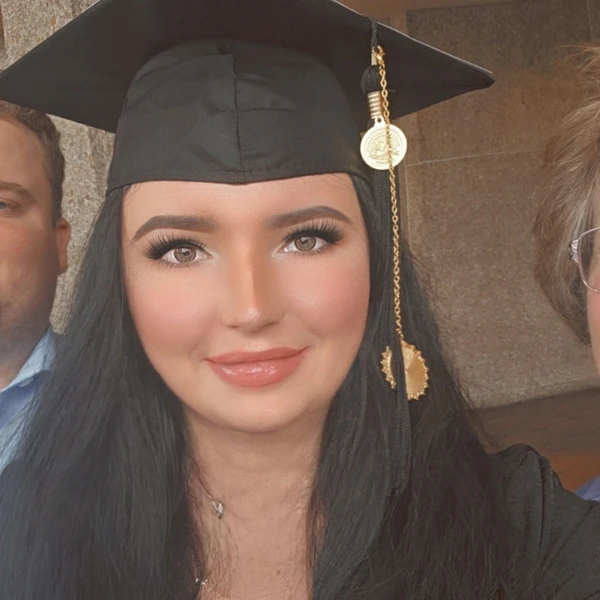
Hobbies and interests
Dance
Writing
Psychology
Clinical Psychology
Neuroscience
Reading
Adult Fiction
Classics
Literature
I read books daily
Deborah Feathers
1x
Finalist1x
WinnerDeborah Feathers
1x
Finalist1x
WinnerBio
Helping families heal and break cycles of trauma is my mission as a Trauma-Focused Marriage and Family Therapy Intern. I integrate Structural and Collaborative Family Therapy to address intergenerational patterns, family dynamics, and trauma’s impact across systems, creating safe, trusting relationships that foster resilience, healing, and lasting change.
I provide individual, couples, family, and group therapy, conduct assessments, develop treatment plans, and deliver psychoeducational programs on trauma, grief, and family dynamics. I support low-income families, guide clients through crises, and advocate for children as a Guardian Ad Litem Mentor, Volunteer, and Educational Surrogate. I collaborate with multidisciplinary teams, gather information from schools, doctors, and social workers, and ensure continuity of care for vulnerable clients.
I hold a B.S. in General Psychology and am pursuing an M.S. in Marriage and Family Therapy at Capella University with a 4.0 GPA. I am a Certified Trauma-Informed Coach, Life and Success Coach, EFT Practitioner, and Hypnotist. Featured in VoyageMIA, CanvasRebel, Bold Journey, and Shoutout Miami, my goal is to advance trauma-informed family therapy, providing culturally responsive care while strengthening relationships and promoting systemic transformation.
Education
Capella University
Master's degree programMajors:
- Psychology, General
Miscellaneous
Desired degree level:
Doctoral degree program (PhD, MD, JD, etc.)
Graduate schools of interest:
Transfer schools of interest:
Majors of interest:
- Clinical, Counseling and Applied Psychology
Career
Dream career field:
Mental Health Care
Dream career goals:
Doctorate in Couple and Family Therapy
Marriage and Family Therapist Intern
Mindful Therapy, LLC2024 – Present2 yearsMarriage and Family Therapist Intern
The Trauma Resolution Center2025 – Present1 yearTrauma Recovery Coach
The Resilience Network2024 – Present2 years
Sports
Dancing
Intramural2005 – Present21 years
Arts
Virginia's Rakstar Dancers
Dance2006 – Present
Public services
Advocacy
Miami-Dade County Public Schools — Educational Surrogate2023 – PresentVolunteering
FL Guardian ad Litem Program — Guardian ad Litem Mentor2022 – PresentAdvocacy
Guardian Ad Litem Program — Guardian Ad Litem2019 – Present
Future Interests
Advocacy
Volunteering
Philanthropy
Entrepreneurship
Johnna's Legacy Memorial Scholarship
Living with a chronic medical condition has shaped every facet of my life. From an early age, I learned that health is not something to take for granted, and that the body and mind can be tested in ways that are invisible to others. I have navigated repeated hospitalizations, complex treatments, and ongoing limitations that affect both my daily routines and long-term plans. These experiences have been physically painful and emotionally isolating, yet they have also taught me resilience, empathy, and the importance of using my experiences to help others.
The impact of my condition extends far beyond my health. Early in my academic journey, I faced professors and institutions that failed to provide accommodations or understanding. I felt invisible, “stupid,” and incapable, questioning whether pursuing higher education or a meaningful career was even possible. Despite these barriers, I returned to school virtually in 2022, completed my bachelor’s degree, and am now finishing my master’s in Marriage and Family Therapy. I will begin my doctorate in fall 2026. Maintaining a 4.0 GPA, joining five honor societies (serving as treasurer in one), publishing four scholarly articles, and earning recognition in Marquis Who’s Who are not just personal achievements--they are proof that limitations do not define potential.
What inspires me to excel despite these challenges is the desire to transform my experiences into purpose. I know firsthand how difficult it can be to navigate a world that is often unaccommodating, and I want to use that understanding to empower others. As a CASA/GAL, I advocate for children who face trauma and systemic barriers, including those with disabilities or unique medical needs. One of the most powerful moments in this work involved two young brothers who had lost their mother; I ensured they received therapy, medical accommodations, and consistent support. Helping them reclaim stability and trust reminded me that even small acts of advocacy and care can have a profound ripple effect.
I also give back through teaching wellness groups at a trauma-focused community center, open to the public and fellow interns. These sessions focus on mindfulness, resilience, and emotional regulation. Leading these classes allows me to translate my lived experience into practical tools for others, giving them strategies to cope with stress, uncertainty, and adversity.
Looking forward, I aim to continue turning personal challenges into systemic impact. My goal is to open a group practice specializing in trauma and develop a systemic treatment model called T.H.R.I.V.E. I hope to train therapists, provide trauma-informed care, and create programs that empower individuals and families to navigate their own obstacles and find resilience.
Living with a chronic medical condition has not defined me by limitation; it has shaped me into an advocate, a learner, and a guide. I hope to use my experiences to empower others, transforming challenges into opportunities for growth, healing, and meaningful impact. Through advocacy, therapy, and education, I aim to show that resilience is not just surviving--it is using what you’ve endured to lift others toward hope, stability, and strength.
GUTS- Olivia Rodrigo Fan Scholarship
“There’s nothing wrong with being scared.”
This lyric from Olivia Rodrigo’s GUTS resonates with me in ways that go far beyond a catchy song on the radio. For many, teenage years are a time of awkwardness, first heartbreaks, and the struggle to define identity--but for me, they were also years marked by life-altering trauma, chronic illness, and near-death experiences. At sixteen, I lay in a hospital bed, my body failing after a surgical error left me septic and in organ failure. In that moment, fear was not abstract--it was raw, consuming, and unavoidable. And yet, it was also deeply human. Olivia’s lyric captures that reality perfectly: adolescence is inherently scary, and acknowledging fear is not weakness--it is survival.
Teenage years are often painted as a time of rebellion, freedom, or social experimentation. But for me, they were a time of fragility, adaptation, and learning resilience. The lyric reminds me that the anxiety, self-doubt, and vulnerability I felt then were normal responses to extraordinary circumstances. It validates the experience of being scared, of navigating uncertainty while trying to grow, and of facing challenges that feel bigger than your own capacity to cope. In many ways, it feels like a message to my younger self: It’s okay that you’re afraid. Your fear is part of your strength.
Olivia Rodrigo’s GUTS also captures the broader emotional landscape of adolescence--the tension between wanting independence and needing support, the pressure to succeed despite self-doubt, and the struggle to find a voice in a world that often overlooks youth. My teenage years were defined by navigating hospitals, surgeries, and chronic illness while trying to maintain friendships, schoolwork, and a sense of self. The lyric resonates because it acknowledges the vulnerability of that period without shaming it, reflecting the essence of adolescence: a time to confront fear, process uncertainty, and learn to trust yourself even when the world feels unpredictable.
The lyric also inspires me in my present. Now, as a graduate student in Marriage and Family Therapy and a future trauma-focused clinician, I carry that message with me into my work. I remind clients, young and old alike, that fear is not something to erase--it is something to witness, understand, and work through. Olivia’s words remind me that validating emotion is often the first step toward resilience and growth.
“There’s nothing wrong with being scared” is more than a lyric. It is a lifeline, a recognition of the humanity in fear, and a reminder that even the most challenging teenage experiences can be transformed into strength, empathy, and purpose. For me, it perfectly captures the intensity, vulnerability, and possibility of adolescence--and the lessons that carry forward into adulthood.
Wicked Fan Scholarship
The first time I heard Defying Gravity, I was sixteen and lying in a hospital bed after a surgical complication had left me fighting for my life. My body was weak, my future uncertain, and the walls around me felt suffocating. Yet, as Elphaba’s voice soared through the speakers, something inside me shifted. For the first time in months, I felt hope. She was defying the gravity of expectation, of fear, of the weight that tried to keep her down--and somehow, I felt like I could, too.
Wicked has always been more than a musical to me; it has been a lifeline. The characters, their struggles, and their courage mirror my own journey in ways that feel almost uncanny. Elphaba’s resilience, her insistence on staying true to herself despite misunderstanding and rejection, resonates deeply with me as a young woman navigating the complexities of trauma, chronic illness, and a world that often underestimates me. Glinda’s evolution--the way she learns empathy, compassion, and the value of genuine friendship--reminds me that personal growth often comes through connection, even when it is uncomfortable or challenging.
The musical’s themes of identity, courage, and defiance have shaped the way I approach my own life. When I nearly died from sepsis and later faced chronic pancreatitis and PTSD, it would have been easy to shrink into fear and self-doubt. But Wicked taught me that strength is not the absence of fear--it is acting in spite of it. It inspired me to pursue my education, to reclaim my voice after years of feeling silenced by illness and trauma, and to dedicate myself to a career where I can help others heal.
“For Good,” another iconic song, speaks to the transformative power of relationships. The lyrics remind me that the people who show up for you, who lift you when you cannot lift yourself, leave a permanent mark on your life. This resonates with my work as a CASA/GAL and a trauma-focused therapist-in-training, where witnessing small moments of support and advocacy ripple through a child’s or family’s life reinforces the profound impact of kindness and care.
Wicked has given me more than entertainment--it has given me courage. It has reminded me that even when the world misunderstands you, even when circumstances threaten to keep you down, you have the power to rise. It has reinforced my belief that resilience, empathy, and staying true to your convictions are not just ideals--they are ways of living.
When I think of Wicked, I think of hope, transformation, and the extraordinary strength that can come from embracing your authentic self. It has inspired me to defy my own gravity every day, in my education, my advocacy, and my commitment to helping others navigate their trauma. It has shown me that lifting yourself up can lift others with you--and that is a lesson I carry into every aspect of my life.
A Man Helping Women Helping Women Scholarship
At sixteen, I lay in an ICU bed, my body failing after a surgical error led to sepsis and organ failure. I whispered goodbye to my mother, convinced I would not survive the night. I emerged alive, but forever changed--left with chronic pancreatitis, PTSD, and the reminder that trauma does not vanish when the immediate danger passes. That experience could have defined me by fear and pain, but instead, it became the foundation for my purpose: to help others navigate the complex and lasting impacts of trauma.
I have carried that purpose into every step of my academic and professional journey. After high school, I struggled to attend college without accommodations and faced professors who doubted my abilities. I felt invisible, “stupid,” and unworthy of higher education. But I returned in 2022, completed my bachelor’s degree, and am now finishing my master’s in Marriage and Family Therapy. I will begin my doctorate in fall 2026. Along the way, I have maintained a 4.0 GPA, earned membership in five honor societies (serving as treasurer in one), published four scholarly articles, and been recognized in Marquis Who’s Who. Each accomplishment is not simply personal--it is part of the foundation I am building to create lasting change for others.
Currently, I give back by advocating for those whose voices are most often overlooked. As a CASA/GAL, I support children in foster care, including those with disabilities or trauma histories, ensuring they receive therapy, educational accommodations, and consistent care. One case that shaped me involved two young brothers who had lost their mother. I coordinated trauma-focused therapy, attended every court hearing, and advocated tirelessly to make sure their needs were met. Seeing them regain stability and trust in adults underscored the ripple effect of consistent, compassionate advocacy--how one person’s presence can alter a child’s trajectory and influence the health of an entire family system.
I also teach group wellness classes at a trauma-focused community center, open to both the public and fellow interns. These sessions focus on mindfulness, resilience, and emotional regulation, giving participants practical tools to navigate stress and trauma. Watching students and community members implement these skills and support one another reinforces that healing is not an isolated act--it spreads, impacting families and communities.
Looking forward, I aim to open a group practice specializing in trauma and develop a systemic treatment model called T.H.R.I.V.E. I plan to train therapists and provide programming that empowers individuals and families to heal within the context of their relationships and communities.
My journey has shown me that impact is born from presence, persistence, and empathy. By turning my survival into service, I hope to positively transform lives, guide families through trauma, and create systems of care that ripple outward--ensuring that no one facing pain feels unseen or unheard.
Women in STEM Scholarship
At sixteen, I lay in an ICU bed, my body failing after a surgical error left me septic and near death. My abdomen was filled with urine, part of my liver removed, my gallbladder gone, and my organs struggling to function. Around eleven o’clock at night, I whispered goodbye to my mother, told her that I loved her-- convinced I would not survive. That night, I learned how fragile life is--and how critical knowledge, precision, and innovation in science can be. It was in that moment that I realized STEM was not just a subject; it was a way to prevent suffering, solve problems, and save lives.
My journey as a woman in STEM has been shaped by both adversity and determination. Living with chronic pancreatitis and PTSD taught me resilience, patience, and the importance of meticulous problem-solving--skills that are essential in science. I have faced skepticism in academia and healthcare settings, but I have learned to transform doubt into motivation. Choosing STEM allows me to combine logic, curiosity, and lived experience to make meaningful contributions, particularly in areas where research can directly improve health outcomes and trauma-informed care.
I am equally committed to creating opportunities for other women in STEM. Representation matters, and mentorship is essential. I hope to inspire young women to pursue science even when societal expectations or self-doubt suggest otherwise. My story--of surviving near-death, overcoming chronic illness, and persisting in rigorous academics--demonstrates that challenges do not define capability. In fact, they can enhance problem-solving, critical thinking, and empathy--qualities that make scientists not just knowledgeable, but effective and compassionate.
Beyond academics, I give back by teaching wellness and educational programs at a trauma-focused community center. I guide participants in problem-solving, resilience, and critical thinking, helping them navigate both personal and systemic challenges. These experiences reinforce that STEM is not isolated--it thrives when applied to real-world problems and community needs. Science is most powerful when it serves people, and I am committed to ensuring my work makes tangible, positive impact.
By pursuing STEM, I am choosing a path where intellect meets empathy, and curiosity meets purpose. I aim to develop solutions that improve health outcomes, mentor and empower women in science, and serve as a living example that resilience and determination can overcome adversity. My goal is to use STEM not only to build knowledge, but to build a better, healthier world for those who need it most.
Priscilla Shireen Luke Scholarship
Giving back has always been more than an action for me--it is a commitment to show up for others when life feels overwhelming, chaotic, or unfair. My understanding of that commitment grew from my own experiences. At sixteen, a surgical error led to sepsis, organ failure, and months in the hospital. I survived, but I was left with chronic pancreatitis and PTSD. I know what it feels like to feel unseen, unheard, and alone, and I have made it my mission to ensure that others never feel that way when I can intervene.
As a Court Appointed Special Advocate/Guardian ad Litem (CASA/GAL), I live that mission every day. One case that profoundly shaped me involved two young brothers whose mother had been murdered by their father. Overnight, they lost everything familiar. They were thrust into foster care and legal proceedings that no child should ever navigate alone. I became a consistent presence in their lives--attending court hearings, coordinating trauma-focused therapy, and advocating for every aspect of their mental health care. I worked to ensure their voices were heard in a system that often overlooks children, and I helped secure accommodations and support that addressed their unique needs. Watching them slowly regain trust and stability reinforced my belief that small, persistent acts of advocacy can ripple into lifelong change.
I also give back through my work at a trauma-focused community wellness center, where I teach group classes open to the public. These sessions focus on mindfulness, emotional regulation, resilience, and wellness, and they are designed for clients, community members, and fellow interns alike. Leading these groups allows me to share practical tools, model healing, and provide safe spaces where people can feel seen and supported.
Looking toward the future, I plan to expand this impact through my career in mental health. I am completing my master’s in Marriage and Family Therapy and will begin my doctorate in fall 2026. My long-term goal is to open a group practice specializing in trauma and develop a systemic treatment model called T.H.R.I.V.E. I aim to train therapists and provide trauma-informed care that helps individuals and families heal within the broader dynamics of their relationships and communities.
Giving back is not just what I do--it is who I am. My experiences with trauma and chronic illness have taught me the importance of presence, empathy, and consistency. By combining advocacy, education, and clinical work, I hope to create a ripple effect of healing that strengthens individuals, families, and communities, ensuring that others always have someone in their corner when they need it most.
Michael Rudometkin Memorial Scholarship
Selflessness, to me, is not about grand gestures--it is about choosing to show up for others, even when it is hard, inconvenient, or painful. It is about putting the well-being of another person above your own comfort and being a steady presence when life feels unbearable. I learned this truth most profoundly in my work as a Court Appointed Special Advocate/Guardian ad Litem (CASA/GAL).
One of the most difficult cases I ever worked on involved two young brothers who had just lost their mother. Their father had murdered her, leaving them not only with unimaginable grief, but also with the heavy shadow of trauma, instability, and fear. Overnight, they were thrust into a system of foster care and legal proceedings that no child should ever have to endure.
As their GAL, my role was to ensure that their voices were heard in court and their needs were not forgotten in the shuffle of paperwork and procedures. But the role became much more than that. I sat with them when they cried for their mother. I helped coordinate trauma-focused counseling so they could begin to process their grief. I advocated tirelessly to secure services and placements that would prioritize not only their safety, but also their emotional healing.
It was not easy. There were times when the system seemed stacked against them--when resources were scarce, and when bureaucratic red tape slowed everything down. But I refused to let them become just another case number. I reminded the court, the social workers, and everyone involved that these were children who had endured the unthinkable. And I showed up for them consistently, week after week, because I knew what it was like to feel abandoned in moments of crisis.
Selflessness also extends into how I approach my broader community. At the trauma-focused community wellness center where I intern, I lead free group classes open to the public. These classes cover topics like mindfulness, emotional regulation, and resilience. They are not just for clients, but also for community members and fellow interns--because I believe that healing should not be limited to therapy sessions alone. Creating these safe, accessible spaces allows people to explore mental health tools, reduce stigma, and build supportive connections.
Even in my personal life, selflessness is a value I strive to live by. Living with chronic illness and PTSD myself, I know how isolating pain can feel. That is why I make it a priority to check in on friends, classmates, and colleagues who might be struggling silently. Sometimes it is as simple as sending an encouraging message or sharing a coping strategy that has helped me. Small acts of compassion matter because they remind people that they are not alone.
I embody selflessness by choosing to be present for others in their hardest moments--whether it is two little boys navigating life after unimaginable loss, a group of community members searching for healing, or a peer who just needs someone to listen. To me, selflessness is about seeing people fully and standing beside them, even when the road is long. And I plan to carry that same spirit into my career as a therapist, supervisor, and professor: showing up, bearing witness, and helping people believe in their worth when they need it most.
Dr. Samuel Attoh Legacy Scholarship
Legacy, to me, is not about wealth, titles, or possessions--it is about what you leave behind in the lives of others. It is about the stories people tell when you are gone: Did you show kindness? Did you lift others when they were falling? Did you leave the world, even in a small way, better than you found it? Legacy is not measured in what we keep, but in what we give.
My upbringing taught me this in painful ways. I grew up in a fractured home, shaped by divorce, absence, and words that left scars deeper than any physical wound. My father once told me I should never have been born, and when I was in the ICU fighting for my life after a medical trauma at sixteen, he didn’t come--he was “too tired.” In that moment, I felt abandoned and disposable. But my mother and brother showed up. They carried me when I could not carry myself, reminding me that presence, not perfection, is what truly matters in a family.
That upbringing left me with a choice: to repeat cycles of abandonment and neglect, or to break them. I chose to break them. I chose to take the pain I endured and transform it into purpose. When I became a CASA/GAL, I advocated for children in foster care who, like me, knew what it felt like to be unseen. Some of those children had disabilities, trauma histories, or learning differences that made them vulnerable to being overlooked. I made it my mission to ensure their voices were heard, their needs met, and their worth recognized. In doing so, I realized that legacy begins in the everyday moments of advocacy, presence, and compassion.
My personal health struggles reinforced this conviction. After nearly dying from sepsis, living with chronic pancreatitis, and navigating PTSD, I discovered that survival alone was not enough for me. I wanted my survival to mean something. That is why I pursued higher education, despite the barriers. Though professors once denied me accommodations and made me feel incapable, I fought back. I rebuilt my academic path, returned to school in 2022, earned my bachelor’s, and am now completing my master’s in Marriage and Family Therapy. I will begin my doctorate in fall 2026.
When I told my father about applying for a doctorate, he said, “You’re taking a bet that you’ll be successful.” For a moment, I felt the sting of his doubt--the echo of a lifetime of his absence and rejection. But then I responded with a truth I now live by: “If I’m going to bet on anyone, I’m going to bet on myself.” That moment crystallized the difference between the legacy I inherited and the one I am building.
My plan is to leave a legacy of healing. I want to open a group practice specializing in trauma, train future therapists, and develop my own systemic treatment model called T.H.R.I.V.E. Through this, I hope to show clients and colleagues alike that trauma may ripple outward--but so does healing.
I cannot rewrite my past. But I can choose what comes next. I can break the cycle, show up where others once failed, and turn my survival into service. That, to me, is legacy: betting on myself--and helping others believe they can too.
Bulkthreads.com's "Let's Aim Higher" Scholarship
What I want to build isn’t just a career--it’s a legacy of healing. My dream is to create a group practice specializing in trauma that not only serves clients but also trains the next generation of therapists. I want to build a safe, systemic space where survivors of trauma can reclaim their lives, families can repair broken bonds, and therapists can learn to treat pain with both science and compassion.
The desire to build this future is rooted in my own story. At sixteen, I nearly lost my life after a surgical error led to sepsis, organ failure, and months in the hospital. I walked out alive, but I also walked out disabled, with chronic pancreatitis and PTSD. That experience could have broken me--and for a time, it did. I struggled with my mental health, attempted college too soon, and faced professors who denied me accommodations. I felt invisible, “stupid,” and unworthy of higher education. But step by step, I rebuilt myself. I returned to school in 2022, earned my bachelor’s, and am now completing my master’s in Marriage and Family Therapy. In fall 2026, I will begin my doctorate. Each degree is a brick in the foundation of what I am building.
What I hope to create isn’t just about me--it’s about my community. I envision a practice that doesn’t stop at individual therapy but extends outward, offering group classes, community workshops, and systemic trauma treatment. I am already laying the groundwork by teaching wellness groups at a trauma-focused community center, where I guide people through mindfulness, emotional regulation, and resilience practices. I have also served as a CASA/GAL, advocating for children with disabilities in foster care, ensuring they received the therapy, medical care, and accommodations they deserved. These experiences have taught me that healing ripples outward just like trauma does. When one person heals, families stabilize, communities grow stronger, and cycles of pain begin to break.
In addition to building a group practice, I am developing a systemic trauma treatment model I call T.H.R.I.V.E. My goal is to train therapists nationwide in this model, expanding the reach of trauma-informed care. This isn’t just about professional achievement--it’s about creating sustainable systems of healing that outlive me.
Building my future in this way will make a positive impact not only on my life but on every client, family, and student who walks through the doors of my practice. It will turn my survival into service, my pain into purpose, and my resilience into a resource for others.
At its core, what I want to build is hope. Hope that people can heal. Hope that trauma does not define destiny. And hope that even in the face of profound adversity, something strong, beautiful, and lasting can be created.
Frank and Patty Skerl Educational Scholarship for the Physically Disabled
Being part of the disabled community has fundamentally changed how I see the world. Disability is often invisible to those who don’t live it, but for me, it’s the lens through which I experience every day. My chronic illnesses--chronic pancreatitis, PTSD from medical trauma, and the lasting effects of a near-death experience with sepsis--are a constant reminder that life is fragile and unpredictable. Yet, they are also a constant reminder of resilience, strength, and the ways people adapt to survive.
At sixteen, I spent five months in the hospital after a surgeon accidentally nicked my ureter. My abdomen filled with urine, I went into organ failure, and I underwent emergency surgery at eleven o’clock at night, whispering goodbye to my mother because I truly believed I would not live to see another day. I survived, but I did not walk out of the hospital the same person I was when I walked in. I walked out disabled. I walked out with chronic pain, dietary restrictions, and trauma that still echoes through my mind.
For years, I thought disability meant limitation. At eighteen, I tried college and failed--professors refused accommodations, and I didn’t know how to advocate for myself. I felt broken, less-than, even “stupid.” But as I grew older and became connected with others in the disabled community, I realized that disability is not weakness--it is adaptation, perseverance, and innovation. Living with a disability forces you to see the world differently, and that difference is a gift. It means I can empathize more deeply, advocate more fiercely, and find creative solutions where others may only see obstacles.
This perspective has shaped not just my worldview, but my career. I am completing my master’s in Marriage and Family Therapy and will begin my doctorate in fall 2026. My dream is to open a group practice specializing in trauma and to develop a systemic treatment model I call T.H.R.I.V.E. My lived experience as a disabled person allows me to sit with clients in their darkest moments and say, “I may not know your exact pain, but I know what it means to carry pain every day--and I know it doesn’t have to define you.”
My disability has also fueled my advocacy work. As a CASA/GAL, I often worked with children who had disabilities of their own--learning differences, chronic illnesses, or trauma-related disorders. I quickly recognized how easily their needs were overlooked in a system focused only on immediate safety and placement. I made it my mission to speak up in courtrooms and team meetings, to ensure these children not only had therapy, but the right accommodations at school, the medical care they needed, and consistent advocates who believed in their potential. I knew what it felt like to be dismissed or unseen because of a disability, and I refused to let that happen to them.
The world often underestimates the disabled, but I have learned that our perspective is one of the most powerful tools for change. Disability has taught me that success is not about perfection--it’s about persistence. It’s about adapting, surviving, and then using that survival to light the path for someone else. That is how I plan to make a difference: by carrying the lessons of disability into every therapy session, classroom, and community space I enter, and by showing others that even in limitation, there is limitless strength.
Elijah's Helping Hand Scholarship Award
When I was sixteen, my world unraveled in ways I could not have imagined. A surgical complication left me with sepsis, organ failure, and months in the hospital fighting for my life. I survived, but the aftermath was suffocating. I lived with chronic pain from pancreatitis, flashbacks from medical trauma, and the crushing weight of PTSD. On top of that, I carried years of emotional wounds--my parents’ divorce, my father’s absence, and his words echoing in my mind: “You shouldn’t have been born.”
The weight became unbearable. One night, the darkness convinced me there was no way forward. I attempted suicide. I didn’t want to die--I just wanted the pain to stop, the chaos in my mind to quiet, the feeling of being unwanted and broken to finally end. That moment marked one of the lowest points in my life, but it also became the beginning of something unexpected: a decision that if I was going to live, I was going to live with purpose.
Mental health has shaped every corner of my existence. It has taught me that pain is not linear, that trauma lingers, and that healing is a process, not a destination. It has also given me a unique perspective--because I know what it feels like to be voiceless, I am relentless about making sure others are heard. Because I know what it feels like to carry unbearable weight, I dedicate my work to helping others lighten theirs.
I began volunteering as a CASA/GAL, advocating for children in the foster care system who had endured unimaginable losses. I remember two little boys whose mother was murdered by their father. Sitting in courtrooms with them, arranging therapy sessions, and being their voice when the system felt overwhelming reminded me why I survived: to help others survive too.
Now, as a graduate student in Marriage and Family Therapy, I work in a trauma-specific internship, helping individuals and families process experiences that often leave scars as deep as my own. I also teach wellness classes at a community trauma center, creating spaces where people can breathe, regulate, and believe in healing again. Every client, every student, and every child I’ve advocated for has reminded me that mental health is not just about surviving--it’s about reclaiming life.
I plan to graduate with my master’s in March 2026 and begin my doctorate that fall. My long-term goals are to become a licensed therapist, supervisor, and professor, and to open a group practice specializing in trauma. I am also working on developing a systemic trauma treatment model I call T.H.R.I.V.E. (Trauma Healing, Resilience, Integration, Validation, and Empowerment). My life has shown me that healing ripples outward just as trauma does, and I want my career to embody that truth.
Mental health and suicide have left scars on my body and mind, but they have also carved resilience, empathy, and determination into who I am. I live with CPTSD every day, but instead of hiding it, I use it to connect with others. My past does not define me--it drives me. And if I can help even one person see their worth, choose to stay, or believe in their healing, then every ounce of pain I’ve carried will have had a purpose.
Alger Memorial Scholarship
I will never forget lying in an ICU bed at sixteen, my body failing me after a surgical error. My abdomen was distended with urine, part of my liver removed, my gallbladder gone, and I was septic, facing organ failure. Around eleven o’clock at night, I whispered goodbye to my mother, convinced I would not survive. That night, I learned the meaning of resilience--not as a word, but as a choice to keep fighting when every part of you feels broken. That experience left me with chronic pancreatitis and PTSD, but it also ignited a determination to persevere, to transform trauma into purpose.
After that ordeal, I attempted college at eighteen, only to be met with professors who dismissed my needs and no system of accommodations to support me. I felt invisible and inadequate. But I refused to let illness or doubt define me. In 2022, I returned to school virtually to complete my bachelor’s degree, and I am now finishing my master’s in Marriage and Family Therapy, with plans to begin a doctorate in fall 2026. Despite chronic illness and the demands of rigorous academics, I have maintained a 4.0 GPA, earned a spot on the President’s List multiple times, joined five honor societies (serving as treasurer in one), and published four articles. I was even recognized in Marquis Who’s Who. Each accomplishment is a testament to my discipline, persistence, and refusal to let adversity limit my potential.
My resilience extends beyond academics into meaningful service. As a CASA/GAL volunteer, I advocated for two young brothers whose mother was murdered by their father. Overnight, they lost everything familiar. I coordinated therapy, attended court hearings, and ensured their mental health needs were prioritized. Witnessing them slowly regain trust, safety, and stability reinforced my belief that advocacy and compassion can transform lives. Additionally, I teach group classes at a trauma-focused community wellness center, open to the public and fellow interns, covering emotional regulation, mindfulness, and resilience. Leading these sessions allows me to provide practical tools and encouragement for people navigating their own challenges.
These experiences--academic, professional, and personal--have proven that adversity can refine purpose rather than limit it. I have transformed trauma into empathy, skill, and advocacy. I have navigated near-death experiences, chronic illness, and systemic barriers while excelling academically and professionally. I have mentored peers, published research, provided direct support to children in crisis, and led wellness programs that empower others. Each challenge has reinforced my conviction that resilience, determination, and compassion are choices we make in the face of hardship.
Life is inherently hard, but I have learned to meet difficulty with courage, persistence, and service. I am proud of my accomplishments and the lives I have touched. More importantly, I continue to use my experiences as fuel to advocate, heal, and empower others. I have proven that even the darkest circumstances can become a foundation for meaningful impact--and I will continue to build on that foundation every day.
TOMORROW X TOGETHER (TXT) MOA Scholarship
I remember lying in my bed, shaking from pain and fear, staring at the ceiling after yet another hospital visit. The lights from the monitor outside my door cast shadows across the room, and I felt utterly alone. My chronic illness and PTSD made even simple tasks feel impossible, and I wondered if I would ever feel “normal” again. In that moment of despair, I clicked on a TXT performance on my phone, hoping for a distraction. Within seconds, I was captivated by “CROWN.” Their energy, sincerity, and the way they poured emotion into every movement and note made me feel something I hadn’t felt in years: hope. That night, through their music and vulnerability, I found a lifeline--and I became a MOA.
Being a MOA is more than fandom; it’s a community and a philosophy. TXT embodies growth, resilience, and authenticity in a way that resonates deeply with my life experiences. Their transparency about emotions, struggles, and self-discovery reflects my own journey with chronic illness and trauma. I am particularly drawn to Huening Kai, whose warmth and openness remind me of the power of authenticity. Watching him embrace vulnerability publicly gave me courage to confront my own challenges, to process pain rather than bury it, and to trust that being human is enough. TXT doesn’t just perform--they communicate, validate, and inspire, and that message has shaped my personal and professional path.
My favorite TXT performance is “Blue Hour.” I watched it countless times during nights when my body ached and my mind felt trapped in darkness. The song’s gentle acknowledgment that darkness is temporary and light returns felt like a direct message to me. In those moments, I didn’t just hear music--I felt connection, validation, and courage to keep going. TXT’s art has given me permission to process my own suffering and inspired me to translate that empathy into helping others.
Their influence extends directly into my career aspirations. I am completing my master’s in Marriage and Family Therapy and will begin a doctorate in fall 2026. I plan to create trauma-informed therapeutic programs and group practices that prioritize relational healing, accessibility, and empowerment. TXT’s resilience in the spotlight reminds me that empathy, authenticity, and courage are essential qualities in guiding others through trauma. Their example encourages me to model vulnerability in therapy, creating spaces where clients feel safe to express themselves and rebuild their lives.
Paying for my studies has been one of my greatest challenges. My chronic illness prevents me from maintaining full-time work while completing coursework and internship hours. Scholarships like this one are crucial--they would allow me to focus fully on my education and clinical training, ensuring I can graduate on time and continue toward licensure, supervision, and eventually teaching and mentoring future therapists.
TXT’s music and message have profoundly shaped my life. They reminded me, in my darkest hours, that I am seen, that hope exists, and that it is possible to transform pain into purpose. Becoming a MOA gave me courage and connection when I needed it most, and their influence continues to guide my academic and professional journey. Through my work in mental healthcare, I hope to channel that same hope, empathy, and resilience to help others process trauma, find strength, and reclaim their lives.
Love Island Fan Scholarship
Love Island thrives on drama, romance, and the sparks that fly when chemistry meets competition. My original challenge, the Heartstrings Challenge, is designed to test couples’ emotional connection, communication, and teamwork while providing the perfect blend of tension, humor, and romance that fans crave.
The Heartstrings Challenge takes place on a custom-built platform above the villa’s pool, featuring a giant suspended “heart web” made of colorful ropes. Couples must navigate this intricate network while completing various tasks, all while being securely harnessed for safety. The challenge has three unique rounds, each testing a different aspect of their relationship.
Round One: The Memory Maze
In the first round, couples must traverse the web while recalling shared memories. At each checkpoint, they encounter a small lockbox containing a question about their relationship, such as “What was your first impression of your partner?” or “What is your partner’s biggest fear?” Answering correctly unlocks the next section of the web, while a wrong answer forces them to backtrack. This round evaluates how well couples know each other and how they respond under lighthearted pressure.
Round Two: Tangled Together
Once they clear the Memory Maze, couples enter the Tangled Together stage. Here, the ropes of the web become more complex and intertwined, representing the twists and turns of real-life relationships. Couples must guide each other through the knots while answering rapid-fire “Would You Rather” style questions that force them to reveal their feelings and preferences. The faster they navigate the web, the more points they earn--but the web’s tricky design often leads to comedic moments of entanglement, teasing, and playful bickering that fans love.
Round Three: Heart-to-Heart Drop
The final stage is a thrilling physical test with an emotional twist. At the top of the web sits a giant, heart-shaped button. Couples must hold hands while answering an intimate, reflective question about their partner--examples include “When did you first realize you were falling for your partner?” or “What is one thing you admire most about your partner?” Once they answer, they push the button together, triggering a safe, controlled descent into the pool below. This stage combines courage, trust, and vulnerability, highlighting the emotional depth behind the villa’s flirtations.
Points are awarded for speed, accuracy, and the quality of emotional answers, and the winning couple receives a special date, along with immunity from the next recoupling. Beyond testing couples, the Heartstrings Challenge ensures moments of laughter, romance, and real emotional connection, giving viewers a multi-dimensional look at villa life.
By blending mental, physical, and emotional challenges, the Heartstrings Challenge offers a fresh, engaging twist for Love Island fans. It celebrates the unpredictability of relationships, the joy of shared memories, and the thrill of testing boundaries--all while keeping the villa buzzing with drama, romance, and unforgettable moments.
Taylor Swift Fan Scholarship
It was a night I will never forget, though not for the usual reasons people remember concerts. I was sitting alone in my bedroom, headphones clamped over my ears, trying not to cry. My body ached, my mind raced, and I felt utterly invisible to the world--a culmination of years of trauma, chronic illness, and nights spent wondering if I would ever feel normal again. On a whim, I pressed play on Taylor Swift’s live performance of “All Too Well: The Short Film” from her Eras Tour. Within seconds, I was transported.
From the opening notes, Taylor’s voice held a raw, trembling honesty that made me feel like someone finally understood the storm inside me. Every word, every note, every pause carried grief, heartbreak, and resilience all at once. As she sang about loss, betrayal, and the aching beauty of memory, I found myself crying openly for the first time in years--not just for my own pain, but for the acknowledgment that pain could be shared, witnessed, and even transformed into art. In that moment, Taylor wasn’t just performing; she was reaching through the screen, validating every feeling I had buried, and letting me know that my experiences were real, significant, and deserving of attention.
What made this performance the most moving to me wasn’t just the technical mastery or the emotional intensity--it was the vulnerability. Taylor laid herself bare, showing that even someone in the spotlight, with fame and accolades, experiences heartbreak, doubt, and raw emotion. Watching her navigate that with courage reminded me that vulnerability isn’t weakness. I realized that my own struggles--my chronic illness, trauma, and the countless nights I felt unseen--did not make me broken or incapable. They made me human. They gave me depth, empathy, and resilience that could be shared with others.
In the days that followed, I carried that performance with me like a talisman. I began to allow myself to feel more fully, to sit with difficult emotions instead of shutting them away. I started journaling, seeking therapy, and connecting with others who were also navigating pain. Taylor’s performance became a model of emotional authenticity: a reminder that it is possible to transform suffering into expression, connection, and even hope.
That night, Taylor Swift’s “All Too Well” did more than entertain me--it saved me in a small but profound way. It reminded me that art can heal, that vulnerability can empower, and that witnessing someone else’s courage can ignite your own. It inspired me to carry that same authenticity into my life, my relationships, and my future career in mental healthcare, where I hope to help others process trauma, embrace vulnerability, and find strength in their own stories.
For me, that performance wasn’t just music--it was a lifeline. It showed me that even in moments of darkness, being seen, heard, and understood is possible. And it taught me that courage isn’t about being unbroken; it’s about showing up anyway. Taylor Swift reminded me to show up for myself--and that lesson continues to shape who I am today.
Women in Healthcare Scholarship
I remember lying in a hospital bed, barely sixteen, watching the fluorescent lights flicker overhead, my body failing me from complications after surgery. Part of my liver had been removed, my gallbladder excised, and my abdomen filled with fluid and infection. I was septic, my organs shutting down, and at eleven o’clock at night, I turned to my mother and whispered goodbye, convinced I wouldn’t survive the night. That night, I stared at mortality and felt the terrifying fragility of life. I also experienced the profound relief that comes when someone shows up, listens, and fights alongside you. That relief--of being seen, validated, and supported--is what drew me to mental healthcare. I want to be that lifeline for others when they are in their darkest moments.
Living with complex trauma, chronic pancreatitis, and PTSD has shown me firsthand how mental health shapes every facet of a person’s life. It is not just about surviving; it is about relationships, family dynamics, and finding the tools to navigate a world that often feels hostile or indifferent. I have struggled with self-doubt, shame, and isolation, but I have also discovered resilience, empathy, and the transformative power of support. These experiences ignited my passion for Marriage and Family Therapy, where I can help individuals and families process trauma and rebuild connections. I know that healing rarely happens in isolation--it happens in relationships, systems, and communities that hold space for growth.
My journey has also highlighted how critical advocacy is, particularly for those whose voices are dismissed. Professors once doubted I could handle college, and medical providers sometimes minimized my pain, but I learned to assert my needs, communicate clearly, and navigate complex systems. These skills fuel my approach as a future therapist: I want every client to feel heard, understood, and empowered, especially those navigating trauma, chronic illness, or systemic barriers.
As a woman in the mental healthcare field, I aim to challenge assumptions about who can be a healer and what resilience looks like. I want to model empathy, strength, and authenticity, showing that women can lead, advocate, and care deeply while maintaining their own health and integrity. I hope to mentor other women entering this field, encouraging them to embrace their experiences, trust their intuition, and use their voices to create meaningful change.
Looking forward, I will graduate with my master’s in Marriage and Family Therapy in 2026 and continue toward a doctorate, licensure, and eventual supervision and teaching. I aspire to create trauma-informed therapeutic programs, group practices, and community initiatives that prioritize relational healing, accessibility, and empowerment. My lived experiences--my brushes with death, my chronic illness, and the PTSD I carry--aren’t burdens; they are the foundation of my empathy, my advocacy, and my vision for the future.
Choosing mental healthcare allows me to transform my pain into purpose. I want to be the person who sits with someone in their darkest hour, who listens without judgment, and who helps them find a path to resilience. That night in the ICU, I learned the power of being seen and supported. That lesson guides every step of my journey, shaping how I hope to impact lives as a compassionate, committed woman in healthcare.
Sabrina Carpenter Superfan Scholarship
I first connected with Sabrina Carpenter not just as a performer, but as someone whose art mirrored my own struggles and growth. Her music and career have shown me that it is possible to face challenges, embrace vulnerability, and pursue dreams without losing yourself in the process. But it wasn’t until a particularly difficult period in my life that I truly felt the impact of her work.
A few years ago, I was navigating a difficult time filled with trauma, anxiety, and self-doubt. I remember sitting in my bedroom late at night, feeling completely overwhelmed, and playing Sabrina’s song “Skin” on repeat. The lyrics spoke to me in a way nothing else had--about reclaiming your worth, refusing to let others diminish you, and embracing yourself fully. In that moment, I felt seen. For the first time in a long while, I felt a sense of permission to feel my emotions, to honor my own pain, and to remind myself that I was enough. Sabrina’s music didn’t erase the struggle, but it gave me a language for it and a reminder that resilience is possible even in dark moments. That night, I cried, but I also felt a quiet strength return--a strength that has carried me through challenges ever since.
Beyond her music, Sabrina’s career trajectory has inspired me. She navigated early fame, transitioned from acting to music, and continually took risks creatively, all while maintaining authenticity. Watching her evolve has reminded me that personal and professional growth often comes through embracing discomfort, learning from mistakes, and trusting yourself. It has encouraged me to take similar risks in my own life--pursuing ambitious goals in school, clinical training, and personal growth--without letting fear or doubt define my path.
What I admire most is Sabrina’s willingness to share her vulnerabilities publicly. Her honesty about mistakes, lessons learned, and the struggles she has faced has taught me that authenticity is a strength, not a liability. Her example has encouraged me to approach challenges with self-compassion, express my emotions openly, and value my own experiences without shame. She has helped me understand that being human includes mistakes, setbacks, and moments of doubt--and that acknowledging these realities is essential to growth.
Being a fan of Sabrina Carpenter has shaped not only how I process difficult emotions, but also how I engage with the world. She has taught me the importance of resilience, self-expression, and authenticity. Her music has given me both comfort and courage in moments of fear, her career has given me a roadmap for pursuing dreams with integrity, and her honesty has reminded me to embrace my own humanity. Through her art, I have learned that challenges can be faced with strength, vulnerability can be transformative, and personal growth is always possible when we dare to be ourselves.
Begin Again Foundation Scholarship
WinnerIt was eleven o’clock at night in the ICU when I turned to my mom and said goodbye. I thought I was going to die. The monitors beeped around me, and the fluorescent lights cast a harsh glow on the white sheets that barely felt like protection. My abdomen was distended, swollen with urine after a surgical error where my ureter had been nicked. Part of my liver had been removed, my gallbladder gone, and I was fighting peritonitis, organ failure, and sepsis--a life-threatening systemic infection that had spread through my body. I was sixteen years old, alone in fear, and facing mortality in a way no child should ever have to.
Sepsis is a condition that turns the body against itself. It is a cascade of immune responses that can lead to tissue damage, organ failure, and death if not caught in time. For me, it was not just a clinical diagnosis--it was a lived nightmare. My organs were shutting down one by one, my body was inflamed from head to toe, and my mind was consumed with terror. Every lab test, every urgent call from a nurse, every moment spent on the edge of consciousness reminded me how fragile life can be. Hours later, I would emerge from the brink of death, but the scars would remain--physically, emotionally, and psychologically.
I spent weeks in the hospital. Surgeries followed surgeries. My abdomen was drained, part of my liver removed, and my gallbladder taken. I developed ascites, a buildup of fluid in the abdomen, and chronic pancreatitis that I now live with every day. The trauma was more than physical. I carry PTSD from those nights, the fear of waking up to the wrong news, and the knowledge that life could be so abruptly fragile. Even now, routine medical appointments trigger memories of that ICU bed, of the helplessness I felt, and of the constant awareness that survival is never guaranteed.
But sepsis also taught me about resilience, the power of support, and the value of empathy. My mother’s presence, the dedication of the nurses who never left my side, and the medical team’s urgent efforts reminded me that human connection can be life-saving. They showed me that even in the darkest moments, there are people who will fight for you, who will bear witness, and who will refuse to let you go without a chance.
This experience has profoundly shaped who I am as a student and a future professional. I have developed an acute awareness of the human body and mind under extreme stress, empathy for those facing medical or psychological trauma, and a drive to help others navigate crises. My goal is to become a Marriage and Family Therapist, using my lived experience of life-threatening illness and PTSD to provide trauma-informed support. I want to create spaces where people feel seen, heard, and guided through challenges that may feel insurmountable.
Living with the aftermath of sepsis--chronic pain, pancreatitis, and PTSD--reminds me every day that survival is both fragile and miraculous. It has given me courage, insight, and the determination to turn trauma into a source of empathy and advocacy. I will carry the lessons of that ICU room forward in every classroom, every therapy session, and every interaction, knowing intimately what it means to fight for life--and what it means to help others do the same.
Elizabeth Schalk Memorial Scholarship
I woke in the middle of the night drenched in sweat, my heart hammering so violently I thought it might burst from my chest. Every shadow in my room felt like a threat, every creak of the floorboards a warning. My hands shook uncontrollably as I pressed them against my face, trying to ground myself, but the memories returned with relentless force. The sounds, the smells, the panic--I was transported back to moments of abuse I had thought I had survived. I could not escape my own body. I could not escape my mind. That night, I understood that PTSD was not just a word; it was a living, breathing presence in my life. Years later, when I was sexually assaulted, that fragile sense of safety I had fought to rebuild collapsed completely. Trauma and mental illness became constant companions, shaping my relationships, my sense of self, and my vision for the future.
Living with PTSD has been exhausting. Nightmares, flashbacks, and sudden panic attacks strike without warning, often triggered by the smallest sound, smell, or touch. For years, I felt ashamed, convinced my struggles marked me as weak or flawed. Therapy and faith slowly showed me that vulnerability is strength, that seeking help is courage, and that healing is possible even when the path is long and difficult.
My mental health challenges have also shaped my family life. As a single mother of two adopted daughters, I am intentional about creating a home where emotions are acknowledged, supported, and never dismissed. My children see me model coping strategies, practice self-care, and navigate difficult emotions with honesty. I want them to know that mental illness does not define a person’s worth, and that resilience is measured by perseverance in the face of adversity. My experiences have taught me how critical it is to break cycles of shame and secrecy, and to show my children that trauma, while painful, can be transformed into growth and purpose.
These experiences also drive my professional goals. I am pursuing my Master’s in Marriage and Family Therapy, and I train at a trauma-specific clinical site where I work with individuals and families navigating abuse, neglect, and mental health struggles. One client, whom I will call A, came to therapy after surviving domestic violence. She initially spoke in whispers, convinced she was invisible and undeserving of care. Over time, as trust was built, she began to sit taller, speak more confidently, and envision possibilities she once believed impossible. Witnessing her transformation reinforced what I have learned from my own journey: trauma does not have to define a person’s life, and healing is possible.
Living with PTSD is not easy, but it has given me resilience, empathy, and purpose. It shapes how I parent, how I pursue my education, and how I hope to serve future clients. I plan to specialize in trauma therapy, helping families and individuals navigate the long, challenging path from pain to healing.
This scholarship would ease a tremendous burden, allowing me to focus on my education and clinical training while continuing to provide stability for my daughters. It would enable me to transform my personal experiences into meaningful guidance and support for others navigating mental illness. Every step I take toward my career is fueled by the belief that even in the aftermath of trauma, hope and resilience are possible.
ADHDAdvisor Scholarship for Health Students
At sixteen, a routine surgery went catastrophically wrong, leaving me hospitalized for five months and fighting for my life. My father, who had long told me I “shouldn’t have been born,” didn’t visit because he was “too tired.” That experience, compounded by later trauma including sexual assault and a suicide attempt, taught me the profound impact of emotional neglect and systemic trauma. Living with complex PTSD has shaped not only who I am but how I support others navigating their own mental health challenges.
I began helping others in deeply personal ways, drawing on my lived experience to create safe, supportive spaces. One of the most impactful experiences was advocating for two young brothers whose mother had been murdered by their father. Overnight, they lost safety, home, and stability. I became a consistent presence, coordinating therapy, attending meetings, and ensuring their emotional needs were prioritized. Watching them slowly begin to process grief and reclaim a sense of safety reaffirmed what I had learned through my own healing: consistent support can transform lives.
I also teach group classes at a trauma-focused community wellness center open to the public and fellow interns. These sessions cover mindfulness, emotional regulation, and holistic wellness practices. Leading these classes allows me to normalize conversations about mental health, provide practical tools for resilience, and model self-care. Through teaching, I empower students, community members, and interns to understand and manage their emotional experiences more effectively.
Within my academic community, I mentor peers, share coping strategies, and emphasize that vulnerability is not weakness, but a path to connection and growth. At home, I model emotional awareness and self-care for my daughters, demonstrating that prioritizing mental health is essential to thriving.
Looking ahead, I plan to use my studies and future career as a Marriage and Family Therapist to provide trauma-informed, systemic support to individuals, families, and communities. I will graduate with my master’s in March 2026, pursue a doctorate, earn licensure, and eventually supervise and teach future therapists. Every step of my journey is guided by the belief that mental health is foundational--and that with consistent care, understanding, and advocacy, people can move from surviving trauma to truly thriving.
Learner Mental Health Empowerment for Health Students Scholarship
I first met them in a sterile courtroom, two little boys clinging to each other, eyes wide with fear and confusion. Their mother had been murdered by their father, and overnight, their world had been torn apart. No one had asked if they were okay--not really. I was assigned as their Court-Appointed Special Advocate/Guardian ad Litem, and in that moment, I understood that mental health was not abstract; it was urgent, tangible, and a matter of survival. I became their consistent presence, advocating for therapy, ensuring they had access to trauma-informed care, attending every meeting, and simply being someone who would show up when the rest of the system struggled to respond. Watching them slowly begin to process grief, reclaim safety, and even laugh again cemented for me what I had long known: mental health saves lives.
That understanding is deeply personal. I live with complex PTSD, shaped by experiences that began long before I entered that courtroom. At sixteen, a surgical error left me hospitalized for five months, nearly costing me my life. My father, who had long told me I “shouldn’t have been born,” didn’t visit because he was “too tired.” Later, sexual assault and a suicide attempt layered additional trauma onto my already fragile sense of safety. These experiences taught me that mental health is not optional--it is the foundation for surviving, learning, and connecting with others.
As a student pursuing Marriage and Family Therapy, my own mental health allows me to engage fully in my studies and clinical training. But more than that, it fuels my advocacy. I have learned that healing is relational--it happens through presence, support, and systems that prioritize care. This principle guides my work both in school and in the broader community. I mentor peers, normalize conversations about mental health, and model coping strategies, emphasizing that asking for help is a sign of strength, not weakness. At home, I extend these lessons to my daughters, teaching them that emotional expression, boundaries, and seeking support are essential tools for resilience.
Through my GAL work, I have witnessed how trauma can isolate, silence, and threaten a child’s very sense of self. But I have also seen the transformative power of consistent advocacy, therapy, and relational support. That is why mental health is central to my identity as a student and future therapist. I plan to continue this work, not only in clinical practice but also by creating systemic solutions--like my envisioned trauma treatment modality, T.H.R.I.V.E.--to ensure trauma is addressed relationally, integratively, and holistically.
Mental health matters because it is the difference between surviving and thriving. It is the reason I am in school, the reason I fight for children in the courtroom, and the reason I dedicate my life to helping others navigate trauma. The boys I advocated for will carry their mother’s memory forever--but through mental health advocacy, they also carry hope, resilience, and the possibility of a future where trauma does not define them. That is the impact I hope to create in every life I touch.
Ethel Hayes Destigmatization of Mental Health Scholarship
I remember the silence -- not the peaceful kind, but the loud, pressurized silence that felt like it would crush me. In my early twenties, that silence nearly swallowed me. After years of medical trauma beginning at fifteen and a sexual assault at twenty-two, the numbness and despair built until I attempted to end my life. It is a past I carry like a scar: visible only when the light hits it right, but always there, a reminder of how close I came to losing everything.
Surviving that moment did not mean everything was suddenly okay. For a long time afterward, hopelessness arrived uninvited -- in the middle of the night, in the middle of conversations, in the middle of a lecture. I learned to navigate a world that had once felt unbearably sharp; to breathe through panic, to answer emails when my limbs felt heavy with exhaustion, to keep showing up for myself even when I could not imagine a future. Therapy, patient friends, and steady routines became the scaffolding that allowed me to rebuild. Slowly, pieces of me that I had thought irreparably broken began to stitch back together.
The darkest parts of my history later became the most honest teachers. During my first internship semester, I had a virtual intake that would change everything. The woman on the other end of the line locked herself in the bathroom, curled on the floor, and told me she was suicidal. She described the depth of her despair in the same hollow tones I once used. Hearing her felt like hearing my own voice from years ago. There was no supervisor in the room with me, no colleague to share the weight -- only the fragile connection between two human beings on a screen.
In that raw, terrifying moment, my training was necessary, but it was my survival that made the difference. I knew how paralyzing the silence could feel. I knew how loneliness could convince someone they were already gone. I sat with her fear instead of shrinking from it. I validated the ache she could not name, helped her map a path through the night, and kept talking until the thread of hopelessness loosened its hold. When she returned to therapy weeks later and said, “You saved my life,” the words landed with a force I had not expected: not only because they were true for her, but because they stitched meaning into the part of my story I had once thought senseless.
That full circle -- from my own attempt to holding another person through theirs -- transformed my purpose. My pain became a lens, clarifying what matters: presence, courage, and the uncompromising belief that people can change course even from the brink. It reshaped how I form relationships, making me more patient, honest, and willing to sit in discomfort. It reshaped my goals: I will graduate with my Master’s in Marriage and Family Therapy this March and begin my doctorate in Fall 2026 to deepen my ability to save lives.
I do not frame my past as heroic. It is painful, complicated, and real. But surviving taught me something fierce -- that hope can be rebuilt, that a single steady voice can matter more than expertise alone, and that the person who once felt too broken to continue can become the person who helps someone else continue. My life’s work is to be that presence: to turn the silence that once nearly killed me into a voice that insists, fiercely and gently, “Stay. We’ll get through this together.”
Autumn Davis Memorial Scholarship
When people ask me why I chose a career in mental health, I sometimes struggle to answer in a way that feels both true and concise. The reality is that my journey began long before I ever stepped into a classroom--it began in hospital rooms, in fractured family dynamics, and in the private battles I fought with complex PTSD. For me, mental health has never been an abstract concept; it has been the ground I have lived and nearly died on. And because of that, it has shaped everything--my beliefs, my relationships, and the career I am building with such determination.
At sixteen, a surgery went catastrophically wrong, leaving me in the hospital for five months and fighting for my life. The physical trauma was immense, but the emotional trauma cut even deeper. My father, who had long told me I “shouldn’t have been born,” didn’t show up when I was in the ICU because he was “too tired.” My mother and brother stepped into protective roles, but his absence left me with a wound that went far beyond my body--it imprinted feelings of abandonment and rejection that reverberated for years. Later experiences of sexual assault and a suicide attempt deepened that pain, and it was during this time that I first came to understand what it means to live with complex PTSD.
CPTSD has taught me both the fragility and resilience of the human spirit. It has shown me how trauma echoes through relationships, families, and systems. But it has also shown me the power of connection--that healing does not happen in isolation, but in the presence of others who bear witness, who support, who love. That truth has become the cornerstone of my belief system: trauma isolates, but healing reconnects.
As a Guardian ad Litem, I witnessed the heartbreaking realities children and families face, and I also saw how intervention and presence can alter the course of someone’s life. From that role, I gained not only insight but also two daughters who have been among my greatest teachers in resilience and love. That experience cemented my calling: to dedicate my life to helping others navigate the impact of trauma, not only individually but within the relational and systemic contexts that shape their lives.
Today, as a Marriage and Family Therapy master’s student, I am putting that calling into practice. My internship is trauma-specific, and every day I see the way trauma lives in bodies, relationships, and families. I also see the transformative power of therapy to create space for healing. I will graduate in March 2026, and in Fall 2026 I plan to begin my doctorate. My long-term goals are to earn licensure, become an AAMFT-approved supervisor, teach as a professor, and establish a group practice specializing in trauma. Beyond that, I have begun laying the groundwork for developing my own systemic trauma treatment model, which I call T.H.R.I.V.E. This modality is designed to address trauma not just at the individual level but through a systemic lens—acknowledging that healing must engage the relational, familial, and cultural systems people live within.
I know intimately that trauma has the power to destroy, but I also know that healing has the power to ripple outward--through families, communities, and generations. My lived experience with CPTSD has given me more than scars; it has given me empathy, vision, and an unshakable conviction that people can not only survive but thrive. My career is not just about therapy--it is about changing the way we understand and treat trauma, so that no one feels as alone as I once did.
Ethan To Scholarship
When I was sixteen, I learned that trauma doesn’t stay neatly in the past. During what was supposed to be a routine surgery, a surgeon accidentally nicked my left ureter. “Water under the bridge”--that’s the phrase doctors use to remember the ureters pass under the uterine arteries. For them, it’s a teaching tool. For me, it became cruelly ironic. Because what happened to me wasn’t water under the bridge. It wasn’t something I could just move beyond. Five months in the hospital, nearly dying, being diagnosed with a life-threatening illness--those experiences rewired my body, my relationships, and my sense of self.
The medical trauma was only one piece of a much larger system of pain. My parents had divorced years earlier. My father once told me I shouldn’t have been born. When I was in the ICU, he didn’t show up because he was “too tired.” Later, I would experience sexual assault and survive a suicide attempt. Each of these experiences left scars, but when viewed through systems theory, I can now see how trauma is never isolated. It reverberates within family systems, reshaping dynamics and relationships. My mother and brother stepped into protective roles, but my father’s absence left me feeling profoundly abandoned. His disengagement didn’t just wound me; it compounded the emotional burdens of everyone else. Those dynamics shaped me as much as the medical events themselves.
And yet, healing happened in systems, too. I survived because people showed up--because my mother and brother refused to leave, because others bore witness, because I wasn’t left entirely alone in the wreckage. That is what drew me to couple and family therapy: the understanding that relationships can wound us, but they can also be the very ground where healing grows.
My first real glimpse into that truth beyond my own family came when I became a Guardian ad Litem. I witnessed firsthand the cycles of trauma that children and families endure, and I saw how advocacy and presence can interrupt those cycles. From that experience, I not only gained invaluable insight into the resilience of families--I also gained two amazing daughters who changed my life.
Today, as a clinical intern in a trauma-specific practice, I continue to see how deeply trauma lives--not just in the body, but in relationships, in family patterns, in the way people learn to survive. Every day, I see how therapy can be the difference between cycles repeating and cycles breaking.
That is why I am pursuing this path with everything in me. I will graduate with my Master’s in Marriage and Family Therapy in March 2026, and in Fall 2026, I will begin my doctorate. My goals are ambitious but clear: to earn licensure, to become an AAMFT-approved supervisor, to teach and mentor future therapists as a professor, and to establish a group practice specializing in trauma. Through that practice, I hope to create a space where healing ripples outward--touching individuals, families, and communities.
Recently, when I told my father I was applying for a PhD program, he said, “You’re taking a bet that you’ll be successful.” I told him, “If I’m going to bet on anyone, I’m going to bet on myself.” My journey has been marked by pain, yes--but more than that, it has been marked by resilience, by meaning-making, and by a conviction that people can heal. I believe healing moves through systems just as powerfully as trauma does. That is why I am here, and why I will not stop until I’ve done everything I can to make that healing possible for others.
Online ADHD Diagnosis Mental Health Scholarship for Women
“I’m not safe.” That thought has lived in me since I was fifteen, after a medical procedure that should have healed me instead left me traumatized. At twenty-two, when I was sexually assaulted, the same words carved themselves even deeper into my nervous system. Complex post-traumatic stress disorder (C-PTSD) has followed me ever since, shaping how I see the world, how I build relationships, and how I move through school.
Attending graduate school online has been both a lifeline and a challenge. Being in my own home provides me with the safety I need to manage triggers, giving me space to ground myself if flashbacks or panic hit during class. But online learning also comes with an isolating silence. Some days, staring at a screen while fighting intrusive memories feels unbearable. I’ve sat in front of my laptop, whispering to myself, “Just one more breath, just one more slide.” Without the casual support of classmates in a physical classroom, I’ve had to create new ways of staying connected and accountable--emailing professors for clarity, forming virtual study groups, and breaking coursework into manageable pieces when my mind feels overwhelmed.
This environment has made me more disciplined, self-aware, and resilient. It has taught me to persist in the face of invisible battles and to embrace creativity in how I learn. At the same time, it has given me empathy for others who show up every day carrying burdens that no one else can see.
Still, I worry about the next chapter. I will graduate this March with my Master’s in Marriage and Family Therapy, and in Fall 2026, I will begin my doctorate program--which will be in person. The thought of stepping back into classrooms, surrounded by peers and professors, excites me but also terrifies me. Will I be able to manage the noise, the unexpected triggers, the vulnerability of being seen not just through a screen but in the flesh? I know the transition will stretch me, and part of me fears it will also test the stability I’ve worked so hard to build.
That’s why prioritizing my mental health is not optional--it’s my foundation. Weekly therapy remains my anchor, helping me process both old wounds and new fears. Mindfulness and grounding exercises allow me to steady myself when anxiety rises. Journaling and exercise help me release tension, while intentional rest reminds me that “rest is not weakness--it’s medicine.” And I continue to lean on my support system, both online and offline, so I never feel like I’m facing these challenges alone.
While C-PTSD has taken much from me, it has also given me a sense of purpose. My scars have made me a more compassionate, determined, and empathetic person. As a future therapist and doctoral student, I want to bring that lived experience into my work, showing others that healing is not only possible but worth fighting for.
Living with trauma while pursuing education has been gut-wrenching, but it has also forged my resilience. I know the transition from online to in-person will bring new challenges, but I am prepared to face them with the same determination that has carried me this far. By making my mental health a priority, I am not only building a future for myself but also preparing to help others find the courage to build theirs.
Fishers of Men-tal Health Scholarship
The first time I woke up in a hospital bed after what was supposed to be a routine procedure, the world tilted. The fluorescent lights seemed to burn my skin, the machines around me beeped like alarms, and my body felt trapped in a storm of panic I could not control. I did not have words for it then, but that was the start of my PTSD. Years later, when I was sexually assaulted, the fragile sense of safety I had managed to rebuild collapsed completely. Trauma became more than something that happened to me, it became something that lived inside me, challenging not only my mind and body but my spirit.
PTSD is not just about memories, it is about being pulled out of the present against your will. I know the terror of waking up drenched in sweat, convinced my pounding heart might not let me see morning. I know what it feels like when a sound, a smell, or an innocent touch sends my body into fight-or-flight, as if danger were inches away even when I am safe. For years, I carried the shame of believing I was broken beyond repair, yet God’s presence reminded me quietly, persistently, that I was never alone.
Through therapy, faith, and community, I began to understand that surviving trauma is not weakness, it is resilience and divine provision. That realization changed how I saw myself, how I raised my daughters, how I connected with others, and ultimately how I envisioned my career. I have come to see my calling like Dima Kapelkin (may he rest in peace) in light of Matthew 4:19, “Follow me, and I will make you fishers of men.” I feel called to help gather those who have been lost in the storms of trauma and guide them toward healing and hope.
Today, I am pursuing my Master’s in Marriage and Family Therapy (graduating in march), and next year I plan to continue into a doctoral program. My goal is to specialize in trauma treatment because my own journey has convinced me that no one should have to navigate the aftermath of trauma alone. I am training at a trauma-specific clinical site, working with individuals and families whose lives have been fractured by abuse, violence, and loss.
One client I supported, a young woman I will call A, came to therapy after experiencing domestic violence. During our first session, she sat curled into herself, barely making eye contact, her voice a whisper. She told me she often felt “like a ghost,” unable to connect to her own life. As I listened, I recognized echoes of my own past, the way trauma makes you feel invisible and untethered. Over time, she began to sit taller, speak louder, and imagine a future again. The transformation was not linear, there were tears, setbacks, and doubt, but gradually she discovered her strength. Witnessing her courage affirmed what I already believed, healing is possible even when the past feels unbearable, and God can use even our brokenness to bring restoration.
My mental health journey has also reshaped my relationships. As a single mother of two adopted daughters, I am determined to break cycles of silence and shame. My children know that in our home, emotions are not “too much.” They see me model vulnerability when I talk about therapy, coping skills, and faith. They see me prioritize self-care without apology. And they hear me remind them that their value is not measured by perfection but by authenticity. What I once saw as scars to hide have become lessons I can pass down, lessons about honesty, resilience, courage, and trust in God even when fear says stop.
These experiences have also transformed my understanding of leadership. Leadership is not about authority or titles, it is about service, empathy, and guiding others through darkness toward light. This belief shapes my approach to therapy and how I support peers in graduate school. When classmates struggle under the weight of coursework and personal challenges, I encourage them not with platitudes but with the conviction that vulnerability, perseverance, and faith can coexist.
Looking forward, I want to dedicate my career to expanding access to trauma-informed care. Too often, survivors encounter judgment, dismissal, or systems that retraumatize instead of heal. My aspiration is to become a clinician, researcher, and advocate who helps shift those systems, developing community programs, training future therapists, and working with marginalized populations who carry the compounded weight of trauma and systemic inequities. I want to help survivors discover that even in the storm, God’s hand can guide them toward wholeness.
This path has not been easy. Graduate school is demanding (and that's an understatement), and as a single mother, every expense, from tuition to textbooks to household needs, stretches my already thin budget. Balancing coursework, clinical training, parenting, my own mental health and some semblance of a life is exhausting. Yet when I think of the younger version of myself who believed she would never escape trauma, the clients who enter the therapy room convinced they are broken, and my daughters watching me rise again and again, I know quitting is not an option.
This scholarship would lift a tremendous weight. It would allow me to focus on my education and clinical training without compromising the stability my daughters deserve. It would give me the freedom to follow my calling, to serve as a “fisher of men,” and to help those who feel lost in trauma find hope, healing, and restoration.
In many ways, PTSD is still a part of me. There are nights when I wake in panic and moments when my body remembers what my mind would rather forget. But instead of being defined by those moments, I am defined by what comes after, the decision to keep moving, to keep healing, and to transform pain into purpose. My trauma once convinced me I was powerless. Now it fuels my conviction that with God’s guidance, I can help others reclaim their power and faith.