Hobbies and interests
Robotics
Education
Reading
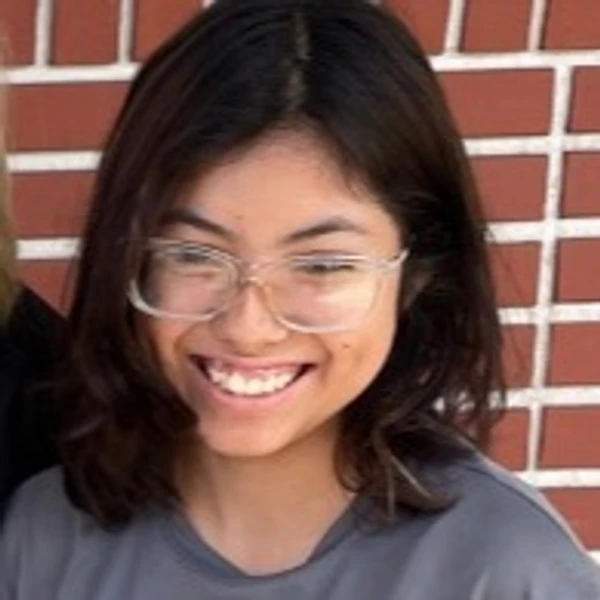
Dayana Mendez
1x
FinalistDayana Mendez
1x
FinalistBio
Highly motivated high school senior pursuing to get a scholarship to study robotics engineering. Seeking to utilize these skills and grow my knowledge as a robotics engineer.
Education
Buena Park High
High SchoolGPA:
3.8
Miscellaneous
Desired degree level:
Master's degree program
Majors of interest:
- Mechatronics, Robotics, and Automation Engineering
Career
Dream career field:
Mechanical or Industrial Engineering
Dream career goals:
Research
Engineering, Other
SkillsUSA — President of Chapter2025 – Present
Public services
Volunteering
Circle of Friends — President2024 – Present
Future Interests
Advocacy
Entrepreneurship
Linda Kay Monroe Whelan Memorial Education Scholarship
I have also learned that “giving back to my community has shown me that leadership is not always defined by recognition or title, but by the quiet moments when someone chooses to care.” I have been a Link Crew leader for the past three years. My responsibility as a Link Crew leader has been to help the freshmen transition into high school. It has been an intimidating transition for the freshmen. I have been there for the freshmen as they try to make sense of everything.
One day changed everything for me. It was my first day as a leader. I was at the freshman orientation. One of the students suddenly fainted in front of me. I went to help the boy. I checked for the boy’s pulse and moved him into the shade. I also brought the boy water and alerted a school staff member. After a while, the crowd dissipated. What I remember is not the urgent situation but the non-urgent situation. I stayed with the boy as he regained consciousness. I had learned that it is not just the urgent moments that show leadership; it is the non-urgent moments.
The next day, I saw the same student alone again. There was something familiar about him. It seemed like the feeling of not belonging and the feeling of being invisible that so many of the student body quietly endured. I talked with him and asked how he was doing. Even though he shrugged his response, we walked to class together. Throughout the next few weeks, I continued to talk with him and share jokes with him. I encouraged him to look into clubs so that he could find a community within the school. One day he told me a story that I will never forget. No one had cared about him the way that I had. Then he told me that he wanted to be a Link Crew leader one day. This was the moment, I realized that leadership is not about the size of the action, but the ripple effect. A small act of kindness had given him the confidence to be a leader.
This understanding inspired me to think beyond that moment and that student. I started conceptualizing my idea for a future organization that would help youth overcome stereotypes and foster a sense of self-confidence and belonging.
This experience has completely changed my perspective on service and leadership. It has taught me that sometimes it’s not about grand gestures or grand ideas; sometimes it’s about simply being present and telling a person that they matter. This is something that I have carried with me throughout my entire life and is something that I continue to carry with me in my academic aspirations.
As a mechanical engineer in my future degree program, including working in a theme park as a theme park engineer. Theme parks are unique places in which imagination and engineering come together to create a sense of community and joy. In a similar way that I made a freshman feel seen in that moment of need, I hope to be able to create a sense of belonging in my future work in a theme park.
Ultimately, giving back to my community has demonstrated to me that being a leader is about empathy, and being a leader is about growth. Whether I am mentoring young students, building an organization that empowers others, or engineering experiences that bring others together, I hope to continue serving others in ways that remind them that they matter, and that they are not alone.
Wicked Fan Scholarship
If my life were a musical, it would be similar to Wicked. A young woman who fights for something she believes is correct and is willing to do anything to reach her goal, and finally achieves it. This is a summary of both Elpaba and my life, and that’s where my love for Wicked started.
It would start with me following the rules that have been set for me for years. I would find out I was in robotics, and I would walk into the classroom. Then I would just like Elpaba, I would find the injustice that would define my story, men unminding me. Then the song that would be my solo would be:
I'm through with playing by the rules of someone else's game.
Too late for second-guessing
Too late to go back to sleep
It's time to trust my instincts
Close my eyes and leap
It's time to try defying gravity
I think I'll try defying gravity
And you can't pull me down
This song became the spark that told me it wasn’t enough to just stop the boys from undermining me; I needed to show the world that women in STEM are just as capable as men in STEM.
Then came the second movie, where Elpaba kept fighting for animal rights, just like I want to keep fighting for women not be undermined in STEM. Elpaba reminds me to keep fighting to achieve what I believe in. To be the start, because sooner or later someone will see, and maybe that one person can make all the difference, but first you must come out of your bubble.
Code Breakers & Changemakers Scholarship
“There must be a mistake,” I thought to myself as I looked at my freshman schedule.
Robotics.
Girls in my family didn’t do anything remotely similar. We cooked, cleaned, and followed paths already written for us. Robotics felt like a different world. But curiosity was louder than my fear, so I walked into class, ready to drop it. But when I walked in, I saw machines humming, wires coiled across tables, and my teacher speaking with passion. Just like that, this different world felt like home.
Less than a month later, I suggested the use of a proximity sensor to my group, and they completely disregarded it. It became my motivation to succeed in robotics. I poured everything I had into studying and practicing late into the night to develop my craft, so that my hands knew what to do without thinking about it. I viewed each challenge; programming sensors and mentally visualizing schematics, as stepping stones to proving them wrong.
And after endless months of preparation, I took the SACA 101 exam, an industry-recognized robotics credential. I answered every question, scared but confident, and I passed. But still one comment stuck with me: “that’s impressive for a girl”. So I let them fuel me to keep going, I pushed further, mastering the Skill Boss, and took the SACA 101 Gold exam a week earlier than scheduled with two other girls, and passed. The next morning, my teacher announced, “Three young women just became the first women to get SACA 101 Gold in California, and one of them is Dayana.”
The barrier wasn’t technical. It was the stereotype that girls like me didn’t belong in STEM. When I embraced my passion, I rewrote my future and my expectations. I learned to be resilient, persistent, and confident to take my life into myself.
These lesson not only shape my future ambitions of studying engineering, but gave me a sense of purpose. Because of my experiences in engineering, I want to study engineering to fix the systems that push me down. I want to create an organization where girls don’t have to feel invisible for liking robotics, just like me and some have. This scholarship is just the beginning, one step closer to girls in themselves, pursuing engineering without hesitation. This organization is more than just a class it’ll represent hope. It’ll show them that anything it possible. That our voice need to be heard and that change needs to happen, so no one ever feels ashamed for wanting to learn, and create something new.
Women in STEM Scholarship
“There must be a mistake,” I thought to myself as I looked at my freshman schedule.
Robotics.
Girls in my family didn’t do anything remotely similar. We cooked, cleaned, and followed paths already written for us. Robotics felt like a different world. But curiosity was louder than my fear, so I walked into class, ready to drop it. But when I walked in, I saw machines humming, wires coiled across tables, and my teacher speaking with passion. Just like that, this different world felt like home.
Less than a month later, I suggested the use of a proximity sensor to my group, and they completely disregarded it. It became my motivation to succeed in robotics. I poured everything I had into studying and practicing late into the night to develop my craft, so that my hands knew what to do without thinking about it. I viewed each challenge; programming sensors and mentally visualizing schematics, as stepping stones to proving them wrong.
And after endless months of preparation, I took the SACA 101 exam, an industry-recognized robotics credential. I answered every question, scared but confident, and I passed. But still one comment stuck with me: “that’s impressive for a girl”. So I let them fuel me to keep going, I pushed further, mastering the Skill Boss, and took the SACA 101 Gold exam a week earlier than scheduled with two other girls, and passed. The next morning, my teacher announced, “Three young women just became the first women to get SACA 101 Gold in California, and one of them is Dayana.”
The barrier wasn’t technical. It was the stereotype that girls like me didn’t belong in STEM. When I embraced my passion, I rewrote my future and my expectations. I learned to be resilient, persistent, and confident to take my life into myself.
These lesson not only shape my future ambitions of studying engineering, but gave me a sense of purpose. Because of my experiences in engineering, I want to study engineering to fix the systems that push me down. I want to create an organization where girls don’t have to feel invisible for liking robotics, just like me and some have. This scholarship is just the beginning, one step closer to girls in themselves, pursuing engineering without hesitation. This organization is more than just a class it’ll represent hope. It’ll show them that anything it possible. That our voice need to be heard and that change needs to happen, so no one ever feels ashamed for wanting to learn, and create something new.
Pete and Consuelo Hernandez Memorial Scholarship
“There must be a mistake,” I thought to myself as I looked at my freshman schedule.
Robotics.
Girls in my family didn’t do anything remotely similar. We cooked, cleaned, and followed paths already written for us. Robotics felt like a different world. But curiosity was louder than my fear, so I walked into class, ready to drop it. But when I walked in, I saw machines humming, wires coiled across tables, and my teacher speaking with passion. Just like that, this different world felt like home.
Less than a month later, I suggested the use of a proximity sensor to my group, and they completely disregarded it. I questioned who I was meant to be, and decided this was my home, so I decided to prove to them that belonged. I poured everything I had into studying and practicing late into the night to develop my craft, so that my hands knew what to do without thinking about it. I viewed each challenge; programming sensors and mentally visualizing schematics, as stepping stones to proving them wrong.
And after endless months of preparation, I took the SACA 101 exam, an industry-recognized robotics credential. I answered every question, scared but confident, and I passed. But still two comment stuck with me: "lucky guess" and “that’s impressive for a girl”. Instead of letting them bring me down they fuel me to keep going, I pushed further, mastering the Skill Boss, and took the SACA 101 Gold exam a week earlier than scheduled with two other girls, and passed. The next morning, my teacher announced, “Three young women just became the first women to get SACA 101 Gold in California, and one of them is Dayana.”
The barrier wasn’t technical. It was the stereotype that girls like me didn’t belong in STEM. When I embraced my passion, I rewrote my future and my expectations. I learned to be resilient, persistent, and confident to take my life into myself.
These lessons shape my future ambitions of studying engineering, building systems that matter, and creating an organization for girls who might feel like they don’t belong in robotics. I want girls to see themselves as capable from the beginning. Get the feeling of finding out that their design work, and most of all feeling accepted into a world that told them they can't be in robotics, because that first robotics class wasn’t just a class, it's the start of my organization and more women in STEM. Of a world we women are not just in STEM but lead it.
Women in STEM Scholarship
"Something has gone wrong," I thought, glancing at my freshman schedule. Robotics. Girls in my family didn't do that kind of thing. We cleaned, we cooked—robots were someone else's job. I stuffed the schedule into my backpack as if it were something I had to hide.
But curiosity is hard to ignore.
I walked into the room ready to change my schedule. Instead, I simply stood there. Machines hummed. Wires wrapped around desks. The teacher outlined with excitement—and I was enthralled.
A few weeks into the school year, I raised my hand: "What if we used a proximity sensor here?"
Silence. A shrug. An eye roll. As if I weren't present in the room.
But I was.
I went on. I asked more questions. I failed at tasks. I worked until my fingers ached. I did not let the silence drive me out and then I passed the SACA 101 exam. A few boys nodded. I heard one whisper, "Most likely lucky guesses."
So I kept going. I mastered the Skill Boss, memorized schematics, and passed the SACA 101 Gold exam.
The next day, my teacher made the following announcement:
"Three young women have just become the first women in California to earn SACA 101 Gold—and one of them is Dayana."
Now, when I talk, they listen.
But this is not simply a story about robotics. It's a story about reclaiming who I am, and who I am allowed to be. For years, I let unwritten rules shape me—rules about what girls can be good at, how we are supposed to act, and when we are supposed to keep our mouths shut. But that robotics class gave me a space to dream big.
It encouraged me with the willingness to have a future in STEM, where I can build both machines and movements.
I desire to build technology that solves issues for real people—specifically those living in resource-scarce communities. I can imagine creating assistive technology for disabled people who typically get left out of innovation. My goal is to automate with greater security, intellect, and accessibility.
But my mission goes further than engineering.
I'd like to use my voice and skills to change who makes up STEM. Far too often, girls are shut down before they even get the chance to begin. I'd like to change that. I plan to begin free robotics classes for girls living in under-served communities. I'd like to provide environments in which young women feel comfortable to tinker, create, and fail and where they learn to believe in their voices even when others don't.
I understand what it is to be the sole woman in a room. I understand what it is to be devalued. I wish to lead, not by example, but by action.
This scholarship will support that mission: earning my degree in Engineering, researching accessible automation, and building a career in the intersection of technology and equity. I do not want to just work in the industry—I want to improve it.
I did not just build a robot. I built a world where I no longer question whether I fit in.
And I’m making space for others to build theirs, too.
Eric W. Larson Memorial STEM Scholarship
I have faced more than financial struggles from being from a low-income family; I am constantly combating stereotypes and low standards. In my community, any technical or academic success was more typically for other people. And girls in particular weren’t being encouraged in any way to pursue careers in science and technology. We were supposed to follow the safer, more “traditional” paths — the ones that didn’t push back against the norm or take up too much room. I saw how these norms shaped how other people perceived me — and, more insidiously, how they started to shape how I perceived myself.
I wasn’t seeking out an engineer. In reality, it stumbled upon me. I was put into this robotics class and right away, felt like I didn’t fit in. I did not have the background, the confidence or the support system that some of my peers seemed to bring with them. I was one of the only girls in the room, and I felt that weight in every group project, every raised eyebrow when I spoke up and every decision that was second guessed. The boys made me feel like I had to prove something because I was a girl. I could have easily been disheartened by that — but something surprising occurred instead.
Over time, that classroom became anything but a normal class. It became a place where I could be myself unlike ever before. Whether it was taking apart gizmos, solving design problems or spending nights in the shop at school (or all three) getting a prototype just right, I was addicted. The more I learned, the more I realized that engineering was going to give me a freedom like nothing I had ever had before. It was a place where logic and creativity met, doggedness over pedigree and my questions were never bothersome, they were necessary. For the first time, I wasn’t having to look at others and wonder who I could or couldn’t be — I was choosing that myself.
Still, the judgment didn’t disappear. It took extra effort to be taken seriously; I had to do more to get by than some of the kids in my class. I never got to stop proving I was worthy. But rather than letting that be debilitating, I was like, that’s my fuel. I was honored to have passed the SACA 101 – Basic Operations Gold certification and to have one of the first young women in California to do so. That accomplishment was about more than just satisfying the credential — it meant one had shattered a barrier. It was about stepping in to a room in which I wasn’t expected to excel and demonstrating, with skill and discipline, that not only did I belong there, but I could lead.
That milestone changed everything for me. I stopped trying to “fit in” and started focusing on how I could stand out—for the right reasons. I began mentoring younger girls who were just as unsure as I once was—girls who were curious but hesitant, brilliant but quieted. I shared my story with them, helped them navigate their projects, and reminded them that they didn’t need permission to be brilliant. Every time I saw a girl’s eyes light up because she understood a concept, built something with her own hands, or realized she had a future in STEM, I was reminded of why this work matters.
As my confidence and skills grew, so did my ambition. I started competing in SkillsUSA, where I’ve had the opportunity to test my engineering knowledge, technical abilities, and leadership in a competitive environment. Competing at SkillsUSA pushed me to level up in every way. I wasn’t just learning in the classroom anymore—I was applying what I’d learned under pressure, representing my school, and showing others (and myself) what I was capable of. The experience has been empowering. It has sharpened my skills, connected me with mentors, and exposed me to a network of like-minded students who are just as passionate about technical excellence and career readiness.
SkillsUSA didn’t just make me a better engineer—it made me a stronger communicator, a more confident leader, and a more determined advocate for women in technical careers. It gave me a seat at the table, and now I want to help pull up more chairs for girls who never thought they could be part of it.
Engineering is no longer just a subject or even just a career—it’s a calling. I’m passionate about using my skills to design real-world solutions that uplift communities like mine. I want to work on projects that make life easier, safer, and more accessible for people who are often forgotten when new technologies are developed. Whether it’s improving infrastructure in underserved areas, creating affordable educational tools, or engineering more sustainable systems, I see engineering as a tool for equity and transformation.
But just as importantly, I want to continue being a mentor and advocate for girls in STEM. I believe deeply in the power of representation—when girls see someone who looks like them doing what they thought wasn’t possible, they start to believe in their own potential. I want to help build programs, host workshops, and create mentorship opportunities that encourage young women to take risks, ask questions, and see themselves as future engineers, scientists, and inventors.