Hobbies and interests
Acting And Theater
Alpine Skiing
Art
ATV Riding
Badminton
Ballroom Dancing
Band
Banjo
Baseball
Basketball
Beach
Biking And Cycling
Billiards
Board Games And Puzzles
Bowling
Boy Scouts
Business And Entrepreneurship
Camping
Cinematography
Combat Sports
Comedy
Concerts
Cooking
Dance
Directing
Diving
Driving
Electric Guitar
Exercise And Fitness
Exploring Nature And Being Outside
Fashion
Fencing
Football
Foreign Languages
French
Gaming
Golf
Guitar
Hiking And Backpacking
Horseback Riding
Italian
Karaoke
Karate
Kayaking
Martial Arts
Media Studies
Modeling
Movies And Film
Music
Music Composition
Piano
Playwriting
Public Speaking
Roller Skating
Romanian
Rowing
Running
Sailing
Screenwriting
Scuba Diving
Singing
Snorkeling
Soccer
Social Media
Softball
Special Effects and Stage Makeup
Speech and Debate
Spending Time With Friends and Family
Sports
Squash
Surfing
Swimming
Table Tennis
Tennis
Theater
Travel And Tourism
Ukulele
Video Editing and Production
Voice Acting
Volleyball
Water Polo
Water Skiing
YouTube
Reading
Action
Adventure
Art
Biography
Classics
Drama
Health
History
Humor
Tragedy
I read books multiple times per month
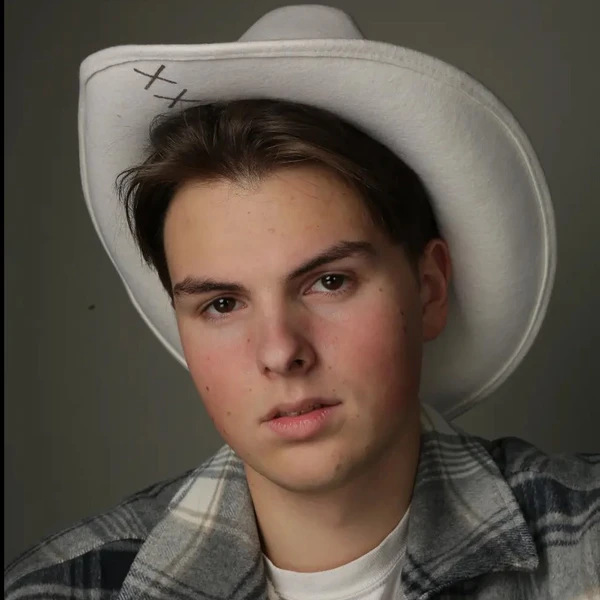
David Petrovici
1x
Finalist1x
WinnerDavid Petrovici
1x
Finalist1x
WinnerBio
David Petrovici is a Romanian multidisciplinary artist, storyteller, and aspiring actor, recently admitted to the prestigious CalArts BFA Acting program. His artistic portfolio includes acting, writing, editing, and directing over seven short films, one of which won Best Short Comedy at the Bucharest Best Comedy Film Festival. During a recent film internship in Los Angeles, David directed a documentary on the history of comedy and interviewed Emmy-winning producers and scholars, gaining firsthand insights into the international film industry.
He was mentored by Oscar-winning director Milton Justice, who compared David’s talent and creativity to that of his former students, including Mark Ruffalo and Bryce Dallas Howard. Also, Milton compares David's acting talent to Meryl Streep, in a televised interview. In his recommendation, Justice wrote, “Quite honestly, I don’t normally see this level of talent in young people today.”
David is also a dedicated athlete, having practiced karate, competitive swimming, speed running, and horseback riding. A silver medalist in both open-water swimming and track, he values discipline and physical expressiveness—qualities that serve him well on stage and screen. Passionate about creating stories that foster empathy, David is committed to building a career that unites art, activism, and cross-cultural dialogue.
Education
California Institute of the Arts
Bachelor's degree programMajors:
- Visual and Performing Arts, Other
Miscellaneous
Desired degree level:
Master's degree program
Graduate schools of interest:
Transfer schools of interest:
Majors of interest:
Career
Dream career field:
Performing Arts
Dream career goals:
Actor Screenwriter Director Editor
Buftea Studios Academy2021 – 20254 yearsLeading part in add
Boromir2010 – 20122 yearsActing Directing Screenwriting Editing
David Petrovich Production2021 – Present5 years
Sports
Kayaking
Club2021 – 20254 years
Sprint
Intramural2018 – Present8 years
Awards
- Silver Medal
Karate
Club2014 – 20228 years
Awards
- Green Belt
Swimming
Club2010 – Present16 years
Awards
- Silver Medal
Equestrian
Club2016 – Present10 years
Alpine Skiing
Club2016 – Present10 years
Aikido
Club2011 – 20132 years
Research
Film/Video and Photographic Arts
California Institute of the Art — Individual researcher, soundtrack composer, audio-video editor2026 – Present
Arts
David Petrovich Production
ActingShort Films and Documentary2021 – PresentBuftea Studios Academy
ActingFilms and Plays2021 – Present
Public services
Volunteering
David Petrovich for Children — Performing2011 – PresentVolunteering
Interact Rotary — Chief Organizer2022 – Present
Bunker Performing Arts Scholarship
What I love most about performing is that it lets me feel fully alive. When I perform, I am more attentive, more open, and more real than in ordinary life. Acting asks me to listen deeply, imagine deeply, and step into another person’s inner world without judging it. I love that it is both emotional and precise at the same time. It demands vulnerability, but also rigor. It asks for courage, but also patience. For me, performing is one of the rare places where feeling deeply is not a weakness, but a strength.
That matters to me because I did not always have an easy relationship with emotion. When I was eight, I became unusually aware of time passing. I would feel the beauty of a happy moment, but at the same time I would already feel its disappearance. As I grew older, that turned into anxiety, and during my early teenage years I went through what I call my “ice-hearted period,” when I tried to protect myself by feeling less. Then a skiing accident forced me to confront both physical and emotional fragility more directly. Acting became one of the ways I returned to life.
I am now studying acting at CalArts, and I want to build a life in theater and film as an actor while also continuing to write, direct, and create stories of my own.
I was inspired to pursue this path both by cinema itself and by the people who later encouraged me to take my calling seriously. Growing up in Romania, film was one of my earliest windows into the wider world. It gave me access to emotional lives, moral conflicts, and kinds of beauty I could not have encountered otherwise. Later, mentors helped me believe that this path was not only something I loved, but something I might actually be able to do well. One of the strongest moments of affirmation came when I auditioned for CalArts. Although applicants were expected to choose monologues closer to their own age, I took a risk and performed Iago’s first monologue. I knew it was a bold choice, but it felt more alive to me than playing it safe. After the audition, the president of the committee told me, “Once in a while, we are happy to meet someone like you, whom we consider the best fit for our artistic community!” I will never forget that.
Another deeply meaningful encouragement came from Academy Award winner, director, and acting teacher Milton Justice. After working with me, he wrote, “Quite honestly, I don’t normally see this level of talent in young people today.” He also wrote that I was “an excellent candidate for a scholarship” and that he “fully believe[d] the committee would be pleased to know they had been a part of the applicant’s early pursuits of study.” Those words meant a great deal to me, not simply because they were flattering, but because they came from someone with real artistic experience and high standards. They made me want to work even harder.
Some of my most meaningful performances so far have been in the films I made in high school. By the time I graduated, I had written, directed, acted in, and edited seven short films. One of them won Best Short Comedy at the Bucharest Best Comedy Film Festival. That period of my life taught me a great deal: how to build a scene, how to trust instinct, how to stay with a feeling long enough for it to become clear, and how much discipline it takes to bring an idea fully to life.
The role that has stayed with me most so far is Iago’s monologue for my CalArts audition, precisely because it required me to take a real artistic risk. I was young for it, and I knew that. But I was drawn to the intelligence, tension, and danger in the language. I had to stretch beyond what felt comfortable, and in doing so I discovered something important about myself: that I am drawn to risk, to leaps of faith, and to digging beneath the obvious until something essential reveals itself. As Milton Justice later said, “David went to the real work right away.... It was like the cliché did not even occur to him. And that’s remarkable to me.”
A dream role I would love to audition for in the future is Hamlet. I am drawn to roles with inner conflict, emotional depth, and a restless mind. Characters like that feel intensely alive to me because they hold contradiction, vulnerability, intelligence, and pain all at once.
Performing is the path I want because it keeps bringing me back to what is most human: feeling, struggle, imagination, and presence. It is the place where I feel most challenged, most truthful, and most myself.
Our Destiny Our Future Scholarship
Storytelling as a Way to Serve Others
When people speak about making a positive impact on the world, they often imagine large-scale change. But in my experience, impact usually begins in much smaller moments: when someone feels understood, supported, or less alone because another person chose to care. For me, the path toward creating that kind of impact has always been connected to storytelling.
I am currently studying acting and filmmaking because I believe stories can shape how people understand each other. Films, performances, and creative projects allow us to explore emotions, struggles, and experiences that we might otherwise never encounter. When someone sees their own fears, hopes, or challenges reflected in a story, they often realize they are not alone. That moment of recognition can be powerful, and sometimes even healing.
My belief in the importance of helping others developed early in my life. Since the age of five, I have been involved in an association dedicated to gifted children, participating in charity and awareness events meant to support and encourage young people. Through these experiences, I learned that talent becomes meaningful when it is used to bring people together and to support others.
Later, I also became involved in organizing charity initiatives through Interact Rotary. Working with others to plan events and support community causes taught me that generosity requires more than good intentions—it requires effort, organization, and commitment. These experiences helped shape my understanding of leadership and service.
One of my most meaningful projects combined creativity and community service. I created a short documentary film called Heaven Is Complicated, which brought together people aged sixteen to forty who were dealing with emotional and psychological struggles. Through rehearsals, filming, and conversations, we created a space where participants could express themselves, build trust, and support each other. The film was ultimately recognized with a festival award, but for me the most important outcome was seeing how storytelling helped people connect and feel understood.
These experiences have shaped my vision for the future. As I continue my education, my goal is to use film and performance not only as artistic expression but also as a way to bring attention to important human experiences. Stories can encourage empathy, inspire courage, and help people confront challenges with greater understanding. Through my work, I hope to create projects that give voice to people who feel unheard and that highlight the strength individuals discover in difficult moments.
Making a positive impact on the world does not always require extraordinary resources or influence. Sometimes it begins simply with the willingness to listen, to create, and to care about the experiences of others. By combining creativity with compassion, I hope to contribute to a world where people feel more connected, more understood, and more hopeful about the future.
In this way, I hope my work will reflect the same spirit of generosity and care that this scholarship was created to honor.
TOMORROW X TOGETHER (TXT) MOA Scholarship
1.
I discovered TXT a few years ago while exploring new music online. What first caught my attention was their debut showcase in Los Angeles. This event reinforced my own dream to come to LA one day and pursue acting and filmmaking. Years later, I am now studying at CalArts...
2.
I think one of the most important characteristics of a MOA is encouragement. TXT’s music often talks about growing, struggling, and continuing forward even when things are uncertain. MOAs reflect that same energy by supporting each other and celebrating each other’s progress. Being a MOA means believing in people’s potential and helping them keep going.
3.
If I had to choose, my bias would be Yeonjun. I admire his dedication and the way he pushes himself to improve constantly. He brings so much energy and confidence to every performance. Watching someone work that hard reminds me that success usually comes from persistence and discipline.
4.
My ult bias would probably still be Yeonjun. As someone studying acting and filmmaking, I respect artists who treat their work with that level of commitment and passion.
5.
My favorite TXT song is “Happily Ever After.” When it was released in 2023, I was going through a difficult moment in my life. I had just ended a relationship with someone I believed was the love of my life, but the relationship turned out to be disappointing and painful. That song comforted me a lot during that time. I kept listening to it. It was a promise that life could still bring something good after disappointment.
6.
Unfortunately I have not had the chance to see TXT live yet. As an international student currently studying in the United States, travel and finances sometimes make things complicated. But I would love to attend one of their concerts one day because their live performances seem incredibly powerful and energetic.
7.
One of my favorite TXT concepts is The Chaos Chapter era. The themes of confusion, youth, and searching for your path really resonated with me. It reminded me that feeling uncertain about the future is actually part of growing.
8.
Right now my education is supported mainly by my family and by scholarships that I apply for. My parents invested all their savings and even their pension funds to help me attend my first year of college in the United States, and I continue applying to scholarships to reduce the financial pressure on them and support my studies.
9.
This scholarship would help cover part of my tuition and living expenses as a student. Studying abroad is an incredible opportunity, but it also comes with significant financial challenges. Support like this helps students like me continue focusing on education and creative development without placing additional strain on our families.
10.
TXT has influenced me by encouraging resilience and optimism. Their music often talks about growing through difficult moments and continuing forward even when things feel uncertain.
The message of “Happily Ever After” turned out to be true for me. After a difficult time, I eventually met someone at CalArts who truly cares about me and shares my values and passions. TXT’s music reminded me that sometimes difficult endings can lead to better beginnings.
11.
I am studying acting because films and performances allow audiences to experience emotions, perspectives, and struggles that may be very different from their own. I feel that I can help them understand each other, and feel less alone.
One of the people who encouraged me strongly on this path is Academy Award–winning producer and acting teacher Milton Justice, who wrote in a recommendation letter that he rarely sees this level of talent in young actors today. His encouragement gave me confidence to continue developing my craft.
Now, I am pursuing my dream at CalArts. Who knows what the future may bring? Maybe one day, if my career grows, I might even have the chance to collaborate with TXT in a creative project or appear in one of their music videos. That would be a beautiful way to close the circle between the inspiration their music gave me and the creative path I am now pursuing.
Eden Alaine Memorial Scholarship
The loss that shaped me most deeply was the death of my uncle Dan, who passed away due to complications related to alcoholism. He was a remarkable man: a highly respected construction engineer who led some of the most important infrastructure projects in Romania, including the main railway and highway bridge over the Danube and the main runway at Otopeni Airport. His work also took him abroad, to countries such as Nigeria and Israel, where he continued to lead large building sites. He was admired professionally and trusted personally, yet his life was also marked by solitude, distance from family, and the physical and emotional toll of constant work in harsh conditions.
My connection to him began before I can remember. As an infant and later as a child, I spent summers at his property in Mogoșoaia. It felt like heaven: a vast garden filled with roses, vegetables, and fruit trees, especially cherries. He cared for that garden with devotion, and every birthday of mine was celebrated there. He would let all the children climb the trees and pick cherries freely. In the evenings, he played the guitar, and performed short scenes for us. Those moments shaped my childhood profoundly and planted the seeds of my love for music and acting.
Despite his talent and sensitivity, my uncle struggled for years with alcohol addiction. He sought help and went through rehabilitation, but never fully recovered. When he passed away, it felt as though my childhood had been abruptly interrupted. His death triggered a deep awareness of time, impermanence, and loss. I became preoccupied with questions about mortality and meaning, which later manifested in what I call my “iced-heart” period—a time of emotional withdrawal and fear. A serious skiing accident followed, and recovery was slow, both physically and emotionally.
What helped me survive that period was turning inward through meditation and journaling. Writing became a daily practice, a way to process grief and to give structure to emotions I could not otherwise articulate. Meditation taught me to understand time not as something to fear, but as something to honor. I realized how important it is to leave something of value behind, something that continues to speak after we are gone. Just as my uncle left the bridge I cross every summer on my way to the seaside, or the runway from which I departed toward my artistic journeys to London and Los Angeles—and now toward my studies—I want to leave behind works that carry meaning for future generations.
Art became my bridge back to life. I wrote scripts inspired by my experiences with my uncle, using storytelling as a form of remembrance and transformation. One of these projects, Heaven Is Complicated, which I wrote, directed, and acted in at seventeen, was later awarded Best Short Comedy Film. More importantly, it allowed me to collaborate with others who were navigating their own struggles, reinforcing my belief that creativity can be a shared healing space.
One of the most significant influences in my life has been Academy Award–winning actor Milton Justice, whose mentoring over time deeply encouraged me. His belief in my potential—comparing my expressive power to that of a young Meryl Streep—strengthened my confidence.
I want to continue my education because learning gives form to experience. College allows me to refine my artistic voice while deepening my understanding of myself and others. Carrying my uncle’s memory forward through discipline, reflection, and creation is both my responsibility and my motivation. His life taught me that talent alone is not enough; meaning must be cultivated deliberately, one conscious moment at a time.
Enders Scholarship
The loss that shaped me most deeply was the death of my uncle Dan, who passed away due to complications related to alcoholism. He was a remarkable man: a highly respected construction engineer who led some of the most important infrastructure projects in Romania, including the main railway and highway bridge over the Danube and the main runway at Otopeni Airport. His work also took him abroad, to countries such as Nigeria and Israel, where he continued to lead large building sites. He was admired professionally and trusted personally, yet his life was also marked by solitude, distance from family, and the physical and emotional toll of constant work in harsh conditions.
My connection to him began before I can remember. As an infant and later as a child, I spent summers at his property in Mogoșoaia. It felt like Eden: a vast garden filled with roses, vegetables, and fruit trees, especially cherries. He cared for that garden with devotion, and every birthday of mine was celebrated there. He would let all the children climb the trees and pick cherries freely. In the evenings, he played the guitar, and performed short scenes for us. Those moments shaped my childhood profoundly and planted the seeds of my love for music and acting.
Despite his talent and sensitivity, my uncle struggled for years with alcohol addiction. He sought help and went through rehabilitation, but never fully recovered. When he passed away, it felt as though my childhood had been abruptly interrupted. His death triggered a deep awareness of time, impermanence, and loss. I became preoccupied with questions about mortality and meaning, which later manifested in what I call my “iced-heart” period—a time of emotional withdrawal and fear. A serious skiing accident followed, and recovery was slow, both physically and emotionally.
What helped me survive that period was turning inward through meditation and journaling. Writing became a daily practice, a way to process grief and to give structure to emotions I could not otherwise articulate. Meditation taught me to understand time not as something to fear, but as something to honor. I realized how important it is to leave something of value behind, something that continues to speak after we are gone. Just as my uncle left the bridge I cross every summer on my way to the seaside, or the runway from which I departed toward my artistic journeys to London and Los Angeles—and now toward my studies—I want to leave behind works that carry meaning for future generations.
Art became my bridge back to life. I wrote scripts inspired by my experiences with my uncle, using storytelling as a form of remembrance and transformation. One of these projects, Heaven Is Complicated, which I wrote, directed, and acted in at seventeen, was later awarded Best Short Comedy Film. More importantly, it allowed me to collaborate with others who were navigating their own struggles, reinforcing my belief that creativity can be a shared healing space.
One of the most significant influences in my life has been Academy Award–winning actor Milton Justice, whose mentoring over time deeply encouraged me. His belief in my potential—comparing my expressive power to that of a young Meryl Streep—strengthened my confidence.
I want to continue my education because learning gives form to experience. College allows me to refine my artistic voice while deepening my understanding of myself and others. Carrying my uncle’s memory forward through discipline, reflection, and creation is both my responsibility and my motivation. His life taught me that talent alone is not enough; meaning must be cultivated deliberately, one conscious moment at a time.
Pamela Branchini Memorial Scholarship
Collaboration as a Space of Becoming
Collaboration, for me, is rooted in preparation rather than performance. Long before an audience is present, relationships take shape through shared effort, uncertainty, and patience. Those moments, often invisible, are where creative work gains meaning.
Over time, I came to understand that collaboration is how art is made when people learn to trust one another. As a child, I participated in charity and awareness performances for gifted children through an association founded by my mother. I remember the atmosphere backstage more vividly than the applause itself: the quiet encouragement, the shared nerves, and the way adults and children adjusted to one another with care. These experiences taught me that collaboration begins with attention. Everyone involved—performers, organizers, and audiences—contributed something essential, even when that contribution went unseen. Art, I learned, grows out of attentiveness to people.
That understanding was tested and deepened when, at seventeen, I wrote, directed, and acted in my short film Heaven Is Complicated. Taking on leadership at that age felt intimidating, especially because the group included people of different ages and emotional backgrounds. Some struggled with anxiety or self-doubt; others questioned whether they belonged in a creative space at all. Very quickly, I realized that collaboration would not come from authority, but from trust. The quality of the project depended on how safe people felt contributing.
Rehearsals unfolded unevenly. Progress sometimes slowed as conversation replaced action, and moments of uncertainty interrupted momentum. Yet those interruptions proved essential. Listening became as important as directing. Choosing when to speak, and when to leave space, shaped the group dynamic. Over time, people began to take creative risks they had initially avoided.
The film eventually received the award for Best Short Comedy Film (at Bucharest Best Comedy Film Festival, in 2023), but that recognition felt meaningful primarily because it reflected a collective process. The outcome resulted from shared responsibility rather than individual ambition. Everyone involved shaped the work, including in ways that could not be credited or measured.
In my intended field, collaboration means being accountable for the environment I help create. Acting relies on responsiveness—to a scene partner’s timing, to a director’s guidance, and to the emotional tone of a rehearsal room. Each choice affects others. Collaboration requires flexibility and restraint, alongside initiative.
Today, I seek creative spaces where preparation is understood as relational work. I value environments that allow for difference without turning it into division, and where contribution is measured by presence rather than volume. Experiences like Heaven Is Complicated taught me that collaboration is not about agreement, but about commitment to a shared process.
For me, collaboration is where art becomes grounded in human experience. It transforms preparation into connection and allows creative work to grow through mutual responsibility. That is the approach I intend to carry forward in my studies and artistic practice.
RonranGlee Literary Scholarship
WinnerSelected Passage:
“It is not that we have a short space of time, but that we waste much of it. Life is long enough, and it has been given in sufficiently generous measure to allow the accomplishment of the very greatest things if the whole of it is well invested. But when it is squandered in luxury and carelessness, when it is devoted to no good end, forced at last by the ultimate necessity we perceive that it has passed away before we were aware that it was passing. So it is—the life we receive is not short, but we make it so, nor do we have any lack of it, but are wasteful of it. Just as great and princely wealth is scattered in a moment when it comes into the hands of a bad owner, while wealth however limited, if it is entrusted to a good guardian, increases by use, so our life is amply long for him who orders it properly.” — Seneca, On the Shortness of Life (Seneca, On the Shortness of Life, trans. John W. Basore)
In this passage, Seneca argues that human life feels short not because time is insufficient, but because we fail to live it with intention; through close reading, I show that Seneca reframes time as an ethical responsibility rather than a natural scarcity, a view that illuminates both the philosophical depth of his Stoicism and the dangers of emotional or existential “waste”—a form of internal mismanagement I once experienced during a period of adolescent withdrawal.
Seneca begins with a reversal so direct that it almost functions as a reprimand: “It is not that we have a short space of time, but that we waste much of it.” The clarity of the statement is striking. Instead of comforting his reader about the brevity of life, Seneca accuses them of squandering it. This rhetorical inversion establishes the philosophical thrust of the passage: time is not a natural limitation but a moral resource. Seneca reframes time not as something that happens to us but as something for which we are responsible. His language avoids abstraction; he does not speak of fate, cosmic order, or existential mystery, but of “waste,” “squandering,” “investing,” and “good guardianship.” These are terms drawn from economics, not metaphysics. Time, for Seneca, is a form of ethical capital.
The economic metaphor continues when Seneca writes that life is “given in sufficiently generous measure” to accomplish “the very greatest things.” There is no hint of resignation in this claim. Instead, Seneca embeds a Stoic optimism: the universe has provided enough time for virtue, wisdom, and excellence. The problem is not shortage but mismanagement. This is reinforced by the contrast he develops between investment and dissipation. If time is “well invested,” it expands; if “squandered,” it contracts. Seneca suggests that temporality is psychologically elastic—its felt length grows or shrinks depending on the discipline of the person experiencing it.
The most haunting sentence in the passage is perhaps the one that follows: “We perceive that it has passed away before we were aware that it was passing.” Here Seneca captures a universal human experience: the shock of belated recognition. This line is not merely descriptive; it is diagnostic. Seneca identifies a type of unconscious living in which a person is present in body but absent in attention. To be unaware that time is passing is, for Seneca, a form of self-neglect.
It was this line—the startled realization that time has slipped away “before we were aware of it”—that resonated most forcefully with me. When I was around eight years old, I first experienced a strange, premature sense of nostalgia. Returning from a summer vacation, I suddenly understood that the days, the weeks, the months I had loved were irretrievably gone. This awareness deepened each year, slowly and quietly, until early adolescence, when it crystallized into what I now call my “ice-hearted period”—a time when emotion felt dangerous, when my awareness of mortality grew too large for my ability to process it, and when I tried, without meaning to, to numb my own interiority. Seneca’s words feel uncannily precise: I was not lacking time, but drifting outside of it, unable to feel its movement except as loss. Although my experience was emotional rather than moral, Seneca’s concept of “waste” becomes metaphorically apt: I was not “using” my own capacity for feeling; I was storing it away as though it were safer untouched. Reading Seneca now, I see how a human life can become shorter not through chronology but through disconnection.
Following this emotional reflection, Seneca’s argument shifts back to the broader ethical terrain. “So it is—the life we receive is not short, but we make it so.” The moral weight falls on the verb make. Life is shaped not simply by events but by orientation, habit, and discipline. The phrase “we make it so” avoids fatalism; Seneca insists that agency, not circumstance, determines the lived experience of time. His continuing metaphor—comparing time to “great and princely wealth” in the hands of a “bad owner”—is especially revealing. Time, like wealth, has no intrinsic meaning; its value is determined by the character of the one who possesses it. A “bad owner” squanders both without understanding their worth; a “good guardian,” by contrast, increases life's value by intentional use.
The final line—“our life is amply long for him who orders it properly”—anchors the entire passage in Stoic ethics. The verb order is central: life must be arranged, structured, and disciplined. In Stoicism, virtue is not spontaneous; it is cultivated through practice. Seneca’s metaphor suggests that disorder, distraction, and unreflective habit—not misfortune—are the true thieves of time. This is not a denial of suffering but a claim about the structure of inner life: meaning emerges not from the length of time given but from the quality of attention applied.
Seneca’s underlying message, then, is that time is not a chronological fact but a moral project. It requires stewardship rather than surrender. We shorten our lives not by dying but by failing to live deliberately. And the only antidote is awareness: the conscious ordering of life according to one’s values.
Returning to my own adolescence, I now see how my “ice-hearted period” reflected a form of internal mismanagement—not moral failure, but emotional paralysis. Seneca’s words illuminate the psychological texture of this state: a person may remain alive in time while drifting outside of its meaning. To “order” life, in Seneca’s sense, means not controlling events but directing attention, reclaiming presence, and refusing to become an absent witness to one’s own existence.
In the years since, my passion for film and acting pulled me out of numbness and back into feeling. I began writing, directing, acting in, and editing my own short films—seven in total— embodying emotion, studying human behavior, and constructing meaning frame by frame. One of them won Best Short Comedy at a festival in Bucharest when I was seventeen, a moment that felt like the first tangible proof that creating was not just something I loved, but something that gave shape and purpose to my time.
This sense of direction deepened when Milton Justice, an Oscar-winning producer and one of the most respected acting teachers in the world, told me he believed I was the most talented actor of my generation, comparing my expressiveness to Mark Ruffalo and Meryl Streep. That affirmation was not only encouragement; it was a philosophical shift. It made me understand, with new clarity, that my time has value precisely when I use it to pursue the work that awakens me. In Seneca’s terms, it was the moment I ceased to be a “bad owner” of my hours and began investing them with intention.
Through my work, I learned that life expands when attention expands, and that purpose is the antidote to both emotional freezing and the quiet disappearance of time.
Seneca’s passage, read closely, continues to guide me: time is not short, but sacred—and its true length is measured not in years, but in how deeply we choose to live them.
Dream BIG, Rise HIGHER Scholarship
My education has never been just a series of classes, grades, or deadlines. For me, it has been a compass—one that has guided me through uncertainty, pointed me toward possibility, and helped me understand who I am becoming. When I was a child in Bucharest, I didn’t yet know the word “purpose,” but I felt its spark whenever I watched films that transported me far beyond my living room. In those moments, I sensed that storytelling—honest, emotional, human storytelling—was where my future lived.
But dreams are not linear, and they rarely arrive without obstacles.
My family has always valued learning, even when resources were limited. When I was accepted into the Acting BFA program at the California Institute of the Arts, one of the most competitive programs in the world, it felt like the door to my future had finally opened. I had competed against over 800 applicants worldwide and somehow, against every odd, made it through. It should have been a moment of pure celebration—but it came with a painful reality. My parents emptied their savings, their pension funds, and eighteen years of putting away money in a private education account just to pay for my first year. Their support came with love, but also with an unspoken weight: I needed to succeed, not just for myself, but for all of us.
This pressure could have crushed me. Instead, it became my motivation.
At CalArts, I discovered what it means to dedicate myself fully to a craft. Acting is not only about technique—it is about emotional honesty, presence, vulnerability, and discipline. It is about learning to face your own fears so you can step truthfully into someone else’s life. I chose to take a class in Abnormal Psychology specifically to better understand the characters I portray. I spent nights researching disorders, behaviors, clinical indicators—not because it was required, but because I wanted to treat every character with the emotional and psychological integrity they deserved. This is when my education transformed into something deeper: a way of respecting humanity itself.
One moment that reshaped my sense of direction came from my mentor, Oscar-winning producer and renowned acting teacher Milton Justice. After seeing one of my scene works, he told me that my emotional presence reminded him of “actors like Mark Ruffalo or even Meryl Streep.” For a seventeen-year-old boy from Romania, hearing this from a man of his experience was overwhelming. But more than flattery, his words anchored me. They made me believe that the future I dreamed of was not impossible—it was simply unfinished.
Of course, the path has not always been straight. At fourteen, I went through a period I call my “ice-hearted year”—a time when emotions felt dangerous and I shut down internally to protect myself. I felt numb, disconnected from others, and overwhelmed by the fear of death and time. It took a painful skiing accident, months of quiet recovery, and the rediscovery of old comedies—especially the films of Stan Laurel—to thaw something inside me. His innocent humor, his vulnerability, and his way of turning sadness into connection taught me something profound: art can heal. It can guide someone out of darkness without ever knowing their name.
This realization remains at the core of why I want to create films. My education has shown me that storytelling can be more than entertainment—it can be rescue, reflection, and renewal. It can be a light for someone going through their own silent battles, the way Laurel once was for me.
Today, I am not only studying acting; I am also writing and directing. My short film Heaven Is Complicated won “Best Short Comedy” at a festival in Bucharest when I was just seventeen. I am now working on the screenplay for my first feature film—an action-mystery that blends Romanian mythology, the legends of the Bucegi Mountains, and the emotional journey of a group of teenagers who ultimately save their region from conflict. My goal is not simply to make movies, but to bring Romanian stories to global audiences—to build cultural bridges through cinema.
But none of this can happen without continuing my education. CalArts is shaping me into the artist I want to be, but the financial strain on my family makes the next years incredibly difficult to sustain. This scholarship is more than financial support; it is momentum. It is the difference between pausing a dream and fulfilling it. It is the opportunity to keep building a future in which I can give back—to my family, to Romania, to young artists who might one day look at my path and feel less alone in their own ambitions.
My long-term goal is to build an artistic career grounded in compassion, emotional integrity, and the desire to impact others. I want to make films that combine humor and humanity, that give audiences permission to feel, and that celebrate the complexity of the human heart. Education has given me direction, clarity, and purpose. It has shown me that who I am becoming matters just as much as where I am going.
And where I’m going, with support, is toward a future in which I hope to create art that inspires, connects, and heals—just as it once healed me.
American Dream Scholarship
For many people, the American Dream is a promise of success, stability, and upward mobility. For me, the American Dream has always been something slightly different — not a guarantee, but a possibility. A door cracked open. A light shining from very far away, convincing you to walk toward it even when the road is uncertain.
My first image of this dream was the Hollywood sign. Growing up in Romania, I watched old comedies and classic films that felt like portals to another universe. Hollywood was never just a place on a map — it was a symbol that imagination mattered, that passion could open doors that circumstance tried to close. It represented the idea that what you dream could one day become what you live.
My definition of the American Dream is the freedom to build a life shaped not by where you begin, but by what you dare to pursue.
When I was seventeen, I directed my first short film, which unexpectedly won Best Short Comedy at a festival in Bucharest. That moment made the dream flicker closer. A year later, I was accepted into the acting program at California Institute of the Arts — one of the most competitive in the world, with hundreds of international applicants. Suddenly, the Hollywood sign was not just symbolic; it was something I could see every morning on my way to class. It felt unreal — that a kid from Bucharest, who grew up watching Stan Laurel DVDs on the living room carpet, was now studying in the same city where the industry I admired was born.
But the American Dream, as I’ve come to understand it, is not only about opportunity. It is also about responsibility — the responsibility to honor the people who believe in you.
One of those people is Milton Justice, an Oscar-winning producer and one of the most respected acting teachers in the world. From the first weeks of training, he saw something in me — something I had never dared to articulate for myself. He compared my emotional expressiveness to actors like Mark Ruffalo and Meryl Streep, and he encouraged me to trust that my vulnerability was not a weakness, but a tool. Coming from someone of his stature, those words reshaped the way I understood my own potential.
This, too, is part of my definition of the American Dream: to be seen for who you truly are, and to have that recognition push you toward who you could become.
Of course, dreams also require sacrifice. My parents used every resource they had — even their retirement savings — to pay for my first year of college. They believed in my dream as fiercely as I did, even when it meant shouldering a tremendous burden. Their support is the foundation that allows me to continue pursuing this path. And it is also what makes scholarships so meaningful — not just as financial assistance, but as a way of honoring the faith that others have placed in me.
For me, the American Dream is not about guaranteed success. It's about the permission to try — to pursue storytelling at the highest level, to bring Romanian voices and stories into the global conversation, and to one day stand on a film set knowing I earned my place there through work, courage, and authenticity.
It is also about giving back. My long-term goal is to create films that bridge cultures, including my first planned feature inspired by the mysteries of the Bucegi Mountains — a story framed through the cinematic language I am learning here in the U.S.
Arthur and Elana Panos Scholarship
From my earliest memories, faith has been more than belief — it has been a story written into my life. At round three years old, I told my parents I had once lived in Japan, in a life that was harsh and lonely. I said I had afterward roamed the universe for a thousand years before asking to be placed in my mother’s womb. To me, this was not fantasy but a deep intuition: that life carries mysteries larger than we can explain, and that our souls are guided by something greater than ourselves.
Until I was ten, I sometimes communicated with what I can only describe as a voice from the universe — a sense of guidance and premonition, showing me things before they happened. I voluntarily cut off that connection afterward, feeling strange compared to my peers.
Faith became my lifeline during my darkest season. Around age fourteen, I developed what I call my “iced heart” — a period of emotional numbness caused by a fear of death and of time slipping away too quickly. I felt frozen, detached, and unable to engage with life. Then came the accident. While skiing in 2021, I fractured my hand. Oddly, instead of despair, I felt relief. The physical pain reminded me I was alive. I believe God used that moment to awaken me, to crack open the numbness that had covered my heart. From that accident, I began to rediscover feeling, purpose, and the courage to live fully. I learned that setbacks can become blessings when seen through God’s timing. That conviction carried me into my creative path — acting, writing, directing — where I now see my art not only as self-expression but as service.
Today, as a freshman at the California Institute of the Arts, I feel my faith guiding my career in two ways: integrity and mission. Integrity means holding onto the moral compass my faith instilled in me — never sacrificing honesty or respect for success. Mission means using my gifts to make a difference.
Through my association “David Petrovici for Children,” I have organized charity events to support talented but disadvantaged kids. I see this as an extension of my faith: giving back what God has given me. The same spirit guided me when I created my short film Heaven Is Complicated, a project that portrays people dealing with emotional struggles and loneliness. By writing, directing, acting in, and editing it, I wanted to give voice to those who often feel unseen. The film went on to win Best Short Comedy at the Bucharest Best Comedy Film Festival (2023), but beyond the award, its impact lay in showing audiences that even in hardship, there can be humor, healing, and hope. In the future, I want to expand this mission globally, creating films that not only entertain but awaken empathy, compassion, and faith-driven resilience.
I am also strengthened by the mentors God has placed in my path. Academy Award-winning producer Milton Justice, now my mentor, has compared my expressive power to Meryl Streep's and called me “the most talented actor of [my] generation.” His words remind me that God’s plan often places the right people in our lives at the right time.
Faith has been the compass that brought me out of numbness, through adversity, and into a life of purpose. I believe it will continue to shape me as an artist who walks with integrity and uses creativity to give back. With the support of this scholarship, I can continue pursuing this calling.
Special Delivery of Dreams Scholarship
From a very young age, I understood that life would not always move in straight lines. At fourteen, I went through a period I call my “iced heart,” when I lost the ability to feel emotions fully and drifted through life numb and detached. This state was born from a deep fear: the fear of death and of time slipping away too quickly, without leaving behind anything meaningful. While most of my peers were exploring life with curiosity and energy, I felt crushed by the weight of questions about impermanence and the point of it all. Joy became inaccessible, and I moved through each day like a ghost in my own body.
It was a ski accident that changed everything. I fractured my hand, and while most people might have felt devastated, I felt relief. For the first time in months, I felt something real. That accident became a turning point — both physically and emotionally — teaching me that what may seem like a setback can become the start of a renewal. Though my bone was healing, what truly mended was my capacity to feel, to connect, and to invest in life again. I carried this lesson into my artistic journey, where acting and filmmaking became not only my passion but also my way of reconciling with myself and others.
Today, I am a freshman at the California Institute of the Arts, pursuing a Bachelor of Fine Arts in Acting. I was selected from more than 800 international applicants, and Academy Award-winning producer Milton Justice has even compared my expressive power to that of Meryl Streep, calling me “the most talented actor of [my] generation.” These words inspire me, but they also remind me of the enormous responsibility I have: to work tirelessly, to honor the sacrifices my family made — including giving up my mother’s retirement savings — and to use my art to give something back to the world.
This scholarship would not only lighten the immense financial burden of tuition but would also directly help me continue building the artistic projects I use to impact my community. Through my association “David Petrovici for Children,” I have organized charity events to support talented children from disadvantaged backgrounds. With proper support, I could expand these efforts in the United States as well, using theater and film to encourage empathy, creativity, and confidence in young people who might otherwise feel voiceless.
Stamp collecting, at first, may seem far removed from theater or filmmaking, but in my life it has been a quiet anchor. My collection began when I was still in primary school. Each stamp felt like a miniature window into another country, another history, another culture. While the stage allowed me to embody characters, my stamps allowed me to travel the world from my desk, teaching me patience, curiosity, and a love for detail. This hobby has shaped me as an artist in ways I only realized later: the same attention I give to the texture of a rare stamp, I bring to the nuances of a character; the same sense of global connection I feel when looking at stamps from across continents, I now strive to evoke in my films and performances.
Stamp collecting taught me that small things carry immense meaning — that an overlooked detail can hold a story powerful enough to connect nations. Similarly, I want my work as an actor and filmmaker to remind people that every individual voice matters. With the help of this scholarship, I will pursue my education and continue the work of turning personal passions into shared community impact.
CF Boleky Scholarship
My Best Friend, Dani
I still remember the first day of school when I was six years old. I walked into the classroom nervous and unsure, and that is when I met Dani. He had an energy that instantly drew me in—playful, inventive, and just a little mischievous. From that day forward, he became my best friend. What started as a shared desk in first grade turned into a bond that shaped much of my childhood and continues to influence my dreams today.
For the first four years of school, Dani and I were inseparable. We studied together, played together, and built entire imaginary worlds during breaks. He always had a way of keeping things bright, of turning the ordinary into something extraordinary. When I left our school for a more advanced program, I was afraid our friendship might drift apart. Even though we no longer spent half the day together in school, as we lived close by, we made sure to stay close, meeting after classes and on weekends to keep our bond alive.
So, we found new ways to stay connected. Both of us loved storytelling, and I had started making short films even as a teenager. Dani quickly became my go-to leading man. Every time I wrote a script or improvised a scene for Instagram, he was the one I trusted to bring it to life. He might not have had formal training, but he had a natural presence in front of the camera. Together, we created stories that mixed our humor and our dreams, and in doing so, we kept alive that childish, inventive energy that first connected us.
But behind the fun, there were contrasts in how our families saw our futures. Dani’s parents were divided: his father encouraged his artistic side, while his mother strongly opposed it. She wanted him to pursue IT studies, even though mathematics caused him constant stress. I watched my best friend struggle between what he wanted and what he was told to do, and I knew how painful that must have been.
My story was different. My mother invested all her energy in supporting my dream of becoming an actor, and my father even agreed to use the family’s savings and retirement funds so I could study at CalArts. That sacrifice gave me the chance to pursue what I loved, while Dani had to remain in Bucharest, bound to a path that never suited him. Leaving him behind was one of the hardest parts of my journey.
Even so, I carry our friendship with me every day. Dani represents not only my childhood but also the reminder that not every talented person gets the same chance. Our friendship matters to me because it is rooted in loyalty, creativity, and a promise: I have decided that one day, when I have established myself as a filmmaker, I will cast Dani in one of my films. It will be my way of pulling him out of the world of numbers and into the world where I know he belongs—the world of stories, imagination, and performance.
Dani and I started this journey together, and even though life took us down different paths, I am determined that we will share the stage again. That belief keeps our friendship alive, and it motivates me not only to succeed for myself but also to create opportunities for the people who have always believed in me.
Crenati Foundation Supporting International Students Scholarship
As a Romanian artist admitted to the California Institute of the Arts (CalArts), one of the most prestigious art schools in the world, I carry with me both pride and responsibility. I am not only pursuing my own growth as an actor and filmmaker; I am also carrying the hopes of representing my country on an international stage. Being selected among over 800 international candidates was a personal milestone, but it was also a reminder that Romania has stories, voices, and talents worthy of global recognition. My goal is to use the education and opportunities I receive at CalArts to give back to Romania by expanding its cultural presence in the world, empowering future generations of artists, and helping reshape how our country is perceived internationally.
I dream telling authentic stories rooted in Romanian culture, history, and values. Too often, Eastern European narratives are overlooked in global cinema, or worse, represented through stereotypes. My ongoing project, "The Sphynx Files," is more than a film — it is a business model and a cultural mission. The story draws inspiration from the legends of the Bucegi Mountains, blending mystery, history, and contemporary themes. By creating films like this, I can contribute to Romania’s cultural export, offering international audiences a chance to see us not as an abstract “Eastern Europe,” but as a country rich with myth, creativity, and resilience.
In addition to bringing Romanian stories to the world, I plan to establish platforms within Romania for young artists to thrive. Through my "David Petrovici for Children" Association, I have already organized charity performances that support talented children in need. This experience has shown me the impact that mentorship and visibility can have on a young artist’s confidence and opportunities. With the training I am receiving at CalArts, I hope to expand this work into professional mentorship and collaborative projects, creating workshops, internships, and even production opportunities for Romanian students who dream of careers in theater and film.
Another way I want to contribute is by bridging Romanian artists with the global artistic community. One of the privileges of studying abroad is building international networks. My ambition is to use these connections not just for myself, but to open doors for others in Romania — inviting international directors, actors, and producers to collaborate on Romanian projects and festivals, and encouraging Romanian talent to work abroad while still keeping their cultural identity at the center of their art.
Mentorship has been a crucial part of my own journey. Academy Award-winning producer Milton Justice, who has compared my expressive abilities to those of Meryl Streep, once wrote: “Quite honestly, I don’t normally see this level of talent in young people today. I fully believe the committee would be pleased to know they had been a part of the applicant’s early pursuits.” His faith in me has reinforced the importance of giving back. Just as I benefited from guidance and belief, I want to be that source of support for future Romanian artists — to help them believe their voices matter and that they can compete at the highest levels.
Ultimately, my vision is for Romania to be recognized as a hub of creativity and innovation in the arts. My career will certainly be personal — filled with roles, films, and projects that challenge me as an artist. But its larger purpose will be collective: to inspire pride at home, to amplify our culture abroad, and to create opportunities for the next generation. If I succeed, my journey will not only belong to me, but to the many Romanian voices waiting to be heard.
Michael Rudometkin Memorial Scholarship
Embodying Selflessness Through Art and Action
To me, selflessness is not defined solely by grand gestures, but by the daily choices to act with empathy and intention. It’s about stepping beyond one's own interests to lift someone else up, even when it's inconvenient or uncomfortable. As someone who has grown up in a creative and community-focused environment, I’ve come to see selflessness not as an obligation, but as a way of life—one that manifests through my artistic work, charitable efforts, and day-to-day interactions.
One of the most formative examples of this has been my involvement in the 'David Petrovich for Children Association', founded by my mother to support gifted youth through performance-based charity events. From the age of five, I have performed in concerts—some on the grand stage of the National Opera House, others in outdoor venues—all to raise funds for children who needed resources for education and creative growth. Even as a young child, I understood that my voice, my presence, and my talent could be offered in service of something larger. Every time I stepped onstage, it wasn’t for applause—it was to make someone else's world a little brighter.
Another instance of selflessness came during a time of cultural and ideological division in my community. A pro-Russian, extremist figure began influencing young people online in Romania, including many of my classmates. Rather than argue or distance myself from them, I decided to engage them with compassion. I wrote and directed a short film titled 'Diversity Market', in which I cast students with opposing views to play symbolic roles in a fictional marketplace. Through the process of rehearsing and acting together, many began to see the world—and each other—differently. It was an act of quiet resistance, yes, but more than that, it was a gift of dialogue. I used my creative voice not to overpower, but to connect and heal.
During a documentary internship in Los Angeles, I also had the opportunity to help fellow students adjust to a new, high-pressure environment. Some felt intimidated or isolated by the fast pace and unfamiliar cultural context. I took the time to check in on them, assist with translation when needed, and ensure no one felt left behind. This wasn’t part of my assigned role—but I remembered what it felt like to be overwhelmed in a new space, and I wanted others to feel welcomed and supported.
Selflessness, in my view, isn’t about sacrificing identity or goals—it’s about using your strengths in service of others. Whether through organizing charity events, leading collaborative artistic projects, or offering quiet support in a competitive environment, I strive to embody selflessness not for recognition, but because I believe our shared humanity calls for it.
Each of us has something to give. For me, it’s my voice, my stories, and my willingness to listen. And when we give freely, we build a world that feels more like home—for everyone.