user profile avatar

Darshan Sathish Kumar

1x

Finalist

1x

Winner

Bio

I’m a high school senior interested in operations research, health systems engineering, and applied mathematics, especially how delays, handoffs, and hidden constraints shape care. Through hospital volunteering, research, and self-directed modeling projects, I’ve focused on turning messy real-world problems into decision-ready systems. I’ve built emergency department flow simulations, conducted quantitative research in healthcare and finance, and learned to test assumptions before optimizing them. I hope to study mathematics and engineering to build tools that make healthcare systems clearer, faster, and more humane.

Education

Northside Health Careers High School

High School
2022 - 2026

Miscellaneous

  • Desired degree level:

    Doctoral degree program (PhD, MD, JD, etc.)

  • Majors of interest:

    • Management Sciences and Quantitative Methods
    • Mathematics and Computer Science
    • Mathematics
  • Planning to go to medical school
  • Career

    • Dream career field:

      Medical Practice

    • Dream career goals:

      Physician-Scientist

    • Founder & Developer

      Independent Project
      2025 – Present1 year
    • Quant Research Intern

      JP Morgan & Chase
      2025 – 2025

    Sports

    Karate

    Club
    2010 – Present16 years

    Awards

    • Area competition first place and second
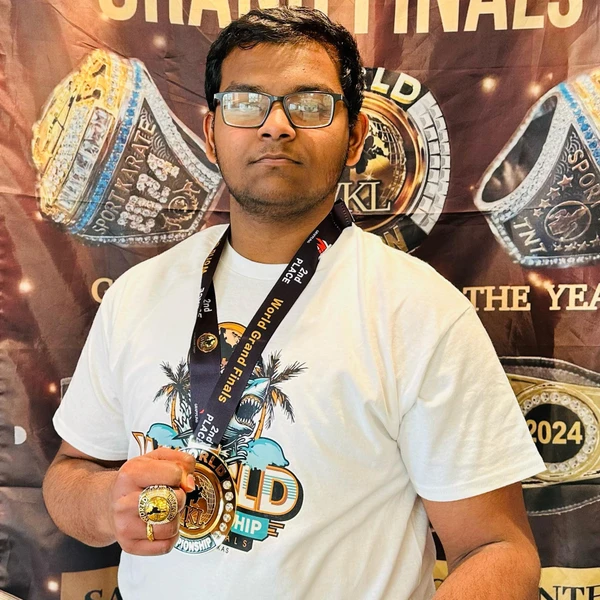
    • World Karate League 1st place
    • Texas Karate Organization 3rd place

    Research

    • Finance and Financial Management Services

      Self-Directed — Founder & Lead Researcher
      2025 – 2025
    • Biological and Biomedical Sciences, Other
      University of Texas Health Science Center — Research Intern
      2025 – Present

    Public services

    • Volunteering

      HOSA — Student Competitior
      2022 – 2023
    • Volunteering

      Peer Tutoring — Lead Tutor
      2022 – Present

    Future Interests

    Volunteering

    Philanthropy

    Entrepreneurship

    Lyndsey Scott Coding+ Scholarship
    The first time I noticed how much a system shapes care, I was volunteering in a hospital emergency department. A patient arrived in critical condition and needed surgery quickly. The medical team was ready. The operating room existed. But the room was still being cleaned, so the patient stayed in the ER while doctors stabilized her and waited. Everyone in the room was competent and moving fast, yet the system around them still created a delay. On the bus ride home, I kept replaying the sequence in my head. What had to happen before the patient could move? Where did the delay occur? How could someone detect that bottleneck earlier? That night, I opened my laptop and started teaching myself Python. I began by writing small programs and deliberately breaking them so I could understand why they failed. Over time, coding became my way of making complex systems understandable. My primary goal in computer science is to build systems that help organizations make better decisions under pressure. Recently, I built a prototype emergency department operations dashboard that simulated hundreds of patient flow scenarios. My first version tracked arrivals, wait times, and bed turnover. When I showed it to a nurse, she immediately pointed out what it missed. What mattered most to her shift was not overall crowding. It was boarding time, the delay between admitting a patient and actually moving them to an inpatient bed. I rebuilt the dashboard around that metric. The model no longer just showed that the ER was busy. It showed exactly where the bottleneck was forming and when it began. That experience shaped how I think about computer science. Code is powerful not because it produces answers, but because it forces you to test assumptions and revise them when real users show you what you missed. Outside of computer science, my biggest interests are healthcare systems and teaching. Through a summer research mentorship at the University of Texas Health Science Center at San Antonio, I analyzed longitudinal data from metabolic disease mouse models and wrote Python scripts to visualize patterns in weight and diet data. I helped interpret those results and presented our findings to faculty and researchers. The experience showed me how computational tools can transform raw biological data into insights researchers can actually use. I also spend much of my week tutoring classmates in calculus and Python. Tutoring has taught me that understanding is not just about solving a problem correctly. It is about making the reasoning accessible to someone else. When a student goes quiet, it usually means they are overwhelmed rather than confused. I slow the problem down until they can explain it themselves. In the future, I hope to combine these interests through operations research and health systems engineering. My goal is to design computational models that help hospitals predict congestion, allocate resources, and reduce delays that affect patient outcomes. Computer science gives me the technical tools to build these models, while my experience in hospitals and research helps me understand the real constraints those models must respect. Technology improves the world most when it works alongside the people who rely on it every day. I want to build systems that make their work clearer, faster, and more effective, especially in places where small improvements can have life-changing consequences.
    Kelly Smith Memorial Scholarship
    Winner
    After high school, I plan to pursue a college degree in mathematics with applications in engineering and healthcare systems. I want a career where I can work on real problems that affect people every day, especially in healthcare, where technology and decision-making directly shape outcomes for patients, families, and staff. I attend a medical magnet high school in Northside ISD, and my coursework has pushed me toward this path. Classes like calculus, statistics, physics, and computer science taught me how to think precisely and test ideas instead of guessing. Health science courses and hospital volunteering showed me where those skills matter. I learned that strong systems don’t come from effort alone. They come from planning, data, and tools that help people make better decisions under pressure. Technology has been a central part of my time in NISD, not just as something I used, but as something I built with. When I noticed inefficiencies during my hospital volunteering, I didn’t just complain about them. I went home and tried to understand them. I taught myself Python and began building simple models to visualize patient flow and bottlenecks in emergency departments. The goal wasn’t to make something flashy. It was to make something honest that reflected what nurses and staff were actually experiencing. That mindset carried into my academic work. Through the Northside ISD Summer Research Mentorship Program, I worked at UT Health San Antonio on liver disease research. I used Python to clean and analyze longitudinal datasets, built visualizations to track trends, and flagged anomalies for review. Technology allowed me to turn raw data into something interpretable, and it taught me how small errors or assumptions can change conclusions. That experience showed me how technology supports learning when it’s used carefully and responsibly. Outside of formal research, I’ve used technology to support others. I tutor classmates in calculus and programming, often using simple code, graphs, or visual explanations to help concepts click. I’ve learned that technology can lower the barrier to understanding when it’s used thoughtfully, especially for students who feel overwhelmed by math or science. Innovation, to me, isn’t about inventing something entirely new. It’s about using the tools you have to solve the problem in front of you more clearly than before. That’s how I try to approach projects, whether it’s research, tutoring, or independent learning. I don’t stop at completing assignments. I ask whether the result actually makes sense and whether it could be improved. Kelly Smith believed in engaged learning and forward thinking, and that philosophy matches how I’ve grown in NISD. I’ve learned to use technology not as a shortcut, but as a way to deepen understanding and make work more meaningful. Those habits will carry with me into college and into a career where I want my work to be practical, reliable, and useful to others. This scholarship would support my next step and allow me to continue building skills that connect technology, education, and healthcare. I want to do work that holds up in real environments, and my time in Northside ISD has prepared me to do exactly that.
    Learner Math Lover Scholarship
    I love math for the same reason I love a locked door with a key hidden somewhere in the room. It doesn’t care if I’m confident or confused. It just sits there, stubborn and quiet, until I figure out what I’m missing. I’ve had plenty of nights where I start out sure I’m doing everything right and end up surrounded by scratch paper like it’s snowed on my desk. I’ll rewrite the same line three times, change one tiny thing, and still get nowhere. Then at some point, I’ll notice something small that I’ve been stepping over the whole time. A sign I copied wrong. A definition I didn’t really understand. A shortcut I took without earning it. And when I fix it, the whole problem shifts. It’s almost annoying how simple it can feel at the end, but that’s what makes it addictive. It’s not magic. It’s earned. What really made math feel human to me wasn’t even my own work. It was helping other people through it. Someone will tell me, “I’m just not a math person,” like it’s a personality trait they’re stuck with. I’ve watched that same person solve something hard five minutes later, not because they suddenly got smarter, but because they finally got a version of the explanation that fit their brain. Sometimes it’s a picture. Sometimes it’s a story. Sometimes it’s just slowing down and letting them talk through what they think is happening. Those moments get me every time. Math also follows me around in ways I didn’t expect. I catch myself doing it when I’m comparing options, trying to predict what’ll happen if I choose one thing over another, or wondering why a trend looks the way it does. It’s like math trained my mind to ask better questions. Not “what’s the answer,” but “what’s changing,” “what’s staying the same,” and “what am I assuming without realizing it.” I think that’s why I’m drawn to it. Math doesn’t reward pretending. It rewards paying attention. It rewards patience. It rewards being willing to be wrong in public on paper until you’re right. And honestly, in a world where so much feels loud and uncertain, I like having one place where the rules are clear, and the progress is real. That’s what math is for me. A challenge, a comfort, and a way of thinking I don’t want to give up.
    Wicked Fan Scholarship
    I’m a fan of Wicked because it doesn’t reward the easy version of being good. It asks harder questions about identity, power, and what it actually costs to stand by your values when doing so makes you unpopular. The first time Wicked really stuck with me wasn’t because of the spectacle. It was because of Elphaba. She doesn’t fit neatly into the world she’s born into, and instead of being helped, she’s labeled. What I love about her story is that she doesn’t start out trying to be rebellious or heroic. She starts out trying to do the right thing. The conflict comes when she realizes that the system she trusted doesn’t want the truth. It wants obedience. That hit closer to home than I expected. A lot of my life has been about following a path that made sense to everyone else. I attend a medical magnet high school, volunteer at a hospital, and for a long time, I assumed my future was pre-med because that’s what people around me understood. But as I spent more time in healthcare environments, I started noticing that some of the biggest problems weren’t medical at all. They were structural. Waiting, confusion, bottlenecks, and decisions that left people feeling powerless. Wanting to question those systems felt uncomfortable, because it meant stepping outside the role people expected me to play. That’s why “Defying Gravity” isn’t just a big musical number to me. It’s about the moment when staying quiet becomes more dishonest than speaking up. Elphaba knows what it will cost her socially, and she chooses truth anyway. That’s not framed as a clean or easy victory. It’s lonely. And that honesty is what makes it powerful. I also appreciate how Wicked handles friendship. Elphaba and Glinda don’t become opposites because one is good and one is bad. They grow apart because they make different compromises. “For Good” is one of the most accurate depictions I’ve seen of how people can shape each other deeply, even if they don’t stay aligned forever. You don’t have to end up in the same place to matter to each other. That idea has stayed with me in how I mentor younger students in karate and tutor classmates. Leadership isn’t about forcing everyone to think like you. It’s about helping people grow, even if they take different paths. Sometimes impact doesn’t look like agreement. It looks like influence. What makes Wicked special to me is that it refuses to simplify people. It shows how narratives are built, how fear gets dressed up as morality, and how courage often looks like isolation before it looks like progress. As someone who’s learning to trust my own judgment and take responsibility for my choices, that message matters. I’m a fan of Wicked because it doesn’t just entertain. It challenges you to ask who you’d be if approval wasn’t the goal, and whether you’d still choose integrity if it meant standing alone.
    Stewart Family Legacy Scholarship
    When people talk about the future of science, they often focus on breakthroughs: new technologies, new cures, new discoveries. But what actually determines whether those breakthroughs matter is leadership. Science shows us what is possible. Leadership decides what becomes real. Science shapes the future by forcing us to confront reality. It replaces assumptions with evidence and opinions with testable claims. That matters because the problems we face now, from healthcare strain to climate change, are too complex to solve by intuition alone. Science gives us tools to understand systems that don’t behave neatly and to see consequences before they turn into crises. I’ve seen this firsthand through my involvement in healthcare. Volunteering at a hospital taught me that even when the science is sound and the professionals are skilled, outcomes still depend on how the system is run. Patients can be medically stable and still suffer because of delays, confusion, or poor coordination. Those problems aren’t caused by a lack of knowledge. They’re caused by gaps in decision-making. That’s where leadership shapes the future. Leadership in science isn’t about being the loudest person in the room or claiming certainty where none exists. It’s about responsibility. It’s choosing to ask hard questions early, listening to people closest to the problem, and acting before small failures turn into big ones. In scientific fields, leadership also means protecting integrity. It means respecting data even when it contradicts expectations and being willing to revise plans instead of defending them out of pride. Outside the hospital, I see the same relationship between science and leadership when I tutor and mentor other students. Science gives structure to learning. Leadership determines whether that structure is inclusive or intimidating. When a student is struggling, the difference between growth and shutdown often comes down to whether someone creates a space where confusion is allowed. That kind of leadership doesn’t require a title. It requires awareness and consistency. Looking ahead, I believe our future depends on leaders who understand science deeply enough to respect its limits. Technology will continue to advance, but progress won’t be measured by innovation alone. It will be measured by whether those innovations reduce harm, increase clarity, and improve real lives. Science expands what we can do. Leadership decides why, how, and for whom we do it. That relationship will define the future, and it’s the intersection I want to work in.
    Sammy Ochoa Memorial Scholarship
    My name is Darshan, and I’m a high school senior in Texas. I go to a medical magnet school, I volunteer at a hospital, and I’m planning to build a career connected to healthcare. I’m also an immigrant, and my family’s life here hasn’t been simple. A lot of things that feel normal for other students, like having everything set up for you or not worrying about paperwork and finances, haven’t been our reality. I’ve grown up helping my parents understand school and life in the U.S. I’m the person who reads the emails, explains the forms, and makes sure we don’t miss something important. The hardest period for my family was when my mom was hospitalized multiple times for chronic pancreatitis. When that happened, everything changed at home. I had to help take care of my younger siblings, keep things running, and still keep up with school. I tried to act like I was fine, but it was stressful. There were nights when I’d be studying and thinking about whether my mom was okay at the same time. Money also became tighter. When someone in your family is sick, it affects everything. What got us through was staying close as a family and leaning on our faith. We didn’t always have answers, but we kept showing up and doing what we could each day. That experience made me grow up fast, but it also made me more serious about the kind of person I want to be. Being around hospitals during that time changed how I see healthcare. I volunteer at Methodist Hospital, and I’ve spent over 200 hours helping staff and supporting patients across different units. A lot of the work is small things, but those small things matter. I’ve seen how scared families can be when they’re waiting, and how much a calm explanation or a little kindness can change how a bad day feels. That’s why I want to stay in healthcare. I’m not saying I’m going to “save the world.” I just know I want to do work that matters when people are vulnerable. I plan to study math and use it in healthcare, because I’ve also noticed that some problems in hospitals aren’t medical. They’re system problems. Waiting, delays, confusion, and overload can make everything harder for patients and staff. I want to use my education to help make care more organized and more humane, so people spend less time lost in the system. Right now, I try to make an impact where I am. I tutor classmates in math and science. I mentor younger students in karate. And at home, I help my family keep things together. I’m not perfect, but I don’t quit on people. This scholarship would help me take the next step without putting more stress on my family. We’ve already been through enough to understand how quickly life can change. I’m working hard because I want to build a future where I can give back through healthcare, the same way others helped my family when we were struggling. Thank you for considering me.
    Ward Green Scholarship for the Arts & Sciences
    I’m planning to study mathematics, with a focus on applying it to healthcare systems. People usually think of math as the opposite of art, but the more I’ve worked with real problems, the more I’ve realized they need each other. You can have the right numbers and still fail if you can’t communicate what they mean. And you can have a beautiful story and still fail if you can’t prove it holds up. That’s where I see my path. Math is how I stay honest. Design is how I make it usable. I attend a medical magnet high school in Texas, and I volunteer at Methodist Hospital. Being in the hospital regularly taught me that healthcare isn’t only medicine. It’s also flow, timing, communication, and decisions made when people are tired and stressed. I’ve watched patients wait even when care teams were working hard, and I’ve seen how delays and confusion add stress to families who already feel powerless. That’s why I started building things instead of just noticing problems. I taught myself Python and began creating simple models and dashboards to visualize bottlenecks, like emergency department boarding time. The first versions weren’t impressive, but they taught me something important: in healthcare, clarity is a form of care. If you can make a problem visible, you can start fixing it. And if you can explain it in a way that makes sense to the people living it, then the work actually has a chance to help. This is where the “art” part matters. A dashboard isn’t just math. It’s communication. It’s choosing what to highlight, what to simplify, and what to measure so the person looking at it can act quickly. I’ve learned that a good visualization can do what a paragraph can’t. It can help someone understand a system at a glance. I want to use what I learn in college to benefit my community in Texas, especially students and families who don’t have access to the same resources. I already tutor classmates in math and programming, and a lot of students come in thinking they’re “not a math person.” Most of the time, they’re not incapable. They just got lost once and never got pulled back in. I want to keep doing this in college, but on a larger scale: building free study resources, running peer-led review sessions, and creating simple interactive tools that make tough concepts less intimidating. In healthcare, I want my education to lead to practical improvements that reduce stress for patients and staff. I want to work in health systems engineering, operations research, or healthcare analytics, not just to make hospitals “efficient,” but to make care more humane. Fewer families are stuck waiting with no information. Clearer handoffs. Better staffing decisions. Systems that hold up on bad days, not just good ones. As a BIPOC student and an immigrant, I’m also aware that access isn’t equal. A lot of students don’t get mentorship, paid opportunities, or guidance on how to enter technical fields. I want to be part of changing that, not by talking about it, but by building resources and pathways that make it easier for other students to start. I’m planning to study math because it’s how I make sense of complex problems. I’m committed to using design and communication to make that work matter to real people. That’s how I plan to use my education to serve my community.
    Matthew Hoover Memorial Scholarship
    I practice karate, and I have for most of my life. It isn’t something I picked up for a season or for a résumé. It’s been a consistent part of my routine for years, both competitively and instructionally, and it’s one of the main ways I’ve learned how to balance responsibility. Each week, I spend about six hours training. That time includes structured practice, belt testing preparation, competition training, and mentoring younger students at my dojo. Karate doesn’t pause when school gets busy, and school doesn’t slow down because training is demanding. From a young age, I had to learn how to manage my time carefully and be realistic about what I could handle. If I didn’t plan ahead, something would slip. Balancing karate with schoolwork forced me to stop relying on motivation and start relying on structure. I learned early that waiting to “feel ready” doesn’t work when you have commitments in multiple areas. I plan my weeks in advance, break large assignments into smaller deadlines, and use short blocks of time efficiently. There are nights when I’m tired after training but still need to study for a test or finish an assignment. Learning how to push through those moments without burning out has been one of the most valuable lessons karate has taught me. This balance matters because I take challenging academic courses, especially in math and science. Maintaining strong grades while training consistently means I can’t afford to procrastinate or cut corners. Karate trained me to show up prepared, whether I feel like it or not. That mindset carried into the classroom and helped me develop steady study habits rather than last-minute ones. Karate has also taught me accountability. In competition, preparation shows. In instruction, effort matters even more. I mentor younger students at my dojo, and I’ve learned that my focus and attitude affect them. If I come in unfocused, they notice. If I’m consistent and patient, they respond. That responsibility changed how I approach leadership. It’s not about authority. It’s about setting an example through behavior. Unlike seasonal sports, karate has been a long-term commitment alongside my academics. There was never a point where I could choose one over the other. I had to be a student and an athlete at the same time, year after year. That consistency is what made the balance real. It taught me how to prioritize, how to recover after setbacks, and how to keep going even when progress felt slow. The skills karate taught me have directly supported my academic success. Focus, resilience, and staying calm under pressure are things I use daily. They’ve helped me stay steady during demanding weeks and manage stress without shutting down. When things feel overwhelming, I fall back on the discipline I’ve built through years of training. Matthew Hoover believed in students being well-rounded and learning how to balance academics and athletics. Karate gave me that balance. It didn’t compete with my education. It strengthened it. As I prepare for college, I know the habits I’ve built through consistent training, competition, and mentorship will continue to guide how I handle challenges both in the classroom and beyond.
    Be A Vanessa Scholarship
    My family and I have had to learn how to handle hard situations without a lot of options. I’m an immigrant, and I live in Texas on an H-4 visa. That affects more than people realize. I can’t just go get a job and start saving for college as many students can. A lot of the “normal” ways teenagers help their families or build experience through paid work aren’t available to me. So when money gets tight, we feel it. And when unexpected things happen, we don’t have much room to absorb them. During junior year, my mom was hospitalized multiple times for chronic pancreatitis. That changed everything at home. I had to help take care of my younger siblings, handle household responsibilities, and keep up with school at the same time. I was trying to act as if nothing changed, but the truth is, it was stressful. There were days when I felt like I was doing three jobs at once: student, helper at home, and the person who had to stay calm so my siblings didn’t panic. That period taught me what adversity actually looks like. It isn’t always dramatic. Sometimes it’s just waking up every day with extra weight on your shoulders and still having to perform. It also made me more serious about what I want to do with my education. I’m pursuing a healthcare path because I’ve seen what it feels like when a family is scared and doesn’t know what’s next. I volunteer at Methodist Hospital, and I’ve spent over 200 hours there. I’ve seen patients waiting, families anxious, and nurses stretched thin but still caring. That environment changed me. It made me want to be part of the healthcare world for real, not just as an idea. I also plan to study math because it’s the tool that helps me think clearly when situations are messy. I like math because it forces you to be honest. You don’t get to pretend something makes sense. You either understand it, or you don’t, and then you fix it. I want to use that kind of thinking in healthcare, because a lot of problems in hospitals aren’t about effort. They’re about systems. Delays, scheduling, communication, and bottlenecks can turn a bad day into a dangerous one. I’m known for being the person who helps when things feel confusing. At home, I’m the one who translates and explains. At school, I tutor other students in calculus and science. In the hospital, I try to be the person who’s steady and useful. That’s how I plan to make a difference long-term: by building skills that let me support people when they’re stressed, and by contributing to healthcare in a way that reduces confusion and improves how care is delivered. This scholarship would help me continue my education without putting more strain on my family. We’ve already gone through enough to know how quickly life can change. I’m not asking for sympathy. I’m asking for a chance. I’m doing the work, and I want to keep going.
    Siv Anderson Memorial Scholarship for Education in Healthcare
    My commitment to healthcare didn’t start with a career plan. It started with showing up and staying. I attend a medical magnet high school in Texas, where healthcare isn’t abstract. It’s part of the day-to-day. Through that program, I began volunteering at Methodist Hospital, and I’ve stayed there for over 200 hours across multiple units. Most of the work isn’t glamorous. Stocking supplies. Running errands. Helping nurses with small tasks so they can focus on patients. But I learned early that healthcare only works when someone is willing to do the uncelebrated parts consistently. Being in the hospital that often changes how you see the profession. You see patients on their worst days. You see families waiting for updates. You see nurses juggling too much at once and still showing up calm and focused. What struck me most was how much care happens outside the actual medical decision. The waiting. The coordination. The communication. Those moments shape how patients experience healthcare just as much as treatment does. That experience is why I’m committed to pursuing a healthcare-focused path, even though my interests sit at the intersection of math, systems, and medicine. I’m not stepping away from healthcare. I’m committing to it in a way that fits how I think. I want to work on the systems that support care, because I’ve seen how delays, bottlenecks, and unclear processes add stress for patients and staff alike. I’ve followed that interest through action. Outside the hospital, I’ve done research at UT Health San Antonio through a summer mentorship program, working with liver disease data. I helped design tracking protocols, cleaned longitudinal datasets, wrote scripts to flag anomalies, and presented findings to faculty. That experience taught me how much responsibility comes with working in healthcare-related research. A small mistake in data or interpretation can change conclusions, and those conclusions can influence real decisions. My commitment also shows up in how I support others. I’m active in HOSA and have competed at the state level, applying what I learn directly to my hospital volunteering. I tutor classmates in science and math, many of whom are also interested in healthcare but feel overwhelmed by the coursework. I’ve learned that encouragement in healthcare education often looks like patience, clarity, and staying with someone until they feel confident again. I’m pursuing healthcare because I believe in work that matters when people are vulnerable. I don’t take lightly the trust patients place in healthcare professionals, whether they’re nurses, technicians, researchers, or system designers. I want a career where my work reduces confusion, supports care teams, and improves how patients experience treatment, even in small ways. Healthcare isn’t something I’m exploring casually. It’s something I’ve already built my time, education, and values around. This scholarship would help me continue that commitment and prepare for a future where I can contribute meaningfully to the field.
    Tebra Laney Hopson All Is Well Scholarship
    I want a bachelor’s degree in mathematics. Not because it sounds impressive, and not because I’m trying to be “the math kid.” I’m choosing it because math is the only place I consistently feel like the world stops being vague. You write down what you mean. You test it. If you’re wrong, you don’t get to argue with reality. You fix it. I go to a medical magnet high school in Texas, and for a long time, I told everyone I was pre-med. It was the default plan. I volunteer at Methodist Hospital, and I still respect doctors and nurses more than I can explain in a few sentences. But what changed my direction wasn’t losing interest in medicine. It was noticing how much suffering comes from things that aren’t medical. Waiting. Confusion. Delays that nobody owns. I’d watch patients who were stable but still stuck in the ER because the next step wasn’t ready yet. I’d watch nurses do everything right and still get crushed by the system around them. That bothered me in a way I couldn’t shake, because it didn’t feel like fate. It felt like design. Or a lack of it. So I did what I always do when something doesn’t make sense. I tried to make it make sense. I went home and started teaching myself Python. It wasn’t graceful. I broke things constantly. But I liked that computers don’t let you fake understanding. If your logic is wrong, it fails. You don’t get credit for sounding confident. I built a basic ER flow model and a dashboard prototype to visualize bottlenecks. The first version looked clean, and it was also wrong in the way that matters most. It didn’t match what nurses were actually living through. A nurse looked at it and pointed me to what she watches when a shift starts slipping: boarding time, the gap between the decision to admit a patient and when the patient actually leaves the ER. I rebuilt the whole thing around that. That’s the moment I stopped seeing math as a subject and started seeing it as responsibility. I’m not chasing math because I want to sit in a tower and prove theorems. I want to use it where it touches people. In healthcare, small decisions become huge outcomes. A scheduling change. A handoff that’s clearer. A delay that’s caught early. That’s real impact, and it’s measurable. I wasn’t a student of Tebra Laney Hopson, but I understand what it means to change someone’s life one person at a time, because I’ve watched educators do it for me. I also try to do it myself. I tutor classmates in calculus and programming, and I’ve learned that the difference between a student who gives up and a student who keeps going is often one thing: someone who doesn’t make them feel stupid for being confused. Someone who stays long enough to help them get unstuck. That’s the energy I want to carry into college and beyond. I want to build. I want to teach. I want to leave behind things that still work after I’m gone, whether that’s a tutoring culture that makes it normal to ask questions, or a tool that helps a hospital spot a problem before it turns into a bad night for patients and staff.
    JK and Mary Ann Newville Memorial Engineering and Nursing Scholarship
    For a long time, I thought mental health was something you handled privately and silently. If you were disciplined enough, you could outwork it. If you were organized enough, you could control it. I believed that because it was the only way I knew how to keep life steady. That belief got tested when my mom was hospitalized twice for chronic pancreatitis. Overnight, I became the person who kept the house running. I managed dinner, helped my siblings with school, handled school emails, and tried to keep my grades high as if nothing changed. On paper, I looked fine. In my head, I was constantly bracing for the next problem. My first response was control. I time-blocked my day down to the hour. I tracked tasks in spreadsheets. I treated my life like a system that would behave if I built the right schedule. It worked until it didn’t. I started snapping at people. I felt guilty any time I wasn’t “productive.” I’d lie in bed exhausted but unable to shut my brain off because I kept mentally rerunning everything I might’ve missed. That period changed what I believe. I don’t believe mental health is a weakness or a motivation problem anymore. I think it’s information. It’s your mind telling you that your current system doesn’t match your current reality. The solution isn’t always “try harder.” Sometimes the solution is to admit the load is too heavy and change how you’re carrying it. It also changed how I relate to people. I used to disappear when I was overwhelmed because I didn’t want to burden anyone. Now I try to communicate sooner, even when I don’t have a perfect plan. I’ve learned to ask for help before things break. I’ve learned that being dependable doesn’t mean doing everything alone. It means being honest about limits so you don’t collapse and leave everyone scrambling. It made me a better tutor, too. I used to think confusion was something to push through. Now, when I tutor calculus or programming, I listen for hesitation. I don’t just explain harder. I try a different angle. I slow down. I name what’s happening out loud so the student doesn’t feel stupid for not getting it immediately. That’s mental health in practice. It’s creating a space where pressure doesn’t turn into shutdown. And it’s shaped my career goals. I’m pursuing math and engineering with healthcare in mind because I’ve seen how stress builds when systems run at full capacity. In hospitals, when the system has no breathing room, small delays snowball, and people suffer. Patients wait longer. Staff burnout. Families feel helpless. I’m drawn to health systems work because it’s one of the few places where engineering decisions can reduce human stress at scale. Better scheduling, better flow, clearer handoffs, fewer bottlenecks. Those changes aren’t abstract. They change what a bad day feels like for patients and nurses. My experience with mental health made me care about the parts of healthcare that don’t get celebrated because they aren’t heroic. The waiting. The overload. The quiet breakdowns that happen when the system forces people to function at 110% all the time. I’m applying for this scholarship because financial pressure is part of my reality, and I’m serious about building a career where my work is used, not just studied. I want to design systems that make care more reliable and make it easier for people to stay steady under pressure. I’ve lived what happens when there isn’t enough margin. I want to build more of it.
    Zedikiah Randolph Memorial Scholarship
    At home, I translate. School emails, insurance letters, and anything official in English usually reach my parents through me first. I used to think the goal was accuracy. Then I noticed my parents would nod even when they didn’t really understand. So I started slowing down, asking better questions, and finding the exact point where the explanation stopped fitting their lives. That habit has shaped how I learn. I don’t move on until the thing actually makes sense. I go to a medical magnet high school, and for a long time, I assumed I’d be pre-med. I volunteer at Methodist Hospital, and I like being useful. What I didn’t expect was how often the hardest problems weren’t medical. Patients could be stabilized and still stuck. Nurses could do everything right and still lose time to delays that didn’t belong to any one person. One night, a patient needed surgery but stayed in the ER because the operating room wasn’t ready yet. The room existed. The team was ready. The system wasn’t. I kept thinking about the steps that had to happen before she could move, and what stalled. I went home and tried to model what I’d seen. I taught myself Python by building small programs, breaking them, and tracing why they failed. I built a simple emergency department flow model and a dashboard prototype. At first, I tracked arrivals and wait times because they were easy to measure. Then I showed it to a nurse, and she pointed out what she actually watches when a shift starts slipping: boarding time, the gap between the decision to admit someone and when they actually leave the ED. I rebuilt the dashboard around boarding so delays didn’t hide inside averages. That’s why I chose math. I don’t love math because it sounds impressive. I love it because it forces clarity. It makes you write assumptions down, test them, and admit when your model is wrong. In healthcare, where constraints are real and time matters, clarity isn’t academic. It changes what people can do. I’ve tried to keep my work grounded. I’ve logged 200+ hours volunteering across multiple hospital units, supporting nurses and patients in the small ways I’m allowed to. I also did research at UT Health San Antonio through a summer mentorship program, working on liver disease data. I designed tracking protocols, cleaned longitudinal datasets, wrote scripts to flag anomalies, and presented interpretations to faculty. That experience taught me how easy it is to get fooled by data if you don’t build sanity checks, and how much changes when you do. In my field, I represent a small slice of students who are doing quantitative work connected to healthcare while also being a non-citizen. As an H-4 dependent, I haven’t been eligible for paid work, so my projects have been unpaid and self-directed. That’s a quiet kind of underrepresentation, but it matters because it limits access to mentorship and opportunities that other students take for granted. I want to make an impact by building practical pathways: tutoring that actually teaches thinking, shared resources that make hard material startable, and tools that help people see problems clearly. I don’t want to “inspire” with speeches. I want to be the person who makes the work feel reachable, especially for students who are smart but don’t have a roadmap. That’s the direction I’m choosing: math as a way to reduce confusion, reduce wasted time, and help more people move through systems that currently make them wait.