
Silver Spring, MD
Age
19
Gender
Male
Ethnicity
Black/African
Religion
Christian
Church
Baptist
Hobbies and interests
Photography and Photo Editing
Movies And Film
Darryl Wormley
2x
Finalist1x
Winner
Darryl Wormley
2x
Finalist1x
WinnerBio
My life goal is to create art that inspires others to reflect on themselves, the world around them, or on art itself. My preferred medium for doing so is film, but I also enjoy theatre and photography. With this passion in mind, I approach every task in my life as a creative project. I draw from my own life experiences, as well as those of others, to inform my approach. I collaborate with others and reflect critically on my work to ensure that what I create is the best it can be.
Education
California Institute of the Arts
Bachelor's degree programMajors:
- Visual and Performing Arts, General
- Film/Video and Photographic Arts
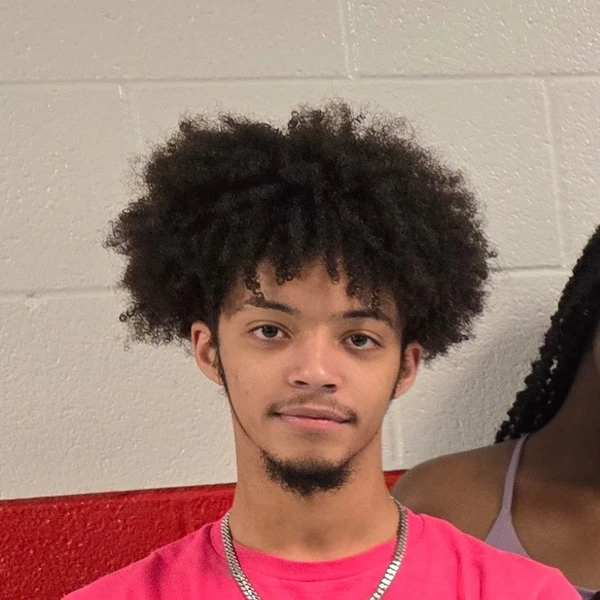
Montgomery Blair High School
High SchoolGPA:
3.7
Miscellaneous
Desired degree level:
Bachelor's degree program
Majors of interest:
- Film/Video and Photographic Arts
- Visual and Performing Arts, General
Test scores:
1420
SAT
Career
Dream career field:
Motion Pictures and Film
Dream career goals:
Cashier/Prep Worker/Cook
Deli2023 – 20241 year
Arts
Montgomery Blair High School
Acting2022 – 2025
Sgt. Albert Dono Ware Memorial Scholarship
When I was a boy I told my mom I wanted to join the Army to fight for this country. She replied: "What has this country done for you? And is that really the best way you can fight for it?"
Those words ring in my head when I read a story of courage cut short like that of Sgt. Albert Dono Ware. A man can adopt this country as his own, give six years of service, and ultimately his life, only to exist in an America where the Secretary of Defense can stand before the nation and declare that "diversity isn't our greatest strength." Ware bled for a country that still debates whether men like him belong in it. His story, tragically, is not an exception.
Historically, Black fighters didn't simply "face hard times at home." They were relegated to substandard housing, denied access to basic resources, and when it wasn't lawmakers drawing lines, it was hatred disguised as justice purging the streets. Nearly ten years after World War II — a war in which the Tuskegee Airmen proved that Black soldiers fought with the same valor as their white counterparts — a young boy in Mississippi could still be brutally murdered on the strength of a rumor.
What moved these stories from history to something I felt was a film I watched in ninth grade: I Am Not Your Negro. Seeing footage of riots, beatings, protests, and media that once passed as standard but today reads as minstrelsy gave me a word for what I already understood. It radicalized me, and then my school handed me a worksheet asking me to apply the five-act structure to it.
I felt the disrespect before I could name it. I brought my grievance to my mother, then to the board of teachers, and the film was removed from the assignment. That moment clarified how I fight: when Black art is filtered through institutional hands, those who come after are robbed of its power. Ware and those like him never had the option to walk away from service. They gave everything without the luxury of hesitation. It's in that recognition that my mother's voice returns: what's the best way for me to fight?
In high school, I earned over two hundred hours of student service learning, directing and writing Sankofa, my school's annual Black History Month show — from summer preproduction through show nights, ensuring every story the Black community wanted to tell was woven together with care. During one production, my ninth-grade theater teacher introduced me to Peyton, a Black student struggling at home. Hesitant at first, Peyton joined after we talked. I recognized something in them and encouraged them to write a poem about isolation in academic spaces. Their piece made it into the show. Today they mentor other young poets — ensuring future students find the support they once lacked. That outcome matters more to me than any title I once held.
In college I continue that work through films showcased in my school's Black Arts Collective festival, and as an online tutor for students in grades 4–6 — an age I chose deliberately. These are the years before a child decides whether school is for them. I've seen what catches early and what doesn't. I'll never forget Sofia, a student who felt overlooked by the very system meant to serve her. During our sessions I engaged with material she actually cared about and slowed down on the parts that didn't land. Once, while reading together, she kept stumbling over Ms. and Mrs. I explained the difference, and when she asked about the equivalent titles for men, she said they were stupid. I didn't see frustration — I saw a child recognizing her place in the world. Reassuring her in that moment, and building her confidence alongside her reading comprehension, meant more than any metric could measure.
This is what Ware's sacrifice asks of those who remain: not only to remember, but to show up in the spaces where the next generation is being formed. None of this work matters if it cannot be passed on. The first actionable step lies in our schools — reform that abandons the reduction of students to test scores and instead measures growth through the full breadth of human capacity. Stronger arts education funding is not a luxury; it is how we produce the next generation of scholars, thinkers, and changemakers. That reform demands engagement at every level: local school boards, county-wide administration, and candidates who understand that public education is the connective tissue of a functioning democracy.
To honor the fallen is not only to remember their sacrifice — it is to ensure the children they died for understand where that sacrifice stands in history, and what it still asks of them. Without people willing to carry that truth forward, men like Ware are defending a glass castle. I intend to be someone who builds something real inside it. It was Raoul Peck's I Am Not Your Negro that first revealed to me what film can do — crack open history and make it impossible to look away. Through narrative films centering people and their struggles across class and race, I hope to build an audience that spreads and deepens that understanding, proving through story what no administration's rhetoric can erase: that diversity is, and has always been, our strength. To do that work at the highest level, I need to surround myself with experts and equipment that can match my artistic imagination. That place is New York University, where with the help of the United African Organization, I will be able to create the stories that inspire others to make change.
WCEJ Thornton Foundation Music & Art Scholarship
The first time I held a camera in sixth grade, during an elective called Lights, Camera, Action, I felt a spark. That class introduced me to the fundamentals of filmmaking, but more importantly, it opened my eyes to storytelling as a powerful tool. By the end of middle school, I knew this wasn’t just a hobby—it was a calling.
To pursue my passion, I applied to my high school’s Communication Arts Program (CAP), where I collaborated with peers across artistic disciplines. Though the program helped shape my artistic voice, I was one of the few Black students in CAP and often felt the weight of underrepresentation. That sense of isolation became a catalyst. It pushed me to challenge the status quo and uplift voices like my own. In Sankofa 2025: Young, Gifted, and Black—a production I wrote, directed, and starred in—I set out to center Black experiences with honesty and vulnerability.
While I was honored with an All-County Fine Arts Award for my work, my proudest achievement was mentoring Peyton, a student who also felt marginalized within the program. I encouraged her to transform her experience into a poem, which became a pivotal moment in the show. Her words resonated so deeply that she was later named student director for poetry. Today, she mentors younger artists—proof that art doesn’t just inspire reflection; it inspires creation.
Beyond the individual level, my work as a Black filmmaker is part of a larger movement of reclamation and representation. From the earliest motion pictures to the harmful legacy of films like The Birth of a Nation, Black stories have too often been distorted. Filmmakers like Jordan Peele have shown me through their work—just as I showed Peyton—that we can reclaim those narratives and build new worlds shaped by our truths.
To do that, I turn to Afrosurrealism—a genre that uses the bizarre to reveal deeper truths about Black life. Through Afrosurrealist filmmaking, I hope to explore themes of identity, power, and liberation—creating work that challenges, empowers, and connects.
Yet, as it stands, film school is not financially feasible. My parents have always prioritized education, but despite their sacrifices, the cost remains beyond our reach. The WCEJ Thornton Foundation Music & Art Scholarship would not only make my journey as an artist possible—it would be an investment in a storyteller and leader, committed to using art to uplift others, just as art has uplifted me.
Mcristle Ross Minority Painter's Scholarship
The first time I held a camera in a sixth-grade class called Lights, Camera, Action, I discovered my passion for storytelling through film. High school continued to shape my artistic journey. The Communication Arts Program (CAP) and extracurricular activities provided opportunities for growth. Photography taught me composition and lighting, while CAP English and Creative Writing helped me refine character and narrative development. Theater was particularly transformative, offering valuable insights into character depth and collaboration with actors to create authentic performances.
As one of the few Black students in CAP, I’ve encountered isolation, but I’ve also gained a unique opportunity to challenge the status quo and bring a fresh perspective to my work. Cinema has shaped how I perceive myself and the world, particularly through films like Judas and the Black Messiah and American Psycho. The former deepens my understanding of my identity as a young Black man navigating societal structures, while the latter critiques broader cultural dynamics through absurd humor. The debates around Patrick Bateman’s character, whether seen as “cool” or a symbol of critique, highlight how filmmakers’ intentions can evoke diverse interpretations. This ability of cinema to provoke thought and offer varied meanings is what excites me as a filmmaker.
For me, film is the perfect intersection of visual design, music, performance, and narrative. Every element—from lighting and set design to sound and silence—plays a crucial role in creating an emotional impact. Filmmaking is a continuous sandbox for experimentation, and I see it as a powerful platform for telling untold stories and connecting with diverse audiences. When creating characters, I focus on their background and identity, understanding how race and class influence how people experience the world. As a Black filmmaker, I embrace the rich legacy of Black contributions to cinema. From early motion studies to troubling portrayals in The Birth of a Nation, Black people have been integral to film history. Over time, we’ve reclaimed our voices, with filmmakers like Ryan Coogler and Nia DaCosta telling our stories on our own terms.
I aspire to contribute to this evolving legacy, redefining what is considered “typical” for a Black filmmaker. Dystopian and psychological horror films particularly interest me, as they explore existential themes and place characters in high-stakes situations. Films like Hereditary, Silence of the Lambs, Django Unchained, and Inglourious Basterds shape my approach, as do my early experiences with horror video games like Resident Evil and Silent Hill, where the buildup to a scare often evoked more fear than the scare itself.
Beyond cinema, art in all its forms serves as a source of inspiration. Photography’s ability to capture a moment in time influences my filmmaking process. I draw inspiration from photographers like Gordon Parks and Annie Leibovitz, who capture the essence of life in a single frame. I also admire visual artists like Kehinde Wiley, whose vibrant portraits explore identity in unique and meaningful ways. Literature, particularly the works of Shakespeare and August Wilson, has profoundly influenced my scriptwriting and storytelling.
Filmmaking is an ongoing journey with no final destination. It’s a pursuit of constant growth and artistic exploration, where new possibilities emerge with each project. I’m determined to push boundaries, entertain audiences, and spark discussions that continue long after the credits roll.
Sammy Meckley Memorial Scholarship
Being the assistant director for my school's fall play was about so much more than managing schedules and cues—it was a journey into the heart of human connection. I discovered that theater hinges on the bonds between director and actor, the actors themselves, and ultimately between the performers and the audience. These personal interactions are what gives a story its emotional resonance and depth.
One rehearsal stands out as a turning point for me. One of the actors was having a tough time connecting with their character's motivation and wants for a scene, and they asked me to help them out. We spent time talking about their own life experiences and how they could bring them into the character to make the performance feel authentic. After we spoke, I realized how vital it was to create a safe space where actors could open up in order to reach their full potential. My role wasn't just about refining line delivery or perfecting blocking; it was about helping actors bridge the gap between their own identity and that of their character. That personal connection transformed our performance.
In theater, every moment of connection influences how the larger narrative unfolds. I found that an actor's ability to convey truth on stage relied heavily on how well I communicated with them offstage. The nuances of emotion—the flicker of doubt in an actor's eyes or the strain in their voice—could only be fully realized when there was trust and open dialogue between themselves and the rest of the cast. As assistant director, I learned to actively listen, tuning into not just the words being said but the experiences behind them. I needed to understand each actor's unique process and find ways to support them in uncovering their most authentic performances.
These dynamics extended beyond the rehearsal space and into the audience. The more honest and vulnerable an actor's performance, the more it resonated with those watching. I came to understand that theater is not just about the grand scheme; it's about those fleeting moments of connection between actor and audience. A single line, a look, or a gesture can profoundly touch someone's heart and fly right over somebody else's radar. I witnessed how these subtle exchanges could create a ripple of emotion that spread through the room, and it was in those quiet, intimate moments that I truly grasped the power of theater: its ability to make people feel seen, understood, and connected, even if just for a moment.
My role as an assistant director benefits my community by providing audiences with a show that allows them to laugh, cry, and leave with a sense of joy and fulfillment. For the actors, I create a space where they can explore their passions and discover more about themselves.
Nabi Nicole Grant Memorial Scholarship
Forks, knives, and spoons flew behind me that frigid Saturday morning as I tore through kitchen drawers in tears, looking for a Ziploc bag. I carefully placed Sammie's small brass pendant, one of Archangel Gabriel, into the bag for safekeeping. Sammie was my friend who had fallen victim to the fentanyl crisis, and their pendant was the last physical thing I had to remember them by.
Just a few weeks earlier, Sammie and I were on one of our typical late-night calls. Minutes stretched to hours as we discussed everything from art to the future. I considered auditioning for my school's winter performance, Sankofa, but I was nervous about getting a significant role as a new actor. Sammie encouraged me to pursue my passion and promised to come see me, even if I was just an extra. When I was casted, Sammie was the first to hear about it. However, my joy came to a screeching halt when I learned Sammie was gone. I stared at my script and felt the weight of our past conversations. My vision of them in the audience clapping for me would never happen.
One day, before my online schooling session started, I stared at my screen in frustration. My life had become a shell of what it once was, and I felt it was my fault. Overwhelmed, I took a walk around my neighborhood for what felt like hours.
Before long, I was lost, walking with my head down in the rain, tears in my eyes. I felt as if my life was over. I couldn’t shake the thought that I could’ve done more. My conscience weighed heavy on my mind, and the water soaking into my clothes weighed heavier.
I found myself on the curb of a secluded street, seeking rest both physically and mentally. At that moment, I realized I needed guidance. Unsure of where to go, I bowed my head and prayed, searching for comfort. In prayer, I began to understand that my pain was part of a greater plan—a step in God's process that I couldn't fully comprehend but could trust.
I started leaning on scripture for hope. Romans 8:28 reassured me: “And we know that in all things God works for the good of those who love him, who have been called according to his purpose.” The verse reminded me that even in the face of great loss, God’s plan is ultimately for good. As I prayed and reflected on His Word, I realized that Sammie’s encouragement and the hope I found in God could guide me forward.
Reconnecting with my faith became a source of strength during my healing journey. I confided in my church's pastor, who explained the significance of Sammie's pendant of Archangel Gabriel. Gabriel’s message to Mary about the birth of Jesus symbolized hope—a reminder that even in hardship, God’s plans are filled with purpose.
To honor His plan, I had to finish the show. It was a challenging time, but I knew I had to give it my all. Whenever difficult memories of the past arose, I would look at the pendant Sammie left and remember that these dark times would be met with light. I found strength in my faith to face the stage, and as I performed, I could feel His presence, not in body but in spirit, encouraging me to press forward.
Through this experience, I learned that even in the darkest moments, faith can light the way forward. My faith continues to guide me, reminding me to embrace the path God has set before me, no matter how challenging.