Hobbies and interests
Ceramics And Pottery
Politics and Political Science
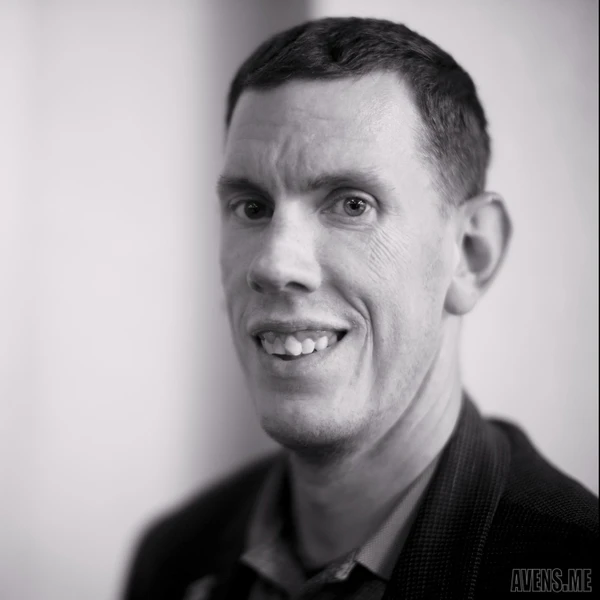
Darryl Perry
2x
Nominee1x
FinalistDarryl Perry
2x
Nominee1x
FinalistBio
I'm a nontraditional student. I returned to college in 2020 after suffering a TBI. In December 2020 I had a stroke, and doctors found a hole in my heart. I underwent open heart surgery in May 2021.
During the Spring 2022 semester I was inducted into Omicron Delta Kappa (O∆K) and Chi Alpha Sigma (XAΣ).
I began law school in June 2023 at Seattle U School of Law.
Education
Seattle University
Doctoral degree program (PhD, MD, JD, etc.)Majors:
- Law
New England College
Bachelor's degree programMajors:
- Communication, General
Jefferson State Community College
Associate's degree programMajors:
- Mass Communication/Media Studies
Miscellaneous
Desired degree level:
Doctoral degree program (PhD, MD, JD, etc.)
Graduate schools of interest:
Transfer schools of interest:
Majors of interest:
- Liberal Arts and Sciences, General Studies and Humanities, Other
- Political Science and Government
- Law
Career
Dream career field:
Law Practice
Dream career goals:
Lawyer for Non-Profit Organizations
Shift Supervisor
Latrobe Area Hospital2003 – 20063 yearsBaggage Handler/Station Manager
Delta2006 – 20104 yearsRadio Host/Office Manager
Free Talk Live2012 – 20197 years
Sports
eSports
Club2022 – 2022
Football
Varsity1994 – 19962 years
Awards
- Captain
Research
American Government and Politics (United States)
Free Press Publications2009 – 2011
Arts
independent
Ceramicsnone2019 – Present
Public services
Public Service (Politics)
Libertarian Party of New Hampshire — Chair2016 – 2018Public Service (Politics)
NH Libertas — President2016 – 2022
Future Interests
Advocacy
Politics
Volunteering
Philanthropy
Entrepreneurship
Margot Pickering Aspiring Attorney Scholarship
As a teenager and young adult, I was interested in why we have the laws we have and how we got them. This interest led me to become politically active in my twenties and later become passionate about fighting for racial and social justice. Over the better part of the last decade, I have attended multiple Black Lives Matter rallies and Pride events.
After I moved to New Hampshire in 2012, I began attending legislative committee hearings. After a while, I began to feel like the senators and representatives were actually listening to what I had to say, even if there wasn't always agreement with my points. However, I noticed that most committee hearings had little input from the average person.
In 2016, I created a lobbyist firm to crowdfund money to help me offset my costs of attending and testifying at committee hearings. I took particular interest in the Election Law Committee, which heard almost all of the bills related to every aspect of elections and the right to vote. One particular bill had a clause stating that someone could qualify to vote by showing proof of paying taxes in the state, but didn't specify what would be accepted as evidence and New Hampshire doesn't have a state income tax. When I was called upon to testify, I pointed out this clause and held up my receipt from the statehouse cafeteria, asking the committee members if this receipt would allow me to vote in Concord should this bill be adopted. After the hearing, one representative told me they hadn't even considered that someone would use a receipt showing sales tax as evidence of paying taxes. That particular bill had several other flaws and was ultimately defeated.
Another bill that grabbed my attention was regarding the regulation of electric grills. The bill was intended to overturn a ruling by the state's fire chief, who had ruled that electric grills, when used outside, were considered open flames. I testified to the committee that the bill actually created onerous regulations on using an electric grill that did not apply to other electrical equipment. A couple of weeks later, one of the senators on the committee told me that, because of my testimony, he had introduced an amendment to strike the bulk of the proposed language.
In 2017, I took up distance running and was thrilled to learn that you didn't need to be an elite or even sub-elite athlete to run the New York City Marathon. Being an elite or sub-elite athlete was only one of the ways to get an entry into the NYC Marathon; there are three other ways to qualify for the race, one of which is raising money for an approved charity partner. I was ecstatic when I saw the Innocence Project was a charity partner and immediately filled out the application to be a charity runner. Unfortunately, their team was already full for the 2017 NYC Marathon by the time I applied, so I made it my goal to be on their team in 2018.
Being a charity runner is a big commitment. Not only are you training to run a marathon (something that often involves running between 15 and 40 miles per week for a period of 16 to 20 weeks), but you are personally responsible for reaching your minimum funding goal. When I signed up for Team Innocence Project, I had to agree to raise a minimum of $3,500 by race day.
I was lucky to have been one of the hosts of a nationally syndicated talk radio show at the time, and I used that outlet as a way of promoting the fundraiser and to raise awareness of the work being done by the Innocence Project. Ultimately, I was able to raise just over $5,000 for the Innocence Project in 2018.
On race day, I wore my Innocence Project t-shirt, matching red compression shorts and running shorts, and light red calf sleeves. As I ran through the Five Boroughs, when not being energized by the crowds that lined nearly every stretch of pavement, my mind went to the men and women who lacked the opportunity to run a marathon because of their incarceration. I thought not only about those who are wrongfully convicted but also those who are convicted of nonviolent, victimless offenses – the majority of whom are minorities – or those who are incarcerated while awaiting trial. I also thought about the men and women who were executed despite being actually innocent of the crimes for which they were convicted. I ran the 2018 NYC Marathon not only for myself but for the untold number of people who didn't have the chance to do so.
I honestly don't know how many times I heard a voice from the sidewalk yell out something along the lines of "YEAH, INNOCENCE PROJECT!" as I ran by. I'll never know whether they knew about the Innocence Project or were simply yelling the words on my shirt, but what I do know is that every time I heard that cheer I was encouraged to push myself a little more. If I wanted to stop running to walk for a minute, I was encouraged to run just a few more steps. After crossing the finish line 4 hours, 28 minutes, and 22 seconds after I started the race, I had enough adrenaline to have my picture taken by event photographers before heading into the medical tent because of dehydration and cramping.
While being a public-interest lobbyist has allowed me to influence legislation, it has not allowed me to actually help anyone who has been wronged by the system. I believe that Seattle University School of Law will prepare me to be a lawyer focused on public interest and social justice law. Becoming a lawyer will allow me to provide legal support to help the wrongfully convicted, defend nonviolent, victimless offenders, or provide legal representation to people seeking to overturn unjust laws.
Catrina Celestine Aquilino Memorial Scholarship
I’m a non-traditional law student whose journey into the legal field has been shaped by a deep commitment to public service, personal resilience, and a desire to use the law as a tool for justice. Over the last decade, I’ve worked as a grassroots advocate focused on voting rights, disability access, and racial equity—areas where the law too often fails to serve those most in need.
My interest in law and policy began in my twenties, when I became politically active around issues of social and racial justice. After moving to New Hampshire in 2012, I started attending legislative hearings and quickly noticed how little input came from everyday people. I wanted to change that. In 2016, I launched a crowdfunded public-interest lobbying firm to help cover the costs of testifying at the State House. I focused primarily on election law, and over time, my advocacy led to meaningful legislative changes—such as expanding voting access for people with disabilities and helping defeat harmful bills that would have made it harder for vulnerable populations to vote.
In 2019, my life took a dramatic turn. Just six weeks after I got married, I suffered a traumatic brain injury. Months later, I had to stop working. Then in 2020, I suffered a stroke, and in 2021, I underwent open-heart surgery to repair a congenital heart defect. These back-to-back health crises could have ended my public service career—but instead, they reignited my purpose. With the support of my wife and family, I returned to school, completed my bachelor’s degree, and enrolled at Seattle University School of Law to continue the work I care so deeply about.
At Seattle U, I’ve remained committed to public interest law. I co-founded the Election Law Caucus to promote democratic participation and voting rights. I serve as a mentor with Seattle Youth Traffic Court, helping high school students understand restorative justice and rehabilitation. And through my volunteer work with the Seattle Clemency Project, I helped prepare a green card reinstatement petition for a 70-year-old deportable veteran—a case that ended successfully and reinforced my desire to use my legal education to help people on the margins.
My values—justice, compassion, perseverance, and service—are deeply rooted in the lessons I learned from my family and community. I grew up in the Birmingham, Alabama metro area, where the legacy of segregation still lingers. My maternal grandmother taught me the importance of standing up for what’s right and showing up for those in need. Her example, combined with my own lived experiences, inspires every step I take toward becoming an advocate for change.
My long-term goal is to work for an organization like the Innocence Project or the Seattle Clemency Project, where I can help overturn wrongful convictions, defend the wrongfully accused, and fight unjust laws. I’m not pursuing law as a steppingstone to wealth or prestige—it’s the path I’ve always felt called to. This scholarship would relieve a significant financial burden and allow me to stay fully focused on my mission: to use the law to make the world more fair, more humane, and more just for everyone.
Phillip Robinson Memorial Scholarship
As a teenager and young adult, I was interested in why we have the laws we have and how we got them. This interest led me to become politically active in my twenties and later become passionate about fighting for racial and social justice. Allies are important for marginalized communities, which is why I have attended multiple Black Lives Matter rallies and Pride events.
During the decade I lived in New Hampshire, starting in 2012, I was actively involved in my political party, and several community organizations. In 2016, I created a lobbyist firm to crowdfund money to help me offset the costs of attending and testifying at committee hearings.
Unlike traditional lobbyists, I was not-for-hire and effectively a public-interest lobbyist, often lobbying on legislation that had no direct impact on my life. It was also not uncommon for me to be the only person who wasn't an elected or appointed official to testify on a bill. One such example is a bill that aimed to create a procedure for a voter with a disability to vote on election day if they were unable to access the polling place. As introduced, however, the bill would only have applied to registered voters — New Hampshire has same-day voter registration — with a physical disability who were unable to access the polling place because of "an extenuating circumstance." After the Senate committee hearing on the bill — that had only three speakers: the bill's sponsor and the Deputy Secretary of State in favor, and I opposed the bill as written — an amendment was adopted so the law would apply to any voter with a disability unable to access their polling place.
Another bill that grabbed my attention was regarding the regulation of electric grills. The bill was intended to overturn a ruling by the state's fire chief, who had ruled that electric grills, when used outside, were considered open flames. I testified to the committee that the bill actually created onerous regulations on using an electric grill that did not apply to other electrical equipment. A couple of weeks later, one of the senators on the committee told me that, because of my testimony, he had introduced an amendment to strike the bulk of the proposed language.
While being a public-interest lobbyist has allowed me to influence legislation, it has not allowed me to actually help anyone who has been wronged by the system. Becoming a lawyer will allow me to provide legal support to help the wrongfully convicted, defend nonviolent, victimless offenders, or provide legal representation to people seeking to overturn unjust laws.
TJ Crowson Memorial Scholarship
As a teenager and young adult, I was interested in why we have the laws we have and how we got them. This interest led me to become politically active in my twenties and later become passionate about fighting for racial and social justice. Over the better part of the last decade, I have attended multiple Black Lives Matter rallies and Pride events.
After I moved to New Hampshire in 2012, I began attending legislative committee hearings. After a while, I began to feel like the senators and representatives were actually listening to what I had to say, even if there wasn't always agreement with my points. However, I noticed that most committee hearings had little input from the average person.
In 2016, I created a lobbyist firm to crowdfund money to help me offset my costs of attending and testifying at committee hearings. I took particular interest in the Election Law Committee, which heard almost all of the bills related to every aspect of elections and the right to vote. One particular bill had a clause stating that someone could qualify to vote by showing proof of paying taxes in the state, but didn't specify what would be accepted as evidence and New Hampshire doesn't have a state income tax. When I was called upon to testify, I pointed out this clause and held up my receipt from the statehouse cafeteria, asking the committee members if this receipt would allow me to vote in Concord should this bill be adopted. After the hearing, one representative told me they hadn't even considered that someone would use a receipt showing sales tax as evidence of paying taxes. That particular bill had several other flaws and was ultimately defeated.
Another bill that grabbed my attention was regarding the regulation of electric grills. The bill was intended to overturn a ruling by the state's fire chief, who had ruled that electric grills, when used outside, were considered open flames. I testified to the committee that the bill actually created onerous regulations on using an electric grill that did not apply to other electrical equipment. A couple of weeks later, one of the senators on the committee told me that, because of my testimony, he had introduced an amendment to strike the bulk of the proposed language.
While being a public-interest lobbyist has allowed me to influence legislation, it has not allowed me to actually help anyone who has been wronged by the system. Becoming a lawyer will allow me to provide legal support to help the wrongfully convicted, defend nonviolent, victimless offenders, or provide legal representation to people seeking to overturn unjust laws.
Martha Mitchell Truth Scholarship
I grew up in the Birmingham, AL metro area in the 1980s and 1990s. When I was in high school, I went to church with a man who was a teenager during the Civil Rights protests in the 1960s. While he would occasionally talk about what it was like to take part in the marches, that era was generally not talked about publicly. Despite my interest in law and history, I was an adult before I learned that Birmingham city schools weren't legally integrated until 1970! As a point of reference, my father graduated high school in 1972 and shares a birthday with Ruby Bridges.
I become politically active in my twenties and later become passionate about fighting for racial and social justice. During the decade I lived in New Hampshire, starting in 2012, I was actively involved in my political party, and several community organizations. I have attended multiple Black Lives Matter rallies and Pride events. I served two terms on the Cheshire TV Board of Directors, serving as the Secretary and de facto parliamentarian for the majority of my six years on the Board. In 2019, my wife and I started a non-profit to raise money so we could provide socks, shoes & winter clothing for our neighbors who were experiencing homelessness.
In 2016, I created a lobbyist firm to crowdfund money to help me offset the costs of attending and testifying at committee hearings. Unlike traditional lobbyists, I was not-for-hire and effectively a public-interest lobbyist, often lobbying on legislation that had no direct impact on my life. It was also not uncommon for me to be the only person who wasn't an elected or appointed official to testify on a bill. One such example is a bill that aimed to create a procedure for a voter with a disability to vote on election day if they were unable to access the polling place. As introduced, however, the bill would only have applied to registered voters — New Hampshire has same-day voter registration — with a physical disability who were unable to access the polling place because of "an extenuating circumstance." After the Senate committee hearing on the bill — that had only three speakers: the bill's sponsor and the Deputy Secretary of State in favor, and I opposed the bill as written — an amendment was adopted so the law would apply to any voter with a disability unable to access their polling place.
In 2017, I took up distance running and was thrilled to learn that I didn't need to be an elite or even sub-elite athlete to run the New York City Marathon. I was ecstatic when I saw the Innocence Project was a charity partner. When I signed up for Team Innocence Project, I had to agree to raise a minimum of $3,500 by race day. Ultimately, I was able to raise just over $5,000 for the Innocence Project in 2018.
While being a public-interest lobbyist allowed me to influence legislation, it has not allowed me to directly help anyone who has been wronged by the legal/judicial system. At Seattle University School of Law, I will be able to take courses in civil rights, constitutional law, and social justice, and will also be able to participate in clinics and externships that will give me hands-on experience in the legal profession. Becoming a lawyer will allow me to provide legal support to help the wrongfully convicted, defend nonviolent, victimless offenders, or provide legal representation to people seeking to overturn unjust laws.
Margot Pickering Aspiring Attorney Scholarship
As a teenager and young adult, I was interested in why we have the laws we have and how we got them. This interest led me to become politically active in my twenties and later become passionate about fighting for racial and social justice. Over the better part of the last decade, I have attended multiple Black Lives Matter rallies and Pride events.
After I moved to New Hampshire in 2012, I began attending legislative committee hearings. After a while, I began to feel like the senators and representatives were actually listening to what I had to say, even if there wasn't always agreement with my points. However, I noticed that most committee hearings had little input from the average person.
In 2016, I created a lobbyist firm to crowdfund money to help me offset my costs of attending and testifying at committee hearings. I took particular interest in the Election Law Committee, which heard almost all of the bills related to every aspect of elections and the right to vote. One particular bill had a clause stating that someone could qualify to vote by showing proof of paying taxes in the state, but didn't specify what would be accepted as evidence and New Hampshire doesn't have a state income tax. When I was called upon to testify, I pointed out this clause and held up my receipt from the statehouse cafeteria, asking the committee members if this receipt would allow me to vote in Concord should this bill be adopted. After the hearing, one representative told me they hadn't even considered that someone would use a receipt showing sales tax as evidence of paying taxes. That particular bill had several other flaws and was ultimately defeated.
Another bill that grabbed my attention was regarding the regulation of electric grills. The bill was intended to overturn a ruling by the state's fire chief, who had ruled that electric grills, when used outside, were considered open flames. I testified to the committee that the bill actually created onerous regulations on using an electric grill that did not apply to other electrical equipment. A couple of weeks later, one of the senators on the committee told me that, because of my testimony, he had introduced an amendment to strike the bulk of the proposed language.
In 2017, I took up distance running and was thrilled to learn that you didn't need to be an elite or even sub-elite athlete to run the New York City Marathon. Being an elite or sub-elite athlete was only one of the ways to get an entry into the NYC Marathon; there are three other ways to qualify for the race, one of which is raising money for an approved charity partner. I was ecstatic when I saw the Innocence Project was a charity partner and immediately filled out the application to be a charity runner. Unfortunately, their team was already full for the 2017 NYC Marathon by the time I applied, so I made it my goal to be on their team in 2018.
Being a charity runner is a big commitment. Not only are you training to run a marathon (something that often involves running between 15 and 40 miles per week for a period of 16 to 20 weeks), but you are personally responsible for reaching your minimum funding goal. When I signed up for Team Innocence Project, I had to agree to raise a minimum of $3,500 by race day.
I was lucky to have been one of the hosts of a nationally syndicated talk radio show at the time, and I used that outlet as a way of promoting the fundraiser and to raise awareness of the work being done by the Innocence Project. Ultimately, I was able to raise just over $5,000 for the Innocence Project in 2018.
On race day, I wore my Innocence Project t-shirt, matching red compression shorts and running shorts, and light red calf sleeves. As I ran through the Five Boroughs, when not being energized by the crowds that lined nearly every stretch of pavement, my mind went to the men and women who lacked the opportunity to run a marathon because of their incarceration. I thought not only about those who are wrongfully convicted but also those who are convicted of nonviolent, victimless offenses – the majority of whom are minorities – or those who are incarcerated while awaiting trial. I also thought about the men and women who were executed despite being actually innocent of the crimes for which they were convicted. I ran the 2018 NYC Marathon not only for myself but for the untold number of people
who didn't have the chance to do so.
I honestly don't know how many times I heard a voice from the sidewalk yell out something along the lines of "YEAH, INNOCENCE PROJECT!" as I ran by. I'll never know whether they knew about the Innocence Project or were simply yelling the words on my shirt, but what I do know is that every time I heard that cheer I was encouraged to push myself a little more. If I wanted to stop running to walk for a minute, I was encouraged to run just a few more steps. After crossing the finish line 4 hours, 28 minutes, and 22 seconds after I started the race, I had enough adrenaline to have my picture taken by event photographers before heading into the medical tent because of
dehydration and cramping.
While being a public-interest lobbyist has allowed me to influence legislation, it has not allowed me to actually help anyone who has been wronged by the system. I believe that Seattle University School of Law will prepare me to be a lawyer focused on public interest and social justice law. Becoming a lawyer will allow me to provide legal support to help the wrongfully convicted, defend nonviolent, victimless offenders, or provide legal representation to people seeking to overturn unjust laws.
Bold Bucket List Scholarship
Some of the things on my bucket list that I've not yet completed are: visit every country on earth plus Antarctica (this also includes other items like seeing the Northern Lights, going to Iceland to touch the North American & European tectonic plates at the same time, and kissing the Blarney Stone), and swim with sharks (the little reef sharks, not the Great White sharks).
Some things I've already crossed off my bucket list include running the New York City Marathon (2018 as a charity runner for the Innocence Project; I raised over $5,000), finish a triathlon (2015, I finished dead last and thought I was going to die several times before finishing the swim), bungee jumped (in high school, it wasn't as fun as I thought it would be), and jump out of an airplane (not a skydiving jump, rather I worked for an airline, and the planes were always on the ground but it still counts, right? I think I get to make the rules for this thing).
Ace Spencer Rubin Scholarship
During my life, I’ve had multiple concussions and many more sub-concussive impacts. Since 2011, I’ve suffered from Post-Concussion Syndrome, though for the most part, I was able to live a normal life. I took up distance running in 2017 and over the next two year would run thirteen half-marathons, two marathons, and an ultra-marathon. Just four days after finishing my last half-marathon – Popular Brooklyn Half Marathon – that was part of my training plan for the Bay of Fundy Marathon, I accidentally stepped on a push broom that flung up and hit me in the middle of my forehead. I knew instantly that I sustained another concussion, and immediately texted my wife from work. At the time my wife was between jobs, and I was studying to become a Personal Trainer. I returned to work the next day, despite knowing I should allow my brain to rest; I had however stopped running due to the concussion. The headaches and vertigo got worse, and I started experiencing severe brain-fog and neuro-fatigue. I was somehow able to pass my CPT exam, but due to my condition was not able to begin working as a CPT at the gym where I was working.
Two months after the concussion, I was finally able to see a neurologist. She was shocked when she saw how poorly I performed the “walk down the hall, and turnaround” test, and was even more surprised to hear that I was still working 6 days per week. I was told to refrain from working or driving until further notice.
I’m still not cleared to drive and am only cleared for “light duty” work of 2-4 hours per day; which obviously does not include working as a Personal Trainer, and finding such a job is extremely difficult.
I used to be really good with time management and could be very flexible with fitting last minute things into my schedule. Now I need structure and a schedule or I don't do things that I want or need to do, and due to neuro-fatigue I need to rest between even simple tasks.
It’s now been almost three years since my last concussion and I’m still unable to work a normal job. I don’t know when or if I’ll be able to do so, but I want to do something that allows me to feel productive. So, after much persuasion from my wife, I went back to college to get a bachelor’s degree, and finish this fall with a BA in Communications.
Over these last couple of years, I’ve learned to temper my expectations of myself even if I do still get frustrated about forgetting things, or not having the energy to finish a task without resting.
This scholarship will help offset some of the costs of my last two semesters.
Lo Easton's “Wrong Answers Only” Scholarship
1) I'm a billionaire trying to prove I can work my way through college.
2) I want to be the Ty-D-Bol Man.
3) The maid forgot to put out my clothes one morning, and I had to go to the closet to pick out a suit. It was the worst day of my life!
Pettable Pet Lovers Scholarship
This is a picture of my precious babies, Fannie Mae (bottom) and Freddie Mac (top), on their cat tower. The like to sit there and watch the school children across the street during the day, and they volunteer for Neighborhood Watch at night -- all of this between naps, of course.
Go Blue America Thought Leadership Scholarship
In a representative democracy, voters are supposed to be able to choose their representatives. However, our current redistricting policies – in most of the country – allow elected representatives to choose their constituents. One proposed solution is to create bipartisan redistricting commissions, whereby elected Republicans & Democrats are tasked with drawing districts together as opposed to the party in power having sole authority in doing so. There have also been proposals for supposedly independent redistricting commissions whereby politically connected people are chosen by the Secretary of State to draw the districts. These independent redistricting commissions have varying thresholds for adoption, with most requiring only a simple majority to pass. In such a case, assuming there are members not from the two major parties, then the voice of the minority party can be ignored completely; alternatively, if the commission has members from alternative parties their voices could be ignored completely. The best way for an independent redistricting commission to function is to have an equal number of Republicans, Democrats & minor party/independent members AND to require any redistricting plan have a majority of each group before it gets adopted.
This still doesn’t address how first-past-the-post elections in single members districts effectively disenfranchises minor party and independent voters. Larger multi-member districts and proportional representation is the only way to ensure all voters are actually represented in government bodies.
Amplify Continuous Learning Grant
I'm currently working on my liberal arts bachelor's degree with a double Minor in Ceramics & Political Science.
I began taking ceramics classes at a local pottery studio after a bad concussion that has left me partially disabled and unable to work a normal job due to my work restrictions, and due to neurofatigue I need to rest between even simple tasks.
Going to college allows me to feel like I'm being a productive member of society; and this scholarship would help reduce the amount of my student loans and cover some out of pocket expenses for books, clay, and pottery tools needed to eventually graduate!