Hobbies and interests
Poetry
Cooking
Travel And Tourism
Baking
Education
Reading
Academic
Business
Cookbooks
Education
I read books multiple times per week
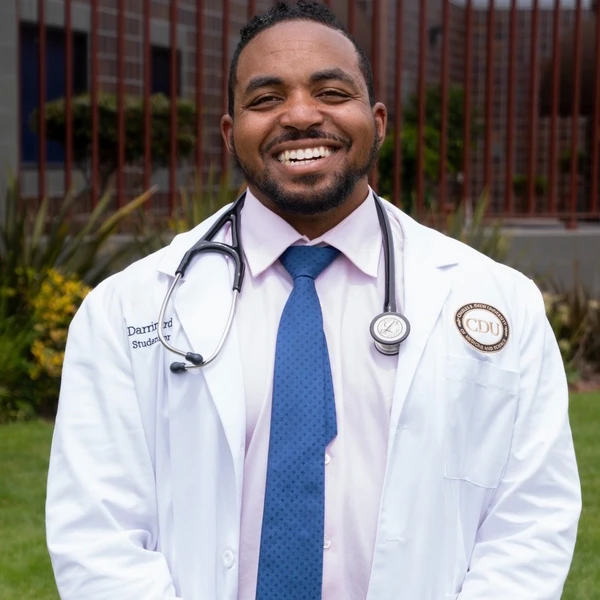
Darrin Ward
1x
Finalist1x
Winner
Darrin Ward
1x
Finalist1x
WinnerBio
Darrin S. Ward is a third-year medical student at Charles R. Drew University of Medicine and Science committed to leadership, mentorship, and equity in medicine. Originally from Compton, he earned a B.S. in Psychology from UC Riverside and a Master of Biomedical Sciences from Charles R. Drew University.
Before medical school, Ward worked as a neurofeedback and TMS technician, caring for patients with anxiety depression, ADHD, and neurological conditions. His path to medicine was shaped by witnessing his mother’s hypoglycemic emergency and helping administer her insulin, strengthening his commitment to compassionate, patient-centered care in underserved communities.
Ward has demonstrated leadership in orthopedic surgery and pipeline development. As External Vice President of the Orthopedic Student Interest Group, he organized outreach initiatives expanding student exposure to orthopedic surgery and mentorship. He is also an Nth Dimensions scholar committed to increasing representation in orthopedic surgery.
Ward mentors premedical students through the Health Careers Opportunity Program and served as a panelist at Black Men in White Coats Youth Summit. Through the Coalition of Black Men Physicians, he helped raise $15,000 in scholarship funding and moderated a financial literacy panel for trainees.
His academic interests focus on orthopedic outcomes and access to surgical care. He authored and presented “Yes You Can: Low Volume Orthopedic Surgeons Performing Total Knee Arthroplasty Can Achieve Optimal Outcomes” and aims to improve musculoskeletal care.
Education
Charles R Drew University of Medicine and Science
Doctoral degree program (PhD, MD, JD, etc.)Majors:
- Medicine
Charles R Drew University of Medicine and Science
Master's degree programMajors:
- Biological and Biomedical Sciences, Other
Charles R Drew University of Medicine and Science
Bachelor's degree programMajors:
- Biological and Biomedical Sciences, Other
University of California-Riverside
Bachelor's degree programMajors:
- Psychology, General
Miscellaneous
Desired degree level:
Doctoral degree program (PhD, MD, JD, etc.)
Graduate schools of interest:
Transfer schools of interest:
Majors of interest:
- Medicine
Career
Dream career field:
Medicine
Dream career goals:
orthopedic surgeon
TMS Technician
Cross Roads psychiatry2023 – 2023
Sports
Rugby
Club2009 – 20134 years
Research
Biological and Biomedical Sciences, Other
2020 – 2021
Arts
Amazon
poetryHis & Hers2018 – 2018
Public services
Volunteering
Charles R. Drew university and ALTA MED — HCOP mentor2023 – PresentVolunteering
Charles R. Drew — medical volunteer2023 – Present
Future Interests
Advocacy
Volunteering
Philanthropy
Entrepreneurship
Christina Taylese Singh Memorial Scholarship
My path to medicine began not in a classroom, but in a moment of urgency. I remember finding my mother unresponsive from hypoglycemia. In that moment, I searched through her purse for the candy she had told me about, hoping to help in whatever way I could until paramedics arrived and stabilized her with a glucagon injection. Although the crisis passed, the experience changed my role within my family. I was no longer just a child watching my mother’s illness. I had become part of her care.
Responsibility came early in my life. I learned how to care for my mother by practicing insulin injections on oranges, using a glucometer, and performing finger sticks. As her diabetes progressed and eventually led to kidney failure, I witnessed firsthand the vulnerability patients experience within the healthcare system. Some physicians rushed through appointments, leaving us confused and overwhelmed, while others took the time to listen, explain, and connect with us as people. These experiences taught me that medicine extends beyond treating disease; it also requires empathy, presence, and trust. They ultimately solidified my commitment to becoming a physician.
My interest in orthopedic surgery developed after attending a bioskills workshop at Charles R. Drew University of Medicine and Science, prior to beginning medical school. I was immediately drawn to the field’s hands-on nature, from learning external fixation techniques to participating in a knee replacement simulation. Equally impactful was meeting Black orthopedic surgeons whose backgrounds reflected my own. Seeing physicians who looked like me thriving in the specialty reinforced the importance of representation in medicine and allowed me to envision myself in the field.
I later became an Nth Dimensions scholar and completed a summer orthopedic internship, where I gained exposure to both clinical care and surgery. Under physician supervision, I evaluated patients with musculoskeletal conditions, including ACL tears, rotator cuff injuries, and advanced arthritis. I also observed and assisted in procedures, including total knee replacements and knee arthroscopy. What struck me most was seeing how restoring mobility transformed patients’ independence and confidence. Orthopedics showed me that surgery is not only technical problem-solving but also a way to help patients return to the activities and lives they value.
Looking beyond residency, I aspire to establish a community-centered orthopedic practice in Greater Los Angeles serving SPA 6. My vision is to create a multidisciplinary facility that integrates surgical care, rehabilitation, and preventative medicine while also serving as a pipeline into healthcare careers through mentorship and training opportunities for local students.
Outside of medicine, I enjoy cooking. Before starting medical school, I ran a small meal prep business serving busy professionals who needed healthy, convenient alternatives to fast food. What began as learning to fry chicken wings alongside my grandmother evolved into a deeper passion for global cuisines and nutrition. Cooking has taught me creativity, discipline, and the importance of creating experiences that bring comfort and connection to others.
Ultimately, I hope to practice medicine in a way that expands access to care, builds trust within underserved communities, and creates lasting impact beyond the clinic walls. The physicians who cared for my mother showed me that medicine can restore more than health; it can restore dignity, trust, and hope. As an orthopedic surgeon, I hope to provide that same sense of care and possibility to the communities I one day serve.
Charles B. Brazelton Memorial Scholarship
Before starting medical school, I ran a small meal prep business serving busy professionals who needed healthy, convenient alternatives to fast food. It wasn’t just about saving time, it was about providing accessible nutrition that could sustain people through demanding schedules while helping them stay consistent with their health goals. At one point, I was preparing meals for ten clients each week for over six months. That experience showed me that food can be both practical and preventive.
My interest in cooking started simply learning to fry chicken wings alongside my grandmother, but it grew into a deeper passion as I explored global cuisines. When I got to college, my apartment became known for having good food. I would make tacos for friends, host fish fries, and before long, it turned into, “Hey, when are you cooking?” or “I could smell your food from the hallway.” After nights out, or before heading to a day party or concert, friends would ask, “Darrin, can you whip something up? I’m starving.” I gladly obliged. Cooking became a way to connect with others while nourishing their bodies. The table was filled with food, but the air was filled with laughter, joy, and sometimes the quiet sound of people dozing off, completely satisfied.
Even now, my YouTube and Instagram feeds are filled with cooking shows and food creators. I’m always looking for inspirational ways to refine my style, experiment with new techniques, and incorporate ingredients I might not otherwise try or encounter.
Along the way, I became more aware of the history behind soul food: how ingredients once considered scraps were transformed, through creativity and resilience, into meals that nourished generations of Black families. That perspective shaped how I see food not just as culture, but as a form of care.
As my own health journey evolved, so did my curiosity about how nutrition impacts the body. I began paying closer attention to ingredients, cooking methods, and how preparation can preserve nutritional value. I came to understand that nutrition, combined with an active lifestyle, plays a critical role in preventing chronic disease, especially in communities that are disproportionately affected. It also has important implications for optimizing patients before surgery and supporting recovery afterward.
As I continue my training to become a physician, I hope to carry this perspective into patient care. Modern medicine is helping people live longer, but longevity should be matched by quality of life. Nutrition deserves the same level of intention that elite athletes give to performance, thoughtful, informed, and adaptable. As physicians, we should not only educate patients, but also offer practical, sustainable ways to build health beyond the clinic and model those habits ourselves.
ACHE Southern California LIFT Scholarship
Medicine has shown me that true leadership is about empowering others. I aim to become an orthopedic surgeon dedicated to mentorship, equity, and patient-centered care, serving South Los Angeles communities such as Compton, Lynwood, Watts, and South Central.
Receiving this scholarship would reduce my financial burden and support expenses, including USMLE Step 1 and Step 2 exams, conferences, and research presentations essential for applying to orthopedic surgery. This support will allow me to complete and present my orthopedic research while preparing for sub-internship rotations, enabling me to fully invest in my growth and development.
As External Vice President of my Orthopedic Student Interest Group, I co-developed the “Bridging the Gaps” outreach program to prepare students for sub-internships through technical training and mentorship. I secured $3,780 in sponsorship funding and coordinated efforts among faculty, residents, and industry partners. Navigating delays and last-minute changes required adaptability, persistence, and professionalism, while aligning individuals’ strengths helped build a cohesive, high-functioning team. The program engaged over 40 students, reinforcing the importance of accessible mentorship.
Beyond my institution, I helped the Coalition of Black Men Physicians raise $15,000 in scholarships and deliver financial literacy programming.
My journey has been shaped by loss and responsibility, deepening my understanding of how illness intersects with dignity, access, and decision-making.
I aspire to build an orthopedic practice integrating surgery, rehabilitation, and patient education. This award enables me to continue creating pathways for others while serving the communities that shaped me, a career defined by access, mentorship, and dignity in care.
I plan to complete an orthopedic surgery residency and become a physician-entrepreneur, establishing a community-centered practice in Greater Los Angeles that serves SPA 6 communities. This vision aligns with the mission of the American College of Healthcare Executives (ACHE) of SoCal to advance healthcare leadership and improve patient care.
My practice will operate under a physician-owned model, allowing providers to prioritize patient outcomes over administrative constraints. This approach reflects ACHE’s emphasis on ethical leadership and advancing the profession through innovative, patient-centered care delivery. Beyond clinical care, I envision developing a multi-use medical and commercial facility that serves as both a health hub and an economic engine, driving job creation across clinical and non-clinical roles.
Aligned with ACHE’s focus on career development and mentorship, the facility will partner with local institutions, including King/Drew High School, Centennial High School, Compton High School, Dominguez High School, Compton College, Los Angeles Trade-Technical College, and Charles R. Drew University to create an education-to-workforce pipeline. Students will gain exposure to healthcare careers and receive training, mentorship, and financial support across roles such as MD, PA, NP, and RN.
Through community engagement and professional collaboration, I aim to build strong networks among providers, educators, and local businesses, mirroring ACHE’s commitment to meaningful connections and community impact. I also intend to pursue the FACHE credential to further develop my leadership capacity.
By integrating healthcare delivery with economic opportunity, my goal is to expand access, promote equity, and create sustainable systems that improve both health outcomes and community prosperity.
Christian Fitness Association General Scholarship
Medicine has taught me that leadership is not defined by personal achievement, but by the opportunities we create for others long after we move forward. Since beginning medical school, I have intentionally sought ways to build pathways for those who will come after me while laying the foundation for my future in orthopedic surgery. Serving as External Vice President of the Orthopedic Student Interest Group has allowed me to integrate leadership, service, and advocacy in ways that reflect the physician I strive to become.
One of my earliest initiatives was organizing a splinting workshop led by a colleague who serves as Head Athletic Trainer at Mater Dei High School in Southern California. This workshop provided students with hands-on exposure to orthopedic skills while emphasizing teamwork. More importantly, it revealed a broader need: students were seeking structured opportunities for mentorship, preparation, and transparency about the path to orthopedic surgery.
In response, I helped develop and organize the first Bridging the Gaps orthopedic outreach program at my institution. This initiative prepared medical students for sub-internship rotations through hands-on bioskills stations and a candid faculty panel addressing the realities of the orthopedic match process. The program brought together surgeons, residents, industry partners, and student leaders to foster both technical development and professional growth, particularly for students from underrepresented backgrounds in orthopedic surgery.
My commitment to mentorship extends beyond my institution. Through my work with the Coalition of Black Men Physicians, where I served on the executive board from 2022 to 2025, I helped raise $15,000 in scholarship funding for Black men pursuing careers in medicine. I also organized and moderated a financial literacy panel for medical students and residents, bringing together physicians and financial experts to provide guidance on managing debt and building long-term stability.
As a Black man in medicine, I find these efforts deeply personal. Black men represent approximately 2% of physicians in the United States, a reality that has strengthened my commitment to mentorship, visibility, and service.
In addition to leadership and service, I have pursued orthopedic research. I authored an abstract titled “Yes You Can: Low Volume Orthopedic Surgeons Performing Total Knee Arthroplasty Can Achieve Optimal Outcomes,” which I presented at the 2024 Annual Meeting of the National Medical Association and the Regional Medical Education Conference. I am currently developing this work into a full manuscript.
While these experiences reflect my academic and professional growth, my most defining challenge occurred outside the classroom.
The day after I took my MCAT, my father called to tell me he had been unable to urinate. Knowing his history of type 2 diabetes, chronic kidney disease, and congestive heart failure, I urged him to seek care immediately. Two days later, I flew home to Los Angeles and discovered he had not urinated in over a week. He had waited because he wanted me to take him.
That hospital visit marked the beginning of the final two years of his life and the last time he would ever see his home.
This was not my first experience with the impact of chronic illness. My mother passed away shortly before the COVID-19 pandemic after years of complications from diabetes. Her illness inspired my pursuit of medicine, but her death nearly derailed it. As my father’s health declined, I found myself balancing medical school with responsibilities I had never anticipated: caretaker, advocate, and decision-maker.
At thirty-three, after a nontraditional path defined by persistence, I entered medical school. I studied for the MCAT while working multiple jobs as a TMS technician, neurofeedback technician, and ABA therapist, and completed prerequisite coursework over Zoom while sitting beside my father during his prolonged hospitalization. At my white coat ceremony, I was overwhelmed not by the symbolism of the moment, but by the need to share it with him. Still wearing my white coat, I drove directly to his long-term care facility, hugged him, and said, “We did it.” A few weeks later, he passed away.
In the aftermath, grief became intertwined with responsibility. I managed funeral arrangements, navigated probate, and confronted financial obligations I had never imagined I would have to handle while in medical school. Sorting through my father’s finances revealed how fragile stability can appear. What once seemed manageable had quietly grown into overwhelming burdens.
During his hospitalization, I also witnessed how illness affects decision-making in deeply human ways. Despite medical advice, my father often ordered fast food for comfort, spending nearly $1,000 in a single week. Eventually, I had to take his wallet not as a financial decision, but as an act of care. I realized his choices were not about money alone, but about autonomy, fear, and dignity.
That experience forced me to reflect on my own habits. I began studying financial literacy, building a structured budget, and making decisions with long-term stability in mind. More importantly, it transformed how I understand medicine.
Watching both of my parents live with diabetes taught me that illness does not exist in isolation. Financial stress influences adherence, access to care, and timing of help-seeking. Patients are often labeled as “noncompliant,” when in reality they may be overwhelmed, grieving, or trying to maintain dignity in circumstances that feel beyond their control.
This perspective will shape the physician I become, one who listens beyond the diagnosis, recognizes the complexity of each patient’s circumstances, and advocates for care that addresses both medical and human needs.
This scholarship would not only support my education but would allow me to continue building pathways for students like those I mentor while becoming a physician who understands that true care extends beyond the clinic. My journey has taught me that medicine is not only about treating disease, but about preserving dignity, expanding opportunity, and advocating for those whose stories are often unheard.
Ruthie Brown Scholarship
Like many medical students, I am incurring significant educational debt to complete my training. Tuition at my institution exceeds $70,000 per year, and my overall cost of attendance is higher than typical due to my current financial circumstances. Additionally, graduate loan interest rates have risen from approximately 8% to 9%, which will substantially increase the total amount I will ultimately repay. As a result, I am increasingly reliant on student loans to cover both academic and living expenses, and I recently requested an adjustment to my cost of attendance to meet these needs, further increasing my overall debt burden.
In addition to educational expenses, I am responsible for essential household obligations, including my mortgage, utilities, internet, health insurance, and life insurance. While I have consistently maintained all payments on time, doing so requires careful financial management.
Following my father’s passing in September 2023, I initially relied on remaining life insurance funds to maintain stability. However, navigating the probate process has introduced additional financial strain through legal fees, court costs, tax obligations, and increased property tax responsibilities. These ongoing expenses have accelerated the depletion of those funds and created financial uncertainty.
To manage my finances effectively, I follow a structured budgeting system. I allocate loan and scholarship funds into a high-yield savings account and withdraw only what is necessary for monthly expenses. I “pay myself” every two weeks, creating a fixed spending allowance similar to a paycheck. This approach helps ensure I maintain emergency reserves and plan ahead for professional expenses, such as conference attendance. I intentionally live below my means by cooking at home, avoiding unnecessary daily expenses, and eliminating nonessential subscriptions.
To further create financial flexibility, I have taken on part-time work as a tutor for children with learning disabilities. I intentionally limit my hours to maintain strong academic performance and prioritize success on Step 1 and Step 2. In parallel, I actively apply for scholarships whenever possible. I have successfully secured several awards, and each one reduces my reliance on loans while reinforcing my commitment to minimizing debt.
Looking ahead, I have a clear and structured plan to manage my student loan burden. During residency, I intend to enroll in an Income-Driven Repayment (IDR) plan to maintain manageable monthly payments while my income is limited. I also plan to explore refinancing options when appropriate to reduce interest rates. Following residency, I aim to work for a qualifying institution and pursue the Public Service Loan Forgiveness program, which provides loan forgiveness after 120 qualifying monthly payments (approximately 10 years) while employed in public service.
Through disciplined financial management, supplemental income, scholarship pursuit, and strategic repayment planning, I approach my financial future with intention and accountability. Financial literacy does not begin when one starts earning income, but before the first dollar is spent. Ultimately, long-term financial stability is not defined solely by how much one earns, but by how effectively one manages and preserves resources to build lasting independence and expand opportunities for both personal and professional growth.
Bulkthreads.com's "Let's Aim Higher" Scholarship
My vision for economic empowerment and business innovation is rooted in transforming access to healthcare, education, and economic opportunity within underrepresented communities. I believe lasting change occurs when systems are intentionally redesigned to serve those who have historically been excluded. By integrating healthcare delivery with entrepreneurship, I aim to build a model that improves health outcomes while stimulating local economic growth.
Growing up in Compton, I saw how limited access shaped both expectations and opportunities. Many of my peers viewed sports or illegal activity as the only viable paths to financial stability, while poor health outcomes were often seen as inevitable. In my household, both of my parents lived with diabetes, and I witnessed how complications of strokes, amputations, and heart disease impacted not only physical health but also financial security. Navigating specialized care while facing overwhelming costs showed me how quickly a family can be pushed toward financial instability.
I also observed the consequences of limited financial literacy. Tools such as trusts, disability insurance, and long-term care planning are unfamiliar yet essential for protecting families in times of crisis. These challenges reflect systemic underinvestment and limited access, not a lack of potential.
As a medical student at Charles R. Drew University, I am building the foundation to address these gaps. In my free time, I study business and entrepreneurship to understand how sustainable systems are created. I have also developed relationships with mentors who have successfully pursued the physician–entrepreneur path, learning from their experiences and the pitfalls they encountered. These efforts are preparing me to move beyond vision into execution.
I plan to complete a residency in orthopedic surgery and establish a physician-owned practice in the Greater Los Angeles area, serving SPA 6 communities. Beyond clinical care, I aim to develop a multi-use medical and commercial facility that functions as both a health hub and an economic engine. The facility will include surgical and rehabilitation services alongside spaces that support local entrepreneurs, helping to reduce barriers to starting and sustaining businesses.
Partnerships with local schools and colleges will create an education-to-workforce pipeline, exposing students to healthcare careers and providing pathways into stable, well-paying jobs. By investing in local talent and reinvesting profits into education and financial literacy, this model will promote long-term community stability.
I recognize that health and economic mobility are deeply connected. Preventing chronic disease reduces financial strain and allows individuals to pursue education, careers, and wealth-building opportunities.
As I complete my training, I will leverage relationships with physicians, medical representatives, and professionals outside of medicine to build a cohesive, mission-driven team. Through collaboration, I aim to turn this vision into a sustainable model that expands access, creates opportunity, and empowers communities.
Ultimately, I want to build more than a practice. I want to build systems that create freedom: the freedom to live healthier lives, achieve financial stability, and redefine what is possible for future generations.
Marie J. Lamerique Scholarship for Aspiring Scholars
My mother breaks out in a cold sweat. Her voice is strained as she tells me to find the candy in her purse. She reaches for a cup of juice, but her hand is shaking too much to hold it steady. I watch as she dials 911, telling the operator she is having low blood sugar and needs help. Moments later, she collapses onto the floor, her speech barely audible.
I am five years old, and I have just witnessed my first hypoglycemic event.
In that moment, I was scared and unsure of what to do, calling out for my mother as any child would. I did the only thing I understood. I reached into my mother's purse and searched frantically for the candy she had told me about, unsure if what I was doing would be enough. In that moment, I was forced to confront a responsibility far beyond my years and the realities of health and disease, realizing for the first time that even my parent was not immune to illness. Shortly after, paramedics arrived and stabilized her with a glucagon injection. But the moment did not end when they left. It stayed with me, quietly reshaping my role within my family.
Growing up, responsibility came early. After that day, it became clear that I could no longer remain just a child in moments like these; I had to learn how to help care for my mother. With her guidance, I practiced insulin injections on oranges, learned how to use a glucometer, and performed finger sticks for glucose checks. What began as a response to fear evolved into a sense of purpose. I learned that even small actions, done with urgency and intention, can make a life-saving difference.
As I grew older, that responsibility deepened. I witnessed the progression of her diabetes, which eventually led to kidney failure and the need for a transplant. Sitting beside her hospital bed, I saw firsthand how vulnerable patients can feel within the healthcare system. One physician spoke in rushed, technical language, leaving us confused and unheard. Another took the time to explain, to reassure, and to meet us with compassion. That contrast showed me that medicine is not just about treating disease; it is about how we show up for people in their most uncertain moments.
That early challenge continues to shape the way I approach my future. Now, as a third-year medical student, I carry the perspectives of both a caregiver and a trainee physician. I understand what it feels like to be on the other side of medicine, searching for clarity, holding onto hope, and depending on someone else’s knowledge and empathy. In my training, I strive to ensure that patients not only receive care but also understand it, taking time to explain diagnoses, answer questions, and create space for them to feel heard and supported.
What began as a frightening moment in my childhood became a defining force in my life. It challenged me to grow up quickly, but it also instilled in me resilience, empathy, and a deep sense of responsibility to others. As I continue my training, I am committed to becoming a physician who not only treats illness but also honors the lived experiences of patients and families, especially in moments when they need it most.
SCFU Scholarship for HBCU Business Students
My vision for economic empowerment and business innovation is rooted in transforming access to healthcare, education, and economic opportunity within underrepresented communities. I believe lasting change occurs when systems are intentionally redesigned to serve those who have historically been excluded. By integrating medical education, healthcare delivery, and entrepreneurship, I aim to create a model that improves health outcomes while stimulating local economic growth.
Growing up in Compton, I saw how limited access shaped both expectations and opportunities. Many of my peers viewed sports or illegal activity as the only viable paths to financial freedom, while poor health outcomes were often seen as inevitable with age. In my household, both of my parents lived with diabetes, and I witnessed how complications, such as strokes, amputations, heart attacks, and ventilator dependence, impacted not only physical health but also financial stability. Like many families, we navigated specialized care while facing costs that could push any household into financial despair.
I also saw the consequences of limited financial literacy. Concepts such as trusts, disability insurance, and long-term care planning were unfamiliar, yet they are critical tools that protect families and expand options in times of crisis. Too often, families are forced to make impossible choices, choosing between caring for a loved one and keeping the lights on, especially when they earn “too much” to qualify for assistance but remain one life event away from financial instability. These challenges reflect systemic underinvestment and limited access, not a lack of potential.
As a medical student at Charles R. Drew University, I am training in an environment dedicated to underserved populations. I plan to complete a residency in orthopedic surgery and become a physician entrepreneur, establishing a community-centered practice in the Greater Los Angeles area, specifically serving SPA 6 communities.
My practice will operate under a physician-owned model, allowing providers to prioritize patient outcomes over administrative constraints. Beyond clinical care, I envision developing a multi-use medical and commercial facility that serves as both a health hub and an economic engine, driving job creation across clinical and non-clinical roles.
The facility will partner with local institutions, including King/Drew High School, Centennial High School, Compton High School, Dominguez High School, Compton College, Los Angeles Trade-Technical College, and Charles R. Drew University, to create an education-to-workforce pipeline. Students will gain exposure to healthcare careers and receive training across roles, with support such as licensure exam discounts, tuition reimbursement, and mentorship for careers including MD, PA, NP, and RN. The inner city does not lack talent; it faces limited access and chronic underinvestment.
The facility will include a surgical center, rehabilitation services, and multidisciplinary offices, as well as nutrition and athletic performance centers. Affordable retail, office, and event spaces will support local entrepreneurs, reducing barriers to starting and sustaining businesses. This model promotes local ownership, keeps wealth circulating within the community, and lowers barriers to capital for small businesses. Excess profits will be reinvested into financial literacy, education, and workforce development.
I also recognize the connection between health and financial prosperity. Preventing chronic disease reduces the need for costly interventions and allows individuals to focus on education, careers, and wealth-building. Health creates the stability necessary for economic mobility.
My career goals in business are inseparable from my commitment to social equity and justice. By merging medicine with entrepreneurship, I aim to build systems that expand access, redistribute opportunity, and break cycles of generational poverty. Ultimately, my work is about creating freedom, the freedom to live healthier lives, build wealth, and redefine what is possible for future generations.
Issa Foundation HealthCare Scholarship
Medicine is demanding, often humbling, and rarely predictable. As a third-year medical student, I am learning medicine in real time, balancing clinical knowledge with the responsibility of patient care. I have performed CPR countless times, witnessing how the difference between life and death can depend on being in the right place at the right moment. These experiences have given me a deep respect for the fragility of life. Patients who were living ordinary lives just hours before can suddenly find themselves gasping for breath, seizing, or hemorrhaging. Each day presents new challenges and new opportunities to show up for others.
One experience, however, challenged not only my assumptions about medicine but also my understanding of my role within it.
During a rotation, I admitted a woman in her fifties who presented after losing consciousness while using the restroom. She had experienced heavy, prolonged menstrual bleeding for nearly two years. After stabilization, she underwent a dilation and curettage (D&C), which revealed stage II endometrial cancer.
As I reviewed her history, I discovered she had visited the emergency department multiple times for similar symptoms. She had attempted to follow up with her OB/GYN, but her procedures were repeatedly delayed or canceled. She underwent a dilation and curettage (D&C), which revealed stage II endometrial cancer. Her diagnosis was one that could have been made much earlier, but had been postponed by systemic gaps in care.
What followed was even more difficult to witness.
Before our team could arrange a formal conversation with her and her family, she was informed of her cancer diagnosis while alone in her hospital bed. She received life-altering news without context, support, or the presence of those she trusted most. When I entered the room, the weight of that moment was palpable. She was not just processing a diagnosis; she was processing her life. What will her life look like now? Will she still have time with her children and grandchildren? Do I need to make arrangements and prepare for the worst?
In that moment, I felt the limits of medicine. Clinical knowledge and technical skill were not enough to address what had just occurred. I stayed with her and her family, answering questions and praying with them. It was a small act, but it was what I could offer.
This experience reshaped my understanding of patient care. I had believed that good medicine meant making the right diagnosis and providing the right treatment. While those remain essential, I now recognize that how we care for patients is just as important as what we provide. Systems can fail. Communication can falter. And in those gaps, patients are left vulnerable.
I began to see how clinicians become desensitized not from indifference, but as a way to cope. While I recognize this, I am committed to resisting numbness.
After this, I became more intentional as a medical student. I often have more time than residents to sit with patients and families and review histories. When I see a red flag, I follow up to ensure it is addressed. Advocacy is often a series of small, persistent actions.
As I continue my training, I aspire to be more than a diagnostician. I want to be a physician who ensures patients are heard, supported, and guided through a system that can feel impersonal. This experience reminded me that medicine is not only unpredictable but deeply humbling because even when we have the knowledge to help, the system does not always allow us to do so. It reinforced my commitment to practicing with empathy, intentionality, and accountability, even within an imperfect system.
Tawkify Meaningful Connections Scholarship
“Hey, stop what you’re doing. Look up. Look to your left, then your right. Feel the breeze, feel the warmth of the sun. There is a whole world waiting for you. You just have to take one step outside and put your scrolling finger to the side.”
In a world increasingly driven by technology, people are, paradoxically, more alone than ever. Social media, apps, live streams, and artificial intelligence promise connection, yet nothing can truly replicate authentic human interaction. There is no substitute for a deep laugh or the comfort of a warm embrace.
Human connection does not require an algorithm or complex code. It requires presence, being engaged in the moment. Sometimes, the most powerful solution is also the simplest: put the phones down, step away from the laptop, and look up.
We preserve and strengthen human connection through intentional effort. Technology has made interaction feel inconvenient and draining. Project the facade of safety behind screens. But these moments are where essential human skills are developed. Interpreting emotions, navigating uncomfortable conversations, and responding to complex social situations are foundational to being human.
These interactions shape how we understand ourselves and others. They form the basis of meaningful relationships. Conversations with strangers can become friendships, and friendships can become chosen family. Taking the risk to connect with romantic interests can lead to building a life and family. These experiences cannot be replicated digitally; they require vulnerability and effort.
Even in my own life, I see this play out. As a 36-year-old medical student, I follow a path many consider nontraditional. Yet I make a conscious effort to remain open to connection. I have friends I’ve known since middle school, as well as friendships formed throughout my journey and in medicine, many of whom are much younger than I am. Being open to their perspectives led to unexpected bonds with people I now think of as little brothers and sisters. Connections I didn’t know I needed.
Some of my most meaningful relationships are with people completely different from me, yet we thrive together. These experiences have taught me that you can learn from anyone and connect with anyone. But it starts with a simple, often uncomfortable step: putting yourself out there and being vulnerable enough to say, “Hey, my name is ____—what’s yours?”
The reward for that effort is significant. Strong human connections contribute to a higher quality of life, a clearer sense of identity, and a deeper purpose beyond career or productivity. A society without meaningful connections becomes isolated, fragmented, and mentally strained. Recognizing that connection is not a luxury, but a necessity, is essential to any community’s health.
As we grow older, building careers, starting families, and managing responsibilities, we often forget a foundational human skill: play. As children, connection comes naturally. Through games, sports, and shared curiosity, we learn about one another without effort. That same spirit of play is not something we outgrow; it is something we neglect.
Reintroducing play into adulthood is essential. Modern versions of these shared spaces exist. Marathons, HYROX competitions, movie clubs, anime conventions. These are more than activities; they are communities where people gather around shared interests. Connection often begins at the surface but deepens through continued interaction and shared experience.
It is too late to remove technology and artificial intelligence from our lives; they are deeply ingrained in how we live and communicate. The solution is not removal, but redirection. Technology can serve as a point of contact, guiding people toward real-world interaction rather than replacing it.
Instead of encouraging endless scrolling, platforms can promote participation beyond the screen, connecting people with local events, group activities, and shared experiences. Artificial intelligence can even gamify real-world connections. Rather than rewarding passive engagement through likes and views, it could incentivize presence by encouraging people to show up and engage in person.
These incentives can include discounts for activities people already enjoy, as well as tangible prizes such as hotel stays, vacations, concerts, and pop-up events. Importantly, these rewards center on shared experiences, encouraging human interaction, whether or not the individual is consciously seeking it.
These systems can tap into the same dopamine-driven feedback loops that make social media addictive, but with one key difference: the reward is earned through real experience, not artificial validation. In this way, technology does not compete with human connection; it reinforces it.
In the end, the connections that shape our lives won’t be the ones we scroll through; they’ll be the ones we show up for.
International Scholarship for Medical and Dental Mission Work
During my master’s training, I participated in a medical mission through our global health course that reshaped my understanding of service, access, and the role of medicine in underserved communities. Through that experience, I traveled to La Romana and worked with Light a Candle Foundation to provide medical care and supplies to underserved communities.
Many of the communities we served were located in the bateyes, rural settlements surrounding sugar cane plantations, where many residents are immigrants from Haiti or individuals of limited economic means who face significant barriers to healthcare and economic opportunity. These communities are often more than an hour from the nearest hospital, making the weekly mobile clinic one of the few reliable sources of medical care available. Through the clinic, we provided medications, HIV testing and education, dental services, vision screenings with eyeglasses, vaccinations, and deworming treatment for children.
What impacted me most was how immediate and direct the care felt. Patients came to us with urgent needs, and treatment was given without the delays or barriers often created by insurance status or financial limitations. For many individuals, receiving even basic medical attention meant relief from pain, reassurance, and the ability to return to work and care for their families.
Although I am not from the Dominican Republic and my Spanish was limited, I felt deeply connected to both the people and the land. The people of the Dominican Republic are part of the Black diaspora, and because I phenotypically resemble many of the people we served, there was often an immediate sense of familiarity and warmth. Even when language created barriers, I learned that compassion does not depend entirely on words. Human presence, energy, and intention communicate just as powerfully.
Some of my most meaningful moments came while speaking with patients as they waited to be seen. We talked about music, food, and the cultural connections between their communities and life in America. When I shared that I was studying to become a physician, many responded with excitement—their eyes would light up, they would hug me, and several told me they hoped I would return one day to continue helping their community. Those moments stayed with me because they reflected something deeper than clinical care; they reflected trust, hope, and shared humanity.
This experience also challenged me to grow. It encouraged me to practice Spanish more consistently and commit to enrolling in a medical Spanish course so I can communicate more effectively with Spanish-speaking patients in both mission settings and future clinical practice.
After completing my medical training, I hope to return and continue working with the Light a Candle Foundation as part of their medical team. As a physician, I want to take on a larger role by providing treatment, performing procedures, and caring for injuries commonly associated with agricultural labor, particularly among workers on sugar cane plantations. I also hope to combine clinical care with preventive education so communities that rely on mobile outreach can receive more consistent and sustainable support.
This mission experience confirmed that medicine can do more than treat illness; it can restore dignity, build trust, and remind people they are worth returning for.
Redefining Victory Scholarship
WinnerI Can Do Anything Scholarship
To be the doctor my parents deserved to have before passing and to be a doctor to my community of Compton, California.
Analtha Parr Pell Memorial Scholarship
The blueprint for me to become a physician was set in motion. The moment I inserted the insulin filled syringe into my mother's arm. I felt the weight of what it meant to care for someone else. I was five years old. I was at home with only my mother, and she had a hypoglycemic episode. After the paramedics stabilized her, it became apparent that I needed to know what to do if this event were to recur. With her guidance, I used oranges as practice models to give insulin injections, operated a glucometer, and lanced my mother's fingers for blood glucose checks. Medical knowledge was a necessity at an early age for me. However, as I grew older, this knowledge transformed into curiosity and eventually fueled my desire to become a physician.
Before meeting "Dr. Dan," I felt helpless watching my mother in her hospital bed as she awaited her kidney transplant. Five years had passed since her first hypoglycemic episode at home, and her diabetes had advanced. I remember how inspired I was by Dr. Dan. He showed my family compassion and offered a sense of security. He laid out the pros and cons of having the operation. He discussed the intricacies of my mother's procedure with confidence and kindness, assuring us that she was in good hands. I held my mother's hand before she entered the operating room. I knew the odds of her living were slim without a successful procedure. Thankfully, the transplant was successful. Despite the happy ending, I could not ignore how powerless I felt. Her last doctor made me feel uneasy after his visits. During his visits, he would spout medical jargon without glancing up from his clipboard. He left leaving the examination room without checking for comprehension of the visit. It infuriated me how he treated my mom like a diagnosis instead of a human being. This dismissal tone is seen too often among patients of color. These two encounters helped define the character of a physician. I want to emulate Dr. Dan's kind and patient demeanor, educate and empower my patients, and treat them with dignity and pride.
As a Clinical care extender. I remember the rush of adrenaline I felt as I walked through the hospital corridors of Saint Francis Hospital in Lynwood, California, ready to serve. "Maurice" was an unforgettable patient. We had countless life discussions as I helped him with his daily hygiene needs. The day he told me, my consistency in care made him feel seen. It struck a chord in my heart. Before that day, I never knew that there were times when he experienced severe pain or needed additional assistance. He was dismissed and presumed to be attention seeking because of his larger and paralyzed frame. I instantly thought back to times I accompanied my mother to her doctor appointments, and her concerns fell on deaf ears until we changed physicians. Experiences like Maurice's and my mother's are unfortunately common in people of color. As a Black male physician, I will help patients feel seen and heard by providing quality and equitable care to all people. I will also teach my colleagues how to be culturally competent as they provide for patients of color. My experiences have given me my purpose and shaped my desire to become a physician and heal others through medicine. I will be the patient advocate many people of color do not have in those treatment rooms. I will use my hands and mind to treat patients from disadvantaged communities, such as Maurice and my mother.
Andrea M Taylor Future Doctors Scholarship
The blueprint for me to become a physician was set in motion. The moment I inserted the insulin filled syringe into my mother's arm. I felt the weight of what it meant to care for someone else. I was five years old. I was at home with only my mother, and she had a hypoglycemic episode. After the paramedics stabilized her, it became apparent that I needed to know what to do if this event were to recur. With her guidance, I used oranges as practice models to give insulin injections, operated a glucometer, and lanced my mother's fingers for blood glucose checks. Medical knowledge was a necessity at an early age for me. However, as I grew older, this knowledge transformed into curiosity and eventually fueled my desire to become a physician.
Before meeting "Dr. Dan," I felt helpless watching my mother in her hospital bed as she awaited her kidney transplant. Five years had passed since her first hypoglycemic episode at home, and her diabetes had advanced. I remember how inspired I was by Dr. Dan. He showed my family compassion and offered a sense of security. He laid out the pros and cons of having the operation. He discussed the intricacies of my mother's procedure with confidence and kindness, assuring us that she was in good hands. I held my mother's hand before she entered the operating room. I knew the odds of her living were slim without a successful procedure. Thankfully, the transplant was successful. Despite the happy ending, I could not ignore how powerless I felt. Her last doctor made me feel uneasy after his visits. During his visits, he would spout medical jargon without glancing up from his clipboard. He left, leaving the examination room without checking for comprehension of the visit. It infuriated me how he treated my mom like a diagnosis instead of a human being. This dismissal tone is seen too often among patients of color. These two encounters helped define the character of a physician. I want to emulate Dr. Dan's kind and patient demeanor, educate and empower my patients, and treat them with dignity and pride.
As a Clinical care extender. I remember the rush of adrenaline I felt as I walked through the hospital corridors of Saint Francis Hospital in Lynwood, California, ready to serve. "Maurice" was an unforgettable patient. We had countless life discussions as I helped him with his daily hygiene needs. The day he told me, my consistency in care made him feel seen. It struck a chord in my heart. Before that day, I never knew that there were times when he experienced severe pain or needed additional assistance. He was dismissed and presumed to be attention-seeking because of his larger and paralyzed frame. I instantly thought back to the times I accompanied my mother to her doctor appointments, and her concerns fell on deaf ears until we changed physicians. Experiences like Maurice's and my mother's are unfortunately common in people of color. As a Black male physician, I will help patients feel seen and heard by providing quality and equitable care to all people. I will also teach my colleagues how to be culturally competent as they provide for patients of color.
I enjoy reading books on self-improvement, such as "The 7 Habits of Highly Effective People". This past August and March of 2023, I went on a medical mission trip to the Dominican Republic headed by Charles Drew University in partnership with the Light a Candle Foundation. By improving myself, I can become a better physician and person in the community