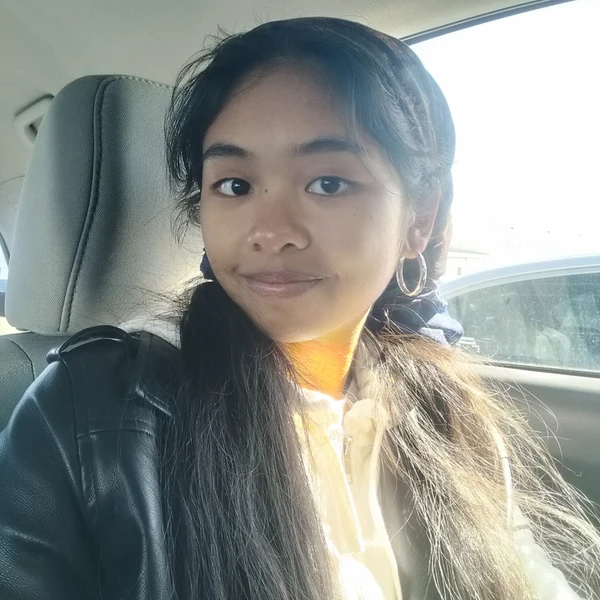
Age
18
Gender
Gender Variant/Non-conforming
Ethnicity
Asian
Religion
Atheist
Hobbies and interests
Drawing And Illustration
Writing
Poetry
Reading
Weightlifting
Running
Foreign Languages
Journaling
Blogging
Anime
Skateboarding
Chess
Collecting
Crafting
Engineering
Advocacy And Activism
American Sign Language (ASL)
Arabic
Comics
Exploring Nature And Being Outside
Mathematics
Upcycling and Recycling
Swimming
Track and Field
Travel And Tourism
Politics and Political Science
Reading
History
Science Fiction
Philosophy
Novels
Adult Fiction
Classics
Self-Help
True Story
Folk Tales
Fantasy
I read books daily
Darany Noy
1x
FinalistDarany Noy
1x
FinalistBio
As a senior IB diploma candidate in the top ten of their class at Melbourne Senior High School, I plan to pursue a bachelor's degree in mechanical engineering at the University of Florida, continuing my studies as a university graduate afterwards to earn a master's degree in aerospace engineering.
Education
Melbourne Senior High School
High SchoolGPA:
4
Miscellaneous
Desired degree level:
Master's degree program
Majors of interest:
- Aerospace, Aeronautical, and Astronautical/Space Engineering
- Mechanical Engineering
Test scores:
1410
SAT1390
PSAT
Career
Dream career field:
Aviation & Aerospace
Dream career goals:
My long-term career goal is to pursue a position at space agencies such as NASA, employing my knowledge of engineering to aid in the design and development of space technology capable of detecting signs of extraterrestrial life on celestial bodies with biosignatures, such as Europa or Enceladus.
Sports
Tennis
Club2021 – 20232 years
Track & Field
Varsity2023 – 20241 year
Public services
Volunteering
Second Harvest Food Bank — Volunteer2025 – 2025Volunteering
Brevard Children's Fair — Set-up and Management Volunteer2025 – 2025Advocacy
Melbourne Senior High School Peer Partners Program — President2023 – Present
Future Interests
Advocacy
Politics
Volunteering
Philanthropy
Transgender Future Scholarship
I’m curled up on my puffy white sofa, bundled in my favorite grey blanket, when my friend, Luke, effectively narrows down my college options from six to one with just a single, scary sentence: “It might be useful to keep in mind that, if you plan to transition during college, going to a university that is more conservative might mean those opportunities disappear for you.”
It’s the week before my 18th birthday, and I've been waffling between my top two schools for my intended major, mechanical engineering: the University of Florida, the liberal school with the better reputation, and the University of Central Florida, the conservative school with the better engineering program and opportunities. Finances are chaining me down to Florida, a red state where transition is a particularly rocky journey, but I know that I can’t wait any longer.
Every transgender person’s challenges will differ from not only individual to individual, but from positioning on the gender spectrum: transgender women are accused as rapists simply for entering the women’s bathroom; nonbinary people are forced into conformation to binary categorization; transgender men are pitied as clueless little “girls” deluded into mutilating their bodies. As someone falling into that last category, the technical dangers of being a transgender man have haunted my thoughts since I was twelve. There’s a unique struggle in growing up instilled by the fears and cautions of a woman and entering adulthood still expected to casually fit in with a room full of cis men, and apprehensions about entering the male-dominant field of engineering, or even just at the daily level of anxiety surrounding bathroom usage in a room full of cis men, kept me on edge.
Luke’s words stirred up the darkest of those fears as I was reminded of the state that I lived in. UF was a safe haven for a state as red as Florida, and to earn my degree, I needed to prioritize preservation of my mental health—that includes limiting my exposure to transphobia through curation of a supportive environment. I just hadn’t realized until that day just how powerless I could be in doing so. Enrollment in UF over UCF couldn’t be called a choice for me—it was a survival strategy.
Though in the current political climate, transgender rights are rapidly declining, I still hold onto faith that transphobia and systemic barriers can shrink as societal norms in comparison to the present. Today, though, I plan to start advocating for transgender people on a small-scale, participating in clubs at UF such as Out in Science, Technology, Engineering, and Mathematics, or oSTEM, an organization empowering LGBTQ+ people in STEM fields through peer mentorship and workshops. Aiding in design for gender-affirming hardware, such as tools to assist in the self-administration of hormone replacement therapy; more gender-affirming STP devices; and other prosthetics is similar to another club which I intend to join called Generational Relief in Prosthetics (GRiP). GRiP specializes in the design of customized equipment according to the client’s individual disability. The overlap will provide the opportunity for me to start my own, similar organization at UF with a focus on enhancing the comfort and access of transgender people on a daily basis, gathering my peers from my engineering classes (likely biomedical engineering students) and a sponsor to assist me in executing the project.
Leaving the club as my legacy is my ultimate goal, but my journey in advocacy will extend beyond that. Then maybe, with enough work, the next transgender student choosing between paths won’t be faced with the decision between their desires and their safety like those before them were.
Matthew E. Minor Memorial Scholarship
As a student in the International Baccalaureate program at my school, community involvement is one of the foundational values of the program. Community service for me, personally, has centered primarily around assistance towards students with intellectual disabilities at my school. From my sophomore year of high school to the present, I have served as a member of what is referred to as the Bulldog Buddies Club, a club partnered with my school’s peer partners program as a way of including intellectually disabled students and enhancing their school experience to match that of the general education student, combating discriminatory policies and prejudices. As the president, I was in charge of the management and organization of the club members, delegating responsibilities when it came to the execution of our student-led, inclusive club events focusing on building friendship, social skills, and community: holiday parties, outings to football games with general education students, or simply hanging out with each other, bridging the gap between disabled students and able students.
While intellectually disabled students are present at nearly every school, that presence is often invisible or cast to the sidelines of the student population. Indeed, even at my school, their classrooms are physically isolated from everyone else. This physical segregation often mirrors a social one. My leadership focuses on dismantling these social dichotomy between the two groups by inviting our buddies into the heart of the school culture, creating opportunities for them to access the same events both financially and physically, as there is often a lack of familial support. Closing the rift through the normalization of interaction means not only fostering an environment of tolerance, the bare minimum, but nurturing circumstances in which stigma-induced bullying and isolation become less and less frequent.
Though that is the main manner in which I advocate for the safety of youth in terms of bullying, my support extends to other branches of my life as well. Defending others in online spaces or patiently explaining to someone on a forum or in a comment section the pain their words can cause are crucial and increasingly significant things to be mindful of. I also educate the special needs students on Internet safety, cautioning them through the teaching of warning signs of grooming or cyberbullying, as well as steps to take when they feel unsafe. Sometimes advocacy against bullying is also as small as telling someone why their actions are hurtful or, a common occurrence for me, explaining the damage behind quotidian ableist slurs, such as “cripple” or “retard.”
As I am one of three children enrolling in higher education within my family, with one older sister continuing her academic career in pursuit of a master’s degree and the other enrolled in her first of many years in medical school, the strain on my family’s resources intensifies. While I hope to pay off tuition with a merit-based scholarship awarded to IB diploma recipients, the ancillary cost of attendance, such as housing, textbooks, food, transportation and supplies, still remains a prevalent issue. This scholarship is more than just a financial cushion for me, but a crucial aspect in paving the path for success in my future, relieving the constant pressure of financial concerns and allowing me to instead invest my energy into studying. By securing this scholarship, I can continue with greater ease my mission to contribute to a more accepting community where everyone, regardless of what they are, can feel accepted for who they are.
Wicked Fan Scholarship
Although originally, I reluctantly watched the first film of Wicked with my sisters on our home TV, I connected with it more fully when we viewed the second film, Wicked: For Good, in theaters. I’ve always been drawn to representation of platonic relationships in the media, and Elphaba and Glinda’s sisterhood, developing from what was once a place of hatred, scratches the itch for complicated familial love. From the tense, unexpected bond between the two in the first film to the testing of that bond under social pressures in the second film, Elphaba and Glinda’s relationship is remarkable to me because it reflects a type of relationship that I can rarely find in the media as a whole. As someone on the aromantic spectrum of the LGBTQ+ community, the feelings of being left out and left behind have become close, familiar friends of mine during my adolescence, as the experience of romantic attraction for another person comes once in a blue moon, if at all. Not only this, but watching my closest friends entering romantic relationships and feeling abandoned in favor of their new favorite people, an entirely common and normal phenomenon in a romance-valuing society, has left me questioning how much worse my feelings of loneliness would become as I grew older.
Unprecedentedly intimate relationships at the platonic level have always spoken to me for this reason. Though they are few and far in between, the relationships in which I’ve held my friends this close are incredibly fruitful to me, and it eases a sense of invisibility to see such friendships represented in the media. Glinda and Elphaba serve as a prime example of this. Though they’re opposites, the two of them form a bond as they navigate the waters of social rejection, with Glinda sacrificing her social popularity to dance with Elphaba, who is rejected by society from the beginning, or as they traverse each other’s pasts, becoming intimate with each other on the same level as lovers would. The sacrifices that the two of them make for each other, such as Elphaba’s sacrifice of the possibility of her own acceptance into her community at the end of the first film, taking on the title of the Wicked Witch to protect Glinda’s reputation, or the acceptance of Fiyero’s love of Elphaba in the second film by Glinda despite her feelings of deep betrayal, go to show just how deeply and unconditionally they love each other. Once again, the unprecedented intimacy of their relationship makes me feel less invisible as an aromantic person, going on to even give me hope that I one day won’t feel as left alone as I sometimes do now.
Sabrina Carpenter Superfan Scholarship
As someone who has struggled with mental health under a dysfunctional, unstable household, poetry has been one of my few outlets for expressing my pain without fears of the repercussions. When I’d gone months without writing a single line, frustrated by writer’s block and a fear of writing “bad poetry,” Sabrina Carpenter’s lyrics—particularly her more emotional songs—have served as the spark for creative inspiration in my mind, simply because of the sheer skill and vulnerability with which she is capable of writing.
One of her most notable pieces for me in this respect is “emails i can’t send,” which expresses how deeply the event of her father cheating on her mom cut her. The natural way with which Sabrina works with a rigid rhyme scheme, the rhetorical questions littered throughout the song to convey the broken trust in her relationship with her father, and the rawness with which she writes about the effects of her father’s infidelity, writing from a self-aware, hindsight perspective that connects her current difficulty building trust with lovers to her shattered trust with her father, all create a set of a lyrics so well-written that they not only reignite my passion for poetry but reconnect me with the accumulating hurt of living with my parents. Though infidelity was never a problem between my parents, I find myself often blocking out the anxiety and pain of their constant fighting and hatred for each other. I often wonder how they got married in the first place. Sabrina’s song perfectly encompasses the way that relationships between parents can impact their children just as much as it impacts them, and, like her, the effects of the hatred between my parents become more and more apparent to me as I grow older. In those anxious, empty moments after hearing or intervening in their screaming matches, or instances of bottled up fury at the things one parent would say about the other on drives home from school, “emails i can’t send” is one of a handful of songs that is capable of unwinding the tangled train of thoughts in my mind back into something more comprehensible.
Though “emails i can’t send” was one of the first songs of hers which I connected with on such an emotional level, and only an example of just how deeply I’ve found myself reflected in her lyrics. “Couldn’t Make It Any Harder” explores the topic of difficulty being vulnerable with others and attachment issues that sabotage the sustainability of a relationship. “Tornado Warnings” and “Lie to Girls” similarly introspect on self-deception as a product of an inability to let go.
Not all her songs have sad connections, of course. More recent, popular tracks like “Espresso” and “Manchild” have served as the backdrop to good memories driving home alone in my truck with the windows rolled down, and the “emails i can’t send” album as a whole takes me back to the days I came home with my sister from high school, her phone blasting whatever she felt like listening to and dragging me along with her. Sabrina’s music has accompanied me through both good and bad times, both smooth and rough moments, and I’m excited to see in what ways her music will grow with me as I enter a new phase of my life for the better.
Taylor Swift Fan Scholarship
While the underlying themes of empowerment and rebirth in “Reputation” have always spoken to me, the live performance of the Folklore track “Illicit Affairs” from the Eras Tour film struck me as one of Taylor’s most relatable. Although the song addresses a lover, she sings only the bridge in the film, reviving the lyrics with unexpectedly angry and heartbroken tones. The mixture of emotions paired with the sole inclusion of the bridge couldn’t help but remind me of my parents. Growing up sheltered by strict, overprotective Cambodian parents in a Western country, my life at school was worlds away from my life at home. Cambodian food, Khmer, and Cambodian customs were unique to my home life, even more so because of the rarity of coming across other Cambodians. Connected to it solely by my bloodline, my parents taught me, in a sense, colors that I couldn’t see with anyone else, a language I couldn’t speak without remembering them, making it all the more painful that I expect to be estranged from them in the future.
As a part of the LGBTQ+ community, my very identity clashes with their core values and, over my adolescence, I’ve grappled incessantly with the fear that their love ends after I come out to them. The combination of Taylor’s relatable lyrics with the heartbroken anger she sings in "Illicit Affairs” reflects my frustration with the situation in multiple ways. Repeating the bridge felt like the way my fears would overwhelm me, overpowering all my thoughts. The lyrics reminded me of my first, forced attempt at coming out to my mother, who told me I was under a delusion, treating me like a clueless kid. The sudden rise of her voice at the beginning, when her anger is at its highest peak, contrasted with the subsidence of her volume in the finale of the song feels like acceptance to me, coming to terms with a coming-out situation gone wrong. Though fear surrounding my situation lingers, as so many questions remain unanswered—will they still love me? Will they help me pay for college, as they continuously told me over the course of my life? Will I enter college struggling with estrangement from them on top of the life shock of leaving their overprotective shelter?—Taylor Swift’s versatile poetry serves as a rare source of consolation against what feels like the inevitable.
Past personal connections to “Illicit Affairs,” this scene stands out to me for its sheer uniqueness, nuance, and power. The emotion itself, a mixture of anger and grief for oneself, carries so much depth. I’m a firm believer in anger being a secondary emotion serving as an externalization of an internal pain, and the fury in her voice similarly expresses her underlying wounded pride and the pain of questioning her own worth in her lover’s life. Not only this, but there’s some level of disbelief in her lover as well, accompanied by a newfound reservation from him, emphasizing the word “Don’t” repeatedly, as though she’s begging him to stop deepening the wounds he’s given her with his excuses and attempts at “talking out” an unforgivable sin.
Though that performance deviates from the original song, her published songs speak to me on a similar level. “Chloe or Sam or Sophia or Marcus” reflects the grief of abandoning a relationship. “Right Where You Left Me” depicts the shock of abandonment. “Anti-Hero” narrates self-hatred while “Call It What You Want” explores confidence. Taylor Swift has been producing songs that encompass every one of my emotions, and I hope to be a fan of hers even past the day she stops.
Our Destiny Our Future Scholarship
During the peak of my anime obsession, my friends would often roll their eyes hearing me ramble about the newest Attack on Titan fanfiction I was reading. What they, and most people in general, don’t understand about fanfiction is that it is often taken just as seriously as “real” fiction in fandom. I would know; much of my personal journey towards unlearning societally-engrained prejudice and toxicity in favor of a healthier, more compassionate lens has been driven by engagement with my favorite AoT fanfic author and her work, which follows the popular character Levi Ackerman as he navigates his new post-war, post-tragedy life bound to a wheelchair. Exploring uncomfortable themes of mental and chronic illness, disability, abuse, and discrimination, her work caused a paradigm shift in my knowledge of compassion. Since then, my innate desire to better people’s lives. to lessen the natural hurt of living, has found a more definite path, starting small with the mere practice of true empathy and extending towards using future knowledge and finances to provide assistance more technically.
Majoring in mechanical engineering this fall at the University of Florida, I’ve delved into how I can employ my knowledge to help people as an undergraduate. My main hope is to join Engineers Without Borders, a community applying engineering course knowledge through international service. Projects such as the installation of clean, reliable water sources at Nepali schools and design of water storage and distribution for Peruvian cities may not seem like the most extravagant service, but there’s indispensable value in meeting standards for safe, healthy living—the beginning of paving a path to security and success. Locally, the UF student organization of Generational Relief in Prosthetics specializes in the development of 3D printed assistive devices like toys and controllers, such as the rewiring of a PS4 controller to allow people of developmental differences to play video games, offering them the opportunity for inclusion. Similarly, the Dream Team Engineering is another program I’m interested in, characterized by the production of engineering devices enhancing care at UF’s children’s hospital, such as 3D modeled and printed replicas of organs for demonstration during patient consultation to increase patient comprehension. My hope is to enroll in their shadowing program early on and to continue keeping up with their research, practicing the development of innovative design and problem-solving skills so that I might one day be able to do so on my own.
“Making an impact on the world” is a big ask that may require more time and energy than possessed by a single, ordinary individual. However, I don’t need to make an impact on the world for it to be significant—only on the world of one person. That doesn’t always come in big projects like the examples I’ve listed above. It’s also the continuation of tiny, day-to-day habits I already have, like (anxiously) striking up conversation with a sad-looking stranger; letting large trucks merge into traffic; returning carts to the corral; or making last-minute, possibly foolish U-turns to give cash to a street beggar, hoping he’ll feel less invisible, and the adoption of habits I want: asking more people if they’re okay; advocating politically in local protests and online to reduce harm towards minorities; or just volunteering more on a regular basis. One big, positive impact on the world might seem impossible for me, but I know there are ways I can at least start the ripples of one.