Hobbies and interests
Advocacy And Activism
Babysitting And Childcare
Child Development
Counseling And Therapy
Mental Health
Writing
Self Care
Poetry
Reading
Adult Fiction
Novels
Young Adult
Women's Fiction
Psychology
I read books multiple times per week
Danyelle Hurley
1x
FinalistDanyelle Hurley
1x
FinalistBio
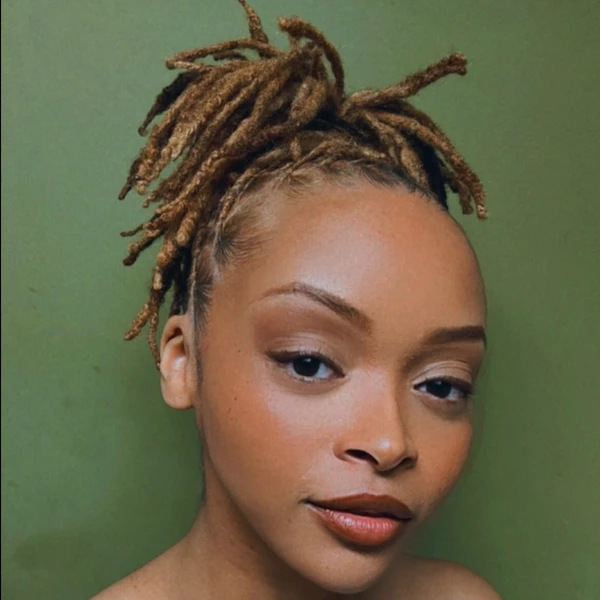
I'm Danyelle! I have experience working as a Registered Behavior Technician, where I help children who are affected by Autism Spectrum Disorder. I provide compassionate care to them while helping them improve their communication, gain independence, and manage their behaviors.
With my background and passion in psychology, I am about to pursue a Master of Arts degree in Clinical Mental Health Counseling from Agnes Scott College. My dream is to become a licensed professional counselor who makes a real difference in the lives of diverse individuals, especially women of color and their families, who too often face barriers to accessing mental health care. I want to be a part of the reason that they have a safe space in which they are valued and can shed their need to be strong and instead dive into their softness and vulnerability. I would also love to integrate art as a therapeutic tool. I believe that creative expression can be a powerful way for clients to process their emotions, reduce symptoms, and discover new forms of self-understanding. I have used art, specifically writing poetry and painting, within my healing journey and have seen how much of an impact it has made in my day-to-day life. I envision creating a therapeutic space where clients can heal through traditional talk therapy as well as creative expression. I believe that this integration of culture, community, and creativity into therapy will empower clients to reclaim their narratives and promote deeper emotional healing.
Education
Agnes Scott College
Master's degree programMajors:
- Mental and Social Health Services and Allied Professions
Augusta University
Bachelor's degree programMajors:
- Psychology, General
Miscellaneous
Desired degree level:
Doctoral degree program (PhD, MD, JD, etc.)
Graduate schools of interest:
Transfer schools of interest:
Majors of interest:
- Psychology, General
Career
Dream career field:
Mental Health Care
Dream career goals:
Becoming a licensed therapist with poetry therapy and creative expression specializations
Registered Behavior Technician
Various ABA Companies2023 – Present3 yearsAdministrative Assistant
Paraclete Counseling Center2025 – Present1 year
Sports
Cheerleading
Varsity2008 – 20113 years
Public services
Volunteering
Make-A-Wish Georgia — Wish Granting Volunteer2023 – Present
Future Interests
Advocacy
Volunteering
Entrepreneurship
Ethel Hayes Destigmatization of Mental Health Scholarship
My experience with mental health has shaped my goals, my relationships, and the way I view the world in a variety of ways. Before I decided to prioritize my healing and mental health, I moved through life trying to meet expectations that were never mine to carry. I thought that if I just worked hard enough, ignored the pain, and kept going, things would eventually fall into place. But after a traumatic, life-altering experience in 2020, that illusion began to crack. I lost my sense of self, and with it, the motivation and stability I had worked so hard to maintain.
Instead of addressing my pain, I tried to suppress it. I pushed through anxiety, sleepless nights, and emotional numbness until I was no longer living a life that I enjoyed. It wasn’t until 2022 that I decided I deserved more than survival. I began therapy, started taking medication for my mental health, and slowly began to rebuild not just my life, but my identity. Making this decision changed my life and enabled me to develop a new set of goals.
Before healing, I measured success by how much I could do without breaking and how other people viewed me. I often felt that if people weren't clapping for me, I didn't deserve to clap for myself either. Now, my goals are rooted in balance, alignment, and purpose. I want to become a licensed clinical mental health counselor, not just because I’m passionate about mental health, but because I want to be the kind of trauma-informed, culturally competent support that I once needed. I want to create healing spaces specifically for people of color, especially women, who carry trauma that often goes unseen and untreated.
I’ve already begun walking in that purpose. I completed my undergraduate degree while managing my mental health, self-published a poetry book as a form of healing and expression, and now I’m starting graduate school to pursue Clinical Mental Health Counseling. My experience has taught me that healing takes preparation. It has equipped me to serve others with empathy, patience, and deep understanding.
As far as mental health shaping my relationships, when I was in survival mode, I couldn’t show up fully for others. I either overextended myself or shut down completely. Prioritizing my mental health taught me how to set boundaries, communicate honestly, and choose relationships that support my growth. I’ve learned to value quality over quantity and to surround myself with people who honor both my joy and my vulnerability.
Therapy also helped me reframe how I see connection. I no longer view asking for help as a weakness, and I’ve learned how powerful it is to say, “I’m struggling” and be met with compassion. I've learned how to choose "safe people" and how to better show up for myself while connecting with others.
Through my personal healing journey, I became acutely aware of how mental health is stigmatized, especially in marginalized communities. I saw how cost, culture, and access make it difficult for so many people to get the help they deserve. As a Black woman, it was life-changing to find a therapist who shared some of my lived experiences. It made me realize how important representation is in the healing process.
This awareness sparked a fire in me. I began speaking up more about mental health, sharing parts of my story, and creating resources to support others. I no longer see mental health as something separate from life; it’s foundational. It affects how we learn, work, love, and see ourselves. I now believe that healing is not just a personal journey; it’s a collective act of resistance, care, and transformation.
My experience with mental health has taught me that healing is never linear, but it is always possible. It has shaped my goals into a mission, transformed my relationships into safe spaces, and expanded my view of the world into one that centers empathy, equity, and emotional honesty. I’m no longer running from my past; I’m using it to light the way forward. And as I continue on this path, I carry with me the belief that everyone deserves a chance to feel whole, and I intend to help make that a reality.
SnapWell Scholarship
In 2020, I experienced a traumatic and life-altering event that resulted in me feeling emotionally numb and disconnected from everything around me. I thought that moving forward as if nothing happened would keep my sadness away, but I began to unravel as time passed. I would wake up every day and just go through the motions - wake up, go to work, go home, go to sleep. There was no joy in my life, and I ended up losing my sense of purpose and everything that I had worked so hard for.
By 2022, I reached a breaking point and realized just how much damage I was causing to myself by pretending to be okay. I didn’t want the rest of my life to look like this, and I knew that I needed to make a big change. I decided to start therapy and also began taking medication to help manage my mental health and how it had been altered after what I experienced. For the first time in years, I felt good about choosing myself and putting the work in to heal.
Through therapy, I began unpacking the trauma that led me to therapy and other trauma that I had suppressed since childhood. I learned how to set boundaries, prioritize rest, and rediscovered my love of writing poetry. Writing became my voice when I didn’t have the words to speak and was a form of release that I picked up during my teenage years. Rediscovering this passion then led me to self-publish a poetry book where I dived deeper into my experiences. I was also able to start back making progress to completing my undergraduate degree.
Now, I’m preparing to start graduate school for Clinical Mental Health Counseling. My goal is to offer the same kind of culturally competent and compassionate care that my therapist provided me. As a Black woman, finding a provider who understood my experiences was life-changing and allowed me to feel safe in all of our sessions. I want to be that type of therapist for others and show them that no trauma is too big and it is never too late to heal.
The trauma that I endured changed my life in a lot of negative ways, but I became determined not to let that experience dictate the rest of my life. Choosing therapy and prioritizing my mental health gave me a new direction and has allowed me to build confidence that I never truly had before. I now have purpose and know that my success is defined by how I show up for myself through the most difficult situations. Instead of feeling lost and stuck, I am now building my future and adopting the values of healing, creativity, and community. I know that I have the skills and lived experience to become an amazing therapist who helps others to see that healing is possible, accessible, and worth fighting for.
Healing Self and Community Scholarship
My overall goal for contributing to mental health accessibility is to create trauma-informed spaces for people of color. While I plan to assist many, I specifically want to focus on helping women of color, as we are often the carriers of generational trauma. I aim to provide clinical support blended with creative expression through low-cost group sessions, digital workshops, and community programs rooted in art, storytelling, and cultural practices.
Because of my own journey with mental health care and creativity, I understand the freedom expression can bring—and how it aids in healing and building self-confidence. I plan to integrate expressive arts therapies like poetry, journaling, and movement into my practice. By honoring the tradition of processing pain through creativity, I can offer care that feels safe, affirming, and familiar.
With this approach, I aim to combine accessible pricing with culturally relevant tools to reduce stigma and cultural disconnect. I plan to develop sliding-scale healing circles, peer support groups, trauma-informed poetry nights, and partner with schools to support students. I also hope to collaborate with churches willing to provide limited funding for their members’ care.
My goal is not only to offer therapy, but to provide visibility and liberation to those left out of traditional mental health systems. Healing should not be a privilege—it is a right. Through intentional, culturally responsive care, I want to ensure that people of color never have to choose between surviving and healing the wounds they were never meant to carry alone.