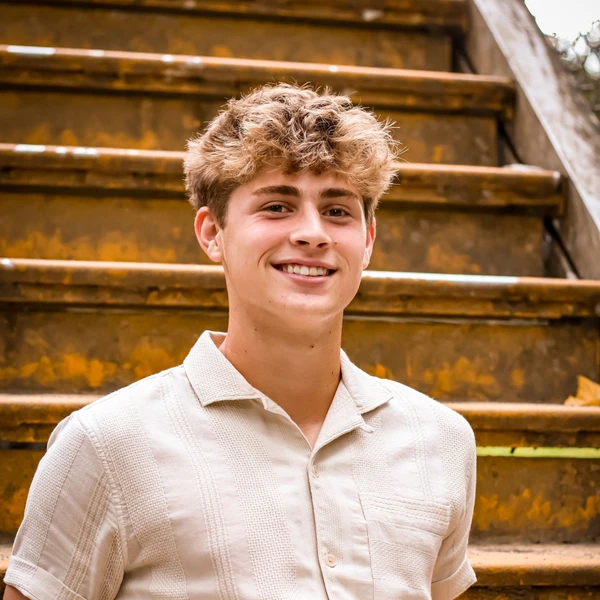
user profile avatar

Dante Hansen

1x

Finalist

Bio

Growing up through the highest levels of competitive soccer—including ECNL, State Teams, and serving as Varsity Captain—I’ve learned to thrive in demanding environments where discipline, resilience, and leadership are non‑negotiable. That commitment has led to my recent recruitment as a scholarship athlete at Saint Michael’s College, where I plan to major in Engineering and minor in Cyber Security. Balancing elite athletics with academics has shaped my identity as a student who embraces challenge. I’ve maintained a 3.8 GPA and earned a 1300 SAT score while training year‑round and competing nationally. At the same time, I’ve spent the past two years working at The Gap, taking on roles from cashier to inventory specialist. Managing school, sport, and work has taught me time management, responsibility, and how to contribute meaningfully to a team—whether on the field, in the classroom, or at my job. I’m driven by a desire to solve complex problems and to build systems that make people safer and more connected. As I begin my college career, I’m committed to bringing the same level of dedication, leadership, and curiosity that have defined my high school years to my future studies and community.

Education

Mount Si High School

High School
2022 - 2026

Miscellaneous

  • Desired degree level:

    Bachelor's degree program

  • Majors of interest:

    • Engineering, Other
    • Computer/Information Technology Administration and Management
  • Not planning to go to medical school
  • Career

    • Dream career field:

      Mechanical or Industrial Engineering

    • Dream career goals:

    • Retail, sales, stock, merchandizing

      The GAP
      2025 – Present1 year

    Sports

    Soccer

    Varsity
    2023 – Present3 years

    Awards

    • Captain
    • State Champion
    • MVP-Defensive Player

    Public services

    • Volunteering

      Mt Si High School Varsity Soccer — Volunteer
      2024 – Present
    Joe Gilroy "Plan Your Work, Work Your Plan" Scholarship
    My primary goal is to become a professional engineer who uses technical knowledge, creativity, and leadership to solve real problems in my community. I want to work in a field where I can design safe, sustainable, and innovative solutions—whether that involves infrastructure, renewable energy, or technology that improves everyday life. To reach this goal, I have created a clear plan that includes academic preparation, financial responsibility, athletic discipline, and long‑term career development. The first step in my plan is earning my engineering degree at St. Michael’s College, where I will also compete as a student‑athlete on a soccer scholarship. Balancing academics and athletics will require strong time management, but soccer has already taught me discipline, resilience, and how to stay focused under pressure. I plan to use those skills to maintain a high GPA, complete all required math and science coursework, and take advantage of tutoring, study groups, and faculty support when needed. My academic goal is to graduate with honors and build a strong foundation in calculus, physics, and engineering principles. Financial planning is another important part of reaching my goals. My soccer scholarship covers a portion of my tuition, but I will still need additional support for remaining tuition, housing, books, and transportation. My estimated annual budget includes: Tuition and fees: $25,000–$30,000 Housing and meals: $12,000–$14,000 Books and supplies: $1,200–$1,500 Transportation and personal expenses: $2,000–$3,000 To meet these costs, I plan to combine scholarships, part‑time work, and careful budgeting. Scholarships like this one are essential because they allow me to focus more on academics and less on financial stress. I also plan to work during summers to save money for the school year and reduce loan dependency. Beyond academics and finances, I am committed to gaining hands‑on experience. I plan to pursue internships starting my sophomore or junior year, ideally with engineering firms or organizations focused on sustainability or community development. Internships will give me practical skills, professional connections, and a clearer understanding of which engineering specialty I want to pursue. I also plan to join engineering clubs, attend workshops, and participate in campus leadership opportunities to strengthen my teamwork and communication skills. Timing is an important part of my plan. My first year will focus on adjusting to college academics, building strong study habits, and completing foundational courses. My second and third years will focus on internships, advanced coursework, and leadership roles. My senior year will be dedicated to completing capstone projects, preparing for job applications, and exploring graduate school options if needed. I have also considered alternative paths. If I discover a passion for a specific engineering specialty—such as civil, mechanical, or environmental engineering—I will adjust my coursework and internships accordingly. If financial challenges arise, I will expand my scholarship search, increase summer work hours, or explore on‑campus employment. If injuries or athletic limitations occur, I will shift my focus fully to academics and professional development. My plan is flexible because success often requires adapting to new circumstances. Ultimately, my goal is not just to become an engineer, but to use my education to give back. I want to mentor younger students, especially those who may not see themselves represented in STEM fields, and help them discover their potential. I want to work on projects that make communities safer, stronger, and more sustainable. With a clear plan, strong values, and determination, I am confident I can reach these goals and make a meaningful impact.
    Learner Math Lover Scholarship
    I love math because it is the one subject that always makes sense, even when life doesn’t. No matter how complicated a problem looks, there is always a path to the answer if you stay patient, think clearly, and trust the process. Math teaches me that challenges aren’t roadblocks—they’re puzzles waiting to be solved. That mindset has shaped the way I approach school, sports, and life. As someone planning to major in engineering, math is more than just a subject I enjoy; it’s the foundation of everything I want to build. I love how math connects ideas that seem unrelated and reveals patterns hidden beneath the surface. Whether it’s understanding how forces act on a structure, how energy moves through a system, or how motion works on the soccer field, math gives me the tools to understand the world in a deeper way. It’s like learning the language behind how things work. I also love the feeling of solving a difficult problem—the moment when everything clicks and the answer finally appears. That sense of accomplishment motivates me to keep pushing myself, even when the work gets tough. Math has taught me discipline, focus, and resilience. It has shown me that progress comes from effort, not shortcuts, and that every mistake is just another step toward understanding. Math has also helped me grow as a student‑athlete. On the field, concepts like angles, velocity, and acceleration show up in every play. When I strike a ball or time a run, I’m using math without even thinking about it. Realizing that math is everywhere makes me appreciate it even more. Most importantly, I love math because it gives me confidence. It reminds me that I can take on hard things and figure them out. That confidence is something I want to carry into my engineering degree and eventually use to help others—whether by tutoring, mentoring, or designing solutions that make life better for my community. Math inspires me to think bigger, work harder, and believe in what I can achieve. That’s why I love it, and why I’m excited to keep learning more.
    Christian Fitness Association General Scholarship
    I believe I should be considered for the Christian Fitness Association General Scholarship because my academic goals, athletic discipline, and commitment to personal growth reflect the values of perseverance, service, and integrity that this scholarship represents. As I prepare to major in engineering at St. Michael’s College while competing as a student‑athlete on a soccer scholarship, I am determined to use my education, my work ethic, and my faith‑driven values to build a future where I can contribute meaningfully to my community and inspire others to pursue their own goals with confidence. Academically, I have always pushed myself to excel, especially in math and science. Engineering is a field that demands precision, creativity, and resilience, and I have worked hard to build a strong foundation in these areas. Throughout high school, I challenged myself with advanced coursework, participated in STEM‑focused programs, and consistently maintained high academic performance while balancing the demands of competitive athletics. My teachers have often told me that what sets me apart is not just my ability to learn quickly, but my willingness to help others understand difficult concepts. Whether tutoring classmates in math or working on group projects, I’ve always tried to bring patience, leadership, and positivity to the classroom. Outside of academics, soccer has been one of the most defining parts of my life. Competing at a high level has taught me discipline, teamwork, and how to stay focused under pressure. Training daily, managing time effectively, and staying committed to improvement have shaped me into someone who doesn’t shy away from challenges. Being a student‑athlete also means learning how to balance responsibilities, maintain physical and mental fitness, and show up consistently for my team. These habits carry over into every part of my life, including my academic goals and my desire to serve others. I also believe that fitness is not just about physical strength—it’s about character. It’s about showing up even when things are difficult, pushing through obstacles, and becoming a better version of yourself. My faith has played a major role in helping me stay grounded, grateful, and focused on the bigger picture. I try to live in a way that reflects humility, kindness, and determination, and I hope to use these values to make a positive impact on others. One of the biggest challenges I faced during school was learning how to balance academics, athletics, and personal responsibilities during a period when everything felt overwhelming. During my sophomore year, I struggled with time management and stress as I tried to keep up with advanced classes, soccer commitments, and expectations at home. There were moments when I felt like I was falling behind in one area no matter how hard I tried in another. It became clear that I needed to find a better way to manage my time and my mindset. To overcome this challenge, I made a conscious decision to restructure my daily habits. I created a schedule that broke down my responsibilities into manageable parts, set realistic goals for each week, and learned to prioritize tasks based on importance rather than urgency. I also reached out to teachers and coaches for guidance, which helped me understand that asking for support is not a weakness—it’s a strength. Through this process, I learned how to stay organized, how to communicate when I needed help, and how to maintain balance without sacrificing my goals. This experience taught me resilience and helped me develop the discipline I rely on today as both a student and an athlete. What makes this challenge meaningful is that it changed the way I approach every part of my life. I learned that growth happens when you push through difficulty, and that consistency matters more than perfection. I also learned how important it is to take care of yourself physically, mentally, and spiritually. These lessons align closely with the mission of the Christian Fitness Association, which emphasizes holistic well‑being and personal development rooted in faith and discipline. Looking ahead, I hope to use my engineering education to contribute to my community in meaningful ways. I want to work on projects that improve safety, sustainability, and access to technology. I also want to mentor younger students—especially those who may not see themselves represented in STEM fields—and show them that they are capable of achieving great things. My goal is to be someone who not only succeeds personally, but also helps others succeed. I believe I am a strong candidate for this scholarship because I am committed to excellence, grounded in faith, and determined to use my education and experiences to make a positive impact. I am grateful for the opportunity to apply, and I hope to represent the values of the Christian Fitness Association through my work, my character, and my future contributions.
    Sloane Stephens Doc & Glo Scholarship
    The impact I want to make begins with using my engineering education to create opportunities for others—especially young people who may not yet see a place for themselves in STEM. I’ve been fortunate to have teachers, coaches, and mentors who believed in me, and I want to become that kind of influence for someone else. Engineering gives me the ability to solve real problems, but more importantly, it gives me a way to help people improve their lives and their communities. My goal is to use what I learn to build solutions that matter and to help others discover their own potential. Growing up, I learned the value of hard work, discipline, and service from my parents. They’ve always shown me that giving back isn’t something you do once—it’s something you build into your life. Their example inspires me to think about how I can use my education not just for my own success, but to make a difference for others. I’m also inspired by people who use engineering to create positive change, whether it’s designing safer infrastructure, developing clean energy solutions, or improving access to technology. Seeing how STEM can directly improve communities motivates me to pursue engineering with purpose. As a student‑athlete, I’ve learned that leadership is about more than performance. It’s about lifting others up, staying accountable, and showing younger students what is possible when you stay committed. Soccer has taught me resilience, teamwork, and how to stay focused under pressure. These lessons shape the kind of impact I want to make. I want to help create programs that introduce students to STEM early—especially in communities where access to technology, tutoring, or hands‑on learning is limited. Whether it’s volunteering, mentoring, or helping build youth workshops, I want to give back by making STEM feel exciting, achievable, and welcoming. My vision for the future is to become an engineer who not only designs solutions, but also helps create pathways for others to succeed. I want to work on projects that make communities safer and stronger, like sustainable infrastructure or accessible technology. But just as importantly, I want to be someone who encourages students to believe in themselves, especially those who might not see many examples of engineers who look like them or come from similar backgrounds. Representation matters, and I want to help create spaces where more young people feel confident pursuing STEM. The change I’m determined to create starts with showing others that they belong in these fields. If I can use my engineering degree to open doors, inspire confidence, and help someone realize their own potential, then I’ll be making the kind of impact that truly matters. My education will give me the tools to build a better future—not just for myself, but for the communities I hope to serve.
    Learner Calculus Scholarship
    Calculus is one of the most important foundations in the STEM field because it teaches us how to understand and predict change. Whether we are studying motion, energy, forces, or systems that evolve over time, calculus provides the mathematical tools needed to describe what is happening and why. As someone planning to major in engineering, I see calculus as essential because engineering is built on the ability to model real‑world problems, analyze them, and design solutions that work reliably. Without calculus, many of the concepts that engineers rely on—such as rates of change, optimization, and the behavior of dynamic systems—would be impossible to understand at a deeper level. In engineering, calculus shows up everywhere. It helps us calculate how forces act on structures, how fluids move through pipes, how electrical currents change in circuits, and how materials respond under stress. These are not just abstract ideas; they are the principles that determine whether a bridge stands, whether a machine operates safely, or whether a design performs the way it should. Calculus allows engineers to move beyond guessing and instead make precise predictions. That precision is what makes engineering reliable, safe, and innovative. Calculus also plays a role in my life as a student‑athlete. Soccer may seem far removed from mathematics, but the concepts behind acceleration, velocity, angles, and trajectories all come from calculus. When I strike a ball, the curve it takes through the air is governed by the same principles engineers use to study motion. Understanding these ideas helps me appreciate the science behind athletic performance, and it shows how STEM concepts are connected to everyday experiences. Being able to see the world through both a physical and mathematical lens strengthens my problem‑solving skills on and off the field. Beyond its technical applications, calculus teaches a way of thinking that is valuable in every STEM discipline. It encourages logical reasoning, persistence, and the ability to break complex challenges into smaller, manageable steps. These skills are essential for engineering, but they also help me balance academics, athletics, and personal growth. As I prepare to study engineering at St. Michael’s College, I know that calculus will be a key part of building the foundation I need to succeed academically and professionally. For me, learning calculus is not just about meeting a requirement—it is about preparing for a future where I can design, build, and solve meaningful problems. That is why calculus is so important in STEM, and why I am committed to mastering it as I pursue my engineering degree.
    Dick Loges Veteran Entrepreneur Scholarship
    My father’s life has always been defined by service, discipline, and resilience, and those qualities have shaped the way I approach my own future. Long before I was born, he served in the U.S. Navy as a musician attached to NATO units, supporting operations in Croatia during the early 1990s. Even though his service ended years before my life began, the values he carried home from the military became the foundation of how I was raised. He taught me that commitment is not something you talk about — it is something you live. That mindset has guided my educational journey and inspired my goal to pursue engineering while competing as an NCAA athlete. Growing up, I saw firsthand what military discipline looks like outside of uniform. My father never glamorized his service, but he lived by the principles it taught him: grit, responsibility, and the belief that you finish what you start. Those values became part of my daily life. When I faced challenges in school or setbacks in soccer, he never let me see them as reasons to quit. Instead, he taught me to treat obstacles as opportunities to grow stronger. That perspective helped me push through advanced engineering, computer science, and cybersecurity courses, maintain a 3.7 GPA, and lead my varsity soccer team as captain — all while working a retail job and training to compete at the NCAA level. But it was his entrepreneurial journey that shaped my career goals the most. After earning his Master’s Degree in Healthcare Administration, my father opened a medical clinic — a business he built from the ground up. I watched him pour everything into it: long hours, financial risk, leadership, and a level of commitment that reminded me of the stories he told from his Navy days. For five years, the clinic succeeded because he refused to give anything less than his best. Then COVID‑19 hit. I watched the pandemic force him to make impossible decisions. Despite doing everything right, the clinic eventually had to close. Seeing him face that loss was difficult, but it taught me something more powerful than success ever could. He handled the shutdown with the same discipline he learned in the military — steady, responsible, and focused on doing right by his staff and patients. He showed me that leadership is not defined by avoiding hardship, but by how you respond when hardship finds you. That experience is the reason I want to become an engineer. I want to build systems that solve real problems, support communities, and make a difference — the same way my father tried to do through both his service and his business. His journey showed me that meaningful work requires courage, resilience, and a willingness to take responsibility for something bigger than yourself. Those are the qualities I want to bring into my engineering career. As I prepare to attend Saint Michael’s College and dual‑enroll in the engineering program at the University of Vermont, I carry my father’s example with me. His military service shaped my discipline. His entrepreneurship shaped my ambition. Together, they shaped my belief that challenges are not roadblocks — they are the path forward. His journey is the reason I am ready for the challenges ahead, and the reason I am committed to using my education to serve others, just as he has served throughout his life.
    RonranGlee Literary Scholarship
    Selected Passage (Marcus Aurelius, Meditations, Book 7): “The impediment to action advances action. What stands in the way becomes the way.” Essay My central argument is that Marcus Aurelius is teaching that obstacles are not detours from our path — they are the path. His message is that challenges are not things that block progress but the very experiences that shape a person into someone capable of achieving meaningful goals. In other words, Aurelius believes that adversity is the raw material from which strength, clarity, and purpose are formed. This idea has shaped the way I approach my own life as a student, an athlete, and someone preparing to enter the field of engineering. When Aurelius writes, “What stands in the way becomes the way,” he is not offering a motivational slogan. He is describing a mindset that requires discipline and honesty. He is saying that when we face something difficult, we should not waste time wishing it were easier or hoping the challenge disappears. Instead, we should recognize that the challenge is exactly what will force us to grow. The obstacle becomes the way because it demands that we develop new skills, new patience, or new strength that we would never have gained otherwise. Aurelius is telling us that progress is not made by avoiding difficulty but by engaging with it directly. This idea makes sense to me because it mirrors my own experience as a high‑level soccer player. I have played at the highest levels of youth soccer for years, and nothing about that journey has been easy. There were seasons when I wasn’t the biggest or the strongest player. There were times when I didn’t make the team I wanted or when I had to fight for playing time. There were mornings when I woke up sore from training and still had to go to school, work a retail job, and then train again at night. But every one of those challenges shaped me. They forced me to become more disciplined, more focused, and more determined. They taught me how to handle pressure and how to stay committed even when things weren’t going my way. Looking back, the obstacles weren’t setbacks — they were the reason I became the player I am today. This mindset also applies to my academic life. At Mt. Si High School, I pushed myself to take the most advanced engineering, computer science, and cybersecurity courses available. I wanted to challenge myself, not because it was easy, but because I knew that pushing my limits would prepare me for the future I want. Balancing a 3.7 GPA with varsity athletics, a job, and college‑level coursework wasn’t simple. But again, the difficulty forced me to grow. It taught me time management, responsibility, and how to stay focused on long‑term goals even when the short‑term workload felt overwhelming. Aurelius’ message also connects directly to engineering, the field I plan to pursue through my dual‑enrollment program with the University of Vermont while playing NCAA soccer at Saint Michael’s College. Engineering is built on the idea that problems are opportunities. Every malfunction, every limitation, every design flaw is a challenge that pushes engineers to think creatively and build something better. The obstacle becomes the way because it directs the engineer toward what needs to be improved. This is exactly why I am drawn to STEM: it is a field where difficulty is not something to avoid but something to solve. As I prepare to enter college, I know that my life is about to become even more demanding. Balancing engineering coursework with the expectations of being a collegiate athlete will test me in new ways. There will be early mornings, late nights, tough practices, and challenging classes. But instead of seeing those things as barriers, I see them as the path forward. They are the experiences that will shape me into the engineer, teammate, and leader I want to become. Aurelius’ philosophy is not about pretending that obstacles are fun or easy. It is about recognizing that they are necessary. They force us to grow into people capable of handling the responsibilities we say we want. When I think about my future — earning an engineering degree, contributing to real‑world solutions, and competing at the NCAA level — I know that the challenges ahead are not there to stop me. They are there to prepare me. In my life, the obstacles have already become the way. The long practices, the tough classes, the job shifts after school, the pressure of being a varsity captain — all of it has shaped me. And as I move into the next chapter, I carry Marcus Aurelius’ message with me: the path to becoming the person I want to be is not around the obstacles but straight through them.
    Craig Family Scholarship
    My name is Dante Hansen, and as a graduating senior from Mount Si High School, I am preparing to take the next step in both my academic and athletic journey. I have spent years competing at the highest levels of youth soccer, and that dedication has earned me the opportunity to play men’s soccer at Saint Michael’s College in Vermont. While soccer has shaped my discipline, resilience, and competitive mindset, my academic ambitions are equally important to me. I plan to major in an engineering field with a possible minor in cybersecurity, driven by a desire to contribute to meaningful solutions that improve the world we live in. Engineering appeals to me because it blends creativity with problem‑solving, and it offers the chance to design systems and technologies that make life safer, more efficient, and more sustainable. My goal is to combine engineering principles with cybersecurity knowledge to help create innovations that have a real, positive impact. The qualities that have helped me succeed in soccer—discipline, focus, and a relentless work ethic—are the same qualities I bring to my academic pursuits. Competing at an elite level has taught me how to manage pressure, adapt quickly, and stay committed even when challenges arise. I approach both the classroom and the field with the same intensity: a belief that improvement comes from consistent effort and a willingness to push beyond comfort zones. Throughout high school, I have also learned the importance of contributing to something larger than myself. Whether supporting younger players, helping teammates, or participating in community activities, I try to lead with kindness and generosity. Soccer has shown me how powerful it is when people support one another, and I carry that mindset into my everyday life. I believe that success is not just about personal achievement but about lifting others up along the way. As I look ahead to college, I am excited to grow as both a student and an athlete. I want to challenge myself academically, compete at the highest level I can, and use my education to make a meaningful difference. Engineering and cybersecurity offer pathways to solve real problems, and I am committed to developing the skills, knowledge, and mindset needed to contribute to that work. With determination, curiosity, and a strong sense of purpose, I am ready to take on the opportunities ahead.