Hobbies and interests
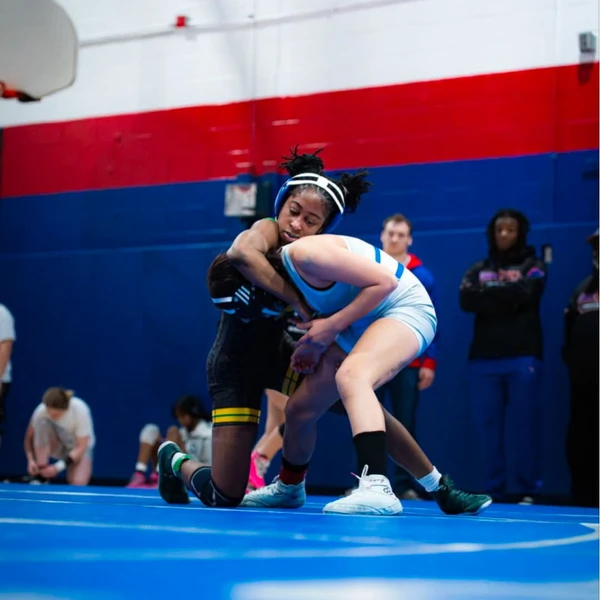
Wrestling
Tumbling
American Sign Language (ASL)
Animals
Agriculture
Babysitting And Childcare
Dance
Reading
Social Issues
I read books multiple times per week
Danita Palmore
1x
Finalist
Danita Palmore
1x
FinalistBio
I am a dedicated student athlete with goals of helping others. Wrestling has played a major role in shaping who I am today, I am a city champion and a freestyle state placer (3rd place) , and through the sport I’ve built mental toughness, resilience, and strong leadership skills.
Outside of competition, I enjoy mentoring younger athletes through programs like Life Champions Academy and my experience with the Jesse White Tumbling Team, where I help guide others and give back to my community. Being able to support and uplift younger kids is something that means a lot to me.
In the future, I plan to study psychology and child development, with the goal of becoming a behavioral analyst and opening a center that supports youth, especially in underserved communities. I want to create a space where kids feel understood, supported, and able to grow into their best selves.
Education
Chicago High School for Agricultural Science
High SchoolLindblom Math & Science Acad High School
High SchoolMiscellaneous
Desired degree level:
Associate's degree program
Majors of interest:
- Psychology, General
- Health Professions and Related Clinical Sciences, Other
Career
Dream career field:
Mental Health Care
Dream career goals:
Performer
Jesse White Tumbling Team2017 – Present9 years
Sports
Wrestling
Varsity2024 – 20262 years
Awards
- 1st Place City Champion (Senior Year)
- 3rd Place City Championship (Junior Year)
- 5th Place City Championship (Sophomore Year)
- 3rd Place Freestyle State Championship (Senior Year)
Research
Agricultural and Food Products Processing
Kraft Heinz — Marketing & Branding2026 – 2026
Arts
Chicago Film Makers
Videography2026 – Present
Public services
Volunteering
School of Scholars — Camp Leader2024 – Present
Future Interests
Advocacy
Volunteering
Entrepreneurship
Sloane Stephens Doc & Glo Scholarship
For a long time, growing up, I felt like I was doing something wrong. I was always overly conscious of myself, questioning even the simplest actions, like the angle I held my head at as I was having a conversation, how many seconds I held eye contact before looking away, or even how loudly my feet tapped on the ground as I walked. Early on,2 I learned to be quiet, to observe, and to minimize my presence so that the ‘wrongness’ I felt wouldn’t be visible to anyone else.
To most adults, I was just “reserved” or “shy”. Quiet. Kept to myself. But those labels were just placeholders for a much more complex reality. I moved through the world with a relentless sense of displacement. I didn’t feel like I truly belonged anywhere, not at home, nor at school. Even on the wrestling team, a sport where I thrived as a 2x national qualifier, I still felt as though I was a permanent guest, rather than a real member of the wrestling team.
School was a silent struggle, on the outside it looked like I was doing “well enough”, earning A’s and B’s sometimes C’s, but that was exactly the problem. I wasn’t failing, so no one took a closer look. Because I wasn’t a disruption, no one noticed the exhaustion it took for me to just keep up. I was constantly trying to manage things that seemed simple for my peers, staying focused, processing instructions, and navigating social situations while silently feeling overwhelmed. No one realized that I was navigating a world that wasn't built for my brain.
It wasn’t until my sophomore year that my struggles were finally noticed, but only because they had reached a point where they could no longer be ignored. The internal strain I had been carrying turned into a life-threatening mental health crisis, a breaking point that stripped away the “well enough” front that I'd maintained for years. I was admitted to a behavioral health facility, where for the first time I received a closer look. The medical professionals and my family looked past my grades and wrestling stats. They noticed a deep disconnect between my outward success and my internal reality, which led to a diagnosis that finally explained my experiences. I was told I had a learning and social processing disorder. Being noticed in such a high-risk situation made me realize how dangerous it is for people to suffer in silence without the right support.
My commitment to addressing the needs of underserved communities comes from my belief that no child should have to reach their breaking point to be seen. Having navigated the world with no map for so long, I have dedicated myself to being a guide for others. I have already started putting this commitment into action through my involvement in the community. I have served as a mentor for younger athletes through my wrestling team’s (Beat the Streets) Life Champions program and as a member of the Jesse White Tumbling team. I look beyond their athletic performance to ensure they are mentally supported. I aim to be the mentor I once needed growing up, someone who notices the one who is “doing okay” but clearly overwhelmed. By showing up for kids in my community, I am working to ensure that their struggles are addressed sooner rather than later, their voices are heard, and their potential is seen, before they ever reach a crisis.
WCEJ Thornton Foundation Low-Income Scholarship
Higher education is the bridge between my lived experience and my professional goal of transforming early childhood intervention. My personal journey, moving from a student silently struggling with an undiagnosed learning and social processing disorder to a national qualifying athlete and community mentor, has taught me that doing well enough is often a mask for profound, unmet needs. Attending higher education will provide me with the clinical knowledge, organizational framework, and professional credibility necessary to ensure that children in underserved communities are seen, understood, and supported long before they reach a crisis point.
The first way that higher education will facilitate my goals is by providing a rigorous academic foundation in child development and behavioral sciences. While my personal experience have game the empathy to recognize a struggling child, I need to have a deep understanding of the neurological and psychological indicators of developmental differences like autism or ADHD. In college, I plan to study how children process information and navigate the world around them. This information will allow me to go from just being an observer to a skilled practitioner capable of identifying early warning signs that many adults miss. By mastering the science behind learning styles and emotional regulation, I can build a childcare and development center that is rooted in evidence based practices rather than just general supervision.
Additionally, higher education will provide me with opportunities to gain entrepreneurial and leadership skills required to launch and sustain my community based center. Operating a facility in an underserved area requires more than just a passion for service, it requires knowledge of community health systems, non-profit management, and educational advocacy. With help from my university's resources, such as internships, networking, and mentorship, I will learn how to navigate systemic barriers that often prevent low-income families from accessing quality developmental screenings. College will empower me to be an advocate for children in similar situations to those I was in. I will not only work within the system, but I will also work to improve the system for those who have been marginalized by it.
Ultimately, I plan to be the guide I never had. I want to remove the relentless sense of displacement that many neurodivergent children feel by giving them the vocabulary and the support to understand themselves early on. By achieving a degree, I am not just earning a credential. I will be gaining the tools I need to ensure no child in my community has to suffer just to be noticed.
Taylor Swift Fan Scholarship
Choosing a Taylor Swift performance for a scholarship essay means recognizing the resilience and emotional intelligence required to succeed in a demanding spotlight. The performance I find most moving is her All Too Well (10 Minute Version) on Saturday Night Live. This moment is a masterclass in the showgirl spirit because it demonstrates the ability to take deeply personal experiences and transform them into a cinematic, shared connection with an audience. What makes this particular performance so resonant is the evolution of her narrative. Watching her perform a song she wrote over a decade ago showcases the power of reclaiming one's story. It mirrors the themes of The Life of A Showgirl by showing that a true performer does not just put on a show; she builds a bridge between her private struggles and the public’s need for empathy. For a student, this is a reminder that our past challenges and different eras are not just obstacles but are the raw material we use to build a stronger future. The ability to stand under that spotlight while remaining vulnerable yet in total control embodies the exact kind of leadership and persistence I hope to bring to my own educational journey. It proves that longevity in any field requires the courage to be seen as you truly are.
Scorenavigator Financial Literacy Scholarship
Growing up, my relationship with money was shaped more by the harsh realities of survival than by strategic principles. For much of my childhood, life felt like a series of temporary stops. Moving from one house to another created a deep sense of instability that affected every part of my life. When you don’t know where you will be sleeping in six months, long-term financial planning seems like an impossible dream. For me, money was not something to manage or invest; it was a limited resource that vanished as quickly as it came, usually just to cover the basic needs of food and shelter.
My single mother has had the biggest impact on how I view money. She is the hardest working person I know. Throughout my childhood, she worked tirelessly to keep us afloat. She often sacrificed her own needs to make sure I had what I needed. Despite her incredible work ethic, we lived without any financial backup. Since she was never taught about money management, she had to run our lives by addressing problems as they came up rather than planning. We were always just one unexpected bill away from disaster.
Watching her face these challenges taught me important lessons. First, I learned the value of a dollar and the crucial need for resilience. I saw how much effort it takes to earn a living. Second, I recognized the exhausting cycle of debt and stress that happens when you lack the knowledge to save and grow wealth. My mother’s struggle made it clear that hard work alone isn’t enough without financial understanding. Her experience became my motivation to seek a different path, not out of disrespect for her efforts but to honor her sacrifices by achieving the stability she worked so hard to provide.
The turning point came during my senior year when I took a financial literacy class. Before this, concepts like credit scores, compound interest, and budgeting felt foreign to me. The classroom became a place where the fog of my childhood instability began to lift. I started to understand that the survival mode I grew up in could be broken with the right knowledge and discipline. Learning about compound interest was especially eye-opening. It taught me that even small amounts of money, managed wisely, could create the security my family always lacked.
I intend to use what I have learned to change my future and my family’s legacy. My main goal is to break the cycle of instability by building a solid emergency fund. I never want to feel the panic of being one bill away from losing my home again. I am committed to saving and investing early, using the wealth-building strategies my mother never had the opportunity to learn. I want to move beyond merely getting by and instead establish a foundation of lasting security.
Additionally, I plan to use my education to ensure I never slip back into the survival mode of my youth. By sticking to a strict budget and responsibly using credit, I will shield myself from the predatory financial cycles that often impact people from backgrounds like mine. I aim to reach a level of financial independence that allows me to support myself and eventually provide the stable family life I wanted as a child. This financial education is not just another school subject; it is my guide to a life defined by choice and security instead of necessity and fear. By applying the discipline I have gained in the classroom, I am turning the lessons of my past into a plan for a successful and stable future.
YOU GOT IT GIRL SCHOLARSHIP
Most people do not expect women to succeed in wrestling. Before they even get to see us compete, many already assume we are weaker, less skilled, or only successful because "girls wrestling is easier". Even in the sport itself, there is a difference in how girls are viewed. During the state series, for boys. It's just called state, but for girls, it becomes "girls state" as if our accomplishments need a separate category to be taken seriously.
Being one of the only girls in a wrestling room full of guys who didn't think I deserved to be there was my daily reality. I'd look back and watch my wrestling film and hear my male teammates in the background questioning how I was getting college offers before them, even though they hadn't put in the work I had. For a while, those comments made me question my worth as an athlete. Eventually, I realized that if I was going to be the only girl in the room, I might as well be the loudest one on the mat. I stopped shrinking myself to fit into their mold and started building my own confidence.
That perseverance turned into results. I became a City Champion, a 2x National qualifier, and placed 3rd in the state. Beyond the mat, my athleticism has always been about pushing limits, whether it was through cross country and track, or performing on the Jesse White Tumbling Team.
But being a "You Got It Girl" is about more than just medals, it's about what you do with that platform. I began leading younger wrestlers through Life Champions Academy, a mentorship program through my club team, Beat the Streets Chicago Wrestling. Doing this has taught me that my struggle wasn't just for me. It was to clear a path for the girls coming up behind me so they don’t have to wonder if they belong.
This scholarship would help me bridge the gap between being a student-athlete and my future career. I plan to study psychology and child development so I can work with underserved youth. My ultimate goal is to create a center for adolescents that focuses on mental health and emotional resilience. I want to provide a safe space where kids can find the psychological support and resources they need to navigate the same types of social pressures and labels I faced.
Whether it's for gear, traveling costs for national tournaments, or college tuition, this support means I can keep proving that a wrestler is a wrestler, regardless of gender. I'm not just building a career, I am building a space where the next generation of girls won't have to prove they belong, they'll already know they do.
Hazel & Olive Sweet Horizons Scholarship
For a long time, I felt like I was doing something wrong, even when I was doing nothing at all. I was always overly conscious of myself, questioning even the simplest actions, such as how many seconds I held eye contact, the angle of my head during a conversation, or how loudly my feet tapped on the ground as I walked. Early on, I learned to minimize my presence so that the wrongness I felt wouldn’t be visible. To adults, I was just reserved or shy. But those labels were just placeholders for a much more complex reality. I was moving through the world with a relentless sense of displacement.
This sense of being an imposter followed me everywhere. Even on the wrestling team, a sport where I thrived as a two-time national qualifier, I didn't feel like I truly belonged. In school, I maintained a front of well enough, earning A’s and B’s. Because I wasn't a disruption, no one noticed the exhaustion it took to just keep up. No one realized I was navigating a world that wasn't built for my brain. It wasn’t until my sophomore year that my struggle reached a life-threatening mental health crisis. That breaking point stripped away the well enough front and led to a diagnosis that finally explained my life: I had a learning and social processing disorder.
Being noticed only when I reached a high-risk situation made me realize how dangerous it is for people to suffer in silence. This challenge has shaped me into a person who values observation over assumptions. It has given me a deep sense of empathy for the quiet ones and a drive to ensure no one else has to reach their breaking point to be seen. I have already begun putting this into action by mentoring younger athletes through Beat the Streets and serving as a camp counselor. I look past their performance to ensure they are mentally supported, acting as the observant presence I once needed.
Pursuing higher education is the essential next step in transforming this personal challenge into a professional mission. To build the future I hope for, I need the clinical knowledge and leadership skills that a degree provides. My goal is to open a specialized childcare and development center focused on early intervention. I want to create a space where children are supported as individuals, where signs of ADHD, autism, and other developmental differences are recognized early, and where doing okay is never used as an excuse to overlook a child’s distress.
College will provide me with the map I never had. It will allow me to study the complexities of the human brain and social systems so that I can be a more effective advocate for underserved communities. By furthering my education, I am not just earning a degree, I am gaining the tools to ensure that the next generation doesn't have to struggle in silence. I want to build a world where children are given the resources to understand themselves long before they ever reach a crisis, turning my past displacement into a future of belonging for others.
Let Your Light Shine Scholarship
I plan to create a legacy by transforming the way children in my community are supported and understood. My goal is to build a future where no child has to reach a life-threatening breaking point simply to be seen.
Growing up, I experienced firsthand how dangerous it is to be "invisible" while doing "well enough." Because I wasn’t a disruption in class and maintained decent grades, my internal exhaustion and the struggle to navigate a world not built for my brain went unnoticed. I want my impact to be measured by the number of crises prevented because a child was given the right tools and a map for their own mind early on.
The business I plan to create one day is a specialized childcare and development center. This won’t just be a place for supervision, it will be a hub for early intervention and advocacy. Drawing from my own late diagnosis of a learning and social processing disorder, I want to build a space where we recognize signs of autism, ADHD, and other developmental differences in the earliest stages. In many traditional settings, a quiet child who isn't struggling academically is often overlooked, but at my center, we look more deeply. I want to focus on the children who appear to be "doing okay" on the surface but may be silently drowning beneath the surface. By providing early support, emotional literacy, and specialized learning plans, I am building a business that acts as a safety net. This ensures children grow up understanding their own strengths rather than feeling like guests in a world they don't understand.
Beyond the clinical side of the business, I want to create a culture of transparency regarding mental health. My center will offer resources for parents who may not know how to advocate for a child who learns differently. Often, parents see the same "well enough" front that teachers see, and they don't realize their child is in distress until it is too late. My business will bridge that communication gap, providing a community space where families can learn about neurodiversity without stigma. I want to build an environment where "different" is seen as a trait to be managed and celebrated, not a problem to be hidden.
I shine my light through active observation and mentorship. In a world that often rewards the loudest and most aggressive voices, I use my light to illuminate the quiet ones. I have already begun this work as a mentor for younger athletes through my wrestling team, Beat the Streets Life Champions' Academy, and the Jesse White Tumbling Team. As well as a camp counselor at Positive Kids Positive Future. I shine by being a stable, observant presence for kids who feel displaced. I don't just look at their athletic performance or their ability to follow rules, I look at their spirit. I use my own history of overcoming a mental health crisis to show others that there is no shame in having a brain that works differently. I believe that true leadership is about advocacy for those who cannot yet advocate for themselves. By creating a space that prioritizes mental health as much as education, I am working to break the cycle of suffering in silence. My light shines brightest when I help a child realize that they don't have to be perfect to be worthy of help, and that their voice deserves to be heard long before they reach a crisis. This is the future I am committed to building, one where every child is seen, supported, and valued for exactly who they are.
Tammurra Hamilton Legacy Scholarship
In my generation, mental health and suicide prevention have become urgent topics because so many of us have mastered the skill of being "fine", while we are actually drowning. There is a dangerous gap between seeming "well enough" and being truly supported. We live in a world where class performance is prioritized over mental health. My own experience with a mental health crisis taught me that when we overlook students who are doing "well enough", we are gambling with their lives.
Growing up I felt a relentless sense of displacement. I moved through the world trying to minimize my presence so my internal struggles would not be a burden to those around me. Adults saw me as shy, teachers saw me as an average student with As and Bs, and my wrestling coaches saw me as a 2x national qualifier who appeared to be doing "well enough". Because I wasn't failing or a disruption, no one noticed the exhaustion I felt navigating a world I felt was not built for my brain.
This silence eventually led to me reaching what I felt was my limit, my sophomore year. This breaking point landed me in a behavioral health facility. It was only then at my most vulnerable that I was finally seen, and given a diagnosis that helped me better understand myself.
This experience fundamentally reshaped my thoughts, beliefs, and personal relationships. I learned that silence does not equal strength, it is an indication of lack of support. It made me realize that we cannot and should not wait for a crisis to offer a hand. This realization has driven my career aspirations and I have now become committed to addressing the needs of underserved communities comes from my belief that no child should have to reach their breaking point to be seen. I aim to be the mentor I once needed growing up, someone who notices the one who is “doing okay” but clearly overwhelmed. By showing up for kids in my community, I am working to ensure that their struggles are addressed sooner than later, their voices are heard and their potential is seen, before they ever reach a crisis.
Looking ahead, my goal is to further my focus on underserved communities by opening a childcare and development center. I want to create a space where children are not overlooked simply because they appear do be doing “well enough”. At my center children will be observed and supported as individuals. I aim to recognize early signs and understand their learning styles, emotional needs, and how they interact with others. I want to create a place where children receive early support, where they don’t have to grow up feeling out of place, but instead they're given the tools to better understand themselves as they grow through school and life.
No child should struggle in silence to be understood and understand themself. I am committed to making sure they don’t have to.
Carmen Jimenez Pride Memorial Scholarship
Growing up to most adults, I was just “reserved” or “shy”. Quiet. Kept to myself. But those labels were just placeholders for a much more complex reality. I moved through the world with an overwhelming sense of displacement. I didn’t feel like I truly belonged anywhere, not at home, nor at school. Even on the wrestling team, a sport where I thrived,I still felt as though I was a guest, rather than a real member of the wrestling team.
School was a silent struggle, on the outside it looked like I was doing “well enough”, earning A’s and B’s sometimes C’s but that was exactly the problem. I wasn’t failing, so no one took a closer look. Because I wasn’t a disruption, no one noticed the exhaustion it took for me to just keep up. I was constantly trying to manage things that seemed simple for my peers, staying focused, processing instructions and navigating social situations while silently feeling overwhelmed.
It wasn’t until my sophomore year that my struggles were finally noticed, but only because they had reached a point where they can no longer be ignored. I had finally reached my limit. I was admitted to a behavioral health facility, where for the first time I received a closer look. The medical professionals noticed a deep disconnect between my outward success and my internal reality, which led to a diagnosis that finally explained my experiences. Being noticed in such a high risk situation made me realize how dangerous it is for people to suffer in silence without the right support.
My commitment to addressing the needs of underserved communities comes from my belief that no child should have to reach their breaking point to be seen. Having navigated the world with no map for so long, I have dedicated myself to being a guide for others. This path is one I do not walk alone, I carry with me my Great-Grandmother Catherine. She was the first in my family to enter the nursing field, breaking barriers to care for others. Although she passed away when I was young, her impact remains my foundation. She proved that we belong in the healthcare field, and her spirit gave me the confidence to believe that I, too, could heal and lead. I have already started putting this commitment into action through my involvement in the community.
Looking ahead, my goal is to further my focus on underserved communities by opening a childcare and development center. I want to create a space where children are not overlooked simply because they appear do be doing “well enough”. A single diagnosis or a moment of being "seen" at age five can be the difference between a child who struggles in silence and one who grows up with the tools to succeed. As these children grow up feeling understood, they will carry that same empathy into their own families and careers, creating a ripple effect of health and confidence across the East Side. Just as Carmen was a visionary leader, I have already begun my service as a mentor for younger athletes with Beat the Streets wrestling and the Jesse White Tumblers. I don't just uplift my fellow athletes, I monitor their mental well-being, acting as the observant presence I once needed.
No child should struggle in silence to be understood and understand themself. I am committed to making sure they don’t have to.
Anita Moore-Hubbard "Butterfly Effect" Memorial Scholarship
Sometimes the most intensive vision isn’t found in a distant place, but in the streets where we were raised. If I were given the wings to fly anywhere, I wouldn’t seek a destination across the ocean. Instead, I would fly back to the East Side of Chicago. I choose to stay rooted in my own community because I have seen firsthand the danger of being overlooked.
Growing up to most adults, I was just “reserved” or “shy”. Quiet. Kept to myself. But those labels were just placeholders for a much more complex reality. I moved through the world with an overwhelming sense of displacement. I didn’t feel like I truly belonged anywhere, not at home, nor at school. Even on the wrestling team, a sport where I thrived,I still felt as though I was a guest, rather than a real member of the wrestling team.
School was a silent struggle, on the outside it looked like I was doing “well enough”, earning A’s and B’s sometimes C’s but that was exactly the problem. I wasn’t failing, so no one took a closer look. Because I wasn’t a disruption, no one noticed the exhaustion it took for me to just keep up. I was constantly trying to manage things that seemed simple for my peers, staying focused, processing instructions and navigating social situations while silently feeling overwhelmed.
It wasn’t until my sophomore year that my struggles were finally noticed, but only because they had reached a point where they can no longer be ignored. I had finally reached my limit. I was admitted to a behavioral health facility, where for the first time I received a closer look. The medical professionals noticed a deep disconnect between my outward success and my internal reality, which led to a diagnosis that finally explained my experiences. Being noticed in such a high risk situation made me realize how dangerous it is for people to suffer in silence without the right support.
My commitment to addressing the needs of underserved communities comes from my belief that no child should have to reach their breaking point to be seen. Having navigated the world with no map for so long, I have dedicated myself to being a guide for others. This path is one I do not walk alone, I carry with me my Great-Grandmother Catherine. She was the first in my family to enter the nursing field, breaking barriers to care for others. Although she passed away when I was young, her impact remains my foundation. She proved that we belong in the healthcare field, and her spirit gave me the confidence to believe that I, too, could heal and lead. I have already started putting this commitment into action through my involvement in the community.
Looking ahead, my goal is to further my focus on underserved communities by opening a childcare and development center. I want to create a space where children are not overlooked simply because they appear do be doing “well enough”. A single diagnosis or a moment of being "seen" at age five can be the difference between a child who struggles in silence and one who grows up with the tools to succeed. As these children grow up feeling understood, they will carry that same empathy into their own families and careers, creating a ripple effect of health and confidence across the East Side.
No child should struggle in silence to be understood and understand themself. I am committed to making sure they don’t have to.