user profile avatar

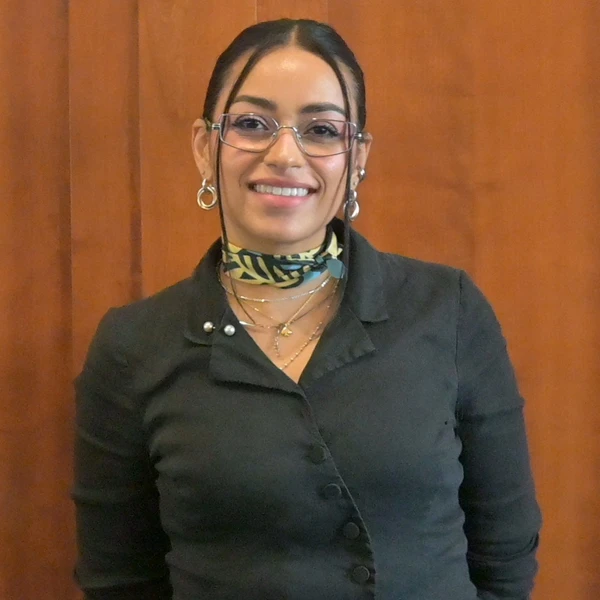
Danielle Medina

1x

Finalist

1x

Winner

Bio

I am a doctoral student in Curriculum and Instruction and a New York City public school educator committed to equity, access, and teacher sustainability. My work as a special education teacher has shown me how deeply students benefit when educators are prepared, supported, and able to remain in the profession. My doctoral research interests focus on special education teacher attrition, pre-service teacher preparation, workload demands, and the ethical use of technology and AI to support new teachers. I hope to use my research to better understand how teacher preparation programs can equip educators for the real day-to-day demands of the field, especially in special education settings where instructional, legal, and administrative responsibilities often overlap. Receiving scholarship support would help me continue my doctoral studies while remaining committed to my work with students, families, and school communities. My long-term goal is to contribute research and practical solutions that strengthen teacher preparation, improve retention, and ultimately expand access to high-quality education for students with disabilities. I currently have a 4.0 gpa

Education

Fordham University

Doctoral degree program (PhD, MD, JD, etc.)
2025 - 2029
  • Majors:
    • Special Education and Teaching
  • Not planning to go to medical school
  • Career

    • Dream career field:

      Higher Education

    • Dream career goals:

    • Special Education Teacher

      Department of Education
      2019 – Present7 years

    Sports

    Track & Field

    Junior Varsity
    2010 – 20122 years

    Research

    • Education, General

      Fordham University — Student/ Research
      2026 – 2026
    RonranGlee Special Needs Teacher Literary Scholarship
    Winner
    The first time I watched a student realize, “Wait, I can read this,” I understood why special education became more than my profession. It became part of my purpose. To me, Harold Bloom’s statement means that teaching is not only about giving students information. Teaching is about helping students recognize themselves as capable, valuable, and present in the world. When Bloom says that the purpose of teaching is to bring a student to a sense of their own presence, I believe he means that education should help a student understand, I am here. I matter. I can learn. I have a voice. This belief is the reason I am passionate about special education. Many students with disabilities move through school being reminded of what is difficult for them. They may know their reading level, their testing accommodations, their service minutes, or the skills they have not mastered yet. While these supports are important, they should never become the whole story of who a child is. Special education should not make students feel smaller. When done with care, it should help students feel seen, supported, and powerful. As a special education teacher, I have worked with students who were afraid to read aloud, hesitant to write, or quick to say, “I don’t know,” before they even tried. I have seen students shut down because they were used to feeling behind. I have also seen what happens when instruction is patient, explicit, and rooted in belief. A student sounds out a word they used to skip. A student writes one sentence and then proudly adds another. A student solves a math problem step by step and looks surprised because they did it independently. These moments may seem small, but they are life-changing for a child who is learning to trust themselves. Equity is central to why I do this work. To me, equity means making sure students receive what they need in order to access learning with dignity. It means recognizing that not every child learns the same way, communicates the same way, or shows understanding in the same way. It also means refusing to lower expectations simply because a student has a disability. My mission is to create learning spaces where students with disabilities have access to strong instruction, meaningful support, and opportunities to see themselves as thinkers, readers, writers, problem-solvers, and leaders. Technology is also an important part of my mission. I believe technology, when used thoughtfully and ethically, can help remove barriers for students and teachers. Tools such as text-to-speech, speech-to-text, visual supports, adaptive programs, and AI-supported planning can help make learning more accessible. Technology should never replace the relationship between a teacher and student, but it can help teachers differentiate instruction, reduce workload, and create more responsive supports. I am especially interested in how ethical technology and AI can support new special education teachers so they feel more prepared, less overwhelmed, and better able to serve their students. This interest connects directly to my doctoral work. I am interested in special education teacher preparation, teacher attrition, workload demands, and how technology can support educators entering the field. I believe that if we want students with disabilities to feel fully seen, we must also prepare and support the teachers who serve them. Special education teachers carry instructional, legal, emotional, and administrative responsibilities. When teachers are not prepared for those realities, both teachers and students are affected. My goal is to contribute to research and practical solutions that strengthen teacher preparation, improve retention, and advance equity for students with disabilities. If I imagined my mission as a fairy tale, I would be a teacher walking into a classroom that others had mistaken for a locked tower. Inside were students who had been told in quiet and loud ways that learning was not really for them. I would not arrive with magic. I would arrive with patience, structure, books, visuals, decodable texts, sentence starters, technology tools, encouragement, and belief. Little by little, the students would discover that the tower had never truly been locked. The door opened each time a child said, “I can try,” “I understand,” or “I have something to say.” That is why I am passionate about special education. It is not only about helping students access lessons. It is about helping them access confidence, voice, independence, and belonging. My goal is to guide students toward the moment when they understand that their presence matters in the classroom, in their communities, and in the world.