user profile avatar

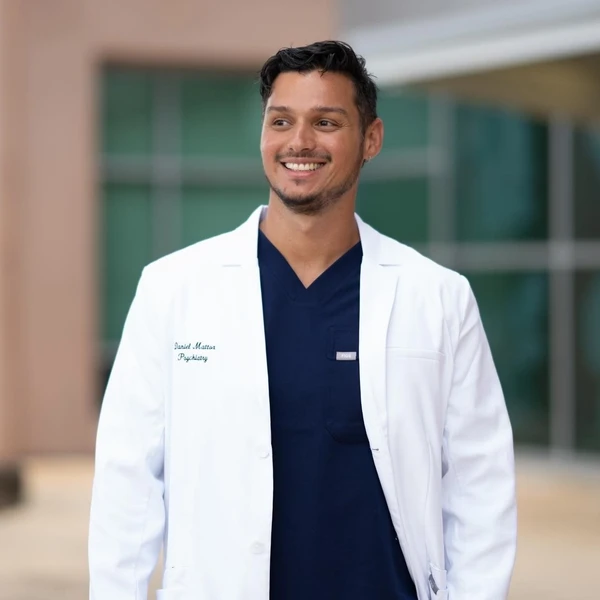
Daniel Mattox

1x

Finalist

1x

Winner

General information

Hobbies & Interests

  • Fishing
  • Diving
  • Muay Thai
  • Foreign Languages
  • Chess
  • Mental Health

Bio

I am a board-certified Psychiatric Mental Health Nurse Practitioner (PMHNP-BC) completing my Doctor of Nursing Practice. I founded and run Elevating Minds Psychiatry, an outpatient and telehealth practice specializing in ADHD and adult psychiatric care, built to expand access for patients an overstretched system too often leaves behind. My doctoral work centers on healthcare leadership, evidence-based practice, and population health. I am passionate about widening access to quality mental health care — reaching people who have gone years without the right diagnosis or a provider they can reach — and I intend to spend my career building care models that meet people where they are.

Education

Capella University

Doctoral degree program (PhD, MD, JD, etc.)

2025 – 2027

Majors:
  • Mental and Social Health Services and Allied Professions
  • Registered Nursing, Nursing Administration, Nursing Research and Clinical Nursing
Western Governors University

Master's degree program

2018 – 2020

Majors:
  • Registered Nursing, Nursing Administration, Nursing Research and Clinical Nursing

Mount Saint Mary's University

Bachelor's degree program

2010 – 2015

Majors:
  • Religion/Religious Studies
  • Psychology, General
  • Registered Nursing, Nursing Administration, Nursing Research and Clinical Nursing

Miscellaneous

Medical school interest:
No

Career

  • Charge Nurse, Child & Adolescent Psychiatry

    Hospital & Health Care · Aurora Behavioral Health Care

    Jan 2017 – Jan 2019

  • Charge Nurse, Crisis Stabilization Unit & Emergency Psychiatric Lead

    Hospital & Health Care · Palomar Health Medical Center

    Jan 2018 – Jan 2022

  • Travel Psychiatric Mental Health Nurse Practitioner

    Hospital & Health Care · Kaiser Permanente Ala Moana

    Jan 2023 – Jan 2024

  • Founder & Psychiatric Mental Health Nurse Practitioner

    Mental Health Care · Elevating Minds Psychiatry

    Jan 2023 – Present

Miscellaneous

Dream career field:
Mental Health Care
Work experience:
10+ years
Has nursing license:
Yes

Future Interests

  • Advocacy
  • Entrepreneurship
Rose Browne Memorial Scholarship for Nursing
My path to nursing did not start in a classroom. It started on an ambulance. I worked as an EMT in Los Angeles for more than two years, and I learned there that people rarely call for help on their best day. I also learned that what a frightened person needs first is someone calm who stays. That experience pointed me toward nursing before I had the words for why. My next step confirmed it. I worked as a case manager in a full-service partnership program for people living with serious mental illness. I saw how often people were failed not by a lack of treatment but by a lack of access to it, and how much difference one consistent professional could make. I wanted to be able to do more than coordinate care. I wanted to provide it. So I earned my BSN at Mount Saint Mary's University and began working as a nurse. I chose psychiatric nursing because that is where I saw the greatest need. I served as a charge nurse in child and adolescent psychiatry, worked in a hospital triage role, and later became the crisis stabilization and emergency psychiatry lead at Palomar Health Medical Center. Those years taught me that caring for someone in crisis begins with listening without judgment, slowing the room down, and treating the person as a human being rather than a problem. Being the first person in my family to go to college shaped how I approached all of this. I learned the system on my own, one credential at a time: a psychology degree, a nursing degree, a master's, a post-master's certificate as a psychiatric mental health nurse practitioner, and now a Doctor of Nursing Practice at Capella University. Along the way I learned persistence, and I learned to value the people who make a path feel possible for someone else. Today I own Elevating Minds Psychiatry, a telepsychiatry practice serving patients in Hawaii and California. Many of my patients are adults with ADHD, anxiety, and depression who spent years being dismissed. Giving them an accurate evaluation and a plan is the most meaningful work I know. Every life experience I have described led me here, and I intend to keep serving patients who are too often left behind. Like Rose Browne, I have pursued my education while carrying real responsibilities. I built my practice from the ground up while completing my doctorate, and that has taught me how much steady support can matter to someone finishing a demanding degree. I hope to repay that support by mentoring other nurses who are the first in their families to enter healthcare.
Healing Self and Community Scholarship
My contribution is a practice model that makes psychiatric care easier to reach and easier to afford. Mental health care is out of reach for many people for two reasons: it is hard to find a provider, and it is hard to pay for one. I founded Elevating Minds Psychiatry, a telepsychiatry practice serving patients across Hawaii and California, where behavioral health providers are in short supply and neighbor-island patients often wait months or fly to be seen. Telehealth removes the travel. A subscription-based model removes the guesswork about cost, so patients know what care will look like instead of facing surprise bills. We keep wait times under seven days, and about ninety-five percent of patients stay in care, which tells me that access and affordability work together. As a board-certified psychiatric mental health nurse practitioner finishing my Doctor of Nursing Practice, I am learning to measure what works and share it. I want to document this model so other small practices can copy it, especially ones serving communities where stigma and cost keep people from asking for help. Many of my patients are adults who spent decades being told they were careless or unmotivated when they needed an evaluation. Giving someone an accurate explanation, a plan, and a clinician who answers in days rather than months is how I intend to make support available to anyone who needs it.
Skin, Bones, Hearts & Private Parts Scholarship for Nurse Practitioners, Physician Assistants, and Registered Nurse Students
I was the first person in my family to go to college. Everything I have built in healthcare, I have built one credential at a time: an EMT certification, a psychology degree from Pepperdine, a BSN from Mount Saint Mary's, a master's in nursing education, a post-master's certificate as a psychiatric mental health nurse practitioner, and now a Doctor of Nursing Practice at Capella University that I expect to complete this year. My motivation for continuing is simple. Each step let me reach people I could not reach before, and I am not finished. My path began on an ambulance in Los Angeles, where I worked as an EMT for more than two years. Emergency work teaches you quickly that people rarely call for help on their best day, and that the quality of the first few minutes of care shapes everything after. I then worked as a case manager in a full-service partnership program for people with serious mental illness, which showed me how often patients are failed not by a lack of treatment but by a lack of access to it. That led me to nursing, and to psychiatric nursing in particular. I spent years as a charge nurse in child and adolescent psychiatry, then as the crisis stabilization and emergency psychiatry lead at Palomar Health Medical Center, where I helped stabilize people during some of the hardest moments of their lives. In 2023 I founded Elevating Minds Psychiatry, a telepsychiatry practice serving patients in Hawaii and California. Today I see roughly twenty-five to thirty-five patients a week, we keep wait times under seven days, and about ninety-five percent of our patients stay in care. Most of them come to me for ADHD, anxiety, depression, and mood disorders, and many are adults who spent decades being told they were careless or unmotivated when what they needed was an accurate evaluation and treatment. Hawaii has a serious shortage of behavioral health providers, and telehealth lets me reach patients on neighbor islands and in rural areas who would otherwise wait months or fly to see someone. My motivation for the DNP comes directly from running that practice. Once you are responsible for a panel of patients, you start asking system-level questions: Which intake process gets people into treatment faster? How do we measure whether care is working? How do we make a small practice sustainable without compromising quality? The doctorate gives me the tools to answer those questions with evidence rather than instinct, and I want to turn what I learn into a practice model that other clinicians serving underserved communities can use. This scholarship would help me in a practical way. I have financed my education while building a business from scratch, and I carry educational debt alongside the costs of growing a small practice. An award would ease that burden at the moment I am finishing my doctorate, which means I can put more of my time and resources into what the degree is for: expanding access, shortening wait times, and keeping care affordable and reachable for patients who most need it. I am grateful for the opportunity to be considered, and I intend to spend my career repaying that investment in the communities I serve.
Ellen Randolph Memorial Nursing Scholarship
The moments that taught me the most about caring for someone have mostly been quiet ones. Before I became a nurse, I worked as an EMT in Los Angeles. People called us on the worst day of their lives, and I learned that skill matters, but the first thing a frightened person needs is to feel that someone calm has arrived and is not going anywhere. A steady voice, an explanation of what is happening, a hand on a shoulder: these small things change how a person experiences even the most frightening emergency. I carried that lesson into psychiatric nursing. As a charge nurse in child and adolescent psychiatry, and later as the crisis stabilization and emergency psychiatry lead at Palomar Health Medical Center, I worked with people who were often at their lowest point, afraid, ashamed, or unable to say what they needed. Over the years, I came to understand that caring for someone in crisis rarely begins with a clever intervention. It begins with listening without judgment, slowing the room down, and letting a person know they are seen as a human being rather than as a problem to be managed. The patients who left our unit steadier were rarely the ones who received the most procedures. They were the ones who felt respected. As a first-generation college student, I also know how much it matters when someone treats your future as possible. That belief in people is a form of care too, and I try to offer it to every patient. Those experiences shape the kind of nurse I hope to be. I founded Elevating Minds Psychiatry in 2023 to serve patients in Hawaii and California through telehealth, many of them adults with ADHD, anxiety, and depression who had been dismissed or overlooked for years. I try to give them what I learned on the ambulance and in the crisis unit: unhurried attention, plain explanations, and the sense that their story is believed. I want to keep growing as a clinician and leader so more patients receive care that is both competent and kind. This scholarship would help me finish the Doctor of Nursing Practice I am completing at Capella University. I am paying for my education while building a small practice from the ground up, and I carry educational debt alongside the costs of growing that business. An award would ease that pressure and let me put more of my energy into the work that matters: shortening wait times, expanding access across the islands, and caring for patients with the same compassion that shaped me. I am honored to be considered in Ellen Randolph's memory, and I hope to carry her spirit of service forward.
Camille S. Amantine Scholarship
I am the first person in my family to attend college, and I am finishing a Doctor of Nursing Practice at Capella University this year. Nothing about that path was handed to me. I started as an EMT in Los Angeles, worked as a case manager with people living with serious mental illness, earned my nursing degrees one at a time, and became a board-certified psychiatric mental health nurse practitioner. Being first-generation meant learning the unwritten rules of higher education on my own, and it taught me to value anyone who helps another person find their way through an unfamiliar system. That value guides my work. In 2023 I founded Elevating Minds Psychiatry, a telehealth practice serving patients in Hawaii and California. Hawaii has a serious shortage of mental health providers, and many people on the neighbor islands wait months or travel by plane to see someone. Our patients are typically seen within a week. Many are adults with ADHD, anxiety, or depression who spent years being told they were lazy or careless when they actually needed an accurate evaluation and treatment. Giving someone that first accurate explanation, and then a plan, can change how they see themselves. My goals are practical and long term. I want to expand access to evidence-based psychiatric care in underserved communities, use the quality-improvement training from my doctorate to measure whether that care works, and eventually mentor other clinicians, especially those who, like me, are the first in their families to enter healthcare. I also want to build my practice in a way that other small providers can replicate, so the benefit reaches beyond my own patient panel. The impact I hope to have is simple to describe: shorter waits, fewer people falling through the cracks, and more clinicians who understand the communities they serve. I know that opportunities like this scholarship make that kind of work possible. Funding my education while building a business has meant carrying debt, and support at this stage would let me reinvest more of my time and resources into the patients and communities I am trying to reach. Thank you for considering my story.
J&Y Law Yahouda Yahoudai Service Scholarship
I have spent my adult life moving toward people in their worst moments rather than away from them. It started in the back of an ambulance. As an EMT, I learned that showing up calmly for a stranger on the hardest day of their life is its own kind of medicine — that presence, before any intervention, is what people remember. That lesson has shaped every role I have held since. I became a psychiatric nurse because I kept noticing the patients everyone else found difficult: the man in restraints, the teenager who would not speak, the person cycling through the emergency department for the fifth time that month. As a crisis and charge nurse on a psychiatric unit, I learned that "difficult" is almost always shorthand for "in pain and not yet understood." My job was to slow things down, to see the human being before the diagnosis, and to make sure the people in my care were treated with dignity even when they could not advocate for themselves. Serving others, I learned, is rarely dramatic. It is mostly the discipline of paying attention. That conviction pushed me to become a Psychiatric Mental Health Nurse Practitioner. I wanted to do more than stabilize crises — I wanted to change the conditions that produce them. Too many people fall through the cracks of mental health care because the system is rushed, fragmented, and impersonal. So I founded Elevating Minds Psychiatry, an outpatient and telehealth practice focused on ADHD and integrative psychiatry. I built it around the kind of care I always wished my patients could get: unhurried appointments, whole-person treatment, and a clinician who actually remembers your story. Every day I get to serve people who had given up on being understood. Service, for me, also means reaching people I will never meet in an exam room. I spend time as a public mental-health educator, translating clinical knowledge into plain language so that the person too anxious or ashamed to book an appointment can still learn something that helps. Mental illness thrives in silence and stigma; every honest, accessible explanation chips away at both. I consider that work part of my calling, not a side project. I am now completing my Doctor of Nursing Practice so that I can serve at a larger scale — improving the systems and standards of care, not just treating one patient at a time. As a first-generation college graduate and a person of Native American heritage, I know what it means to enter rooms that were not built with you in mind, and I carry that awareness into how I care for underserved patients who feel unseen by the healthcare system. Making the world a little better has never felt abstract to me. It looks like a panic attack that ends, a family that finally understands their child, a patient who keeps their next appointment because someone finally listened. That is the life I have chosen to build — one where my work and my purpose are the same thing. This scholarship would help me keep building it.
Women’s Health Research & Innovation Scholarship
I came to this work the long way around. I started as an EMT, became a psychiatric crisis and charge nurse, and now practice as a board-certified psychiatric mental health nurse practitioner who founded an outpatient and telehealth practice focused on ADHD and integrative psychiatry. I am finishing my Doctor of Nursing Practice at Capella. Across every one of those roles, the same pattern kept surfacing in my women patients, and for years I did not have a name for it. A patient stabilized on stimulant medication would tell me her focus collapsed for one week each month. A woman whose depression was well-controlled would describe a few days of darkness so reliable she could mark them on a calendar. Anxiety, irritability, and intrusive thoughts that flared and then lifted on a monthly rhythm. What draws me to PMDD and PME is that it sits exactly where my clinical work lives: PME is the premenstrual worsening of the conditions I treat every day — depression, bipolar disorder, anxiety, PTSD, and ADHD — and PMDD is a cyclical mood disorder that crisis settings see at its worst, including the suicidality that makes this more than a quality-of-life issue. What troubles me most is how routinely it is missed. I trained in psychiatry and was never taught to ask whether symptoms track the menstrual cycle. So patients get medication increases that do not hold, diagnoses that do not quite fit, and the quiet message that they are exaggerating. A twelve-year average time to diagnosis is not a patient problem; it is a screening and training problem, and it is one clinicians can fix. The concrete change I am making is in my own practice and in how I teach. I am building cyclical-symptom screening into my psychiatric intake and every ADHD evaluation — a few structured questions about whether mood, focus, and irritability shift in the luteal phase, paired with brief daily symptom tracking across one to two cycles before I adjust medication. That single step reframes "treatment-resistant" cases as cyclical ones and changes what I prescribe and when. My DNP training is in translating evidence into frontline practice, so I am turning this into a repeatable workflow — a screening prompt, a tracking tool, and a short clinician guide — that other prescribers can adopt without specialized training. Beyond my own patients, I educate publicly as a mental-health advocate, and PME and PMDD are exactly the kind of underrecognized conditions that benefit from plain-language education aimed at both patients and the providers they see first. When a woman can say "my symptoms are cyclical" and a clinician knows to take that seriously, the months of being dismissed get shorter. Moving PMDD and PME from the margins does not require a breakthrough drug. It requires the medical community to screen for them, name them, and believe patients — and that begins with individual clinicians changing their intake the next morning. As a practice owner and a doctoral nurse, I am positioned to model that change and hand other providers the tools to repeat it. That is the difference I intend to make.
Brian J Boley Memorial Scholarship
Winner
I did not start in a clinic. I started in the back of an ambulance as an EMT, and later on the floor of a psychiatric crisis unit, where I worked as a charge nurse during some of the hardest hours of people's lives. That is where my decision to spend my career in mental health was made—not in a lecture hall, but at the bedside of patients who arrived frightened and too often already convinced that no one would really listen. In crisis psychiatry you see quickly how tangled mental illness and substance use become. A person rarely arrives with one clean diagnosis. They arrive with depression and a bottle, with psychosis and a relapse, with trauma they have been trying to outrun. I watched how easily a stretched system reduces these people to a chart and a disposition. I also watched what changed when someone slowed down, sat with them, and treated them as a person rather than a problem to move along. That difference is why I am pursuing my Doctor of Nursing Practice. I am already a board-certified Psychiatric Mental Health Nurse Practitioner, and I founded Elevating Minds Psychiatry, an outpatient and telehealth practice focused on ADHD and integrative psychiatry. The DNP is the next deliberate step. It is teaching me to translate research into practice, to lead system-level change, and to build models of care more humane than the ones I inherited. I am a first-generation college graduate, and every degree I have earned has felt like proof that the people who get written off are not lesser—they were just never given the room to be understood. Making a difference, for me, is not abstract. It is structural and it is daily. In my own practice I have built longer appointments, because you cannot understand a human being in fifteen minutes. I educate the public openly about ADHD, anxiety, and the stigma that keeps people from care, because shame is its own barrier to treatment. I am bilingual in Spanish and proficient in ASL, because access should not stop at language. And I refuse to let the financial machinery of healthcare dictate who deserves attention and who does not. Brian's story—the way mental illness and addiction overtook him while a system meant to help looked away—is one I have seen too many versions of. My answer to it is the kind of clinician I am working to become and to model for others: one who stays in the room when it is uncomfortable, who screens for the addiction hiding behind the depression, who intervenes earlier, and who never confuses efficiency with care. I am pursuing this degree because I have stood in the gap where the system fails people, and I have decided to spend my life closing it. The difference I want to make is simple to say and hard to do: that the next person in crisis meets someone who actually sees them.
Bick First Generation Scholarship
I am the first in my family to go to college, and the path here was never mapped for me. I grew up without a blueprint for higher education, learning the rules of each new stage while already living its consequences. No one at home could explain financial aid, course registration, or how to turn ambition into a degree. What I had instead was the conviction that education could change the trajectory of my life the way nothing else could. That conviction meant working through every stage of school. I began my career as an EMT, then became a psychiatric crisis and charge nurse, sitting with people on the hardest nights of their lives. Each step I took, I was also teaching myself how the next one worked. There was no safety net ahead of me, only the determination to keep climbing a staircase no one in my family had seen before. That determination carried me further than I once believed possible. I became a board-certified Psychiatric Mental Health Nurse Practitioner, and today I am completing my Doctor of Nursing Practice. Along the way I founded my own psychiatric practice, Elevating Minds Psychiatry, built specifically to reach patients a strained mental-health system leaves behind: rural and neighbor-island patients here in Hawai'i who have no local provider, and adults whose conditions went unrecognized for years. What drives me is knowing what it feels like to be unseen and unsupported, and being determined that the people I serve will never feel that way. Being first-generation taught me to navigate unfamiliar systems alone, and that skill became the foundation of a career built around making care reachable for people who have been overlooked. I treat patients and their families without judgment because I know how much further compassion travels than stigma. This scholarship would relieve real financial weight. Pursuing a doctorate while building a practice from the ground up has meant carrying significant educational debt, and support at this stage would let me reinvest my energy where it matters most: finishing my degree and expanding care to communities that need it. More than that, it would affirm that the uncertain, unguided path a first-generation student walks is worth something. Being first-generation means being first, but I intend not to be the last. I want my story to be proof to others from families like mine that the staircase no one has climbed before can still be climbed, and that where you start does not have to decide where you end.
Champions Of A New Path Scholarship
What gives me an advantage is that I have already spent my life doing the work this scholarship is meant to support. I am not asking for help to imagine a future; I am asking for help to keep building one I have already started. I am a board-certified Psychiatric Mental Health Nurse Practitioner completing my Doctor of Nursing Practice, and a first-generation, Indigenous clinician. My path was not handed to me. I began as an EMT, became a psychiatric crisis and charge nurse, and then a nurse practitioner, teaching myself each stage with no blueprint at home. Along the way I founded my own practice, Elevating Minds Psychiatry, built specifically to reach patients a strained mental-health system leaves behind, here in Hawai'i, one of the most provider-short states in the country. That history is my advantage. I do not treat mental health care as an abstraction or a career plan; it is something I have practiced under pressure, at 3 a.m. in stabilization units and in the lives of patients other providers had given up on. I bring real clinical outcomes, a working practice that already expands access, and the ability to serve in Spanish and ASL so that language is never a barrier to care. I deserve this scholarship because the investment compounds. Support for me is not spent on a single degree; it flows directly into a practice that already reaches underserved patients and a doctoral project aimed at making that care measurable and replicable. I have proven I will do the work without a safety net. Given a partner, I will do more of it, faster, for the people who need it most. That is the difference between potential and a track record, and I am offering the latter.
Sloane Stephens Doc & Glo Scholarship
The impact I want to make is simple to say and hard to achieve: I want mental health care to reach the people a strained system leaves behind. I am a Psychiatric Mental Health Nurse Practitioner completing my Doctor of Nursing Practice, and I have built my career around that single goal. I practice in Hawai'i, which faces one of the most severe behavioral-health provider shortages in the country. Rural and neighbor-island residents often have no local psychiatric provider at all, and adults whose ADHD or mood disorders went unrecognized for decades are told they are careless or unmotivated rather than assessed and treated. I founded my own practice, Elevating Minds Psychiatry, specifically to close that gap. Telehealth lets me extend evidence-based care across the islands, and I keep new-patient wait times short because every scheduling decision I make is really a decision about who gets seen and who keeps waiting. I am using my education to make that work bigger than any single encounter. My doctoral training has pushed me toward quality improvement and measurable outcomes: shorter time-to-treatment, better ADHD management, care that holds up to data rather than good intentions. A DNP gives me the tools to turn a small practice into a model, a way of delivering culturally grounded, accessible psychiatric care that other providers can study and replicate where care is hardest to find. That is how I plan to give back, not one patient at a time, but by building systems that reach many. The people who inspire me are the ones I have sat with on their worst days. As a psychiatric crisis and charge nurse, I spent years in emergency and stabilization settings, beside people in the middle of overdoses, breakdowns, and the kind of despair that makes the next morning feel impossible. Watching some of them recover, simply because someone finally took them seriously, taught me that access and dignity are often the difference between a life that turns around and one that does not. They are the reason I kept going through school, and they are who I picture when I make decisions about my practice. The change I am determined to create is a community where seeking mental health care is neither a luxury nor a source of shame. I educate the public openly about ADHD and psychiatric treatment because reducing stigma is itself a form of care. As a first-generation, Indigenous clinician, I also want my path to be proof to others from backgrounds like mine that this work is open to them, and that the communities most often overlooked deserve providers who understand them. This scholarship would let me reinvest directly in that mission, finishing my degree and expanding care to people who would otherwise go without. I am not looking for a credential to hang on a wall. I am asking for a partner in work I intend to spend my whole career doing.
Arnetha V. Bishop Memorial Scholarship
I am a board-certified Psychiatric Mental Health Nurse Practitioner and the founder of Elevating Minds Psychiatry, an outpatient and telehealth practice in Hawai'i. I am also a first-generation college graduate of Native American descent, completing my Doctor of Nursing Practice this year. My path was not linear. I began as an EMT, moved into psychiatric crisis and charge nursing, and eventually became a nurse practitioner and practice owner. Every step taught me the same lesson: mental health care reaches too few of the people who need it most. That lesson is the heart of how I plan to make a positive impact within marginalized communities. Hawai'i has one of the most severe behavioral-health provider shortages in the country. Rural and neighbor-island patients often have no local psychiatric provider, and adults whose ADHD or mood disorders went unrecognized for decades are told they are simply careless or unmotivated. I built my practice specifically to close that gap. Telehealth lets me extend evidence-based psychiatric care across the islands, and I keep new-patient wait times short because every operational decision I make is really a decision about who gets seen and who keeps waiting. Because I speak Spanish and ASL, I work to ensure language is never the reason someone goes without care. My experience with mental health has shaped my beliefs, my activism, and my aspirations in equal measure. In years of crisis stabilization and emergency psychiatric work, I sat with people on the hardest days of their lives and saw how often stigma and lack of access, not lack of resilience, determined who recovered. That changed what I believe: mental health is the area of medicine where access is most broken, and where a single committed clinician can change the trajectory of a life. It is why I do not separate clinical work from advocacy. I educate the public openly about ADHD and psychiatric care, because reducing stigma is itself a form of treatment, and because the families who most need accurate information are often the least likely to have a provider who looks like them or speaks their language. My career aspirations follow directly from that conviction. My doctoral training has pushed me beyond the single encounter toward quality improvement and systems that expand access at scale: shorter time-to-treatment, better ADHD management, and outcomes that hold up to data rather than intention. I intend to grow Elevating Minds into a model other providers can look to for delivering culturally grounded, evidence-based mental health care in the places it is hardest to find. As a first-generation, Indigenous clinician, I know what it means to be the first in a family to walk a path, and I want my practice to be proof that those paths are possible. This is not a temporary placement or a credential to hang on a wall. I have built my career around the patients a strained system leaves behind, and I intend to spend it serving them. Honoring Arnetha Bishop's commitment to making mental health services available to all is exactly the work I have chosen.
Bulkthreads.com's "Let's Aim Higher" Scholarship
I am building a psychiatry practice designed to reach the people Hawai'i's mental-health system leaves waiting. Elevating Minds Psychiatry began as a single provider, me, and a conviction: that evidence-based psychiatric care should not depend on whether you live near a clinic or can survive a months-long waitlist. Hawai'i has one of the nation's most severe shortages of behavioral-health providers. On the neighbor islands, an adult with untreated ADHD, anxiety, or depression may have no local psychiatric provider at all. What I am building is the answer to that gap: a telehealth-first practice that keeps wait times under a week and meets patients where they actually are. But I am not only building a business. I am building it deliberately, using the quality-improvement methods at the center of the Doctor of Nursing Practice I am completing in 2026. That means treating access itself as something measurable, tracking how quickly a new patient is seen, how reliably people stay in treatment, and how ADHD outcomes improve over time, so the practice runs on data rather than good intentions. Anyone can open a clinic. I want to build one that can prove it works and then be copied. The future I am building toward is bigger than my own caseload. Once the model holds, I intend to document it, the scheduling, the neighbor-island coverage, the supervision, so other clinicians and rural clinics can replicate it instead of reinventing it. A model that travels helps far more people than one provider ever could see alone. The community impact is direct. Every operational decision I make, how many telehealth slots I hold, how fast intake moves, is really a decision about who gets care and who keeps waiting. When I shorten that wait, a parent gets treated before their job is at risk; an adult who spent decades being told they were lazy finally gets an accurate ADHD assessment; a neighbor-island patient is spared a flight for fifteen minutes with a stranger. What I am building, in the end, is reach: the ability to extend real psychiatric care across the islands and to show that it can be done well, measurably, and sustainably. Finishing my doctorate is the next brick. I plan to spend my career laying the rest.
Charles B. Brazelton Memorial Scholarship
My "awkward" thing is that I have spent my whole life collecting jobs that don't obviously belong together, and only later realized they were one path. I started as an EMT at nineteen, peeling people off the worst day of their lives in the back of an ambulance. Then I trained for firefighting and earned the physical certification, convinced I'd go that direction. Instead I became a psychiatric nurse, then a crisis and charge nurse running an emergency psych unit, then a nurse practitioner, and now I own a psychiatry practice while finishing a doctorate. On paper it reads like someone who couldn't make up his mind. In practice, every one of those rooms taught me the same lesson from a different angle: people in crisis don't need you to be impressive, they need you to stay. The thing that actually makes me stand out, though, is quieter. I'm a psychiatric provider who talks with his hands. I'm proficient in American Sign Language and conversational in Spanish, and I learned both for the same reason: too many patients sit across from a clinician who can't quite reach them. When I can sign with a Deaf or hard-of-hearing patient instead of passing notes back and forth, the whole encounter changes; people relax when they are met in their own language. Being understood is medicine. I'm also a first-generation college graduate, which means I've spent my career being the first person in my family to walk into a lot of rooms, feeling vaguely like I was holding the menu upside down. I studied psychology and religion as an undergraduate, an odd pairing everyone questioned, until I ended up in a field that is precisely about meaning, suffering, and why people do what they do. The "impractical" double major turned out to be the most useful preparation I had. What's a little different about me is that I'm genuinely fond of the unglamorous parts. I run a cash-pay practice not because it's lucrative but because it lets me keep wait times short and see neighbor-island patients who would otherwise fly to Honolulu for fifteen minutes with a stranger. I get a strange amount of satisfaction from fixing the boring things: intake forms, scheduling, the gap between when someone reaches out and when they are actually seen. Most people want the dramatic save. I want the system that makes the dramatic save unnecessary. So my "awkward" thing is that I never took the straight road, and I stopped apologizing for it. The detours, the ambulance, the sign language, the strange major, the small business nobody told me to start, are not a lack of focus. They're the reason I can sit across from almost anyone and find a way in. Standing out, for me, has never been about being the loudest in the room. It's about being the one who can still reach the person nobody else managed to.
Joe Gilroy "Plan Your Work, Work Your Plan" Scholarship
Joe Gilroy carried his plan in his shirt pocket. I carry mine in a quality-improvement dashboard, but the discipline is the same: plan the work, then work the plan. My goal is to turn Elevating Minds Psychiatry, the outpatient and telehealth practice I founded, into a scalable model for closing Hawai'i's mental-health access gap, and to finish the Doctor of Nursing Practice that gives me the tools to do it rigorously. Hawai'i has one of the nation's most severe behavioral-health shortages; neighbor-island and rural patients often wait months or board a flight to see a psychiatric provider. I intend to be part of the fix, measurably. Here is the plan, in phases. Phase one (now through late 2026): finish the DNP. My doctoral project applies quality-improvement methods to my own practice, tracking time-to-treatment and ADHD outcomes so my decisions rest on data, not intuition. Resources required: tuition, funded through practice income and scholarships rather than new loans; roughly fifteen hours a week of study time protected by capping my clinical schedule; and faculty mentorship I already have. Phase two (2026 to 2027): expand telehealth capacity. I currently see twenty-five to thirty-five visits a week with more than eighty active patients and wait times under seven days. The constraint is provider hours, not demand. The plan is to add a second licensed PMHNP and standardize intake so a new patient is seen within five days. Budget angle: a second provider costs salary plus liability coverage and EHR seats, funded by the additional visit revenue they generate once they reach roughly twenty visits a week, which my current demand supports within the first quarter. Phase three (2027 onward): translate the model. Once the quality metrics hold, I will document the workflow, neighbor-island coverage, scheduling, and supervision, so it can be replicated by other providers and eventually partnered with rural clinics that cannot recruit a full-time psychiatrist. The resources I need are concrete: protected study time, predictable revenue, one additional clinician, and continued investment in telehealth infrastructure. The timing is sequenced so each phase funds the next; the degree sharpens the method, the method improves outcomes, and better outcomes justify expansion. I have already thought through the angles that derail plans like this: regulatory differences across the islands, reimbursement (I run cash-pay to keep access predictable and overhead low), and burnout, which I guard against by growing the team rather than my own hours. A scholarship accelerates phase one directly, reducing the educational debt that would otherwise pull revenue away from hiring. I did not stumble into running a practice; I planned it, opened it, and grew it deliberately. I intend to finish my doctorate and scale my mission the same way Joe Gilroy ran his shop: with a written plan, a clear budget, and the daily discipline to work it.
Ruthie Brown Scholarship
I am addressing my student debt the same way I built my practice: deliberately, with a written plan and measurable steps rather than hope. I am a board-certified Psychiatric Mental Health Nurse Practitioner finishing my Doctor of Nursing Practice at Capella University in 2026. I carry graduate education debt from the years of training that brought me here, and I am also a non-traditional, adult learner who works full-time as the founder and provider of Elevating Minds Psychiatry while I finish school. My repayment strategy has to fit a real working life and a small business, not a spreadsheet fantasy. My plan has four parts. First, I am refusing to add new debt to finish the degree. Capella's competency-based model lets me move through coursework faster when my clinical schedule allows, which directly lowers my cost per term. I am funding the remainder of my DNP through practice income and scholarships like this one rather than new loans, so the balance I graduate with is the balance I started the year with, not larger. Second, I am pursuing the loan-repayment programs built for exactly the work I do. I practice in Hawai'i, one of the most severe behavioral-health shortage areas in the country. I am applying to the National Health Service Corps Loan Repayment Program and Hawai'i's state loan-repayment programs, which award debt relief to clinicians who serve underserved and shortage communities. My career is already aligned with their mission, so this is not a workaround; it is the intended path. Several years of qualifying service could retire a large share of my balance. Third, I am using my practice as a repayment engine. Owning Elevating Minds Psychiatry means every operational decision, from how many telehealth slots I hold to how quickly I see new patients, affects revenue I can direct at principal. I make automatic monthly payments to avoid missed-payment interest, and I apply any scholarship dollars above tuition straight to the highest-interest loans first. Fourth, where service-based forgiveness does not cover the rest, I will use an income-driven repayment plan as a floor, not a crutch, keeping payments sustainable in lean months while aggressively overpaying in strong ones. This award would accelerate the most powerful part of that plan: reducing principal now, before interest compounds for decades. Money that does not go to a loan servicer goes back into the mission, extending psychiatric care to neighbor-island and rural patients who currently wait months, or fly, to see a provider. I did not take on this debt casually, and I will not carry it passively. I built a practice to close Hawai'i's mental-health gap, and I am paying down the cost of my training the same way I run that practice: with a plan, discipline, and a refusal to take no for an answer.
VNutrition and Wellness Nursing Scholarship
As a Psychiatric Mental Health Nurse Practitioner, I think about nutrition more than people might expect — because the connection between what we eat and how we feel is one of the most underused tools in mental health care. My practice focuses on integrative psychiatric care, which means I treat the whole person, not just a diagnosis. Nutrition is part of almost every plan I build. The science is clear and growing: diet shapes mood, energy, sleep, and focus. Blood-sugar swings can look like anxiety. Poor nutrition worsens depression and makes ADHD symptoms harder to manage. Many of the psychiatric medications I prescribe carry metabolic risks — weight gain, blood-sugar changes, lipid effects — that demand real attention to diet and lifestyle. Ignoring nutrition in psychiatry is a missed opportunity to help patients feel better and live longer. So in my career, improving nutrition and overall health happens in concrete steps. First, I screen for it: I ask about eating patterns, skipped meals, and access to food, because a patient who is not eating well will not respond as well to treatment. Second, I educate plainly — I explain the gut-brain connection in language that sticks, and I help patients connect a mid-afternoon crash to what they ate at noon. Third, I set small, achievable goals rather than overwhelming diet overhauls: protein with breakfast, steady hydration, fewer blood-sugar spikes — changes that support both mood and metabolic health. Fourth, I coordinate care, looping in primary care and dietitians when patients need more than I can provide, so nutrition is managed as part of a team. I also work to make this guidance reach people who usually go without it. Through my telehealth practice and the mental health education content I create, I bring whole-person health information — including the role of nutrition — to rural and underserved patients who may never see a specialist. Prevention and education are where nursing makes its largest impact, and they cost a patient nothing. My goal is for every person I treat to understand that caring for their mind and caring for their body are the same project. As I complete my Doctor of Nursing Practice, I want to keep building care models that treat nutrition and lifestyle as core parts of mental health, not afterthoughts. Healthier eating is not a side note to recovery — for many of my patients, it is part of how recovery becomes possible.
Michael Rudometkin Memorial Scholarship
Selflessness, for me, has never been about grand gestures — it has been about showing up, again and again, for people in the moments when it would be easier to look away. I have built my entire career around that, as a Psychiatric Mental Health Nurse Practitioner and now a doctoral student. For years I worked in the settings most people avoid: a crisis stabilization unit, an emergency psychiatric receiving facility, and a child and adolescent psychiatric unit. These are places defined by people in need — someone in a suicidal crisis, a frightened family, a teenager who has run out of hope. My job was to be the calm, steady presence in the worst hour of someone's life, to keep them safe, and to help them find a reason to keep going. I sat with patients others had given up on. I de-escalated, I listened, and I stayed long past the end of my shift when someone needed me to. I also gave to the people coming up behind me. As a charge nurse, I mentored and onboarded more than fifteen new nurses, many of them overwhelmed by the intensity of psychiatric care. I made it my responsibility to make sure they did not feel alone, because I remembered how hard those first months were. Lifting up the next person is, to me, the most practical form of selflessness there is. When I founded my own practice, selflessness became the operating principle. I built it specifically to reach people the system overlooks — rural patients, neighbor-island patients with no local provider, and adults whose ADHD went unrecognized for decades. I hold telehealth slots for people who would otherwise wait months, and I create free public education content so that even people who never become my patients can learn, get unstuck, and stop blaming themselves. None of that maximizes profit. It maximizes who gets help. Perseverance is woven through all of it. Building access-focused care while completing a doctorate has meant long days and real sacrifice, and there have been moments I questioned whether I could keep going. I keep going because the alternative — someone falling through the cracks for lack of one committed person — is unacceptable to me. I embody selflessness the way Michael did: by believing that a life is measured by who you helped along the way. I intend to spend the rest of mine making sure that fewer people face their hardest moments alone.
Learner Mental Health Empowerment for Health Students Scholarship
Mental health is not an abstract cause for me — it is my life's work and the reason I am still a student at all. I am a Psychiatric Mental Health Nurse Practitioner completing my Doctor of Nursing Practice, and I returned to school precisely because I wanted to do more for the people our mental health system overlooks. Every degree I have pursued has been in service of one goal: making good mental health care reachable for people who would otherwise go without it. Mental health matters to me because I have seen, up close, what happens when it is ignored. I spent years in crisis stabilization units and emergency psychiatric settings, with patients at the edge of their lives, and on a child and adolescent unit with kids already carrying more than they should. Over and over, the tragedy was not that help did not exist — it was that it arrived too late, or never reached them because of stigma, distance, or cost. That is why mental health is important to me as a student: my education is the tool I use to shorten that gap. I advocate for mental health in several concrete ways. Clinically, I built a telehealth practice specifically to reach rural and underserved patients who have no local provider, and I specialize in adult ADHD — a condition that is wildly underdiagnosed and heavily stigmatized. A huge part of my work is simply telling adults who spent decades being called lazy or careless that they have a real, treatable condition, and watching the shame lift. Beyond the exam room, I advocate publicly. I create mental health and ADHD education content to reach people who may never walk into a clinic, normalizing conversations that families have avoided for generations. I talk openly about mental health with patients, peers, and my community because every honest conversation chips away at the stigma that keeps people silent and sick. Changing the narrative — from weakness to health, from blame to treatment — is something I do deliberately, every week. As a doctoral student, my advocacy is also becoming systemic: my work focuses on expanding access to evidence-based mental health care at scale, not one patient at a time. I want to build a model of accessible, stigma-free psychiatric care that other providers can follow. Mental health is important to me because I have watched it change — and end — lives. My entire education and career are an attempt to make sure that fewer people fall through the cracks, and that when someone reaches for help, someone is there to reach back.
Catrina Celestine Aquilino Memorial Scholarship
My name is Daniel Mattox, and I am a board-certified Psychiatric Mental Health Nurse Practitioner completing my Doctor of Nursing Practice. I am also a first-generation college graduate and the founder of my own psychiatric practice. None of that was a straight line. I started in healthcare as an EMT, moved into emergency and crisis psychiatric nursing, and slowly built a career around one conviction: that mental health care should reach the people the system most often leaves behind. I spent years in the settings most people avoid — a crisis stabilization unit, an emergency psychiatric receiving facility, a child and adolescent psychiatric unit, and community mental health — working with people whose lives were unraveling around untreated illness and addiction. That work changed me. It taught me that the difference between someone recovering and someone falling through the cracks is often just whether a single person was willing to stay, listen, and keep the door open. Today I make a positive impact in two ways. First, directly: I diagnose and treat adults and adolescents with ADHD, anxiety, depression, and mood disorders, often as the first provider to correctly identify conditions that went unrecognized for years. There is little as meaningful as telling someone who spent decades being called lazy or careless that they have a real, treatable condition — and then helping them get better. Second, structurally: I built a telehealth practice specifically to reach rural and underserved patients who have no local provider, and my doctoral work focuses on expanding access to evidence-based mental health care at a systems level, not one patient at a time. How do I plan to keep making an impact? By widening the door to care for as long as I am able. Mental health is the area of medicine where access is most broken, where stigma is highest, and where one committed clinician can change the trajectory of a life. My goal is to grow a model of accessible, high-quality psychiatric care that other providers can follow, and to keep advocating — through public education and through my practice — for the people our system overlooks. I am bold about this because I have seen what happens when care does not arrive in time, and what happens when it does. A scholarship like this would ease the educational debt I carry from building this path as a first-generation student, and let me reinvest in the mission directly. I intend to spend my entire career making sure that where someone is born, what they can afford, or how long they have waited never decides whether they get the mental health care they deserve.
Deanna Ellis Memorial Scholarship
My experience with substance abuse has been on the other side of it — as the clinician in the room. For more than a decade I have cared for people whose lives were unraveling around addiction: as a case manager for clients with severe mental illness and co-occurring substance-use disorders, as a charge nurse on a crisis stabilization unit, on a child and adolescent psychiatric unit treating teenagers already caught in substance use, and now as a Psychiatric Mental Health Nurse Practitioner. That experience has shaped my beliefs, my relationships, and the entire trajectory of my career. It changed what I believe about people. Addiction is the most stigmatized condition I treat, and the most misunderstood. I have watched patients be written off as weak or manipulative when what I saw was untreated trauma, untreated mental illness, and a brain doing exactly what the substance had trained it to do. I came to believe, firmly, that no one is beyond help, and that the job of a clinician is to keep the door open long after others have closed it. It changed how I show up in relationships — with patients and outside of work. Working with people in active addiction taught me to separate the behavior from the person, to stay calm when someone is at their worst, and to keep showing up without conditions. That patience, and that refusal to give up on people, has carried into every part of my life. And it set my career aspirations. I chose psychiatric nursing in large part because substance use and mental illness are so deeply intertwined, and because our system treats them as separate problems when they are almost never separate. I founded my own practice to provide integrated, accessible mental health care — including for patients whose ADHD, anxiety, or depression sits alongside substance use — and my doctoral work is focused on widening access to exactly this kind of care. What I have learned, over and over, is that recovery is possible, but usually only when someone is willing to be a steady, nonjudgmental presence through the relapses and the hardest days. I want to spend my career being that presence, and building care that meets people struggling with substance use where they are — with dignity, persistence, and hope. Substance use is rarely the whole story; it is usually the loudest symptom of pain that went untreated for too long, and I have built my career on treating the whole person underneath it.
Eric Maurice Brandon Memorial Scholarship
I chose nursing because it is the profession that refuses to look away from people in their hardest moments — and I learned early that the hardest moments are so often about mental health. My path began as an EMT, meeting people on the worst days of their lives. Again and again, the emergency underneath the emergency was psychiatric: untreated depression, panic, psychosis, a teenager who had stopped wanting to live. I did not want to stabilize those patients and hand them off. I wanted to stay, understand them, and help them recover over months and years. Nursing gave me that path. As a registered nurse I deliberately chose the settings most people avoid — a crisis stabilization unit, an emergency psychiatric receiving facility, and a child and adolescent psychiatric unit. I led teams through suicidal and psychotic crises, supported frightened families, and cared for kids failed by every system meant to protect them. It was exhausting and often heartbreaking, and it was the most meaningful work I had ever done. I kept asking how I could do more, which led me to become a Psychiatric Mental Health Nurse Practitioner and, now, to complete my Doctor of Nursing Practice. What sustains me are the patients themselves — especially the adults I treat for ADHD, who spent decades being told they were lazy or careless when what they needed was an accurate diagnosis and real treatment. Being the clinician who finally names what is happening, and then helps, is the privilege of my career. It is why I built my own practice: to create care specifically for the people a strained system leaves behind — rural patients, those without a local provider, and adults whose conditions went unrecognized for years. For me, nursing has always been about access. Every step — EMT, RN, nurse practitioner, practice owner, doctoral student — has been an effort to widen the door to care a little further. I am interested in nursing because it meets people where they are, treats the whole person, and shows up even when the work is frightening. I intend to spend the rest of my career expanding that kind of care and using my doctoral training to reach far more people than I ever could one patient at a time. That is the nurse I have always wanted to be, and the one I intend to keep becoming: present, persistent, and committed to making quality mental health care reachable for everyone who needs it, no matter where they live or how long they have waited.
Wieland Nurse Appreciation Scholarship
I became a nurse because I wanted to be present for people in the moments that frighten them most — and over time I learned that nowhere is that presence needed more than in mental health. My path was not a straight line. I started as an EMT, riding in ambulances and meeting people on the worst days of their lives. What struck me was not the medical emergencies alone; it was how often the real crisis underneath was psychiatric — untreated depression, panic, psychosis, a teenager who had stopped wanting to live. I realized I did not want to hand those patients off. I wanted to stay, to understand them, and to help them get better over months and years, not minutes. Nursing gave me that path. As a registered nurse, I chose the settings most people avoid: a crisis stabilization unit and an emergency psychiatric receiving facility, then a child and adolescent psychiatric unit. I led teams through some of the hardest moments in medicine — suicidal and psychotic crises, frightened families, kids who had been failed by every system meant to protect them. It was demanding, often heartbreaking work, and it was the most meaningful thing I had ever done. I kept asking how I could do more, and the answer was to become a provider who could diagnose, treat, and walk alongside patients for the long haul. That led me to become a Psychiatric Mental Health Nurse Practitioner, and now to complete my Doctor of Nursing Practice. What inspired me most were the patients themselves — especially the adults I now treat for ADHD. So many of them spent decades being told they were lazy, careless, or not trying hard enough, when what they actually needed was an accurate diagnosis and real treatment. Being the clinician who finally names what is happening, and then helps, is the privilege of my career. It is also why I founded my own practice: I wanted to build care specifically for the people a strained mental health system leaves behind — rural patients, those without a local provider, and adults whose conditions went unrecognized for years. Nursing, for me, has always been about access. Every step — EMT, RN, nurse practitioner, practice owner, doctoral student — has been an attempt to widen the door to care a little further. I chose nursing because it is the profession that meets people where they are, treats the whole person, and refuses to look away. I intend to spend the rest of my career expanding that kind of care, and using my doctoral training to reach far more people than I ever could one patient at a time. I found out about this scholarship through Bold.org.
Daniel Mattox Student Profile | Bold.org