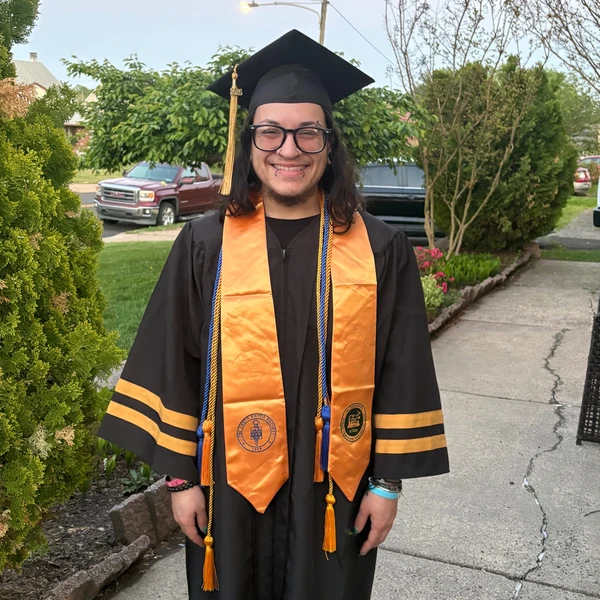
user profile avatar

Dakota Nieves-Parker

1x

Finalist

General information

Hobbies & Interests

  • Animals
  • Art
  • Beach
  • Biology
  • Botany
  • Board Games And Puzzles
  • Camping
  • Conservation
  • Ecology
  • Exploring Nature And Being Outside
  • Field Hockey
  • Gender Studies
  • Hiking And Backpacking
  • Pet Care
  • Volunteering
  • Swimming

Reading

  • Academic
  • Adventure
  • Cultural
  • Environment
  • Gardening
  • Horror
  • Travel
  • Science Fiction
  • Science‎
  • Magical Realism
  • Realistic Fiction
  • Sociology
  • Spirituality

I read books daily.

Bio

I am a first-generation Latino biology student at the University of Delaware pursuing a career in marine science and conservation. My research interests include marine ecology, fungal bioremediation, and environmental restoration. Through undergraduate research, tutoring, and ecological volunteer work, I strive to make science more accessible while protecting ecosystems and increasing representation in STEM. My long-term goal is to earn a PhD and conduct research that helps coastal communities adapt to environmental change.

Education

University of Delaware

Bachelor's degree program

2026 – 2030

Majors:
  • Biological and Biomedical Sciences, Other
  • Marine Sciences

Community College of Philadelphia

Associate's degree program

2024 – 2026

Majors:
  • Biological and Biomedical Sciences, Other

Philadelphia Technician Training

Trade School

2021 – 2022

Majors:
  • Mechanic and Repair Technologies/Technicians, Other

Miscellaneous

Desired degree level:
Doctoral degree program (PhD, MD, JD, etc.)
Desired degree modality:
In-Person
Medical school interest:
No

Career

  • Undergraduate Researcher

    Research · Community College of Philadelphia

    Jan 2024 – Present

  • Automotive Technician

    Automotive · Patriot Chevrolet

    Jan 2022 – Jan 2023

  • Automotive Technician

    Automotive · Peruzzi Toyota

    Jan 2021 – Jan 2022

  • Aseptic Research Trainee

    Biotechnology · Community College of Philadelphia

    Jan 2025 – Jan 2025

  • Pet Care Associate

    Retail · Petsmart

    Jan 2023 – Present

  • English & Humanities Tutor

    Education · Community College of Philadelphia

    Jan 2024 – Present

Miscellaneous

Dream career field:
Marine/Maritime Industry
Dream career goals:
Earn a PhD in Marine Science, conduct research on marine ecosystems and environmental restoration, and become a scientist who combines research, conservation, and science communication to make marine science more accessible to the public.
Work experience:
7 years
Has nursing license:
No

Future Interests

  • Advocacy
  • Volunteering
  • Philanthropy
  • Entrepreneurship
Barbara Cain Literary Scholarship
Some books give you new information. Others change the direction of your life. When I first read Merlin Sheldrake’s Entangled Life, I was not, formally, a biology student. I was simply a student of the world. I was fascinated by fungi and determined to learn everything I could about them. That fascination eventually became one reason I decided to go to college and study biology, and Entangled Life helped turn curiosity into something I could see myself building a life around. I already knew fungi were strange. What I had not understood was how thoroughly they could challenge the categories I used to make sense of life. A mycelial network can fuse, fragment, regenerate, and continuously remake itself. Lichens complicate the idea of an organism as an independent individual. Fungi sense and respond to their environments without anything resembling a brain. Sheldrake writes that “all life-forms are in fact processes not things.” The more I read, the less biology seemed like a collection of neatly defined organisms and the more it became a constantly changing network of relationships whose boundaries humans often impose more neatly than they exist in reality. That book did more than deepen my interest in fungi. It convinced me that I wanted to pursue curiosity seriously. I enrolled in college to study biology, found my way into undergraduate research, and began studying microorganisms involved in bioremediation. That work made me increasingly interested in organisms whose ecological importance can be disproportionate to the attention we give them. It also helped shape the questions I want to pursue in marine science, particularly the roles marine fungi may play in ecosystems affected by hydrocarbons and microplastics. I am drawn to what we do not yet understand, especially organisms and relationships that have historically existed at the edges of scientific attention. John Lindsay-Poland’s Emperors in the Jungle challenged me differently. With family roots in Panama, I began the book interested in the history of U.S. involvement there. Instead, I found myself repeatedly thinking about ecology. American authorities penalized Black and Indigenous Panamanians for keeping open containers of water because they could become breeding grounds for mosquitoes carrying yellow fever and malaria. At the same time, canal construction cut into the earth on an enormous scale, creating standing water faster than workers could drain it. I could not get past that contradiction. It represented something larger than poor environmental management. Colonial powers repeatedly encountered ecosystems radically different from their own and responded by trying to remake them into environments more accommodating to themselves. Rather than first asking how an unfamiliar ecosystem functioned, they often treated unfamiliarity itself as a problem to solve. That history changed how I think about conservation. Scientific knowledge alone is not enough if we approach ecosystems believing they must conform to our expectations. Understanding environmental problems requires asking not only how an ecosystem functions, but how history, power, and human decisions have shaped it. These books have shaped my goals differently. One helped transform fascination into a scientific path; the other taught me to consider the responsibility that comes with following it. I want to become a marine conservation scientist who investigates overlooked ecological relationships while understanding the histories and communities connected to the environments I study. Entangled Life taught me that nature rarely respects the boundaries humans draw around it. Emperors in the Jungle showed me what can happen when we insist that it should. Together, they taught me that becoming a scientist is not only about learning more about the world. It is about learning to question the assumptions I bring to it.
Sloane Stephens Doc & Glo Scholarship
As a future marine conservation scientist, I hope to make an impact that extends beyond scientific discovery. While conducting research is central to my career goals, I believe that science creates the greatest change when it is shared with the people whose lives and environments it affects. My vision is to help protect aquatic ecosystems while making scientific knowledge more accessible, empowering communities to understand, value, and actively participate in conservation. Growing up, I was inspired by Steve Irwin and his family. They showed me that conservation is not just about studying wildlife but about helping people develop a genuine connection to the natural world. They made science exciting, approachable, and accessible to millions of people. As I entered college, that early inspiration was reinforced by my professors, research mentors, and fellow researchers, who showed me what science looks like behind the scenes. They demonstrated that great scientists are not only curious researchers but also generous mentors, collaborators, and educators. Together, those influences shaped my belief that scientific research and public engagement should always go hand in hand. My education has shown me that many of nature's most important organisms are also its least appreciated. Through undergraduate research in bioremediation, I learned that microorganisms and fungi quietly recycle nutrients, break down pollutants, sustain food webs, and help ecosystems recover from environmental damage. Although conservation often focuses on charismatic animals, these overlooked organisms may hold some of our greatest opportunities for restoring ecosystems affected by climate change and pollution. Understanding their role has strengthened my commitment to pursuing research that not only advances scientific knowledge but also contributes practical solutions to environmental challenges. I also want my education to benefit people beyond the laboratory. As a first-generation college student, I had to learn how to navigate higher education by asking questions, seeking mentors, and advocating for myself. As a Latino and queer student pursuing marine science, I understand what it feels like to wonder whether you belong in spaces where few people share your background. Those experiences have strengthened my commitment to making science more welcoming, accessible, and reflective of the communities it serves. I hope to mentor future scientists, communicate research in ways that are understandable to the public, and help ensure that opportunities in STEM reach students who might otherwise believe those careers are out of reach. Ultimately, I want to become a scientist who contributes not only through the research I conduct, but also through the people and communities I serve. By combining conservation research with education, mentorship, and public engagement, I hope to help build a future where scientific discoveries benefit everyone and where more people see themselves as participants in protecting the natural world rather than observers of it.
Joe Gilroy "Plan Your Work, Work Your Plan" Scholarship
My long-term goal is to earn a PhD in marine science and conduct conservation research focused on how climate change and pollution affect aquatic ecosystems. I hope to better understand the organisms and biological processes that can help restore damaged environments while developing practical, science-based solutions that protect biodiversity. I recently earned my Associate of Science in Biology from the Community College of Philadelphia and am in the process of transferring to the University of Delaware to complete my bachelor’s degree. While there, I plan to continue participating in undergraduate research, expand my laboratory and field experience, and build strong relationships with faculty mentors whose work aligns with my interests. I will also pursue internships and study abroad opportunities that expose me to marine ecosystems and strengthen both my research skills and scientific perspective. Beyond the classroom, I will continue contributing to research that addresses real-world environmental problems. This year, I will present my work on an oil microcosm project studying the Delaware River at a scientific conference and assist with revisions to our manuscript following peer review. Experiences like these have shown me how collaborative research translates scientific questions into practical conservation solutions and have reinforced my desire to pursue research as a career. After completing my bachelor’s degree, I plan to earn a master’s degree to further develop my technical expertise before eventually pursuing a PhD. Although I may spend time working between graduate programs, I view that experience as another opportunity to strengthen my skills, gain professional experience, and better prepare myself for doctoral research. Financing my education requires just as much planning as my academic goals. My strategy is to minimize debt by combining scholarships, federal financial aid, tuition reimbursement whenever available, income from working while in school, and funded internships or research opportunities. I have already begun building a comprehensive scholarship plan because I understand that financial preparation is essential to long-term success. I also recognize that careers rarely follow a perfectly straight path. If research positions are limited, I will continue gaining experience through volunteer work, independent scientific projects, internships, and graduate research assistantships. Every opportunity to develop my skills and contribute to conservation research moves me closer to my ultimate goal. Planning is not simply about reaching a destination. It is about building a path that can adapt to unexpected challenges without losing sight of the destination itself. By remaining flexible, continuing to seek opportunities, and investing in both my education and research experience, I am confident that I can achieve my goal of becoming a marine conservation scientist.
Emerging Leaders in STEM Scholarship
I chose to major in biology because I've always been fascinated by the natural world. As a kid, I was constantly outside flipping over rocks, catching frogs, climbing trees, and exploring every creek, puddle, and patch of woods I could find. I didn’t know it at the time, but those experiences sparked a fascination that never really went away. Over time, that fascination expanded from forests, streams, and ponds to the ocean. Marine ecosystems fascinate me because every tide pool, estuary, and coral reef is a web of interactions that scientists are still uncovering. The idea that microorganisms and other overlooked organisms can play a critical role in restoring damaged ecosystems convinced me that research is where I want to make the greatest impact, and their vulnerability to climate change and pollution has strengthened my desire to help understand and protect these environments through research. After graduating from high school, I wasn’t sure what career I wanted to pursue or whether college was the right next step. As a first-generation college student, neither my family nor I knew how to navigate college applications, financial aid, scholarships, internships, or the countless decisions that come with higher education. I couldn’t justify taking on thousands of dollars in debt without a clear sense of where I wanted my education to lead. Watching many of my classmates leave for college while I remained uncertain about my future was discouraging. Without a clear career direction, the financial means to attend, or a roadmap for navigating higher education as a first-generation student, pursuing college felt out of reach. Even after enrolling, the challenges didn’t disappear. I balanced two jobs with a near full-time course load while learning to navigate higher education largely on my own. I spent countless hours researching transfer requirements and scholarships because there wasn't anyone at home who could explain how any of it worked. Every step forward came from asking questions, finding mentors, and teaching myself the system. My long-term goal is to earn a PhD in marine science and conduct conservation research focused on how climate change and pollution affect aquatic ecosystems. I hope to better understand the organisms and biological processes that can help restore damaged environments while developing practical, science-based solutions that protect biodiversity. My experiences have taught me that solving environmental problems requires more than scientific discovery. It also requires making science accessible to people who have traditionally been left out of these spaces. By pursuing marine science, I hope to contribute meaningful conservation research while helping the next generation of first-generation and underrepresented students see that they belong in STEM.
Rosie Walks Human–Wildlife Coexistence Scholarship
The most urgent challenge in wildlife conservation is not simply habitat loss, pollution, or climate change. It is the growing disconnect between people and the ecosystems that sustain them. People protect what they understand and value, and as that connection weakens, environmental degradation becomes easier to ignore. Modern life can make it easy to lose sight of how closely our lives are connected to the natural world. Whether we realize it or not, clean water, healthy fisheries, fertile soils, and even the air we breathe depend on functioning ecosystems. When those connections become invisible, conservation is often viewed as protecting nature elsewhere rather than protecting the systems that sustain our own lives. Working in the automotive industry showed me that hazardous waste doesn't disappear when it leaves the shop. If improperly managed, it can enter streams, rivers, and oceans. That experience taught me the importance of environmental responsibility long before I ever stepped into a biology classroom. It begins with the everyday choices people make, often without realizing their ecological consequences. Working in pet care showed me that most people genuinely want to care for animals, yet many unknowingly make decisions that harm them due to a lack of accurate information. Whether it was improper aquarium cycling, releasing unwanted pets into local waterways, or purchasing animals without understanding their needs, I saw that education often made the difference between responsible stewardship and unintended harm. Those experiences convinced me that conservation depends as much on public understanding as it does on scientific research. Undergraduate research taught me that many of nature's most important organisms are also its least appreciated. While conservation often focuses on charismatic mammals and birds, microorganisms and fungi quietly recycle nutrients, break down pollutants, sustain food webs, and make life possible for larger organisms. Yet because they are invisible to most people, they are rarely part of the public conversation about conservation. My work studying bioremediation showed me that organisms many people overlook may hold solutions to environmental problems we are only beginning to understand and are often the ones that hold ecosystems together. When we fail to understand their importance, we risk losing far more than individual species. Every extinction represents more than the loss of a species. It represents the loss of ecological relationships, millions of years of evolution, and scientific discoveries we may never have the opportunity to make. I hope to become a marine conservation scientist who not only studies ecosystems but also helps people understand why they matter. Research can identify solutions to environmental challenges, but lasting conservation depends on communities that value and support those solutions. By combining scientific research with public education, I hope to help build a future in which people see themselves as participants in nature rather than as separate from it. When people understand how deeply their lives are connected to the natural world, conservation becomes not just an environmental responsibility, but a shared human one.
Bick First Generation Scholarship
After graduating from high school, I wasn’t sure what career I wanted to pursue or whether college was the right next step. As a first-generation college student, neither my family nor I knew how to navigate college applications, financial aid, scholarships, internships, or the countless decisions that come with higher education. I couldn’t justify taking on thousands of dollars in debt without a clear sense of where I wanted my education to lead. Watching many of my classmates leave for college while I remained uncertain about my future was discouraging. Without a clear career direction, the financial means to attend, or a roadmap for navigating higher education as a first-generation student, pursuing college felt out of reach. Instead of enrolling immediately, I entered the workforce. I attended trade school and began working in the automotive industry, where I gained firsthand experience with the environmental responsibilities involved in handling and disposing of hazardous chemicals. Although I eventually had to leave the field after developing carpal tunnel syndrome, the experience had already made me more aware of the relationship between human activity and environmental health. When I transitioned into animal care, that interest evolved into a broader curiosity about biology and ecosystems. Working with animals not only revealed a career I was passionate about, but also introduced me to a tuition reimbursement program that finally made college financially possible and gave me the confidence to enroll at my local community college while continuing to work. Even after enrolling, the challenges didn’t disappear. I balanced two jobs with a near full-time course load while learning to navigate higher education largely on my own. Every scholarship application, transfer requirement, internship search, and financial aid decision required me to seek out information, ask questions, advocate for myself, and become comfortable navigating unfamiliar systems. Rather than becoming discouraged by the complexity of the process, I learned to approach my education proactively by researching opportunities, building relationships with mentors, and creating a long-term plan for my academic and professional goals. Today, I approach my education with the understanding that opportunities must be pursued, not waited for. Whether I am applying for scholarships, participating in undergraduate research, seeking internships, or preparing to transfer to the University of Delaware, I actively create opportunities that move me closer to my goal of becoming a marine conservation scientist. This scholarship would ease the financial burden of pursuing my bachelor's degree, allowing me to dedicate more time to research, internships, and community outreach rather than taking on additional work. More importantly, it would be an investment in a first-generation student determined to use science to protect marine ecosystems while helping other students navigate higher education with the roadmap I had to build for myself.
Dakota Nieves-Parker Student Profile | Bold.org