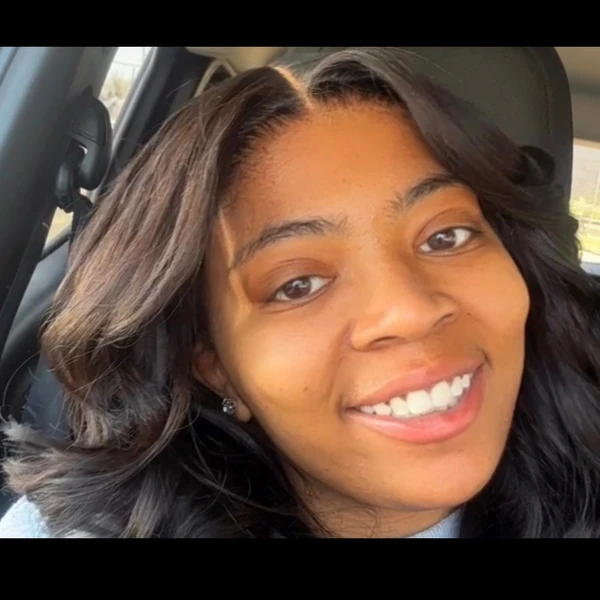
Philadelphia, PA
Age
26
Gender
Female
Ethnicity
Black/African
Religion
Christian
Church
Baptist
Hobbies and interests
Child Development
Advocacy And Activism
Beach
Criminal Justice
Education
Daisha Graves
1x
FinalistDaisha Graves
1x
FinalistBio
I’m a dedicated third-grade teacher and current Master of Education student at Neumann University. I’m passionate about helping young learners grow through inclusive, engaging instruction. As I work toward advancing my teaching skills and career, I’m seeking support to manage the rising costs of graduate school while continuing to serve my students every day.
Education
Neumann University
Master's degree programMajors:
- Special Education and Teaching
- Education, General
GPA:
4
Lincoln University
Bachelor's degree programMajors:
- Political Science and Government
GPA:
3
Miscellaneous
Desired degree level:
Doctoral degree program (PhD, MD, JD, etc.)
Graduate schools of interest:
Transfer schools of interest:
Majors of interest:
Career
Dream career field:
Education
Dream career goals:
to create a supportive, engaging classroom where all students could grow academically and socially. I planned lessons, managed the classroom, and adapted instruction to meet the needs of diverse learners
Teaching2018 – Present8 years
Finances
Loans
The Federal Government
Borrowed: September 20, 20182,300
Principal borrowed47,000
Principal remaining
Research
Education, General
I’ve conducted action research by testing instructional strategies in my 3rd-grade classroom and analyzing student outcomes to improve learning2024 – 2025
Public services
Public Service (Politics)
Voter Registration — educate, uplift, and activate others2018 – Present
Champions Of A New Path Scholarship
My name is Daisha Graves, and I am a first-generation college student currently pursuing my Master of Education at Neumann University. I am also a third-grade teacher in Philadelphia, where I was born and raised. With a 4.0 GPA and a classroom full of bright, curious minds, I am committed to both personal excellence and the success of every student I serve.
Teaching has always been more than a career path for me — it’s a calling rooted in purpose. I initially studied political science in undergrad, but my heart kept bringing me back to the classroom. I began working at a daycare when I was just 17 years old and have never looked back. Since then, I’ve realized that education is the most powerful tool for change. I chose to become a teacher because I wanted to be the representation I never saw growing up — someone who looks like me, comes from where I come from, and shows students that they can rise above any circumstance.
My journey has not been easy. As a first-generation student, I have had to navigate every step of this process on my own — from applications and financial aid to managing work, school, and life. I’ve faced significant hardship, including periods of homelessness during my childhood. I come from a family where most people didn’t graduate high school, let alone attend college. Despite the challenges, I’ve always held on to my vision of a better future — not just for myself, but for the generations after me.
I currently pay for my education entirely on my own. Balancing graduate school and full-time teaching is demanding, both emotionally and financially. A scholarship would not only ease the burden of tuition but allow me to focus more fully on my students and professional development. I dream of creating inclusive, culturally responsive learning spaces that reflect and uplift all students, especially those from underserved communities.
What sets me apart is my perseverance and unwavering commitment to equity. I’ve broken generational curses and continue to fight for access, representation, and justice through education. Every day I step into my classroom, I bring with me a sense of purpose that my students feel and respond to. They see someone who looks like them, believes in them, and never gives up — no matter what.
This scholarship would be an investment in a teacher who is already doing the work and striving for more. It would help me continue pursuing my master’s degree while continuing to pour into the lives of the young people I serve. Most importantly, it would be one more reminder to my students — and to me — that our dreams are valid, and our futures are worth fighting for.
Learner Math Lover Scholarship
As a third-grade teacher and first-generation college graduate, I never imagined I would say this—but I truly love math. My relationship with math didn’t start with love; in fact, I hated it as a child. It felt confusing, rigid, and unforgiving. I struggled to find meaning in numbers and often felt left behind. But as I grew into my role as an educator, I discovered something powerful: teaching math was an opportunity to rewrite the story—for myself and for my students.
What I love most about teaching math is seeing that lightbulb moment when a concept finally clicks. For many of my students, math feels just as intimidating as it once felt to me. Because I’ve been in their shoes, I can empathize with their frustration, their confusion, and even their fear. That’s why I approach math with creativity, patience, and joy. I break things down, I scaffold carefully, and I celebrate small victories along the way.
Teaching math has helped me see it not as a subject of rules and right answers, but as a language of patterns, problem-solving, and persistence. I love how math builds confidence. I love how it challenges students to think critically and pushes them to keep trying even when it’s hard.
More than anything, I love that I get to be the teacher I wish I had—someone who helps students believe they can do math. Because when a child who once said, “I’m not good at math” finally says, “I get it!”—that’s a victory that stays with them forever.
Charles Cheesman's Student Debt Reduction Scholarship
My name is Daisha Graves, and I am a first-generation college student currently pursuing a graduate degree in education while working as a third-grade teacher. Education has been my passion since I began working in a daycare at age 17. That early experience opened my eyes to the profound impact educators can have on young lives, and it inspired me to dedicate myself to making a difference in children’s futures every day.
Despite the joy and fulfillment I find in teaching, the path has not been without its challenges. Like many first-generation students, I’ve had to navigate the complexities of higher education largely on my own, balancing full-time work with rigorous coursework and managing financial burdens that come with student loans. To date, I have taken out nearly $50,000 in student loans for my undergraduate and graduate studies, and I am currently behind on my graduate school payments. This financial strain weighs heavily on me, but it also fuels my determination to succeed and pay it forward.
My educational pursuits are driven by a deep commitment to equity and inclusion in schools. I want to be more than just a classroom teacher—I aspire to become an educational leader who helps create environments where all students, regardless of background, feel valued, supported, and empowered to learn. Whether that means mentoring new teachers, influencing educational policy, or designing programs that meet the unique needs of underserved communities, I am dedicated to making education accessible and meaningful for every child.
Beyond my professional goals, community involvement has been an integral part of who I am. I volunteer regularly at local after-school programs, helping students with reading and homework. I also participate in community workshops focused on empowering first-generation college students, sharing my experiences and encouraging others to pursue their dreams despite obstacles. These experiences continually remind me that resilience and kindness can change lives.
If awarded this scholarship, the money would go directly toward paying down my student loan debt. Reducing this financial burden would mean more than just easing monthly stress—it would give me the freedom to invest in my professional development and my family’s well-being. With less debt hanging over me, I could pursue additional certifications, attend workshops, or participate in educational conferences that enhance my skills and deepen my impact in the classroom. I would also be better positioned to save for emergencies and future goals, creating a more stable foundation for myself and my loved ones.
Ultimately, paying down my loans faster means I can focus more fully on my students and my community. It means having the mental and financial space to innovate in my teaching, to stay committed to my graduate studies, and to support other first-generation students who face similar challenges. This scholarship would not just be a financial gift—it would be an investment in the future of countless children and families who benefit from the work I am so passionate about.
I am grateful for the opportunity to share my story and honored to be considered for this scholarship. With your support, I am confident I can overcome the financial challenges of graduate school and continue on my path toward becoming a leader in education who lifts others as I rise.
Sloane Stephens Doc & Glo Scholarship
My journey in education began when I was just 17 years old, standing in a daycare classroom barely older than the oldest kids I was helping care for. At the time, I didn’t realize it, but those early mornings filled with crying toddlers, spilled snacks, and finger painting would become the foundation of my life’s work. I fell in love with watching children learn—even in their tiniest moments of growth. Seeing a child go from frustration to joy after mastering something new lit a fire in me that hasn’t gone out.
I come from a family where college wasn’t discussed at the dinner table. I’m a first-generation college student, raised by hardworking parents who taught me the value of showing up, giving my best, and staying grounded. They didn’t have degrees to pass down, but they gave me a different kind of education—one rooted in persistence and heart. I had to figure out the rest on my own. Applying to college, navigating financial aid, choosing a major—I learned to lead myself through unfamiliar territory, often with doubt on my back but determination in my heart.
Throughout undergrad, I worked while taking a full course load. I often left a shift and went straight to class, then home to study late into the night. Every tired day was another step closer to becoming the kind of educator who could truly make a difference. I’ve never had the luxury of choosing between school and work—I’ve always had to do both. But that’s exactly why I take so much pride in what I’ve accomplished.
Today, I’m a third-grade teacher, and every day I walk into my classroom with a clear purpose. I know what it feels like to struggle in silence, to feel like you’re figuring everything out on your own. That’s why I make sure my students feel seen, supported, and capable. I focus not just on academics, but on creating a space where they can be emotionally safe and genuinely excited to learn. I bring compassion into my teaching because I know how much that matters.
One of the hardest experiences I’ve faced was losing a childhood friend during college. His passing was sudden and devastating. He had been one of my biggest cheerleaders, always encouraging me to keep going when things got tough. His loss shifted something in me. It reminded me that life is short and that I owe it to myself—and to his memory—to live with purpose. I chose to continue forward, using my grief to deepen my empathy and strengthen my drive. I carry him with me in everything I do.
Now, as a graduate student pursuing a master’s degree in education, my goals are growing. I want to lead beyond the classroom—whether that’s through mentoring other teachers, designing better systems for underserved students, or advocating for policy change that reflects what real students and educators need. I’m not interested in simply going through the motions. I want to be a voice for those who are often unheard—students who come from families like mine, who need someone to say, “You belong here.”
What’s shaped me most is the belief that small moments matter. A kind word, a little extra patience, a teacher who doesn’t give up on you—those are the things that change lives. I’ve experienced them. I’ve provided them. And I will keep doing so, because that’s what I was meant for.
This is my story. It’s rooted in resilience, grown through service, and guided by the belief that every child deserves someone who sees their potential and refuses to let them give up.
Simon Strong Scholarship
Adversity isn’t always a dramatic event. Sometimes, it’s quiet, constant, and woven into everyday life. For me, adversity has looked like navigating a college system no one in my family had ever been through, balancing full-time work while studying, and holding together my responsibilities at school and home when everything felt like it was falling apart. I didn’t grow up with a safety net—I had to build one myself, thread by thread. But each challenge shaped me into someone who not only keeps going, but reaches back to help others along the way.
One of the hardest chapters of my life began during my undergraduate studies. I was the first in my family to attend college, and while I was incredibly proud, I often felt isolated and overwhelmed. My parents supported me emotionally, but they didn’t know how to guide me through FAFSA, registration deadlines, or course selection. I worked nearly full-time in food service just to afford books, tuition, and transportation, often staying up late into the night to finish papers after closing shifts.
Halfway through my program, I lost one of my closest childhood friends in a sudden accident. His death shook me deeply. He had always been a grounding voice in my life, one of the few people who truly understood the challenges I was facing as a first-generation student. Losing him created a heaviness I carried with me every day. Grief made everything harder—focusing in class, staying motivated, even showing up. But I pushed through, not because I felt strong, but because I knew he believed in me. I used his memory as motivation to keep going, to honor his life by finishing what I started.
What helped me most during that time was letting go of the idea that I had to do everything perfectly. I started asking for help—from professors, friends, and advisors. I leaned into community resources. I gave myself permission to take things one day at a time. That shift—from self-reliance to shared resilience—changed me. It taught me that strength isn’t just about pushing through. It’s also about knowing when to reach out.
That experience shaped the way I teach today. As a third-grade teacher, I see my students not just for who they are, but for what they carry. Many come from families like mine, navigating hardships behind the scenes. I go out of my way to be a steady presence for them—academically and emotionally. I model resilience not by pretending everything is easy, but by showing them what it means to keep showing up, with care and courage, even when life gets hard.
Now, as a graduate student in education, I’m using my voice and experience to push for more inclusive, compassionate practices in schools. I want to help design systems where students don’t have to struggle silently—where support is built in, not something you have to fight for.
To anyone facing the kinds of challenges I’ve been through—especially first-generation students or those grieving a loss—I would say this: You are not weak for feeling overwhelmed. You are not alone. And you don’t have to be perfect to succeed. Ask for help. Take breaks when you need them. And above all, remember that your journey may look different, but that doesn’t make it less worthy. In fact, it probably makes you stronger than you know.
Adversity shaped me, but it didn’t define me. It gave me purpose, perspective, and the fire to become the kind of educator—and person—I once needed.
Michael Rudometkin Memorial Scholarship
To me, selflessness means choosing to support and uplift others, not because it’s convenient or expected, but because I believe in the power of human connection and shared responsibility. As a third-grade teacher, graduate student, and first-generation college student, I’ve learned that selflessness is often quiet, sometimes unnoticed, but always deeply meaningful. It’s about showing up for others when they need it most—especially when you don’t have to.
One of the clearest examples of this came during the COVID-19 pandemic. As a teacher, I witnessed firsthand how difficult remote learning was for many of my students and their families. I had one student in particular who was struggling both academically and emotionally. His parent had lost their job, they had no stable internet connection at home, and he was falling further behind each week. I spent many evenings after work creating printed materials for him, dropping them off at his home, and setting up one-on-one phone calls so he wouldn’t feel forgotten. These weren’t tasks outlined in my job description, but they were what he needed—and what I knew I could give. That student eventually caught up, but more importantly, he began to smile again, engage, and believe in himself. His growth reminded me that small acts of care can change someone’s path.
Outside of school, I’ve also been a support system for fellow graduate students. One of my closest classmates was on the verge of dropping out last year due to the overwhelming demands of coursework, work, and caring for a sick parent. I offered to share notes, help with research, and even reviewed her final papers—not because I wanted recognition, but because I knew what it felt like to be overwhelmed and unsure if you could keep going. She later told me that my help gave her the strength to finish the semester, and she’s still on track to graduate.
These experiences, while different, share a common thread: they reflect my belief that when we support others, we don’t lose—we all rise. Selflessness doesn’t mean ignoring your own needs, but rather choosing to act from a place of empathy and service when the opportunity arises.
In my personal life, I’ve also practiced selflessness by being a steady presence for family members during difficult times. As a first-generation student, I often serve as a guide for younger relatives navigating school or career decisions. I’ve helped them with college applications, job searches, and simply listened when they needed encouragement. I want to be the kind of person I needed when I was younger.
In all these instances, I’ve learned that selflessness isn’t always grand or dramatic. Often, it’s in the quiet moments—the late-night tutoring call, the extra time spent helping a struggling student, the comforting words to a friend in crisis—that we make the biggest difference. I hope to continue living a life grounded in service, compassion, and a deep belief in the good we can do for others when we lead with heart.
SnapWell Scholarship
As a full-time third-grade teacher and graduate student working toward my Master of Education, I’m no stranger to long days, packed schedules, and the pressure to keep pushing forward. For a long time, I wore my busyness like a badge of honor—believing that saying “yes” to everything and everyone was the only way to succeed. But I reached a breaking point that forced me to reevaluate everything I thought I knew about what it means to be successful.
About halfway through my first semester of grad school, I found myself completely overwhelmed. I was juggling lesson planning, coursework, grading, family responsibilities, and the quiet, persistent pressure to prove that I belonged in both academic and professional spaces. I barely slept. I skipped meals. I told myself I could rest once everything was done—only “everything” was never done. My anxiety began to build in the background until it finally caught up with me one evening when I found myself crying alone in my car after work, unable to move, speak, or breathe in a way that felt normal. That moment scared me. But more than that, it woke me up.
I realized that I could not pour into others—my students, my peers, or my future—if I was completely depleted. For the first time, I chose to put my mental and emotional health first. I spoke to my professors and shared what I was experiencing. I gave myself permission to take a weekend off from assignments, to reconnect with my body through movement, and to prioritize sleep without guilt. I sought out therapy and started setting small, healthy boundaries—like turning off work emails after a certain hour or carving out 30 minutes a day just for myself.
What I learned from that experience is that rest is not a reward—it’s a requirement. Caring for your mental and emotional well-being is not a sign of weakness but a form of strength. By making space for myself, I was able to show up more fully in every area of my life. I became a more present teacher, a more focused student, and a more compassionate version of myself.
Now, I carry those lessons with me every day. I’ve learned to recognize the signs of burnout early. I understand the value of saying “no” when necessary, and I’ve redefined success—not as doing everything perfectly, but as doing what I can with care, intention, and balance.
As I continue pursuing my degree and growing in my career, I know there will be more challenges. But I also know that I am better equipped to face them—not by pushing through at any cost, but by honoring my needs along the way. Taking care of my mental, emotional, and physical health is no longer an afterthought—it’s part of my plan for long-term success in school, in work, and in life.
Eitel Scholarship
I am currently pursuing my Master of Education while working full-time as a third-grade teacher. As a first-generation college student and an educator committed to equity and inclusion, this graduate program is more than a professional step forward—it is a deeply personal investment in my future and in the lives of the students I serve.
My major in education reflects my passion for shaping meaningful learning experiences for children, particularly those from underserved communities. Through my coursework, I am expanding my understanding of curriculum design, trauma-informed practices, and inclusive education. I am especially focused on developing strategies that support students with learning differences and diverse cultural backgrounds, ensuring that every child feels seen, valued, and capable of success.
Balancing full-time teaching with graduate studies is both rewarding and challenging. While I’m grateful to be growing in both roles simultaneously, pursuing a degree while working comes with financial stress—especially as I fund my education out of pocket. This scholarship would significantly relieve that burden, allowing me to continue my studies without compromising my well-being or my ability to show up fully for my students.
Beyond the financial support, receiving this scholarship would serve as a powerful affirmation of the work I’m doing and the goals I’ve set for myself. As an educator, I teach my students to believe in their potential, to advocate for their needs, and to pursue their goals with courage. This scholarship would reinforce those same lessons in my own life—showing me that my hard work is seen and supported.
With the support of this scholarship, I will be better equipped to complete my degree, advance my professional skills, and continue working toward my long-term goal of becoming an instructional leader. I hope to one day support new teachers, lead equity initiatives, and help shape school cultures that prioritize belonging and inclusion.
Most importantly, this scholarship will allow me to keep doing what I love: helping students realize their potential and believe in their worth. Thank you for considering my application and for supporting students like me in our journeys to make a difference.
LGBTQ+ Wellness in Action Scholarship
Mental and physical wellness are the foundation of my ability to thrive—not only as a graduate student and educator but as a whole person. As someone pursuing a Master of Education while teaching full-time, I am constantly navigating the demands of academia, the responsibilities of my classroom, and the deeply personal work of honoring and protecting my own well-being. For me, maintaining my health isn’t a luxury—it’s a necessity. It allows me to show up fully for my students, my studies, and myself.
As a woman who is a part of the LGBTQ+ community and a first-generation college student, I carry multiple layers of identity that shape how I move through the world—and how the world moves around me. There is deep pride in those identities, but also moments of tension, exhaustion, and isolation. The emotional labor of proving you belong in spaces not designed for you can weigh heavily. I’ve had to advocate for myself in ways that others have never had to consider—whether it’s navigating assumptions about my identity, handling microaggressions, or managing the internalized pressure to succeed at all costs.
In the context of graduate school, these challenges often manifest in subtle ways. I sometimes feel the need to overextend myself, to prove my place in a field that still lacks full representation. That drive, while motivating, can come at the cost of rest, connection, and balance. Burnout becomes a real risk when you are both a student and a teacher, especially when your existence itself challenges long-held norms. I’ve learned that prioritizing my mental and physical health is not selfish—it’s revolutionary. It is an act of resistance in a world that doesn’t always prioritize LGBTQ+ wellness or joy.
I have found strength in setting boundaries, creating routines that honor my needs, and seeking out affirming spaces—both academic and personal—where I can breathe fully as myself. I go to therapy regularly, stay active when I can, and surround myself with a supportive community that reminds me I am not alone. I also try to model this balance for my students. I want them to know that well-being is just as important as grades and goals—that you don’t have to sacrifice your health to succeed.
Wellness, for me, is not about perfection. It’s about sustainability. It’s about recognizing when I need to pause, when I need to speak up, and when I need to lean on others. It’s about remembering that I am worthy of rest, care, and peace—not after I finish the degree, but now, in the middle of the work.
Despite the systemic and social stressors that LGBTQ+ students often face, I am proud of the resilience that exists in our community. We know how to survive. But I also believe we deserve to thrive. My commitment to my mental and physical health is a promise—to myself, and to those I serve—that I will not just endure the journey, but live it with intention, authenticity, and strength.
This Woman's Worth Inc. Scholarship
I am worth the dreams I aspire to achieve because those dreams are not just mine—they are the legacy of the women who came before me and the promise I carry for those who will follow. As a first-generation college student, I am the product of perseverance, sacrifice, and resilience. I am here because of women who worked hard without recognition, who believed in the value of education even when they didn’t have access to it, and who gave me the courage to believe I could become more than what the world expected of me. My dreams were born from their sacrifices—and I refuse to let them go unrealized.
Today, I am a third-grade teacher and a graduate student pursuing my Master of Education. Every day, I walk into my classroom and see young girls—some bold, some unsure, many still learning how to take up space in the world. I see myself in them. I know what it’s like to question whether you’re good enough, to feel like you have to prove your worth in spaces where your voice feels too quiet. I also know the power of a woman who finally realizes she belongs.
That is the woman I’ve become. That is the woman I am still becoming.
I am worth my dreams because I dream not only for myself but for others. I dream of an education system where every child—regardless of race, gender, or ability—feels empowered to succeed. I dream of classrooms where young girls learn to speak up, lead, and love who they are. I dream of schools that celebrate diversity, elevate underrepresented voices, and actively dismantle barriers that keep students—and teachers—small.
This is why I’m pursuing my master’s degree: to deepen my impact, expand my reach, and grow into the kind of educator who transforms systems, not just lesson plans. I want to mentor new teachers, advocate for inclusive curriculum, and create programs that support the emotional and academic well-being of students—especially girls from marginalized communities.
My dreams are big, but so is my commitment. I show up every day. I put in the work. I rise after every setback. I lead from love. I know what it costs to be a woman with ambition—but I also know how beautiful it is to own your voice, to live in your purpose, and to lift others as you climb.
To value the power of womanhood is to honor our right to dream boldly and chase those dreams unapologetically. I am worth my dreams because I’ve fought for them. I’ve earned them. And I am ready to bring them to life—not just for me, but for the generations of women who deserve to believe theirs are possible too.
OMC Graduate Scholarships
As a first-generation college student and current third-grade teacher, pursuing my Master of Education is both a professional aspiration and a deeply personal journey. It represents a continuation of a path that was not clearly laid out for me, but one I have chosen to forge with determination, sacrifice, and an unwavering belief in the transformative power of education. Receiving this scholarship would provide not only financial support but the encouragement and affirmation that my efforts, goals, and dreams are seen and valued.
Balancing graduate school with full-time teaching is a challenge—both financially and emotionally. I work hard every day in the classroom to provide my students with the best possible education, while spending evenings and weekends immersed in coursework, readings, and research. Like many educators, I entered this field because of a passion to serve, not for the paycheck. But continuing my education does come with real financial burdens, especially as I work to cover tuition, books, and other academic expenses out of pocket. Receiving this scholarship would relieve some of that burden, allowing me to focus more fully on my studies and my students, without the added pressure of financial strain.
More importantly, this scholarship represents an investment not just in my education, but in the countless students and families I serve—and will continue to serve in the future. With a graduate degree, I aim to take on a greater leadership role within my school community. I want to advocate for inclusive curriculum practices, mentor new teachers, and contribute to professional development programs that prioritize equity, trauma-informed teaching, and differentiated instruction. I am especially passionate about improving support systems for students with learning differences and those from underserved communities.
In the long term, I hope to help shape policy and programming that closes opportunity gaps and makes high-quality education accessible to all students, regardless of background or ability. But to do that effectively, I need the strong academic foundation and advanced knowledge that my graduate program provides. This scholarship would bring me one step closer to that goal—supporting not only my academic growth, but my capacity to make a tangible, lasting impact in the field of education.
As a teacher, I often tell my students that every small step matters. Scholarships like this are those steps for me. They create momentum, build confidence, and allow educators like myself to keep moving forward—no matter the obstacles. I am committed to using this opportunity not just for my own advancement, but to continue lifting up others as I go. With this support, I know I can become the educator and advocate my students—and our education system—deserve.
Charlene K. Howard Chogo Scholarship
Please tell us a bit about yourself and how you plan to make a positive impact on the world through your career.
As a first-generation college student, becoming an educator was not just a personal milestone—it was a declaration that barriers can be broken and that dreams, when nurtured with purpose and perseverance, are worth chasing. I grew up understanding the value of education not because it was readily accessible, but because it often wasn’t. That experience shaped my deep respect for learning and ignited my passion to become the kind of teacher who makes school a place where every child feels seen, valued, and capable of success.
I am currently a third-grade teacher, and each day I walk into my classroom with a deep sense of responsibility. I teach academic subjects, yes—but more importantly, I teach children how to believe in themselves, how to ask questions, how to persevere when something is hard. My students come from a variety of backgrounds and bring with them a beautiful diversity of needs, cultures, and talents. As someone who once sat in their seat as a child navigating school without a clear roadmap, I understand what it means to need guidance, support, and someone who believes in you unconditionally. I strive to be that person for my students.
While I’m incredibly proud of what I do now, I also recognize the importance of growing in my own knowledge and skills. That’s why I am currently pursuing my Master of Education. I want to deepen my understanding of pedagogy, curriculum design, and equity in education so I can become not just a better teacher—but a more effective advocate for my students, particularly those who come from historically underserved communities. My goal is to help bridge the opportunity gap by creating inclusive, student-centered learning environments where every child—regardless of background or ability—can thrive.
Looking ahead, I plan to use my career to create lasting, positive change in education. I want to mentor new teachers, support families, and influence how schools approach equity, inclusion, and student wellness. I see education as a tool for empowerment, and I believe every child deserves a teacher who will fight for their right to learn, grow, and succeed. As someone who had to navigate uncharted territory in my own educational journey, I know how powerful it is to have someone in your corner.
My long-term vision includes developing community partnerships and initiatives that support early literacy, family engagement, and inclusive curriculum reform. But even now, in my classroom, I believe I’m making a difference—one student, one moment, one lesson at a time. Because that’s how change begins.
By continuing to lead with compassion, commitment, and a strong belief in every child’s potential, I hope to not only teach students what they can achieve—but to show them they are already more capable than they realize. Education changed my life, and I am dedicated to using my career to ensure it has the power to change theirs, too.
RonranGlee Special Needs Teacher Literary Scholarship
Why are you passionate about the special education teacher profession?
“I have learned that the purpose of teaching is to bring the student to his or her sense of his or her own presence.” – Professor Harold Bloom
When I reflect on Professor Bloom’s quote, I believe he is speaking to the heart of what it means to be a teacher: not simply to impart knowledge, but to help students discover their identity, their power, and their unique place in the world. To guide a student to a sense of their own presence is to help them feel seen, heard, and valued—not just in the classroom, but in life. For students with special needs, this journey can be especially transformative, because the world doesn’t always reflect back to them a sense of worth. That’s why I chose the special education profession: to stand in that gap, to champion their strengths, and to walk beside them as they discover their voice.
As a third-grade teacher and current graduate student in education, I see every day how students with exceptionalities often have to fight to be understood. Some communicate in words, others with gestures, assistive devices, or art. But all of them have something to say—and it is my mission to help them say it. I strive to create a classroom environment where every student is accepted exactly as they are, where learning is personalized, and growth is celebrated in every form. I use inclusive teaching strategies, provide emotional support, and build relationships based on trust and consistency. I don’t just teach content—I teach courage, self-advocacy, and belonging.
A Fairy Tale: The Whispering Classroom
Once upon a time, in a quiet village nestled between mountains, there was a teacher named Miss Elena. She had a gift: while others saw chaos or silence, she saw potential. One day, she was called to teach in the Whispering Classroom—a room where students were said to be “different.” One student hummed when he was excited, another spoke in drawings, and another refused to speak at all.
Rather than trying to make the children fit the mold, Miss Elena created new molds. She brought music, visuals, tactile tools, and time. She whispered encouragement and listened more than she spoke. Slowly, the students began to bloom. They began to trust her. Then, they began to trust themselves.
The once-quiet classroom was now full of life: not noisy in the traditional sense, but rich with expression, connection, and discovery. The children, once labeled as “challenging,” stood tall in their presence. They knew they mattered.
Miss Elena didn’t change who they were—she helped them become who they had always been.
That is my purpose as a special education teacher. To help students discover that their presence is powerful, their voice has meaning, and they are worthy of respect, love, and opportunity—just as they are. That’s not just teaching. That’s transformation
Reimagining Education Scholarship
If you could create a class that all students K-12 were required to take, what would the class be about and what impact do you think it would have?
If I had the opportunity to create a class that all K-12 students were required to take, it would be called “Foundations of Emotional Intelligence and Communication.” This class would be designed to teach students how to understand and manage their emotions, communicate effectively with others, build healthy relationships, and navigate conflict with empathy and respect.
As a third-grade teacher, I witness daily how foundational emotional intelligence is to a child’s academic success, peer relationships, and overall well-being. Students who are equipped with the tools to identify and regulate their emotions are more likely to persevere through challenges, collaborate with others, and engage positively in the classroom. Yet, this type of social-emotional learning is often treated as an “extra”—something to be fit in between math and reading blocks, or added as a one-time assembly. I believe it deserves its own structured place in the curriculum, from kindergarten through twelfth grade.
The class would be developmentally appropriate at each level. For example, in the early grades, students might learn to name their feelings, practice calming strategies like breathing or journaling, and explore the basics of empathy through picture books and role-play. As they grow older, the curriculum would evolve to include lessons in active listening, digital citizenship, conflict resolution, mindfulness, and the psychology of group dynamics and bias. High school students would learn about managing stress, setting personal boundaries, and having difficult conversations—skills they can carry into the workforce, college, or any path they pursue.
The long-term impact of this class would be transformative. Academically, students who can manage anxiety, cope with setbacks, and ask for help are more likely to thrive. Socially, students who learn to see situations from multiple perspectives are less likely to bully or isolate others. They are more inclined to build inclusive communities where diversity is celebrated, not feared. At the societal level, a generation raised to value empathy and clear communication can better engage in civil discourse, contribute to their communities, and lead with emotional awareness.
As both a teacher and a current graduate student in education, I see how urgently our schools need this kind of intentional, consistent focus on emotional development. The pandemic underscored the importance of mental health support in schools, and students are still grappling with the social and emotional toll. Providing them with the lifelong tools to understand themselves and connect with others is not just a matter of curriculum—it is a matter of care.
Ultimately, teaching students how to be human—how to be kind, resilient, and reflective—is just as important as teaching them how to read and write. A required K-12 course in emotional intelligence and communication would not only support their academic success but shape them into compassionate, capable adults who are ready to lead in a complex world. And that, to me, is the most meaningful kind of education we can offer.
Dr. Jade Education Scholarship
Imagine Yourself Living the Life of Your Dreams
When I imagine the life of my dreams, I see a future where I have not only achieved personal success but also paved the way for others who come from backgrounds like mine. As a first-generation college student and a Black woman, I am proud to be on the path to becoming the first in my family to earn a Master of Education degree. This milestone is not just for me—it represents breaking generational barriers and creating a legacy of opportunity for those who will come after me.
In my dream life, I am a dedicated educator and advocate, working in schools that serve inner-city students from communities similar to my own upbringing. I wake up every day energized by the knowledge that my work can inspire young people who face challenges like poverty, limited resources, and low expectations. I know firsthand how powerful it can be to have a role model who believes in you, and I want to be that person for my students.
My role extends beyond teaching third grade or working with preschoolers; I see myself as a mentor and motivator, especially for students who may feel trapped by their circumstances. I want to show them that they, too, can break free from cycles of disadvantage through education and perseverance. I will use my story—of being a first-generation student and overcoming obstacles—as proof that their dreams are possible.
Having earned my Master’s degree, I will bring research-based strategies into classrooms to support literacy, social-emotional learning, and culturally responsive teaching. But more importantly, I will create a classroom culture where every child feels valued and capable of greatness. I will help students discover their voices and believe in their potential, just as someone once did for me.
Beyond the classroom, I dream of leading initiatives that connect schools with communities, providing families with resources and opportunities for growth. I will organize workshops on leadership, civic engagement, and college readiness, helping students and their families see a future beyond the limitations imposed by society. My goal is to build bridges that encourage collaboration and shared empowerment.
Financially, achieving my dream life means overcoming the barriers of student debt and financial insecurity that often hinder first-generation students like me. Securing scholarships and support will allow me to focus fully on my education and professional growth, so I can serve my community without the constant stress of financial burdens.
Ultimately, my dream life is one where I am not only successful but also a catalyst for change. I want to motivate students from inner-city neighborhoods to believe in their power to redefine their futures. I want to help break down the systemic barriers that hold too many back. And I want my journey to be a beacon of hope, showing that with hard work, determination, and support, generational barriers can be broken.
This vision drives me every day. It fuels my passion for teaching and motivates me to keep learning and growing. Living the life of my dreams means living a life of purpose—using my experiences and education to empower others and create lasting change.
B.R.I.G.H.T (Be.Radiant.Ignite.Growth.Heroic.Teaching) Scholarship
Prompt #1: Tell us about a time when you had a positive impact on a child’s life.
When I first stepped into the classroom as a preschool teacher, I quickly realized that teaching was about far more than lesson plans and learning objectives. It was about noticing the small things—the quiet struggles, the unspoken needs, and the opportunities to make children feel seen, safe, and supported. One of the first children to teach me this was a little girl named Alani.
Alani arrived in my class quiet and withdrawn. While most of the children were laughing, singing, and playing together, she remained on the edges—watching but never joining. She didn’t speak in class, avoided eye contact, and stayed glued to her seat during group activities. At first, I wondered if she was just shy or adjusting to a new environment, but after a few weeks, I realized this was deeper. Alani wasn’t just quiet—she was afraid. And I couldn’t ignore it.
I made it my mission to build trust with her—not by forcing interaction, but by showing her I was there, consistently, with patience and warmth. During free play, I’d sit beside her and gently describe what she was doing. “You’re stacking the red blocks now. That’s a strong tower!” At first, she didn’t respond, but she didn’t pull away either. One day, as I handed her a block and said “thank you,” she softly whispered, “you’re welcome.” It was the first time I’d heard her voice. That tiny moment felt like a breakthrough.
From then on, I celebrated every small win: a whispered word, a smile, a wave. I began reading books with her one-on-one during quiet times, especially stories with characters who felt nervous but found their voices. I learned what she liked—cats, drawing, music—and built connections from there. Slowly, she started participating in group time, singing songs, and playing alongside her classmates. By the end of the year, Alani was reading short books aloud, sharing her art, and even comforting other students who felt shy.
That experience shaped my entire philosophy as an educator. I learned that a child’s silence doesn’t mean they have nothing to say—it may mean they’re waiting for someone to make it safe for them to speak. I realized how powerful it is to meet students where they are, to offer them consistency and care, and to celebrate progress in all its forms.
When I moved into teaching third grade, I carried those lessons with me. My students are older now, but the emotional needs are just as present. I’ve taught children navigating learning difficulties, anxiety, trauma, and self-doubt. Whether I’m helping a student find joy in reading or teaching a class how to manage big emotions, my foundation is the same: create a space where every child feels safe, valued, and capable of growth.
That’s also what led me to pursue my Master of Education degree at Neumann University. I wanted to deepen my skills, learn the research behind what works, and bring more tools to the classroom—especially around literacy intervention, trauma-informed practices, and culturally responsive teaching. As I learn about brain development, behavior, and equity in education, I think about students like Alani and how much more I can do for students like her with the right training and mindset.
One of the most meaningful things I’ve done outside the classroom is community outreach around civic engagement. I’ve volunteered to help register voters, especially in underrepresented communities, because I believe in the power of education and voice—not just in the classroom, but in society. Helping others feel informed and empowered to make decisions is deeply connected to what I do every day with my students. Whether it’s teaching a child to speak up for themselves or helping a neighbor cast their first vote, it’s all part of the same mission: to uplift others through knowledge and support.
As I look ahead, I see myself continuing to grow as both an educator and advocate. My goal is to move into educational leadership one day—possibly as a reading specialist or instructional coach—so I can support other teachers in creating inclusive, effective classrooms. I also want to help shape school culture in a way that honors every child’s unique story and learning style.
But no matter where my path takes me, I’ll always carry with me the lessons I learned that first year in preschool. I’ll remember that one quiet child who needed someone to notice her, and the pride on her face when she finally found her voice. That’s the kind of impact I want to keep making—not through grand gestures, but through daily care, connection, and belief in each student’s potential.
I didn’t just become a teacher to deliver lessons. I became a teacher to change lives—even if it’s one child, one word, one breakthrough at a time.