user profile avatar

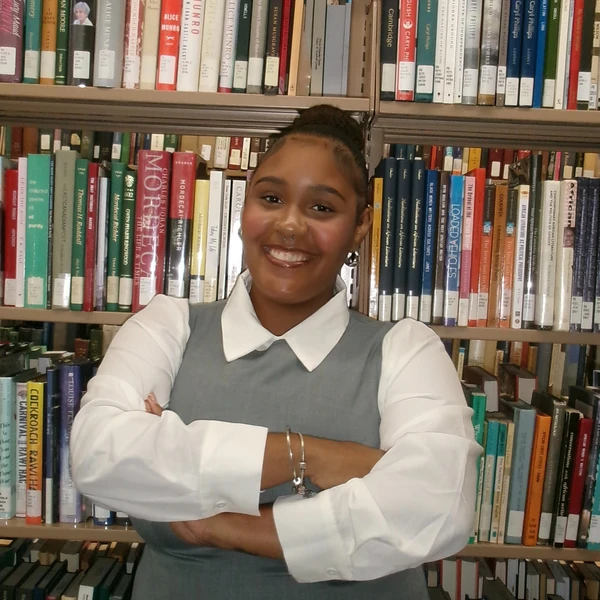
Daionne Coleman

1x

Finalist

General information

Location
Pittsburgh, PA
Age
19
Gender
Female
Ethnicity
Black/African
Heritage
African American
Religion
Christian
Church
Baptist

Hobbies & Interests

  • Dance
  • Writing
  • African American Studies
  • Clinical Psychology
  • Cleaning
  • Cosmetology
  • Cooking
  • Criminal Justice
  • Criminology
  • Gender Studies
  • Fashion
  • Forensics
  • Makeup and Beauty

Reading

  • Romance
  • Mystery
  • Young Adult
  • Adventure
  • Classics
  • Drama

I read books multiple times a week.

Bio

Hey everyone! My name is Daionne, but everyone calls me Daisy. I am a first-year psychology major with a concentration in mental health from Pittsburgh, Pennsylvania, currently attending Spelman College. I’m passionate about mental health advocacy, breaking barriers, and making real change in my community. My goal? To become a psychologist who ensures Black communities receive the care, representation, and understanding they deserve. When I’m not chasing my dreams, you can find me eating while binging my favorite tv shows. Other than advocating for what's right, I love to immerse my self in a fiction world created by the book in my had. My favorite color is blue, probably because it reminds me of calmness and the sky— something I take many pictures of. I live by Lauryn Hill’s words: “How are you going to win if you ain’t right within?” Because to me, success starts from within, and I’m dedicated to helping others find that balance, too. So, why am I a great candidate? Because I don’t just dream, I take action. I’m committed to making a difference, inspiring others, and I continue choosing the bold path, even when the practical one feels easier. That means putting purpose over fear, even when challenges appear. I defy expectations everyday by being the first in my family to pursue secondary education, work through financial hardship instead of giving up, and refusing to minimize my dreams because they make others uncomfortable. I did and will continue to choose myself every time. Even when I am uncertain of the future. I just hope one day, someone chooses me.

Education

Spelman College

Bachelor's degree program

2025 – 2029

Majors:
  • Psychology, General
GPA3.6 GPA

Pittsburgh Capa 6-12

High School

2018 – 2025

GPA3.8 GPA

Miscellaneous

Desired degree level:
Doctoral degree program (PhD, MD, JD, etc.)
Majors of interest:
Clinical, Counseling and Applied Psychology
Desired degree modality:
Full-Time
Medical school interest:
No
English as first language:
Yes
Homeschooled:
No

Career

  • Operations Associate

    Package/Freight Delivery · GoPuff

    Jan 2025 – Present

  • Crew Member

    Food & Beverages · Tropical Smoothie Cafe

    Jan 2024 – Jan 2025

  • Milkshake Maker

    Food & Beverages · Burgatory

    Jan 2023 – Jan 2024

  • Crew Member

    Food & Beverages · Wendy’s

    Jan 2022 – Jan 2023

Miscellaneous

Dream career field:
Mental Health Care, Psychology, Counseling
Dream career goals:
I hope to open a business called EmpowHer. My business, EmpowHer, is a clinic run by all African American, female doctors. The clinic will contain psychologists, cardiologist, specialists etc. The healthcare industry has long struggled with disparities in care for African Americans, who often face low representation and mistrust in the system. EmpowHer will address these gaps by creating a culturally welcoming environment for African American patients.
Work experience:
5 years
Has nursing license:
No
Leadership experience:
Yes

Future Interests

  • Advocacy
  • Volunteering
  • Philanthropy
  • Entrepreneurship
STLF Memorial Pay It Forward Scholarship
I helped organize and lead a Cultural Week Fair at my school, an event designed to celebrate cultural diversity while also building unity among students from different backgrounds. The fair brought together multiple student organizations, including the Black Student Union (BSU), Latinx Union, Asian Student Union, and Japanese Student Union (JSU), etc, each of which hosted tables that represented their unique cultures through food, music, activities, and educational displays. As BSU president and a member of the Eradicate Hate Youth Summit (who gave our school a stipend to fund this project), I played a major role in developing and implementing this event after our school received a stipend from the summit to fund student-led initiatives focused on inclusion, education, and community engagement. My responsibilities began in the planning stages, where I collaborated with other student leaders and faculty advisors to decide the structure and goals of the Cultural Week Fair. We discussed how to ensure that every organization felt equally represented and how to create an environment that was both educational and engaging for the student body. I helped coordinate communication between clubs, organized scheduling for table setups, and worked to make sure each group had the resources needed to effectively showcase their culture. Being part of the Eradicate Hate Youth Summit also motivated me to ensure that the event aligned with its mission of reducing bias, promoting understanding, and empowering youth voices in leadership. At the BSU table, I helped design an interactive trivia activity focused on African American history, achievements, and cultural contributions. Students were invited to answer questions ranging from historical milestones to modern-day Black excellence in arts, science, politics, and culture. To make the experience more engaging, we offered small prizes for correct answers, which encouraged participation and sparked meaningful conversations. Many students expressed that they learned new facts they had never been taught before, which showed me how powerful interactive education can be in breaking down gaps in knowledge and understanding. Beyond just organizing activities, I also volunteered during the event by helping set up tables, guiding participants, and ensuring everything ran smoothly throughout the day. I made sure each organization felt supported and that students felt welcomed to explore all the different cultural presentations. Seeing students move from table to table, asking questions, and engaging with cultures different from their own was one of the most rewarding parts of the experience. This event taught me that leadership through service is about more than holding a position or planning an event. It is about actively creating spaces where people feel seen, valued, and included. Serving as a leader meant using my voice and position to uplift others and ensure that every group had the opportunity to share their story. It also showed me that service is most impactful when it is interactive and community-driven, because people learn best when they are directly involved and engaged. Overall, I am in multiple volunteering organizations now and while I was in high school, but organizing the Cultural Week Fair will always be my favorite. As a high school student, it strengthened my skills in leadership, communication, and collaboration, but more importantly, it reinforced my commitment to using service as a tool for social change. It reminded me that when young people are given the resources and trust to lead, we can create meaningful spaces that educate, connect, and inspire our communities. All of these experiences helped me grow into the college freshman I am today.
Deanna Ellis Memorial Scholarship
Substance abuse is a mental health issue. Too often, people try to separate the two as if they are unrelated, but they are deeply connected. In many cases, substance use is not the root problem, but rather a coping mechanism for underlying pain, trauma, or untreated mental illness. My understanding of this connection comes from personal experience, and it has shaped not only my beliefs, but also my relationships and future career aspirations. Growing up, I witnessed my grandmother struggle with substance abuse. However, as I got older, I began to understand that her drug use did not exist in isolation. She was battling mental health challenges that were never properly addressed. Instead of receiving support, she turned to substances as a way to cope. In the Black community, there is often a strong stigma surrounding mental health. Therapy is sometimes viewed as unnecessary or even shameful, and many individuals are taught to suppress their emotions rather than seek help. Because of this, my grandmother did not feel she had a safe space to express her struggles or access the care she truly needed. Watching this unfold had a profound impact on me. It changed the way I view substance abuse. To me, it is not a moral failure, but as a sign that someone is hurting and needs support. This perspective has made me more empathetic in my relationships. Instead of judging people for their behaviors, I try to understand what they may be going through beneath the surface. It has also strengthened my communication with loved ones, encouraging me to check in on their mental and emotional well-being more intentionally. At the same time, this experience has not been easy. Substance abuse can strain relationships, create instability, and cause emotional pain for everyone involved. There were moments of confusion, frustration, and sadness as I tried to make sense of what was happening. However, these challenges also helped me grow. They taught me resilience, patience, and the importance of education when it comes to mental health and addiction. Most importantly, my grandmother’s experience has directly influenced my career aspirations. I want to become an adolescent psychologist, focusing on mental health within underserved communities, particularly among Black youth. I have seen firsthand what happens when mental health issues go untreated and when people do not have access to culturally competent care. I want to be part of the solution. In the future, I hope to open a clinic called “EmpowHer,” staffed by Black women healthcare professionals who prioritize culturally aware, patient-centered care. Too often, Black women and families enter medical spaces where their voices are dismissed or their pain is minimized. I want to create an environment where individuals feel seen, heard, and supported— a space where mental health is taken seriously and addressed without judgment. My experience with substance abuse in my family has been difficult, but it has given me clarity and purpose. It has shaped my belief that healing begins with understanding, compassion, and access to proper care. Through my future career, I hope to break stigmas, provide support, and ensure that others do not have to face these struggles alone.
Kaprieasha Tyler Healthcare Scholarship
Growing up in a single-parent, low-income household shaped my understanding of resilience long before I had the words to describe it. My mother worked tirelessly to provide for me, often juggling multiple responsibilities while still making sure I felt supported and loved. Watching her navigate financial stress, long hours, and constant uncertainty taught me that perseverance is not just about pushing forward when things are easy— it’s about continuing even when the odds feel stacked against you. My long-term plan is to earn my graduate degree, become a child psychologist, and create a clinic called EmpowHer that redefines the patient experience for Black women and families. Pursuing my path to my career & specifically Spelman felt like the odds were stacked against me. Choosing to attend Spelman College came with financial concerns and uncertainty. My family worried about the cost and questioned whether psychology would provide stability. I understood their fears, but I also knew Spelman was the place where I could grow into the woman capable of building EmpowHer. It has been my dream since I was ten years old. I chose to bet on myself, even when it felt risky. Since arriving, I have actively worked to secure scholarships and financial support, ensuring that my education remains sustainable while I continue striving toward my goals. Growing up, there were moments when I became acutely aware of what we didn’t have. But instead of allowing those circumstances to discourage me, I used them as motivation. I became disciplined, intentional, and determined to create a future that looked different from my past. Coming from where I come from has never limited me— it has fueled me. I will continue to choose the bold path, lead with purpose instead of fear, and defy expectations by turning my experiences into impact.
Simon Strong Scholarship
The night I realized my community was not as simple as it looked, I was walking home and noticed something I had seen a hundred times but never fully understood. On one block, there were large, renovated homes with new cars in the driveway. Just a few steps away, there were abandoned houses, broken windows, and families struggling to make ends meet. Growing up in Lincoln-Lemington, at the intersection of opportunity and neglect, I learned early that adversity does not always look the same—but it is always present. My adversity was not one single moment, but an ongoing reality: navigating two completely different worlds at once. I attended school with students who had access to resources, tutors, and stability, while many of my neighbors faced food insecurity, underfunded schools, and limited opportunities. It was difficult not to compare my situation to others or feel discouraged by the inequities around me. There were moments when I questioned whether my environment would limit my future. Instead of allowing that doubt to define me, I used it as motivation. I became more intentional about my education, seeking out opportunities that would allow me to grow beyond my circumstances. I built relationships with mentors and teachers, even staying connected with them after graduating, because I understood the value of guidance and support. I also became more aware of the importance of giving back. Experiences like working with organizations focused on food insecurity opened my eyes to how I could be part of the solution, not just a witness to the problem. Overcoming adversity, for me, meant changing my mindset. I stopped viewing my environment as something holding me back and started seeing it as something that gave me perspective. It taught me resilience, empathy, and adaptability. Being able to understand different lived experiences has shaped who I am today, especially as a psychology major focused on mental health. I want to help others who feel overlooked or limited by their circumstances, because I know what it feels like to question your potential. This adversity has also strengthened my sense of identity. It showed me that where you come from does not determine where you are going. Instead, it can be a source of strength. I have learned how to navigate spaces where I may feel out of place and still remain confident in who I am. That skill is something I will carry with me for the rest of my life. To someone facing similar circumstances, my advice would be this: do not let your environment define your limits. It is easy to feel stuck when you are surrounded by inequality or hardship, but your story is still being written. Seek out people who believe in you, take advantage of opportunities even when they seem out of reach, and most importantly, believe that you are capable of more. Growth does not come from comfort—it comes from pushing through challenges and choosing to keep going. Adversity is not something I overcame once; it is something that continues to shape me. But instead of holding me back, it has become the foundation of my strength, my purpose, and my future.
CJM Rampelt Family Legacy Scholarship
My passion is not only becoming a adolescent psychologist, but I dream of opening a clinic called EmpowHer, staffed by Black women healthcare professionals dedicated to culturally aware, patient-first care. Too many of our mothers, sisters, and daughters enter medical spaces and are ignored or dismissed. I want to build a clinic where our voices matter, our pain is believed, and our health is prioritized. My commitment to this work stimmed from dealing with mental health in my family and seeing how it went untreated and this inspired me to want to change the stigma that comes with mental health in black communities. I want to be someone who can provide guidance and create a safe space where young people feel comfortable expressing themselves. I was the first in my family to seek professional help and it worked wonders. Having an African American female therapist gave me a sense of comfort and understanding in the space that I don’t think any other therapist could have provided. My commitment was then strengthened after seeing a viral video of a Black woman in active labor who was questioned unnecessarily instead of being immediately treated. While the video was disturbing, it reminded me why this work matters. It reinforced my desire to be part of the change that ensures Black patients are treated with dignity and urgency in healthcare settings. It reminded me that EmpowHer is not just ambitious— it is necessary. Pursuing this path has not been simple. Choosing Spelman came with sacrifice. My family didn’t want me to come because of the cost, and they were afraid psychology would not be “financially stable” enough to repay loans. I understand their fears, but I also knew Spelman was the environment where I could grow academically, professionally, and personally into the kind of woman capable of building EmpowHer. Spelman has been my dream since I was ten years old. So, I made the decision to bet on myself, even when it meant stepping into uncertainty. Since arriving, I have worked hard to secure scholarships and financial support so that pursuing my education does not become a long-term burden on my family. My long-term plan is to earn my graduate degree, become a child psychologist, and create a clinic that redefines the patient experience for Black women and families. I want patients to walk into a doctor’s office and exhale— not brace themselves. I don’t want another family like mine, who watched my grandfather avoid healthcare out of fear until it was too late. I want young Black girls to see doctors who look like them and know that their futures are limitless. I want healthcare to feel safe, accessible, and affirming. I believe change does not always begin with policy. It begins with one exam room, one conversation, and one patient who finally feels seen. I will always choose the bold path, even when the practical one feels easier. I will always lead with purpose instead of fear, even when challenges appear. I defy expectations everyday by being the first in my family to pursue higher education, working through financial hardship instead of giving up, and refusing to minimize my dreams just because others may not understand them yet. I will choose myself and my future, even when the outcome is uncertain. I hope that one day, the world will choose me too. Not just for who I am, but for the change I am committed to creating. Total Cost= $57,221.00/ year Gift Aid (FAFSA Grants and Scholarships ): $8,445.00= Federal Pell Grant $7,397 ; Spelman Need Base Grant $1,500 Total need: $48,776.00
Daionne Coleman Student Profile | Bold.org