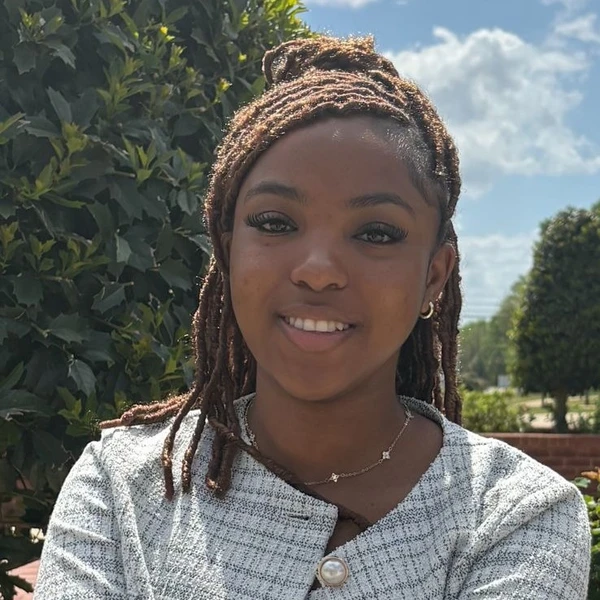
user profile avatar

Daina Falloon

1x

Finalist

General information

Hobbies & Interests

  • Spanish
  • Reading
  • Movies And Film

Reading

  • Adventure
  • Drama
  • Fantasy
  • Romance
  • Science Fiction
  • Young Adult

I read books multiple times a week.

Bio

My name is Daina Falloon, and I am a Chemistry major with minors in Engineering and Mathematics. I was born and raised in Jamaica, where I learned that determination and hard work can open doors that once seemed out of reach. I've always been curious about how things work, and that curiosity naturally led me to chemistry. I love that chemistry doesn't just explain the world around us, it also gives us the tools to improve it. As I've grown as a student and researcher, I've realized that I'm most passionate about using science to solve real-world problems. I am especially interested in developing sustainable technologies and discovering innovative ways to make chemical processes more efficient and environmentally responsible. Through my research experiences and involvement in STEM, I've strengthened my problem-solving skills, learned the value of collaboration, and discovered how much I enjoy asking questions that don't yet have answers. Those experiences have confirmed that research is where I see myself making the greatest impact. My goal is to earn a Ph.D. in Chemical Engineering and build a career developing innovative, sustainable solutions that improve industries while protecting the environment. I hope to contribute to discoveries that create lasting, positive change and inspire future generations to pursue science and engineering.

Education

Talladega College

Bachelor's degree program

2024 – 2028

Majors:
  • Chemistry
Minors:
  • Engineering, General
  • Biology, General
  • Mathematics

Miscellaneous

Desired degree level:
Doctoral degree program (PhD, MD, JD, etc.)
Majors of interest:
Chemical Engineering, Biomedical/Medical Engineering
Desired degree modality:
Full-Time
Medical school interest:
No

Career

  • Supplemental Instructor

    Education · Talladega College

    Jan 2025 – Jan 2026

Miscellaneous

Dream career field:
Mechanical or Industrial Engineering
Dream career goals:
Chemical Engineer
Work experience:
0 years
Has nursing license:
No

Future Interests

  • Advocacy
  • Volunteering
  • Philanthropy
  • Entrepreneurship
Minority Women in LAS Scholarship
I came to the United States believing that if I worked hard enough, I could build the future I had always dreamed of. I knew being an international student would not be easy, but I believed that good grades, determination, and perseverance would be enough to keep me moving forward. This past year taught me that sometimes you can do everything right and still find yourself wondering if your dream is about to end. Growing up in rural Portland, Jamaica, I learned early that education could change the course of my life. Opportunities were limited, but my curiosity wasn't. I loved science because it challenged me to ask questions and search for answers. That curiosity eventually brought me to the United States to study chemistry, leaving behind my family, my home, and everything I had ever known. Living so far from home has not been easy. There are days when I wish I could simply go home after a difficult week, but home is an island hundreds of miles away. Instead, I call my parents and try to sound stronger than I feel because I never want them to think their sacrifices were for nothing. The hardest moment came when my university unexpectedly reduced scholarship funding. It felt like the world was ending. The decision came in May, when most transfer application deadlines had already passed and scholarship opportunities at other universities were almost nonexistent. I remember sitting there thinking, What am I going to do now? More than anything, I kept wondering how I was going to tell my parents. They had celebrated every achievement that brought me here, and now I was afraid I might have to tell them that none of it would be enough because we simply couldn't afford for me to stay. For the first time, I realized that losing my education had nothing to do with my grades or my work ethic. I had maintained a 4.0 GPA, taken advantage of research opportunities, and committed myself to learning as much as I could. Yet my future suddenly depended on finances instead of my ability. That was one of the hardest lessons I have ever learned. Even during that uncertainty, I refused to stop investing in the future I want. I continued conducting research, strengthened my laboratory skills, and shared my love of science by teaching children about the carbon cycle and environmental sustainability through the Tapia Carbon Project. Those experiences reminded me why I started this journey in the first place. I want to earn a Ph.D. in Chemical Engineering and develop sustainable technologies that improve lives while showing young women, especially Black immigrant women, that they belong in science. Being an immigrant has changed the way I see education. I no longer take a single class, research opportunity, or day on campus for granted because I know how quickly those opportunities can disappear. My journey has taught me resilience, but it has also taught me humility, gratitude, and the importance of never giving up on something worth fighting for. Receiving the Minority Women in LAS Scholarship would mean more than financial support. It would mean the chance to continue a journey that my family and I have sacrificed so much to begin. I have come too far to let my story end here, and I am determined to make sure it doesn't.
ESOF Academic Scholarship
Growing up in rural Jamaica, I learned that talent is everywhere, but opportunity is not. I knew bright students who dreamed of becoming doctors, engineers, and scientists, yet many of those dreams were limited by financial barriers or a lack of access to resources. Watching that as a child shaped the way I view education. To me, earning a degree has never been just about building a successful career. It has always been about gaining the knowledge and opportunities to come back and help others do the same. As a first-generation college student and an international student, pursuing higher education in the United States has been both an incredible privilege and a tremendous responsibility. I chose to attend Talladega College because I wanted to study at an HBCU, a place where Black students are challenged to excel academically while being reminded that our success should also create opportunities for those who come after us. That mission has stayed with me throughout my college journey. I am currently pursuing a degree in chemistry with minors in biology and mathematics at Talladega College. My educational goal is to continue developing as a scientist and eventually earn a Ph.D. in chemical engineering, with a focus on green chemistry and sustainable innovation. Through my coursework and research experiences, I have developed a passion for understanding how science can be used to create solutions to real-world challenges. Professionally, I hope to become a chemical engineer and researcher who contributes to sustainable technologies while also mentoring and creating opportunities for students from underrepresented communities to pursue careers in STEM. While my professional goals are centered around science and innovation, my purpose extends beyond my career. I believe education has the greatest impact when it is used to serve others. Service has always been a part of my life. Before coming to college, I was actively involved in 4-H and Girls Guides, organizations that taught me leadership, teamwork, and the importance of giving back to my community. Those experiences showed me that leadership is not about being the loudest voice in the room. It is about being willing to help, encourage, and create opportunities for others. That commitment to service has continued at Talladega College through my role as a Supplemental Instruction Leader for Chemistry. Every week, I work alongside students who are struggling with concepts that I once found difficult myself. Some come to sessions feeling discouraged or convinced they simply are not "good at chemistry." One of the most rewarding parts of serving as an SI Leader is watching that confidence grow. Seeing a student who was once afraid of failing walk into an exam believing in themselves, reminds me that sometimes the greatest form of service is helping someone realize their own potential. I have also been fortunate to participate in STEM outreach programs that allowed me to share my passion for science with younger students. Last summer, while conducting research at Tennessee State University, I volunteered with laboratory setup and organization. I also had the opportunity to participate in the Tapia Carbon Project, where I taught children about the carbon cycle, its role in the environment, and why understanding science is important to protecting our planet. At Talladega College, I volunteered with the Microsoft Copilot Initiative, where I helped introduce students to coding and showed them how technology can be a tool for creativity, problem-solving, and innovation. Watching students become excited about concepts they had never explored before reminded me how powerful education can be. Growing up, I rarely met scientists who came from backgrounds like mine. I want young students, especially those from underserved communities and underrepresented backgrounds, to see someone who looks like them pursuing a career in STEM and believe that they can do the same. Sometimes, all it takes is one conversation, one mentor, or one opportunity to completely change the direction of a student's life. This belief has become even more personal over the past few months. In mid-May, Talladega College unexpectedly reduced student scholarships, creating uncertainty for many of us. Because the decision came so late, transferring to another university and securing comparable financial aid became nearly impossible. As an international student from Jamaica, I realized that insufficient funding could mean returning home before completing the education I have worked so hard to pursue. It was a difficult reminder that for many students, success depends not only on hard work but also on having people who are willing to invest in their potential. Rather than discouraging me, the uncertainty surrounding my education strengthened my sense of purpose. It reminded me that scholarships do far more than pay tuition, they keep dreams alive. One day, I hope to be in a position where I can provide those same opportunities for others. I want to mentor students who are interested in STEM, partner with HBCUs to expand research opportunities for underrepresented students, and eventually establish a scholarship for students who have the talent and determination to succeed but whose education is threatened by financial barriers. I know firsthand how one opportunity can change the course of a life because scholarships have changed mine, and my goal is to ensure that students from communities like mine have access to the same opportunities. Receiving the Eleven Shades of Fate Scholarship would do more than help me continue my education. It would allow me to continue preparing for a future built on service, leadership, and giving back. My goal is not simply to earn a Ph.D. or become a successful engineer. My goal is to use my education to open doors for others, just as others have opened doors for me. If I can inspire even one student from a community like mine to believe that their dreams are possible, then I will know that my success has become something much greater than my own.
Charles B. Brazelton Memorial Scholarship
My “awkward” thing is that I used to read everything. When I say everything, I mean everything. As a child, I had a habit that my family found a little strange. I would read everything around me. Food boxes, household product labels, instructions, and anything else with words on it immediately caught my attention. If there were words in front of me, I wanted to know what they said. My favorite “book” was the cereal box sitting at our breakfast table. Every morning while I ate breakfast, I would read the entire box from beginning to end. I was not trying to win a prize or complete an assignment. I genuinely enjoyed it. It was my own form of entertainment. I would read the same information repeatedly until I had memorized most of it. Even today, I can still remember many of the details that were printed on those boxes years ago. Looking back, I realize how unusual that probably seemed. While other children were focused on finishing breakfast quickly or rushing off to play, I was sitting at the table studying a cereal box like it contained a secret waiting to be discovered. The funny thing is, I never thought it was strange. To me, it was normal. I was simply curious. I wanted to know what things were made of, why certain ingredients were included, and what all those unfamiliar words meant. I found excitement in details that most people overlooked. Writing this essay made me realize something I had never connected before: maybe this little habit was one of the earliest signs of why I became interested in chemistry. For a long time, I thought my love for chemistry began when I learned about atoms, molecules, and reactions in school. But now I think it started much earlier, with a child who could not look at an ordinary object without wondering what was happening beneath the surface. That same curiosity is what draws me to chemistry today. Chemistry is about asking questions, discovering answers, and understanding the hidden details that make up the world around us. The child who wanted to know what was inside her cereal is the same person who now wants to understand the science behind the materials and processes that shape our everyday lives. My “awkward” thing is that I have always been fascinated by things others might overlook. What once seemed like a strange habit has become one of the qualities I value most about myself. I have learned that curiosity does not always begin with a groundbreaking discovery. Sometimes, it begins with a child sitting at a kitchen table, reading the back of a cereal box every morning simply because she wants to know more. And maybe, without realizing it, that child was already becoming the scientist she hoped to be.
LeadHer Learning Scholarship
Education, to me, represents possibility. It is the bridge between where someone begins and where they have the potential to go. Growing up in rural Jamaica, I learned that education was not something to take for granted. It was a source of hope, opportunity, and empowerment. It represented a chance to build a future beyond my circumstances and gain the knowledge needed to create meaningful change. From a young age, I understood that education required dedication and sacrifice. I saw how access to resources could influence the opportunities available to individuals, and I became determined to make the most of every opportunity I received. As a first-generation college student, my journey through higher education has required resilience, independence, and the courage to navigate unfamiliar challenges. There were moments when the path ahead felt uncertain, but education has continued to remind me why I started this journey. To me, education is not simply about earning a degree or achieving personal success. It is about gaining the tools to solve problems, serve others, and create opportunities for those who come after me. My education in chemistry has allowed me to explore my curiosity about the world around me and understand how science can be used to address real challenges. My goal is to continue my education by earning a PhD in Chemical Engineering and using my knowledge to develop sustainable solutions through green chemistry that can benefit communities, including those similar to the one that raised me. As a woman pursuing STEM, education has also shown me the importance of representation. When young women see people like themselves succeeding in fields where they may feel they do not belong, it can change what they believe is possible. I want to be part of that change. I hope to inspire other young women, especially those from backgrounds like mine, to pursue careers in science and engineering and recognize that their circumstances do not define their potential. Education has also taught me that knowledge comes with responsibility. Through my research experiences, STEM outreach, and my role as a Supplemental Instruction Leader for chemistry, I have learned the importance of sharing what I know and supporting others in their own journeys. Helping others understand difficult concepts and encouraging students to explore STEM has shown me that even small acts of support can have a lasting impact. Ultimately, education has changed the direction of my life. It has given me confidence, expanded my perspective, and allowed me to imagine possibilities beyond what I once knew. However, I believe the true value of education is not only in what it allows us to achieve for ourselves, but also in how we use it to uplift others. Education has given me the opportunity to grow, and I hope to use that opportunity to create pathways for others to do the same.
Rosa A. Wilson Scholarship
When I think about the future, I see myself as a chemical engineer using science to create solutions that improve the lives of others. After completing my bachelor’s degree, I plan to pursue a PhD in Chemical Engineering and specialize in green chemistry and sustainable technologies. My goal is not simply to develop new processes or materials, but to create innovations that are meaningful, responsible, and accessible to communities that often face challenges due to limited resources. My desire to use engineering as a tool for service comes from where I come from. I was raised in rural Jamaica, where I learned early that opportunities are not always equally available. I saw the importance of making the most of what you have, working hard for what you want, and valuing education as a pathway to a better future. Coming from a background where resources were not always abundant has shaped the way I view problem-solving. I do not want to create solutions only for those who already have access to opportunities; I want my work to reach people who are often left without the resources they need. As a woman pursuing STEM, I have also learned the importance of representation. Entering fields where women, especially women from underrepresented backgrounds, are still finding their place has shown me how powerful encouragement and mentorship can be. Sometimes, seeing someone with a similar story succeed is the motivation another person needs to believe they can do the same. I hope to be that source of encouragement for young women who may question whether they belong in science and engineering. Through my future career, I plan to engage with communities through STEM outreach, mentorship, and education. I want to share my experiences with students who may come from backgrounds where careers in STEM feel distant or unrealistic. I believe empowerment begins when people are given knowledge, support, and the confidence to see themselves as capable of creating change. My journey has not always been easy. As a first-generation college student, continuing my education has required persistence and sacrifice. Recently, despite maintaining my 4.0 GPA, my university issued an unexpected scholarship cut, creating uncertainty about my ability to continue my degree. Because of the timing, finding another institution with comparable financial support was extremely difficult, and without additional assistance, I may face the possibility of returning home to Jamaica before completing my education. However, challenges have strengthened my determination rather than changed my goals. I want my future work to reflect the values that have guided me throughout my life: resilience, compassion, curiosity, and service. I believe engineering is not only about creating solutions; it is about understanding who those solutions are meant to serve. My goal is to use my education to empower others, inspire future generations of women in STEM, and prove that where someone begins does not determine how far they can go.
Lynch Engineering Scholarship
I have always been curious about how science can be used to create solutions that improve people’s lives. To me, engineering is not just about numbers, formulas, or designing processes; it is about understanding real challenges and using innovation to make the world better. My long-term goal is to become a chemical engineer specializing in green chemistry and sustainable technologies. After completing my bachelor’s degree, I plan to attend graduate school and earn a PhD in Chemical Engineering, where I hope to develop sustainable solutions that that can improve the quality of life for communities similar to my own. Growing up in rural Jamaica shaped who I am. I learned the importance of hard work, perseverance, and making the most of every opportunity. As a first-generation college student, pursuing higher education has required determination and sacrifice. Recently, my university issued an unexpected scholarship cut in mid-May, creating uncertainty about my ability to continue my education. Because of the timing, transferring to another institution with comparable financial support became extremely difficult. Without additional funding, I may face the possibility of returning home to Jamaica before completing my degree. Despite these challenges, I remain committed to my goals. The values that guide me are curiosity, resilience, compassion, and service. I want to become an engineer who does not just solve problems but creates meaningful solutions for marginalized communities. I hope to inspire young women from backgrounds like mine to pursue STEM and believe that their circumstances do not limit their potential.
Byte into STEM Scholarship
Growing up in Portland, Jamaica, I was surrounded by natural beauty but limited opportunities. Scientific research, engineering laboratories, and careers in STEM often felt like things that existed somewhere else, not in communities like mine. Still, I was the child who constantly asked questions. I wanted to understand why things worked the way they did, from the chemistry behind everyday reactions to the technologies that improve people's lives. My curiosity became my greatest strength, and my parents taught me that education could take me farther than my circumstances ever could. That belief carried me across countries when I became the first person in my family to pursue higher education in the United States and in general. Today, I am a chemistry major with minors in biology and mathematics, working toward my goal of earning a Ph.D. in Chemical Engineering. Although this journey has been rewarding, it has also required resilience. As an international student, I have had to navigate a new educational system while managing the financial uncertainty that comes with studying abroad. When Talladega College unexpectedly reduced institutional scholarships in mid-May, my educational plans were suddenly at risk. The loss of funding made transferring to another university and securing comparable financial aid extremely difficult, and without sufficient support, I could be forced to return home before completing my degree. This experience reminded me how quickly financial barriers can threaten years of hard work, but it also strengthened my determination to continue moving forward. What drives my passion for STEM is the opportunity to solve problems that matter. Chemistry is more than equations and laboratory experiments to me; it is a pathway to developing solutions that improve lives and protect our environment. My long-term goal is to advance sustainable chemical engineering by designing cleaner manufacturing processes and environmentally responsible materials that can benefit communities around the world, including developing countries like Jamaica. Research has shown me that science becomes meaningful when it addresses real-world challenges. At Talladega College, I participated in molecular biology research through the Wolbachia Project. Last summer at Tennessee State University, I expanded my skills by investigating fibrosis and HL-60 cells. Equally important to me is ensuring that other students see STEM as a place where they belong. Through the Microsoft Racing with Rajah Copilot Initiative and the Tapia Carbon Project, I volunteered to introduce younger students to STEM through hands-on activities and interactive lessons. Seeing students become excited about science reminded me of my younger self, someone who simply needed exposure and encouragement. I want to be the representation that helps students, especially Black students and those from underserved communities, recognize that their background does not limit their potential. My education is preparing me not only for a career but for a lifetime of service. I hope to combine research, mentorship, and outreach to develop sustainable technologies while creating opportunities for students who rarely see themselves represented in STEM. Whether through scientific research, mentoring future scientists, or expanding STEM outreach, I want my work to create an impact beyond the laboratory. Receiving the Byte into STEM Scholarship would do more than ease the financial burden created by my unexpected loss of funding. It would allow me to continue pursuing the education that has already transformed my life and bring me closer to becoming the scientist I aspire to be. My journey is proof that students from small rural communities, limited financial means, and underrepresented backgrounds can make meaningful contributions to science. I hope to inspire others to see STEM not as a distant dream but as a place where they belong and can create lasting change.
William A. Lewis Scholarship
Growing up in rural Portland, Jamaica, I always believed education was my way of creating a different future for myself. My parents worked hard and constantly reminded me that my education was something no one could ever take away from me. Their sacrifices inspired me to dream beyond what I could see in my small community. Those dreams eventually led me to Talladega College, an HBCU where I could pursue my passion for chemistry and work toward my goal of earning a Ph.D. in Chemical Engineering. While getting here was a major accomplishment, staying here has been one of the greatest challenges I have ever faced. In the middle of May, Talladega College unexpectedly made significant scholarship cuts. Like many students, I suddenly found myself facing a financial situation I had never anticipated. As an international student and the first in my family to attend college, I couldn't simply return home for a semester or easily transfer to another university. By the time the scholarship reductions were announced, most transfer deadlines had already passed, and securing another institution with enough funding to make attendance possible became incredibly difficult. The reality is that without sufficient financial support, I may have no choice but to return home to Jamaica before I can complete the education I have worked so hard for. There were moments when I felt discouraged. It is difficult to stay focused on classes, research, and leadership responsibilities while worrying about whether you will be able to continue your education. But giving up was never an option because I knew how much this opportunity meant, not only to me, but also to my family, who have supported me every step of the way despite the distance and financial sacrifices. My parents have been my greatest source of strength. Even when they could not solve every problem, they reminded me why I started this journey in the first place. My professors and mentors at Talladega also encouraged me to keep moving forward. They believed in my potential, opened doors to research opportunities, and reminded me that I belonged in STEM even during moments of uncertainty. Instead of allowing my circumstances to define me, I continued to invest in my future. I participated in undergraduate research, gaining experience with molecular biology techniques and later fibrosis research that strengthened my laboratory skills. I also volunteered through the Microsoft Racing with Rajah Copilot Initiative and the Tapia Carbon Project, introducing younger students to STEM and showing them that science is for people who look like us and come from communities like ours. As a Supplemental Instruction Leader for chemistry, I have found joy in helping other students succeed while continuing to grow myself. This experience has taught me that resilience is not about pretending everything is easy; it is about choosing to keep going when the future feels uncertain. I am determined to finish my degree and earn a Ph.D. in Chemical Engineering. More importantly, I want to become the kind of mentor who reminds other underrepresented students that their circumstances do not determine their potential. Receiving the William A. Lewis Scholarship would ease the financial burden threatening my education and allow me to continue pursuing the future I have worked so hard to build.
Teria Onwuaduegbo Black Women in STEM Scholarship
My career interest is in chemical engineering, and I am pursuing it with a long-term goal of earning a PhD in the field. What draws me to chemical engineering is how it blends chemistry, math, and engineering into something very practical, designing and improving systems that people rely on every day, whether that is in energy systems, materials, environmental sustainability, or health-related technologies. I like the fact that chemical engineering is not just theoretical; it is applied science that turns ideas into systems, products, and processes that people actually rely on. My interest in this field developed from a natural curiosity about how things are made and how they can be improved. Over time, that curiosity turned into a deeper motivation to understand the science behind complex systems and to be part of creating solutions that matter. I am especially interested in how chemical engineering can be used to address environmental and sustainability challenges, since those issues directly affect communities like mine in very real ways. I have taken intentional steps to prepare myself for this path. At Tennessee State University, I was involved in research focused on fibrosis, where I studied fibroblasts and α-SMA expression. I also worked with HL-60 cells to observe differentiation processes. That experience gave me my first real introduction to laboratory research and helped me understand what it means to think like a scientist, being precise, patient, and willing to troubleshoot when experiments do not go as expected. It also helped me build discipline in following procedures and analyzing results carefully, which I know is essential in chemical engineering. I also conducted Wolbachia-related research at Talladega College, which expanded my understanding of how biological and chemical systems interact on a larger scale. That experience pushed me to think beyond the surface of science and recognize how small changes at the microscopic level can influence entire systems. It strengthened my interest in working in a field where I can connect science to broader, real-world outcomes. Outside of research, I have actively sought out opportunities to grow in STEM spaces through organizations like IBM and Girls Who Code. Being part of these communities has helped me build technical skills, but just as importantly, it has shown me what it means to be a Black woman in STEM navigating spaces where we are still underrepresented. Instead of discouraging me, it has pushed me to stay consistent, keep learning, and take up space in environments where our voices and perspectives are needed. Each experience I have had so far has helped me build a stronger foundation for chemical engineering. I am learning not just the academic side of STEM, but also the resilience and adaptability needed to succeed in it. I understand that chemical engineering is a challenging field, but I am drawn to that challenge because it forces growth and demands both critical thinking and creativity. Ultimately, my goal is to become a chemical engineer who contributes to solutions that improve systems people depend on every day. I want my work to reflect both technical excellence and real-world impact, especially for communities that are often overlooked. For me, this path is not just about earning a degree, it is about using science and engineering to build something that actually makes a difference.
HBCU LegaSeed Scholarship
Growing up as a first-generation African American student has shaped the way I understand struggle, opportunity, and what it really takes to keep moving forward when life is uncertain. I have learned that where you come from can influence what people expect from you, but it does not have to decide where you end up. I come from a background where financial instability is not just something you hear about, it is something you feel in real time. Even in my college journey at Talladega College, I experienced a moment that really tested my ability to stay focused on my education. In mid-May, my scholarship funding was suddenly reduced. There was no long adjustment period or easy solution, it just shifted, and with it came immediate stress about how I would continue school. I had to think seriously about transferring. I now face the possibility that I might have to leave my university and return home to Jamaica if I can't secure enough financial support. That reality was hard to sit with because it made me realize how quickly education can become uncertain for students like me who rely heavily on scholarships. But more than anything, that experience showed me something deeper: a lot of students are not lacking potential, they are lacking stability. And when stability is missing, even the most determined students can feel like they are running out of options. I understand what it feels like to try to focus on your future while also worrying about whether you will be able to stay in school next semester. Still, I did not let that moment stop me. If anything, it made me more focused and more intentional about why I am here in the first place. I am not just trying to earn a degree for myself, I am trying to turn everything I have been through into something that actually means something beyond me. My upbringing has made me deeply aware of how many students grow up thinking college is not for them, not because they are not capable, but because they do not see it as realistic. When you are surrounded by financial pressure or limited resources, it is easy for higher education to feel distant, like something meant for “other people.” I want to change that mindset wherever I can. With my degree, I want to build a legacy that is rooted in access and support. I want to mentor first-generation students, especially those who feel overwhelmed by the college process or discouraged by finances. I want to be the person who helps them figure out financial aid, stay encouraged when things get hard, and understand that setbacks do not mean the end of their goals. Long-term, I also want to be involved in work that addresses educational inequality more broadly, especially the financial barriers that force too many students to pause or abandon their education. I have lived what it feels like to be one unexpected change away from losing everything you have worked for, and I want to help build systems where that is not the reality for the next student. At the end of the day, I want my story to mean something. Not just that I made it through, but that I used what I went through to create more stability, more access, and more hope for others. That is the legacy I want to build.
GD Sandeford Memorial Scholarship
Growing up as a first-generation African American student has shaped how I view education, not just as a personal achievement, but as something I am responsible for using to create opportunities for others. For me, earning a degree is not only about personal success; it is about making sure the path is a little easier for the students who come after me. At my current university, Talladega College, I experienced an unexpected setback when scholarship funding was abruptly reduced in mid-May. That change made it extremely difficult to transfer to another school with a comparable scholarship package, and it created real uncertainty about how I would continue my education. At times, the lack of sufficient funding even put my ability to stay in school at risk, which could ultimately mean having to return home to Jamaica and pause my academic journey. That experience made me even more aware of how quickly opportunities can disappear for students without financial stability, and how many students are one barrier away from giving up on their education entirely. Because of this, I am even more committed to using my degree to support others who face similar challenges. I want to be someone who helps bridge the gap for students who feel lost in the college process, especially first-generation students who may not have guidance navigating admissions, financial aid, or scholarship changes. I understand what it means to push forward without having all the resources others may take for granted. It has also deepened my motivation to give back to students who are facing similar barriers. I know firsthand how stressful it is to try to focus on academics while also worrying about whether you will be able to stay enrolled next semester. With my degree, I plan to use my education to support and uplift my community in meaningful ways. One of my main goals is to mentor younger students, especially those who are first-generation college-bound. I want to help them understand the college process early, from applications and financial aid to adjusting academically once they arrive on campus. Many students are capable of succeeding in college, but they lack access to guidance and support systems that make the process less intimidating. I want to help fill that gap by being someone they can turn to for advice, encouragement, and practical help. Beyond mentorship, I also want to be involved in work that addresses the larger systemic issues that affect educational access. I am interested in contributing to programs, research, or initiatives that focus on improving college affordability and support systems for students from underserved backgrounds. I want to help create environments where students are not forced to leave school because of sudden financial changes or lack of resources. Ultimately, I want my degree to represent more than my personal achievement. I want it to be a tool that strengthens my community and expands opportunities for others. My goal is to use my education to support students who feel uncertain, overlooked, or overwhelmed and help them stay on track toward their goals. Even with the challenges I have faced, I am determined to turn my experience into something that creates stability and hope for others.
Daina Falloon Student Profile | Bold.org