
Hobbies and interests
Athletic Training
Viola
Tutoring
Volunteering
Speech and Debate
Reading
Horror
Mystery
Classics
Drama
I read books daily
Crystal Santana
1x
Finalist1x
Winner
Crystal Santana
1x
Finalist1x
WinnerBio
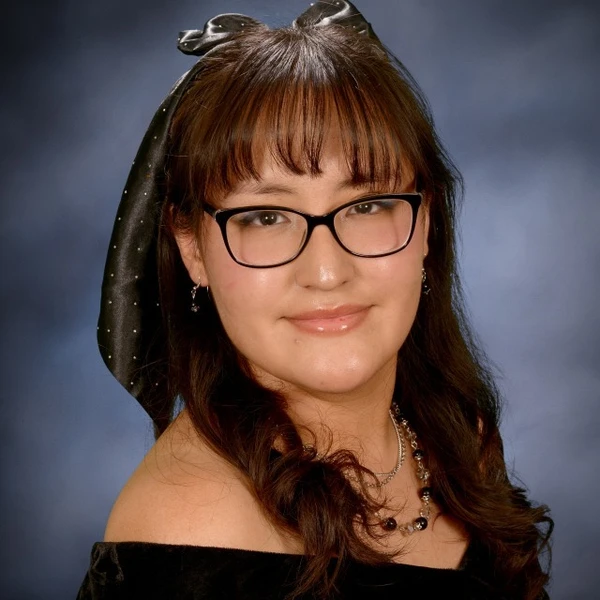
I'm passionate about helping my community, especially children. I hope to fulfill my dream of becoming a children's advocate in the legal system by going into social work and becoming an attorney. I hope to attend the Steve Hicks School of Social Work at the University of Texas at Austin to earn my master's. I owe my success to my hardworking parents, who immigrated with me to the United States, for the opportunity to obtain my education.
Education
Caprock High School
High SchoolMiscellaneous
Desired degree level:
Doctoral degree program (PhD, MD, JD, etc.)
Majors of interest:
- Criminal Justice and Corrections, General
- Law
- Social Work
Career
Dream career field:
Legal Services
Dream career goals:
To help children in the legal system
Kidzone Employee
Hodgetown Stadium2024 – 20251 yearIntern
Pottery County Attorney's Office2025 – Present1 yearSubway Employee
Subway2024 – Present2 years
Sports
Softball
Intramural2017 – 20203 years
Arts
Caprock Orchrestra
Performance Art2018 – 2025
Public services
Volunteering
High Plains Food Bank — Volunteer2024 – PresentVolunteering
Americorps — Tutoring elementary school kids2025 – PresentVolunteering
National Honor Society — Member2024 – Present
Future Interests
Advocacy
Politics
Volunteering
Entrepreneurship
Text-Em-All Founders Scholarship
Growing up, I understood what it felt like to be unheard before I truly understood what advocacy meant. I was born with a speech impediment and remained mostly mute until I was seven years old. In a predominantly Spanish-speaking household, learning two languages while struggling to speak left me isolated from others and frustrated with myself. I often sat quietly in classrooms and cafeterias, watching other people connect easily while my thoughts stayed trapped in my head. Unable to advocate for myself, my needs were neglected, and I suffered emotionally and academically.
As I grew older, I realized compassion is not just feeling bad for someone; it is choosing to show up for them. That belief became the foundation of my involvement in community service. Through volunteering and my work as an AmeriCorps tutor, I learned how important encouragement and patience can be in a child’s life. Many of my students struggled academically or behaviorally, and some reminded me of myself when I was younger, frustrated, insecure, and convinced they were falling behind everyone else. I worked to create an environment where they felt safe enough to try, fail, and grow. Whether it was celebrating a student finally finishing a book independently or helping them through a difficult day, I understood that small moments of support can have lasting impacts.
My experiences also taught me the importance of authenticity. For years, people softened the truth to avoid hurting my feelings, but that only kept me stagnant. The people who changed my life were the ones who were honest with me while still believing in my potential. My speech therapist and teachers pushed me to grow instead of settle into comfort. Because of them, I joined the Debate despite my fear of speaking publicly. I struggled constantly and often embarrassed myself, but I kept showing up. Debate taught me resilience and helped me find confidence in my voice, even when speaking did not come naturally to me.
That growth eventually led me to an internship at my city’s attorney’s office, where I assisted with cases involving children and families. Seeing vulnerable children navigate legal systems confirmed what I already felt deeply: I want to dedicate my life to advocating for people who feel unheard of. My goal is to pursue a degree in Social Work at the University of Texas at Austin, followed by law school, so I can become a child advocate attorney. I want to work with children involved in foster care, immigration cases, or difficult family situations and ensure they have someone willing to listen to them and fight for them. I also want to keep Social Work apart from my career in the form of charities and volunteering, and hopefully start my own programs to support my community.
As the child of Mexican immigrants and a first-generation college student, I understand the sacrifices behind opportunity. My parents worked physically demanding jobs to give me a future they never had, even during times when finances were unstable. Their compassion for others, despite their own struggles, taught me that success means little if you do not use it to uplift people around you.
The values behind the Text-Em-All Founders Scholarship resonate deeply with me because compassion, authenticity, and shared excellence have shaped every part of my journey. My education is not only a path toward personal success; it is a way for me to create opportunities and support for others. I want to use my experiences and future career to ensure that no child feels invisible or voiceless.
Valerie Rabb Academic Scholarship
Growing up as the child of Mexican immigrants, my life has been shaped by resilience, sacrifice, and a deep commitment to helping others. My parents worked physically demanding jobs to provide for our family, often putting their needs aside so I could have opportunities they never had. Watching their sacrifices taught me the value of hard work, but more importantly, it taught me the importance of giving back to others, even when life is difficult.
One of the biggest challenges I faced growing up was my speech impediment. For years, I struggled to communicate, remaining mostly mute until I was seven years old. Even after that, speaking was difficult, especially as I navigated learning English in a primarily Spanish-speaking household. This left me feeling isolated and overlooked, both socially and academically. I often avoided situations where I had to speak, which held me back from forming connections and fully participating in school.
Over time, I realized that staying silent was not going to change my situation. With the help of honest mentors, especially my speech therapist and teachers, I began to push myself out of my comfort zone. I joined activities like debate, even though it was one of the hardest things I could have done. I struggled, failed, and often felt embarrassed, but I kept showing up. That persistence helped me grow, not just as a speaker, but as a person. I learned that adversity does not define you; how you respond to it does.
My experiences have directly shaped my career goals. I plan to pursue a degree in Social Work, followed by law school, to become a child advocate lawyer. I want to work with children in systems like Child Protective Services and immigration, ensuring they are heard and supported. This goal comes from both my personal struggles and the experiences I’ve had helping others.
As an AmeriCorps tutor, I worked with elementary students who often faced challenges similar to my own, academic struggles, lack of confidence, and feeling overlooked. I didn’t just help them with reading; I created a space where they felt supported and valued. Seeing their growth reminded me of how important it is to have someone believe in you. Additionally, my internship at my city’s attorney’s office gave me insight into how the legal system can either support or fail vulnerable individuals. It showed me the importance of advocacy and confirmed that this is the path I want to pursue.
In the future, I plan to use my career to make a meaningful difference by advocating for children who do not have the ability or resources to advocate for themselves. I want to ensure that no child feels as unheard as I once did. Beyond legal work, I hope to stay involved in my community through mentorship and outreach programs that support families and children.
Adversity has shaped who I am, but it has also given me direction. My struggles with communication taught me empathy, resilience, and determination; qualities that I will carry into my future career. I am committed to using my experiences to uplift others and create change in my community, ensuring that every child has the opportunity to be heard and to succeed.
Aserina Hill Memorial Scholarship
Growing up as the child of Mexican immigrants, my life has been shaped by resilience, sacrifice, and a strong sense of community. My parents worked physically demanding jobs to provide for our family, often putting their needs aside so that I could have opportunities they never had. Watching them give, even when they had little, taught me that kindness is not about how much you have, it’s about how much you’re willing to give.
That mindset has guided me throughout high school. As an AmeriCorps tutor, I worked with elementary students in an after-school program, helping them improve their reading skills and build confidence. Many of the students I worked with struggled not only academically, but also emotionally. I realized that being there for them meant more than just teaching lessons, it meant being someone they could trust. I celebrated their small victories, supported them on hard days, and made sure they felt seen. That experience showed me how powerful consistent support can be in a child’s life.
If I had the opportunity to start a charity, I would create a program focused on helping children find their voice, both academically and personally. The organization would provide tutoring, mentorship, and emotional support for children who feel overlooked, especially those from immigrant or low-income families. I would want it to be a place where kids feel safe expressing themselves, asking questions, and growing at their own pace.
This idea is deeply personal to me. Growing up with a speech impediment, I often felt silenced and misunderstood. I know what it feels like to have thoughts you can’t express and needs that go unheard. Because of that, I want to make sure other children don’t feel the same way. My charity would not only focus on academics like reading and writing, but also on confidence-building, communication skills, and mentorship.
I would also include resources for families, such as guidance on navigating school systems, access to community support, and educational workshops. Many families, like mine, want to help their children succeed but don’t always know where to start. Providing that support would create a stronger foundation for both students and their families.
Aserina Hill’s legacy of giving reminds me that small acts of kindness can have lasting impacts. Just like the people who helped my family along the way, I want to give back in a way that creates real change. My goal is to continue serving my community, pursuing a degree in Social Work, and eventually becoming a child advocate lawyer.
This scholarship would not only support my education but also help me continue the cycle of giving that has shaped my life. I want to be someone who uplifts others, just like Aserina; quietly, consistently, and with purpose.
Gomez Family Legacy Scholarship
WinnerMy parents have always been a motivator for me since I was little. Telling me that an education is important, that they worked these laborious jobs to provide me with the opportunities to go to college and to get a career that won't be hard on the body like the construction job my dad has. Growing up, I watched my dad come home exhausted from his job, his hands calloused and worn. I could see the toll it took on him, the work he put in to provide me with a better life. My parents moved to the US with me when I was two because they believed they could provide a better life for me there. I remember the pride in my mom when I spoke about my ambition, telling me that I should follow my dreams, and it pushed me. Education represents more than just grades or degrees for me; it’s a way to honor my family’s journey. Motivating me to complete the promise of going to college, which is a privilege in itself, compared to what my parents sacrificed for me. I want to be the first in my family to graduate from college, not just for myself, but to show my younger siblings that they can aim high too.
Education is also for my community. Latinos have one of the lowest rates of secondary education. Many go to the workforce without further education because of societal barriers, like being given the idea they aren't worthy of going to college or being set back in finances that college isn't their highest priority. I want to go to college to break this pattern and to hopefully inspire other Latinos that it is possible. They shouldn't be discouraged following a path that requires college. That certain careers are not the only careers they have access to.
Education was motivated by my parents and my community, but it's important to me because I believe that I cannot help myself or the world without it. I want to be working in the legal system, dealing with children in Child Protective Services and representing immigrants in their legal battles with citizenship and the immigration process. These types of jobs usually require schooling to even practice, but I can't do these dreams and help these people without knowing what I'm helping them with. Education also involves experience. The more I know, the more help I can bring to the world. Even with finances, people who go to college get more job opportunities that pay more and when a person is more financially stable, the better they can help others in their finances. Law school is expensive, but attorneys, after a few years, make it back and some more. With that money I can help my parents not worry about bills and a home, help them pay for my siblings' college, and take them on trips to finally relax. Provide for charity to the less fortunate, help other Latinos achieve college.
My journey towards higher education is not just a personal endeavor; it’s a commitment to my family, my community, and the values they instilled in me. By pursuing my education, I aim to honor my parents' sacrifices and serve as an example for those who feel limited by their circumstances. I envision a future where I can advocate for the rights of the vulnerable, uplift my family, and inspire others to pursue their dreams of further education. By breaking barriers, I hope to show that education is not merely a path to personal success, but a powerful tool for transforming lives and communities.