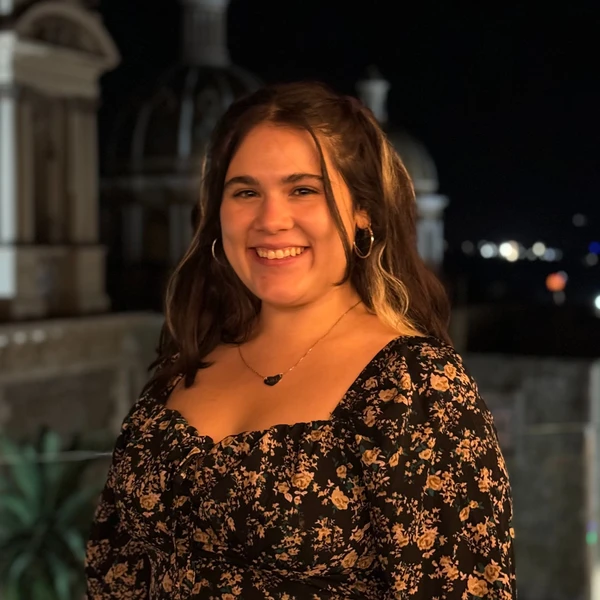
I want to be a teacher. I would play teacher to my stuffed animals as a little girl and have loved the field ever since. However, an educator is much more than just a teacher. Our responsibility is to inspire, comfort, and of course, teach our students to be the best students they can be. Education, although a robust and stable constant in our lives, is always in the spotlight for change. There is always something new to be taught, difficult conversations to navigate, and different ways to integrate learning through participation. As an educator, you must also change and adapt to accommodate each student.
I didn’t truly realize my impact as an educator until recently. This past summer, I was a tutor for an underfunded middle school in Compton, CA. My students were those who "started fights,” “refused to attend school,” and “did not want to succeed.” I didn’t expect to be around such talented students in an environment riddled with so much doubt –one student in particular stuck out to me. Having decided he was incapable of writing a paragraph, he refused to do assignments. Over time, my encouragement improved his confidence, allowing his creativity to flourish into classwork he was proud of. Because his efforts were not celebrated beforehand, it became apparent that he was pushed not to succeed, but to be reduced to a “problem student.”
There are students like Eyner everywhere; no matter how hard they work to prove themselves academically, their potential is always diminished on the basis of their race, economic status, and culture. This marginalization is why for some, university is an effortless assumption, while for others, it is an unattainable commodity. Educational inequity affects all marginalized communities, including the one I grew up in.
I watched my parents work tirelessly so that I have a more comfortable life than they did. I knew early on that meant going to university. As a first-generation college student, I knew I was often at a disadvantage because of my economic background. Unlike my colleagues, I relied heavily on scholarships to afford college. Although harbored by imposter syndrome, food insecurity, and anxiety, I remained undeterred from my love of education. I cherished every class knowing that I was one of the only Latinas there.
Because of my experiences, I realized I could make the biggest impact as an educator, supporting and serving students like myself. I have worked with a variety of students from different cultural backgrounds, ages, and social classes. As a behavioral interventionist, I assisted children with developmental disabilities and witnessed how my clients’ condition affected their access to accommodations at school. Currently, I tutor students from kindergarten to high school. I’ve taught classes on my own, developed individual study plans, and catered to each student’s educational needs. Here, I have worked primarily with students from affluent families. The disparity between my own upbringing and theirs has created difficulties to adjust to. However, I find interacting with students who have opposing viewpoints makes me a stronger educator. I have confidence in my versatility and ability to recognize the resources a student may lack.
After I earn my degree and start working in the field, my priority is to work in an underserved community. It is imminent that I work among students that I share identities with and learn more about how those identities contribute to educational inequity. As an educator, I want to take into account all of my students' experiences. Even if I only have one student facing homelessness, for example, I want to maintain a lens of inclusivity to make sure that student does not feel left out. Likewise, I want to create a safe space for all gender identities and students dealing with mental health issues. I've learned through therapy in my own life, that there are a lot of barriers that can take our attention away from our day to day duties. I want to be a teacher that leads with apathy to ensure that I don't see students as just students. K12 children are humans outside of schools dealing with depression, anxiety, family issues, self-esteem issues, and economic struggles. It's not about teaching at students, but learning from them as well. All human beings deserve to be seen.
Earning a scholarship would mean less worry and more focus. While I work full-time now, I do not have enough in savings to comfortably start graduate school without worrying about going into debt. I will be working while I am registered as a full-time student, but most of that income will be going towards rent and other house utilities. My parents no longer work, so I am currently the only breadwinner. While this is an inopportune time to start graduate studies, I am motivated to be a master student and take advantage of an opportunity my parents did not get.
This scholarship would ensure a little more safety for me to dedicate more time to my studies. Since this will most likely be the last year of schooling for me, I want to be intentional with the work I turn in and with the students I attend to. My goal is to learn the most I can with student teaching and getting that valuable first hand experience in the classroom. Having an economic leverage would allow me to be fully present during seminars, without the disruption of worrying how I'm going to pay for the seminar. Professionally, I would get pay full attention to courses and take that knowledge with me when I run my own classroom. I have the passion and drive to be a teacher worth talking about.
My students inspire me everyday. Witnessing their progress and perseverance is what makes being an educator rewarding and urges me towards longevity in the field. While I can’t alleviate the adversities they face everyday, I aim to be a pillar of encouragement and see them through accessing their full potential. I wholeheartedly trust that every student has the same right to learn and know, with absolute certainty, that their impact is boundless.