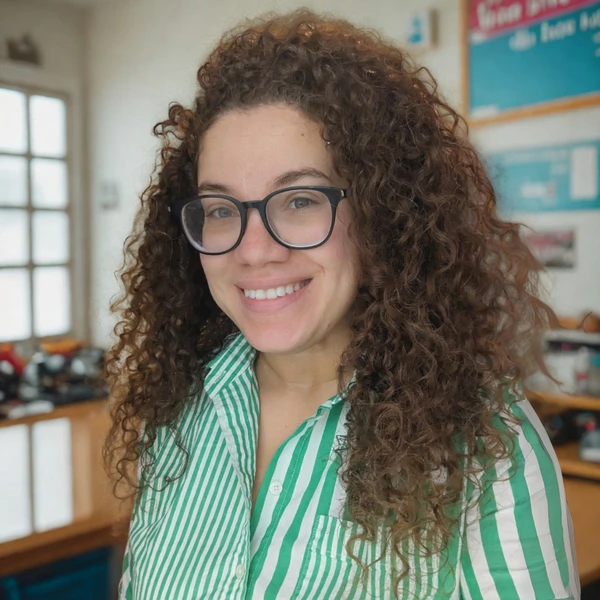
Hobbies and interests
Sewing
Cooking
Interior Design
Education
Comedy
Acting And Theater
Singing
Music
Babysitting And Childcare
Girl Scouts
Exploring Nature And Being Outside
Reading
Adult Fiction
Adventure
Book Club
Crafts
Education
Design
Cookbooks
Contemporary
Family
Fantasy
How-To
Romance
Science Fiction
I read books daily
Cristina Glover
1x
FinalistCristina Glover
1x
FinalistBio
I am a non-traditional student pursuing a career as a Family and Consumer Sciences (FCS) teacher because I believe practical life skills are foundational to independence, confidence, and long-term well-being. Returning to college at this stage of my life has been a deliberate and purpose-driven decision. While working full time and managing family and community responsibilities, I have earned a 4.0 GPA, made the Dean’s List, and been accepted into the Honors Program, demonstrating discipline, resilience, and commitment to excellence.
In New York State, FCS is a Career and Technical Education field that extends far beyond cooking and sewing. It integrates nutrition, human development, personal finance, housing, textiles, and independent living through project-based learning that connects classroom instruction to real-world application. I am completing my Associate degree in Childhood Education and will transfer to Buffalo State University to earn my B.S. in Family and Consumer Sciences Education.
My path is rooted in lived experience. As a longtime Girl Scout troop leader, I taught leadership, financial literacy, nutrition, civic engagement, and independence. I have been sewing since sixth grade, create garments and home goods, and enjoy cooking and woodworking. I also worked as a Life Skills Coach supporting individuals with developmental disabilities, strengthening my ability to differentiate instruction and support diverse learners.
I am committed to preparing students not just for graduation, but for capable, confident adulthood.
Education
SUNY Buffalo State
Bachelor's degree programMajors:
- Family and Consumer Sciences/Human Sciences, General
Minors:
- Outdoor Education
Erie Community College
Associate's degree programMajors:
- Education, General
Miscellaneous
Desired degree level:
Master's degree program
Graduate schools of interest:
Transfer schools of interest:
Majors of interest:
Career
Dream career field:
Education
Dream career goals:
Family and Consumer Science Teacher
Intelligence Analyst & Human Resources Specialist
US Army Reserves2006 – 20115 yearsOffice Manager
United Methodist Church2017 – Present9 yearsOperational Specialist
March of Dimes2016 – 20182 years
Public services
Volunteering
Girl Scouts of Western New York — Troop Leader2013 – PresentVolunteering
Girl Scouts of Western New York — Service Unit Product Program Manager2018 – 2023
Lotus Scholarship
Growing up in a single-parent household taught me that stability is built with intention. For much of my childhood, it was just my mom, my older sister, and me. We didn’t have the latest or the best of anything, but we never went without what we needed. My clothes were often secondhand, but they were always clean and in good repair. We didn’t have money for extras, but our home was structured, consistent, and steady. My mother made sure of that.
Watching her manage everything—finances, parenting, and eventually her own college education—shaped how I approach challenges. I learned early that progress doesn’t require abundance; it requires discipline. When I returned to school in my late thirties while working full time and raising my only child, I carried that mindset with me. Maintaining a 4.0 GPA is not about perfectionism; it reflects the standard I was raised with: do the work, even when it’s inconvenient.
Coming from a single-parent household also sharpened my awareness of how much unseen labor holds families together. That perspective drives my goal of becoming a Family and Consumer Sciences educator, where I will teach financial literacy, household management, and shared responsibility to all students—skills that build long-term stability.
I am actively pursuing this path by completing my undergraduate degree, preparing for teacher certification, and continuing to engage in community-centered service. My upbringing did not limit me—it prepared me. I intend to use that foundation to strengthen the next generation.
Jeannine Schroeder Women in Public Service Memorial Scholarship
One persistent social issue that rarely receives the attention it deserves is the continued socialization of household labor and caregiving as “women’s work.” From an early age, girls are more likely to be taught cooking, cleaning, budgeting, and caregiving skills, while boys are often excused from developing those same competencies. The result is not just an imbalance in adulthood—it is a systemic gap in life preparation that reinforces unequal distributions of unpaid domestic labor and limits men’s independence.
I am working to address this issue through my pursuit of a degree in Family and Consumer Sciences Education, a public service field dedicated to teaching practical life skills in K–12 settings. My goal is to create classroom environments where all students—regardless of gender—are explicitly taught the competencies necessary for independent living.
When boys are not taught how to prepare meals, manage a household budget, understand child development, or maintain a home, we are not protecting them—we are limiting them. We are also placing disproportionate responsibility on women in adulthood. This dynamic perpetuates economic vulnerability, caregiver burnout, and unequal domestic expectations that follow young people into marriages, partnerships, and parenthood.
In my nonprofit and community-based work, I have seen how essential explicit instruction can be. As a Life Skills Coach supporting individuals with developmental disabilities, I implemented individualized plans focused on budgeting, communication, transportation, and daily living tasks. The transformation that occurs when someone gains confidence in managing their own life is profound. Independence is not innate; it is taught.
Family and Consumer Sciences classrooms offer a structured opportunity to disrupt gendered assumptions. When boys sew, cook, care for infant simulators, and learn financial planning alongside girls, the message shifts. Life skills are human skills. Caregiving is leadership. Domestic competence is not gendered—it is foundational.
This work is deeply connected to social justice. Unequal domestic labor contributes to wage gaps, career stagnation for women, and long-term financial inequity. Teaching boys and girls the same practical skills at the same standard challenges that imbalance at its root. It equips future adults to enter relationships as partners rather than dependents.
As a non-traditional undergraduate student maintaining a 4.0 GPA while working full time, I am preparing intentionally for this responsibility. I have spent years volunteering and working in community-centered roles, and I have witnessed firsthand how stability is built through systems and shared responsibility. I am not entering education to replicate outdated norms. I am entering to modernize them.
Addressing this issue does not require radical slogans; it requires curriculum design. It requires equitable expectations. It requires refusing to laugh when a boy says, “I don’t cook,” and instead responding, “You will.”
Through public education, we have the opportunity to shape not just academic outcomes, but adult realities. By teaching all students to manage households, care for others, and sustain themselves financially, we create a generation better prepared for partnership, equity, and independence.
Challenging the socialization of domestic labor as “women’s work” is not peripheral to public service—it is central to it. My work in Family and Consumer Sciences education is one way I am actively working to change that narrative.
Susie Green Scholarship for Women Pursuing Education
The truth is, I went back to school because I saw the next chapter of my life approaching, and I wanted to meet it with intention.
My daughter is my only child. I married young and became a parent young, and for nearly two decades, raising her has been the center of my life. Every decision I made — where we lived, how I worked, how I structured my time — revolved around giving her stability, opportunity, and room to grow. She is now a recruited student athlete preparing for college, and watching her step into that independence is one of the proudest seasons of my life.
I have given her all I had to give. I have done my best to raise her with discipline, kindness, resilience, and confidence. And now, as she prepares to leave for college, I trust that I did a good job.
But that transition forced me to ask myself an honest question: Who am I when she leaves?
I didn’t want to become an empty nester drifting without direction. I am not disappearing when she goes to college — and I am certainly not abandoning my role as her mother — but I am entering a season where I can move forward for myself. I have knowledge, experience, and energy that still feel active. I wanted to channel them into something meaningful rather than stand still.
Returning to school required courage, not because I doubted my ability, but because I had to step back into vulnerability. I am in my late thirties. Many of my classmates are nearly half my age. I work full time. I manage a household. Choosing to enroll meant accepting discomfort — learning new systems, adapting to academic rigor again, and rebuilding study habits after years away from formal education.
But I grew up watching my mother pursue higher education while raising my sister and me as a single parent. She earned multiple degrees not because it was easy, but because it mattered. That modeling stayed with me. Education was never something reserved for youth; it was something you return to when you are ready to grow.
Losing my Dad in 2023 after a five-year battle with brain cancer further clarified my decision. Watching him decline made one truth unavoidable: time is not guaranteed. If there is meaningful work you feel called to pursue, postponing it indefinitely is a gamble.
So I chose to move.
Courage, for me, looked practical. It looked like filling out applications. Registering for classes. Studying after long workdays. Maintaining a 4.0 GPA not out of perfectionism, but out of respect for the opportunity. It looked like proving to myself that growth does not expire with age.
Going back to school is not about replacing motherhood. It is about honoring it. I modeled perseverance for my daughter while she was home. Now I model lifelong learning as she builds her own future.
I am not going anywhere. I am simply stepping forward.
The courage to return came from recognizing that I fulfilled one sacred role well — and that I am allowed to build the next one with equal intention.
Curtis Holloway Memorial Scholarship
My educational journey has been shaped most profoundly by my mother, who raised my older sister and me as a single parent, and later by my Pa, who entered our lives in 2002 and chose to love us as his own. But long before I returned to school in my late thirties, I had already been watching education in motion.
For much of my childhood, it was just my mom, my sister (born in 1987), and me (1988). My mother carried the full weight of our household—financially and emotionally—while continuing to pursue her own education. She earned her AAS in Business from Erie Community College, later completed a BA in Finance at the University at Buffalo, and years after that went back again to earn her Executive MBA from the University at Buffalo School of Management (2008–2010). I didn’t just hear her talk about education—I watched her do it.
I watched her study at the kitchen table. I watched her juggle coursework, work responsibilities, and parenting. I watched her walk across stages more than once. There was no dramatic speech about sacrifice; there was just steady movement forward. Education wasn’t theoretical in our home. It was visible. It was practiced. It was normal.
Growing up in a single-parent household meant I understood early that stability does not happen by accident. Bills were paid because someone worked hard. Goals were achieved because someone stayed disciplined. My mother never presented herself as overwhelmed, even when she must have been. She modeled resilience quietly and consistently.
When my mom married Pa in 2002, our family expanded, and in 2005 my younger brother was born. Pa reinforced what my mother had already built. He never used the word “step” in reference to my sister or me. He encouraged curiosity, celebrated effort, and treated our goals as worthy of attention. His support was relational and intentional—he showed up emotionally the way my mother showed up structurally.
Together, they shaped my understanding of success. My mother taught me endurance. Pa taught me presence. My mother demonstrated that education is a long game. Pa demonstrated that love and consistency are just as important as achievement.
Now, as a non-traditional student working full time while raising my own daughter, I often think about those years. Maintaining a 4.0 GPA while balancing responsibilities is not just personal ambition—it is learned behavior. I am building on a model I witnessed my entire life. I know what it looks like to pursue education while parenting because I watched it happen.
Losing Pa in 2023 after a five-year battle with brain cancer sharpened my sense of urgency. Watching him lose his words, then his strength, reminded me that time is not guaranteed. His death did not remove his influence; it solidified it. Continuing my education became one way to honor both him and my mother—to live out the discipline and commitment they embodied.
Their support was instrumental because it made education feel attainable, even within the constraints of a single-parent household. I never grew up believing opportunity was reserved for other families. I grew up believing that effort mattered.
As I work toward becoming an educator, I intend to extend that belief to my students—especially those navigating single-parent homes or blended families. I want to be the steady adult who sees their potential and expects them to rise to it. Everything I am building now rests on what they built first.
Brent Gordon Foundation Scholarship
I lost my dad—my Pa—on June 21, 2023, after a five-year battle with brain cancer. Even as an adult with a family of my own, his death changed the shape of my life in ways I’m still discovering.
Pa wasn’t my biological father, but there were never any “step” titles in our relationship. From the moment he met me as a kid—his “little ball of energy”—he claimed me as his own. Our relationship was built on small, steady things: weird car-ride conversations about whether there’s life on other planets, inventing the word “feethum” for the top of your foot, and sharing Altoids and Listerine breath strips that my daughter and I now jokingly call “Peepaw Communion.” Those details might sound small, but they are the language of our family’s love.
When he was diagnosed with brain cancer, we began losing him slowly. The first thing to go were his words. He would reach for simple phrases and come up empty. Then names slipped away. He started calling my brother “boy,” my mom just “Mom,” and my daughter Phoebe “Little Cristina” or even made-up names. For a long time, he still remembered mine—Cristina, Xtina, Kiddo—but eventually even that disappeared. He was devastated the day he couldn’t find my name. I wasn’t. I reminded him as many times as he needed. That experience taught me that love isn’t just in what someone remembers; it’s in your willingness to repeat, to stay, to show up even as things fall apart.
Some of my most treasured memories from those years are the moments he had with Phoebe. In 2020 he started teaching her to play guitar. After he passed, I recovered a video of that first lesson from his phone. He’d kept it there for three years, which told me how much it meant to him. Before he died, he bought her a purple guitar that she still plays today. Watching her practice on the guitar he chose for her feels like watching their relationship continue in a different form.
Being with him through illness and loss has had a direct impact on my own journey. Grief rearranged my priorities. It reminded me that time is not guaranteed and that if there is work worth doing, it shouldn’t be postponed indefinitely. I had already returned to school as a non-traditional student in my late thirties, balancing coursework with full-time work and parenting. After his death, my commitment deepened. Maintaining a 4.0 GPA and pursuing a degree in education—on top of everything else—has been one way of honoring what he modeled: responsibility, follow-through, and showing up for the people you love.
Losing Pa also made me more aware of generational impact. He poured into me; I pour into my daughter; and now, as I prepare to become a K–12 educator, I want to extend that circle outward to my future students. Walking through his illness taught me patience, compassion, and the importance of seeing people as whole human beings, not just as roles or labels. Those are qualities I will bring into my classroom.
His death was a profound loss, but his life is still shaping my decisions. The way I parent, the way I study, and the way I move toward my goals all carry his fingerprints. This scholarship would support me in finishing the degree I am working so hard to complete—but more than that, it would help me continue building the kind of life he believed I could have.
Goellner Public Education Scholarship
I did not decide to become a teacher in a lecture hall — I grew into it through lived responsibility. My decision to pursue a career in K–12 education did not come from a single defining moment. It came from years of experience layered slowly over time. I did not follow a traditional path into teaching. Instead, education found me through the roles I was already living — as a young wife, a mother, a troop leader, a nonprofit professional, and eventually a non-traditional college student.
I married and became a parent young, while many of my peers were still navigating typical college life. I often felt slightly out of sync — building a household and managing responsibilities while others were building resumes. That stage of life required me to grow up quickly. I learned how to budget, plan, advocate, and problem-solve not in theory, but in practice. I learned that independence is built through small, steady skills: managing time, communicating clearly, and making thoughtful decisions.
Over the past decade, I have worked in a preschool setting, watching children transform from hesitant toddlers into capable kindergarteners. At home, I have watched my own daughter grow from a shy six-year-old into a confident high school junior preparing for college. Observing development unfold — academically, socially, and emotionally — reshaped how I understand education. Growth is rarely dramatic. It happens because someone steady is present. It happens through relationships, patience, and high expectations paired with support.
My professional background further solidified this calling. As an Office Manager for a church and preschool, I oversee operations, budgeting, and family engagement initiatives. As a former Life Skills Coach supporting individuals with developmental disabilities, I implemented individualized plans focused on independence and functional skill development. Earlier in my career, I worked in nonprofit leadership and served in the military, where I developed strengths in organization, accountability, and structured planning. Across every role, the common thread has been supporting individuals and families through systems that promote stability and growth.
Returning to college in my late thirties brought a new perspective. Sitting in classrooms alongside students nearly half my age, I once again felt slightly outside the typical timeline. But this time, that feeling brought clarity rather than doubt. My lived experience deepened my academic engagement. I approached coursework not simply to complete assignments, but to understand how theory connects to practice. Maintaining a 4.0 GPA while working full time required discipline and sacrifice, but it also reaffirmed that education is not confined to one stage of life.
I am drawn to K–12 education because it is where foundational skills and identities are formed. Students do not just learn content; they learn how to see themselves. I want to build classrooms where students feel capable, supported, and challenged — where learning feels structured yet human.
Teaching is not a reinvention for me. It is alignment. The responsibilities I embraced early in life, the systems I learned to build, and the growth I continue to pursue have all led me here — ready to serve students with steadiness, experience, and purpose.
Kerry Kennedy Life Is Good Scholarship
My career of choice is becoming a Family and Consumer Sciences (FCS) educator because I believe practical life skills are the foundation of independence, stability, and dignity. In New York State, FCS extends far beyond cooking and sewing. It includes financial literacy, nutrition, human development, housing, and independent living. These are not secondary subjects — they are life infrastructure. I am passionate about teaching students how to manage money, prepare food, communicate effectively, and make thoughtful decisions, because those competencies shape how confidently someone enters adulthood.
My path here has not been traditional. I married young and became a parent while many of my peers were still navigating typical college life. I built a family while others were building resumes. I often felt out of sync — balancing grocery budgets, schedules, and long-term planning while friends focused on dorm life and internships. I do not regret that path; it shaped me. But it required me to grow up quickly and develop practical systems for time, money, and responsibility.
Now, in my late thirties, I sometimes experience a familiar feeling — this time as a non-traditional student sitting beside classmates nearly half my age. Once again, I am slightly outside the expected timeline. But what once felt isolating now feels grounding. I understand that growth does not happen on a universal schedule. I have learned that lived experience is not a detour; it is preparation.
Professionally, every role I have held has centered on structure and family-centered impact. As an Office Manager for a church and preschool, I oversee operations, budgeting, vendor negotiations, and family engagement initiatives. As a former Life Skills Coach supporting individuals with developmental disabilities, I implemented individualized plans focused on independence and functional daily living skills. Earlier in my career, I worked in nonprofit leadership and served in the military, developing strengths in organization, documentation, and accountability. Across all of these roles, the consistent thread has been helping individuals build stability through practical systems and skills.
Returning to college while working full time has required real sacrifice. My weeks are scheduled with precision. Evenings that could be restful are spent reading, outlining, and revising. Maintaining a 4.0 GPA has demanded discipline, organization, and the humility to ask for help when concepts are complex. I have sacrificed leisure, spontaneity, and sometimes rest — not out of obligation, but out of intention.
There is vulnerability in beginning again. Choosing to pursue certification later in life means embracing discomfort and allowing yourself to be a learner in a room where you are not the typical student. But these sacrifices feel purposeful. My daughter has watched me juggle deadlines and persist through difficult semesters. She has seen that growth does not expire with age and that education is worth sustained effort.
Family and Consumer Sciences education feels like alignment, not reinvention. It formalizes the work I have been doing for years — teaching life skills, building systems, supporting families, and modeling accountability. I want to create classrooms where students leave not just informed, but capable. For me, this career is not simply employment. It is a commitment to preparing young people for independent, confident adulthood.
Marie Humphries Memorial Scholarship
I found my way to teaching through lived experience rather than a straight path. For nearly ten years, I have worked at Little Lamb Preschool, where I’ve had the privilege of watching children grow from hesitant two-year-olds into confident, capable five-year-olds. During that same decade, something just as meaningful was happening at home: my only child grew from a shy six-year-old into a brazen, thoughtful sixteen-year-old now navigating her junior year of high school. Watching development unfold both professionally and personally has sharpened how I understand learning, growth, and the role of a steady, caring adult in a child’s life.
What began as a part-time job to supplement income while staying active in leadership roles—Girl Scouts, church, school events, youth sports—eventually began to feel incomplete. I’m entering the phase of life where I will soon be an empty nester. The main force shaping my schedule for years—my daughter—no longer needs me in the same way. But I still have energy, curiosity, and purpose to give.
As a lifelong Girl Scout and troop leader for many years, I taught lessons from handbooks, but more importantly through hands-on projects, outdoor adventures, field trips, and relationship-building. Teaching, I learned, doesn’t only happen through formal instruction. It happens through trust, modeling, reflection, and joy. It happens when a child realizes she can do something hard.
As my daughter began exploring colleges and preparing to leave home, I felt a pull to pursue something meaningful for myself. That reflection led me back to school. Returning to college has reminded me that I am still capable of growth. Balancing work, school, volunteer commitments, and parenting a teenager has required intense organization and discipline. Earning a 4.0 GPA has been rewarding, but more than that, it has affirmed that this path is not impulsive—it is intentional.
Unexpectedly, this journey has also become a teaching experience for my daughter. She has watched me complain about readings, juggle deadlines, and still push through because the work matters. Recently, she asked for a large whiteboard for her room so she could mirror my planning system. When my grades were posted and I earned a 4.0, she celebrated like they were her own. I told her simply: if I can do it, you can too.
As a parent, I have always said that if I did my job well, my daughter would grow into someone who follows her dreams, treats others with kindness, and does the right thing even when it’s difficult. Someone with the courage to speak up and the confidence to stand for what matters. That is also my goal as an educator.
I believe students learn best when they are allowed to make mistakes while the stakes are still small. Failing safely, reflecting, and trying again builds resilience. I want to be the teacher who answers questions honestly, supports curiosity, and creates a classroom that feels human and connected to real life.
Teaching doesn’t feel like a second career. It feels like the natural continuation of the work I’ve already been doing for years.