
Ethnicity
Black/African
Hobbies and interests
Art
Coding And Computer Science
Finance
Courtney Thomas
1x
Finalist
Courtney Thomas
1x
FinalistBio
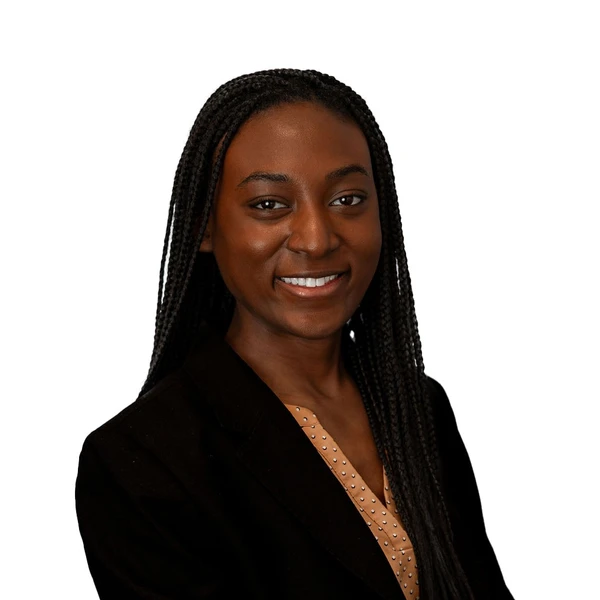
Hello! My name is Courtney Thomas. I am passionate about using data and technology to solve real-world problems, I’m pursuing a B.S. in Computer Science with a Data Science concentration and minors in Statistics and Finance at Virginia Commonwealth University. My goal is to bridge quantitative analytics and community impact through sustainable, data-driven innovation.
I’ve led cross-disciplinary teams through projects such as the U.S. Department of Energy’s Solar Decathlon, where I coordinated designers and engineers to build an affordable net-zero housing proposal recognized for innovation and collaboration.
As a Data Science and Machine Learning Undergraduate Assistant and Quantitative Analyst-in-Training, I combine research, finance, and coding to develop predictive models that inform better decisions. I’m deeply committed to increasing representation in STEM and mentoring students from underrepresented backgrounds to lead confidently in technical fields.
Education
Virginia Commonwealth University
Bachelor's degree programMajors:
- Computer Science
Minors:
- Finance and Financial Management Services
- Statistics
Virginia Commonwealth University
Bachelor's degree programMajors:
- Interior Architecture
Miscellaneous
Desired degree level:
Master's degree program
Graduate schools of interest:
- Virginia Commonwealth University
- Massachusetts Institute of Technology
Transfer schools of interest:
Majors of interest:
Career
Dream career field:
- Computer Software
Dream career goals:
To become a quantitative analyst and technology leader who develops predictive, data-driven solutions for sustainable finance and community resilience. I aspire to merge data science and financial modeling to help cities, organizations, and investors plan for long-term economic and environmental sustainability.
Stem & Coding Instructor
CODEVA2023 – 20241 yearQuantitative Analyst-in-Training
VCU Student Managed Investment Portfolio2025 – Present1 yearData Science & Machine Learning Undergraduate Assistant
VCU2025 – Present1 year
Sports
Track & Field
Varsity2015 – 20172 years
Awards
- 4x400 Relay
Research
Accounting and Computer Science
VCU Twin Registry — Data Science/ML Undergraduate Assistant2025 – Present
Arts
Freelance
IllustrationTo Laugh in A Kitchen by Maureen Bannister2016 – 2017
Public services
Volunteering
VCU — VCU STEM Mentor (Department of Engineering)2025 – PresentPublic Service (Politics)
Southeastern Wind Coalition — VCU ISEE Finalist/Awardee - Community Design Volunteer2024 – 2024
Future Interests
Volunteering
Entrepreneurship
Zelaya Creativity Scholarship
Even
The table rocked the moment Dara set her coffee down a small click against the tile that, as far as she could tell, only she could hear. Everyone else in the café had made peace with it. The man across the aisle balanced his laptop, his lunch, and apparently his whole nervous system on three legs and a prayer. Dara could not.
She folded a napkin into eighths and slid it under the short leg. The table tipped the other way. Now a different leg was short. This is the thing nobody tells you about wobbly tables: there is no short leg. There is only a floor that has quietly stopped being flat, and four legs negotiating badly with it.
She got down on the tile actually down, cheek near the grout, while the barista pretended not to watch and sighted along the base until she found it. Not a short leg at all. A high one, an eighth of an inch too proud, lifting its diagonal partner off the ground every time someone breathed near it. The napkin was wrong. The napkin was always wrong; paper compresses, then you're back where you started, just with worse posture.
She needed something that wouldn't give.
The sugar packet flattened to nothing. The coffee stirrer snapped. A folded receipt held for exactly as long as it took her to feel proud, then surrendered. Around her, people came and went, untroubled, ordering oat lattes on top of a structural failure. Dara understood how she looked. A grown woman conducting a forensic investigation into a café table while her coffee went cold. Trivial. She'd have said so too, about anyone else.
But there's a specific, private itch in being the only person who notices a thing is wrong and could be right. It's not about the table. It's about the eighth of an inch the knowledge that the gap is measurable, which means it's closeable, which means walking away is a choice and not an accident.
The fix, when it came, was a wine cork someone had left on the windowsill, trimmed with her keys into a wedge so thin it was almost an idea. She seated it under the proud leg and pressed. Set her elbows on the surface. Leaned her full weight in.
Nothing. No click. The table met the floor on all four points at once, like it had been waiting years for someone to bother.
She sat back down and drank her coffee, which was terrible now, cold and over-sweet from the sacrificed packet. Worth it. She stayed another twenty minutes, then packed up and left the fixed table for whoever came next.
A teenager took it without looking. Set down a milkshake, opened a textbook, never felt the ground shift, because it didn't. He would never know it had ever been otherwise — which was, Dara thought on her way out, the entire point of doing it. The best repairs are the ones nobody feels. You just get to sit at a table that holds.
Women in STEM Scholarship
Building Tomorrow’s World with Data and Purpose
When I first started learning how to code, I didn’t see it as a path to a career, I saw it as a way to create change. I was fascinated by how technology connects people, how something written in a few lines of code could make life easier or solve a problem that once felt impossible. As a Black woman in computer science, I’ve learned that STEM is more than algorithms and machines, it’s about the impact those tools can make on people’s lives. My journey has been about learning to use data not just to predict outcomes, but to make a difference for overlooked communities.
I’m pursuing a Bachelor of Science in Computer Science with a concentration in Data Science and minors in Statistics and Finance at Virginia Commonwealth University. Every class reminds me that the future belongs to those who understand both numbers and people. For me, STEM isn’t about prestige, it’s about purpose. I want to use data to make the world fairer, giving communities like mine a voice in decisions that shape our environment and economy. I believe data can be a form of advocacy and a bridge toward more inclusive decision making.
One of the most meaningful experiences of my college journey was serving as Student Lead for the U.S. Department of Energy Solar Decathlon. Our challenge was to design a net-zero, affordable housing project for low-income families in Richmond, Virginia. I was one of the youngest on the team and one of the only Black women, but I quickly learned that leadership isn’t about being the loudest voice in the room, it’s about listening, learning, and helping others see how their work connects to something bigger. Late nights of collaboration taught me that technology and empathy must work together. When we presented our design, I felt pride not just in what we built, but in why we built it, to create sustainable housing rooted in compassion and equity.
As a Data Science and Machine Learning Undergraduate Assistant, I’ve analyzed climate and social data to identify communities most vulnerable to environmental risks. I’ve seen how data can tell stories that inspire change, from modeling natural disasters to mapping underserved regions. My technical work in Python, R, and statistical modeling gives me the tools to solve problems, but my heart for service gives me the reason to solve them.
Outside the lab, I mentor women and students of color through VCU’s STEM mentorship program. I know what it feels like to question whether you belong in a space not built for you. Helping a student understand a concept or finish her first project reminds me why representation matters, it changes what people believe is possible. Each time I see someone’s confidence grow, I’m reminded that progress begins when we lift each other up.
Looking ahead, I hope to merge my love for data and finance to design solutions for sustainable investing and community resilience. I want to help organizations make responsible financial decisions that benefit both people and the planet. My dream is to become a quantitative analyst and technology leader who measures progress not just in profit, but in purpose. The Women in STEM Scholarship would mean more than financial support, it would affirm the values guiding my journey: resilience, empathy, and innovation. I believe the future of STEM belongs to women who build with both intelligence and heart. I hope to keep paving that path so one day another young girl can look at me and think, “If she can do it, maybe I can too."