user profile avatar

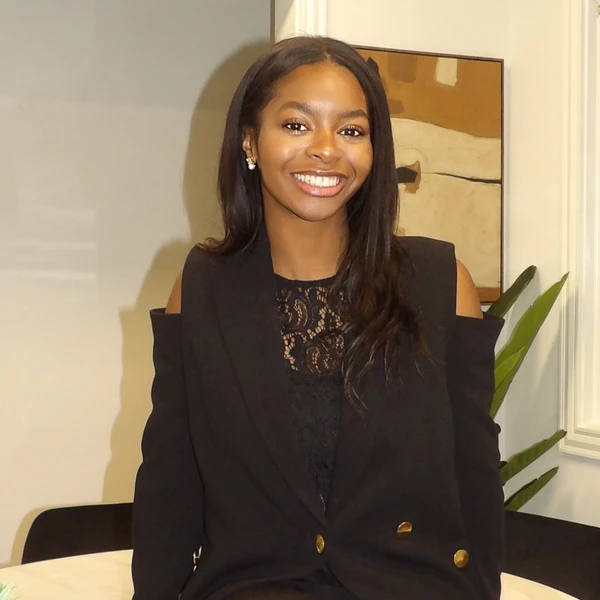
Cori Singleton

1x

Finalist

Bio

Hello, my name is Cori Singleton, and I am a dedicated college student pursuing a degree in Fashion Marketing with a strong passion for fashion, visual arts, and creative expression. I aspire to build a career that combines creativity with purpose, using fashion as a platform to inspire confidence, individuality, and tell powerful stories. Throughout my academic journey, I have been actively involved in organizations such as the National Art Honors Society, Youth Leadership, and Peer Leadership. These experiences have strengthened my creativity, leadership, and communication skills—qualities that I carry into every project and collaboration. Through fashion, I discovered my voice and learned to use my background as a strength while navigating a competitive industry. I am proud to share that I was recently accepted to LIM College, where I will continue my education as a transfer student majoring in Fashion Marketing! Currently, I am balancing school and a full-time job while applying for scholarships to support my education and relieve financial stress as I prepare for this next chapter. Every opportunity brings me one step closer to my goal of making a meaningful and lasting impact in the fashion industry.

Education

Middlesex County College

Associate's degree program
2024 - 2026
  • Majors:
    • Marketing
    • Business, Management, Marketing, and Related Support Services, Other
    • Visual and Performing Arts, General

Watchung Hills Regional High School

High School
2019 - 2023

Miscellaneous

  • Desired degree level:

    Bachelor's degree program

  • Graduate schools of interest:

  • Transfer schools of interest:

  • Majors of interest:

    • Visual and Performing Arts, General
    • Business, Management, Marketing, and Related Support Services, Other
    • Marketing
    • Design and Applied Arts
  • Not planning to go to medical school
  • Career

    • Dream career field:

      Apparel & Fashion

    • Dream career goals:

    • Consumer Behavior & Market Analysis Extern

      Extern (Beats by Dre)
      2025 – 2025
    • Teacher's Assistant

      The Learning Experience
      2023 – Present3 years

    Sports

    Cheerleading

    Varsity
    2022 – 20231 year

    Artistic Gymnastics

    Club
    2011 – 202312 years

    Awards

    • Gold Medalist

    Arts

    • National Art Honors Society

      Visual Arts
      Collaborative School Art Projects, Visual Art Installation
      2022 – 2023

    Future Interests

    Volunteering

    Entrepreneurship

    Tamika A. Nurse Fashionista Memorial Scholarship
    When I was five years old, I told myself “I believe I can fly,” and launched myself off the floor—landing flat on my chest. Fortunately, I had no serious injuries… besides a sore ribcage in the days that followed. No, I couldn't actually fly, but for that brief moment (≈ 0.6 seconds) that I remained in the air, I truly believed that I could. That’s what makes a superhero right? Learns from mistakes ☐ Not scared to try new things ☐ Makes good choices ☐ Gets back up when they fall ☐ Always helps others ☐ Can fly… ☐ So, if I couldn’t fly, then what truly made me the superwoman I am today? The IT Girl. Let’s look back to a year ago: “Congratulations, Cori! You’re a finalist!” Yes, I was a finalist for this scholarship. Honestly, I’m forever grateful. Would it have been nice to win? Absolutely—but I learned something more valuable. After reading that message, I reflected on becoming an IT girl. Over the past year, I applied the lessons from The IT Girl Rules: Get Hired And Stay Hired as I became my own hero. I was always waiting for someone to save me: my parents, friends, God. I once asked God to save me. I thought I was waiting on him, but really he was waiting on me to take the first step. Paying my own tuition, working full-time, and entering fashion without experience weren’t setbacks—they prepared me for a better life. Learns from mistakes = Wisdom ☑ Ms. Tamika Nurse taught me not to stay where I’m comfortable, but to step into places where I could grow. So I did. I applied to LIM College for Fashion Marketing, joined a Beats by Dre externship, and showcased garments in a fashion show. Those leaps led to my greatest accomplishments. From that, I learned to trust God before everything aligned and moved before I felt ready. Not scared to try new things = Courageous ☑ One important lesson in becoming an “it” girl is having discipline with my time and ambition. Following Ms. Tamika A. Nurse’s advice, I built a consistent routine that changed my life. Building a portfolio and tailoring my resume expanded my opportunities while building self-respect. Makes good choices = Responsible ☑ An “it” girl knows life isn’t linear, and I still wonder if I’m good enough. Applying for internships and scholarships feels like knocking on a locked door, but I keep going. Every rejection brings me closer to the right opportunity. Gets back up when they fall = Resilient ☑ “It” girls invest in their community. Burnout taught me I couldn’t pour into myself without pouring into others. In that season, I leaned on family, friends, and volunteered with the American Heart Association—reminding me of community and connection. My own experiences taught me that everyone’s story looks different and deserves to be seen beyond circumstance. As I continue growing my career, my goal is to create an annual scholarship fund for women of color pursuing fashion. I want to invest in women whose stories have been overlooked, giving them confidence to pursue their dreams. I haven’t won yet, but this scholarship has already changed my life. I hope to pass on the same light Ms.Tamika Angelica Nurse shared with me. Always helps others = Helpful ☑ I’ve learned that becoming an “it” girl is a lifelong journey. “Her road to self-improvement has no true end.” With the advice in The IT Girl Rules: Get Hired And Stay Hired, I learned how to become my own hero. Can fly ☒ Will soar ☑
    RonranGlee Literary Scholarship
    In the train, it was a question of being aware of my body, no longer in the third person but in triple. In the train, instead of one seat, they left me two or three. I was no longer enjoying myself. I was unable to discover the feverish coordinates of the world. I existed in triple: I was taking up room. I approached the Other ... and the Other, evasive, hostile, but not opaque, transparent and absent, vanished. Nausea. I was responsible not only for my body but also for my race and my ancestors. I cast an objective gaze over myself, discovered my blackness, my ethnic features; deafened by cannibalism, backwardness, fetishism, racial stigmas, slave traders, and above all, yes, above all, the grinning Y a bon Banania. The silent passenger: a metaphor often used to symbolize one’s life journey where you are the driver, the bus is your life, and the passengers are your thoughts, emotions, and bodily sensations, while the silent passenger represents trauma or the internal critic. The metaphor suggests a sense of control over one’s internal world, where movement continues despite external disruption. However, Frantz Fanon complicates this assumption of control in Black Skin, White Masks (Chapter 5: “The Lived Experience of Blackness”). He describes a rupture in his sense of subjectivity, where he is no longer fully the “driver” of his self-experience. Instead, Fanon reveals how awareness of the self is mediated through the gaze of others. Identity becomes externally defined rather than internally unified, exposing how racial perception destabilizes selfhood. External Fanon introduces the scene by entering a train, a public space. He quickly realizes how much space he occupies simply by being himself, noting that “instead of one seat, they left me two or three.” This is not passive avoidance but racial distancing shaped by discomfort toward his Blackness. From this distance, Fanon becomes increasingly aware of his body as something seen rather than simply lived. This marks a shift from natural presence to racialized awareness. He no longer experiences ease in his body, but instead becomes conscious of how he is occupying space. This produces a breakdown of “natural presence,” where visibility itself becomes uncomfortable. Fanon states, “I was unable to discover the feverish coordinates of the world.” His environment is no longer neutral or navigable; space itself becomes disorienting. At this point, Fanon is no longer experiencing himself solely from his own perspective, but through a racialized lens often described as the “white gaze.” Internal Fanon describes moving from a single perspective into “triple” existence, representing himself as he is, as he sees himself, and as he is seen by society. This signals a fragmentation of identity shaped by external perception. The child’s exclamation, “Look, a Negro! Maman, a Negro!” reduces Fanon from an individual to a racial category, showing how he is interpreted before he is understood. Through this white gaze, Fanon becomes aware of himself both as a subject and as an object of perception. This creates a divide between lived experience and social interpretation, where identity is no longer unified, but shaped by outside judgment. His sense of self becomes shaped by visibility rather than personal coherence. He expresses, “I cast an objective gaze over myself,” showing how he begins to see himself through the same external lens imposed by others. Identity becomes structured through racial visibility, where individuality is replaced by imposed meaning and representation. Psychological Fanon’s encounter with “the Other” reflects the social force shaping his identity. The Other is not just another person, but a representation of the racialized system that shapes how he is seen. As he approaches them, they become evasive and hostile, reinforcing his exclusion before any personal recognition can happen. At this stage, Fanon experiences “nausea,” which is not physical but existential. It reflects psychological distress caused by the breakdown of a clear sense of self. His identity is no longer steady, but disrupted by the tension between how he sees himself and how he is seen. This moment marks the peak of internalized racial perception: Fanon is not only defined externally, but also begins to feel that definition internally as alienation and psychological strain. Ultimately, Fanon’s experience reveals how racial perception reshapes self-awareness. Racism is not merely an external prejudice; it fundamentally alters how individuals experience their own identity. What begins as an external gaze becomes a structure of self-perception. In turn, this process produces a fracturing of identity, resulting in a fractured sense of identity that exposes how perception can shape consciousness itself.
    Wicked Fan Scholarship
    Dear Wizard, I’ve learned that belief does not require truth to be powerful—only a mind willing to accept it. When I was five years old, I told myself, “I believe I can fly,” and launched myself off the floor—landing flat on my chest. Fortunately, I had no serious injuries, besides a sore ribcage in the days that followed. No, I couldn't actually fly, but for that brief moment (≈ 0.6 seconds) that I remained in the air, I truly believed that I could. Silly, I know. Even then, that experience taught me how imagination can feel just as real as truth itself. Wicked resonated with me not just because of its magic, but because you revealed how belief is constructed, who we hand our power to, and what happens when we reclaim it. It was you who stated, “They’re never gonna stop believing in me… because they don’t want to,” after admitting to being a fraud. A fascinating paradox in which you were powerless in truth, yet powerful in perception. You painted yourself as a man of power, using belief itself as a means of control. I then realized that if people can believe in something false and still be transformed by it, then belief itself is the real power. That's the power of the mind. Limitless, yet so easily influenced by the world around us, shaping what we come to believe through each experience. Our reality is perceived as true because it’s all we’ve been exposed to. What we accept as true shapes the risks we take, the authority we obey, and the limits we impose on ourselves. Fortunately, beliefs are not fixed truths. They can be reshaped, challenged, and reprogrammed. Reprogramming the subconscious mind requires a conscious mind. This process was mirrored in the disillusionment Elphaba felt after discovering the difference between who she believed you to be and who you truly were. With that, I realized that you never needed magic to rule Oz; you needed belief. Once I understood this, I began to notice how often people live inside stories they never chose, simply because they were taught to believe them. Elphaba only began to fly freely once she stopped waiting for someone else to tell her she could. Like Elphaba, my understanding of flight began in a very literal way. I truly believed I could fly. Gravity brought me back down physically, but mentally, that belief stayed with me. Over time, flying came to mean something else entirely: learning that flight isn’t about escaping gravity, but about choosing ambition even when limits remain. Many people don’t realize how much belief they carry until it is tested. This scholarship is one of those moments for me. There are times when I doubt myself, but I am writing this essay believing that I have a real chance of winning. Carrying that belief forward means choosing action, even in uncertainty, toward the future I want to build. I made a promise to myself that I would do it—do it scared, do it tired, do it unapologetically. So I’m going for it, and this time, not even gravity will pull me down. Thank you, Wizard of Oz. Yours in flight, Cori Singleton
    Edward Dorsey, Jr. and Audrey Dorsey Memorial Scholarship
    “You become unstoppable when you work on things people can’t take away from you. Things like your mindset, character, and entire being.” As Black people, our skin color, hair textures, and history are important aspects of us that we can never change. What we can change are our minds by elevating them through education and recognizing our power by breaking out of this checklist of false beliefs: □ My Black identity is a limitation. □ I have to work twice as hard to get half as much. □ I am not good enough or knowledgeable enough. □ Other people cannot afford my work. Rather than falling victim to these ideas, we can embody a whole new mindset that affirms: ☑ I will not let the challenges I face based on my race diminish my accomplishments. ☑ I am worthy of my position and the success that comes with it. ☑ My voice is a powerful tool I can use to share my ideas, insights, and experiences with others. ☑ I am deserving of knowledge, I am capable of growth, and I use both to make an impact. Education and community are key to breaking these barriers. With limited representation of Black people in these competitive industries, access to education can change our lives. I plan to use my transfer to LIM College as a stepping stone to unlock opportunities in the business of fashion. Alongside the rigorous curriculum, internships are a graduation requirement, giving students real-world experience. A Bachelor’s degree in Fashion Marketing, combined with internships, will help me strengthen my resume with qualities beyond my physical characteristics. I believe that community, both digital and physical, is one of the most powerful forces in a world of racial division. Together, we can help each other’s dreams become reality through connections, words of affirmation, and financial support, such as this very scholarship. Applying for this scholarship gives us the opportunity to relieve financial burdens and bring us one step closer to our dreams. I admit, it’s easy to feel discouraged when others label your dream as unrealistic. At times, I start to believe them. Yet, I want to use my education to empower my Black community and prove what is possible. Knowledge is power, and I plan to share it, whether it's through academic insights or guidance on navigating through the business and fashion worlds. In today’s world, digital presence is essential. I want to utilize social media as a platform to mentor and guide others, especially those who may not see themselves represented in the fashion industry. Advice resonates more deeply when delivered by someone who reflects your background and experiences. Representation builds belief. When I see a successful Black woman in fashion, it reassures me that my dreams are attainable. It’s encouraging to see someone who looks like me achieving what I once only imagined. With education as my credibility, I can help others access resources, make connections, and open doors they thought were closed. Once I earn my degree, I will be able to provide others with guidance and a clearer path toward success. To me, a degree is not just a paper with my name, it's proof of the knowledge and experience that no one can take away. It represents resilience and excellence. Too often, we are told to play small, but I refuse. I want to show the world what Black excellence truly is: overcoming systematic obstacles and excelling. We are more than capable and that’s why barriers exist to keep us out. But, when we gain access to resources, we become unstoppable.
    Mcristle Ross Minority Painter's Scholarship
    Confidence is not something that comes naturally for most people; it’s built over time through experience, resilience, and practice. It’s the courage to put yourself out there and that doesn’t always mean facing your biggest fears. For me, my confidence has grown through art and fashion, my most powerful forms of self-expression. This matters because when you’re unsure about who you are and what you bring to the table, it deeply affects your emotions and mindset. As an African American woman, I have had my share of feeling uncertain of who I am or who I am meant to be. Standing out was certain in any environment that I entered, but I wanted it to be for reasons that weren’t my skin color or my hair texture. Which is why I have chosen to pursue art as my career because it allows me to transform my feelings into physical form. Wanting to feel understood in a world that often isn’t willing to listen is what drives me to use art, where I don’t need words to express myself. Art is limitless in its expression, and that freedom excites me most, especially within fashion marketing, my chosen path in the arts. I’ve experimented with a wide range of mediums including drawing, painting, sculpting, sewing, and creative writing. These experiences have helped me grow artistically. Like any skill, practice and taking initiative is how you expand your craft. This field also allows for collaboration that creates stronger works capable of inspiring others and telling powerful stories. In fashion marketing, I bring my creativity to life both physically and digitally as the world continues to evolve. My experiences inspire every piece that I create and help me connect with others who may have faced similar challenges. Like Mcristle Ross, I believe that art is not only a reflection of the human spirit but a necessary force for connection and expression. With each piece I’ve created, I truly believe that my passion for art has shaped my identity and given me purpose. My journey is not as I envisioned, working a full-time job as a Teacher’s Assistant while in school. But I’ve learned that passion and determination are powerful forces that will open doors that I only once dreamed of. Although I have had the financial burden of fully paying my tuition, support like this helps students like me stay committed to our creative paths, even when the odds are stacked against us. What often goes unrecognized is just how influential art can be, especially when it’s created by those who are deeply admired. My goal is for others to experience my art and feel a sense of hope, a reminder that there is purpose in the process. I especially hope to inspire other Black women who carry a strong desire to create and leave a lasting impact on the world.
    Tamika A. Nurse Fashionista Memorial Scholarship
    7:00 AM – wake up, journal. 9:00 AM – pilates. 10:00 AM – get ready. 10:30 AM – make breakfast. 11:00 AM – organize goals. By noon, most “it” girls are juggling careers, creativity, or school... all while looking effortlessly put together. Pilates class, $35. Organic meals, $30. The outfit prices vary, but nonetheless, her day is expensive and for a middle-class Black girl with a dream, that lifestyle seemed unattainable. I always viewed an “it” girl as someone who has it all... luxury, designer labels, and a perfect schedule. Social media made me believe that I had to imitate this lifestyle to be considered one myself. In reality, an “it” girl doesn’t need to have everything right now. She creates everything with all that she has. To me, an “it” girl is someone who’s confident, someone who has the courage to show up authentically, making the most of where they are. Ms. Tamika Nurse states in her book, The It Girl Rules: It’s Getting Haute In Here, “Each of us reflects God’s masterful creation... I advocate dressing the person you are today.” Although she speaks of clothing, this applies to any obstacle: to begin with what you have, and trust that it’s enough to start. This philosophy reflects my journey as a Black girl with a lifelong dream of working in fashion. That dream felt more distant when I learned I’d be funding my own tuition. The challenges of Black woman in fashion fuel my drive to make this dream a reality. Currently, I am working full-time as a Teacher’s Assistant while taking online courses at community college. It’s not the path I imagined. I realized feeling discouraged would not get me to where I wanted to be, so I took control of my narrative and evolved into my own version of an “it” girl. College courses alone didn’t feel fulfilling, so every night I read fashion history, studied industry icons, explored textiles, and watched fashion shows. I enrolled in extra courses and immersed myself in the fashion world. I made it real before it became reality. This brings me to rule #10 from Ms. Nurse’s book, “Fake it until you make it.” In this industry, that means showing up with confidence, owning the spaces I aim for, and embodying the mindset of the professional I want to be. Even without the job title or connections yet, I’ll continue carrying myself like a fashion leader, until my visions become reality. Many women don’t realize that being a work in progress is a beautiful journey. As Ms. Nurse writes, “It’s a marathon and not a sprint.” My life may not be perfect, but I’ve created a routine that drives me forward. With faith, I learned to love the life I live, so I can live a life I love. Despite financial barriers, earning this scholarship would make attending LIM College a reality. It’s rare to see a successful Black woman in fashion, and I hope to become one, not only for myself, but to inspire others. I want to turn my passion into purpose and be the “it” girl young women admire simply by being myself. Rule #9 states, “Whatever style statement you choose, put your personal signature on it.” Dare to stand out. Success in fashion often comes from daring to be different. I want my work to reflect who I am, not anyone else. This is the essence of my journey. Style is eternal, and so is authenticity. Being an “it” girl isn’t defined by where you end up, but by who you become along the way.