Hobbies and interests
Baking
Child Development
Comedy
Finance
Linguistics
Spanish
Reading
Academic
Chick Lit
Childrens
Christianity
Classics
Cookbooks
Cultural
Education
Environment
Family
Economics
Food and Drink
Historical
Humor
How-To
Parenting
Politics
Leadership
Romance
I read books daily
cora mcmichael
1x
Finalistcora mcmichael
1x
FinalistBio
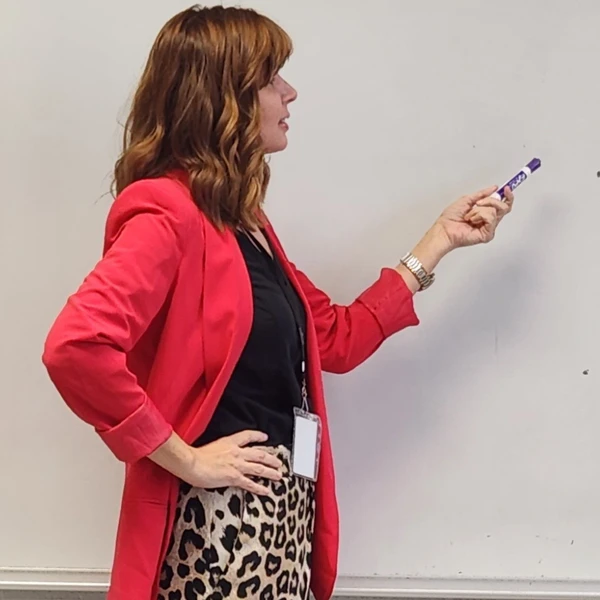
I’m a single mother of two incredible teenagers, a full-time middle school math teacher, and a doctoral student in Curriculum & Instruction at Valdosta State University. I’ve spent over a decade working in Title I schools, where creativity, compassion, and resourcefulness are essential. My goal is to become a curriculum leader who designs equitable, engaging learning experiences for all students, especially those often overlooked in traditional systems. I returned to school for my doctorate because I believe educators should never stop learning. I want to transform math instruction by blending research-based strategies with real-world relevance. In my current classroom, that means using collaborative projects, digital tools, and humor to help students see that math is not just about numbers; it’s about problem-solving, patterns, and possibilities. My journey hasn’t been easy. After leaving an abusive marriage, my children and I started over with very little. I’ve sold plasma, taken on multiple jobs, and relied on the kindness of a chosen community to get where we are today. Despite financial strain, I’m proud to have built a life rooted in stability, learning, and love. Earning a doctoral degree is deeply personal. It represents not just academic achievement, but the legacy I’m building for my children and the students I serve. Scholarships make it possible for me to keep going. I’m not just investing in myself; I’m investing in the future of education.
Education
Valdosta State University
Doctoral degree program (PhD, MD, JD, etc.)Majors:
- Education, General
Mercy College
Master's degree programMajors:
- Bilingual, Multilingual, and Multicultural Education
Crown College
Bachelor's degree programMajors:
- English Language and Literature, General
Marshall Senior High School
High SchoolMiscellaneous
Desired degree level:
Doctoral degree program (PhD, MD, JD, etc.)
Graduate schools of interest:
Transfer schools of interest:
Majors of interest:
- Curriculum and Instruction
Career
Dream career field:
Education
Dream career goals:
Teacher
Chattanooga Valley Middle School Track & Field Team2019 – Present7 years
Sports
Cheerleading
Varsity1990 – 19944 years
Cross-Country Running
Varsity1990 – 19911 year
Arts
Houston Decorative Arts Museum
Ceramics2014 – 2016
Public services
Volunteering
Actors & Others for Animals — Volunteer2007 – 2009Volunteering
Moms Demand Action — Volunteer2017 – Present
Future Interests
Advocacy
Volunteering
Philanthropy
Learner Calculus Scholarship
Most students groan when they hear the word “calculus.” It has a reputation for being one of the most difficult math courses, and many approach it with fear or dread. What most don’t realize, however, is that they are already doing “calculus” in their everyday lives whenever they measure the rate at which something changes, compare growth over time, or think about how one decision affects another. To me, calculus represents both a challenge and an opportunity, the point where mathematics transforms from abstract concepts into the language of science, technology, and engineering.
Calculus is the key that unlocks deeper problem-solving in STEM. Algebra prepares students to think logically, but calculus teaches them to think dynamically. It is how we measure change, growth, and movement, the very processes that drive our world. In engineering, calculus explains how forces bend a bridge or how fluids move through pipes. In computer science, it helps optimize algorithms and predict system performance. In biology and medicine, it models how populations grow, how diseases spread, and how the body responds to chemical reactions. Calculus not only enhances these fields, but it also forms their foundation.
As a math teacher, I also see the personal growth that comes from studying calculus. Many of my students arrive intimidated by advanced math. They struggle at first, but as they persevere, they build resilience, confidence, and creativity. One of the most rewarding aspects of teaching is witnessing a student overcome the challenge of calculus and reach that "aha" moment. It proves that mathematics is not just about solving problems on paper; it’s about training the mind to approach challenges with determination and curiosity. I believe that calculus is essential because it teaches more than just formulas; it fosters a way of thinking that is vital for STEM innovation. It pushes students beyond memorization into application, requiring them to model real-world problems, test their reasoning, and refine their solutions. These skills are exactly what the next generation of scientists, engineers, and innovators need.
This scholarship would not only help me continue my own academic and professional journey, but it would also support my mission to prepare students for STEM careers. By embracing the challenge of calculus, I want to inspire my students to see mathematics not as an obstacle, but as a bridge to possibility. Calculus is difficult, yes, but it is also empowering. With persistence, it becomes less of a barrier and more of an open door to the opportunities that await in STEM.
Sabrina Carpenter Superfan Scholarship
From the moment Sabrina Carpenter took on the role of Jenny Parker in Adventures in Babysitting, I was struck by her energy, charm, and versatility. She infused the screen with humor, relatability, and courage, demonstrating to young audiences the seamless integration of responsibility and adventure. That performance was my first glimpse into her ability to embody a character with both heart and comedic timing, and it became clear that Sabrina had the kind of presence that would take her far beyond a single movie role.
Her recent hits like Please, Please, Please and Espresso capture the playful, relatable side of her artistry, while her performances carry the same heartfelt quality that made her early Disney work unforgettable. Sabrina has been in the public eye since childhood, and instead of being defined by one role or moment, she shows us how to take risks and own every new chapter. That lesson resonates deeply with me as both an educator and a doctoral student, learning to reinvent myself while staying true to who I am.
One of her songs that speaks to me most is Good Graces. It embodies a graceful approach to moving on and letting go of negativity after a difficult experience. As someone who has navigated personal hardships and still strives to model resilience for my students, I hear in that song a reminder to choose growth over bitterness. Sabrina’s music doesn’t just entertain; it offers encouragement for those of us learning how to balance pain with hope and keep moving forward.
As a middle school teacher, I also admire Sabrina’s dedication to giving back, particularly through her support of Pencils of Promise. Their mission (expanding access to education, training teachers, and creating safe, sustainable learning environments) reflects the same values I strive to uphold in my classroom. I see students every day whose lives are shaped by the opportunities education creates, and I also see how fragile those opportunities can be without support systems in place. Knowing that Sabrina uses her platform to champion education worldwide makes me feel even more connected to her as a role model.
What inspires me most is Sabrina’s refusal to be boxed in. She’s a singer, songwriter, actress, and advocate, and she doesn’t shrink herself to fit a single definition. In my own life, I juggle many roles: teacher, single mom, coach, and student. Watching Sabrina lean into her versatility reminds me that it’s possible not only to wear many hats but also to excel in them with passion and authenticity.
Ultimately, Sabrina Carpenter has impacted my life by showing me that talent paired with authenticity and compassion has the power to move people. She reminds me that being true to yourself while lifting others is the most meaningful kind of success. If I am fortunate enough to be selected for this scholarship, I will carry that lesson with me as I continue striving to create opportunities for my students and to make education more equitable for the next generation.
Qwik Card Scholarship
Building credit early matters to me because I know what it feels like to live without it. For 18 years, I was in a financially abusive marriage where I had little control over money and no opportunity to establish my own credit. When that chapter of my life ended, I was determined that my future (and my children’s) would look very different. The first major step I took was buying my own home. Signing those papers wasn’t just about having a roof over our heads; it was the beginning of my equity journey and proof that I could take control of my financial future. That experience showed me that credit is more than a number; it is freedom, opportunity, and security. It is the key that opens doors to stability and growth. I want my two teenagers to understand this lesson much earlier than I did. I want them to see that building credit wisely is not about living beyond your means but about positioning yourself for choices and independence later. By being intentional now, they can avoid the hardships I faced and start adulthood with confidence.
One of the smartest money moves I’ve made is setting up an emergency savings account and automating contributions to it, even when money was tight. As a single mom and teacher, I don’t have the luxury of large financial cushions, but even small, consistent deposits add up. That account has given me peace of mind when unexpected expenses arise, like car repairs or medical bills, and has kept me from having to use high-interest credit cards. On the flip side, I also learned a tough lesson about co-signing loans during my marriage. When payments weren’t made, my credit suffered. It took years to repair that damage, and I learned to be cautious and protective of my financial reputation. Those experiences remind me daily of the importance of financial literacy and making informed, deliberate choices.
As for who I am, I am a mother, an educator, and a first-generation college student. I teach eighth-grade math in a Title I school, where many of my students are growing up in circumstances similar to mine. I am also a doctoral student, studying curriculum and instruction, because I want to become a stronger leader in education and an advocate for equity. What motivates me is the desire to give my children (and my students) the tools I never had at their age: knowledge, confidence, and the belief that they can shape their own futures. Financial literacy is one of the most powerful tools we can pass on to the next generation. For me, taking control of my credit after years of instability wasn’t just about money, it was about reclaiming my voice and building a foundation for my family. I plan to continue budgeting carefully, building equity through my home, and using credit responsibly so that my children grow up not only seeing the importance of strong credit but also learning how to achieve it themselves.
Building credit early matters because it creates possibilities. It ensures that when opportunities come, whether that’s college, a first car, or a home, they aren’t out of reach. My journey proves that it’s never too late to start, but my hope is to inspire my children and students to start much sooner.
Taylor Swift Fan Scholarship
The most moving performance of Taylor Swift’s that I’ve ever seen is The Man. Every time I watch her sing it, I feel both seen and challenged. As a middle school teacher and single mom, I know what it’s like to work in a profession that is overwhelmingly female and yet undervalued in both pay and recognition. Teaching is one of the most vital careers in our society, but because it is “women’s work,” it is often dismissed or taken for granted. When Taylor belts out the line, “I’m so sick of running as fast as I can, wondering if I’d get there quicker if I was a man,” I feel the truth of that in my bones.
I am currently pursuing my doctorate in education, not because I have endless time or resources, but because I want to create a better future for my children and for my students. Some days, I wonder if the path would be easier if I were in a different profession or a different gender. But then I remember the flip side: like Taylor, I am carving out space, pushing forward, and proving that the work matters. That makes the victory even sweeter.
The Man isn’t just a performance to me; it’s an anthem. It reminds me that even if the world questions my worth, I know I am hustling, I am making a difference, and I am raising two kids to see that strength comes from persistence. Like Taylor, I’m not just running; I’m rewriting the rules for what it means to succeed.
Love Island Fan Scholarship
As a middle school teacher, I can attest to the significant impact that collaboration can have. Working as a partner involves more than just dividing the workload; it also involves the blending of personalities, the development of trust, and the unveiling of hidden talents. My suggested task, Puzzle Your Partner, brings the same collaborative chemistry to the villa that Love Island thrives on.
Islanders team up for a scavenger hunt that spans the entire villa and includes personal trivia, cheeky dares, and mini-puzzles. They must finish a brief assignment at each hidden location before continuing on; this could be anything from answering a brainteaser to disclosing a previously untold personal fact to doing a 20-second funny dance.
Each completed station rewards them with the next clue and a “Partner Card” where they record the new fact they learned. The twist? At the finish line, couples must take a final quiz covering all of these facts. For each incorrect answer, they face a playful penalty (whipped cream pie, water balloon toss, or wearing a ridiculous outfit to the next villa dinner.) The fastest couple with the highest quiz score wins a special prize, like a private romantic dinner or a poolside party!
This challenge blends problem-solving with flirty fun, encourages genuine listening, and guarantees meme-worthy moments for the audience. Forgetting a partner’s fact might lead to some lighthearted banter or spark villa drama! Either way, Puzzle Your Partner delivers what Love Island does best: romance, entertainment, and a little bit of chaos.
RonranGlee Special Needs Teacher Literary Scholarship
I am passionate about teaching students with special needs because I truly believe, despite its challenges and setbacks, this is a great time to be in public education. We have cultivated so much collective knowledge that we can now genuinely diagnose learning needs and design real INDIVIDUAL education plans tailored to each student. We have more tools, resources, and research than ever before to support diverse learners. It’s an exciting time to be in this field precisely because we’re better equipped to meet students where they are and help them achieve their fullest potential. We also have so many ways to communicate with students and parents, email, apps, video calls, and and shared digital portfolios, which makes partnering with families more effective and personal than ever. That collaboration is essential for student success, and it energizes me to be part of a profession that is constantly evolving to do better for all students.
Harold Bloom wrote, “I have learned that the purpose of teaching is to bring the student to his or her sense of his or her own presence.” To me, this means helping students become aware of themselves as learners, thinkers, and contributors—seeing their own agency and value in the learning process.
I will guide my special needs students to experience this sense of presence by helping them build self-awareness, recognizing their strengths, needs, and progress through reflection, feedback, and goal-setting. I will foster mindfulness by teaching them to pay attention to their own thinking and emotions while providing strategies to manage frustration or anxiety. By creating a deeply supportive environment where they feel safe, respected, and valued, I will encourage them to take academic risks. Finally, I will celebrate mistakes as part of learning, scaffold tasks to ensure they can experience success, and consistently reinforce the belief that they are capable of understanding and growing.
Ultimately, my mission is to help each student see themselves not as “limited” but as powerful learners with unique gifts to share. These ideas aren’t just theory; they’re the foundation I strive to build in my classroom. To show what I mean, here’s a fairy tale about the importance of building with care, intention, and the right materials.
Once upon a time in a bustling school, there were three teachers who set out to build learning environments for their students with special needs. They all loved their students and wanted to protect them from the Big Bad Wolf of Confusion, Frustration, and Discouragement that prowled around every classroom door.
The first teacher built her classroom out of straw. She was warm and kindhearted but relied on general plans for all students, hoping her enthusiasm would be enough. She didn’t use Individualized Education Programs (IEPs) thoughtfully or adapt her instruction for specific needs. When the Wolf of Confusion came, he huffed and puffed, and the straw classroom fell. The students felt lost and unsupported.
The second teacher built her classroom out of sticks. She had some training and tried to differentiate, but didn’t collaborate with colleagues or families. She wasn’t consistent in using FAPE (Free and Appropriate Public Education) principles or ensuring a Least Restrictive Environment (LRE). Her lessons didn’t always match the students’ documented goals. When the Wolf of Frustration came, he huffed and puffed, and the stick classroom fell. The students felt discouraged and unseen.
The third teacher—the teacher I aspire to be, built her classroom out of sturdy bricks. She understood that students deserved real Individualized Education Programs designed with care and collaboration. She worked closely with families, specialists, and administrators to make sure students received FAPE in the Least Restrictive Environment appropriate to their needs. She used patience and empathy to truly know her students. She practiced strong communication and interpersonal skills to build trust with families and colleagues. She adapted and redesigned lessons as needed, used research-based strategies, and was endlessly resourceful. She dedicated herself to continuous improvement, seeking out professional development and learning from her students and team. She built her classroom brick by brick: clear routines, personalized supports, and high expectations paired with loving encouragement. When the Big Bad Wolf came, he huffed and puffed, but he could not blow the brick classroom down. Inside, students felt safe, respected, and ready to learn. They were aware of their own strengths. They were mindful of their goals and progress. They knew they could take risks without fear of ridicule. In this classroom, students experienced their own presence as confident, capable learners. And the third teacher kept building, day by day, year by year, ensuring that every student could see themselves not as limited, but as extraordinary.
And they all learned, grew, and believed in themselves ever after.
B.R.I.G.H.T (Be.Radiant.Ignite.Growth.Heroic.Teaching) Scholarship
When I think about the person who most inspired me to become an educator, my high school Spanish teacher immediately comes to mind. In a small rural town with limited opportunities and often narrow expectations, she was something of a revelation. She was smart, fun, open-minded, and unlike anyone I had met before. Her father had been a career Army soldier, so she’d lived all over the world, and she brought those experiences and that curiosity into our little classroom in the middle of nowhere. She didn’t just teach us verb conjugations; she taught us to believe there was a whole world beyond our zip code and that we were worthy of exploring it.
What I remember most is that she never made us feel small for our small-town experiences, even though she was so different from us. Instead, she built bridges between her world and ours. She shared stories about different cultures, encouraged us to see ourselves as citizens of the world, and introduced us to music, food, and traditions that sparked something bigger in our imaginations. Even students who struggled in other classes came alive in hers because she treated them with respect and curiosity. She taught us that learning another language wasn’t just about words on a page; it was about connection and empathy.
But her greatest impact on me was personal. During my senior year, my home life began to unravel in ways that were painful and isolating. I was too embarrassed to tell anyone, too proud to admit I needed help. Eventually, I worked up the courage to talk to her, terrified of being judged or dismissed. Instead, she listened with compassion and understanding. She didn't pry or lecture. She offered warm encouragement, practical support, and the gift of being truly seen. She helped me see the big picture, that my current pain didn't have to define my whole life. That moment of acceptance and kindness changed me profoundly. Her example planted the seed of what kind of teacher I wanted to be. I wanted to create a classroom that was safe, warm, and open, where students felt they could be themselves, ask questions, and share their lives without fear. I wanted to treat every student with the dignity she gave me, even when they were struggling or acting out. I wanted to inspire them to see their own worth and potential, even when life felt small or limiting.
Today, as a middle school math teacher in a Title I district, I try to carry her spirit into my own classroom every single day. My students come from a rural, low-income area with many of the same challenges I faced. They often juggle adult responsibilities at home, caring for siblings, translating for parents, and working to help the family survive. Many have faced trauma or instability that makes learning feel like a luxury. I can’t fix all of those challenges, but I can offer them a safe place for an hour a day where they feel respected, heard, and capable.
I try to expand their worlds the way my Spanish teacher did for me. Even in math, we talk about real-life problems, careers, and connections. I sponsor our Spanish Club to build cultural bridges in our largely English-speaking community and give our multilingual students a space to shine. I encourage my students to see the big picture, that their world doesn't have to end at the county line. If I can be for them even a fraction of what my Spanish teacher was for me, a source of hope, a safe harbor, a spark of curiosity then I will have done my job well. I became a teacher because of her, and I continue because of them. Her kindness, her openness, and her belief in the potential of every student guide me every day.
Tracey Johnson-Webb Adult Learners Scholarship
Sweet Dreams Scholarship
Being part of my community has given me hope in some of the hardest moments of my life. As a single mom in rural Georgia, teaching in a Title I middle school, I know firsthand how much people need one another to keep going. When I left an abusive marriage, I relied on the kindness of friends, church members, fellow teachers, and even students’ families, who showed me that hope is never lost if you’re willing to accept help. Those experiences taught me that no matter how strong or independent we want to be, our strength is multiplied when we stand together.
My hope for the future is based on the little, everyday acts of kindness I see in my community: families sharing meals with neighbors, faculty collecting clothes for children in need, and volunteers giving up time they don't have to ensure that no one feels alone. This sense of belonging drives my commitment to serving my community in all of my roles, including teacher, coach, parent, and advocate. This is why I feel the next generation will be able to grow up knowing they are not alone in facing obstacles.
One moment that stands out was last year when I organized meals for our middle school track team. Many of my athletes come from families with limited resources, and we didn’t have funds to cover away-meet dinners. I reached out to local churches, businesses, and parents in our district. Within days, we had volunteers signed up to cook, deliver, and serve meals for every meet. Watching our students sit together, laughing and eating with full plates, reminded me of the power of community to transform something stressful into something joyful. It wasn’t just about food; it was about showing kids they were seen and cared for. That effort taught me that when you ask people to help with clear, meaningful goals, they will show up. It also showed our students what generosity looks like so they can carry it forward.
Beyond school, I volunteer with Moms Demand Action, where I help organize local gun safety advocacy and education events. It's difficult work because we're dealing with serious, often controversial, issues, but I've seen neighbors from various backgrounds come together to seek safer communities for our children. Volunteering has taught me that true connection necessitates listening, vulnerability, and patience, and that even when change appears gradual, hope is what keeps us going.
These experiences have shaped my vision for the future. I want to keep fostering spaces where people feel safe, supported, and empowered to grow. Whether I’m in my classroom, at a community meeting, or just chatting with a parent in the car line, I want people to leave knowing they’re not alone. That’s the kind of leader I want to be, and that’s the community I want to help build.
Debra S. Jackson New Horizons Scholarship
Returning to school at this stage in my life is not just a choice; it’s a promise I made to myself and my children. As a single mother of two teenagers, I am deeply aware of the responsibility I carry to provide stability and opportunity for them. My journey here has been shaped by resilience in the face of adversity, most profoundly by my experience surviving an abusive marriage. Leaving that relationship was one of the hardest decisions I ever made, but it was necessary to protect my children and myself. It taught me the value of courage, self-advocacy, and the belief that change is always possible, even when it seems impossible.
These experiences have fundamentally shaped my personal values. I believe in perseverance, integrity, and the power of education to transform lives. They’ve made me a more empathetic mother, teacher, and community member. I understand what it means to fight for a second chance, and I want my children to see that life doesn’t end when things fall apart, that we can choose to rebuild. Those values also guide me in my work as an educator in a Title I district, where many of my students face their own forms of hardship and instability. I strive to be the teacher who sees them, believes in them, and helps them imagine bigger futures.
Returning to graduate school now is a strategic and personal decision. As much as I love teaching, I also recognize the financial limits of my current role. I want to move into curriculum leadership so I can advocate for better instructional practices, support new teachers, and drive initiatives that close opportunity gaps in under-resourced schools. This path will not only allow me to earn more to support my family but also amplify my impact. My goal is to help shape educational environments where every student, regardless of background, feels valued and equipped to succeed.
This scholarship would be an incredible help in achieving that goal. As a single-income household, budgeting for graduate school is challenging. Every dollar I can secure through scholarships reduces the financial strain on my family and allows me to focus on my studies without sacrificing my children’s needs. It is hard enough to juggle full-time teaching, second and third jobs, parenting, and coursework; I don’t want to add constant financial worry to that list. Receiving this scholarship would be both practical relief and a meaningful validation of the choice to invest in myself at this stage of life.
Ultimately, I see returning to school not only as a way to improve my own circumstances but as an act of service. I want to model resilience and lifelong learning for my children and my students. I want them to see that even after pain, there is possibility, that we can transform our futures through knowledge and hard work. Education gave me the tools to escape a harmful situation and build a safe, hopeful life for my family. I am determined to use it now to help others do the same.
Reimagining Education Scholarship
If I could create a single class that every K-12 student in America would have to take, it would be "Life Mathematics and Problem Solving," focusing on practical numeracy, critical thinking, and personal agency. As a middle school math teacher in a Title I district, I see every day how traditional math instruction can leave students disconnected from the real world. Many of my students juggle caring for siblings, navigating food insecurity, or translating for parents, all while trying to learn how to solve for x. While grocery shopping in our community one afternoon, I secretly watched a student help her mom figure out how much money they could spend at the grocery store. She calculated sales tax in her head, checked a coupon’s fine print, and made choices that balanced price with quality. It was one of the most advanced problem-solving demonstrations I’ve ever seen, yet no test or curriculum truly measured or celebrated that skill.
“Life Mathematics and Problem Solving” would make these real-life scenarios the curriculum itself. Instead of teaching formulas in isolation, it would embed them in budgeting, comparing loan rates, cooking conversions, understanding pay stubs, and interpreting data like media claims or viral statistics. Students would design and defend budgets, calculate interest, plan a trip within set constraints, and debate the ethics of data privacy. Lessons would explicitly connect mathematical reasoning to everyday challenges and social issues.
This class would also develop metacognitive and collaborative problem-solving skills. Students wouldn’t just arrive at the answer; they’d learn how to evaluate multiple strategies, defend their reasoning, and critique arguments constructively. Digital literacy and fluency would be embedded throughout, preparing students to navigate online shopping safely, spot scams, and understand their digital footprint’s consequences. The impact of this class would be transformative. First, it would address educational equity by ensuring that all students, not just those with support at home, graduate with skills they need to make informed decisions about money, safety, and civic engagement. For many, especially in under-resourced communities, this knowledge is life-changing. Second, it would reduce math anxiety by making math feel relevant, accessible, and empowering. Students wouldn’t see math as an abstract barrier to graduation but as a toolkit for independence. Finally, it would foster a generation of critical thinkers ready to question, analyze, and improve the world around them.
As a teacher, I believe our job isn’t simply to deliver content but to equip students with the skills to solve real problems with confidence and compassion. “Life Mathematics and Problem Solving” wouldn’t just teach them how to calculate; it would teach them why to calculate, when to question, and how to think. That is the kind of education that truly prepares students for life beyond the classroom.