
Hobbies and interests
Sports
Rock Climbing
Shopping And Thrifting
Gaming
Reading
Science Fiction
Adventure
Biography
Business
I read books multiple times per week
Cooper Adams
1x
Finalist
Cooper Adams
1x
FinalistBio
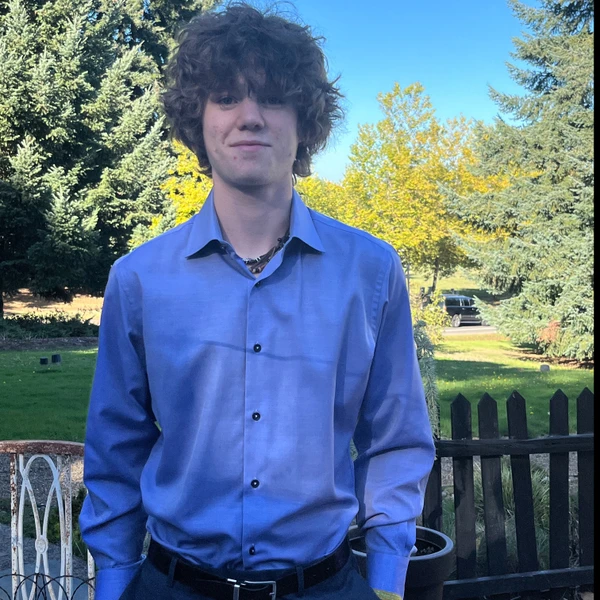
I am ready to take on the world. Growing up in Australia (I was born in the US), I never thought that my journey would bring me back to the US to attend The University of Oregon. I am excited about all that university life has to offer and my first year was one of the greatest in my life. I hope to study entrepreneurship, business and communications with a goal to one day build and work with startups. I am passionate about sports, my friends and travel and can't wait for all that is to come
Education
University of Oregon
Bachelor's degree programMajors:
- Communication, Journalism, and Related Programs, Other
- Business, Management, Marketing, and Related Support Services, Other
Miscellaneous
Desired degree level:
Bachelor's degree program
Graduate schools of interest:
Transfer schools of interest:
Majors of interest:
- Business, Management, Marketing, and Related Support Services, Other
- Communications Technologies/Technicians and Support Services, Other
- Computer/Information Technology Administration and Management
Career
Dream career field:
Venture Capital & Private Equity
Dream career goals:
Research Assistant
Orbit Media Group2023 – Present3 years
Sports
Baseball
Varsity2015 – Present11 years
Research
Marketing
Orbit Media Group — Research Assistant2023 – Present
Arts
Orbit Media Group
Design2024 – 2025
Public services
Volunteering
Oregon Country Fair — Cook2024 – Present
Future Interests
Advocacy
Volunteering
Philanthropy
Entrepreneurship
Sharra Rainbolt Memorial Scholarship
The year I turned thirteen, my family's world split open at the seams as both my mother and I fell through at the same time.
In 2018, my mother was diagnosed with aggressive breast cancer. She needed immediate surgery and radiation. Within weeks of her diagnosis, I was diagnosed with Lyme disease and Bartonella. Two people in the same household, fighting for their health simultaneously - one in a treatment chair, one bedridden and unable to leave the house. I was in seventh grade. I did not fully understand what was happening. What I understood was that the word "normal" had left our lives, and I did not know when it was coming back.
Cancer does not just attack the body it invades. It dismantles everything built around it. For our family, that meant finances stretched thin by treatment costs, a household held together by sheer will, and a mother who somehow - through surgery, through radiation, through the fog of her own fear, she kept showing up for me. On the days she was well enough, she sat at the kitchen table and homeschooled me, because I was too ill to attend school in person. She was fighting for her life and teaching me fractions at the same time. That image has never left me.
My own illness compounded everything. Lyme disease and Bartonella brought insomnia, exhaustion, pain, and over a year of compound antibiotics, blood transfusions, and treatments that did not work. Watching my mother fight cancer while I was simultaneously fighting to get out of bed each morning created a kind of dual helplessness I had never experienced — and hope never to again. For the first time in my life, I felt I had no control over anything.
What pulled us both through was stubbornness, love, and an unwillingness to accept the worst as the final answer. My mother came through her treatment. Her cancer went into remission. My Lyme disease, after my father tried a radical combination of organic nutrition and medical cannabis, also went into full remission, where it remains today. Three months after recovering, I made my State Representative baseball team. Six months after that, I was selected for Australia's National Little League squad, which qualified for the Little League World Series before Covid cancelled it.
That sequence: illness, recovery, achievement - taught me something I carry every day: that adversity does not disqualify you from your dreams. It clarifies them.
Cancer also changed how I see other people. When you watch your mother lose her hair, endure radiation, and still make dinner - still ask how your day went - you learn what strength actually looks like. It is quiet. It is daily. It does not announce itself. It shaped how I show up for others, how I mentor younger athletes, how I volunteer, and how I approach my studies at the University of Oregon, where I am now pursuing Journalism and Entrepreneurship.
The financial impact of that period was real and lasting. Medical bills, reduced family income during my mother's recovery, and the accumulated cost of my own treatment left our family with little cushion. Pursuing higher education in the United States - a country I moved to largely on my own at sixteen - has required resourcefulness and sacrifice at every step.
This scholarship would directly ease that burden. But more than the financial relief, it would affirm what my mother modeled for me through every hard day of her treatment: that the people who fight hardest deserve the chance to keep going.
Thank you
WCEJ Thornton Foundation Low-Income Scholarship
I have never taken the easy path. Partly because I was raised not to. Partly because life did not offer me one.
I grew up in Brisbane, Australia, in a family that valued hard work, faith, and showing up for others — even when things were hard. And things were often hard. Between seventh and tenth grade, I was homeschooled, largely because my health made traditional schooling impossible. At twelve, I was diagnosed with Lyme disease and Bartonella — conditions that left me bedridden for over a year, unable to attend school, unable to leave the house, barely able to imagine a future that looked like anything I had planned. During those same years, my mother was fighting aggressive breast cancer. Medical bills accumulated. My mother could not work consistently. The financial pressure on our family was not a background condition — it was the daily weather.
Education during that period was not a luxury. It was an act of survival. My mother taught me through her own illness, sitting at the kitchen table on the days she was well enough, refusing to let me fall behind. What I learned went far beyond curriculum. Education is not something that happens to you inside a building — it is something you build for yourself, piece by piece, on whatever foundation you have. That conviction has driven me ever since. At the University of Oregon, even after the disruption of surgery and recovery, I have rebuilt my academic standing with the same stubbornness I brought to every baseball comeback: show up, do the work, prove that circumstances do not determine your ceiling.
Baseball was both a refuge and a discipline. By my early teens I had earned starting positions on local, regional, state, and national teams, including five consecutive selections to the Queensland State Team and a place on Australia's National Little League squad that qualified for the Little League World Series before Covid cancelled it. But even as I competed, I understood something important: the opportunity I had been given was not universal. Younger kids in my programs often lacked access to coaching, equipment, and consistent mentorship. So I gave back — working directly with junior players, teaching technique, but more importantly modelling what it looked like to stay committed when nothing was going your way. Those early mentoring experiences planted something in me that has only grown since.
At sixteen, with my family's finances stretched by years of medical bills and my mother's limited capacity to work, I moved to Eugene, Oregon — largely on my own — to pursue college baseball in the United States. It was not a decision made from abundance. It was a calculated bet on myself, the only real investment available to me. I walked onto the Churchill High School Varsity team, earned a spot on the Emerald Challengers travel program as its youngest player at sixteen, and for the first time felt like the future I had fought for was within reach.
Then I tore the labrum in my throwing arm on the first play of my first football game. Surgery, recovery, and the loss of the goal that had driven every sacrifice — it was the hardest thing I had faced since the years of illness. I could have gone home. Instead, I stayed. I enrolled at the University of Oregon to study Journalism and Entrepreneurship, and I began volunteering at the Oregon Country Fair — cooking for staff and volunteers, three meals a day for three weeks straight. Unglamorous, essential, humbling work that reinforced what I already knew: character is built in the spaces between the highlights. And I just love it.
Higher education is not an abstract aspiration for me. It is the mechanism by which everything I have survived becomes useful to others. The skills I am building at UO — in communication, storytelling, and entrepreneurial thinking — are tools I intend to use to build access: to mentorship, to opportunity, and to the kind of community infrastructure that catches young people before they fall through the cracks.
I know what it is to be a kid whose circumstances could have ended his story early. I also know what it is to have someone refuse to let that happen. This scholarship would ease a financial pressure that is very real. More than that, it would affirm something I have believed since those kitchen-table lessons with my father: that perseverance, properly supported, changes lives.
Thank you
Stephan L. Wolley Memorial Scholarship
Some people find their identity in a sport. I found mine in the fight to keep playing.
I grew up in Brisbane, Australia, in a household where family came first and hard work was the only acceptable substitute for talent. From the age of eight, baseball was my world - year-round, relentless, joyful. By my early teens I had earned starting positions on local, regional, state, and national teams, including five consecutive selections to the Queensland State Team and a place on Australia's National Little League squad, which qualified for the Little League World Series before Covid erased our chance. But those milestones were built on something deeper than ability. They were built on a family that sacrificed, a faith that held, and a competitor's refusal to quit.
Between seventh and tenth grade, I was homeschooled. My mother, while simultaneously fighting aggressive breast cancer, became my primary educator during the same years I was battling Lyme disease and Bartonella - conditions that left me bedridden for over a year. That season of life could have defined me by what I lost. Instead, it shaped the way I learn. Without the structure of a traditional classroom, I had to become my own disciplinarian, my own advocate, and my own standard-setter. I am a better student, a better teammate, and a better person because of it.
At sixteen, I made the decision to move to Eugene, Oregon - largely on my own — to pursue college baseball in the United States. Within months I walked onto the Churchill High School Varsity baseball team and that summer became the youngest player, at sixteen, to earn a spot on the Emerald Challengers, Oregon's premier travel ball program, typically reserved for seniors and college freshmen. The team reached the State Finals. For the first time, it felt like every sacrifice had been worth it.
Then came football.
I had never played the game before, but I believed in trying things that scared me - my family raised me to compete, not to spectate. On the very first play of my very first game as a junior, I tore the labrum in my throwing arm. For a kid who had crossed an ocean for baseball, the injury was not just physical. It was an identity crisis. The goal that had driven every hard year — every illness, every goodbye - was suddenly gone.
But here is what I have learned about competition: it is not a scoreboard. It is a posture. It is the choice, made quietly and repeatedly, to show up again after the thing you love most has been taken from you. My family taught me that. My faith reinforced it. And football, the sport that broke my arm, reminded me that courage means stepping onto a field you have never played on, knowing the risks, and going anyway.
I recovered. I redirected. I enrolled at the University of Oregon, where I am studying Journalism and Entrepreneurship, channeling the discipline and coachability I learned through sport into building something that lasts beyond a season. I now support younger athletes navigating the same crossroads I once faced - that moment when the game stops and you have to decide who you are without it.
Stephan Laurence Wolley valued family, faith, and competition. So do I - not as abstract ideals, but as daily commitments forged through circumstances that left no room for anything less. This scholarship would help me honor that, and him, by continuing to compete in every arena that matters.
Thank you
Brett Brakel Memorial Scholarship
Baseball saved my life. That is not a figure of speech - it is the most honest sentence I know how to write.
At twelve years old, living in Brisbane, Australia, I was diagnosed with Lyme disease and Bartonella. For over a year, I was bedridden, unable to attend school, unable to see friends, barely able to imagine a normal day. At the same time, my mother was diagnosed with aggressive breast cancer. I was a kid watching the two most stable things in my world - my health and my family - crumble simultaneously. Baseball was the first thing I came back to. Three months into remission, still fragile, I returned to the field. The game did not care how much I had missed. It just asked me to show up.
So I did.
That choice changed everything. Over the next several years, I earned five consecutive selections to the Queensland State Team and a place on Australia's National Little League squad - a team that qualified for the Little League World Series before Covid cancelled our chance. Baseball had become more than a sport. It was proof that if I kept showing up, something remarkable was possible.
That belief is what carried me across an ocean at sixteen. With my parents in Australia and my grandparents in Eugene, Oregon, I made the decision - largely on my own - to move to the United States and pursue my dream of playing college baseball. I walked onto the Varsity team at Churchill High School as a sophomore. That summer, I became the youngest player — at sixteen - to earn a roster spot on the Emerald Challengers, Oregon's premier travel ball program, a team typically composed of high school seniors and college freshmen. We reached the State Finals. For the first time, the bet I had made on myself felt validated.
Then, on the very first play of my first high school football game, I tore the labrum in my throwing arm. For someone who had moved across the world for baseball, this was not just a physical injury. It was the loss of the identity I had built everything around. The goal that had driven every sacrifice - through illness, through my parents' separation, through every goodbye said to friends in Australia - was suddenly gone.
But the game taught me that adversity is not the end of my story. It is the material I built the next chapter from. I had learned that from coaches who stayed late to work with me when I had nothing to offer in return. From teammates who showed up for each other through losing seasons. From my mentor Trent Oeltjen - a former LA Dodger and Olympic medalist - who gave me his time not because I had arrived, but because he believed in where I was going.
Unable to play, I began to give back. I found new purpose supporting younger athletes, engaging with student programs at the University of Oregon, and bringing the discipline, coach-ability, and team-first mentality I built on the diamond into every room I entered. I am now studying Journalism and Entrepreneurship at UO - using the communication and leadership forged on the field to build something meaningful beyond it.
Brett Brakel believed that baseball teaches lessons that last a lifetime. I have lived every one of them. I carry them forward not just in how I compete, but in how I lead, how I learn, and how I show up for others - the same way so many coaches once showed up for me.
Travel Not to Escape Study Abroad Scholarship
From Surviving to Creating: A Life That Feels Like My Own
I was thirteen years old when my body stopped working. Lyme Disease and Bartonella - a diagnosis that arrived without warning and stayed for years. I spent the better part of a year bedridden, transitioned into distance education, and watched my mother fight aggressive breast cancer from the next room. My parents' marriage didn't survive it either. By the time I entered remission, I had learned something most teenagers don't have to: how to survive.
I got good at it.
Too good, maybe.
At sixteen, I made a
decision that most adults would hesitate to make. I moved from Brisbane, Australia to Eugene, Oregon - largely on my own - to chase a dream of playing college baseball. I moved in with grandparents I had met three times. I walked onto a varsity baseball team in a country where I barely understood the culture. I earned a spot on Oregon's top summer travel team. I was surviving again, and this time it looked a lot like thriving.
Then, on the very first play of my very first high school football game, I was blindsided. Torn labrum. Baseball — the entire reason I had uprooted my life - was suddenly gone. And for the first time, surviving wasn't enough. I didn't know who I was without the dream that had carried me across an ocean.
The acceptance letter from the University of Oregon arrived during that fog. I remember the moment clearly. It didn't just offer me a school — it offered me a version of myself I hadn't considered. Not just an athlete. Not just a kid trying to make it in America. A student. A person becoming something on his own terms.
But old patterns are hard to break. I arrived at UO having never really processed what I'd been through - the illness, the grief, the isolation, the injury. I powered through my freshman year the same way I'd powered through everything else. Sophomore year, it caught up with me. The accumulated weight of years of simply surviving became impossible to outrun. I withdrew from two terms. I asked for help — which, for me, was harder than any of the rest of it.
That decision turned out to be the most honest thing I've ever done.
Studying abroad is not an escape from that story. It's the next chapter of it. I am applying to study in a program that will place me in an environment where I have to build meaning from the ground up - which, as it turns out, is something I already know how to do. The difference now is that I'm not just trying to survive the experience. I'm trying to design it.
I want to study in a place that challenges my understanding of identity - because mine has been rebuilt more than once. I want to sit in classrooms where the perspectives are genuinely foreign to me, where I have to listen before I speak, where being an outsider isn't a liability but a lens. I've lived that before. Now I want to learn from it deliberately.
The prompt asks about moving from surviving to creating a life that feels like your own. I've spent most of my life not quite sure which one I was doing. Studying abroad - with intention, with the support I've learned to accept, with the self-awareness I've earned - is how I answer that question for good.
I am not just trying to make it anymore. I am ready to build something.
TRAM Resilience Scholarship
Finding My Edge
There is a particular kind of exhaustion that has nothing to do with how much you slept. I know it well. At sixteen, I was diagnosed with Lyme disease and Bartonella - a co-infection that took months to identify and years to manage. During that time, I learned what it means to fight for something you cannot see, explain, or predict.
Lyme disease and Bartonella do not announce themselves cleanly. Some days I functioned normally. Others, I couldn't concentrate long enough to finish a paragraph. Brain fog, joint pain, and fatigue became uninvited companions I had to negotiate with daily. The hardest part wasn't the physical symptoms - it was the invisibility of it. I looked fine. Teachers assumed I was disengaged. Friends didn't always understand why I cancelled plans. I spent enormous energy just explaining myself, and eventually I stopped and redirected that energy inward.
That shift changed everything.
When you cannot rely on your body to show up consistently, you develop systems. I became obsessive about prioritization - figuring out which hours of the day I was sharpest and protecting them. I learned to communicate proactively rather than reactively, to ask for what I needed without apology, and to measure progress in smaller, more honest increments. These weren't coping mechanisms. They were, I came to realize, entrepreneurial skills.
Marketing is fundamentally about understanding people — what they need, what they fear, what they'll respond to when they feel unheard. Chronic illness taught me empathy at a granular level. I know what it's like to have a real problem that no one around you quite believes in. That experience has shaped how I think about consumers, about messaging, and about what it means to build something that actually solves a problem rather than just describing one.
In school, I want to develop the technical fluency to match the intuition I've already built.
I'm drawn to the intersection of brand strategy and venture creation - the moment when a compelling idea meets the right story and becomes something people trust. I've seen, from the inside, how much illness-related industries fail at both. The patient experience is often alienating, the communication patronizing, and the products disconnected from real daily life. That's a market problem. And market problems are solvable.
Beyond school, I hope to build ventures - or help build them - that center the overlooked user. Not as charity, but as strategy. The people mainstream marketing ignores are often the most loyal customers when someone finally speaks to them honestly. I believe underestimated founders and underserved communities represent the most interesting opportunities in the next decade of entrepreneurship, and I intend to be part of that.
Lyme disease and Bartonella did not make me who I am. But they accelerated it. They burned away the assumption that things would just work out and replaced it with something more durable: the knowledge that I can figure it out, even when the conditions are bad, even when no one else sees the obstacle. In business, that's not a disadvantage.
That's the whole game.
Lippey Family Scholarship
The hardest challenge I’ve faced has not been a single moment, but a long stretch of feeling like my effort and my circumstances were stacked against me. I’ve always been willing to work hard, but between serious health issues, family upheaval, financial strain, learning differences, and international relocation, school often felt like running uphill.
When I was twelve, I became seriously ill with Lyme disease and related complications that left me bedridden for over a year. At the same time, my mother was battling life‑threatening breast cancer and undergoing surgery and radiation. Watching her fight for her life while my own health collapsed was terrifying. I had to leave traditional school and switch to online learning, trying to keep up while dealing with pain, exhaustion, and insomnia. My father had to drastically scale back his career to become my full‑time caretaker, which put significant financial strain on our family.
My learning differences amplified everything: assignments that looked simple on paper took me much longer, and some days just getting through a lesson felt like climbing a mountain. Teachers sometimes saw a “bright but inconsistent” student, but behind that inconsistency were long nights, medical appointments, and a brain fighting to keep up.
Instead of giving in to frustration, I chose to treat these obstacles as problems to solve. With the support of my dad, doctors, and educators, I slowly rebuilt my health and my schooling. I learned to break tasks into smaller steps, manage my time around low‑energy days, and asking for clarification when I needed it. As my health improved, I was able to return more fully to sports, which helped me regain confidence and community.
Another turning point came when I moved from Australia to Eugene, Oregon, to live with my grandparents so I could attend high school in the U.S. and pursue my dream of going to an American university. That meant adjusting to a new country, a different education system, and new social circles while my family’s finances were still tight and my learning differences hadn’t disappeared. I had to prove myself in a new environment, advocate for support when necessary, and catch up academically in a system I hadn’t grown up in.
All of these challenges—illness, my mother’s cancer, parental separation, financial stress, learning differences, and international relocation—forced me to grow in ways I never expected. They taught me how to ask for help and communicate honestly with teachers and counselors instead of quietly falling behind. They pushed me to build structure into my days so I could keep moving forward even when I felt overwhelmed. They also gave me deep empathy for others whose struggles aren’t always visible.
Being a low‑income student with a learning difference means there is very little margin for error. I often have to spend more time than others to reach the same academic goals, and my family cannot simply buy extra support. But that reality has strengthened my ambition and drive. I’ve learned to make persistence my advantage—to keep showing up, keep refining my strategies, and refuse to let my limitations define my future.
These experiences have led to real personal growth. I am more resilient, more organized, and more compassionate than I would have been without them. I’ve learned that impact doesn’t come from having an easy path; it comes from how you respond when the path is hard. That is the mindset I bring to college: to work relentlessly, to support others facing their own challenges, and to prove that a hard‑working student with obstacles can still create meaningful change.
Kalia D. Davis Memorial Scholarship
Legacy, to me, is measured less by awards or headlines and more by the people who can say, “Because of you, I kept going.” That belief has been shaped by my own journey through illness, family disruption, and financial strain, and by the mentors who have modeled excellence, kindness, and quiet leadership. Like Kalia, I want my life to reflect living fully, loving deeply, laughing often, learning constantly, and leaving a legacy of service.
In middle school, my life changed abruptly when I developed Lyme disease and related complications. Overnight, I went from being active and social to being mostly bedridden, exhausted, and in pain. At the same time, my family was navigating my mother’s serious illness and the financial and emotional stress that came with it. School shifted online, my friends moved ahead, and I had to rebuild my sense of self while trying not to fall permanently behind.
Those years taught me what real work ethic looks like. It was not glamorous—it was logging into class despite insomnia, finishing assignments around doctor visits, and relearning how to focus when my brain and body felt out of sync. When I was finally cleared to return to sports, I approached them differently. I no longer saw practice as something to get through; I saw it as a privilege. Running drills, lifting, and conditioning became proof that I was getting my life back. I learned to show up early, stay late, and give maximum effort not because anyone was watching, but because I knew what it felt like to lose the chance.
Sports also taught me what it means to be a teammate in the fullest sense. I’ve played with kids who were dealing with injuries, family problems, or anxiety, and I know that what happens off the field affects performance on it. I make a point of being the person who notices when someone is quiet, offers encouragement after a mistake, and celebrates the small wins—a good rep, a new PR, a tough day finished. I’ve volunteered by helping younger students with schoolwork, supporting teammates who are struggling, so I can be a steady, positive presence.
Academically, I push myself to maintain a strong GPA because I see education as the foundation for the impact I want to make. Balancing school, sports, and work taught me time management and discipline. Like Kalia, I’ve held jobs while studying, learning how to show up even when life felt chaotic. Those experiences reinforced that excellence is a habit, not a mood—it’s doing your best consistently, whether you are tired, stressed, or unsure.
This scholarship would help me continue that path. My family has faced significant financial strain from medical costs and life changes, and paying for college is a real challenge. Support from this scholarship would ease these burdens, allowing me to focus more on my studies, my sport, and my community work rather than constantly worrying about money. It would also give me the freedom to pursue leadership and mentoring roles on campus, so I can multiply the help I’ve received by offering it to others.
Most of all, being chosen for a scholarship in Kalia D. Davis’s name would be an honor and a responsibility. Her story of academic excellence, athletic dedication, campus involvement, and joyful presence is the kind of example I want to live up to. I hope to carry forward her spirit by working hard, lifting others up, and using every opportunity I’m given to make a positive difference—living, loving, laughing, learning, and building a legacy that makes life better for the people around me.
Let Your Light Shine Scholarship
Entrepreneurship, for me, is not about chasing a title or a jackpot exit. It is about refusing to let hardship have the last word and using what nearly broke you to build something that lifts others up. My legacy will begin with a simple commitment: to make sure young people navigating illness, family disruption, or financial stress never feel like they are doing it alone.
When I was twelve, a tick bite and a series of misdiagnoses took away almost everything I recognized as normal life. Lyme disease and related complications left me bedridden, exhausted, and watching my friends move forward while I fell behind. At the same time, my mother was battling breast cancer, and my family was straining under the weight of medical bills, uncertainty, and fear. School shifted online, my social life collapsed, and even basic things like sleep turned into a nightly struggle.
What pulled me through was a combination of stubbornness, creativity, and community. I learned to manage coursework from a laptop, pacing assignments around doctor visits and flare‑ups. Writing and storytelling gave me a way to process what I was experiencing and connect with others who understood. Baseball became another form of rehab, even when that meant training alone or in places where the sport wasn’t a priority. Each small win—finishing a class, making a play on the field, getting through a day with less pain—became proof that my circumstances did not define my potential.
Those experiences are the foundation of the legacy I want to create. I hope to build a mission‑driven business that combines digital tools, storytelling, and community support to help young people facing health or family crises stay on track with their education and goals. I imagine a platform with flexible academic support, peer mentoring, and mental‑health–informed resources designed specifically for students dealing with chronic illness, caregiving responsibilities, or financial hardship. The goal would be to turn “falling behind” into “navigating differently,” and to help schools and families see resilience as an asset, not a liability.
My business vision grows out of what I already do informally. I volunteer by helping younger students and teammates who are dealing with their own challenges—whether that is a difficult home situation, anxiety, or feeling like they don’t fit. Sometimes that means tutoring someone through an assignment after practice; other times it’s staying late to throw batting practice because baseball is the one space where they feel confident. I also share my story with peers who are struggling, to share and connect
That is one way I shine my light: by being open about what I’ve survived and using that story to give others hope. Another is through consistency. It is easy to talk about ambition and drive; it is harder to show up when you are tired, stressed, or scared. I try to be the person who keeps showing up—at school, on the field, and in my community. I push myself to earn top grades, not only to reach my own goal of graduating from college, but to model what it looks like to aim high even when the path has been anything but smooth.
In the future, I see myself as a founder who measures success by lives impacted, not just revenue. I want to work with people who share that purpose and create programs that make it easier for students in tough situations to keep their dreams alive. I this will help prove that the hardest seasons of life can become the blueprint for helping others, and that entrepreneurship can turn personal struggle into collective strength.
SuperDad Scholarship
As the son of a single dad, I have seen the struggles of trying to balance my life and needs with Dad going at it alone. He has done everything including sacrificing his career at times, moving countries to support me and being there full time during my various illnesses (I had Lymes disease when I was 12 and dad had to do everything for me) and injuries (we moved to the U.S. for me to play baseball but I had a career ending injury). Despite it all, he is always there for me. He homeschooled me during Covid when I was sick. He picked up his life and moved back to the U.S. when I wanted to go to college there. He took care of everything. I want to study hard at school and do well so I can help him like he helped me. I have seen him try to make a life for himself while supporting me and I am motivated to do my best to help him. This scholarship would mean the world to me so I can do what I can to help him borrow less money for my college. He inspires me to always see the positive in life, even when things are scary and bleak. He never stops helping me and I want to give back. Because it’s just been he and myself, he has helped shape my values of helping others, seeking to stay motivated and positive and mostly, dedicated. I love my dad and want him to be the happiest he can be as all his sacrifices have allowed me to grow and thrive. It’s been tough as sometimes we don’t have enough money but he lays finds a way. I know how hard it’s been on him, being alone and under pressure. But as I grow and find my wa, I know he will always be there for me and I want to be there for him. My vision for the future is that I can complete my studies at The University of Oregon and enter the world happy, healthy and excited about what I can achieve. And I will have him to thank for everything he has done. I hope to not only give back to him, but help others like he does a like he has taught me. In terms of my dreams, all I ever wanted to do was become a pro baseball player. Dad did everything to help me: he was my coach for 10 years, he took me to pitching and hitting lessons. He always found time and money for my tournaments and games. He was there. Every single time. When I got hurt, we cried and suffered, but Dad encouraged me to look into the world and know that I can do anything I put my mind to. I carry that and his love with me every day
No Essay Scholarship by Sallie
Josh Gibson MD Grant
Neal Hartl Memorial Sales/Marketing Scholarship
Neal’s Legacy and My Inspiration
Neal Hartl’s story resonates deeply with me. As someone stepping into the world of sales and marketing, I share his belief in the power of genuine human connection. Neal’s ability to build rapport, to listen carefully, and to guide clients toward smart decisions reflects my own aspirations. He demonstrated that sales isn’t about pushing products—it’s about serving people. That philosophy inspires me to approach every business interaction with empathy, transparency, and mutual respect.
My Driving Passion
My decision to pursue a career in sales and marketing stems from a fascination with how ideas are communicated and perceived. From student projects to helping local organizations launch campaigns, I’ve seen how thoughtful messaging can shape opinions and inspire action. In sales, the opportunity to bridge the gap between a solution and someone who genuinely benefits from it is invigorating. Marketing, meanwhile, offers a creative outlet—developing narratives, designing engaging content, and responding dynamically to market trends.
Ambition Meets Discipline
Like Neal, I am motivated by challenge and continual growth. Maintaining a 3.7 GPA while working part‑time and participating in extracurricular leadership roles has taught me time management, perseverance, and how to thrive under pressure. I’ve learned that success in business is not accidental—it requires strategic planning, resilience, and the willingness to learn from setbacks.
Purpose Beyond Profit
Above all, I feel driven to build relationships that last. Neal Hartl’s legacy makes clear that true success in sales and marketing goes beyond closed deals—it lies in trust, reputation, and long‑term value. Whether I’m helping a small business owner attract new clientele or guiding a nonprofit in developing a fundraising pitch, I find deep fulfillment in making a genuine difference. That kind of impact is what makes this field meaningful.
I was born in the US but grew up in Australia and, due to my love of sports, technology and entrepreneurship, I was always connected to the US and how America and it's sports, brands and companies told stories. I am hoping that I can continue to refine my storytelling skills and help brands to connect in meaningful and authentic ways with their fans, customers and the world
In closing, the Neal Hartl Memorial Sales/Marketing Scholarship signifies more than financial support—it carries forward the spirit of a man who infused his family, his profession, and his friendships with warmth and integrity. If awarded this scholarship, I will honor that spirit by striving for excellence in my academic and professional journey in business, always guided by the same ambition, passion, and drive that defined Neal’s life