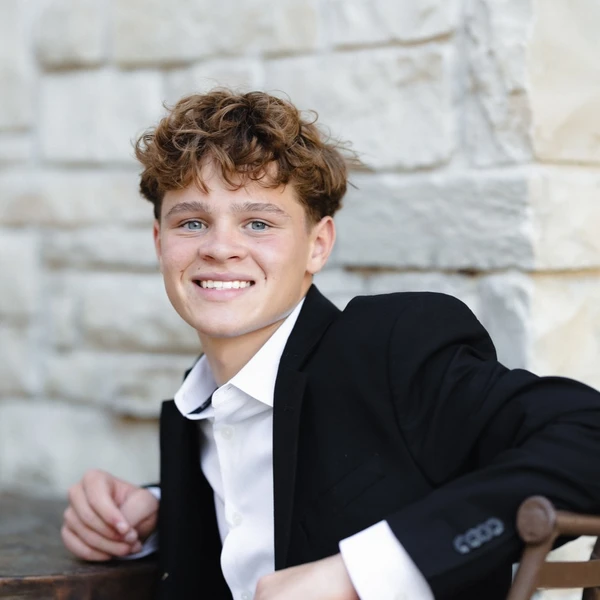
Connor Rice
1x
Finalist
Connor Rice
1x
FinalistBio
I am a motivated high school senior preparing to begin college in Minnesota. Throughout high school, I’ve focused on challenging myself academically while staying involved in my community. I value hard work, responsibility, and continuous growth, and I am committed to making the most of my college experience both inside and outside the classroom. I plan to use my education to build a meaningful career and give back to the communities that have supported me.
Education
East Ridge High School
High SchoolMiscellaneous
Desired degree level:
Bachelor's degree program
Majors of interest:
- Biology, General
Career
Dream career field:
Medical Practice
Dream career goals:
Cook
Pizza Hut2025 – 20261 year
Sports
Lacrosse
Varsity2023 – 20252 years
Ice Hockey
Varsity2023 – 20252 years
Public services
Volunteering
Global Leadership Adventures — I was a member of a group working to help parts of Costa Rica that needed help.2023 – 2023
Tawkify Meaningful Connections Scholarship
Option 2: The Future of Human Connection
Technology has completely changed the way people communicate and build relationships. Social media, texting, and video calls make it possible to stay in contact with someone at any moment. Messages can be sent instantly, and people can connect across the world in seconds. While these tools make communication faster and more convenient, they can also make relationships feel less personal. As technology becomes a bigger part of daily life, it is important to think about how people can preserve real and meaningful human connection.
One challenge of living in a digital world is that many interactions now happen through screens instead of face to face. People often spend large amounts of time scrolling through social media or messaging others rather than having real conversations. Although this may seem like connection, it can sometimes leave people feeling more isolated. Online communication often removes important parts of human interaction such as tone of voice, facial expressions, and body language. Without these signals, it can be harder to fully understand how someone feels. This can lead to misunderstandings or relationships that feel shallow. Because of this, people must make an effort to step away from their screens and spend real time with others.
Face to face interaction remains one of the most powerful ways to build strong relationships. When people spend time together in person, they can better understand each other's emotions and reactions. Eye contact, laughter, and even moments of silence can create deeper bonds than any message on a phone. Simple activities like eating dinner together, studying with classmates, or spending time outdoors with friends allow people to connect in ways that technology cannot fully replace. These shared experiences build trust and strengthen relationships over time.
At the same time, technology does have the ability to strengthen connections when it is used in the right way. For many families and friends who live far apart, video calls and messaging apps allow them to stay close despite the distance. Technology can also help people meet others who share the same passions or goals. Online communities allow individuals to find support, share ideas, and learn from people they might never have met otherwise. In these situations, technology becomes a tool that supports relationships instead of replacing them.
The future of human connection will likely depend on balance. Technology will continue to grow and shape how people interact, but it should not replace the value of real human presence. People must learn to use technology in ways that support deeper communication rather than distract from it. Setting aside time to unplug, listen to others, and focus on real conversations can help maintain authentic relationships.
In the end, human connection is built through understanding, empathy, and shared experiences. No matter how advanced technology becomes, people will always need meaningful relationships in their lives. By using technology wisely while still prioritizing real interaction, society can preserve strong human connections in an increasingly digital world. This is why human connection is one of the most valuable skills one can possess.
Our Destiny Our Future Scholarship
Making a positive impact on the world is not something that happens all at once. It happens through small choices made every day. I believe change starts with personal responsibility. If I want to improve the world around me, I have to first focus on improving myself. That means building strong values, working hard, and treating others with respect.
One of the main ways I plan to make a positive impact is through my future career in the medical field. Healthcare is not just about science. It is about people. When someone is sick or afraid, they are at one of the most vulnerable moments in their life. I want to be the kind of person who brings calm, knowledge, and compassion into that situation. By helping patients heal and supporting families during difficult times, I can make a direct and meaningful difference. Even helping one person each day adds up over time.
I also plan to continue serving communities beyond my career. My past experiences volunteering in places like Costa Rica and the Dominican Republic showed me that the world is much bigger than my own city or state. There are communities that lack resources many of us take for granted. I want to stay involved in service work, whether that means participating in medical mission trips, supporting global health programs, or volunteering locally. Giving time and effort to others keeps me grounded and reminds me why I chose this path.
Another way I hope to create impact is by leading by example. Leadership is not always about having a title. It is about setting a standard. I want to show younger students, future coworkers, and even my own family that hard work and integrity matter. If I stay disciplined, focused, and honest, others may feel encouraged to do the same. Positive habits spread. So does negativity. I want to be someone who spreads motivation and accountability instead of excuses.
I also believe that making a positive impact means never stopping learning. The world changes quickly. Medicine advances. Communities face new challenges. If I stay curious and open to growth, I will be better prepared to solve problems and adapt. Growth allows me to serve others at a higher level.
At the end of the day, I do not expect to change the entire world by myself. That is unrealistic. But I can change the world for the people I meet. If I can improve lives through healthcare, service, and strong character, then I will know I am doing my part. That is how real impact begins.
STLF Memorial Pay It Forward Scholarship
I have not personally organized a volunteering event, but I have taken part in meaningful service experiences that have shaped who I am. Instead of focusing on leading from the front, I focused on showing up, working hard, and doing my part. Through my actions, I learned that leadership is not always about being in charge. Sometimes it is about being willing to serve.
One of my most impactful experiences was volunteering in Costa Rica with Global Leadership Adventures. During that trip, I worked alongside other students to support local communities. We helped with community improvement projects and learned about the culture and daily life of the people there. It opened my eyes to how different life can look in other parts of the world. Even small efforts, like helping repair spaces or working with local children, made a difference. I learned that service requires humility. You are stepping into someone else’s community, so you must listen and respect their needs.
I also volunteered in the Dominican Republic through Global Leadership Adventures. There, I was involved in projects that focused on supporting underserved communities. Whether it was helping with basic construction tasks or spending time with local children, I understood that service is about connection. It is about giving your time and energy without expecting anything in return. These experiences were not always easy. The work was tiring, and the conditions were different from what I was used to. But that challenge helped me grow stronger and more grateful for what I have.
In addition to international volunteering, I have tried to give back in my own ways at home. Selling figurines to raise money to build a well in Cambodia and starting my Easter egg business to bring joy to families both reflect my desire to serve others. Even though those efforts were small, they showed me that leadership through service starts with initiative. You do not have to hold a title to make an impact.
Leadership through service is important because it focuses on others instead of personal recognition. A strong leader listens first and acts second. They understand that their role is to support and uplift people around them. Service builds empathy, patience, and responsibility. It teaches you to see problems from different perspectives and to work as part of a team.
Through my volunteering experiences in Costa Rica and the Dominican Republic, I learned that leadership is not about being the loudest voice. It is about being dependable, respectful, and willing to work. True leadership comes from serving others and putting the needs of the community first.
Arthur and Elana Panos Scholarship
My faith has played an important role in shaping who I am today. I went to a Catholic middle school, where I learned not only about academics but also about values like service, compassion, and responsibility. During those years, I practiced my faith regularly and began to understand that faith is not just about going to church. It is about how you treat others and how you live your life every day.
One of the biggest lessons my faith has taught me is the importance of serving others. I have tried to live that out in small but meaningful ways. When I was younger, I sold small figurines to raise money to help build a well for an underprivileged town in Cambodia. At the time, I did not fully understand how big the world was, but I understood that clean water is something everyone deserves. That experience showed me that even a young person can make a difference. It taught me that faith should move you to take action, not just talk about doing good.
I have also started my own small business putting eggs in people’s yards on Easter. While it may seem simple, it has taught me responsibility, planning, and leadership. I had to organize supplies, manage money, and communicate with customers. At the same time, it allowed me to celebrate an important part of my faith while bringing joy to families. It showed me that faith and hard work can go together. You can believe in something greater than yourself and still take initiative in practical ways.
My faith has also helped me during difficult moments. When I feel stressed, uncertain, or overwhelmed, prayer gives me a sense of peace and direction. It reminds me that I am not alone and that challenges are opportunities to grow. Believing that God has a purpose for my life gives me confidence to step outside of my comfort zone and try new things.
As I look toward my future career, I believe my faith will continue to guide me. It will remind me to treat people with respect and dignity, no matter their background. It will push me to be honest, hardworking, and compassionate. In any profession, there will be pressure and tough decisions. My faith will help me stay grounded and focused on doing what is right.
Most importantly, my faith teaches me that success is not only about money or status. It is about making a positive impact on others. I hope to carry that belief into my career and into every part of my life.
Maxwell Tuan Nguyen Memorial Scholarship
I did not always plan on going into the medical field. For a long time, I thought I wanted to study business. I liked the idea of building something of my own and being financially successful. Business felt practical and safe. But over time, I realized that I wanted more than just a stable career. I wanted work that felt meaningful every single day.
A big part of that change came from my family. Both of my sisters work in healthcare, and I have other family members who serve in different medical roles. Growing up, I saw how serious they were about their jobs. They would come home tired, but they would also talk about the patients they helped. They spoke about real people, real struggles, and real recoveries. Listening to their stories made me understand that healthcare is not just a job. It is a responsibility and a privilege.
Watching my sisters was a big inspiration that had a strong impact on me. I saw how much compassion and patience their work requires. They are not just treating symptoms. They are calming fears, answering questions, and sometimes being the one steady person in a patient’s hardest moment. That kind of impact cannot be measured in profit or numbers. It is measured in trust and lives improved.
Switching from business to medicine was not an easy decision. It meant stepping away from a path I had already started planning. But I realized that I would regret not choosing something that truly mattered to me. I want a career where my effort directly helps someone else feel better, heal, or even survive. That is something business alone could not offer me in the same way.
Through my career in the medical field, I plan to make a difference by focusing on both skill and compassion. I want to be someone patients feel comfortable with, someone who listens carefully and treats them with respect. I also want to continue learning, because medicine is always changing and improving. By combining knowledge with empathy, I hope to provide care that not only treats illness but also supports the whole person.
In the end, my family inspired me to choose medicine, but the decision became my own. I am choosing this path because I want my work to matter. I want to wake up each day knowing that what I do has the power to truly change lives.
Big Picture Scholarship
The movie that has had the greatest impact on my life is Good Will Hunting. This film stands out to me because it explores intelligence, identity, fear, and the importance of mentorship in a way that feels real and honest. It is not just a story about a mathematical genius. It is a story about potential and the courage it takes to step into it.
One of the most powerful aspects of the film is Will’s struggle with his own abilities. He is incredibly intelligent, yet he hides from opportunities because he is afraid of failure and rejection. That conflict feels relatable. Many people have goals or talents, but fear can hold them back. Watching Will slowly confront his fears helped me understand that success is not just about talent. It is about mindset and the willingness to grow beyond what feels comfortable.
The relationship between Will and his therapist, Sean, is another reason this movie impacted me. Sean does not try to impress Will with knowledge. Instead, he challenges him emotionally and pushes him to take responsibility for his future. The famous scene where Sean repeats, “It’s not your fault,” shows how deeply past experiences can shape someone’s beliefs about themselves. That moment reminds me that strength is not just intellectual. It is emotional. Growth often requires facing parts of ourselves that we would rather ignore.
The film also highlights the importance of surrounding yourself with people who believe in you. Will’s friend Chuckie tells him that the best part of his day is walking up to Will’s house hoping he will not be there anymore because he has moved on to something greater. That line shows real friendship. It is about wanting the best for someone even if it means change. It challenges me to think about how I support the people around me and whether I am encouraging them to reach their potential.
Personally, Good Will Hunting has influenced how I view my own future. I plan to pursue higher education and eventually attend medical school. The movie reminds me that ability alone is not enough. Discipline, humility, and courage are just as important. It also reinforces the value of mentors who push you to think differently and grow beyond your limits.
Ultimately, this movie has had the greatest impact on my life because it is about choosing growth over comfort. It shows that real success comes from facing fear, accepting help, and believing that you are capable of more than you think. That message continues to stay with me and influence how I approach my goals.
Stewart Family Legacy Scholarship
Leadership and science play a powerful role in shaping our future because they influence how we solve problems, make decisions, and improve the quality of life for people around the world. Science gives us the knowledge and tools to understand complex issues, while leadership guides how that knowledge is used. When combined, they create progress that can change societies for the better.
Science drives innovation. It leads to medical breakthroughs, technological advancements, and solutions to global challenges such as climate change, disease, and access to clean water. Through research and discovery, scientists develop vaccines, improve treatments, and design systems that make everyday life safer and more efficient. However, scientific knowledge alone is not enough. Without strong leadership, even the best discoveries can be misused, misunderstood, or left unimplemented.
Leadership shapes how scientific advancements are applied. Effective leaders make informed decisions, support ethical standards, and ensure that new technologies and discoveries benefit communities rather than harm them. Leaders in government, healthcare, education, and business must rely on scientific evidence to guide policies and actions. During times of crisis, such as public health emergencies, strong leadership grounded in science can save lives and provide stability.
In the field of healthcare, leadership and science are especially connected. Doctors, researchers, and hospital administrators must not only understand scientific principles but also lead teams, communicate clearly, and make difficult decisions under pressure. A strong leader in medicine ensures that patients receive safe, effective, and compassionate care. Science provides the knowledge to treat illness, while leadership ensures that care is delivered responsibly and fairly.
Looking toward the future, the world will continue to face complex global challenges. Advancements in artificial intelligence, environmental sustainability, and medical technology will require leaders who respect scientific evidence and think critically about long-term impact. Young people who value both leadership and science will be prepared to guide these changes responsibly.
Ultimately, science shapes what is possible, and leadership shapes what becomes reality. Together, they create a future built on knowledge, integrity, and service to others.
Valerie Rabb Academic Scholarship
I am a student who is driven by both curiosity and a desire to help others. I plan to attend the University of Minnesota and eventually go to medical school to become a hospitalist. I am drawn to this career because hospitalists care for patients during some of the most serious and life-changing moments. I want to be someone who can bring both knowledge and compassion into high-pressure situations and help people feel supported when they need it most.
Through my service experiences, I have learned that access to healthcare and basic resources can completely change a person’s quality of life. My trips to the Dominican Republic and Costa Rica showed me how different communities face challenges related to infrastructure, medical access, and poverty. In addition, saving money to help fund a well in a village in Cambodia taught me that even small actions can create lasting impact. Clean water improves health, prevents disease, and gives families stability. These experiences strengthened my desire to work in medicine, where I can directly improve lives while also thinking about larger public health issues.
In my career as a hospitalist, I plan to make a positive impact by providing patient-centered care. I want to be a physician who listens carefully, explains medical information clearly, and treats every patient with dignity. Hospitals can feel overwhelming, and I hope to be someone who brings calm, clarity, and leadership to both patients and healthcare teams. Long term, I would also like to be involved in outreach programs or global health initiatives that expand access to care in underserved communities.
One form of adversity I have faced has been learning to push myself beyond my comfort zone. Traveling to new countries and working in unfamiliar environments challenged me in ways I did not expect. There were language barriers, cultural differences, and moments where I felt unsure of myself. However, instead of stepping back, I leaned into those challenges. I focused on listening, observing, and learning from others. Those experiences built confidence, adaptability, and resilience; qualities that are essential in medicine.
I have also learned that pursuing a career in healthcare requires long-term discipline. Preparing for college and medical school means committing to rigorous academics and staying focused even when the path feels demanding. I have overcome moments of doubt by setting clear goals and reminding myself why I chose this path in the first place: to serve others in meaningful ways.
Becoming a hospitalist will require years of dedication, but I am prepared for that challenge. My experiences in service, leadership, and personal growth have shaped my commitment to making a positive impact through medicine. I hope to use my education not only to build a successful career, but to improve lives and strengthen communities wherever I am able to serve.
Clasen Scholarship
I plan to attend the University of Minnesota and eventually go to medical school to become a hospitalist. A hospitalist is a doctor who cares for patients while they are in the hospital. I am interested in this career because it allows doctors to help people during some of the most serious and important moments in their lives. I want to work in a fast-paced environment where I can make decisions that truly matter and support patients as they recover.
I have always been interested in science and how the human body works, but what draws me most to medicine is the opportunity to help others. Hospitals can be stressful and overwhelming places for patients and their families. A good hospitalist not only understands medicine but also communicates clearly and shows compassion. I want to become a doctor who listens carefully, explains things in a way people understand, and treats every patient with respect.
Over the next year, I plan to take steps to serve my community in ways that connect to my future career. First, I hope to volunteer at a local hospital, clinic, or nursing home. Being in a healthcare setting will help me better understand what doctors and nurses do each day. Even if I start with small responsibilities, I know the experience will teach me about teamwork, responsibility, and patient care.
I also plan to earn my CPR and first aid certification. These skills are important not only for someone who wants to become a doctor, but also for being a responsible member of the community. Knowing how to respond in an emergency could allow me to help someone in a critical situation. In addition, I hope to participate in community health events, such as blood drives or wellness programs, where I can support efforts to improve public health.
Academically, I will focus on building a strong foundation in science courses during my first year at the University of Minnesota. Classes like biology and chemistry will prepare me for medical school and help me understand the knowledge required to become a hospitalist. I also plan to join pre-med student organizations to connect with others who share similar goals. Being part of a supportive community will help me stay motivated and continue growing.
Becoming a hospitalist will require years of hard work and dedication, but I am ready for that challenge. Over the next year, I will focus on gaining experience, serving others, and preparing myself academically so that I can move closer to my goal of becoming a physician who makes a meaningful difference in people’s lives.