Hobbies and interests
Aviation
Aerospace
Anatomy
Astrophysics
Biomedical Sciences
Chess
Church
Ethics
Flying And Aviation
Genetics
Medicine
Music
Neuroscience
Philanthropy
Surfing
Piano
Running
Swimming
Soccer
Model UN
Mock Trial
Reading
Action
History
Leadership
Mystery
Spirituality
Suspense
I read books multiple times per week
Connor Clinkscale
1x
FinalistConnor Clinkscale
1x
FinalistBio
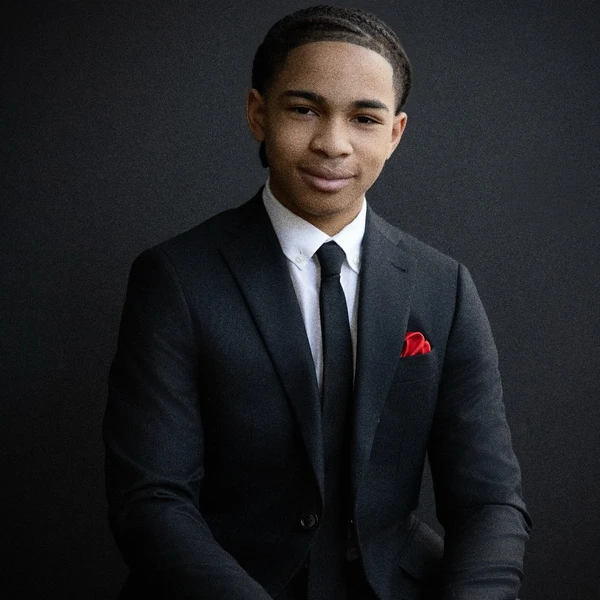
Connor Clinkscale is a student pilot and aspiring physician–astronaut whose early fascination with flight has grown into a focused passion for neuroscience, medicine, and space exploration. Surviving a training flight crash as a teenager deepened his commitment to understanding how the brain responds under pressure and in extreme environments. Connor has pursued advanced summer study in neuroscience and emergency medicine, flown extensively as a young aviator, and shared his story through national aviation publications and public speaking. He plans to major in neuroscience on a pre-med track, with the long-term goal of becoming a “space doctor” who helps protect the health and performance of astronauts before, during, and after missions.
Education
Greater Atlanta Christian School
High SchoolMiscellaneous
Desired degree level:
Bachelor's degree program
Majors of interest:
- Neurobiology and Neurosciences
- Research and Experimental Psychology
- Medicine
- Aerospace, Aeronautical, and Astronautical/Space Engineering
Career
Dream career field:
Airlines/Aviation
Dream career goals:
neuroscience, aviation, aerospace
Sports
Swimming
Junior Varsity2012 – Present14 years
Arts
Greater Atlanta Christian School
MusicYes2020 – Present
Public services
Volunteering
City of Children, Ensenada, B.C., Mexico — Volunteer2020 – Present
Future Interests
Advocacy
Volunteering
Philanthropy
Entrepreneurship
Stephan L. Daniels Lift As We Climb Scholarship
I want to pursue a career in STEM because science and technology have helped me make sense of the most difficult moment of my life and turned my curiosity into a purpose. Growing up, I loved airplanes and space, but aviation became more than a hobby after I survived an engine failure and emergency landing at 15. That experience showed me how fragile life is, but it also revealed how powerful preparation, systems, and the human brain can be in a crisis. I realized I did not just want to fly; I wanted to understand what happens in the mind under extreme pressure and use that knowledge to help others.
After the accident, I kept asking myself why my brain focused instead of freezing and why I wanted to get back in the cockpit instead of giving up. Those questions led me to neuroscience. STEM gives me tools to explore how the brain responds to stress, fear, and trauma, and how we can design better training, therapies, and technology to support people in high-stakes situations. Whether it is a pilot facing an emergency, a surgeon in an operation, or a student dealing with anxiety, I want to use a STEM education to improve human performance when it matters most.
As a young African American man in aviation and STEM, I am aware of how few people look like me in these spaces. African American communities are often underrepresented in labs, cockpits, and engineering teams, which means our perspectives and lived experiences are missing from the solutions being built. I want to change that. Pursuing a STEM degree is not just about my own career; it is about helping close representation gaps so the next generation sees STEM as a place where they belong and can lead.
I plan to use my STEM degree to uplift my community in three main ways. First, I want to conduct research that focuses on resilience and mental health for people in high-pressure roles, especially those from underserved backgrounds who may not have access to quality care. By developing tools and strategies that are culturally informed and affordable, I can help make mental health support more accessible in communities that have been overlooked.
Second, I want to mentor younger students, especially African American youth who are interested in STEM but do not know where to start. I have benefited from mentors who encouraged me to “take this light and stretch it further,” and I want to do the same by volunteering at aviation programs, STEM camps, and schools in my community. I can help students prepare for opportunities, apply for scholarships, and navigate spaces where they might be the only person who looks like them. Representation is powerful, and I want to be the example I wish I had when I first stepped into a cockpit.
Finally, I hope to combine my interests in neuroscience, aviation, and technology to work on solutions that improve safety and equity. This could mean designing better training simulations for pilots, creating tools that help students manage test anxiety, or working on systems that support astronauts and space explorers from diverse backgrounds. No matter where my STEM career takes me, my goal is to “lift as I climb” by using my education, experience, and voice to open doors for others and to create technologies and research that directly benefit my community.
For me, a STEM degree is not just a pathway to a job; it is a way to turn a life-changing experience into a lifelong mission to serve.
Ali Safai Memorial Scholarship
Flying has been part of my life for so long that I can hardly remember a time before the cockpit. I started at Centennial Aviation Academy as a kid who loved airplanes and space, but aviation has become much more than a hobby. It has shaped how I think, handle fear, set goals, and imagine my future.
The defining moment in my aviation journey happened on February 16, 2023, in a Piper Archer named Annie. Shortly after takeoff, the engine failed at about 100 feet, leaving my instructor and me with seconds to act. We were over highways, cars, and concrete—our only choices were to crash into traffic or attempt what pilots call “The Impossible Turn,” a maneuver so dangerous most do not survive it. In those seconds, everything slowed. My instructor called out the emergency, and I focused on the instruments, steadying my hands and mind. We turned back toward the runway, skimmed the grass, and came to a violent stop. The tires screeched, the wing dug in, the windshield shattered, and then there was silence.
We walked away from a crash that could have ended very differently. In the days that followed, people told me how “impossible” it was to survive that turn. While I was physically fine after hospital scans, mentally I had questions I couldn’t ignore. Why did my brain focus instead of freeze? Why did I want to fly again instead of quit? Ten days later, I climbed back into another Piper Archer—not to prove anything, but out of curiosity. I wanted to understand what happens in the mind during trauma and how some people find clarity when everything should fall apart.
That experience changed my relationship with aviation and with the word “impossible.” Flying stopped being just about lift, drag, and checklists; it became a window into human resilience. It pushed me toward neuroscience and helped me realize I want to study how the brain responds under pressure—so I can help others heal and perform at their best, whether they’re pilots, astronauts, or patients facing their own emergencies. Aviation, in other words, gave me my “why.”
Flying has also taught me discipline and responsibility in ways few environments could. As a student pilot, I’ve spent early mornings and long afternoons planning flights, doing safety checks, rehearsing emergency procedures, and debriefing every lesson. In the cockpit, there’s no room for shortcuts; every checklist matters, every decision counts. That mindset has carried into school, where I approach exams and labs with the same seriousness I bring to a preflight inspection.
Aviation has also given me a community. Through Centennial Aviation Academy, space camps, and the National Flight Academy, I’ve met instructors, pilots, and mentors who push me to grow. One of my most important mentors is NASA astronaut Victor Glover, who challenged me to “take this light and stretch it further.” Hearing that from someone who’s actually been to space made me feel a responsibility not only to pursue my own dreams but also to make the path clearer for those who come after me.
Because of flying, I now see my future as more than personal ambition. Aviation has taught me how fragile life is, how preparation creates possibility, and how crucial it is to stay calm when others are counting on you. It has turned my curiosity about the sky into a commitment to serve people on the ground and in space. The cockpit is where I first learned that impossible moments don’t have to be the end of the story—they can be the beginning of a purposeful life.
Chris Ford Scholarship
When I think about my future, I do not picture a job title first; I picture people. I see the younger boys I have mentored who are still deciding what is possible for their lives, the families I have served on mission trips who deserve better access to healthcare, and the communities I come from that have always had to do more with less. I am an African American Christian young man shaped by faith, resilience, and curiosity, and I believe the education I am pursuing is not just for me; it is a responsibility to them.
I was raised to see talent as a starting point, not a finish line. My parents taught me that education is one of the most powerful tools we have to change our circumstances and our communities. That belief has guided me from early enrichment programs to advanced experiences in neuroscience, emergency medicine, and debate. It is why I have spent summers in labs and at space camps building the skills I will need to serve others well.
I plan to major in neuroscience on a pre med track, with the long term goal of becoming a space doctor, a medically trained astronaut who cares for space personnel before, during, and after missions. That dream grew out of more than a decade of aviation and space experiences, including Space Camp, the National Flight Academy, and my training as a student pilot at Centennial Aviation Academy. It was tested and deepened the day I survived a plane crash during a training flight and returned to the cockpit ten days later, driven not by pride but by curiosity about how the brain responds to trauma. That experience led me to study resilience and showed me that my calling is to understand how the brain works under pressure so I can help others heal and perform at their best.
My desire to make a positive impact also comes from service. Through international missions to City of Children in Ensenada, Mexico, and leadership roles with youth programs, I have tutored, led activities, and walked alongside children who face significant hardship. Each year, my responsibilities have grown, from participant to lead volunteer guiding younger students and modeling maturity and cultural humility. These moments taught me that leadership is about consistency, compassion, and respect, whether you are on a mission trip, in a mentoring session, or one day in a clinic with patients who need to feel seen and heard.
Music and aviation are other parts of my story that shape how I hope to contribute. As a pianist preparing for the National Federation of Music Clubs Festival, I have learned discipline, patience, and how to perform under pressure. As a pilot with many certified flight hours and mentors like NASA astronaut Victor Glover, I have learned to treat responsibility and safety with the highest seriousness. Both the stage and the cockpit have taught me to stay calm, think clearly, and honor the trust others place in me.
In the long term, I hope to weave these experiences into a career that touches lives on multiple levels. I want to treat patients with skill and empathy, conduct research that advances our understanding of the brain in demanding environments, and mentor younger African American students who dream of careers in science, aviation, or medicine but are not sure the path is open to them. Through my future career, I plan to combine knowledge with empathy, discipline, and faith so that my education does more than change my life; it helps change the lives of others.
Evangelist Nellie Delores Blount Boyce Scholarship
I am a Christian, African‑American high school senior whose life has been shaped by three constants: faith, curiosity, and a deep sense of responsibility to others. I was raised to believe that every opportunity is both a blessing and an assignment—that the gifts God places in our hands are meant to serve people beyond ourselves. That belief sits at the center of my goals and is the reason I see higher education not simply as a path to a career, but as preparation for a calling.
Academically, I am drawn to the intersection of science, service, and stewardship of the mind. I plan to major in neuroscience on a pre‑med track, with the long‑term goal of becoming a physician who studies the brain in extreme environments such as aviation and space. My fascination with how people think, focus, and recover under pressure began in childhood, when I spent weekends at the airport and evenings watching launches and space documentaries. Over time, that curiosity turned into serious questions: Why do some people freeze in crisis while others remain calm? How does trauma affect the brain, especially in communities that already face chronic stress and inequality? College is where I hope to gain the scientific training, research experience, and mentoring I need to pursue those questions in a way that leads to better care for real people.
My commitment to higher education is also rooted in my experiences as a servant leader. For several years, I have traveled on international mission trips and worked with youth development programs at home, tutoring younger boys, leading small groups, and serving families in need. These experiences changed how I define leadership. It is not about being the loudest voice or the person out front; it is about showing up consistently, listening more than you speak, and being willing to do the unglamorous work that makes others feel seen and supported. In college, I want to continue this work through campus ministry, community outreach, and eventually medical missions that bring both healthcare and hope to underserved communities in the U.S. and abroad.
Music and aviation are the two other threads that tie my story together and push me toward my goals. As a pianist, I have spent years practicing scales, mastering complex pieces, and performing under bright lights and high expectations. That discipline has taught me how to turn nerves into focus and repetition into excellence. As a student pilot with dozens of certified flight hours, I have learned how serious it is to be responsible for people’s safety, how quickly conditions can change, and how essential calm, clear thinking is when the stakes are high. Both the stage and the cockpit have shown me that I am drawn to environments where preparation, split‑second decisions, and steady hands can save lives—exactly the kind of environments physicians often face.
With my degree, I hope to bring all of these strands together. I want to practice medicine, conduct research that deepens our understanding of the brain, and mentor young people of color who dream of careers in science, aviation, and medicine but are not sure the path is open to them. I see my future not just as “becoming a doctor,” but as building a life where my education, my faith, and my work all point in the same direction: using everything God has given me to heal, uplift, and open doors for those who come after me. Higher education is the bridge between who I am now and the person I am determined to become—and I am committed to crossing that bridge with excellence, humility, and purpose.
Michael Pride, Jr/ProjectEX Memorial Scholarship
Humanitarian service, for me, starts with a simple question: “What did I need when I was younger, and how can I become that for someone else?” That question guides my work as a Lead Mentor with Young Gents, Inc. and shapes how I show up for boys of color in my community and beyond.
As Lead Mentor for Young Gents, Inc., a youth development movement dedicated to normalizing Black excellence for boys of color, I mentor younger members ages six to twelve in Atlanta, Nashville, and San Francisco. Nearly a decade of growing from participant to mentor has taught me that leadership is less about authority and more about connection. Through the Young Gents Seven Pillars curriculum, I help guide sessions on etiquette, financial literacy, community engagement, career exploration, golf, travel, and social intelligence. What began as sharing lessons became an education in patience, empathy, and accountability. I have watched shy boys find their voices in our book club, lead service projects through our charitable fund, and carry themselves with new confidence at community events. My role is to model consistency, respect, and possibility so that they see Black excellence not as an exception, but as a norm in their everyday lives.
My commitment to underrepresented communities has also taken me beyond the United States. At Escuela Primaria El Salvador in Havana, Cuba, I spoke to primary school students about space, science, and dreaming beyond their immediate circumstances. I did not speak Spanish and they did not speak English, but with the help of an interpreter, we were able to ask questions, laugh, and imagine the future together. Many of those students had limited access to STEM resources, so I focused on showing them that curiosity and ambition are not limited by language, nationality, or background. That experience reinforced what I practice with Young Gents: representation and encouragement can change how a young person sees their future.
My educational and career goals center on understanding how extreme environments affect the human brain and using that knowledge to protect people working in space. In college, I plan to major in neuroscience and complete the pre med curriculum so I can build a strong foundation in brain science, biology, and behavior. I want to immerse myself in research on topics like neuroplasticity, cognition under stress, and how the brain adapts when normal sensory and physical cues are disrupted. After earning my undergraduate degree, I plan to become a physician with specialized training in neuroscience, combining medical school with advanced study of the brain. My long term goal is to work with NASA or another space agency as a space doctor focused on the neurological effects of space travel, from microgravity to isolation and long duration missions. I hope to design protocols, treatments, and training that help astronauts maintain peak cognitive performance and mental health before, during, and after their missions. Ultimately, I want my career to sit at the intersection of neuroscience, medicine, and space exploration, pushing human possibility while keeping the brain safe and using that expertise to continue creating safe, empowering spaces for the communities that helped raise me.
RonranGlee Literary Scholarship
At the heart of The Alchemist, Paulo Coelho argues that genuine fulfillment comes only when a person accepts the risk of pursuing a deeply personal calling, even when that pursuit appears irrational, dangerous, or lonely. The paragraph my chosen passage comes from crystallizes this idea: it shows that every meaningful decision the boy makes is a test of whether he will live by borrowed expectations or by the quiet, insistent voice of his own heart. Coelho’s underlying message in this moment is not that the universe magically rewards any desire, but that courageously aligning one’s actions with one’s authentic purpose changes how the world responds. The paragraph makes clear that the true “alchemy” is not turning metal into gold, but turning fear, doubt, and sacrifice into inner clarity.
The first layer of meaning in this passage lies in how Coelho juxtaposes comfort with calling. He presents the boy standing between two plausible futures: one safe, familiar, and socially acceptable; the other uncertain and shaped by intuition rather than guarantees. Coelho’s choice of concrete details around the safer path emphasizes its appeal. The boy can imagine a predictable routine, a stable identity, and the approval of others. Yet the tone around these images is not celebratory; it carries a quiet heaviness, as if the boy is already rehearsing the regret he would feel by settling. Coelho suggests that comfort without purpose becomes its own kind of poverty. The implication is that the real cost of turning away from a personal dream is not external failure, but an internal sense of having betrayed oneself.
At the same time, Coelho refuses to romanticize the harder path. In this paragraph, the language around the boy’s chosen direction includes anxiety, risk, and the possibility of loss. What matters is not that he feels no fear, but that he acts while fully aware of it. Coelho is careful to show that courage is not the absence of fear; it is the decision to keep moving in the presence of fear because something deeper is at stake. For me, as a young reader and as someone who has faced fear in a very literal way in the cockpit, this distinction is crucial. The passage helped me understand that waiting to act until one feels “ready” or fearless is another way of postponing one’s life.
Underlying the boy’s decision, Coelho introduces a second important theme: the idea that the universe responds to sincere commitment. Readers sometimes misinterpret this as a promise that everything will turn out well if you simply want it enough. The paragraph I focus on pushes back against that shallow reading. Coelho does not have the boy declare that success is guaranteed. Instead, what shifts is the boy’s relationship to uncertainty itself. Once he commits, the same world that felt random and threatening begins to feel filled with signs, allies, and lessons. In other words, the universe does not remove obstacles, but it becomes legible; events that might have felt meaningless now participate in a pattern. Coelho’s point is that commitment sharpens perception. When you move with purpose, you start to recognize opportunities and guidance that you would otherwise overlook.
The paragraph also reveals Coelho’s belief that every genuine calling demands some kind of sacrifice. The boy cannot hold on to everything: his old identity, his possessions, and his previous sense of safety all have to be loosened or abandoned. Coelho uses these sacrifices symbolically. Selling his flock, leaving behind people who care about him, and stepping into an unknown land all represent the inner shedding of excuses. The message is not that sacrifice is inherently good; it is that refusing to sacrifice anything is incompatible with deep change. For me, this resonates with the idea that choosing a demanding path, like medicine and neuroscience, will require giving up easier alternatives. The paragraph insists that those losses are meaningful precisely because they are made in service of something that matters more.
Another subtle but powerful element of the passage is the role of self-trust. The boy does not receive a detailed, step-by-step plan. Instead, he has a partial vision and a sense that he must move toward it. Coelho uses this uncertainty to emphasize that faith in one’s own perception is part of the journey. The boy listens to his recurring dream, recognizes its emotional weight, and treats it as a legitimate source of guidance, even when others do not understand. Coelho seems to be saying that our deepest longings are not random; they are clues to our purpose. The risk is that society can train us to ignore those clues. This reading has shaped how I think about my own interests. My fascination with flight and the human brain is not just a hobby; it feels like the sort of persistent signal Coelho describes, something that keeps returning no matter how much other noise fills my life.
The passage also highlights Coelho’s conviction that real growth happens through action, not contemplation alone. The boy does not become wiser by sitting under a tree and thinking. His understanding unfolds step by step as he makes decisions, encounters obstacles, and reflects on his experiences. The paragraph suggests that there are truths that only become visible from the inside of a risk. From the outside, he can imagine what might happen; from the inside, he learns who he is in response to what actually happens. This idea has influenced the way I approach both challenges and opportunities. When I survived a training flight crash, I could have chosen to withdraw and keep my life “safer” and smaller. Instead, the experience forced me to act: to return to flying, to ask new questions about the brain under pressure, and to begin shaping my academic path around those questions. Coelho’s emphasis on action helps me see that growth came not only from the event itself, but from my response to it.
In addition, the paragraph reveals how Coelho understands failure. Implicit in the boy’s decision is the possibility that he might never find the treasure he seeks. Yet Coelho portrays the choice to go as inherently meaningful, independent of the outcome. The value lies in living in alignment with one’s Personal Legend. From this perspective, the worst failure is not missing the treasure; it is never starting the journey. This reframing frees the boy, and the reader, from a narrow definition of success. It suggests that the point of pursuing a difficult dream, like becoming a physician who studies the brain in extreme environments, is not just the end title or accomplishment. The point is the kind of person you become through the pursuit: more attentive, more resilient, and more attuned to the connections between your inner life and the outer world.
The paragraph also speaks directly to the tension between individual desire and the expectations of others. Coelho acknowledges that the boy’s choice may disappoint people around him who believe they know what is best for him. By showing the boy move forward anyway, Coelho is not endorsing selfishness; he is insisting that a life built solely on others’ expectations leads to quiet despair. The text implies that when individuals have the courage to follow their own path, the benefit ultimately radiates outward. Santiago’s journey eventually allows him to bring back wisdom, love, and a new understanding of the world. Similarly, I see my own ambitions not as a rejection of community, but as a way to serve it more deeply. By following a path that feels honest to who I am, I hope to contribute knowledge and care that I could not offer if I forced myself into a safer, more conventional story.
Finally, the paragraph reveals Coelho’s belief that the world is alive with meaning if we are willing to see it. The references to omens, signs, and the language of the world are not about superstition; they are about attentiveness. Coelho encourages readers to treat coincidence, emotion, and intuition as sources of information, alongside logic and evidence. This does not mean abandoning critical thinking. Instead, it means broadening our definition of knowledge to include the ways our hearts respond to the world. For someone like me, who loves both science and stories, this is an essential lesson. I want to study the brain with the rigor of a scientist, but I do not want to lose the sense of wonder that first drew me toward the stars and the cockpit. Coelho’s passage suggests that both are necessary: the precision to measure reality and the openness to experience its mystery.
In all these ways, the chosen paragraph from The Alchemist has shaped my understanding of what it means to live a meaningful life. Coelho’s underlying message is that courage is not loud or dramatic; it is the quiet decision to move toward a calling that may not make sense to anyone else. The universe, in his view, does not reward laziness or entitlement, but it does respond to sincere, persistent effort aligned with one’s true purpose. For me, that purpose involves aviation, neuroscience, and the desire to protect human beings in extreme environments. The passage challenges me to keep choosing that path even when it is uncertain or difficult, trusting that the journey itself will transform me and, I hope, allow me to serve others more deeply.
Trees for Tuition Scholarship Fund
After college, I plan to make my community, and eventually the broader world, a better place by combining science, medicine, and space exploration to protect human health in extreme environments. My goal is to become a physician with advanced training in neuroscience and to work at the intersection of brain science and space travel. I want to study how conditions like microgravity, isolation, disrupted sleep cycles, and high stress affect the brain, then turn those discoveries into practical systems that keep astronauts, pilots, and other high-risk professionals mentally sharp and emotionally resilient.
This vision started in the cockpit. As a student pilot, I learned early that safety is not abstract; it is built through preparation, clear thinking, and the ability to stay focused when something goes wrong. Surviving a training flight crash pushed me to ask why some people freeze in a crisis while others are able to act. Those questions led me toward neuroscience and medicine, and they shaped how I think about service. I do not just want to understand the brain in theory; I want to use that knowledge to help people survive, recover, and perform at their best when the stakes are highest.
Right now, I am already working to make my community better by sharing what I have learned. I speak with younger students about aviation, safety, and big dreams, and I write about resilience and possibility for youth-focused aviation audiences. My goal in these spaces is not to present myself as fearless, but to be honest about fear and to show how preparation and curiosity can turn frightening experiences into fuel for growth. I want students, especially those who may not often see themselves in cockpits or labs, to know that their questions and ambitions belong in those spaces.
In the future, I plan to keep that commitment to outreach alongside my work in medicine and research. I hope to collaborate with space agencies, hospitals, and universities to develop better training, monitoring, and treatment for people who work in extreme conditions, and then bring those lessons back to communities on Earth. The same strategies that help an astronaut manage stress on a long mission could help a trauma patient recover, a first responder stay focused, or a student handle intense pressure.
Ultimately, I want my career to be about more than my own achievements. I want it to be about making exploration safer, expanding who gets to participate in it, and using every opportunity I have, whether in a lab, a clinic, or a classroom, to help others see that what looks impossible can become a starting point for growth.