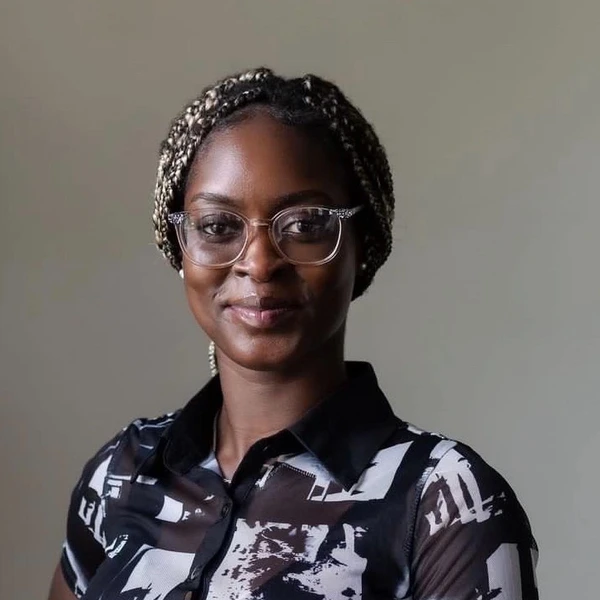
user profile avatar

Comfort Akinlabi

1x

Finalist

Bio

A graduate of The University of Maryland College Park, and an incoming law student at the American University Washington College of Law. I am interested in corporate law and intellectual property law. I am fluent in English and Yoruba, I have also worked as a legislative intern at the Maryland General Assembly. I currently work for the Department of Juvenile service. I am committed to service and addressing legal challenges.

Education

American University

Doctoral degree program (PhD, MD, JD, etc.)
2026 - 2029
  • Majors:
    • Law

University of Maryland-College Park

Bachelor's degree program
2022 - 2024
  • Majors:
    • Criminology

Miscellaneous

  • Desired degree level:

    Master's degree program

  • Graduate schools of interest:

  • Transfer schools of interest:

  • Majors of interest:

    • Law
  • Not planning to go to medical school
  • Career

    • Dream career field:

      Law Practice

    • Dream career goals:

    • Residential Advisor

      Department of Juvenile Services
      2025 – Present1 year

    Public services

    • Volunteering

      CMSC YOUTH CHURCH — Welfare Coordinator
      2024 – Present
    Bick First Generation Scholarship
    Like a seed, I was planted in the in the bustling streets of western Nigeria. It was a blessing to be born and raised in a country where vibrant cultures intertwined and stories of resilience are etched into the fabric of everyday life, but sometimes it felt like a burden. As the firstborn daughter, I was required to assist my mom at home and at her clothing store to help make ends meet at a young age. When my mother was away from finding business opportunities, I was her second in charge and filled in for her absence. Although it felt as if my childhood was taken from me, like a tree, I learned to stand tall and became deeply rooted in the understanding that serving my family (and others) was an honor. But just when I felt like I had embraced the winds of resilience, my parents got divorced, and I had to relocate to the United States at 17 years old and leave the familiar comfort of my homeland. At 18, I decided to embark on a new journey in pursuit of a brighter future, but at other points in time, there was an overwhelming feeling of fear of the unknown. I worried about what the transition to college would be like since I had already graduated high school when I was 16 years old. I worried about how I could be in school and still help provide for my mom and my siblings. I worried about feeling like an outsider in a country that did not accept people like me. But these were all expectations I needed to have in order to prepare myself for the journey ahead. Over time, I learned to rely on my roots when re-planting myself in this unknown environment. I used courage to pursue my education at a community college and then used that as a stepping stone to get my bachelor’s degree at the University of Maryland. While in college I relied on my roots of culture to help foster inclusive and supportive communities through DICE, an organization dedicated to empowering diverse students. I relied on my roots of service to others and sought out an internship at the Maryland General Assembly where I was able to conduct outreach to learn about the constituents’ concerns and provide them with well-informed assistance As a criminal justice major, I learned that young people are amongst the most vulnerable groups and need early intervention and advocacy to guide them toward a better path in life. I want to serve families, particularly children (both here and abroad), who feel like the universe is fighting against them. I would like to be a youth advocacy attorney and protect the legal rights of children while also presenting opportunities to access and achieve their dreams. This scholarship will help me achieve that dream, and I believe I will be a good lawyer because each of my roots reflects a principle of what is needed in the legal industry.
    Jeffrey J. Douglas First Amendment Scholarship
    My name is Comfort Akinlabi, born and raised in western Nigeria, stemming from a low-income household where survival took precedence over self-expression. I learned from an early age that having a voice is a privilege that can be sharpened by education. So I sought to use education as a tool to sharpen my voice, especially because my parents, who could not afford higher education, had their voice silenced in a country that abuses freedom of speech. Despite those constraints, I was drawn to being heard and connected with people. During the course of my immigration from Nigeria to the United States, I witnessed how silence can accompany the sacrifice of expression, and finding my voice took on a different meaning to me. I was no longer just finding my voice; I was redefining my voice in a new country and a social color system that I was not familiar with. Adapting to life in the United States was not easy as an immigrant who had a second language, I often feel unheard, unseen and unrepresented due to the color of my skin, Furthering my education beyond high school helped me express myself in spaces where I felt unheard and unseen, and I exceled academically at Prince George's Community College majoring in Criminology and criminal justice with a 3.9 GPA later graduating from the University of Maryland College Park with a 3.5 GPA. I started to actively use my voice through active involvement in organizations on campus, such as diversity and inclusion, emphasizing the importance of representation. My commitment to the freedom of expression goes beyond the classroom and academic achievements. Through my church and community involvement, I have served underserved communities where poverty and marginalization often silence individuals from being able to express themselves. My internship at the Maryland General Assembly exposed me to the legislative part of expression, where voices can be heard and shaped into policies, and I was able to assist in shaping voices into laws and polices to serve the community. I also currently work at the Department of Juvenile Services with vulnerable youths whose voices, through racial discrimination and economic barriers, have been shut down. As I pursue legal education, I am committed to protecting and advancing freedom of expression, particularly for juveniles whose voices are often overlooked. I want to be an advocate who not only speaks but ensures that every voice is heard. My journey has taught me that