user profile avatar

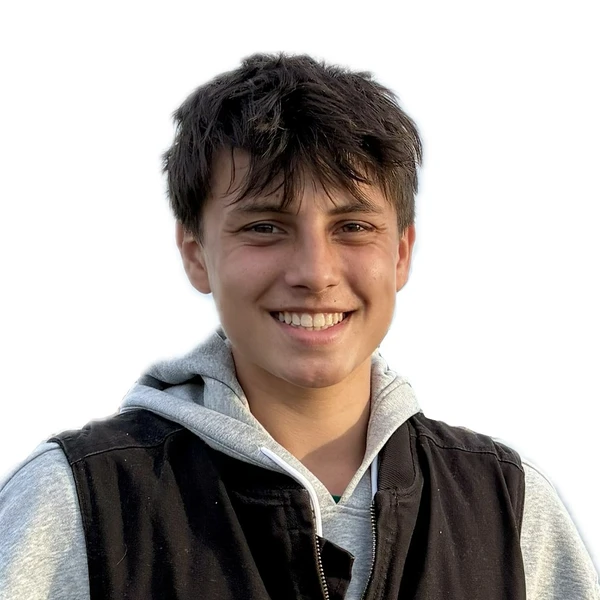
Cole Geurtsen

1x

Finalist

1x

Winner

Bio

My name is Cole. I'm from Berkeley, California, and this fall I will be attending the University of Washington in Seattle to major in Molecular, Cell, & Developmental Biology. During high school, I was a part of my school's Biotech program, where I fostered much of my passion for this subject. Last summer, I had the opportunity to work as a Cardiovascular Cell Biology Intern, which was an experience that not only taught me a lot about the Biotech and Research & Development Department, but it also taught me many lessons I'll carry throughout college and my eventual career path. I hope to one day conduct research and experiments similar to my internship, and I want to work on something with the potential to impact millions of people.

Education

Berkeley High

High School
2022 - 2026

Miscellaneous

  • Desired degree level:

    Bachelor's degree program

  • Majors of interest:

    • Biochemistry, Biophysics and Molecular Biology
    • Biology, General
    • Cell/Cellular Biology and Anatomical Sciences
    • Microbiological Sciences and Immunology
  • Not planning to go to medical school
  • Career

    • Dream career field:

      Biotechnology

    • Dream career goals:

    • Research & Development Intern

      BioMarin Pharmaceutical
      2025 – 2025

    Sports

    Tennis

    Varsity
    2024 – 20262 years

    Research

    • Biotechnology

      BioMarin Pharmaceutical — Research & Development Intern
      2025 – 2025
    Bio-Rad Northern California Scholarship
    Winner
    The possibility of my throat swelling to the point where I couldn't breathe was a potentially lethal consequence of my severe peanut allergy. This frightening threat controlled me, placing embarrassing constraints on my life from an early age. I sat alone in the school cafeteria, birthday dinners were often ruined by cross-contamination, and most of my Halloween candy remained uneaten. It seemed that I’d live with these inconveniences forever, but after meeting with several doctors, we found a possible solution: Oral Immunotherapy. The treatment was straightforward, but not without risks: I would slowly build up my tolerance by increasing my exposure to peanuts; if my immune system became overwhelmed, I could go into anaphylactic shock. For eight months, my Fridays became five-hour ordeals in the doctor’s office. Despite the controlled environment, with gradual changes in dosage and constant vital checks, there were times when my immune system would short-circuit, sending my body into anaphylactic shock. These risks were not confined to my doctor’s office; during a home treatment, I reacted and needed to be rushed to the hospital. My surroundings blurred, and a burning sensation consumed my body as my throat swelled and my stomach throbbed. The pain was excruciating; I desperately cried out to pull over so my mother could administer an EpiPen. The experience was terrifying, and I contemplated quitting, but the fear that shook me in those moments also fostered an unwavering curiosity. As a result of my experience, I became motivated to test, calculate, and experiment in my school's Biotechnology Program. The same scales I used to measure my doses every night were also used to weigh the components of my solutions in class. When learning about epinephrine’s role in cell signaling, I was intrigued, as it had saved my life on multiple occasions. The web of connections between the treatment I was bound to and the concepts I explored in class made science a subject that resonated with me. Over the Summer, the weeks spent running experiments and analyzing data as a Cardiovascular Cell Biology intern shifted my perspective. It felt gratifying, like I belonged. This wasn't just because of my excitement to be in the lab; it seemed as though I was paying it forward. Being able to eat something every day, which at one point could have killed me, was only possible due to groundbreaking scientific advances. The realization that the work I was doing in Research & Development was once done by someone else to develop Oral Immunotherapy was what impacted me the most. It demonstrated that, while there is still much to be discovered in science, the solutions produced have the potential to benefit millions. Oral Immunotherapy remains a long, tedious, and sometimes scary journey, with my treatments continuing today. Nevertheless, it led me towards a commitment to science, cultivated through the traits, lessons, and perspectives drawn from this unconventional experience. As I look back at how far I've come and ahead to what my future holds, I realize that it all stems from this one scientific breakthrough, my own personal experiment. This experience has helped me realize that my passion for science isn’t solely for experimentation and research: it’s a passion to work on something that can help others, change others, just as I was through Oral Immunotherapy.