Hobbies and interests
Acting And Theater
African American Studies
Art
Cinematography
Guitar
Gender Studies
Directing
Criminal Justice
Education
Writing
Playwriting
Public Policy
Media Studies
Advocacy And Activism
Community Service And Volunteering
Human Rights
Movies And Film
Public Speaking
Video Editing and Production
Reading
Academic
Adult Fiction
Art
Biography
Classics
Contemporary
Drama
Family
Cultural
Criticism
Folklore
Humanities
Gothic
Historical
I read books daily
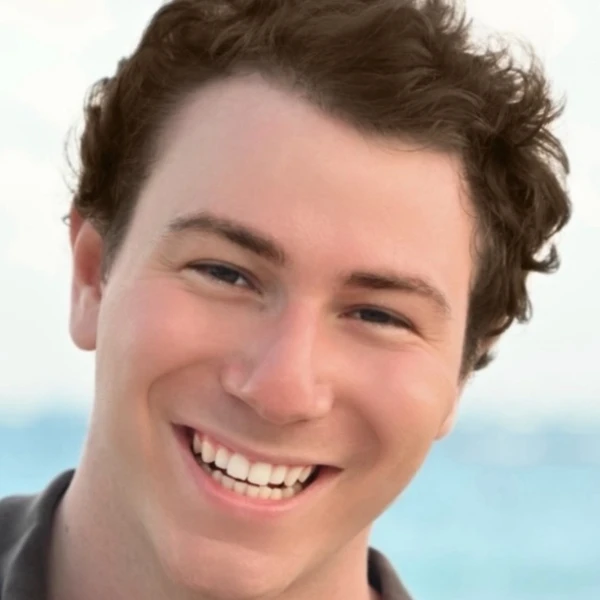
Cody Siegel
1x
Finalist1x
WinnerCody Siegel
1x
Finalist1x
WinnerBio
Hi! I'm currently a senior at Vassar College studying English & Film. I'm incredibly passionate about prison work, literary modernism, the gothic, decadence, degeneration, affect theory, queer theory, film as exploitation, & psychoanalysis. I studied as a visiting student at the University of Oxford from 2025-26 where I focused primarily on modernism. I am on track to graduate in 2026 with B.A. with honors in English with a concentration in British & American Literary Histories and a correlate in Film.
I aspire to better the lives of others by bridging the divide between literary inquiry & traumatic experience. I aim to use narrative theory/psychoanalytic techniques to create spaces of rehabilitation for those living within networks of confinement, whether that be carceral or psychological. I ran the Westchester Youth Alliance Teen Leadership Committee where I partnered with PEN America in working in prisons with incarcerated men, helping them produce poetry based off of their experiences within the prison system. This exploration of confinement has morphed into a commitment to queer or “deviant” bodies after experiencing a traumatic episode in 2024 that resulted in temporary paralysis from a psychosomatic reaction I had after reckoning with my own body & sexuality as a gay man. This experience prompted me to focus on bodily confinement & repression in modernist literature, which I hope to pursue at the masters level, with the goal of eventually pursuing a PhD.
I enjoy writing short fiction, filmmaking, & hiking. I also love traveling to explore cultures, art & cuisine.
Education
Vassar College
Bachelor's degree programMajors:
- English Language and Literature, General
Minors:
- Film/Video and Photographic Arts
Harvey School
High SchoolMiscellaneous
Desired degree level:
Master's degree program
Graduate schools of interest:
Transfer schools of interest:
Majors of interest:
- English Language and Literature, General
- Cultural Studies and Comparative Literature
Career
Dream career field:
Writing and Editing
Dream career goals:
I hope to work in academia as a professor of English as well as a creative/academic writer on modernist theory.
Research Assistant to Professor Pasquale Toscano
Vassar College English Department2025 – Present1 yearPeer Writing Consultant
Vassar College Writing Center2022 – 20242 yearsSpeech Writer and Marketing Intern
Town of Bedford, Office of the Supervisor2022 – 20253 yearsEditing Intern
Jump Cump NYC2025 – 2025
Sports
Cross-Country Running
Varsity2018 – 20224 years
Awards
- Team Captain
- Coaches Award
- New England Council Honors
- Most Valuable Player
Rowing
Varsity2024 – 20251 year
Awards
- Summer Eights
Swimming
Varsity2015 – 20227 years
Awards
- Most Dedicated Swimmer
- Silvers
- Junior Olympics Qualification
Ice Hockey
Club2016 – 20204 years
Research
Cultural Studies/Critical Theory and Analysis
University of Oxford Independent Study (Secondary Thesis) — Author of Critical Theory on Melodrama, Literary Theory, and 1950s Cultural Studies2025 – 2025English Language and Literature, General
Vassar College — Research Assistant2025 – Present
Arts
The Vassar Review
Art Criticism2025 – PresentJacob Burns Media Arts Lab
Film CriticismYes2017 – 2025
Public services
Advocacy
Student Diversity Leadership Conference — The Harvey School Representative2022 – 2022Public Service (Politics)
American Civil Liberties Union NYCLU Education Policy Center — Student Ambassador to Westchester County2020 – 2022Advocacy
Westchester Youth Alliance — Head of Teen Leadership Committee2018 – 2022
Future Interests
Advocacy
Volunteering
Philanthropy
Catalyst Creators: Scholarship for Children's Picture Book Manuscripts Featuring Underrepresented Voices
Two intersecting interests have shaped my activities before and during college: storytelling and activism. In 2022, I watched them entwine completely in my play, ‘Safe Haven,’ which was produced by the Worldwide Plays Festival and performed on the Great Lawn in Central Park. Storytelling was my first love. Even at the tender age of three, I was crafting Playbills and directing Cody’s Puppet Pals. By age nine, I was taking my dad’s Super 8 camera and turning my backyard into a cinematic battlefield. By age ten, I was the kid who formed his own elementary school theater troupe, with rehearsals every recess. I wrote, directed, and costumed plays in my basement theater I co-designed with my dad. Storytelling fed me.
That lesson became deeply personal in the summer of 2024. On May 16th, 2024, in my dorm room during my first intimate encounter with another man, I suffered a trauma-induced psychosomatic collapse that paralyzed me above the waist for four months. During recovery, writing helped me recognize how deeply emotions live in the body before the mind can interpret them. And so, writing is how I continue the work that recovery began. My passion for writing lies in its ability to sculpt what the body knows before the mind can name it. That realization impels me to pursue children’s literature, arguably the most formative literary mode.
Amid state-level efforts to censor children’s books concerning critical race theory (CRT) and LGBTQ+ histories, the U.S. is enduring a radical step backwards that restricts how race, sexuality, and embodiment can be discussed in our public schools and shared civic spaces. I hope to work toward a refined practice to create spaces where literature becomes a means of processing collective trauma rather than evading it. I am in the preliminary stages of writing a children’s book with the working title “Harry Hears Hearts.” The manuscript draft follows a quiet child named Harry, who discovers he can hear the hidden rhythms inside people, like the nervous flutter in his mother’s chest on his first day of school, the heavy thud of someone carrying a secret, the elated wing flag of butterflies in a friend’s stomach. At first, the sounds overwhelm him, and Harry struggles to understand why everyone else doesn’t share this quasi “superpower.” But gradually he realizes that the rhythms he hears are his own emotions: his fear, excitement, loneliness, love. Instead of hiding his difference, Harry learns to use it to help others feel understood. “Harry Hears Hearts” is not explicitly about sexuality and its traumas, but it is deeply sculpted by my own experiences of feeling estranged from my body and unsure how to interpret the emotional signals around me. In several ways, Harry’s capacity to hear emotional rhythms echoes my own attempt to understand how feelings live in the body before we have words for them.
In my experience, children’s books rarely undergird emotional sensitivity as a form of strength, especially in young men and growing boys. I want to write a story that reframes sensitivity as useful perception– a way of generating knowledge to the invisible worlds around us. When children encounter characters whose experiences differ from their own, they learn empathy. When they encounter characters who resemble them, their own feelings can be verified by an external source. Books normalize experiences that children might otherwise believe are isolating or specific to them. What I hope children will take away from my manuscript is the idea that emotions– especially overwhelming ones– are not something to shy away from, but signals and pieces of knowledge. Learning to listen to them can help us care for one another in ways we never knew we needed.
If Harry’s story encourages even one child to see their sensitivity not as weakness but knowledge, then the book will have done the work I know literature has the capacity to do. This manuscript is dedicated to the kids who feel more than they know how to say– the quiet boy staging plays in his basement, the child who’s told her sexuality by others before she can name it herself. Stories give them language.
Thank you for your consideration.
Elijah's Helping Hand Scholarship Award
Bone, snap, crack: I lost my ability to walk in the summer of 2024. I attribute this paralysis to my queerness.
I recall that month I spent in the hospital two summers ago with something akin to horrified
nostalgia. In the midst of my first intimate encounter with another man, at 2:14 a.m. on May 16th, in my Vassar dorm room, I suffered a trauma-induced psychosomatic collapse that left me in prolonged tonic immobility. Gripped by panic at the idea of dying there in the middle of spasms, pacing across my room as my heart accelerated and a metallic taste seeped through my mouth, I finally collapsed. I woke hours later in an ambulance, paralyzed in my neck, arms, and legs for the entire summer. My doctors could not predict whether I would ever have a fully functioning body again. When I recall the hours I spent between the EMDR training trying to recollect the event, or when I reflect upon bowel-program sessions and the intricate struggle to move my neck to eat, a frigid shiver strikes. I was terrified. And vulnerable. Emotional difficulties then eclipsed the physiological ones: a paralyzing loneliness overtook me as I began to realize that this event is stemmed my confession to love another individual. That the very act of my queerness sparked this psychosomatic reaction that caused "permanent damage" upon my body. As a gay man raised in a conservative household, I was conditioned to suppress my sexuality. Subsequently, my body felt deviant in the moment I gave it to someone else-- the moment I confirmed I was indeed a gay man.
More than any other therapy, literature became a refuge from physical recovery and mental tumult. My esteem for painter David Wojnarowicz moved me to read his memoir "Close to Knives" (1991), where I encountered a character whose situation surprisingly paralleled my own: where he equates his sexuality as his site of bodily breakage. Wojnarowicz’s writing on living with AIDS invokes in his viscera a searing state of betrayal. Wojnarowicz’s syntax mimics a traumatic architecture: his experience of occupying a body he believes to be unfamiliar. It became my task, like David’s, to write my own prose to make sense of why I had this bodily reaction. Such is the power of literature: to breathe life into characters with whom we mourn our tribulations and celebrate our successes. I discovered then the written word’s reparative potential, which now impels me to pursue a masters in English with a specialty in modernist literature and concentrations in queer studies and psychoanalysis. Specifically, I hope to investigate how reading queer modernist literature can evoke in us a visceral sensation in our bodies before we make sense of the legible content.
I plan to devote myself to academia because, in my experience, the academic community touches lives: when I returned to Vassar's campus after my traumatic episode, faculty, staff and students welcomed me back ebulliently. Their support was invaluable. I had returned home. I realized how the college setting can offer a source of hope. And so I endeavor to become a professor who is committed not only to innovative research but also to motivating students, to convincing them that the written word proves integral to traversing the pitted trek of life. Elijah, whose memory I aim to celebrate through this award, embodied the courage to exist in a world conditioned to reject their legitimacy. Their passing reminds me that intellectual life cannot be divorced from emotional survival-- that scholarship, at its best, tends the wounds that language fails to articulate.
Thank you for your consideration!
Wicked Fan Scholarship
The body will inevitably face its metamorphosis at one time or another. The first time I saw Wicked, I was six, when my grandmother took me to the theater for my first Broadway show for my birthday. I didn’t yet understand the particular political landscape I lived in, but I remember feeling the visceral discomfort of seeing green skin exposed under a spotlight — the way the audience gasped when Idina Menzel sang. It was my first lesson that the body itself causes in us a visceral sensation. Maybe that was why I couldn’t look away: because I knew, even then, that a body marked as strange could still be radiant. That moment of watching Miss Menzel belt “The Wizard And I” is my first memory of goosebumps. It began my lifelong commitment to storytelling. I began writing plays in my basement, directing friends in puppet shows, and imagining stories where the outsider is taken in.
As I grew older, Wicked’s story of social scapegoating — of power defining who counts as “good” — became something I recognized in real life. In high school, I led the Westchester Youth Alliance, where we partnered with PEN America in helping incarcerated writers publish their stories. I saw the same struggle for narrative legitimacy that Elphaba faced: to work against a system that denied these narratives because they were too uncomfortable, too raw, and too exposing of our current legal system. To write from prison is to challenge an institution that insists on your silence; it’s to “defy gravity” on the page. In every workshop I’ve led, I’ve watched the act of writing remake a person — a quieter metamorphosis, but no less revolutionary than Elphaba’s flight.
Now, as a scholar of modernism at Vassar, I see Wicked as a parable about aesthetic transgression — about how institutions police what’s “acceptable” art. Like Ginsberg’s Howl or Wilde’s Dorian Gray, it turns moral panic into artistic rebellion. That’s why I’m drawn to studying writers who, like Elphaba, transform stigma into spectacle.
For me, Wicked remains a story about survival through transformation — a reminder that the body, once marked and misunderstood, can become the very instrument of liberation. I’m a fan of Wicked because it taught me that storytelling is an act of defiance — that to tell your story, or to help someone else tell theirs, is to stand at the edge of the world and sing anyway. That lesson still guides everything I write, study, and fight for.
Thank you for your consideration!
Kalia D. Davis Memorial Scholarship
The human body faces its inevitable metamorphosis at one point or another. In April 2024, I walked past Bessel van der Kolk’s book ‘The Body Keeps the Score’ (2014) at a Poughkeepsie bookshop. I was persuaded by the title, I’ll admit: five words that spoke the full agenda and unequivocal thesis of my approach to psychoanalysis.
I recall my metamorphosis. On the night of May 16, 2024, at my Vassar dorm, I suffered a trauma-induced psychosomatic breakdown that resulted in prolonged tonic immobility. Gripped by panic at the idea of dying there in the middle of spasms, pacing across my room as my heart accelerated while a metallic taste seeped through my mouth, I finally collapsed. I woke up in an ambulance, immobile. This episode left significant portions of my body functionally paralyzed for the remainder of the summer, including my neck, arms, and legs. When I think back to the hours I spent on EMDR training, neurological examinations, and physical therapy, a nerve strikes. I was terrified. And vulnerable. This episode is squarely in the past now, but the recovery process was cathartic. I was able to study successfully at Oxford the following year.
In June 2024, I picked up ‘The Body Keeps the Score’ and read it in one sitting. More than any other therapy, reading served as my oasis. Literature became a refuge from emotional tumult and provided me with the mechanism to unlock the subconscious truth behind my body’s motivations. Prose allowed me to confront my body as something I do not merely live in, but actively repel against. Writing forced me to reckon with the core of my bodily dissonance that caused this reaction: living in a queer man’s body. As a gay man taught to suppress his sexuality in a conservative household, the unshakable truth of living within a “deviant form” forced me to view my body as abject. This uncanny dissonance – between psyche and physical form – compelled me to explore the trauma derived from one’s inability to escape a “deviant” body.
My esteem for painter David Wojnarowicz moved me to read his memoir “Close to the Knives” (1991). Wojnarowicz’s writing on living with AIDS invokes in his viscera a searing state of betrayal. Wojnarowicz’s syntax mimics a traumatic architecture: his experience of occupying a body he deems unfamiliar. It became my task, like David’s, to write my own prose to make sense of why I had this bodily reaction. As someone who has always been engrossed in creating worlds my love for literature stems from its ability to cause in us a bodily sensation. I believe texts that elicit visceral responses helped me make sense of the root of my paralysis. I discovered then the written word’s reparative potential, which impels me to pursue a masters in English.
This scholarship, that honors the legacy of Kalia and her tremendous impact, will make possible my dream to pursue a masters in English at Oxford. I plan to devote myself to academia because, in my experience, the academic community touches lives. I realized how academia can offer a source of hope. And so I strive to become an academic who is dedicated not only to transformative research in modernism and psychoanalysis, but also in motivating his students, to convincing them that the written word proves itself crucial in traversing our pitted personal trajectories.
Thank you for your time and consideration.
Priscilla Shireen Luke Scholarship
In May, 2024, I suffered a trauma-induced psychosomatic collapse that left me in prolonged tonic immobility, resulting in paralysis in my neck, arms, and legs for the entire summer. As a gay man raised to suppress my sexuality, my body felt deviant. Literature became my oasis, my way of reclaiming what had happened to me, helping me translate a somatic enigma into something legible.
By September 2024, I was studying safely as a visiting student at Oxford (UK). There, my efforts expanded from dealing with an immobile body to a reorientation of public purpose. Oxford is a city divided into two. On one side sits the college gates, while across Magdalen Bridge, a humbler city resides. One October evening, I was browsing a jewelry stall, where I saw the salesman wearing a Star-of-David necklace the same as mine – but as a choker. He wore a septum ring and a dragon tattoo snaking down his neck. I saw in the pocket of his jeans ‘The Aspern Papers’ by Henry James. We spoke fervently about James’s style. I learned the salesman was named Arthur, attended the same synagogue as me, and nursed a dream of becoming a poet. Eventually, Arthur recounted to me his experience in the British prison system. I continued to visit him every week for a year. We discussed Woolf, Adorno, politics; shared each other’s writing; and organized a modest book trade together. I have consistently sought affinity through finding common-ground with those most radically disparate from me “on paper.” As I recall my recovery process in 2024, my understanding of what it means to give back has morphed from an abstract sense of obligation into a daily practice of connection. My work across literary advocacy, education reform, and carceral outreach has all stemmed from this conviction: that social progress begins with empathy translated into action.
My first sustained engagement with service began as a student ambassador for the ACLU’s Education Policy Center. There, I contributed to the Know Your Rights campaign and researched the structures that perpetuate the school-to-prison pipeline. Policy became personal when I met students whose opportunities were determined not by potential but by the zip codes in which they were born. This work guided me when I founded the Harvey Human Rights Initiative, a student-led organization committed to equity in independent schools. I carried that ethic into my work with PEN America’s Prison Writing Program, leading editorial workshops for incarcerated writers. I encountered individuals who transformed isolation into expression and defied invisibility through prose. Today, as Creative Director of the Vassar Review, I am cultivating an editorial space that prioritizes truth-telling and artistic integrity. Our next issue, “Temptation and Testimony,” highlights writers confronting injustice and resilience.
Through the support of the Priscilla Shireen Luke Scholarship, I aim to lead literary scholarship beyond academia – into prisons, military and psychiatric hospitals, group-home centers – confined spaces where trauma goes unresolved. I intend to partner with the Prison Phoenix Trust while studying at either Oxford or Cambridge, which seeks to bring contemplative practices into UK prisons. My long-term goal is to direct a nonprofit literary organization that partners with schools, libraries, and correctional facilities to build infrastructures of empathy through language.
For me, service is the act of meeting others where they are and helping them imagine where they might go. It is the quiet work of amplifying stories that deserve to be heard and of building systems that make those stories possible. In honoring the legacy of Priscilla Shireen Luke, I aim to continue that work—transforming empathy into action and hope into enduring change.
Rainbow Futures Scholarship
WinnerI recall the night of May 16, 2024, at my Vassar dorm, when I suffered a trauma-induced psychosomatic breakdown that resulted in prolonged tonic immobility. This episode left significant portions of my body functionally paralyzed for the remainder of the summer, including my neck, arms, and legs. This episode is squarely in the past now, but the recovery process was cathartic.
Beyond any other therapy, literature was my oasis. It became a refuge from emotional tumult and provided me with the mechanism to unlock the subconscious truth behind my body’s motivations. Writing forced me to reckon with the core of my bodily dissonance that caused this reaction: living in a gay man’s body. As a gay man taught to suppress his sexuality in a conservative household, the unshakable truth of living within a “deviant form” forced me to view my body as abject. This dissonance – between psyche and form – compelled me to explore the trauma derived from one’s inability to escape a “confined” body at the academic level.
My esteem for painter David Wojnarowicz moved me to read his memoir “Close to the Knives” (1991). Wojnarowicz’s writing on living with AIDS invokes in his viscera a searing state of betrayal. Wojnarowicz’s syntax mimics a traumatic architecture: his experience of occupying a body he believes to be unfamiliar. It became my task, like David’s, to write my own prose to make sense of why I had this bodily reaction. I discovered the written word’s reparative potential, which impels me to pursue a year-long masters in English (1900-present) at the University of Oxford.
Funding from various scholarships, including the McGuire Fellowship from Vassar, as well as scholarships with missions dear to me, primarily Rainbow Futures, are the only outlets through which I can pursue my masters and fulfill the track to receive a doctorate, with the hopes of becoming a professor of literature. I plan to earn an MSt with a focus on twentieth-century literature and transatlantic modernism. This course will inform a cohesive project on how modernism is a mode of literary production made possible by political crisis. I plan to investigate modernism’s ability to evoke a visceral reaction that begins in the body, with attention to the queer literature of Forster, Stein, Barnes, James, and Woolf.
As I recall my recovery process in 2024, my perspective of queerness has morphed into a far more empathetic affinity toward those living within confined bodies, ranging from victims of the carceral system to a young boy disavowed by his family. My instinct to lead has always existed, but this traumatic experience has forced me to think about how I intend to do so. Through my masters, I aim to lead literary scholarship beyond the academy – into prisons, military and psychiatric hospitals, and foster care centers – confined spaces where trauma goes unresolved. Stemming from my poetry workshopping with incarcerated people through PEN America in 2022, I intend to partner with the Prison Phoenix Trust at Oxford or wherever I end up studying, which seeks to bring contemplative practices into UK prisons.
I plan to devote myself to academia because, in my experience, the academic community touches lives. The act of sitting in the Vassar library and picking up a new text was restorative for me. I realized how academia can offer a source of hope. And so I strive to become an academic who is dedicated not only to transformative research, but also in motivating his students, to convincing them that the written word proves itself crucial in traversing our pitted personal trajectories.
RonranGlee Literary Scholarship
I argue that in Ezra Pound’s Imagist poem ‘In a Station of the Metro,’ (1913), a radical compression and reduction of language transforms mundane sensory experience into a purified, “cleansed” vision of perception. In doing so, Pound not only contributes to but actively models an emerging European fascist aesthetic that would take control about two decades later, in which individual perception is manipulated to prioritize reduction, uniformity, and a controlled collective vision of particular sensory imagery.
The summation of our lives and constructed realities is rooted in individual experience, which emerges from human sensation. What we call “reality” is, in large part, a creation of the mind, a filtered perception constructed from sensory input (Coleridge, 'Biographia Literaria' 165). Memory itself is imaginative: we recall sensory fragments and reconstruct them into images that seem real but exist only in consciousness. William Blake’s “doors of perception” suggest that if these filters were purified, we might glimpse reality as it truly is (Blake 23). The artist, and especially the poet, engages in a similar project: to transform experience into language that transcends mere representation, offering a symbolic vision with the power to reshape perception. Ezra Pound’s principles of Imagism embody this project, emphasizing the “thing” itself, stripped of superfluity and presented with radical concision ('A Retrospect,' 1918).
Pound’s attention to the immediate, concrete object exemplifies this novel form of sensory compression into the modernist movement. Imagism’s three rules—direct treatment of the “thing,” elimination of unnecessary words, and musical sequencing of rhythm rather than metronomic constraints—allow language to function as a lens through which reality is intensified. This radical compression is not merely stylistic; it mirrors the process by which humans filter and reconstruct experience. By focusing on the “thing” itself— Pound makes his poem a vessel for direct, intensified perception. The poem reads, in its totality:
The apparition of these faces in the crowd
Petals on a wet, black bough.
(Pound, 'In a Station of the Metro')
The conception of ‘petals on a wet black bow’ evokes a series of disparate sensations for the reader. If one hears the poem read aloud without looking at the words, we assume its sensory detail through the auditory, and this image could be of flower “pedals” on a decaying, black tree bough, or perhaps is it of “bicycle pedals” on a wet, menacing “bow.” No matter what image we conjure in Pound’s symbols, it is recreated by us according to our own past imaginative facilities. The reader takes in whatever emotional resonance, turmoil, and affinities they associate with ‘these faces,’ which surround them amid the present moment.
The 1910s fascist aesthetic structure (e.g., rationalism, brutalist architecture, the return of the “Romanesque” in Italy) relies on an emotional investment through design that encourages participation not in democratic dialogue but in stylistic surrender. Pound’s semantic ambiguity functions like fascist symbols, artifacts, or propaganda slogans: ambiguous enough to invoke personal investment, but so hyper-focused that it formulates this imaginative effort toward one particular vision of unification. In doing so, the poem’s syntactic reduction to essential, mythic figures (‘apparition,’ ‘black bough’) is a mechanism for aestheticizing experience the very way Mussolini’s Italy or Hitler’s Third Reich eventually does: it demands the reader fill all ambiguous spots with their own image, but only within a formal structure that limits interpretation to some idealized invention.
The title, 'In a Station of the Metro,' operates as a spatial locator while still being isolated from the grammatical syntax of the verse. The separation pulls the reader into a transitory space, a literal underground housing a mode of industrial transportation, while positioning the content as physically above this mundane body — the imagined location prefacing this ‘apparition’ (line 1). In doing so, Pound’s vision of modernity is not fragmented but idealized, with the present crowd becoming one spectacle, evoking this mythologized quality to the industrial space. The crowd is not made up of individual faces, but one single apparitional spirit that contributes to one singular aesthetic. To conduct a close reading of Pound’s language here is indeed a close reading of the proto fascist aesthetic. Fascist aesthetics seek a stylized reality where the state and its symbols are not mere representations but active architects of a utopia. Within 1910 fascist aesthetics, the artist of such a text relies on spiritual elevation of the individual body into a conglomeration of one spirit: not seen as individuals but as symbols of an ideal body politic.
Pound’s semicolon holds a distinctive indicator for some way of navigating meaning. If the semicolon were removed, the poem would read: “The apparition of these faces in the crowd / Petals on a wet, black bough.” In this alternative poem, we see petals not as the subject of the second line but as the action of the ‘apparition.’ Pound here has a kind of abbreviated parataxis – a syntax of series. Here, only two elements are in that series. A series is typically joined by an “and,” but Pound eliminates this. The syntax is compressed in the service of rendering what is, in effect, a new kind of perception: one that is modern, industrial, but also, as Pound conceives it, not constrained by temporality. He gestures here to a return of the archaic, of the antiquated, even in his attempts to “make it new.” While we may be in Paris in the metro, the formatting draws on Japanese verse models and Japanese pictorial aesthetics. Pound recalls the long poetic history of comparing dead souls with leaves, more commonly found in the classicism of Homer, Milton, Virgil, and Dante. Pound's archaic overlay strips down the poem to its primal elements. While we may see this radical new form of writing at its surface, the reductionist tendencies from 'Metro' point at this return to classicism, this desire for control over a uniform intellect.
By reducing language to its elemental organs, the poet enacts a process of purification analogous to the fascist aesthetic desire for unity and control. Pound depicts this radical concision where his Imagist project transforms human perception, compressing and intensifying experience so that the mind interacts with it as both subject and architect. Pound’s canon, culminating in ‘The Cantos,’ demonstrates this dual impulse: a temptation to “make it new” through the ancient, mythic, and reduced, while simultaneously guiding the reader’s imagination toward a controlled, unified vision of perception.
Johnna's Legacy Memorial Scholarship
Recently, my band was challenged to take on a Frank Zappa Tribute Show. As lead vocalist, I was overwhelmed by the scope of Zappa’s lyrics. I appreciated Zappa’s penchant for satire, but “Whereupon I proceeded to take that mittenful of the generous deadly yellow snow crystals-” is a mouthful. Frank’s music is all one extended verse lacking any bridge or central narrative. Zappa intends to construct, deconstruct, and reconstruct all in one go. Chaos theory postulates that there are always underlying patterns, but I couldn't see it. I make sense of the world by looking for patterns of meaning. Whether it be through writing, performing, or simply trying to educate myself, I believe in the butterfly effect and that we must collectively try to be better. There may not be a reason behind suffering, but we can keep an open heart to the mystery behind it.
When I was ten, I was diagnosed with a chronic illness. Fifth-grade me didn’t understand why I constantly felt sick, and why I couldn’t do much of anything I loved-- swimming, performing, even eating. After years of attempted treatments and medications, beginning in eighth grade, I attended monthly infusions at Mount Sinai Hospital in New York. Since then, every five weeks I go into Manhattan for a four-hour process of infusion of this medication. I have found a comforting pattern for dealing with my illness. However, a side-effect of the medication is that it makes me heavily immuno-compromised.
When stay-at-home orders were issued in March 2020, my family retreated to the solitude of Maine for a week because of our own anxieties about Covid, specifically how it could effect me as an immuno-compromised patient with a chronic illness. That week in Maine became five months. I became the proverbial boy in the bubble. While the world was dealing with the division over whether or not to wear a mask, the murder of George Floyd flooded every screen. When my peers took to the streets in protest, I wanted to be right alongside them, part of a movement, part of a community greater than myself that sought to critique police brutality. But was I really helpless? Did being physically secluded exempt me from doing the right thing?
I got to work using what I had and finally broke away from my isolation. I was still able to contribute virtually to the organization I led, Westchester Youth Alliance, where I met with my teen activist “colleagues” to co-organize a Westchester Black Lives Matter rally on Juneteenth. Although I couldn’t attend, I crafted flyers, promoted the event on social media, and gathered speakers, local artists, and performers. Later that summer I led panels for the Community Works Institute alongside the producers of “True Justice”-- a documentary on Bryan Stevenson. I communicated the need for restorative justice practices and putting aside one’s white fragility to have uncomfortable conversations about race, class, and gender in order to see any progress. As I continued to lead panels and take on discussions within the chaos of my own bubble, I found my place in the pattern.
I rolled up my sleeves and learn Frank Zappa: I had to dismantle and reorganize in order to memorize. I printed the lyrics to the four songs that fell under the “Don’t Eat the Yellow Snow Suite.” I looked down at the nonsense on the page and it slowly came together. Now when I am faced with a conundrum, whether it be learning Zappa, dealing with a chronic illness, or understanding my own part in systemic oppression, I take a deep breath, dismantle, and reorganize.
#AllKidsNeedBooks Scholarship
(in response to Prompt 2)
The human body faces its inevitable metamorphosis. In May 2024, I suffered a trauma-induced psychosomatic breakdown that resulted in prolonged tonic immobility. This episode left significant portions of my body functionally paralyzed for the remainder of the summer, including my neck, arms, and legs. Beyond any other therapy, literature was my oasis. It was a refuge from emotional tumult and provided me with the mechanism to unlock the subconscious truth behind my body’s motivations. Writing forced me to reckon with the core of my bodily dissonance that caused this reaction: living in a queer man’s body. As a gay man taught to suppress his sexuality, the truth of living within a “deviant form” forced me to view my body as abject.
As an English major at Vassar specializing in modernism, literature became my oasis, helping me translate a somatic enigma into something legible. My esteem for painter David Wojnarowicz, for example, moved me to read his memoir “Close to the Knives.” Wojnarowicz’s writing on living with AIDS invokes, in his viscera, a state of betrayal. Wojnarowicz’s syntax mimics a traumatic architecture: occupying a “deviant” body he believes is unfamiliar. It became my task, like David’s, to write my own prose to make sense of why I had this bodily reaction. My love for literature stems from its ability to cause in us a bodily sensation. I discovered the written word’s reparative potential, which now impels me to pursue a masters in English at Oxford or Cambridge.
Though I fully recovered, this process reshaped how I conceive of leadership. While working for Senator Jon Ossoff, I was tasked with contacting a Republican farmer who refused to speak with me. Over several phone calls, we veered off politics and into our mutual love for Hemingway. It was our discourse on literature that bridged our gap. Later, I partnered with PEN America to work in local prisons to write poetry with incarcerated men in Bedford Hills, New York, whose visceral experiences transformed the page into something I had never witnessed.
As I recall my recovery process in 2024, my perspective of leadership has shifted to a far more conscious affinity toward those living within confined bodies. My instinct to lead has always existed, but this traumatic experience has forced me to think about how I intend to do so. Through #AllKidsNeedBooks, I aim to lead literary scholarship beyond the academy – into prisons, military and psychiatric hospitals, foster care and state-run group-home centers – confined spaces where trauma goes unresolved. Stemming from my poetry workshopping with incarcerated people through PEN America, I intend to partner with the Prison Phoenix Trust, which seeks to bring contemplative practices into UK prisons. I also hope to contribute to TORCH‑led initiatives from the Research Centre in the Humanities, such as the ‘Mind, Soul and Trauma’ projects, proposing an evolved strand that concentrates on “writing” the body. The mission of #AllKidsNeedBook speaks invaluably to me, and its support will help me continue this work and pursue a master’s dedicated to exploring how literature can heal and connect the lives of confined bodies.
Champions Of A New Path Scholarship
The human body will face its inevitable metamorphosis. In April 2024, I walked past Bessel van der Kolk’s ‘The Body Keeps the Score’ (2014) at a Poughkeepsie bookstall. A month later, my body staged its metamorphosis. At 2:14 a.m. on May 16th, in my Vassar dorm room, I suffered a trauma-induced psychosomatic collapse that left me in prolonged tonic immobility. Gripped by panic at the idea of dying there in the middle of spasms, pacing across my room as my heart accelerated and a metallic taste seeped through my mouth, I finally collapsed. I woke hours later in an ambulance, paralyzed in my neck, arms, and legs for the entire summer. The voyage to recovery included EMDR, physical therapy, and reckoning with living in a body I had learned to resist. As a gay man raised to suppress my sexuality in a conservative household, my body felt deviant. Though the collapse is squarely in the past and I have gained full recovery, this process reshaped how I conceive of leadership.
That June, I picked up ‘The Body Keeps the Score’ and read it in one sitting. Literature became my oasis, my way of reclaiming what had happened to me, helping me translate a somatic enigma into something legible. I immersed myself in trauma theory, particularly Freud’s notion of “conversion”: when the mind cannot process trauma, the body absorbs it instead. Writing became a way to ask what my body already knew – why it broke before my mind could name the pain. The process of reading and writing forced me to confront my body as something I do not merely live in, but actively rebel against.
By September 2024, I was studying safely as a visiting student at the University of Oxford. Here, my metamorphosis expanded from dealing with an immobile body to a reorientation of public purpose: an innate curiosity for the “stranger” or the unknown body. Oxford is a city divided into two. On one side sits the college gates, while across Magdalen Bridge, a humbler city resides. Growing up and studying in the Hudson Valley, I was familiar with these municipal divides: Vassar bridged against blue-collar Poughkeepsie; or in Bedford, bucolic estates sitting across high-surveillance correctional facilities. I had the innate desire one October evening to bridge the divided bridges that complete Oxford. I was browsing a jewelry stall at Gloucester Green Market, where I saw the salesman wearing a Star-of-David necklace the same as mine – but as a choker. He wore a septum ring and a dragon tattoo snaking down his neck. I saw in the pocket of his jeans ‘The Aspern Papers’ by Henry James. We spoke fervently about James’s style. I learned the salesman was named Arthur, attended the same synagogue as me, and nursed a dream of becoming a poet. Eventually, Arthur recounted to me his experience in the British prison system. I continued to visit him every week for a year. We discussed Woolf, Adorno, politics; shared each other’s writing; and organized a modest book trade together.
I have consistently sought leadership through finding common-ground with those most radically disparate from me “on paper.” Prior to my 2024 episode, working on the Jon Ossoff Senate field team in 2021, I contacted a Republican farmer from Swainsboro, Georgia, who initially refused to speak with me. Over several phone calls, we veered off politics and into his naval service and our mutual admiration for J.D. Salinger. Eventually, we spoke about the Senate race – not about party lines, but about access to healthcare for his newborn granddaughter. An intrinsic value I work to enact both within myself and others is familiar connections with strangers. I connect with my own repressed and unfamiliar self, and do the same to my outer communities, whether that be the locals of Oxford, Southern conservatives, or the inmates of a Bedford prison: those I would otherwise never encounter.
As I recall my recovery process in 2024, my perspective of leadership has shifted from instinctual expectation to a far more conscious, empathetic affinity toward those living within confined bodies, ranging from victims of the carceral system to a queer man disavowed by his family. My instinct to lead has always existed, but this traumatic experience has forced me to think about how I intend to do so. Through Champions of a New Path, I aim to use my masters education to lead literary scholarship beyond the academy – into prisons, military and psychiatric hospitals, foster care and state-run group-home centers – confined spaces where trauma goes substantially unresolved, through which little has been done by current governmental administrations to rectify. Given as I am applying to study in the United Kingdom primarily, I intend to partner with the Prison Phoenix Trust, which seeks to bring contemplative practices into UK prisons. I also hope to contribute to TORCH‑led initiatives from the Research Centre in the Humanities, such as the ‘Mind, Soul and Trauma’ projects, proposing an evolved strand that concentrates on “writing” the body.
At its core, exceptional leadership is grounded on bridging what is disavowed – in the body I possess, in the towns I inhabit, between strangers. This ethos I maintain and plan to integrate into my graduate work is why I believe I deserve the Champions of a New Path Scholarship. I no longer see leadership as predestined command, but as the courage to remain permeable and unfinished. I do not seek total mastery over the spaces I lead, but to dwell in them attentively. My metamorphosis is not the end of a journey, but how I choose to begin.