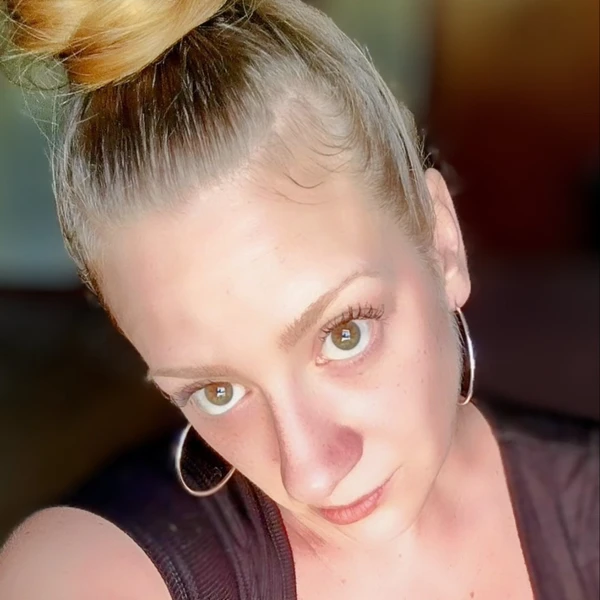
Christina Antilla-Simmington
1x
FinalistChristina Antilla-Simmington
1x
FinalistBio
I am a dedicated student pursuing a degree in Criminal Justice, with a strong passion for public service and social justice. My academic focus is on understanding the legal system and contributing to meaningful reform. I am committed to using my education to make a positive impact in my community and to advocate for fairness and equity within the justice system.
Education
Southern New Hampshire University
Associate's degree programMajors:
- Criminology
Miscellaneous
Desired degree level:
Associate's degree program
Graduate schools of interest:
Transfer schools of interest:
Majors of interest:
Career
Dream career field:
forensic psycologist
Dream career goals:
Shelter support staff
Families in Transition2023 – 20241 yearProgram technician
Learn to Fish Ministry2015 – 20205 years
Sports
Cheerleading
Junior Varsity2005 – 20083 years
Johnna's Legacy Memorial Scholarship
Strength in the Struggle: Rising Beyond Limits
Living with a chronic medical condition—whether it touches your life directly or wraps around someone you love—changes the way you see the world. For me, it’s been like carrying an invisible weight. Most people don’t see it. Some don’t believe it. But every step forward takes intention, courage, and energy that others often take for granted.
This condition has altered my life in both subtle and profound ways. It’s disrupted routines, clouded plans, and forced me to navigate life on a different timeline than most of my peers. There have been mornings when simply getting out of bed felt like a small victory. Times when my body or mind wouldn’t cooperate, and I had to choose between pushing through or protecting my peace. In a world that celebrates productivity over presence, that’s a hard choice to make.
But I’ve also gained something invaluable through this experience: perspective. I’ve come to understand that limitation doesn't equal failure. I’ve learned to redefine success—not by how fast I move, but by how purposefully I walk. I measure strength not in perfection, but in persistence.
What inspires me to excel despite these limitations is the very fact that I’ve been underestimated. I’ve been spoken over, overlooked, and boxed into other people’s definitions of what’s possible. That lights a fire in me. I push forward not to prove them wrong—but to prove to myself that every barrier I break is one less someone else will have to.
I’m currently pursuing a degree in criminal justice, with a heart rooted in advocacy and reform. My experiences with chronic health challenges have made me incredibly empathetic, especially toward populations that are misunderstood, marginalized, or criminalized for coping with pain in ways society doesn’t approve of. People battling addiction, poverty, or trauma—many of whom are navigating invisible illnesses of their own—deserve justice systems that see their humanity, not just their mistakes.
Through my career, I want to create change that’s personal and structural. I want to help build programs that integrate mental health and trauma awareness into criminal justice practice. I want to see courts and correctional systems infused with compassion and science, not just punishment. My goal isn’t just to work in the system—it’s to help change it from the inside out.
But beyond policy and advocacy, I want to empower people. I want to be a voice for those who haven’t found theirs yet. I want to create spaces where people feel safe to be honest, to ask for help, and to heal. Whether that’s through public speaking, community work, mentorship, or storytelling, I plan to use my voice as a tool for visibility and connection. Because when you’ve lived through hard things, your survival becomes someone else’s hope.
Living with a chronic condition has taught me how to sit with pain and still reach for joy. It’s taught me how to set boundaries, ask better questions, and listen more deeply. It’s taught me that rest is resistance, and vulnerability is strength. I’ve learned to treat myself with compassion—and in doing so, I’ve learned how to show up better for others.
I may not move through the world the way others do, but I move with purpose. And that purpose is rooted in justice, healing, and hope.
I want to leave the world better than I found it—not just by rising above my own challenges, but by reaching back and helping others rise too.
Erase.com Scholarship
From Pages to Purpose: A Story of Healing, Hope, and Justice
Books have always been my window into worlds both distant and deeply personal. From memoirs of survival to research in neuroscience and addiction, reading has been a lifeline—a quiet mentor whispering, you’re not alone. One book that fundamentally shaped me was "The Body Keeps the Score" by Bessel van der Kolk. It taught me that trauma doesn’t just linger in memory—it lives in the body, in behavior, in cycles that repeat unless confronted with compassion and knowledge. That book, and others like it, didn’t just inform me. They gave me language for my own pain. They gave me direction.
As a recovering drug addict, I’ve learned more outside of the classroom than in it—lessons earned the hard way. I’ve learned that addiction is never just about drugs. It’s about pain, disconnection, and sometimes just trying to survive the day. But I’ve also learned that recovery is possible, and that the same mind that once sabotaged me can be rewired, reshaped, and reborn. That’s where books became my allies—educating me about neuroplasticity, emotional regulation, and justice systems that often fail people like me.
My experience with mental health has flipped my worldview upside down. It’s made me fiercely empathetic, especially toward people our society tends to write off: addicts, the incarcerated, the misunderstood. It’s deepened my relationships—taught me that vulnerability is not weakness, and that healing requires community, boundaries, and brutal honesty. It’s shifted my goals from vague ambitions to laser-focused passion: I’m pursuing a degree in criminal justice because I want to stand at the intersection of law, rehabilitation, and reform. I want to humanize the people behind the charges.
My ultimate goal is to work in restorative justice or rehabilitation-focused reform, ideally within or alongside forensic science. I want to work with systems that treat the whole person, not just their worst mistake. I dream of creating or contributing to programs that integrate mental health, trauma education, and addiction recovery into criminal justice practice. Systems that don’t punish pain—they treat it.
Right now, I’m not just dreaming—I’m doing. I volunteer with recovery communities, and I’m working on an advocacy project highlighting the impact of trauma-informed care in the justice system. I talk openly about recovery, because shame thrives in silence. I plan to use both my education and lived experience to advocate for better laws, more humane treatment, and real second chances. My life has been shaped by systems, both broken and healing. I plan to reshape those systems in return.
I’m a student, an artist, a survivor, and a future changemaker. I’ve walked through hell, and I’ve come back holding a flashlight. Now, I’m determined to help others find the exit too.