user profile avatar

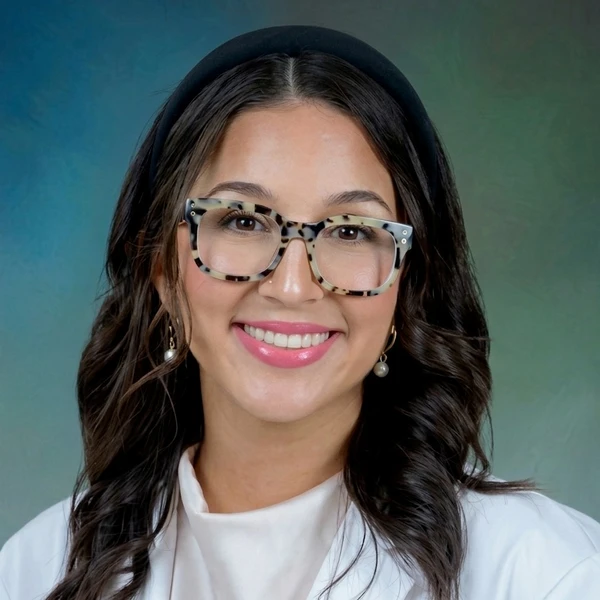
Ciara Martinez

1x

Finalist

Bio

I am a first-generation medical student and advocate dedicated to reshaping healthcare spaces to be fundamentally more equitable, accessible, and inclusive. As a Hispanic woman navigating medicine, my journey is driven by a deep commitment to breaking down systemic barriers for historically marginalized communities. Guided by my own lived experiences and a passion for advocacy, I actively work to amplify underrepresented voices and champion neurodiversity and disability inclusion within medical education and clinical practice. Currently pursuing my MD, I balance my academic training with national and institutional leadership roles focused on medical education policy, student mentorship, and creating supportive communities for peers with disabilities and chronic illnesses. I believe that representation is not just about opening doors, but about actively restructuring the spaces within. My ultimate goal as a future physician is to bridge the gap between complex clinical care and compassionate, culturally responsive advocacy, ensuring that every patient and future medical professional feels seen, valued, and empowered.

Education

The University of Texas Medical Branch at Galveston

Doctoral degree program (PhD, MD, JD, etc.)
2025 - 2029
  • Majors:
    • Medicine

University of North Texas Health Science Center

Master's degree program
2023 - 2025
  • Majors:
    • Biological and Biomedical Sciences, Other

The University of Texas at Austin

Bachelor's degree program
2020 - 2023
  • Majors:
    • Neurobiology and Neurosciences

Miscellaneous

  • Desired degree level:

    Doctoral degree program (PhD, MD, JD, etc.)

  • Graduate schools of interest:

    • The University of Texas Medical Branch
  • Transfer schools of interest:

  • Majors of interest:

  • Not planning to go to medical school
  • Career

    • Dream career field:

      • Medicine
    • Dream career goals:

    • Medication Reconciliation Technician

      Driscoll Children's Hospital
      2023 – 20252 years

    Sports

    Track & Field

    Varsity
    2012 – Present14 years

    Awards

    • World Record Holder at Age 12

    Research

    • Medicine

      University of Texas Medical Branch — Student Researcher
      2025 – Present

    Public services

    • Volunteering

      University of Texas Medical Branch Medical Students with Disability & Chronic Illness — Founder & President
      2025 – Present
    Joe Gilroy "Plan Your Work, Work Your Plan" Scholarship
    Goal: Complete medical school, match into a surgical residency, and build lasting research and mentorship infrastructure for disabled and first-generation students in medicine. My plan runs on three tracks: clinical training, research output, and infrastructure that outlasts my own time in school. Phase 1: Clinical Foundation (2026-2029) I'm a second-year student at UTMB John Sealy School of Medicine, on track to graduate in 2029. My plan includes finishing rotations with a focus on surgery, the specialty I've found most compelling through shadowing, and completing Step 1 and Step 2 CK on schedule to stay competitive for a surgical match. This phase costs roughly $2,500 annually in exam registration and prep materials, which I cover through my own business, GradGirlShop, and ambassador partnerships alongside coursework. I begin a surgery preceptorship in July 2026 to build clinical exposure ahead of residency applications. Phase 2: Research Output (ongoing) I have three active research projects: a propensity-matched analysis of HPV screening gaps in immunosuppressed lupus patients, a study on language-based disparities in endometrial cancer diagnosis, and a completed retrospective cohort study on GLP-1 receptor agonists and endometriosis, already drafted as a manuscript with co-authors. My plan is to submit at least two more abstracts within 18 months, targeting venues like the ACS Clinical Congress and AMA Research Challenge, both of which I've already submitted to this year. This requires continued access to TriNetX, already provided by UTMB, and mentorship from Dr. Fangjian Guo and Dr. Marisol Carpio-Solis. I budget 8-10 hours weekly for analysis and writing, scheduled around coursework rather than competing with it. Phase 3: Permanent Infrastructure (2026-ongoing) This is the part built to outlast me. I founded UTMB's chapter of Medical Students with Disability and Chronic Illness because no such space existed before I created it, and my plan is to make sure it survives my graduation. I've secured an Awesome Foundation grant for its first year of programming, and I'm building formal bylaws and a faculty advisory relationship with Dr. Mukaila Raji to ensure continuity. I'm also leading a systematic review on barriers facing disabled trainees, targeted for the Disability and Health Journal, because lasting change needs published evidence, not just one organization's goodwill. Phase 4: A Scholarship Program (post-residency) Long-term, I intend to launch a scholarship funding students pursuing healthcare research without institutional stipends, the exact gap I fell into as an undergraduate juggling two jobs around unpaid research hours. My target is $10,000-$15,000 annually for two to three stipends, funded through GradGirlShop's existing revenue and donor relationships built from the AMA and TMA networks I'm cultivating now through my current committee roles. Timing and Contingencies I've built redundancy in deliberately. If my residency timeline shifts, my research and MSDCI infrastructure continue regardless, since neither depends on specialty choice. If a specific funding source for the scholarship program falls through, GradGirlShop remains my baseline mechanism rather than my only one. My current roles, Vice Chair of the AMA-MSS Committee on Medical Education, External VP of First in the Family, and my TMA committee work, exist specifically to build the institutional relationships and policy fluency this plan depends on later. Joe Gilroy's approach, plan your work, work your plan, resonates because my entire path has required building the plan myself, with no family precedent to borrow from. Every phase above exists because I mapped out exactly what resources it required and secured them deliberately, the same way I funded MSDCI and structured my research around real mentorship rather than hope. This scholarship would fund the exam costs, research time, and advocacy work this plan already depends on.
    Mad Genius Scholarship
    The Recipe Nobody Ordered Everyone pictures genius happening in gleaming labs with beeping machines and lab coats that stay white. Nobody pictures it happening over a stovetop, boiling water, and a bag of all-purpose flour, at eleven at night, while you mutter to yourself about moisture content. That's where mine happened. I was ten months into a research project trying to build a biodegradable sanitary pad for girls in developing countries who had no access to period products at all. Not exactly a snack-food mashup, but the mindset was identical: take two things nobody would normally put together and force them into something new that actually works. My "ingredients" weren't cheeseburger and quesadilla. They were flour, water, and desperation. The obvious approach failed immediately. Store-bought adhesives were too expensive, too chemical, too impossible to source in the places that needed this most. So I did what any reasonable person absolutely should not do at eleven at night: I started cooking. Tablespoons of flour, a splash of boiling water, stir, fail, adjust, fail again. My first batch clumped into something resembling wallpaper paste that had given up on life. My second batch dried too brittle. My third batch, if I'm honest, smelled faintly like unseasoned biscuits and looked worse. But somewhere around batch six, stirring flour into boiling water slowly instead of dumping it all at once, I got something smooth. Something that held. I remember standing in my kitchen at midnight, genuinely thrilled about paste, like I'd split the atom instead of made a slightly better glue. That's the part nobody warns you about: genius doesn't always feel dignified in the moment. Sometimes it feels like a college student triumphantly texting her research partner "IT WORKED" about flour water. Then came the mold. My perfect adhesive, sealed in the fridge with a paper towel over it like some kind of science-fair casserole, grew a horror movie in under a week. Mad genius, meet mad bacteria. I redesigned the storage, sealed it tighter, layered it differently, tested it again. Every fix revealed a new problem, and every new problem demanded another slightly unhinged workaround, because nobody had handed me a manual for "invent a menstrual product out of pantry staples." I was making the manual as I burned through it. That's what a Mad Genius looks like to me. Not someone who gets it right the first time in a pristine lab with a grant and a team. Someone standing over a pot of boiling water at midnight, laughing a little unhinged about texture consistency, refusing to accept that the "normal" solution was the only solution. A Mad Genius is the person willing to look ridiculous mid-process, because they already know the end result will make total sense in hindsight, even if right now it just looks like a girl arguing with paste. I've carried that same energy into research that looks a lot more respectable on paper: combining massive patient databases with questions nobody had bothered connecting before, like whether a patient's primary language affects how fast their cancer gets caught, or whether a drug for diabetes quietly helps women with a completely unrelated reproductive disease. Different ingredients. Same instinct. Take two things sitting in separate rooms of medicine and force them onto the same plate, because the mashup is where the actual discovery lives. A Mad Genius isn't the person with the cleanest process. It's the person who keeps stirring the pot after five failures, convinced that batch six is going to be the one that finally holds.
    Bick First Generation Scholarship
    Being first-generation means figuring out nearly everything on my own, with no one in my family who could tell me what to expect next. My mom raised me largely by herself, and while she always believed in me, she couldn't walk me through college applications, financial aid forms, or what a personal statement was supposed to sound like. I learned all of it through trial and error, often making mistakes a more experienced family member could have helped me avoid. That gap showed up again during medical school applications, and it still shows up now in my second year. No one at home understands what a Step exam is or what it means to juggle clinical rotations with research deadlines. So I found my guidance elsewhere. I joined organizations, sought out mentors, and learned to ask for help even when it felt uncomfortable. I've worked two jobs since I was sixteen just to stay financially afloat, and I made peace early on with the fact that I'd always be working a little harder than classmates who had family members to call for advice. Instead of letting that gap discourage me, I decided to close it for other students. As External Vice President of First in the Family at UTMB, I mentor incoming first-generation students one on one, helping them navigate the same academic planning and resource hunting that once felt so isolating to me. I know what it's like to sit alone trying to understand a process built for people who already have a map. I want the students coming after me to have one. My dream is to become a physician who treats patients the way I wish someone had treated me during my own years of being dismissed and misdiagnosed, and to keep building spaces for people told, one way or another, that they don't quite belong in medicine. Being first generation taught me that belonging isn't given to you. You build it yourself, then you build it for the people behind you too. This scholarship would ease a financial burden that doesn't really go away for someone in my position. There's no family safety net covering tuition gaps, unexpected fees, or the cost of simply staying afloat while in school full time. Support like this would let me spend less energy calculating what I can afford this semester and more energy on my patients, my research, and the students I mentor. Being first generation has never been something I'm ashamed of. It's the reason I know exactly what kind of doctor, and what kind of person, I want to be.
    J&Y Law Yahouda Yahoudai Service Scholarship
    The first community I built wasn't for myself — it was for the students who'd come after me. When I arrived at UTMB and found no dedicated space for medical students navigating disability or chronic illness, I didn't wait for someone else to create one. I founded the university's first chapter of Medical Students with Disability and Chronic Illness, writing the organizational bylaws myself and building a peer network from nothing. What started as a response to my own isolation has become a place where students who once felt they had to hide their health status to be taken seriously in medicine now have somewhere to be honest about it instead. That same instinct to build the support system I once needed shapes almost everything I do outside the classroom. As External Vice President of First in the Family at UTMB, I work to make sure first-generation students don't have to figure out medical school's unwritten rules entirely alone, the way I did. Now I mentor incoming first-gen students one-on-one, helping them with academic planning and pointing them toward resources I had to discover through trial and error. Some of my community work looks less like leadership and more like simply showing up. At Libbie's Place, I spend time with elderly residents living with dementia, making pipe cleaner flowers together through a small, repetitive, tactile activity that gives residents something to focus on and succeed at, and gives me the chance to sit with people the healthcare system often rushes past. There's no research output or leadership title attached to those afternoons. It's just presence, patience, and the quiet recognition that community sometimes means showing up for people who won't remember that you did, and doing it anyway. That same commitment to populations often overlooked in clinical care led me to co-develop the Inclusive Medicine Initiative (IMI): Bridging the Disability Care Gap through Neuro-Affirming Clinical Partnerships. Through IMI, I'm working directly with the Ball High School Special Education Department on a "reverse doctor role" program, designed to demystify the clinical environment and reduce doctor-associated anxiety for students with disabilities, using validated outcome measures to track its impact. It's community-building aimed upstream, reaching students long before they'd ever need to advocate for themselves in a doctor's office the way I once had to. I've tried to extend that same principle through more structured channels too. As Community Service Coordinator for the Blocker Osler Student Society, I lead volunteer campaigns and community-health events, and I built a centralized tracking system so our chapter could measure whether our outreach was actually reaching the people it was meant to serve. Through MSDCI, I organized a bone marrow and blood stem cell donor-registry luncheon that educated students on disparities in hematologic medicine while directly recruiting donors. The thread connecting all of this, from pipe cleaner flowers at Libbie's Place to founding MSDCI to building IMI's clinical partnerships, is a belief that community isn't something you wait to be invited into. It's something you build, or simply show up for, wherever you notice a gap. I know what it costs to navigate something difficult without a community behind you, because I've lived it. That's exactly why I keep showing up for others whether they're dementia patients who won't remember my name, students with disabilities who've never met a doctor who understands them, or first-generation trainees building a path with no map to follow.
    Women’s Health Research & Innovation Scholarship
    My research has consistently orbited one question: which patients get dismissed before they ever get diagnosed? I've studied that gap in cervical cancer screening for immunosuppressed women with lupus, in delayed endometrial cancer diagnoses among Spanish-speaking patients, and in reproductive outcomes for women with endometriosis. PMDD and PME sit squarely inside that same pattern, conditions affecting a staggering number of people worldwide, routinely misread as "just PMS" or ordinary mood variability, and largely absent from the diagnostic frameworks most clinicians are actually trained on. What draws me to this space isn't a single case but a structural observation I keep encountering in my own work: conditions that are cyclical, hormonally mediated, or disproportionately affect women tend to get diagnosed years later than conditions with more "stable" presentations, if they get diagnosed correctly at all. PMDD requires clinicians to track symptom patterns across a full cycle rather than a single visit, a diagnostic model most training programs don't reinforce and most fifteen-minute appointments don't accommodate. PME compounds that further, since it means an existing psychiatric or neurological condition worsens premenstrually in a way that's easy to misattribute to the underlying diagnosis alone rather than recognize as a distinct, trackable pattern. Both get lost in the same gap I've spent my research career trying to close: conditions that don't announce themselves clearly within a single clinical snapshot. The concrete step I'd take is one I already have the infrastructure for. My ongoing propensity-matched TriNetX research uses large-scale clinical data to identify diagnostic and treatment disparities that individual case series can't capture, the same approach that's already surfaced screening gaps in immunosuppressed patients and disparities tied to language barriers. I'd apply that same methodology to PMDD/PME: querying TriNetX for patterns in time-to-diagnosis, misdiagnosis as unipolar depression or generalized anxiety, and rates of symptom-tracking documentation across visits, then stratifying by whether providers used validated tools like the Daily Record of Severity of Problems. If the data shows what I suspect: that most patients cycle through years of treatment for conditions PMDD/PME are being misread as before anyone tracks symptoms against a menstrual cycle , that's the kind of concrete, quantifiable gap that moves a condition from "underrecognized" to "documented failure of current screening protocol," which is what actually changes training curricula and screening guidelines. I'd pair that with something I've already built the model for through MSDCI's "Beyond the Textbook" lecture series: bringing an expert-led session on PMDD/PME diagnostic criteria directly into medical student education, using the same pre/post survey design I'm already running to measure gains in clinical-encounter confidence. Getting this into the curriculum before students become the clinicians making these calls is a smaller lever than a national guideline change, but it's one I can pull immediately, at my own institution, with a model already proven to work for other overlooked conditions. PMDD and PME don't need a new advocate discovering them for the first time. They need the same rigorous, data-driven case-building that's moved other overlooked conditions from anecdote to clinical protocol — and that's exactly the kind of work I already do.
    Frank and Patty Skerl Educational Scholarship for the Physically Disabled
    For years, I thought of my Ankylosing Spondylitis as something to manage privately, a problem to solve on my own, quietly, so no one would question whether I could keep up. It took me a long time to understand that isolation wasn't resilience. It was the disabled community, not any single doctor or diagnosis, that taught me the difference. I found that community almost by accident, in conversations with other students and patients who'd also been dismissed, misdiagnosed, or told their symptoms were "atypical" for their age or sex. What struck me wasn't just the shared frustration; it was how differently they'd learned to move through the world because of it. They'd built systems I hadn't thought to build for myself: ways of advocating in appointments, of asking for accommodations without apologizing, of treating flares as information rather than failure. Being part of that community didn't just validate my experience. It handed me tools I'd spent years trying to invent alone. It also reshaped how I see the healthcare system itself. Before, I viewed my misdiagnosis as a personal misfortune, bad luck, or a run of doctors who happened to miss it. Sitting with other disabled and chronically ill people, I started to see the pattern instead of the anecdote: how often bias about who "looks sick" or which diseases are "supposed" to affect which bodies delays care for entire groups of people, not just me. That reframing, from individual bad luck to structural blind spot, is what turned my frustration into direction. It's also why I couldn't just carry that insight privately into my own medical training. When I got to medical school and found no space at my institution for students navigating disability or chronic illness, I founded one. Building UTMB's chapter of Medical Students with Disability and Chronic Illness wasn't an abstract mission — it came directly from knowing what it felt like to have no peers who understood what a flare during finals week actually costs, and wanting the students after me to have what I didn't. Through that organization, I've built peer community, run education sessions confronting the exact diagnostic bias that delayed my own care, and started a systematic review examining how often disabled trainees are pushed out of medicine before they ever reach patients, because if the data doesn't exist, institutions can keep treating individual struggles as isolated instead of systemic. Going forward, I don't intend to leave that lens behind once I'm the one wearing the white coat. The disabled community taught me to notice what gets dismissed as atypical, unlikely, or "probably nothing" and I plan to carry that skepticism of easy explanations directly into how I diagnose and treat patients, especially those whose symptoms don't match a textbook presentation. I also intend to keep building the infrastructure my community still lacks: mentorship for trainees who are told their bodies disqualify them, research that finally counts how many of us there are and what actually helps us stay, and a training pipeline that treats disabled physicians not as an exception to accommodate, but as clinicians whose lived experience makes them better at the job. The disabled community didn't just change how I see the world. It handed me the blueprint for the kind of doctor I intend to be.
    Jules Ehlers-Danlos Syndrome Resilience Scholarship
    My freshman year of high school, I was still racing toward a state title in track, chasing a scholarship I'd worked years for. By the end of that year, I couldn't get out of bed some mornings without help. It took five years and more doctors than I can count to get a name for what was happening to my body: Ankylosing Spondylitis. One rheumatologist dismissed the possibility outright because AS was "predominantly male" as if my spine had read the statistics before deciding to fuse. By the time I got a correct diagnosis, I'd lost my running scholarship, sat out chunks of school, and learned that being young and in pain often means being disbelieved. That disbelief shaped how I approached my education from then on. I couldn't rely on the version of "hard work" that assumes a consistent body, the same energy, the same sleep, the same ability to sit upright through a three-hour exam. Flares didn't check my class schedule. So I built systems instead: negotiating accommodations I once would have been too embarrassed to ask for, learning to advocate for extensions and modified testing conditions without apologizing for needing them, and treating rest as a legitimate part of studying rather than a failure of discipline. ADHD came into the picture later and forced another round of the same lesson that the way I was taught to study wasn't built for the way my brain and body actually work, and that adapting the method isn't cheating the system, it's surviving it intelligently. I could have let AS convince me medicine wasn't built for someone like me. Instead it became the reason I'm in medicine at all. As founder of UTMB's chapter of Medical Students with Disability and Chronic Illness, I've spent the last year building the infrastructure I needed as a premed and didn't have: peer community, accommodation literacy, and a lecture series that puts diagnostic bias, the kind that delayed my own diagnosis for years, directly in front of students before they become the doctors making that call. I'm leading a systematic review on the barriers disabled trainees face getting through medical training at all, because the data on us barely exists, and you can't fix what institutions haven't bothered to measure. We're heading toward a physician shortage of tens of thousands within the next decade, and the response from parts of medicine is still to quietly weed out the students whose bodies require flexibility. I think that's exactly backwards. The physicians who've had to fight to be believed are often the ones who listen hardest to patients nobody else believes either. This scholarship would go directly toward costs that don't pause for a school schedule — specialist visits, medication, the accommodations that keep me able to show up fully as both a student and a patient. It would let me spend less time calculating what I can afford to treat this semester and more time on the research, mentorship, and clinical work that got me here. I'm not looking for the illness to be excused. I'm looking for the support to keep proving it was never a disqualifier to begin with.