user profile avatar

Chyanne Robinson

1x

Finalist

Bio

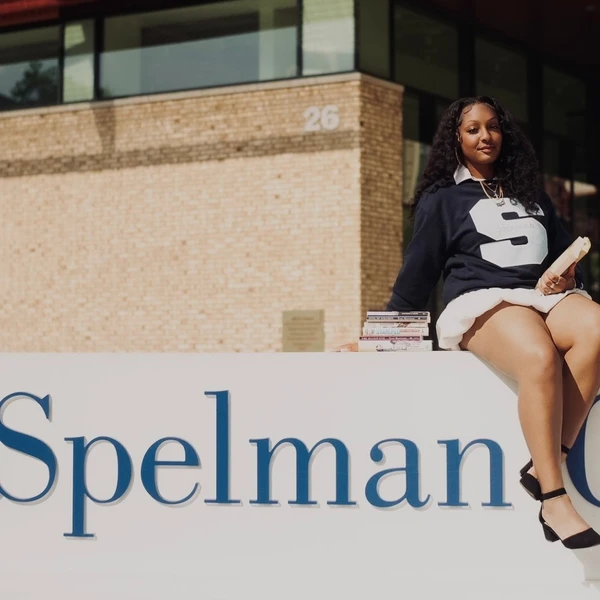
I am Chyanne Elyse a 1st-year graduate student at the University of Southern California. I'm pursuing a degree in Library Science and Information as a way of making knowledge accessible and upholding the mission of many libraries: content within libraries should not only reflect the demographics it's rooted in, but also provide the resources to help them succeed. This is important to me as I begin my librarianship after graduating because I want to work within a public library before transitioning to be a film archivist. At a young age, I looked for myself in films and literature. That only truly came about in 2009 with the release of "The Princess and the Frog." This was a big motivator for me, and still is today, as I continue to write, find, and speak on Black films and literature with accurate and fruitful depictions of the Black experience. This is the goal and will forever be the goal

Education

University of Southern California

Master's degree program
2026 - 2027
  • Majors:
    • Library Science, Other
    • Library and Archives Assisting

Spelman College

Bachelor's degree program
2021 - 2025
  • Majors:
    • English Language and Literature, General
  • Not planning to go to medical school
  • Career

    • Dream career field:

      Motion Pictures and Film

    • Dream career goals:

      Bulkthreads.com's "Let's Aim Higher" Scholarship
      What I want to build is an archive, not just a physical one, but a commitment to the idea that BIPOC stories deserve infrastructure. Not just celebration, but preservation. Not just visibility in the moment, but permanence. I've been a screenwriter long enough to know how many stories get made and then disappear. Films that never got distribution. Footage that sat in someone's garage and got thrown out when they moved. Community films shot on VHS that documented a neighborhood before gentrification changed everything about it. That loss is not accidental. It reflects whose stories systems were built to protect, and whose were left to chance. So, practically, what I'm building starts with becoming a librarian. That's the foundation. I'm in my Library Science master's program right now, doing the work to understand how institutions collect, organize, and provide access to information. I want that experience at the community level first, in a public school or local library, because archiving without understanding who you're serving is just hoarding. The people always come before the collection. From there, the goal is to move into film archiving with a specific focus on underrepresented cinema. I want to work with BIPOC filmmakers, community documentarians, and independent artists to make sure their work gets properly cataloged, stored, and accessible, not locked in an institution nobody can get into, but genuinely reachable by the communities those films came from. A grandmother should be able to find a film her son made. A student should be able to watch local history on a screen at their public library. When communities can see themselves in the historical record, they fight harder to stay in it. That's the civic logic underneath all of this. Information is power, and an archive is the long game version of that truth. This is how I'm building my future: layer by layer, with intention. The degree, then the library job, then the archival work, then the collection that outlasts me. Small and large at the same time. Personal and communal at the same time. I'm not just trying to have a career, I'm trying to build something that holds.
      New Light: Illuminating Your Future Scholarship
      Growing up as a Jehovah's Witness, I was taught that civic life (I.e., voting, protesting, organizing) wasn't something we participated in. The belief was that human systems weren't worth investing in. I understood it then. But as I got older, I couldn't reconcile that with what I was seeing around me: communities without resources, elections that shaped people's everyday lives, movements that needed bodies in the street. Leaving was hard, but it gave me the clarity I needed to make a greater impact. The life I'm building now is a direct answer to everything I wasn't allowed to do. The clearest goal I have is to finish my Library Science degree and step into a role where I'm useful immediately. That means a public school or community library, somewhere with high foot traffic and real need. Not as a stepping stone, but as the work itself. I want to be the person who helps a first-generation student figure out how to apply for college, or who sets up a voter registration table during an election cycle, or who curates a display that makes a kid from the neighborhood feel like their history belongs in this building. Those are small goals on paper. They're enormous in practice. Bigger picture, I'm working toward becoming a film archivist. That path runs through librarianship on purpose,I want the community-facing experience first, because I believe the best archivists understand who they're preserving history for. My goal is to eventually work with institutions that center underrepresented film traditions: Black cinema, independent work that never got wide distribution, films that got lost not because they weren't good but because the system wasn't built to hold them. I want to help change what gets kept. Civic engagement isn't separate from any of this, it's the thread running through all of it. I plan to stay active in local politics in both the Bay Area and LA. That means voting in every election, yes, but also showing up to city council meetings, supporting organizations doing real work on the ground, and using whatever platform my creative work gives me to point people toward civic participation. Screenwriting is part of this, too. The stories I want to tell are ones that put ordinary people in conversation with the systems that shape their lives, not to lecture, but to open something up. Personally, I want to build a life that feels integrated, where the work and the values aren't at odds. That kind of integrity doesn't happen automatically. It's daily. A small but real goal is to keep making intentional choices: about where I put my energy, what communities I invest in, and who I learn from. The future I'm moving toward isn't about arrival, it's about accumulation. Every library shift, every script, every vote, every conversation with someone figuring out their own path adds up to something. I just want to keep being someone who shows up, who does the work, and who takes seriously the idea that my presence in these spaces, as a Black woman, as a creative, as someone who had to choose engagement over comfort, actually matters. I believe it does.
      Sleep Deez Legacy Scholarship: For the Visionaries Who Shape Culture
      Film didn't just happen to me, it found me. Growing up in the Bay Area, specifically Oakland, I was surrounded by raw and impactful stories, with not a single storyteller putting them out. That sparked not only curiosity but also a fire to do so in the only way I knew how: writing. I entered writing competitions for short films, short stories, and poetry. Each competition brings in a large audience, but not the audience intended to receive the message. With that in mind, I took my ideas with me to Spelman College. There, I studied Literature, Media & Writing with a focus on screenwriting and a minor in Film. I found a space where the message was taken in and spewed with countless questions engaging in a discourse around representation and genuine connection. Being at an HBCU taught me that representation isn't just meaningful, it's structural. The archive matters. What gets saved, and what gets left out, is a political act. Screenwriting became the way I learned to think. You can't write a script without understanding motivation, consequence, and the weight of a scene that goes unsaid. That discipline changed how I moved through the world. I started reading situations the way I read a story: What's the subtext here? What's missing from the frame? Those are the same questions a good archivist asks, and honestly, the same questions a good librarian asks, too. I didn't plan for all of this to connect, but it does, and that's the thing about a creative life: it rarely stays in one lane. Now I'm in a Library Science master's program, splitting time between the Bay and LA, and I'm being real with myself about why. It's not just career strategy. It's a civic responsibility. I've watched my community navigate systems that weren't built with them in mind (I.e., schools, institutions, public resources), and I know that information access is the foundation of everything else. If people don't know their rights, their history, their options, they're working blind. A librarian, especially in a public school or community library, is one of the most quietly powerful people in a room. I want to be that person. Film archiving is the long game for me. Because what I understand now — what studying film and working on scripts has made visceral — is that when Black films, Indigenous films, queer films, working-class films disappear from the record, that absence shapes what the culture believes is possible. Preservation is not passive. It's an argument about whose stories deserve to last. I want to be part of making that argument with my whole career. But I'm starting where the community is. Whether that's a school library where a kid finds a film for the first time that looks like their life, or a public library where someone who never went to college gets access to the same resources as someone who did; that's where the work begins. Creativity, for me, has never been separate from service. I write because I believe in the power of a story to shift something in a person. I'm becoming a librarian because I believe in the infrastructure that makes stories reachable. And I'm moving toward archiving because I believe the stories we protect today become the culture we inherit tomorrow. That's the legacy I'm building; not just my own filmography, but a body of work that holds space for others. The screenplays I write, the collections I'll curate, and the patrons I'll sit with while they figure out what they're looking for. All of it is the same commitment: to make sure the story doesn't stop with me.
      Chyanne Robinson Student Profile | Bold.org