
Hobbies and interests
African American Studies
Bible Study
Chess
Soccer
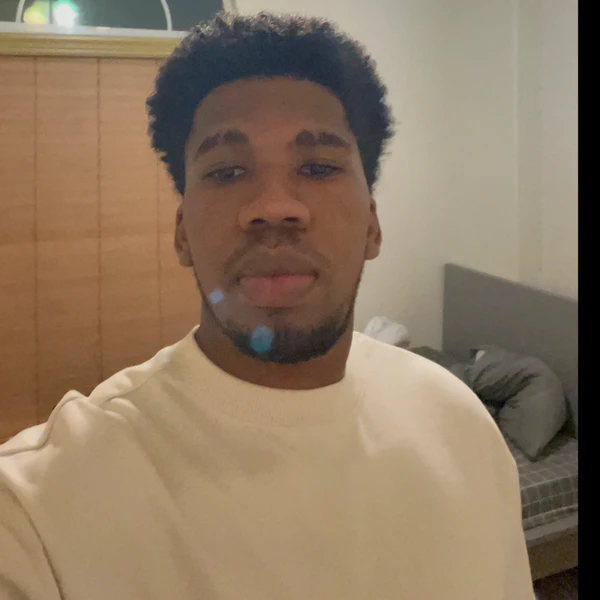
Chukwuemeka Obi-Obasi
1x
Finalist
Chukwuemeka Obi-Obasi
1x
FinalistBio
I am a first generation college student at Houston Community College studying Computer Information Systems, with plans to transfer to the University of Houston in Fall 2026 to pursue a Bachelor’s in Management Information Systems. My passion for technology was born from a painful experience watching my family get scammed by a hacker when I was young. That moment never left me and it is what drives me toward a career in cybersecurity and tech. I currently balance a full time job, DoorDash on the side, and a full course load while maintaining a 3.6 GPA. I am not just trying to get through school. I am trying to build something meaningful for myself, my four sisters, and every family that deserves to be protected from the threats I grew up watching destroy people’s hard earned lives.
Education
Houston Community College
Associate's degree programMajors:
- Computer and Information Sciences, General
- Computer/Information Technology Administration and Management
Miscellaneous
Desired degree level:
Bachelor's degree program
Graduate schools of interest:
Transfer schools of interest:
Majors of interest:
- Computer and Information Sciences, General
Career
Dream career field:
Computer Software
Dream career goals:
Cyber Security
Sports
Soccer
Club2018 – 20224 years
Public services
Volunteering
Individual — Volunteer donor2022 – Present
Future Interests
Advocacy
Volunteering
Philanthropy
Entrepreneurship
Text-Em-All Founders Scholarship
I did not choose cybersecurity because it sounded like a good career. I chose it because I watched what happens when a family gets targeted by people who exploit what you do not know, and I watched how that exploitation, left unaddressed, can cost far more than money.
When I was young, my family was scammed. A coordinated financial fraud stripped away resources we could not afford to lose. My father carried the weight of that loss differently than the rest of us. He internalized it as a personal failure, as something he should have prevented. That shame, compounded by financial pressure and silence, became too heavy to carry. My father died by suicide. I grew up in the hole that left behind.
My mother raised five children alone after that. She never stopped. She modeled a kind of endurance I did not fully appreciate until I was old enough to understand what it cost her. I carried my father’s story as both a wound and a compass. I wanted to understand how what happened to us happened, and make sure it could not keep happening to other families. That is the origin of everything I am building.
I am completing my Associate’s degree at Houston Community College with a 3.76 GPA and Dean’s List distinction, transferring to the University of Houston’s C.T. Bauer College of Business this fall to pursue a Bachelor’s in Management Information Systems with a cybersecurity concentration. I am working toward my CompTIA Security+ certification and building toward a career in security architecture and threat analysis. The technical path is clear. The mission behind it is personal.
The communities most vulnerable to digital exploitation are the ones with the least protection and fewest resources to recover when something goes wrong. They are families like mine. People who work hard, trust the wrong system, and pay a price that should never have been theirs to pay. I want to spend my career standing between those families and the people who would exploit them.
That same impulse drives how I show up every day. Through Phi Theta Kappa and simply being present at HCC, I have become a consistent resource for peers navigating systems that were not designed to make their path easy. Students facing dropout decisions because the financial pressure felt unsurvivable. Classmates who needed someone to say: I know what this weight feels like, and you do not have to carry it alone. I show up that way because I know what it costs when nobody does.
I have never pretended my path was easier than it was. I talk openly about the loss, the hardship, and the financial pressure that defined my childhood because I learned early that silence is not protection. It is a risk. My father’s story taught me that. Honesty is what makes genuine connection possible, and genuine connection is what actually helps people.
Beyond my academic work I am building a personal finance YouTube channel for young people from working class backgrounds who were never handed a financial literacy foundation. That channel is my way of taking what I had to learn through pain and making it freely available to someone who should not have to learn it the same way I did. Knowledge shared is protection extended.
The greatest achievements are the ones that lift everyone. I have known that since I was a child sitting in the wreckage of something that should never have happened to my family. Everything I am building is my answer to that moment.
I am ready to use it for good.
Brent Gordon Foundation Scholarship
My father died when I was young from divide. I did not have the language for it then, and for a long time I did not have the language for what came after either. What I had was a mother who kept moving, and five children who learned, by watching her, that stopping was not an option we could afford.
My father’s death did not just take him. It took the version of my childhood that might have existed if he had stayed. It changed what our household could provide, what my mother could carry on her own, and what was expected of me far earlier than most children my age. Financial pressure became the background noise of everything. My mother stretched every resource as far as it could go, working tirelessly to make sure we had what we needed while quietly carrying a grief I suspect she never fully put down. I watched her do that for years, and it shaped me in ways I am still discovering.
What I did not fully understand at the time was the cost of growing up that fast. I became responsible, serious, and goal-oriented early. But I also grew up without fully processing the loss, because in a household where survival is the priority, grief does not always get its own space. The weight of that unprocessed experience followed me into adulthood, showing up as anxiety, as relentless pressure I put on myself, as a difficulty sitting still because stillness felt like falling behind.
Losing my father also meant losing the financial foundation that a two-parent household might have provided. By the time I enrolled at Houston Community College, I was covering every expense on my own, working a deli counter, managing bookkeeping at a grocery store, and picking up gig work to stay afloat. There was no safety net. Every decision I made had financial consequences I felt immediately and personally. That reality made me disciplined in a way that pressure alone can produce, but it also made certain stretches of this journey genuinely hard in ways that went beyond academics.
What his loss ultimately gave me, underneath all of that difficulty, was clarity. I watched my mother build a life under conditions that should not have been survivable, and I internalized that standard without being asked to. I knew from a young age that I was going to have to build my own foundation from nothing, and that knowledge, as heavy as it was, gave me a direction that has never wavered.
I am finishing my Associate’s degree this summer with a 3.76 GPA and a Dean’s List distinction, transferring to the University of Houston’s C.T. Bauer College of Business this fall to pursue a Bachelor’s in Management Information Systems with a cybersecurity concentration. Every step of that path has been built on the same foundation my mother modeled after we lost him: keep moving, stay focused, and make the sacrifice mean something.
My father’s absence shaped my journey by making me someone who could not afford to drift. I am still here. I am still building. And the life I am constructing is, in part, a conversation with a man I lost too early, proof that what he left behind did not go to waste.
Timothy Reyes Stuckman Memorial Scholarship
The hardest challenge I have faced is not one I can point to a single moment and say, that is where it started. It is cumulative. It is the weight of building a life independently, from the ground up, without a safety net, while still trying to become someone worth betting on.
I lost my father when I was young. My mother absorbed that loss and kept moving, raising five children on her own without ever letting us see her break. What I did not understand then was the cost of growing up in that environment, not just financially, but emotionally. Financial pressure was constant. Childhood, in the traditional sense, ended early for me. While my peers were navigating ordinary teenage concerns, I was already thinking about survival, about what things cost, about what it meant to hold yourself together when the foundation shifts beneath you. I grew up fast, and I carried more than I knew how to name for a long time.
When I enrolled at Houston Community College, those patterns followed me. I was working a deli counter, handling bookkeeping at a grocery store, and picking up gig work between shifts just to cover my expenses independently. There were stretches where exhaustion was constant and the gap between where I was and where I wanted to be felt enormous. There were moments where I questioned whether the pace was sustainable, whether the goal was worth the cost, whether I had enough left to keep going.
What I learned in those moments is that resilience is not a feeling. It is a decision you make over and over again when the feeling is nowhere to be found. I kept showing up. I kept submitting assignments on time and studying for exams after long shifts and choosing the goal over the easier path, not because it was easy but because I had decided it mattered. That decision, made quietly and repeatedly without anyone watching, is the one I am most proud of.
I am finishing my Associate’s degree this summer with a 3.76 GPA, a Dean’s List distinction, and membership in Phi Theta Kappa Honor Society. This fall I transfer to the University of Houston’s C.T. Bauer College of Business to pursue a Bachelor’s in Management Information Systems with a cybersecurity concentration. The challenges I have faced did not redirect me. They clarified me. They showed me that I am capable of carrying more than I thought, and that the life I am building is not going to be handed to me, which means I will value it in a way that people who had it easier simply cannot.
The lesson I carry forward is that your circumstances do not determine your ceiling. They reveal your character. Every difficult stretch I have pushed through has made me more certain of my direction, more committed to the people I want to serve through my career, and more determined to make the sacrifice mean something.
This scholarship would directly ease the financial pressure that has defined this journey and give me more capacity to invest in the next chapter. I am not asking for a shortcut. I am asking for a bridge between where I am and where I am already going.
Finance Your Education No-Essay Scholarship
New Beginnings Immigrant Scholarship
My new beginning did not feel like one at first. It felt like starting over with nothing, in a place that did not know I existed, with no map and no margin for error.
I came from Nigeria carrying the values my mother spent years building into me: discipline, resilience, and the unshakeable belief that education was the only path worth taking. She raised five children alone, stretched every resource as far as it could go, and never once suggested that our circumstances were a reason to settle. I carried that with me when I arrived in the United States, and I have been trying to honor it every day since.
Navigating American systems as an immigrant and first-generation college student is a specific kind of challenge that is difficult to fully explain to someone who has not experienced it. There is no family member who has been through this process to call when you do not understand your financial aid package. There is no blueprint for which classes to take, which opportunities to pursue, or how to position yourself for what comes next. You figure it out as you go, and you absorb the cost of every mistake personally. I worked a deli counter, managed bookkeeping at a grocery store, and picked up gig delivery work to cover my expenses independently while carrying a full course load. There was no safety net. There was just the goal and the work required to reach it.
What kept me going was clarity about why I was here. Back in Nigeria, people I love were targeted by an online scam. Watching that happen, seeing how easily people can be exploited through systems they do not understand, pointed me toward cybersecurity with a conviction that has never wavered. I did not choose this field because it sounded impressive. I chose it because it felt like the answer to a question I had been carrying since childhood.
I am currently completing my Associate’s degree at Houston Community College with a 3.76 GPA, a Dean’s List distinction, and membership in Phi Theta Kappa Honor Society. This fall I transfer to the University of Houston’s C.T. Bauer College of Business to pursue a Bachelor’s in Management Information Systems with a cybersecurity concentration. I am working toward my CompTIA Security+ certification and building toward a career in security architecture or threat analysis, with a long-term goal of protecting communities that are vulnerable to the kind of digital exploitation that has already touched my own family.
My immigrant experience did not slow my path. It clarified it. It taught me that belonging is something you build, not something you are handed. It taught me that the people around you are watching how you carry yourself under pressure, and that the standard you set for yourself in the hard moments is the one that defines everything else. I arrived with nothing but direction and drive. That turned out to be enough to get here. It will be enough to go further.
This scholarship would ease the financial pressure that has defined every step of this journey, and it would remind me that the new beginning I chose was worth every cost it carried.
Sgt. Albert Dono Ware Memorial Scholarship
Service, sacrifice, and bravery are not abstract values to me. They are the words I would use to describe my mother.
She raised five children alone after we lost my father. She never asked for recognition. She never stopped. Whatever the day demanded, she met it, and then she met the next one. I grew up watching that kind of quiet, unrelenting dedication and absorbing it as the standard for what it means to show up for the people who depend on you. That is the foundation everything else I am building stands on.
When I learned about Sgt. Albert Dono Ware, what struck me first was how familiar his story felt. A young man from Africa who came to the United States, chose to serve his adopted homeland with his whole life, and gave everything he had in that service. He did not have to do any of that. He chose it. That choice, the deliberate decision to pour yourself into something larger than your own comfort or survival, is one I recognize deeply. It is the same choice my mother made every morning raising us. It is the same choice I made when I decided that financial pressure and independence would not be reasons to quit, but reasons to push harder.
I am currently completing my Associate’s degree at Houston Community College with a 3.76 GPA, transferring to the University of Houston’s C.T. Bauer College of Business this fall to pursue a Bachelor’s in Management Information Systems with a cybersecurity concentration. My path has not been easy. I have covered every expense independently, worked multiple jobs simultaneously, and built my academic record without a safety net. But I have also tried to do what Sgt. Ware did, show up fully, and make the sacrifice mean something beyond just myself.
Through Phi Theta Kappa I have been a resource for peers navigating systems that were not designed to make their path easy. I have sat with classmates who were considering dropping out, walked people through financial aid processes, and tried to be the presence I wished I had when I was figuring things out alone. That is community service in its most immediate form. It does not require a platform. It just requires showing up.
But Sgt. Ware’s legacy also challenges me to think bigger than individual acts of service. The African diaspora in the United States faces structural challenges that no amount of individual hustle fully resolves. Wealth gaps, underrepresentation in technology and cybersecurity, limited access to quality financial education in working class communities, and a persistent lack of mentorship pipelines for young Black men pursuing technical careers, these are not personal failures. They are systemic ones.
The reforms I see as most critical start with two things: access and representation. In cybersecurity specifically, the field I am entering, the diversity gap is stark. The professionals building and defending digital infrastructure do not reflect the communities most harmed when that infrastructure fails. Closing that gap requires intentional investment in scholarship pipelines, early exposure programs in underserved schools, and mentorship networks that connect young people from the diaspora to professionals who look like them and came from where they came from.
The stakeholders who need to drive this change are not just government agencies or nonprofit organizations. They are technology companies that benefit from secure systems and have the resources to fund the pipeline that produces them. They are community colleges, which are often the first and only point of entry for students like me into higher education. They are individuals who have made it through the door and have a responsibility to hold it open.
Sgt. Ware served a country that was not his birthplace because he believed in what it could be. That kind of faith, the faith that your contribution matters even when the system does not always make space for you, is something the African diaspora has demonstrated generation after generation. My job is to honor that faith by building something that outlasts my own ambition. A career that protects people. A platform that educates them. A life that reflects the values of the man this scholarship honors: service, sacrifice, and bravery, not as ideals, but as daily practice.
Ethel Hayes Destigmatization of Mental Health Scholarship
Mental health was never something we talked about in my home. Not because it was not present, but because there was no space for it. When you are a child watching your mother hold five kids together after losing your father to suicide, you learn quickly that survival does not leave much room for processing. You keep moving. You push through. You do not talk about the weight because the weight is just life, and life does not stop to ask how you are doing.
I was young when my father died. Young enough that grief did not fully arrive the way it does for adults, but old enough to feel the shift in everything. My mother became the only anchor in a household that had just lost its foundation. She never broke down in front of us, never let us see her surrender to the pain she must have been carrying. She just kept going, working, providing, showing up, doing what needed to be done. I did not understand then what it cost her. I understand now.
What followed was a childhood defined by financial pressure. There was no buffer, no room for error, no version of our life where money was not a constant source of stress. I watched my mother stretch every resource as far as it could go, and somewhere in that process I stopped being a child in the way children are supposed to be. I became alert to things kids my age were not thinking about. I understood bills, scarcity, and sacrifice before I understood much else. While my peers were navigating the ordinary concerns of growing up, I was already thinking like someone who needed to hold things together. I grew up fast, and that came with a cost that took years to fully recognize.
There is a grief that comes with a lost childhood that does not get named very often. It is not dramatic. Nobody sees it happen. But when you are forced into maturity before you are ready, when the weight of adult reality lands on you while you are still trying to figure out who you are, it leaves a mark. For me that mark showed up as anxiety, as an inability to fully rest, as a persistent feeling that I always needed to be doing more, preparing more, building more, because stillness felt dangerous. I did not have language for any of that for a long time. I just thought it was normal. I thought everyone felt that way.
They do not.
I have had stretches where the pressure of building a life independently, covering every expense on my own, holding my academic goals steady without a safety net, pushed me into places mentally that were genuinely dark. The difference between those moments and the ones that defined my father is that I learned, slowly and imperfectly, to keep reaching forward instead of turning inward. That is not a small thing. In communities where mental health is still treated as weakness, where men especially are expected to absorb everything and show nothing, choosing to acknowledge your own struggle is an act of resistance. I am still learning how to do it. But I am learning.
My father’s death shaped how I see fragility and strength. My mother’s endurance shaped how I see resilience. And my own experience of growing up faster than I should have shaped how I see the cost of silence. Together they gave me a complicated but honest understanding of what it means to carry something heavy and keep walking anyway.
I want to be someone who talks about this. Not to perform vulnerability, but because I know what silence costs. Part of what I am building through my education, my platform, and the career ahead of me is a life where I can be honest about the full picture. Where I can tell younger people who look like me that struggle is not shameful, that asking for help is not weakness, and that the weight you carry does not have to define your ceiling.
Mental health shaped my beliefs by teaching me that strength is not the absence of pain. It shaped my relationships by making me someone who notices when people are struggling and does not dismiss what they are carrying. And it shaped my aspirations by reminding me every day that the life I am building is not just for me. It is proof of what is possible when you refuse to let the hardest parts of your story be the last word.
Lyndsey Scott Coding+ Scholarship
My CS path is focused on cybersecurity. I am completing my Associate’s degree at Houston Community College this summer with a 3.76 GPA, transferring to the University of Houston’s C.T. Bauer College of Business this fall to pursue a Bachelor’s in Management Information Systems with a cybersecurity concentration. I am actively working toward my CompTIA Security+ certification right now, with the goal of landing a cybersecurity internship in my first year at UH and converting that into a full-time role in security architecture or threat analysis by graduation. The motivation behind this path is personal. People I love were targeted by an online scam, and that experience made protecting people from digital exploitation feel less like a career and more like a calling.
Alongside my technical work, I am building a personal finance and entrepreneurship YouTube channel aimed at young people from working class backgrounds who were never given a financial literacy foundation. I was one of those people. I learned investing, budgeting, and credit through trial and error, and I want to compress that learning curve for others. I also have a background in performance and communication that goes back to when I was performing poetry on a TED Talk stage around the age of ten. That artistic side of me never left. It evolved into a drive to communicate complex ideas in ways that actually reach people.
This is where it gets interesting. Cybersecurity taught me how systems are exploited, how bad actors manipulate gaps in knowledge and infrastructure to take advantage of people who do not know what they do not know. Financial predation works the same way. Predatory loans, scam investments, and financial fraud all thrive on the same thing: an information gap between the person with power and the person without it.
My YouTube channel is not separate from my CS work. It is powered by it. Understanding how exploitation works technically has sharpened how I explain financial exploitation to my audience. The credibility I am building as a cybersecurity professional gives my financial content a layer of authority it would not otherwise have. And the communication skills I have developed creating content make me a more effective educator and future mentor in tech spaces.
The concrete steps I am taking right now: completing Security+ certification, building my channel consistently, transferring to UH this fall, and pursuing a cybersecurity internship in year one. Each of these moves the same mission forward from a different angle. Protect people from exploitation. Give them the tools to protect themselves. Build something that outlasts me.
Pierson Family Scholarship for U.S. Studies
I grew up in Nigeria watching my mother hold a household together through sheer will. She was raising five children largely on her own, navigating financial pressures that would have broken most people, and doing it with a quiet dignity that I have never been able to fully put into words. What she modeled for me was not just survival. It was the belief that the next generation could go further, and that education was the bridge to get there.
That belief brought me to the United States. I came to pursue something she never had full access to, a clear path, a credential, and the opportunity to build something that could outlast my circumstances. I enrolled at Houston Community College, covered my own expenses entirely through work, and started building from the ground up.
The challenge I am most proud of overcoming is the challenge of doing all of this alone. There was no family nearby to absorb a bad month. No safety net for a missed shift or an unexpected expense. I worked a deli counter, managed bookkeeping at a grocery store, and picked up gig delivery work to stay afloat while carrying a full course load. There were moments when the weight of it felt unsustainable. What I learned in those moments is that resilience is not something you have before the pressure. It is something you discover you have because of it. I finished with a 3.76 GPA, made the Dean’s List, and earned a place in Phi Theta Kappa Honor Society. None of that happened because conditions were easy. It happened because I refused to let them be an excuse.
The person who has inspired me most is my mother. Not because of any single dramatic moment, but because of the consistency of her character over decades. She gave everything she had to make sure her children understood that their starting point did not have to be their ending point. I carry that understanding into every decision I make. When I am tired and the goal feels distant, it is her face I think of. She did not have the option to quit, and neither do I.
This fall I transfer to the University of Houston’s C.T. Bauer College of Business to pursue a Bachelor’s degree in Management Information Systems with a cybersecurity concentration. My post-graduate plan is to build a career in security architecture or threat analysis, protecting individuals and communities from the kind of digital exploitation that has already touched my own family. A personal experience watching people I love fall victim to an online scam is what drew me to this field and what keeps the work feeling urgent rather than abstract.
Beyond the career, my plan is to give back. To mentor students who come from where I come from, who are navigating American institutions without a map, who need someone to tell them the door is open and show them how to walk through it. The education I am building in the United States is not only mine. It belongs to every person who sacrificed something to make it possible, and I intend to honor that by making it mean something beyond myself.
WCEJ Thornton Foundation Low-Income Scholarship
There is a question I have asked myself more times than I can count over the past two years: is this sustainable? Not the goal, but the pace. The double shifts, the coursework, the bills, the constant calculation of what can wait and what cannot. The honest answer, most days, was that I did not know. But I kept going anyway, because the alternative was giving up on something I had decided mattered.
I am currently completing my Associate’s degree at Houston Community College, on track to graduate this summer with a 3.76 GPA. I have been working the entire time, covering every expense independently with no financial safety net. A deli counter, bookkeeping at a grocery store, gig delivery work between shifts. None of it glamorous, all of it necessary. I am a low-income student in the truest sense of that phrase, not as a label but as a daily lived reality that shapes every decision I make.
What kept me grounded through all of it was community. Not just the idea of it, but the practice of it. As a member of Phi Theta Kappa Honor Society’s Omega Sigma Chapter, I became a consistent resource for peers who were navigating the same systems I had figured out the hard way. Students who did not understand their financial aid options. Classmates weighing whether to drop a course or push through. People who were one bad week away from walking away from their degree entirely. I sat with them, talked them through it, and showed up in the way I wished someone had shown up for me when I was in that same place. That work did not come with a title or a stipend. It came from understanding what it costs to move through these systems alone, and deciding I was not going to let that be someone else’s unnecessary burden.
That community involvement is not separate from my academic journey. It is woven into it. It taught me that leadership is not about position, it is about presence. And it deepened my conviction that the career I am building needs to serve people, not just employ me.
This fall I transfer to the University of Houston’s C.T. Bauer College of Business to pursue a Bachelor’s degree in Management Information Systems with a cybersecurity concentration. My goal is to work in security architecture or threat analysis, protecting people who are vulnerable to digital threats they cannot see coming. I chose this field because of a personal experience watching people I love fall victim to an online scam. That moment made the work feel urgent in a way that no career aptitude test ever could. The communities most harmed by cybercrime are often the ones with the least protection, and I want to spend my career changing that.
Higher education is how I close the gap between where I am and where I need to be to do that work effectively. At UH I will have access to internship pipelines, industry connections, and research opportunities that will turn my academic foundation into a real career. I am already working toward my CompTIA Security+ certification to accelerate that path.
The positive impact I plan to create is already in motion. At HCC I proved that you can hold a 3.76 GPA, work multiple jobs, support your peers, and still keep your eyes on the horizon. At UH I intend to do the same, at a higher level, with a bigger platform, and with a clearer understanding of what it means to build something that matters beyond yourself.
This scholarship would meaningfully reduce the financial pressure that has defined my academic journey. It would give me the margin to focus more completely on the work ahead, to invest in certifications, and to arrive at UH ready to build rather than just survive.
I have been surviving for two years. I am ready for the next chapter, and I intend to make it count for more than just myself.
Dream BIG, Rise HIGHER Scholarship
I did not always know exactly where I was going. But I knew, from a very early age, that education was the only path that made sense. Not because someone told me to believe that, but because I watched what happened to people who did not have it, and I decided that would not be my story.
Growing up, I watched my mother carry more than any one person should have to carry. She was disciplined, tireless, and completely committed to making sure her children had options she did not always have herself. That image never left me. When I enrolled at Houston Community College, I was not just pursuing a degree. I was honoring a standard she set without ever asking me to meet it.
The early days of college were harder than I expected. I was covering all of my own expenses independently, working a deli counter, handling bookkeeping at a grocery store, and taking on gig work whenever my schedule allowed. There were no safety nets. If I missed a shift, a bill did not get paid. If I fell behind in a class, there was no tutor waiting and no one at home to push me back on track. Everything depended on me making the right call, consistently, when I was tired and when it would have been easier not to.
What education gave me during that period was not just knowledge. It gave me structure. It gave me a framework for thinking about problems that extended beyond my immediate circumstances. Every course I completed, every concept I absorbed, quietly expanded the way I saw what was possible. I stopped thinking about survival and started thinking about direction. That shift, from surviving to building, is the most important thing a college education has ever done for me.
As I complete my Associate’s degree this summer, I carry a 3.76 GPA, a place on the Dean’s List, and membership in Phi Theta Kappa Honor Society. Those credentials matter. But what matters more is the person I have become in the process of earning them. Someone who has learned to hold a goal steady under pressure. Someone who has discovered that discipline, practiced consistently, compounds over time just like any other investment.
My direction became clearer as I moved through my coursework. A personal experience with online fraud targeting people I love pointed me toward cybersecurity. I wanted to understand how these systems worked well enough to defend them, to be on the right side of the technology that increasingly shapes whether people are safe or vulnerable. That conviction carried me into my declared concentration in Management Information Systems with a cybersecurity focus, and it is what carries me now toward the University of Houston’s C.T. Bauer College of Business, where I transfer this fall.
The future I am building is not just personal. I am working toward my CompTIA Security+ certification, planning to pursue a cybersecurity internship in my first year at UH, and positioning myself for a career in security architecture or threat analysis. But the vision extends further than a job title. I want to be the kind of professional who brings real protection to communities that are underserved by the systems meant to keep them safe. The people most vulnerable to digital threats are often the ones least equipped to defend against them, and I want to spend my career changing that equation.
Education did not just give me a sense of direction. It gave me the ability to articulate why the direction matters. Before college, I understood my goals instinctively. After years of rigorous coursework, financial pressure, and consistent effort, I can now explain not just what I want to build but how, and why it will matter to people beyond myself.
The scholarship description says candidates must believe that who they are becoming matters just as much as where they are going. That line landed differently for me than it might for someone whose path has been more straightforward. I have spent years becoming someone who could maintain academic excellence without institutional support, survive full financial independence, and still find ways to show up for the people around me. That process of becoming, pushing through the unglamorous middle of a goal that no one else could see as clearly as I could, is what I am most proud of.
I am not finished becoming. I am finishing my degree this summer and transferring to UH with a clear plan, a strong record, and a level of hunger that has not diminished despite everything I have already pushed through. The challenges I have faced did not dim my ambition. They proved to me that the ambition was real, because it survived conditions designed to extinguish it.
This scholarship would directly ease the financial pressure that has defined my academic journey, giving me more capacity to invest in certifications, research, and the opportunities that will accelerate my path. But more than the support itself, it would affirm something I have quietly believed through every difficult stretch: that the work was worth it, that the dream was worth protecting, and that rising higher is exactly what I intend to do.
Jimmy Cardenas Community Leader Scholarship
There is a version of my story where I gave up. I think about that version sometimes, not with fear, but with clarity about how close it was.
Growing up, I watched my mother work relentlessly to hold our family together. That shaped something in me early: the understanding that nothing worth having comes without cost, and that the people around you are watching how you carry yourself under pressure. By the time I enrolled at Houston Community College, I had already internalized that quitting was not an option I was willing to choose.
But knowing that and living it are two different things. I was working a deli counter, managing bookkeeping at a grocery store, and picking up gig work between shifts just to cover my expenses independently. There were semesters where exhaustion was my constant companion. The temptation to step back, let the goal slide a little further into the future, take a break I could not actually afford, was real and recurring.
I did not give up. I finished with a 3.76 GPA, made the Dean’s List, and earned membership in Phi Theta Kappa Honor Society. This fall I transfer to the University of Houston’s C.T. Bauer College of Business to pursue a Bachelor’s in Management Information Systems with a cybersecurity concentration.
But the obstacle I am most proud of overcoming is not academic. It is the quieter, harder work of carrying a full load alone and still choosing to show up for the people around me.
Leadership, in my experience, appears in small moments before it ever shows up in large ones. It was the classmate I walked through the financial aid process because I remembered how confusing it was and did not want her to lose time I almost lost. It was the peer I encouraged to stay enrolled when working full time felt like too much. It was being present in PTK not just to build a resume, but because I understood what it meant to navigate these systems without a guide and wanted to make that path easier for someone else.
My career in cybersecurity is, at its core, a form of community service. I chose this field because of a personal experience watching people I love become victims of an online scam. That moment showed me what it means to be on the wrong side of a system you do not understand, and it gave me a mission that goes beyond employment. I want to protect people who are vulnerable to threats they cannot see, and I want to build toward a career that serves communities, not just corporations.
Jimmy Cardenas built his legacy by showing up with resilience and purpose, by letting his commitment to his community define his direction. That is the standard I hold myself to. The obstacles I have faced did not redirect me. They clarified me. And the leadership I have demonstrated is not something I perform for applications. It is how I have built everything I have.
Patricia Lindsey Jackson Foundation-Mary Louise Lindsey Service Scholarship
I did not join Phi Theta Kappa because it looked good on paper. I joined because I had spent two years figuring out how to navigate a system that nobody handed me a map for, and I wanted to be the map for someone else.
When I arrived in the United States from Nigeria, I was alone. No family nearby, no guide, no blueprint. I learned how to apply for financial aid, how to read a degree plan, how to balance a full course load with a full work schedule, and how to keep moving when none of it felt sustainable. By the time I joined PTK’s Omega Sigma Chapter at Houston Community College, I had already become the person my peers came to when they were lost. PTK just gave that role a name and a structure.
The service I am most proud of is not dramatic. It does not have a single defining moment. It is the ongoing, quiet work of being available. Sitting with a classmate who did not understand the financial aid process. Walking someone through how to write a strong academic appeal. Encouraging a peer who was considering dropping out because the weight of working full time while going to school felt like too much. I knew that weight. I had carried it. And I had learned that the right word from the right person at the right moment can be the difference between someone pushing through or walking away.
The challenge in this kind of service is that it is invisible. There are no ceremonies for it. Nobody tracks how many people stayed enrolled because you spent forty minutes with them after class. But I have come to understand that invisible service is often the most important kind, because it meets people where they actually are rather than where it is convenient to find them.
Faith has shaped how I think about this more than anything else. I was raised to believe that your blessings are not yours alone, that whatever capacity you build, whatever door you walk through, you leave it open behind you. Coming to America alone could have made me insular and protective of every advantage I gained. Instead it did the opposite. It made me acutely aware of how much difference one person’s generosity can make, and how little it costs to give someone the knowledge you already have.
Leadership, I have learned, is not about being in front. It is about being useful. The most impactful leaders I have encountered in my own life were not the loudest people in the room. They were the ones who noticed when someone was struggling and did something about it without waiting to be asked.
I carry that understanding into everything I am building. As I transfer to the University of Houston this fall to study Management Information Systems, I intend to keep doing what I have always done: showing up, staying available, and making sure that the path I cleared getting here is easier for whoever comes behind me.
Service is not something I do on the side. It is how I move through the world.
Hackers Against Hate: Diversity in Information Security Scholarship
I did not grow up dreaming about cybersecurity. I grew up watching my mother work herself to exhaustion raising five children alone, and one day, hackers took from her what she could not afford to lose.
I was around ten years old when our family became victims of an online scam. People who had never met us reached through a screen and stripped away financial security that had cost my mother years to build. I did not fully understand what had happened at the time, but I understood the aftermath. I watched her face. I felt the shift in our home. And somewhere in that pain, a question formed in me that never went away: who were these people, and how did they know how to do that?
That question became a direction. When I came to the United States alone to pursue higher education, I carried it with me. I enrolled at Houston Community College, declared Computer Information Systems, and started building, one course, one concept, one late night at a time.
It has not been easy. I cover every expense on my own, no family nearby, no financial safety net. I have worked in a deli, handled bookkeeping at a grocery store, and picked up gig work between shifts just to stay afloat. There were stretches where exhaustion felt like a permanent condition. But I kept showing up, finished with a 3.76 GPA, made the Dean’s List, and never stopped moving toward the goal I set for myself when I first arrived.
This fall, I transfer to the University of Houston’s C.T. Bauer College of Business to pursue a Bachelor’s in Management Information Systems with a cybersecurity concentration. I am working toward my CompTIA Security+ certification. I want to be in a security architecture or threat analysis role within a few years of graduating, working to protect people who do not yet know they are vulnerable. People like my family was.
I think about that often. Not with bitterness, but with clarity. The experience did not just point me toward a career. It gave me a reason that goes deeper than a paycheck or a title. I want to understand these systems thoroughly enough to defend them, and I want to do it for the people who will never have the resources to defend themselves.
I also know what it means to move through a field where you do not always see yourself reflected back. As a Black immigrant in a discipline that is still working toward genuine inclusion, I have had to be intentional about belonging. I do not say that to invite sympathy. I say it because I believe the work I am doing matters more in a field that needs more people willing to do it from where I come from and with what I have been through.
This scholarship would ease a real financial burden and let me pour more of myself into the work that matters. But more than that, it would remind me that the path I chose, and the reason I chose it, is worth backing.
I have been building toward this since I was a kid. I am not stopping now.
Bold.org No-Essay Top Friend Scholarship
100 Bold Points No-Essay Scholarship
Taylor Swift Fan Scholarship
I will be honest. I did not grow up as a devoted Swiftie. But there is one performance of Taylor Swift’s that stopped me mid scroll and made me sit with it longer than I expected.
It was her performance of All Too Well, the ten minute version, during the Eras Tour. I had heard about the song before but I had never really listened. When I finally watched the performance I understood why people talk about it the way they do.
What struck me was not just the song itself but the way she performed it. There was no hiding behind production or choreography. It was just her, the stage, and a song that felt like it was being ripped out of her in real time. The crowd knew every single word and sang it back to her at full volume for ten straight minutes. That kind of connection between an artist and an audience is rare. It felt less like a concert and more like a collective release of something people had been holding for a long time.
I think what makes that performance so moving is what it represents beyond the music. Taylor Swift wrote that song when she was very young, watched it get overlooked, and then years later brought it back on her own terms and turned it into one of the defining moments of her career. That arc resonates with me personally. I know what it feels like to work on something that does not get the recognition you hoped for and to keep going anyway. I know what it feels like to come back to something important and finally give it the space it deserves.
The Eras Tour itself was historic for reasons that go beyond ticket sales and revenue records. It was a statement about ownership, about an artist reclaiming her story and her work, and about the power of staying in the game long enough to rewrite the narrative. That is something I genuinely respect regardless of genre or fan status.
Watching that performance reminded me that the most powerful art is the kind that is honest even when honesty is uncomfortable. Taylor Swift did not perform All Too Well like someone trying to win over a new audience. She performed it like someone finally saying what they had always needed to say. And seventy thousand people sang every word back to her.
That is the kind of impact I want to have in my own field someday. Not the loudest or the flashiest but the most honest. The kind that makes people feel like someone finally said what they were thinking.
Sola Family Scholarship
My mother raised five children alone. Four girls and one boy, the boy being me. She did not choose that life. When I was nine years old my father was unfaithful and left. He walked away from all of us and my mother was left standing there with five children, no second income, and no one to share the weight with. She never ran from it. She picked it up and carried it without complaint.
She worked full time. And every evening when she came home tired and worn down, she still found time to sit with us, ask how our day went, and make sure each one of us felt seen. I did not understand then what that cost her. I understand now.
For over five years my mother did not buy a single thing for herself. Not a new pair of shoes, not a bag, not a dress. She wore the same things over and over while making sure her children were dressed in the best she could find. She erased her own needs completely so ours could be met. The next time she received something new it was clothes and bags we pooled our money together to buy for her. That is the only way she would accept anything for herself.
What struck me most was not just what she did but how she did it. She never complained. Upon everything she was carrying, the betrayal, the financial pressure, the exhaustion of raising five children alone, she woke up grateful every single day. I was confused by that as a child. How could someone going through so much find so little to complain about? Over time I stopped being confused and started being shaped by it. She taught me patience, gratitude, and that resilience shows up quietly and consistently even when no one is watching.
When I was ready for college I told my mother I wanted to go straight into a four year university. She looked at me and said she would make it happen and talked about taking out loans. For a moment I let myself believe that was the plan. Then I sat down and thought about what that actually meant. More stress on a woman who had already given everything. I could not do it. So I chose community college instead. It was quieter than I imagined college would be. But my mother did not have to take out a single loan.
Now I am finishing my Associate’s degree and preparing to transfer to the University of Houston in Fall 2026. I am applying to every scholarship I qualify for because I refuse to let her sacrifice one more thing for me if I can help it. She has given enough. It is my turn to carry something.
My mother is my hero. She is the reason I chose patience over shortcuts, gratitude over entitlement, and hard work over waiting for things to come to me. I am her son and everything I am building I am building with her in mind.
She spent years making sure I never went without. Now I am going to spend the rest of my life making sure she finally gets to rest.
Ward Green Scholarship for the Arts & Sciences
I am pursuing a degree in Computer Information Systems at Houston Community College with plans to transfer to the University of Houston in Fall 2026 to complete a Bachelor’s in Management Information Systems with a focus on cybersecurity. I did not choose this path randomly. I chose it because of something that happened to my family when I was a child that I have never been able to forget.
When I was young my family was scammed out of a significant amount of money by a hacker. I watched my mother cry and felt completely powerless. I did not understand what had happened or how to stop it. That moment planted a seed in me that has been growing ever since. I wanted to understand how these systems work so I could eventually become the person who prevents that kind of pain from happening to someone else.
The community I want to serve is the one that is most often overlooked. Low income families, immigrant households, elderly individuals, and Black and brown communities who are disproportionately targeted by cybercriminals and who have the least access to education and tools that would protect them. These are not just statistics to me. They are people I grew up around. They are people who look like my mother.
I am already taking steps to turn that vision into something real. I recently built an independent cybersecurity awareness web platform designed specifically for everyday people. Not corporations. Not tech professionals. Regular families who need to know what phishing looks like, how to protect their bank accounts, and what to do if they think they have been targeted. I built it in plain language because I know from experience that the most dangerous gap in cybersecurity is not technical. It is educational.
As I continue my studies I plan to build on that foundation. I want to develop tools, resources, and eventually programs that bring cybersecurity education directly into the communities that need it most. I also plan to use the business and systems side of my MIS degree to understand how organizations can build more equitable and accessible digital infrastructure for underserved populations.
The arts and sciences are not separate in my mind. The science of cybersecurity requires the art of communication. Protecting people requires not just technical skill but the ability to translate complex ideas into language that reaches them where they are. My background as a multilingual immigrant who taught himself American English through YouTube has given me exactly that ability. I know how to bridge worlds. That is what I plan to spend my career doing.
Lady Gaga Fan No-Essay Scholarship
Learner Calculus Scholarship
When most students hear the word calculus, their first reaction is dread. I understand that reaction. Calculus is not easy and it is not supposed to be. But I have come to believe that the difficulty of calculus is precisely what makes it so valuable, especially in STEM fields where the problems worth solving are never simple.
Calculus is the mathematics of change. It is the language that scientists, engineers, and technologists use to describe how things move, grow, decay, and interact with each other over time. Without calculus, most of what we take for granted in modern technology would not exist. The algorithms that power search engines, the models that predict weather patterns, the encryption systems that protect financial data, all of it is built on a foundation that calculus helped create.
For me personally, the connection between calculus and my field of study is direct. I am pursuing a degree in Computer Information Systems with a focus on cybersecurity and Management Information Systems. Cybersecurity is fundamentally about understanding patterns, detecting anomalies, and predicting behavior. Those are calculus concepts at their core. Rate of change, optimization, and modeling complex systems are not abstract ideas in this field. They are practical tools that show up in threat detection algorithms, network analysis, and machine learning models that identify suspicious activity before it causes damage.
Beyond the technical applications, calculus teaches something that goes deeper than any specific formula. It teaches you how to think about problems that do not have obvious solutions. When you are working through a calculus problem you are learning to break something complex into smaller pieces, analyze how each piece behaves, and then reconstruct the whole picture from what you have learned. That is exactly the kind of thinking that STEM careers demand every single day.
I grew up watching my family suffer the consequences of a cyberattack that drained their finances. That experience is what pushed me toward technology and toward wanting to understand the systems that either protect people or leave them vulnerable. The deeper I go into my studies the more I realize that math is not just a requirement to get through. It is the foundation that everything else is built on. Calculus specifically trains the mind to handle complexity with precision and that precision is what separates good engineers and technologists from great ones.
STEM fields are growing faster than almost any other sector and the problems they are being asked to solve are becoming more complex every year. Artificial intelligence, quantum computing, climate modeling, and cybersecurity all require people who are not afraid of difficult mathematics. Calculus is where that fearlessness begins. It is the first real test of whether a student can sit with a hard problem and refuse to walk away from it.
I have learned not to walk away from hard things. Calculus taught me part of that lesson.
Julie Holloway Bryant Memorial Scholarship
My first languages are Igbo and Pidgin English, both rooted in Nigeria where I grew up. When I came to the United States alone, English was not new to me but American English was a different experience entirely. The rhythm was different, the pronunciation was different, and apparently so was the way I carried myself when I spoke.
I remember the moment it hit me hardest. I was in class, standing up to answer a question. I was confident in my answer. What I was not prepared for was what happened while I was giving it. I could hear giggles. There was chatter behind me. My words were coming out fine but my accent was filling the room in a way I had not anticipated. My professor stopped me mid sentence and asked where my accent was from. It was not unkind, but it was enough to make me acutely aware that my voice stood out in a way I had not chosen.
That moment stayed with me. I went home and started taking classes on YouTube specifically designed to help people learn how to sound more American when speaking English. I practiced daily. I worked on pronunciation, on rhythm, on the way certain words land differently depending on where you are from. I was not ashamed of where I came from. I just wanted to be heard clearly without my accent becoming the only thing people focused on.
What I did not expect was what happened on the other side of all that work. My accent did not disappear. Instead it blended. The American English I was learning started to weave itself into the Igbo and Pidgin patterns I had grown up with and what came out was something entirely my own. A voice that is distinctly me. Layered, textured, and shaped by two continents and multiple languages. I learned to love it. I would not trade it for anything.
Being multilingual has given me something that goes beyond language. It has given me the ability to move between worlds. I can switch from English to Igbo to Pidgin mid conversation depending on who I am speaking to and what I want to express. I can be precise and professional in English, warm and familiar in Igbo, and creative and expressive in Pidgin. Each language unlocks a different version of how I think and communicate and having access to all three makes me a richer communicator in every setting.
After graduation I plan to transfer to the University of Houston to pursue a Bachelor’s in Management Information Systems with a focus on cybersecurity. In that field, communication is everything. Being able to translate complex technical concepts into language that everyday people can understand is one of the most undervalued skills in tech. Growing up multilingual taught me how to do exactly that. It taught me that the way you say something matters just as much as what you are saying.
My accent used to make me shrink. Now it reminds me of everything I have crossed to be here.
Wicked Fan No-Essay Scholarship
Finance Your Education No-Essay Scholarship
1000 Bold Points No-Essay Scholarship
400 Bold Points No-Essay Scholarship
Tinkerer’s Path Scholarship
I have always been someone who needs to understand how things work. Not just on the surface, but all the way down to the root. That curiosity is what led me to build my cybersecurity awareness project, and it is the same curiosity that is shaping everything I want to do with my life.
When I was young, my family was scammed out of a significant amount of money by a hacker. I watched my mother cry and felt completely powerless because I did not understand what had happened or how to stop it. That moment never left me. But instead of just carrying the pain of it, I started asking questions. How did it happen? What made my family vulnerable? What would it have taken to prevent it? Those questions eventually led me to study Computer Information Systems, and they led me to build something.
The project I created is a cybersecurity awareness web page designed specifically for everyday people, not tech professionals, not corporations, but regular families who do not know what phishing is, who have never heard of two factor authentication, and who would not recognize a social engineering attack if it was happening to them in real time. I built it because those are the people who get hurt the most and who receive the least protection.
The page covers the most common digital threats including phishing, ransomware, identity theft, and financial fraud. It breaks down red flags to watch for in plain language, walks through six practical steps anyone can take to protect themselves, and opens with real statistics that show just how widespread the problem is. I designed it to be visually clean and easy to navigate because I knew my audience was not someone sitting at a computer with a technical background. It was someone like my mother.
What I learned from building this project is that problem solving is most powerful when it is personal. I was not solving an abstract challenge. I was solving something that had already hurt people I love. That drove me to think carefully about who I was building for and what they actually needed, not just what was technically impressive.
Going forward I want to keep building at that intersection of technology and human impact. I am planning to transfer to the University of Houston in Fall 2026 to pursue a Bachelor’s in Management Information Systems with a focus on cybersecurity. My long term goal is to develop tools and systems that protect vulnerable communities from the digital threats that are becoming more sophisticated every single year, especially as AI technology makes those threats harder to detect.
The tinkerer’s path, as I understand it, is not just about building things. It is about building things that matter. That is the only kind of building I am interested in.
500 Bold Points No-Essay Scholarship
$25,000 "Be Bold" No-Essay Scholarship
Love Island Fan Scholarship
Okay so hear me out, because I think this challenge would genuinely change the game on Love Island.
Everyone who watches the show knows the pattern. Two people meet, they have incredible chemistry, they share deep conversations by the fire pit, they couple up, and then the second anything slightly stressful happens, everything falls apart. And you are sitting there watching like, did they actually like each other or did they just like the villa?
That is exactly what my challenge is designed to test. I am calling it “Real World Ready.”
Here is the idea. Each couple gets a sealed envelope containing a real life scenario they have to work through together over 24 hours. Not a game, not a talent show, not a fashion challenge. Actual real life stuff. Things like sitting down and figuring out a budget together. Navigating a disagreement without either person storming off. Making a big decision when they genuinely do not agree. The kind of things that real couples deal with every single day outside of a villa in Mallorca.
No help from other islanders. No producer hints. Just the two of them figuring it out.
Hidden cameras catch everything. And I mean everything. The eye rolls, the sighs, the moments where one person is clearly doing all the work while the other one stands there looking pretty. At the end of the 24 hours they have to stand up in front of the whole villa and explain how they handled it.
Then the other islanders vote. Not on who was the most romantic or who looked the best doing it, but on who actually seemed like a real team. Who communicated. Who listened. Who showed up for their partner when it was not fun or easy or glamorous.
The winning couple gets immunity for the week and a date that actually connects to their scenario. If they had to budget together, their date is planning a dream future and making it feel real. If they had to resolve a conflict, their date is something that requires total trust. The reward means something because they earned it in a real way.
I think this challenge would make for some of the most entertaining and revealing television the show has ever produced. Because anybody can be charming on a date. Not everybody can be a partner when things get hard.
And look, after watching Huda on Season 7 this past summer, I think she would either absolutely dominate this challenge or single handedly burn the whole thing down within the first hour. I always knew she was a little crazy. 😂
300 Bold Points No-Essay Scholarship
Post Malone Fan No-Essay Scholarship
Miley Cyrus Fan No-Essay Scholarship
Hearts on Sleeves, Minds in College Scholarship
There is a specific kind of silence that follows you when you have spent most of your life believing you are not enough. I know that silence better than I know most things. I grew up afraid to speak. Not because I had nothing to say, but because somewhere along the way I convinced myself that my voice did not matter enough to be heard. That belief followed me across an ocean.
I came to the United States alone. My parents are immigrants who could not make this journey with me, which means from the moment I arrived, every form I filled out, every office I walked into, every system I had to navigate, I did it without anyone to guide me. And I did most of it quietly, because that is what I had always done.
I remember sitting in a financial aid office not long after I arrived. I was holding documents I barely understood, watching people around me ask questions with a confidence I could not imagine having. I had questions too. A lot of them. But I sat there in silence. My heart was racing. I was anxious, afraid that if I spoke up I would say the wrong thing or look like I did not belong. Deep down I was afraid of rejection. I had always been afraid of rejection. So I stayed quiet and told myself I would figure it out later.
But later came with consequences.
I nearly missed out on financial resources I qualified for simply because I never asked. And when I realized that, something broke open in me. Because it was not the first time my silence had cost me something. It had been costing me for years. Every time I did not raise my hand, every time I swallowed a question, every time I made myself smaller so I would not risk being told I was not enough, I was paying a price I could not afford.
That was the moment I decided to rewrite my story. And this time I put myself as the main character.
I started speaking up even when my voice shook. I started walking into offices and asking the questions I used to swallow. I started applying for scholarships, which for someone like me, someone who grew up feeling invisible, is one of the most radical acts of self-belief I have ever practiced. Every application says I am here. I am worthy. I deserve to be considered. I still have to remind myself of that sometimes. But I say it anyway.
Today I am a student at Houston Community College maintaining a 3.6 GPA while working full time and DoorDashing to support myself financially. I am a first generation college student navigating this entirely on my own, and I am doing it. I plan to transfer to the University of Houston in Fall 2026 to pursue a Bachelor’s in Management Information Systems with a focus on cybersecurity, because I want to use my voice and my skills to protect people who feel as lost and unheard as I once did.
My four sisters are back home watching everything I do here. My parents sacrificed everything so I could have this chance. I carry all of them with me every time I choose to speak instead of disappear.
I spent too many years letting fear write my story. That chapter is over. I am the author now and I am just getting started.
Ruthie Brown Scholarship
Managing student loan debt as a first generation college student is already a challenge on its own. But when you are the child of immigrants who could not make it to this country, and you came here alone, it takes on a completely different weight.
My parents are immigrants. They were not able to come to the United States, which means I made this journey by myself. There was no family safety net waiting for me here, no parent to call when bills came due, and no one to help cushion the financial pressure of pursuing a college education in a country I was navigating entirely on my own. Everything I have built here, I have built from scratch.
Right now I work a full time job and DoorDash on the side while carrying a full course load as a student at Houston Community College, where I maintain a 3.6 GPA. I am pursuing an Associate’s degree in Computer Information Systems and plan to transfer to the University of Houston in Fall 2026 to complete a Bachelor’s in Management Information Systems. Every dollar I earn goes toward keeping myself afloat, covering tuition, transportation, and daily living expenses without financial support from home.
The way I am addressing my student debt is simple but intentional. First, I apply for every scholarship I qualify for because earned money is always better than borrowed money. Second, I am building skills in a high demand field, cybersecurity and information technology, that will position me for well paying work immediately after graduation. Third, I live below my means now so that I am not buried under debt when I cross that stage.
But I want to be honest about what makes this hard. It is not just the money. It is the loneliness of doing something this big without your parents beside you. My mother and father sacrificed everything so that I could have opportunities they never had. They could not come with me but they believed I could make it on my own. That belief is something I carry every single day. It is what gets me out of bed when the workload feels impossible. It is what keeps me enrolled when it would be easier to stop.
I also think about my four sisters back home who are watching what I do here. The example I set matters beyond just my own future. If I can make it, finish my degree, manage my debt responsibly, and build something real in this country, I open a door for them and for every person in my family who dared to dream about a better life but could not make the trip themselves.
Receiving the Ruthie Brown Scholarship would directly reduce the financial burden that makes this journey so difficult. It would mean one less loan, one less bill, and one more step toward the finish line. I do not take opportunities like this lightly. I came here alone, and I am still standing. That says everything about what I will do with support when I finally receive it.
Patricia Lindsey Jackson Foundation - Eva Mae Jackson Scholarship of Education
I grew up in a Pentecostal household, raised on the foundation that Jesus Christ is our personal Lord and Savior. My parents instilled that truth in me before I was old enough to fully understand it, and looking back, I realize that foundation was one of the greatest gifts they ever gave me. It became the thing I returned to every time life tried to break me.
Faith has never been a passive part of my life. It has been active, present, and at times the only thing holding me together when everything else felt uncertain. Growing up, my family faced real hardship. When I was young, we were scammed out of a significant amount of money by a hacker. I watched my mother cry and felt completely helpless. In moments like that, faith was not just a comfort. It was a compass. It reminded me that pain has purpose, that nothing we go through is wasted, and that the right response to suffering is not bitterness but determination.
That determination eventually pointed me toward education. I am currently completing my Associate’s degree in Computer Information Systems at Houston Community College, and I plan to transfer to the University of Houston in Fall 2026 to pursue a Bachelor’s in Management Information Systems. My goal is to work in cybersecurity and technology, protecting everyday people from the kind of digital threats that devastated my family. Faith gave me the reason. Education is giving me the tools.
The path has not been easy. I work a full time job, DoorDash on the side, and carry a full course load as a student, all while maintaining a 3.6 GPA. I am a first generation college student which means I have had to figure out most of this journey on my own. There have been moments of exhaustion, doubt, and loneliness. But every time I have felt like giving up, I have gone back to what I was raised on. The belief that God does not bring you to something without bringing you through it. That belief has carried me further than any other resource I have had access to.
Beyond my own journey, faith has also shaped how I see my responsibility to others. I am the only boy out of five children. I have four sisters who look up to me and a mother who has sacrificed more than I can put into words. My faith reminds me that I am not just building for myself. I am building for them. It keeps me humble, grounded, and focused on something larger than my own ambitions.
What also pushes me toward higher education is the image of who I want to become and the example I want to set. I want my sisters to see that it is possible. I want my mother to see that her sacrifices were worth it. And I want to eventually give back to a community that produced me, using the skills I am building to protect and empower people who look like me and come from where I come from.
Faith taught me that integrity matters even when no one is watching. It taught me to lead with honesty, to serve others before myself, and to pursue excellence not for recognition but because it is the right thing to do. Those values align deeply with the legacy of Patricia Lindsey Jackson and Eva Mae Jackson, women who led with faith, uplifted their communities, and poured into the lives of those around them without reservation.
I carry those same values into every classroom, every shift at work, and every goal I set for my future. I am not just trying to get a degree. I am trying to become someone worth believing in.
Josh Gibson MD Grant
Josh Gibson MD Scholarship
K-POP Fan No-Essay Scholarship
Nebustream Technology Development Scholarship
There is a moment I still think about when I need to remind myself why I keep going. When I started my Associate’s degree at Houston Community College, I signed up for my first coding class. We were diving straight into Python, and I had no idea what I was walking into.
The first few weeks were overwhelming. Every class introduced new concepts that built on the last, and if you missed something or did not practice, you fell behind fast. I was coding almost every single day just to keep up, and even then I was struggling. There were moments where I genuinely questioned whether I belonged in this field. My grade was slipping and I could feel myself approaching failure. Not just academically, but mentally. The doubt was loud.
But then I thought about something that has never really left me. When I was younger, my family was scammed out of a significant amount of money by a hacker. I watched my mother cry and felt completely helpless because I did not understand what had happened or how to fix it. That moment planted something in me that I did not fully understand until I was sitting in that Python class on the verge of giving up. I realized that quitting was not something I could afford to do. Not just for myself, but because the whole reason I chose this path was rooted in that pain. I wanted to understand how these things happen. I wanted to be someone who could prevent it.
So I stopped feeling sorry for myself and got to work. I practiced every day without exception. I went back to the basics when I did not understand something instead of skipping over it. I asked questions. I stayed consistent even when I did not feel like it. Slowly things started to click. My understanding deepened and my confidence grew alongside it.
I finished that class with a C. It was not the grade I wanted, but I earned every point of it and I did not quit. That experience taught me more about myself than any grade ever could. It showed me that I am the kind of person who does not walk away when things get hard. I am the kind of person who figures it out.
Today I am still at it. I balance a full time job, DoorDash on the side, and a full course load as a student while maintaining a 3.6 GPA. I am preparing to transfer to the University of Houston in Fall 2026 to pursue a Bachelor’s in Management Information Systems. None of it has been easy. But every time I feel the weight of it, I go back to that Python class, and I go back to the image of my mother crying, and I remember exactly why I started.
I did not get into technology because it was easy. I got into it because something in my past made it necessary. And that reason is bigger than any obstacle I have faced so far.
No Essay Scholarship by Sallie
WayUp “Unlock Your Potential” Scholarship
Jim Maxwell Memorial Scholarship
I grew up in a Pentecostal household, raised on the foundation that Jesus Christ is our personal Lord and Savior. My parents instilled that truth in me before I was old enough to fully understand it, and looking back, I realize that foundation was one of the greatest gifts they ever gave me. It became the thing I returned to every time life tried to break me.
And life did try.
When I was younger, my family was targeted by a hacker and lost a significant amount of money. I watched my mother cry. I watched my family absorb a blow that no family should have to take. And for the first time in my life, I found myself questioning God. I remember asking Him why. Why would He allow this to happen to us, knowing that we were His children, knowing that He loved us? I never felt more betrayed by God, and that led me to part from Christianity for a while; I was just 15. It was the first real crisis of faith I had ever experienced, and it shook me deeply.
But that foundation held. My parents had planted something in me that even my doubts could not uproot. I eventually found my way back to a truth I had always known but now understood on a much deeper level. Romans 8:28 says that all things work together for good to those who love God. I had to live through something painful to truly believe that verse, not just recite it.
Because that experience did work together for good. It redirected my entire path. I began to see that tragedy not as something God had done to my family, but as something He was using to shape me into someone who could protect others from the same pain. That is what led me to pursue my associate's degree in computer information systems and my plans to earn a bachelor's degree in management information systems at the University of Houston. I did not choose this field by accident. I chose it because I believe God pointed me toward it.
On the days when the grind gets heavy, when I am balancing a full-time job, DoorDashing on the side, and carrying a full course load as a first-generation college student, I go back to that same place. I remember why I started. I remember my mother's tears. I remember the moment I decided to turn that pain into purpose. And I remind myself that God does not place a calling on your life without equipping you to fulfill it.
My faith is not something I practice only on Sundays. I pray daily. I speak with God consistently, and the relationship I have built with Christ has heavily shaped the man I am becoming. It gives me discipline when I want to quit, clarity when I feel lost, and gratitude even in the middle of the struggle.
This opportunity is meaningful to me because it comes at a pivotal point in my journey. I am building something real, and I am building it on a foundation that has already proven it can hold. My faith brought me this far. I have every reason to believe it will carry me the rest of the way.
James Lynn Baker II #BeACoffeeBean Scholarship
There is a moment from my childhood that I carry with me every single day. I watched my mother cry as our family came to terms with losing a significant amount of money to a hacker. I was young, and I did not fully understand the technical details of what had happened, but I understood the pain. I understood the helplessness. And somewhere in that moment, something in me decided that I was not going to let that pain be the end of the story. I was going to let it be the beginning of something.
That experience is what led me to pursue my associate's degree in computer information systems. As I began learning more about how systems work, how data is protected, and how cybercriminals operate, I started realizing that the people most vulnerable to these kinds of attacks are often the ones who simply were never taught how to protect themselves. That realization turned into action.
Within my academic community, I began tutoring classmates who were struggling with coursework. But it was more than just helping with homework. The knowledge I was gaining gave me the ability to have real conversations with people around me about digital safety and financial protection. I started informing friends, classmates, and family members about how scams operate, how to identify suspicious activity, and how to safeguard their personal and financial information. These were not formal workshops or organized events. They were honest, personal conversations rooted in something that actually happened to my family. And because of that, people listened.
The change those conversations created was simple but meaningful. People around me became more aware, more cautious, and more equipped to protect themselves. One conversation at a time, I was changing the environment around me. That is precisely what the coffee bean does. It does not wait for the water to cool down. It alters the water.
As I prepare to transfer to the University of Houston in Fall 2026 to pursue my bachelor's degree in Management Information Systems, my vision only grows larger. I want to work at the intersection of technology and financial security, building systems and solutions that protect everyday people from the kind of loss my family experienced. With the rapid rise of AI, cybercrime is becoming more sophisticated and harder to detect. The communities that will suffer most are the ones that already have the least resources. I want to be someone who stands in that gap.
My degree will give me the tools to do that on a large scale. What started as a child watching his mother cry has grown into a purpose that drives everything I do academically, professionally, and personally. I am not a carrot that softened under pressure. I am not an egg that hardened and closed off. I made a choice to be the coffee bean, to take everything that tried to break me and use it to change the environment around me instead.
That is not just a goal. That is who I already am becoming.
Chris Jackson Computer Science Education Scholarship
If someone had told me years ago that I’d one day be pursuing a degree in computer science, I would’ve laughed because back then, all I had was a broken-down laptop and a shaky internet connection. But I also had curiosity. I remember the first time I opened a coding tutorial on YouTube. I didn’t understand a single line, but I was hooked. There was something powerful about telling a computer what to do and watching it actually respond. That moment sparked everything.
As a first-generation Nigerian American student, my journey has never been linear. I wasn’t born with access or connections. I was raised by a single mom who worked long shifts to keep the lights on, and I learned early that if I wanted to change my life, I’d have to build it bit by bit, line by line, just like a program. That’s why I chose computer science. It’s more than just a degree. It’s the tool I’ll use to rewrite my future.
My ultimate goal is to become a data analyst or software engineer working at a mission-driven tech company. I want to use technology to solve real-world problems like improving access to education or healthcare in underserved communities. Eventually, I hope to start my own company that creates tools specifically for students like me: low-income, underrepresented, and often overlooked. I believe technology should be a bridge, not a barrier.
What makes me the best candidate for this scholarship isn’t just my passion for computer science. It’s the fact that I’ve built everything from scratch with no shortcuts, no silver spoon, and no backup plan. I’ve studied late into the night after long shifts at work. I’ve taught myself how to code while juggling school, family responsibilities, and finances. And through it all, I’ve never lost sight of why I’m doing this: to build a life that honors the sacrifices my family has made and to create opportunities for others like me.
This scholarship would lift a huge weight off my shoulders. It would mean fewer hours working at my part-time job and more time focusing on mastering my craft. It would mean freedom to pursue internships, contribute to open-source projects, and build the kind of future that Chris Jackson believed in, a future powered by passion, grit, and purpose.
Thank you for considering me.
Dr. Soronnadi Nnaji Legacy Scholarship
I was raised in Owerri, Nigeria, which also happens to be the same place that Dr. Soronnadi Nnaji called home. Both of my parents are from Owerri as well, and growing up in that environment shaped how I see the world. It’s a place rooted in tradition, discipline, pride, and perseverance. From that foundation, I learned what it means to carry your name with honor and to pursue greatness not just for yourself, but for your entire community.
When I was younger, I performed spoken word poetry to inspire youth in my city. That journey led to me being recognized by the governor of Imo State and later standing on TEDx stages to speak to young people about growth, self-worth, and possibility. Those early moments helped me realize the power of my story, and they lit a fire in me to use that voice for impact wherever I go.
At 18, I left my home in Owerri and moved to the United States by myself. It was the hardest and most defining moment of my life. I now live in Richmond, Texas, working part-time while pursuing an Associate’s degree in Computer Information Systems at Houston Community College. I plan to transfer to the University of Houston to complete my degree in STEM and use what I learn to create meaningful change through technology.
My cultural background has guided every step of my journey. In Owerri, I was taught to respect my elders, stay grounded in my faith, and carry myself with discipline and integrity. In our culture, family comes first, and success isn’t just celebrated — it’s shared. That belief is what drives me to succeed. I’m not just doing this for myself. I’m doing it for my family, my city, and every young African student who thinks they’re too far from their dream.
I’m passionate about growth — mentally, spiritually, and academically. This summer, I’ve been dedicating myself to learning new skills in Python and Excel while continuing to build character, discipline, and long-term vision. I believe in becoming the kind of person who lifts others naturally, not just through words, but by example.
Receiving the Dr. Soronnadi Nnaji Legacy Scholarship would mean more than financial relief. It would be a full-circle moment — a young man from the same hometown, carrying the same values, continuing the work of impact in a new generation. With this support, I would be able to stay focused on my education, continue building my skill set, and keep moving forward toward a future where I can make a real difference in people’s lives.
I’m not just chasing a degree. I’m chasing purpose. And I’m ready to put in the work.